- Brownish Pink(6)
- Champagne(2)
- Fancy Vivid Red(26)
- Near White (GHI)(0)
- Other Fancy(2)
- White (DEF)(0)
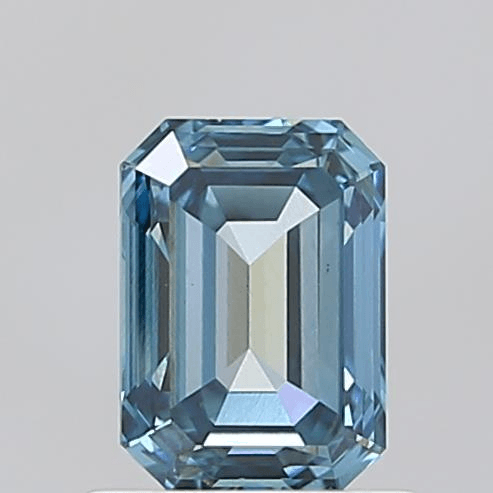
- Fancy Blue(69)
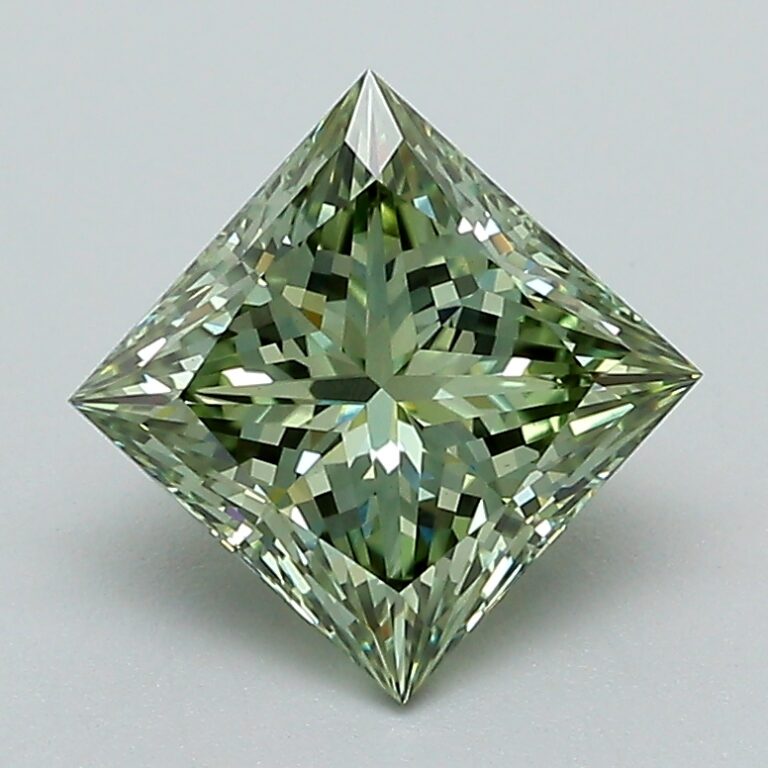
- Fancy Green(53)
- Fancy Pink(93)
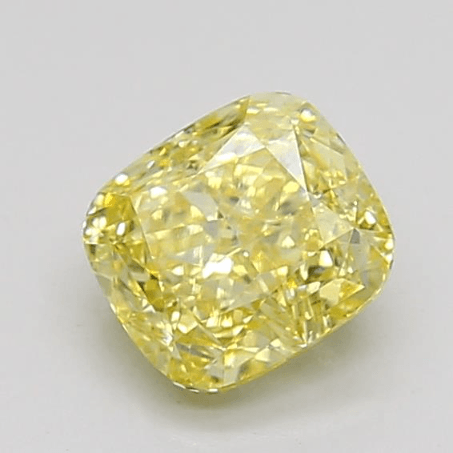
- Vivid Yellow(72)
- Grey(0)
- Orange(10)
- Reddish Pink(1)
- Black(2)
- Princess(11)
- Baguette(4)
- Asscher(18)
- Tapered Baguette(0)
- Cushion(41)
- Emerald(28)
- Heart(22)
- Marquise(23)
- Oval(41)
- Pear(42)
- Radiant(31)
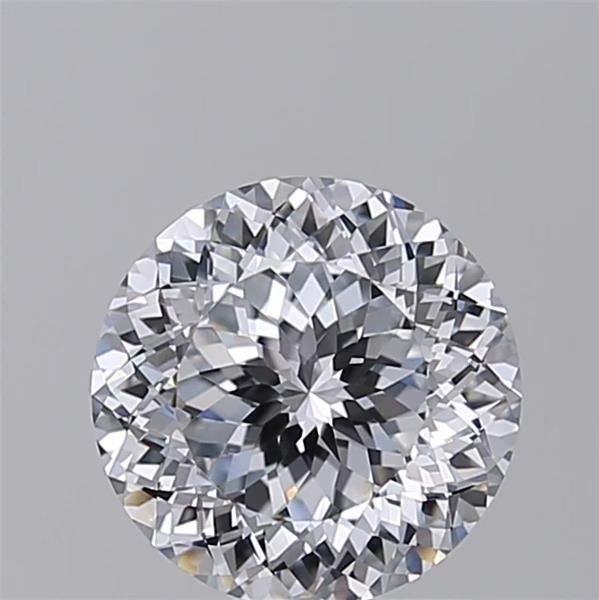
- Round(32)
- Triangle(2)
- Trillion(0)
- Angel(0)
- Ashoka(8)
- Bat Bird(5)
- Briolette(0)
- Bull(0)
- Bullet(0)
- Butterfly(0)
- Cadillac(1)
- Cloud(0)
- Coffin(0)
- Diamond(0)
- Dutch Cut(0)
- Flame(0)
- Flower(0)
- French(0)
- HorseHead(0)
- Lips(0)
- Lotus(0)
- Oval(41)
- Pentagonal(0)
- Pineapple(0)
- Portuguese(0)
- Radiant(31)
- Star(0)
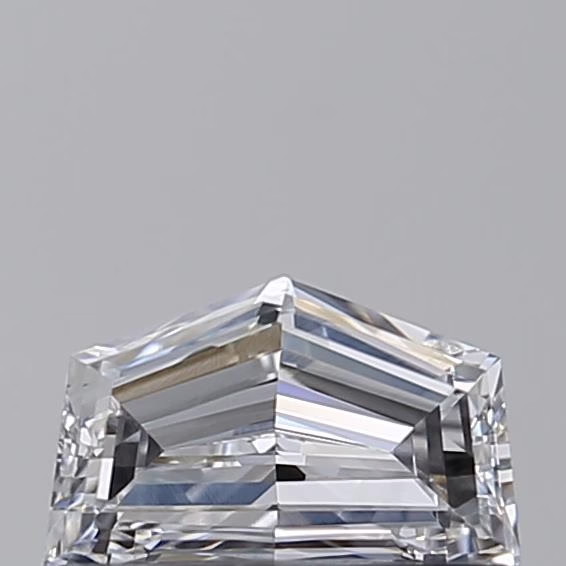
- Trapezoidal(0)
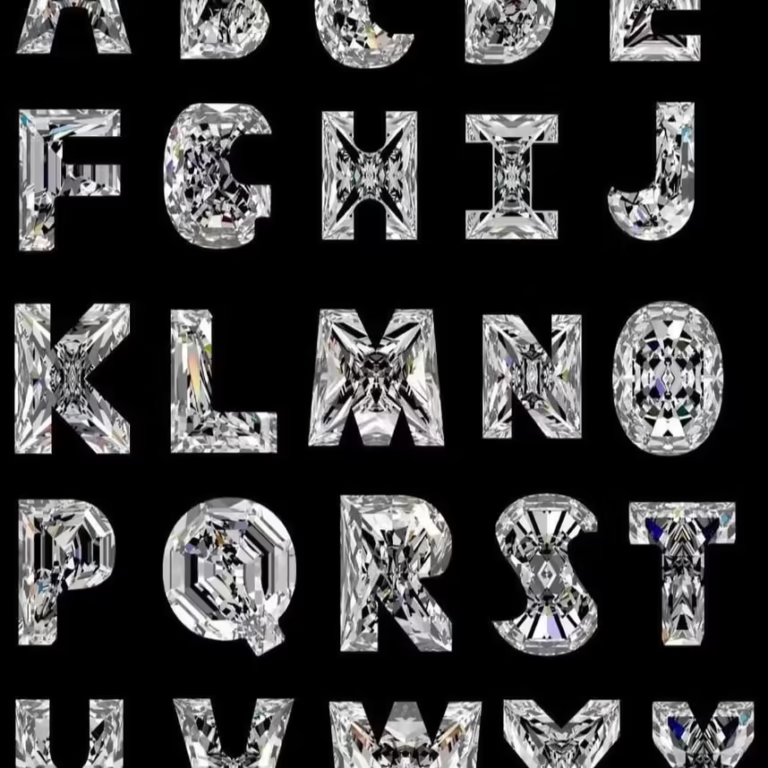
- Alphabet(0)
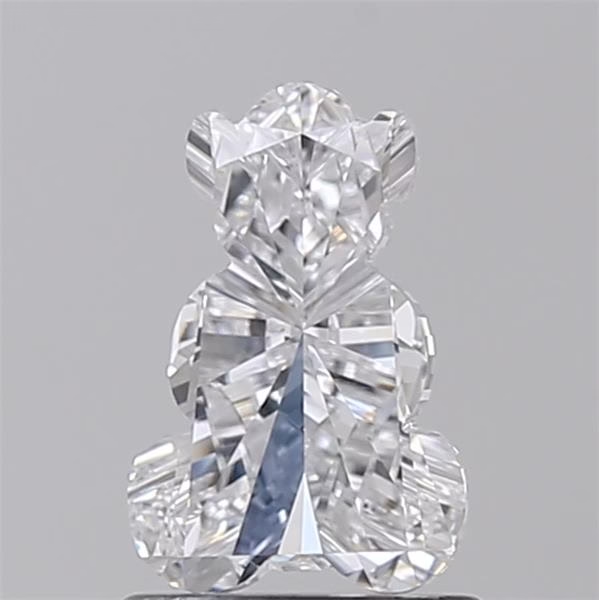
- TeddyBear(5)
- Half Moon(0)
- Kite(2)
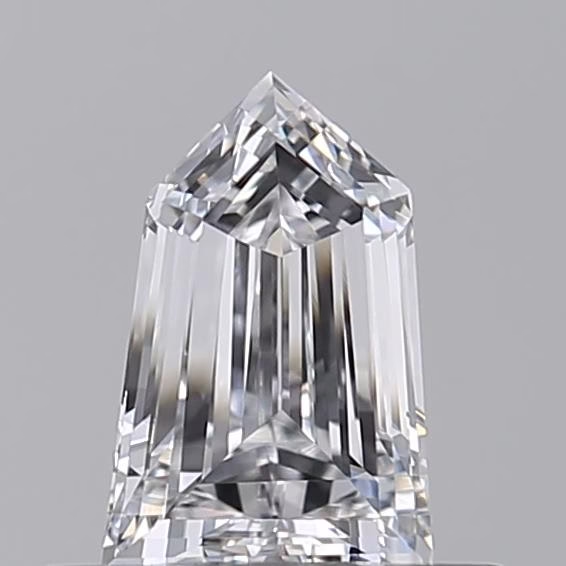
- Shield(6)
- Lozenge(0)
- Octagon(0)
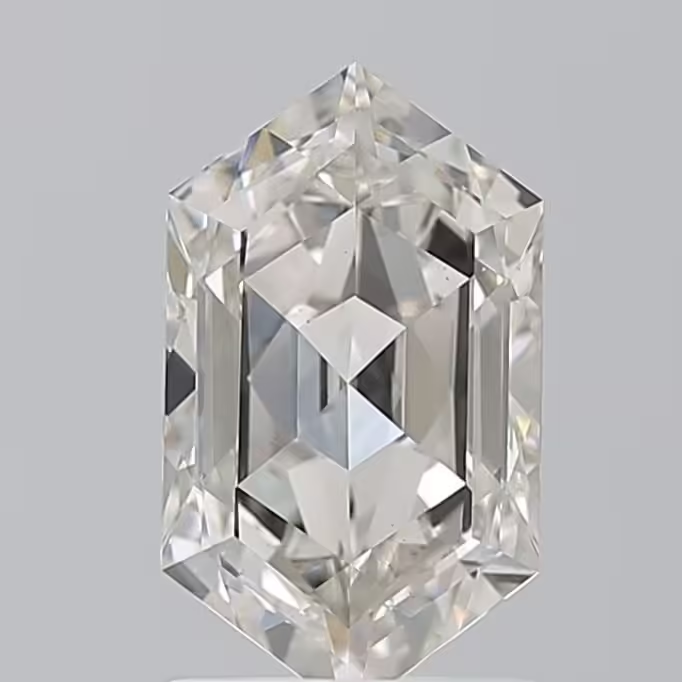
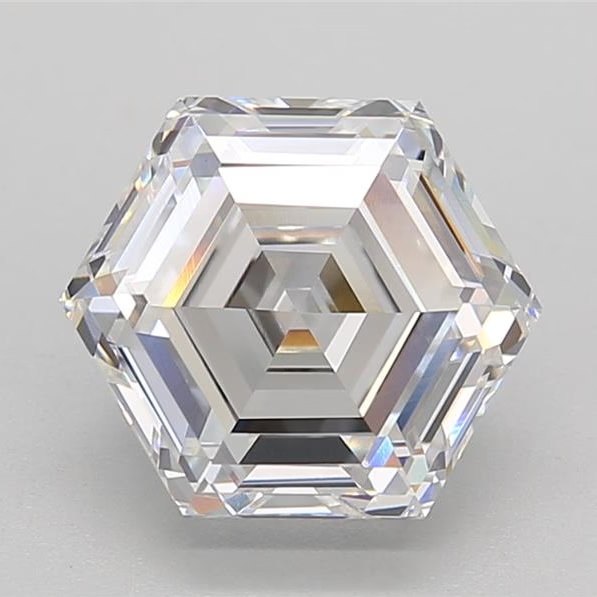
- Hexagonal(6)
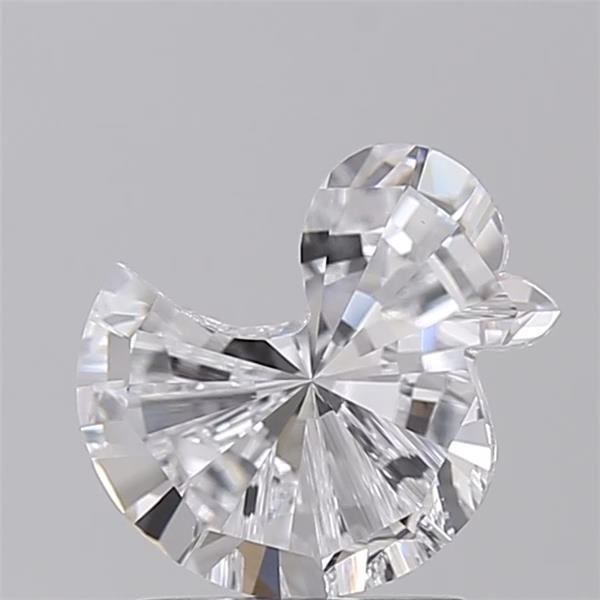
- Duck(0)
- Portuguese(0)
- Old European cut(0)
- Rose Cut(8)
- Modified Cut(129)

Primira Luxury Blog
“Jewelry is more than an accessory; it’s a timeless tale waiting to be told.”
“Like a well-crafted gem, true beauty comes from within. Let your jewelry amplify it.”

Mining Free
Lab diamonds are a responsible choice for conscious consumers, offering brilliance without the environmental impact - crafted with no mining and free from exploitation.
Beauty & Quality
Lab grown diamonds offer the same physical, chemical, and optical brilliance as mined diamonds, delivering a natural sparkle and structure without the environmental impact. Choose lab diamonds for an ethical, stunning alternative that mirrors the beauty of traditional stones.
Value
Discover the brilliance of affordable lab-grown diamonds that offer the same sparkle and durability as mined stones - perfect for those seeking high-value diamonds and cost-effective luxury without compromise.
 1-to-1 Custom Design
Experience
 Craft Your Vision
Today with a 10% Starte
 HD video Preview
Before It Ships
 Fully Customizable
- Stone, Metal & Budget
 Choose Metal Tone:
Yellow, White or Rose Gold
 Handcrafted in Solid 10K · 14K · 18K
Gold, 925 Silver or 950 Platinum
 Select Your Stone Type:
 Lab-Grown Diamond or Moissanite
 Award winning
 craftmanship and detailing
 Hallmarked &
 Certified (IGI / SGL)
 Personalized Care &
 Expert Support
 Design Any Piece
Within Your Budget
1-to-1 Custom DesignExperience
Craft Your VisionToday with a 10% Starte
HD video PreviewBefore It Ships
Fully Customizable- Stone, Metal & Budget
Choose Metal Tone:Yellow, White or Rose Gold
Handcrafted in Solid 10K · 14K · 18KGold, 925 Silver or 950 Platinum
Select Your Stone Type: Lab-Grown Diamond or Moissanite
Award winning craftmanship and detailing
Hallmarked & Certified (IGI / SGL)
Personalized Care & Expert Support
Design Any PieceWithin Your Budget
Xplore our newly in Customized Shapes & Cut – Extra 10% Discount Code Today.
Special collection
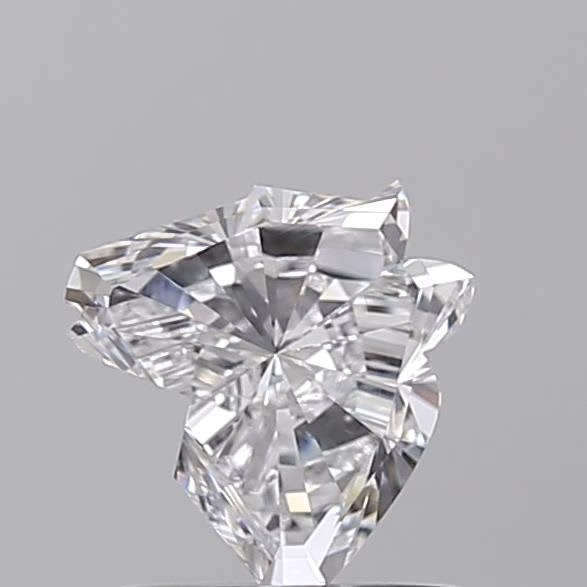
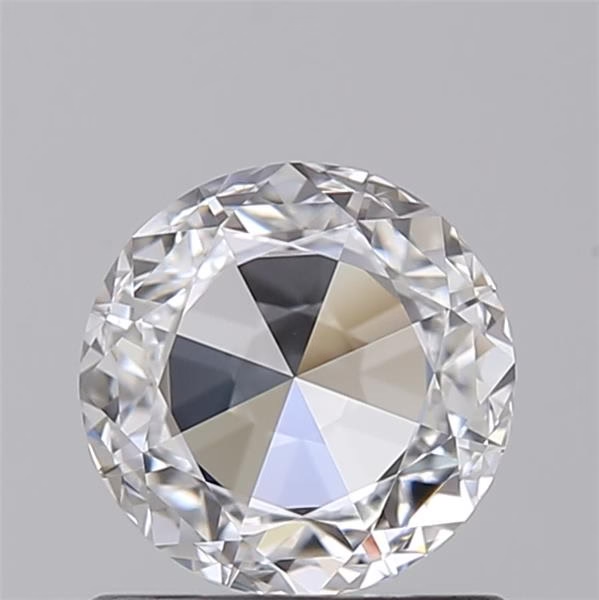
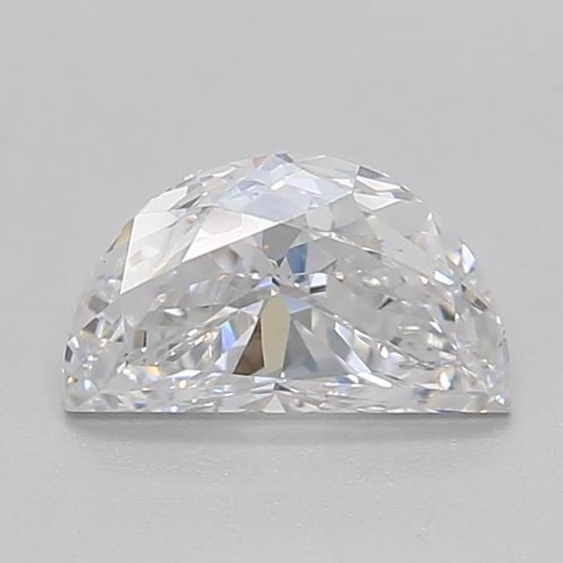
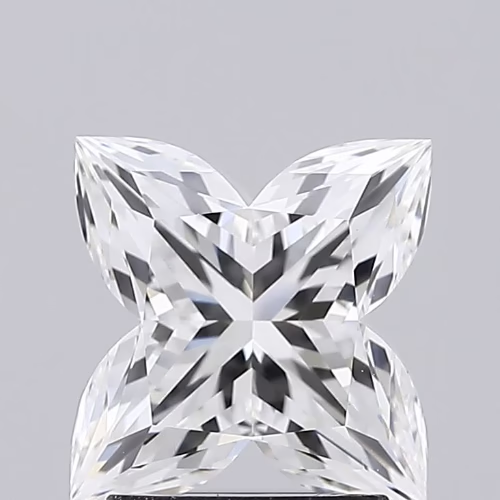
Personolization LGD Customized Shapes
Celebrate the essence of elegance with lab grown diamonds that radiate individuality and charm. Our collection of special colored diamonds is thoughtfully curated to honor the most important women in your life. Whether you’re looking for diamonds for women or colored lab diamonds for gifting, our range offers timeless beauty and modern sustainability. Each piece can be customized – custom colored lab-grown diamonds for special women – to create a gift as unique as she is.
Why Our Lab Grown Diamond
Xplore our newly in Customized Shapes & Cut – Extra 10% Discount Code Today.
Special collection
Beauty of colors
forever love
Celebrate timeless moments with rare, radiant hues found in our lab-grown diamond collection.


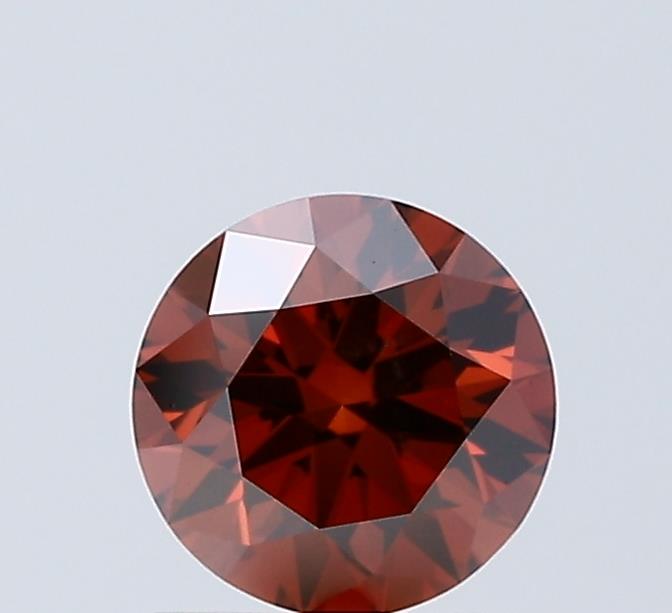
Primira's
Real Reviews From Real Customers
Lifetime
Warranty
100% Money
Back Guarantee
Easy
Customization
7 Days
Return
14 Days
Exchange
Insured
shipping
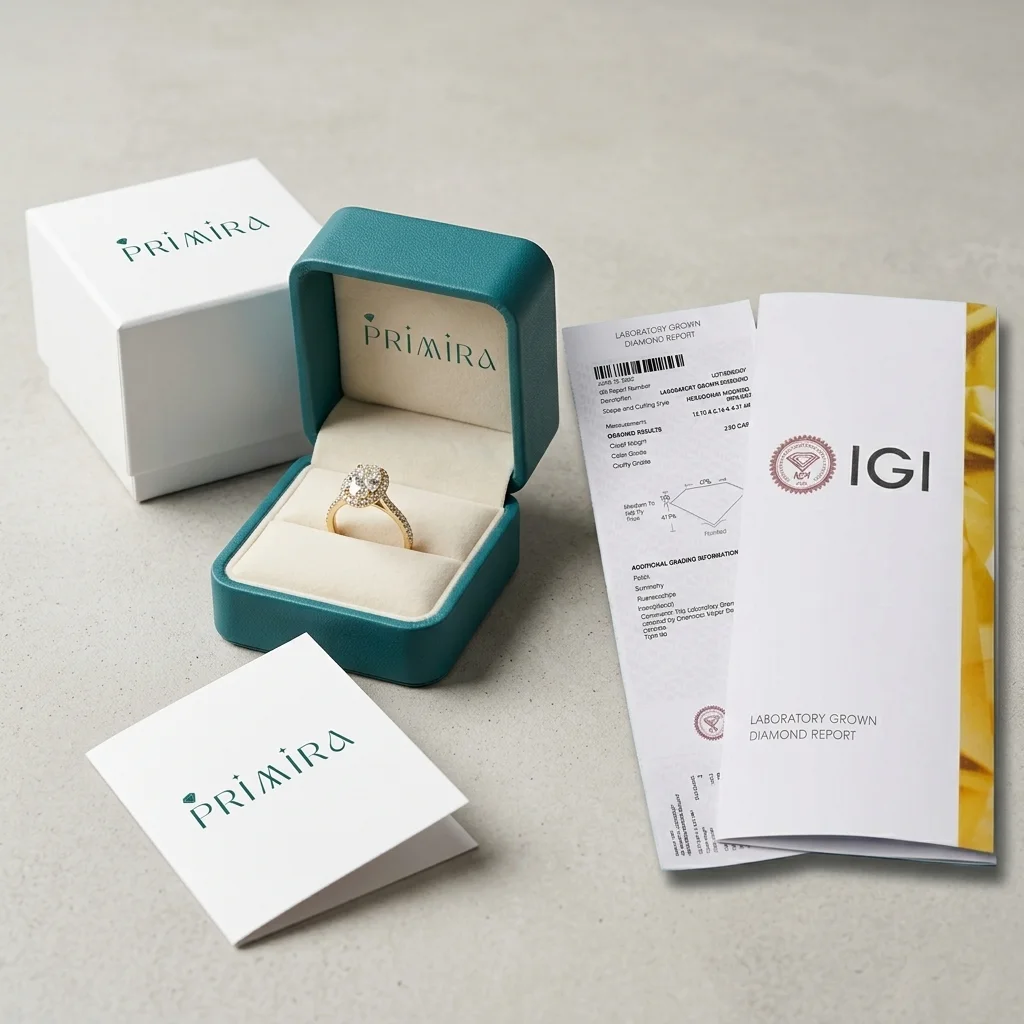
sustainable, beautiful packaging
Give your precious pieces a home they deserve with our stylish, soft-lined jewelry boxes made for effortless organization.
Compare Stone Type
Moissanite
Moissanite, first discovered by the French scientist Henri Moissan in 1893, is a dazzling lab-created gemstone known for its exceptional brilliance. As the second hardest gemstone after diamonds on the Mohs hardness scale, lab-grown moissanite combines durability with stunning sparkle, making it an excellent alternative for those seeking ethical and affordable options.
Lab Grown Diamond
Lab diamonds share the same physical and chemical properties as natural diamonds, making them virtually indistinguishable to the naked eye. While their appearance is remarkably similar, the key difference lies in their creation – lab diamonds are manufactured in controlled environments, offering a sustainable and innovative alternative to traditionally mined stones.
Natural Diamond
Natural diamonds are composed of pure carbon atoms arranged in a crystal structure, formed over millions of years deep within the earth. Extracting these precious gems involves labor-intensive mining, followed by expert cutting and polishing by skilled gem cutters who shape the stones into their final dazzling forms.
FAQ'S
Yes, lab-grown diamonds possess the same chemical, physical, and optical properties as naturally mined diamonds.
Yes, all of OCS Glamour’s lab-grown diamonds are certified by reputable institutions such as the Gemological Institute of America (GIA) or the International Gemological Institute (IGI). These certifications assure the authenticity, quality, trust, and transparency of our lab-grown diamonds, providing you with confidence in your purchase.
Yes, we offer custom design services to create a unique piece tailored to your preferences and Budget , characterised based on the 4Cs – Cut, Colour, Clarity and Carat
Absolutely! We offer wholesale options tailored for business-to-business customers. Whether you’re looking to start a small business or need to purchase jewelry in bulk, we’re here to support your needs. For more details or to discuss your specific requirements, please feel free to contact us directly. You can reach us via email, or for a quicker response, feel free to WhatsApp us at +918200524191. We’re committed to providing quality service and products to help your business succeed.
No. A lot of people think that machines can be programmed to create a specific diamond grade and carat size but that’s really not possible. Machines simply put the right conditions together but then nature takes it from there. Just like with mined diamonds, there will be variances in colour, clarity and carat size in every piece.
Yes, Lab Grown Diamonds are also characterised based on the 4Cs – Cut, Colour, Clarity and Carat – just like natural diamonds
Moissanite is a gemstone that shares similarities with diamonds in terms of brilliance. Its affordability and unique fire have contributed to its growing popularity
Read Our Article Behind Every Collection
Each design at Primira Luxury is handcrafted with precision, purpose, and emotion. From the first sketch to the final polish, our artisans turn your vision into a piece that feels personal, ethical, and timeless.
Read More
Fancy Color Lab Grown Diamonds — Pink, Blue, Yellow & Beyond
A fancy color lab grown diamond gets its color from a specific production mechanism — and which mechanism produced the color in the stone you’re looking at is the first thing the IGI report is telling you, whether you’ve read it that way before or not. There’s no setting to soften a weak stone, no styling photo doing the persuading — you’re looking at the stone itself: hue, saturation, clarity, and the specific production method that put the color there, checked against a report number you can verify on your own. A fancy color lab grown diamond is any lab-grown stone that falls outside the standard D-to-Z colorless range — pink, blue, yellow, green, and a handful of rarer hues — graded on a scale that measures how much color is present, not how little.
If you’re shopping for a finished piece rather than a loose stone, our fancy color lab grown diamond rings collection has these colors already set. This page is for buyers specifying the stone first.
How Each Fancy Color Lab Grown Diamond Gets Its Color
This is the part most retailers skip past with a line about “trace elements.” The actual mechanism is different for each color, and it’s worth knowing before you order, because it’s printed on your certification report either way.
Yellow — Nitrogen
Yellow lab grown diamonds get their color from nitrogen, introduced and controlled during the CVD or HPHT growth process itself. More nitrogen in the growth chamber produces a deeper yellow; less produces the lighter, warmer tones closer to a near-colorless stone. Because the color is set while the crystal is forming, it’s stable for the life of the stone.
Blue — Boron
Blue comes from boron, also introduced during growth — this is an HPHT-specific pathway in most production. Boron concentration controls depth: a small amount produces the pale, icy blues currently trending; a higher concentration moves toward the deep royal blue tone. Like yellow, this is a growth-stage color — nothing is added after the stone is cut.
Pink — Irradiation and Annealing
Pink is the outlier. It isn’t created during growth at all. A near-colorless or lightly tinted stone is grown first, then exposed to irradiation and annealed (heated and cooled under controlled conditions) afterward — a separate, disclosed post-growth step that shifts the crystal structure enough to produce the pink hue. This is a completely standard, certified production method for lab grown pink diamonds, distinct from how yellow and blue are made, and it’s documented on the stone’s IGI report.
Green, Black, Champagne, Orange, Grey
Green follows the same irradiation and annealing pathway as pink. Black, champagne, grey, and orange each result from different trace-element concentrations or inclusion patterns — all documented on the IGI report the same way yellow and blue are.
The single sentence worth remembering: lab grown yellow and blue diamonds get their color from nitrogen and boron introduced during crystal growth, while pink is created afterward through irradiation and annealing — three distinct production methods producing three different fancy colors, each disclosed and verifiable on the IGI report.
Saturation Tiers — Vivid, Intense, Light
The full grading scale for fancy color runs nine levels, from Faint through Fancy Deep. Primira stocks three of those tiers — Vivid, Intense, and Light — because these are the three that actually read differently to the eye at typical jewelry carat weights; the gaps between the omitted tiers are too subtle to matter to most buyers and mostly affect price, not appearance.
- Vivid — the strongest, most saturated expression of the color. This is what most buyers picture when they picture a “fancy color diamond.”
- Intense — strong, clearly identifiable color, one step lighter than Vivid, often the better value per unit of visible saturation.
- Light — a soft, pastel expression of the same hue. A distinct aesthetic in its own right, not a lesser version — some buyers prefer this specifically.
- Fancy Deep and Fancy Dark — these exist on the grading scale but are not stocked; heavily saturated tones in some hues (particularly yellow and green) can read almost opaque, which reads as richness on a large stone but tends to lose luminosity at smaller carat weights. This is a depth-and-transparency tradeoff that’s easy to evaluate in person but almost impossible to read from a listing photo, which is why we keep stock within the Vivid-through-Light range where the color is confidently readable from the IGI report alone.
Saturation tier matters more here than it does on a white diamond’s color grade — it’s the primary driver of both how the stone looks and what it costs.
Choosing a Cut and Shape for Color
This is where fancy color buying logic actually reverses from white diamond buying logic, and it’s worth stating plainly because almost nothing online connects it to a real shape recommendation.
A round brilliant is cut to maximize light return — bouncing white light back out through the crown for maximum sparkle. That’s the entire story on our round brilliant lab grown diamonds page. For a fancy color stone, light return isn’t the goal — trapping color is. Larger, flatter facets hold light inside the stone longer, intensifying the face-up hue rather than scattering it. That’s why radiant, cushion, oval, and pear cuts dominate the fancy color market and round brilliant is comparatively rare here — the same proportions that make a white diamond sparkle would wash the color out of a colored one.
Practical takeaway: if you’re choosing a shape primarily to maximize saturation, radiant and cushion give the most color-forward result per carat; oval and pear show slightly more color variation across the face of the stone, which some buyers prefer for the visual movement it creates.
Step-cut shapes like emerald behave differently again — not because they trap color but because their open facets put clarity and inclusion placement on permanent display; see emerald cut lab grown diamonds for how that changes stone selection.
Carat, Clarity, and Metal Pairing
Clarity: Primira’s standard stock runs VVS1 to VS2 across all stone types, fancy color included — all eye-clean, with no SI2 or lower kept in inventory. With colored stones, that clarity range buys you more headroom than it would on a white diamond, since the body color itself does some of the work of disguising minor inclusions. That doesn’t change what we stock — it just means clarity worries less here than buyers expect coming from white diamond shopping.
Carat: the same 0.25ct to 10ct+ range applies on custom order as it does for colorless stock. Larger fancy color carats have become considerably more accessible through lab production than they ever were through mined supply, simply because production volume isn’t limited by what geology happens to produce.
Metal: if you’re sourcing this stone for a custom setting, the metal backdrop changes how the color reads. Yellow gains warmth set against yellow gold. Blue and pink gain depth against white gold or platinum — a non-reflective backdrop keeps the eye on the stone’s own color instead of bouncing extra white light through it and diluting the hue. Decide the metal alongside the stone, not after.
Custom Orders — Matching Multiple Stones
The custom-order detail that matters specifically here, and doesn’t come up on our single-stone pages: if you’re ordering more than one fancy color stone for the same piece — a pair of earrings, a cluster, a pavé accent run — hue and saturation vary stone to stone even within one nominal color name. Two stones both labeled “Fancy Intense Pink” can still read as visibly different shades side by side. Because cutting happens at our own Surat facility, we can hold a matched parcel — multiple stones pulled and confirmed against each other for hue and saturation before they’re set — which a buyer sourcing from a generic online inventory generally can’t request.
If budget is the deciding factor over diamond composition specifically, fancy color moissanite stones are also cut to order in the same color range, at a different price point.
Treated Natural vs. Lab Grown Color — What’s Actually Different
If you’ve researched colored diamonds at all, you’ve likely run into warnings about “treated” stones — cheap, low-grade natural diamonds artificially color-enhanced and sold as if they were rare natural fancy colors. That’s a real problem in the natural diamond market, and it’s a fair thing to be cautious about.
It’s also a different situation from what you’re buying here. A lab grown fancy color diamond’s color mechanism isn’t a disguise applied to an inferior stone after the fact — for yellow and blue, it’s part of the original growth process; for pink and green, it’s a disclosed, standard production step, not a workaround. The IGI report states the color origin plainly. There’s nothing to uncover, because nothing is being hidden in the first place. Lab grown diamonds have the same optical, physical, and chemical properties as mined diamonds — fancy color stock included.
Caring for a Fancy Color Lab Grown Diamond
Day-to-day care follows the same rules as any loose lab grown diamond: store separately so stones don’t scratch each other, avoid prolonged skin contact with bare fingers before setting (oil dulls the surface), and keep the stone in its sealed packaging until it goes to your jeweler.
One vulnerability specific to this category: stones whose color was introduced through irradiation and annealing — pink in particular — can be more sensitive to the open-flame heat used during certain setting and repair work. This isn’t a flaw in the stone; it’s a fact your setter needs to know before they put a torch anywhere near it. Tell whoever sets the stone that its color was created via irradiation, and they’ll adjust their technique accordingly. Color-stable stones whose hue was set during growth (yellow, blue) don’t carry this same setting-stage caution.
Certification and How We Stand Behind It
Every fancy color lab grown diamond ships with an IGI report, and on a colored stone, that report is doing more work than it does on a white one — it’s not just confirming cut, color, clarity, and carat, it’s the document that states how the color was produced. That’s the verification that matters most on this page: not “is this a lab grown diamond” but “how was this specific color made, and does the paperwork agree with what you’re looking at.” Check the report number directly against igi.org before you order if you want that confirmed independently.
Certified stones already in inventory dispatch within 48 hours of order confirmation; anything ordered to a custom saturation match or paired set runs on our standard 15–35 business day production window. Every shipment is insured from dispatch to delivery. If what arrives doesn’t match the confirmed specification, the 7-day return window applies the same as it does across the rest of the site. As with our other loose stone pages, the buyback program doesn’t apply here — it’s structured around set jewelry, not unset stones.
For the full picture on how loose stone ordering works — production timing, IGI verification, CVD vs. HPHT sourcing — see our loose lab grown diamonds collection page.
Frequently Asked Questions
How do lab grown diamonds get fancy color in the first place?
It depends on the color. Yellow comes from nitrogen and blue from boron, both introduced during crystal growth. Pink and green are created afterward through irradiation and annealing, a separate, disclosed step once the stone has already formed. Each method is documented on the stone’s IGI report.
Is a colored lab grown diamond a “treated” diamond?
Not in the sense that term usually carries a warning for natural stones. “Treated” in the natural diamond market typically means a low-grade stone artificially color-enhanced to imitate a rare natural fancy color. A lab grown diamond’s color process — whether set during growth or introduced through irradiation afterward — is a standard, disclosed part of how the stone is made, stated plainly on its certification, not a workaround applied to disguise a weaker stone.
What cut or shape works best for a fancy color lab grown diamond?
Radiant and cushion cuts hold color most intensely, since their broader, flatter facets trap light rather than scatter it. Oval and pear show more color movement across the stone’s face. Round brilliant — built to maximize light return rather than color saturation — is the least common choice for fancy color stock.
Will the color fade or change over time?
No. Whether the color was set during growth (yellow, blue) or introduced afterward through irradiation and annealing (pink, green), the result is permanent under normal wear. The one thing to flag is heat exposure during future jewelry repair work, not everyday wear — see the care section above.
Which fancy color lab grown diamond is the most popular?
Yellow and blue are currently the two most requested colors, with pink close behind. Trending into 2026, lighter, softer tones — ice blue, blush pink, pale canary yellow — are seeing increased demand alongside the traditional deeper Vivid saturations.
Can I order multiple fancy color stones matched to the same hue and saturation?
Yes — this is a common request for earrings, clusters, or any piece using more than one colored stone. Because cutting happens at our own facility, we can hold and compare a matched parcel of stones against each other before confirming the order, rather than sourcing them individually from separate inventory batches.
 Chat on WhatsApp