
Primira Luxury Blog
“Jewelry is more than an accessory; it’s a timeless tale waiting to be told.”
“Like a well-crafted gem, true beauty comes from within. Let your jewelry amplify it.”


Showing all 6 results
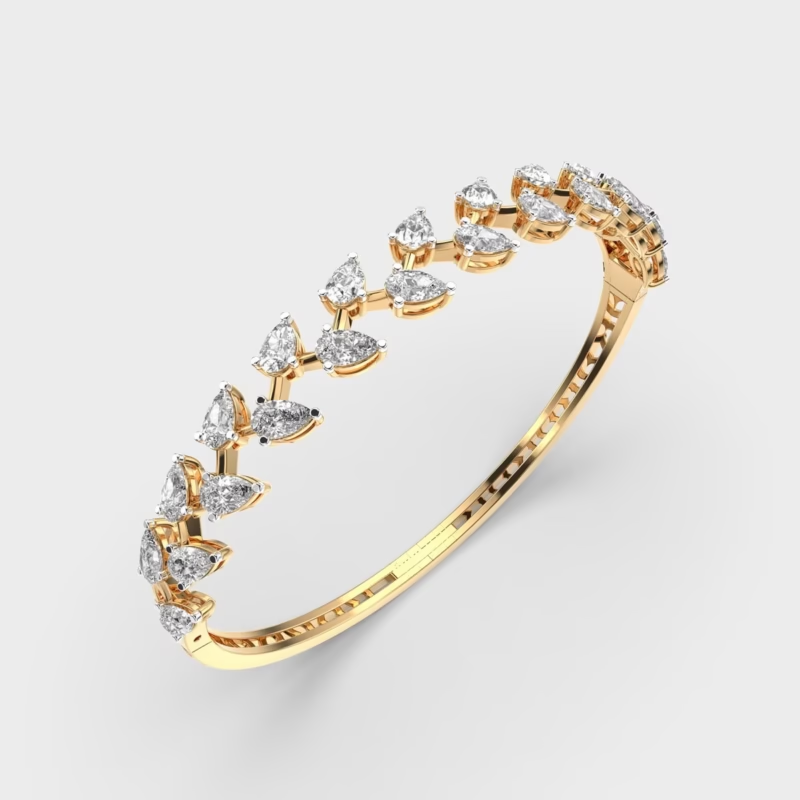
 ₹59,757 – ₹337,569Price range: ₹59,757 through ₹337,569
- ₹50,944 – ₹271,866Price range: ₹50,944 through ₹271,866
- ₹86,543 – ₹554,804Price range: ₹86,543 through ₹554,804
- ₹64,939 – ₹370,203Price range: ₹64,939 through ₹370,203
- ₹68,574 – ₹397,768Price range: ₹68,574 through ₹397,768
- ₹43,986 – ₹252,208Price range: ₹43,986 through ₹252,208
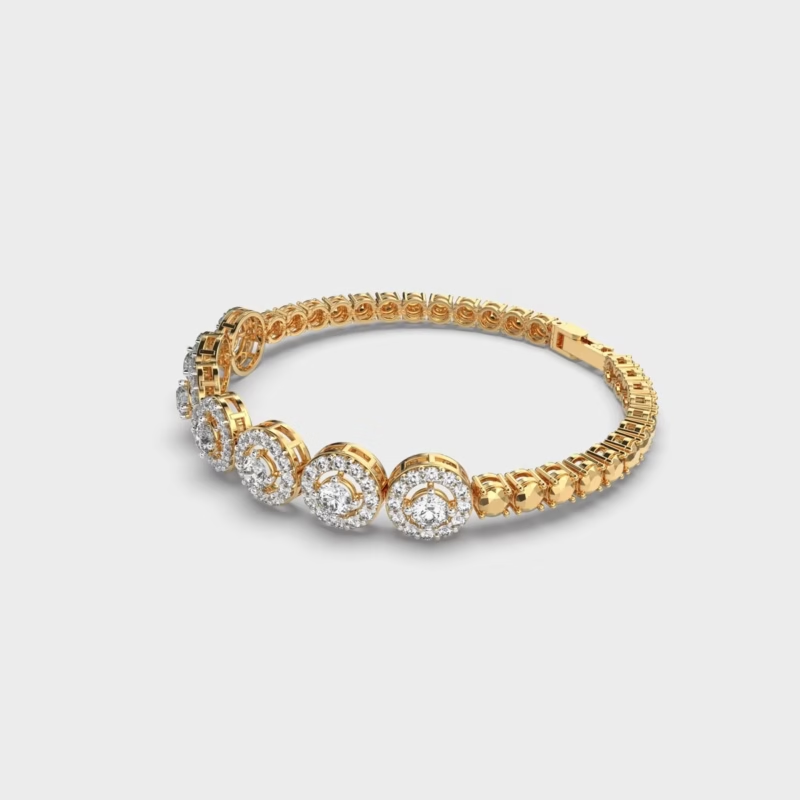
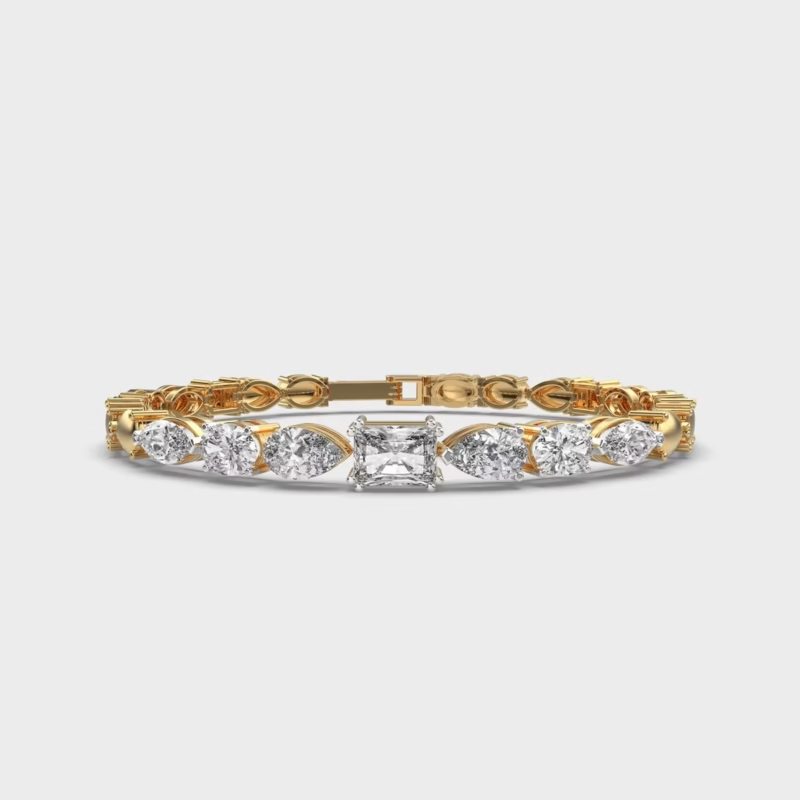
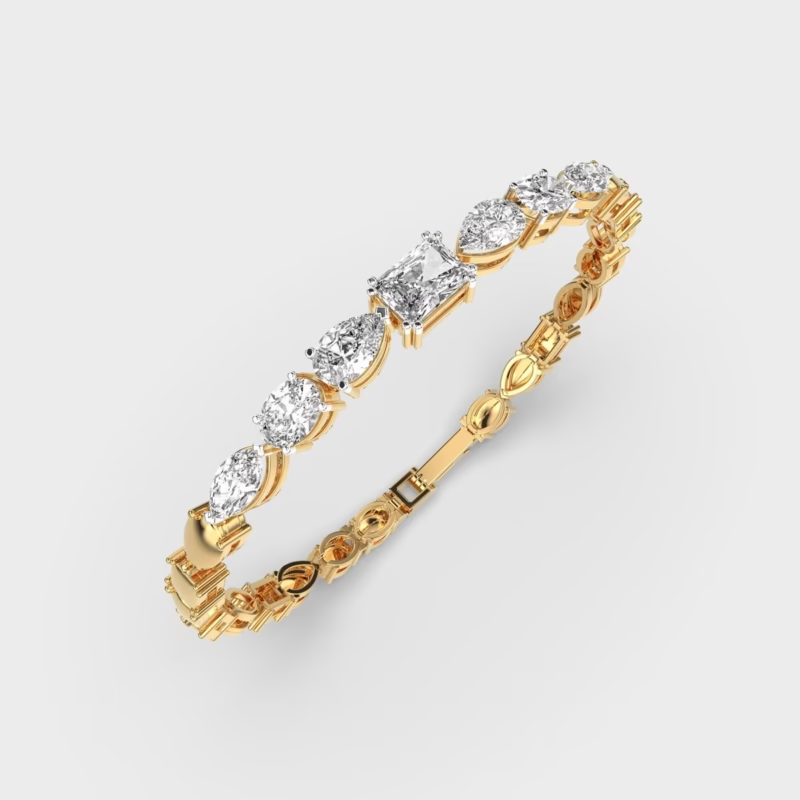
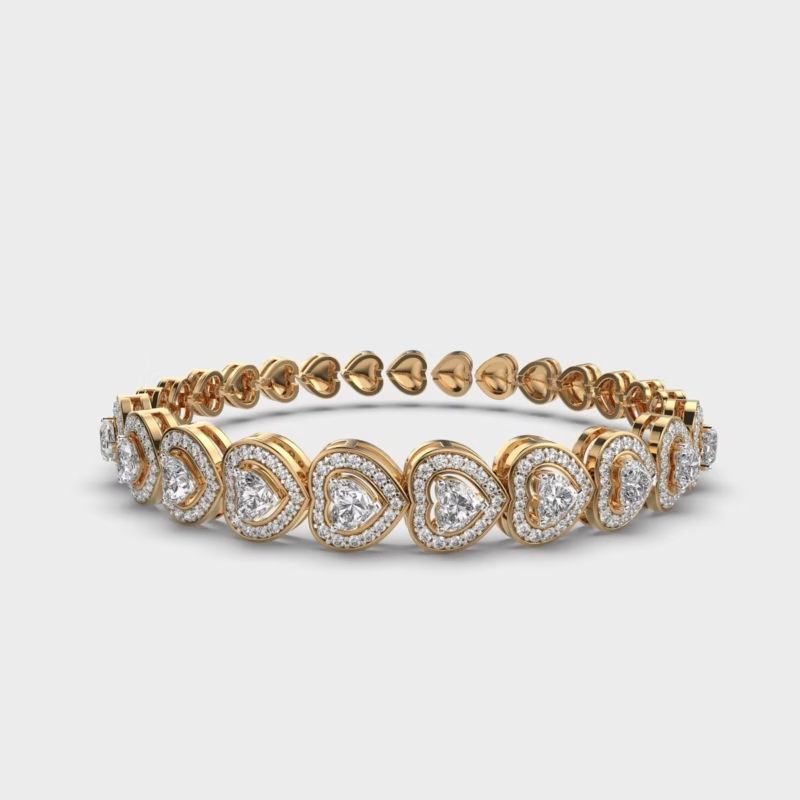
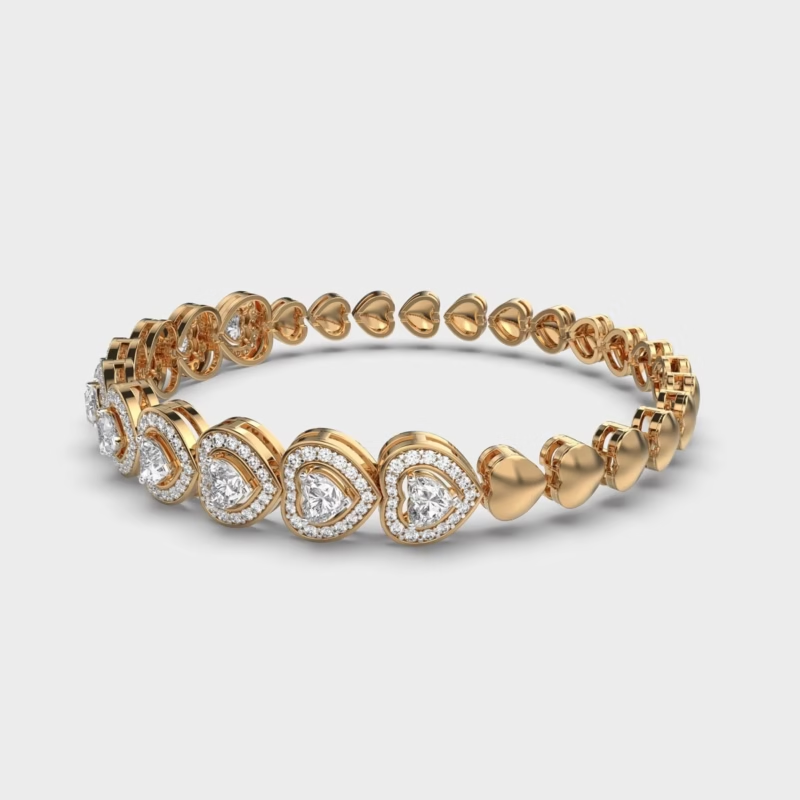
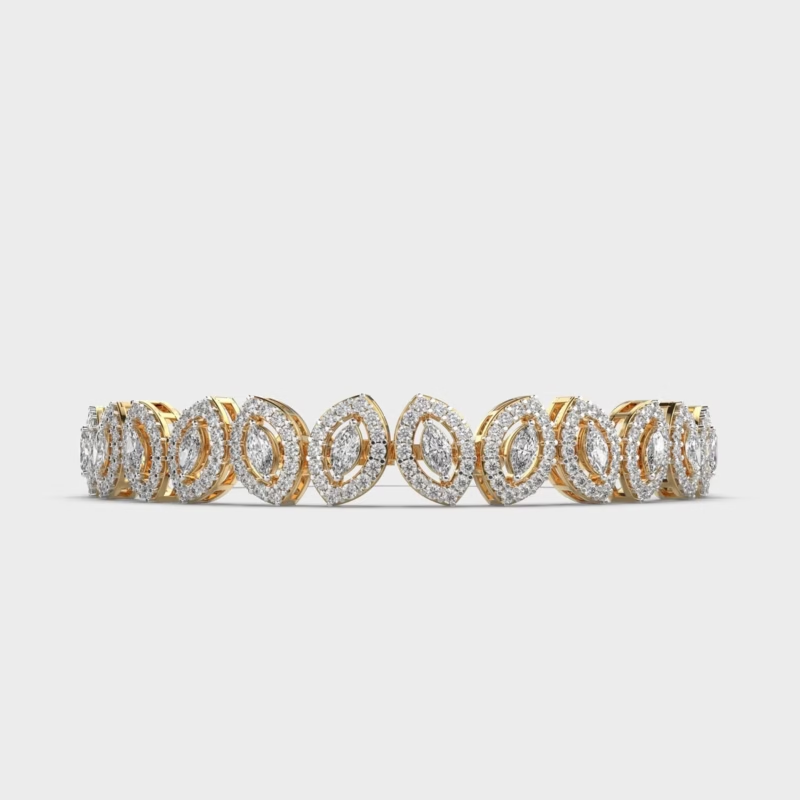
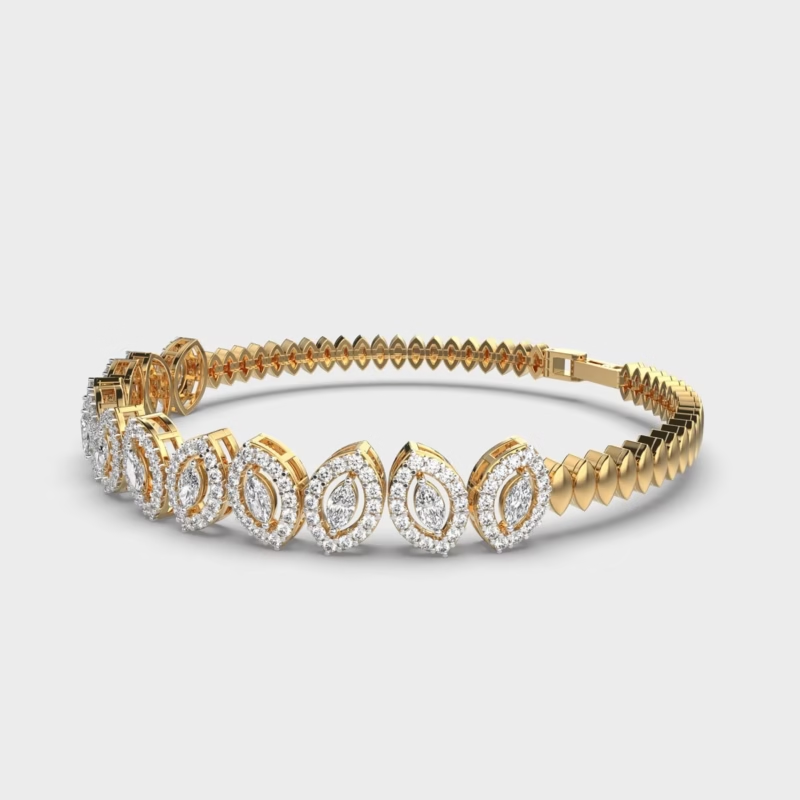
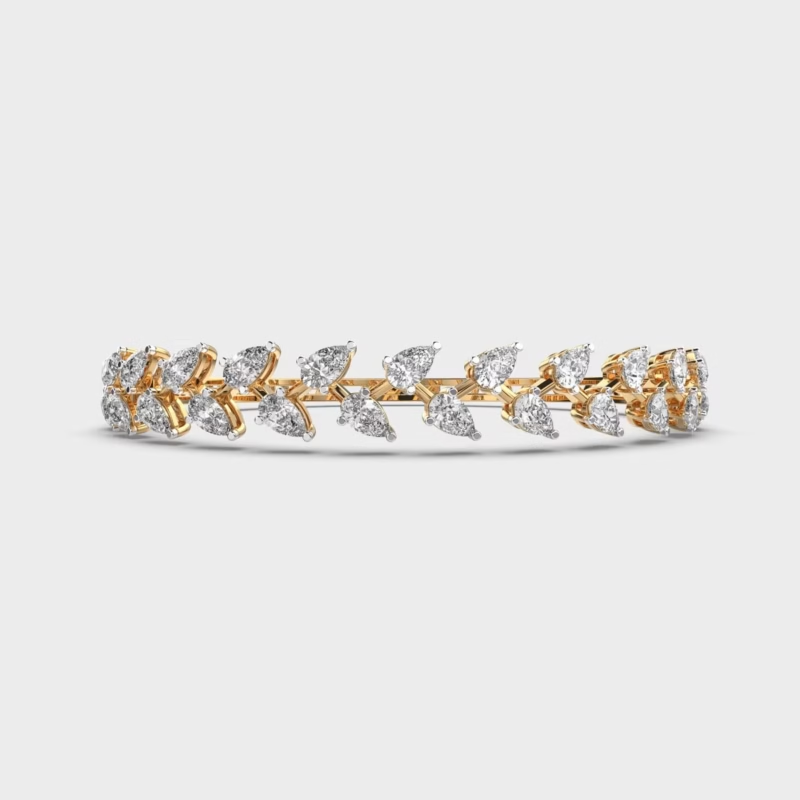
Showing all 6 results
Discover Your Perfect Price
Filter by Stone Type and Metal to view accurate, variation-based pricing
Transparent, personalized, and effortless - explore designs that match your style, metal, and budget.
- Tip: Choose one stone type and one metal type to see your exact price.
- If prices seem off, just uncheck and re-apply your filters – the page will refresh with accurate pricing.
 1-to-1 Custom Design
Experience
 Craft Your Vision
Today with a 10% Starte
 HD video Preview
Before It Ships
 Fully Customizable
- Stone, Metal & Budget
 Choose Metal Tone:
Yellow, White or Rose Gold
 Handcrafted in Solid 10K · 14K · 18K
Gold, 925 Silver or 950 Platinum
 Select Your Stone Type:
 Lab-Grown Diamond or Moissanite
 Award winning
 craftmanship and detailing
 Hallmarked &
 Certified (IGI / SGL)
 Personalized Care &
 Expert Support
 Design Any Piece
Within Your Budget
1-to-1 Custom DesignExperience
Craft Your VisionToday with a 10% Starte
HD video PreviewBefore It Ships
Fully Customizable- Stone, Metal & Budget
Choose Metal Tone:Yellow, White or Rose Gold
Handcrafted in Solid 10K · 14K · 18KGold, 925 Silver or 950 Platinum
Select Your Stone Type: Lab-Grown Diamond or Moissanite
Award winning craftmanship and detailing
Hallmarked & Certified (IGI / SGL)
Personalized Care & Expert Support
Design Any PieceWithin Your Budget
Primira's
Real Reviews From Real Customers
Lifetime
Warranty
100% Money
Back Guarantee
Easy
Customization
7 Days
Return
14 Days
Exchange
Insured
shipping
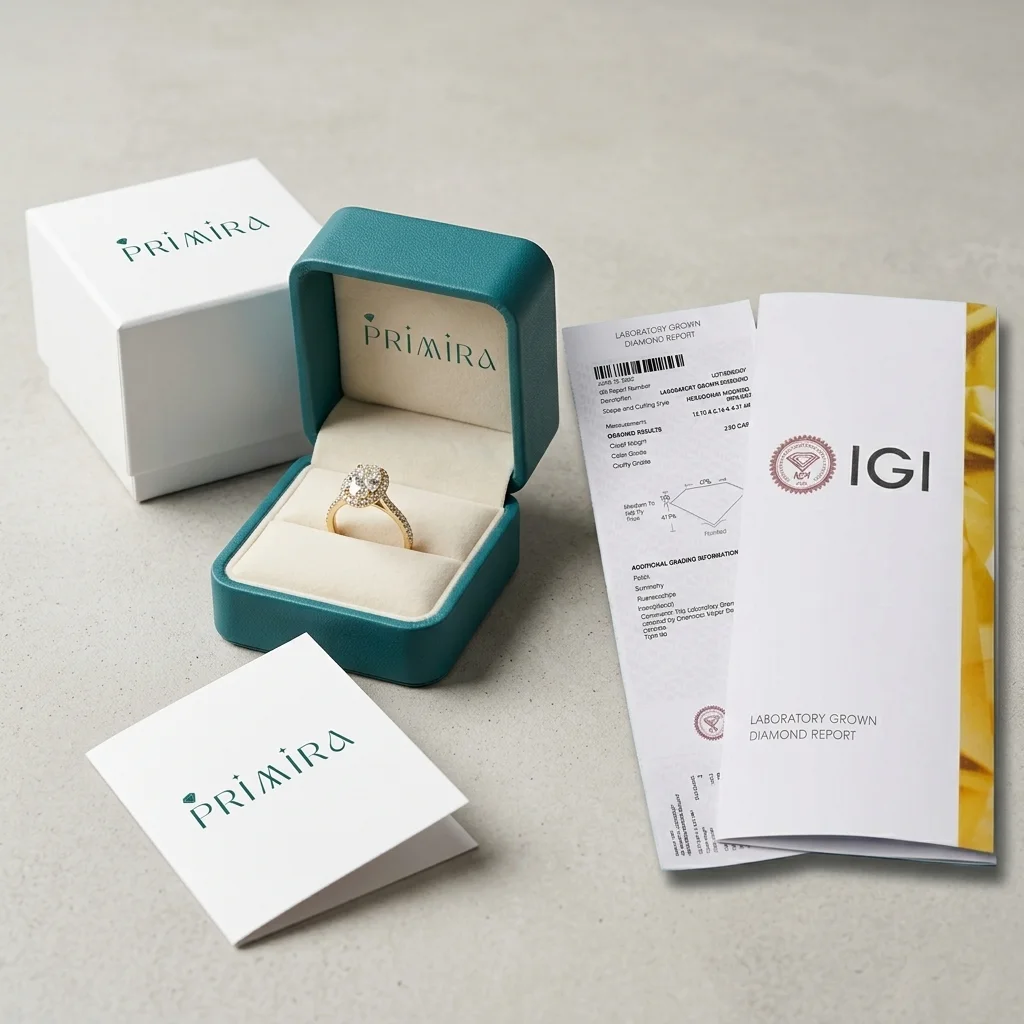
sustainable, beautiful packaging
Give your precious pieces a home they deserve with our stylish, soft-lined jewelry boxes made for effortless organization.
Read Our Article Behind Every Collection
Each design at Primira Luxury is handcrafted with precision, purpose, and emotion. From the first sketch to the final polish, our artisans turn your vision into a piece that feels personal, ethical, and timeless.
Read More
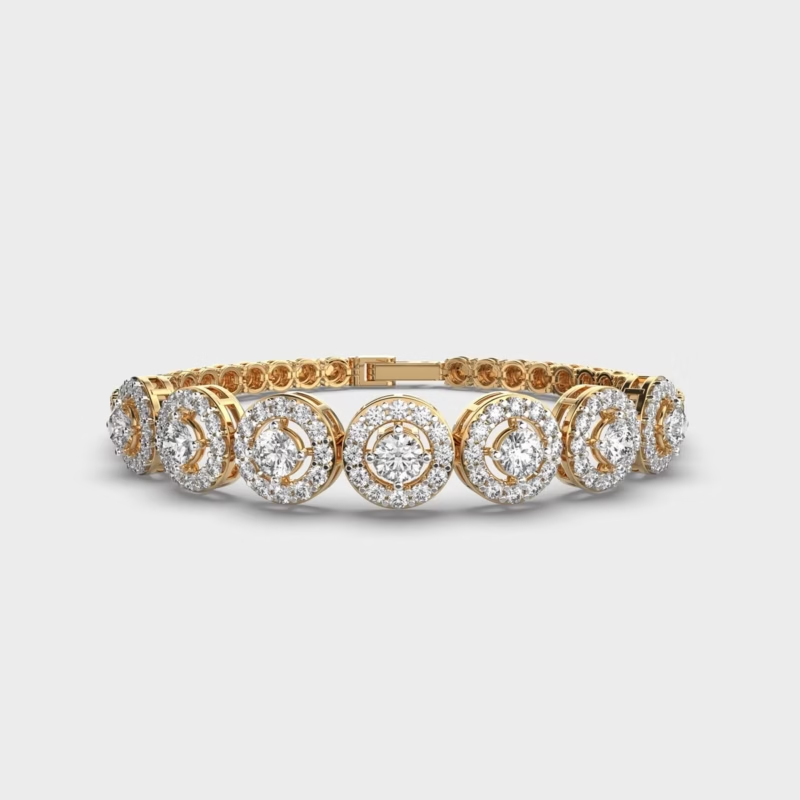
Lab Grown Diamond Tennis Bracelet — Factory Direct
The Story Behind the Name — and What It Actually Tells You
In 1987, during a US Open match, Chris Evert stopped play to look for her diamond bracelet. The clasp had failed. Every article about tennis bracelets opens with this story as atmosphere. What it actually is: a case study in what a single-point clasp failure costs you. The entire bracelet — every stone — gone.
That incident is why the construction of a tennis bracelet’s closure matters more than almost any other piece of jewelry. A pendant with a broken chain is recoverable. A ring that comes off stays on your finger or the nearest surface. A tennis bracelet with a failed clasp leaves you with nothing. The failure mode is total.
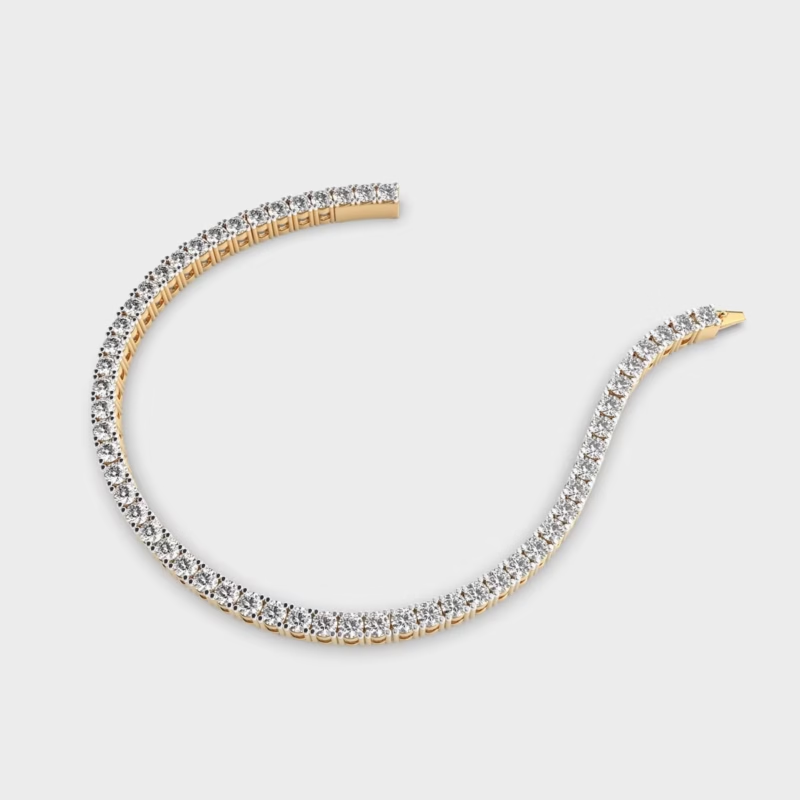
Primira’s lab grown diamond tennis bracelets use a box clasp with a figure-8 double safety lock — not as a checkbox feature, but as a production-bench specification. Understanding how both stages work, and how stone uniformity is maintained across 50–60 stones set in a continuous line, is what makes buying a lab grown diamond tennis bracelet online a rational rather than a hopeful decision.
How the Box Clasp Double Safety Lock Actually Works
Most buying guides call this feature out. None explain the mechanism. Here’s what’s actually happening.
The box clasp housing is a hollow rectangular unit with a precisely calibrated opening. A flat metal tongue — set to a specific gauge that matches the housing tolerance — slides in and flexes slightly on entry, then springs outward against the inner walls. This internal tension is stage one: the tongue holds itself in position through metal spring pressure, not through an external lock. A correctly calibrated box clasp won’t release from casual wrist movement even before stage two engages.
Stage two is the figure-8 safety catch: a folded wire loop that rotates over a small post on the clasp housing. When folded fully, it covers the tongue’s exit path. Even if the internal spring tension on stage one weakened through repeated wear — a real long-term variable in any mechanical clasp — the figure-8 catch keeps the tongue inside the housing. Both stages would need to fail simultaneously for the bracelet to open accidentally.
The housing tolerance and the figure-8 wire gauge are production specifications, confirmed at the bench in Surat before the bracelet ships. If the tongue gauge is even marginally off-spec relative to its housing, stage one holds inconsistently. If the figure-8 wire is too thin, it fatiques under daily opening and closing. Neither of these is something a buyer can assess from a product photograph or a description that says “double safety lock.”
What the pre-production WhatsApp confirmation covers for a tennis bracelet: length (wrist measurement plus preferred drape allowance), stone specification (total carat weight, per-stone diameter range, colour grade), and clasp type. These are the three variables that determine whether the bracelet will work correctly for your wrist, look visually right in wear, and stay secured. All confirmed before production begins.
Stone Uniformity — Why This Is a Manufacturing Problem, Not a Retail One
A single-stone piece can be selected and graded individually. A tennis bracelet contains 50–60 stones set in a continuous line where each stone sits adjacent to the next. At that scale, colour variation that would be invisible in a solitaire becomes detectable when the stones sit side by side across 7 inches of wrist.
The solution isn’t buying better individual stones. It’s matched-parcel sourcing: ensuring all 50–60 stones come from the same lab grown diamond growth cycle batch, colour-graded and size-sorted together before setting begins. Stones from the same batch share the same CVD or HPHT growth parameters, which means their colour distribution follows the same profile rather than varying between batches. Size-sorting to ±0.01mm tolerance ensures the line sits level rather than creating visible height variation at the prong line.
Surat processes 90% of the world’s rough diamonds. When both the stones and the setting are produced in the same facility — the same production bench where the stones were cut and graded — matched-parcel sourcing is a production workflow decision rather than a coordination challenge between a stone supplier and a separate jewellery manufacturer. That coordination is where retail-assembled bracelets introduce the variation that makes some continuous-line pieces look uniform and others look like stones from different batches, which they often are.
IGI certification for a tennis bracelet covers the matched parcel — the colour grade range and total carat weight across the full setting, not individual stone reports. For a continuous-stone format, this is the right documentation: it confirms what the bracelet actually is as a set, not just the specifications of any one component.
Setting Style — Channel, Shared-Prong, and Bezel as Daily-Wear Engineering Forks
The setting choice in a tennis bracelet isn’t primarily aesthetic. Each option makes a different engineering trade-off that affects how the bracelet wears over time.
Shared-Prong Setting
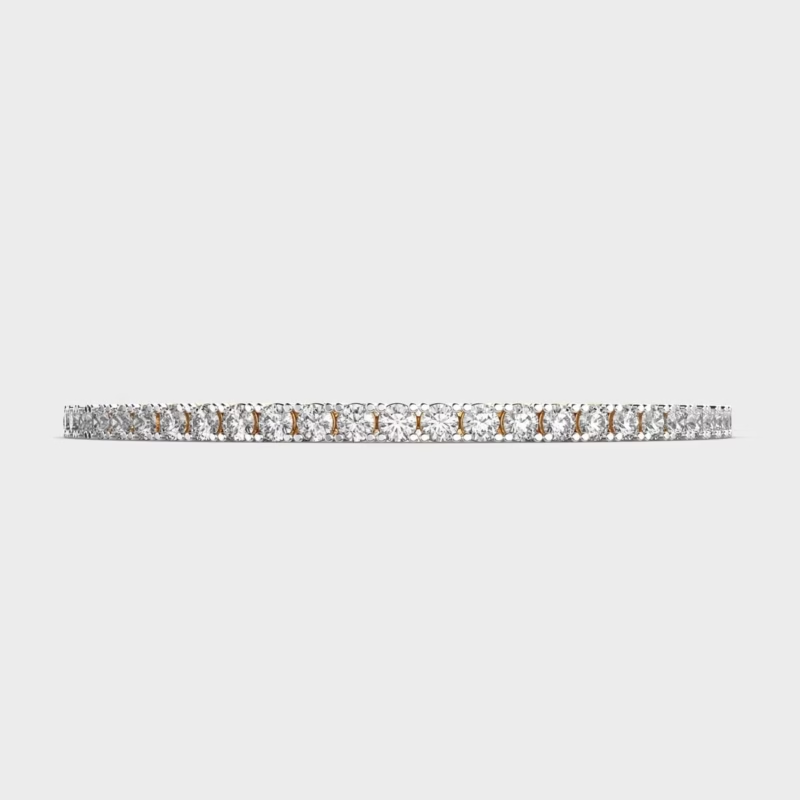
Each stone is held by two prongs shared with its adjacent neighbour. This means the prongs sit between stones rather than at their perimeters, so a higher proportion of each stone’s surface faces open air. Maximum light entry from all angles, including the sides — this is the setting that produces the highest sparkle-per-stone in a tennis bracelet.
The maintenance consideration: prong tips on a continuous-flex piece experience cumulative fatigue from repeated wrist movement. Over time — typically years of daily wear — tips can begin to wear thin at their contact point with the girdle. The bracelet should be brought in for prong inspection every 18–24 months of daily wear. Worn prongs don’t fail suddenly; they telegraph the problem first by catching faintly on fabric. That’s the signal to act before the stone works loose.
Channel Setting
Stones sit between two parallel metal walls with no individual prongs. The exterior surface of the bracelet is smooth — no prong tips to catch on fabric, no maintenance inspection required at the same frequency as shared-prong. The trade-off is light entry: with metal running along the stone’s long edges rather than at two points, less light reaches the diamond from the sides.
For buyers who want a tennis bracelet they genuinely forget is there — morning to evening, gym included — channel setting is the correct engineering choice. The bracelet’s edges protect the diamonds against impact from the sides in a way no prong setting can.
Bezel Setting
Each stone is wrapped in a continuous metal rim. Maximum protection in a tennis bracelet format, modern aesthetic, lowest long-term maintenance requirement of the three. Bezel settings in a flexible bracelet do introduce more metal into the visual field per stone, which reads as a slightly more substantial piece — less “river of diamonds,” more “diamonds in architecture.”
Bezel tennis bracelets are the correct choice for buyers with genuinely active daily routines, or for buyers who travel frequently and want a piece that can go on at the airport and not come off until they’re home.
Total Carat Weight, Per-Stone Diameter, and Length — The Three Numbers That Determine What You’re Actually Buying
These three specifications interact in ways that aren’t obvious from a standard product listing.
Total carat weight (TCW) describes the sum of all diamonds in the bracelet. A 5ct tennis bracelet could contain 50 stones at 0.10ct each or 62 stones at approximately 0.08ct each — and these are different bracelets in terms of how they appear on the wrist.
Per-stone diameter determines visual density. Smaller diameter per stone means more stones per inch, a finer, more delicate appearance, and a bracelet that drapes closer to the wrist. Larger diameter per stone means fewer stones per inch, more visual presence per stone, and a bracelet that sits slightly more prominently. For a 7-inch bracelet, 0.08ct round stones (approximately 2.7mm diameter) produce a different look from 0.12ct round stones (approximately 3.0mm diameter) even if both bracelets have the same TCW.
Length is the most commonly underestimated variable in online tennis bracelet purchases. The standard length is 7 inches — correct for most wrists. Add 0.5 inches for a comfort drape that allows the bracelet to move slightly. Add 1 inch for a looser, lower-set style. The pre-production WhatsApp confirmation covers this: wrist measurement is confirmed before production begins, so the length is cut to specification rather than pulled from stock.
Primira’s tennis bracelets are available from 3ct total weight upward, on custom order to 10ct+. The per-stone diameter range and the stone count are confirmed in the pre-production specification stage so you know exactly what the bracelet will look like before production starts.
The 4Cs in a Tennis Bracelet — Where the Guidance Differs From a Solitaire
Cut
Cut is the most important specification in any lab grown diamond, and in a tennis bracelet it works slightly differently than in a solitaire. Because all 50–60 stones are viewed simultaneously as a line rather than individually, a stone with a slightly weaker cut isn’t compensated for by adjacent stones’ sparkle — it reads as a dull link in the chain. Primira stocks Ideal and Excellent cut grades only. No Good or Fair cuts are in the inventory.
Colour
For a white metal tennis bracelet (14K or 18K white gold, 950 platinum), D–F colorless produces the cleanest visual result. G–H–I near-colorless is a legitimate value tier — the colour differential is invisible to the naked eye in individual stones and, in a correctly matched parcel, maintains visual consistency across the full line. For a yellow gold bracelet, G–H–I actually reads warmer and works better with the metal tone.
Clarity
VS1 to VS2 is the working clarity range for tennis bracelets. In a bracelet, each stone is viewed from above at wrist distance and in motion — inclusions that would be visible in a loupe are irrelevant. VVS1 stones in a tennis bracelet are a purchase decision about documentation, not about a visible quality difference in wear. Primira does not stock SI2 or below; at SI2, inclusions can become detectable when the stones catch direct light at close range.
Carat
Lab grown diamond production makes large total carat weights financially accessible in a way mined diamonds at this stone count never were. 5ct, 7ct, and 10ct custom orders are realistic budgets rather than aspirational ones. The per-stone diameter decision follows from the TCW and the stone count you confirm in the specification stage.
Metal Choice for a Daily-Wear Tennis Bracelet
The tennis bracelet is the piece that earns the “daily wear” label genuinely — not as a lifestyle aspiration but as a usage reality. Metal choice follows from this.
14K gold (58.5% pure) is the default for a daily-wear bracelet. The higher alloy content relative to 18K makes it more resistant to micro-scratches on the setting walls and the clasp housing. Available in yellow, white (rhodium-plated), and rose. The most practical tennis bracelet metal.
18K gold (75% pure) produces a richer, deeper colour in yellow and rose. In white, it needs rhodium re-plating more frequently than 14K because the higher gold content makes the underlying yellow more visible as the rhodium layer thins. If the bracelet will genuinely be worn daily, this is a relevant maintenance consideration.
950 Platinum is the correct choice for buyers who want a metal that never requires re-plating, never tarnishes, and holds its prong structure (in a shared-prong setting) more securely due to its density. The weight difference is perceptible on the wrist — most buyers who try both prefer the feeling.
All metals are available in high polish as the standard finish for tennis bracelets. Brushed or satin finishes are available on request but work better against a bezel setting (where the flat metal expanse between stones can carry a finish) than against a shared-prong setting (where the finish is largely obscured by the stone layout).
Sizing Your Tennis Bracelet
Measure the circumference of your wrist with a soft tape just below the wrist bone, snug but not tight. Add to that measurement:
- 0.5 inches: fitted wear, bracelet sits flat against the wrist
- 0.75 inches: comfort wear, slight movement, bracelet sits just above the wrist bone — the most common preference
- 1 inch: loose wear, bracelet drapes lower, relaxed silhouette
Standard length is 7 inches, which suits most wrists with 0.75-inch drape allowance. Custom lengths from 6 inches to 9.5 inches are confirmed in the pre-production stage.
This is the variable that causes the most post-delivery dissatisfaction in online tennis bracelet purchases. A bracelet 0.5 inches too short is uncomfortable and won’t sit correctly. One inch too long slides toward the hand and catches on things. The WhatsApp confirmation before production begins exists specifically to resolve this before cutting starts.
Custom Tennis Bracelets — What the Confirmation Stage Covers
The detail genuinely specific to a continuous-line setting: stone shape. Tennis bracelets are most commonly set with round brilliants — the uniform diameter and depth of round stones makes matched-parcel setting across 50+ stones the most predictable production path. Oval, emerald, and cushion tennis bracelets are available on custom order but require an additional specification confirmation: the length-to-width ratio of the fancy-shape stones determines whether the line lays flat or tends to rotate. Oval and cushion stones in a tennis bracelet are set with their long axis along the bracelet, which requires consistent ratio matching (±0.05 in L:W) across all stones to prevent the line from developing uneven visual rhythm. This ratio confirmation happens at the stone selection stage, before setting begins.
Custom stone-shape tennis bracelets carry a 15–35 business day production timeline from the Surat facility. The pre-production WhatsApp stage is where the ratio specification is confirmed and stoned matching for the full parcel is reviewed.
Care and Maintenance — What a Tennis Bracelet Specifically Needs
The shared-prong setting inspection schedule is the care detail most owners don’t know about. Every 18–24 months of daily wear, the prong tips should be inspected by a jeweller under magnification. The signal that an inspection is overdue is any sensation of the bracelet catching faintly on fine fabric — a garment thread pulling against a prong tip that has worn to a slight hook. This precedes stone loss by a meaningful interval if addressed promptly.
Cleaning: warm water with a drop of dish soap and a soft brush (a clean, soft-bristle toothbrush works). Brush lightly along the setting walls and between stones. Rinse under running water. Pat dry with a lint-free cloth. The clasp housing should be dried carefully — water pooling in the box clasp interior can accelerate corrosion of the spring mechanism over years of daily wear.
Remove the bracelet before high-impact activities, contact sports, or heavy lifting. In a shared-prong bracelet, the prong tips most vulnerable to bending from impact are the ones at the clasp end, where the bracelet transitions from flexible chain to fixed hardware. This is also the area to check first during any inspection.
Store the bracelet flat or coiled loosely. Storing a tennis bracelet clasped in a tight fold compresses the link joints in one direction repeatedly, which accelerates fatigue in the hinge sections over time.
Frequently Asked Questions
What total carat weight should I choose for a tennis bracelet?
The honest answer is that TCW is only part of the specification. A 3ct bracelet with 0.06ct round stones (approximately 2.3mm diameter per stone) and a 3ct bracelet with 0.10ct stones (approximately 3.0mm) look substantially different on the wrist. The per-stone diameter affects visual density more than TCW alone. In the pre-production WhatsApp confirmation, Primira confirms both: TCW and per-stone diameter range, so you know exactly what the visual result will be before production begins.
What’s the actual difference between channel and prong settings in daily wear?
Channel setting: smooth exterior surface, no prong tips to catch on fabric, lower maintenance frequency. Slightly less light entry from the sides of each stone. Prong (shared-prong) setting: maximum light entry, highest sparkle per stone, requires prong inspection every 18–24 months of daily wear. Neither is objectively better — it depends on your lifestyle and maintenance commitment. If you want to forget the bracelet is there, channel. If maximum sparkle matters more, shared-prong with the inspection schedule.
How do I know the clasp is genuinely secure?
A correctly calibrated box clasp with a figure-8 safety catch has two independent locking stages. After clasping, the test is: apply gentle lateral tension (not just tugging at the clasp opening) in the direction the tongue would exit the housing. A correctly set clasp won’t shift. Then confirm the figure-8 catch is fully folded over its post. If either of these feels loose or doesn’t click firmly, that’s the signal to inspect the clasp before wearing. Primira’s clasp specifications are confirmed at the production bench — housing tolerance and wire gauge are production variables, not catalog selections.
Are lab grown diamond tennis bracelets worth buying for daily wear?
The question about daily wear is really a question about construction quality. Lab grown diamonds score 10 on the Mohs hardness scale — identical to mined diamonds — so the stone itself is not the variable. The variables are the metal quality (Primira stocks 10K through 950 platinum, with 14K as the default for daily wear), the setting precision (the prong tips and channel walls), and the clasp mechanism. A lab grown diamond tennis bracelet from a facility that cuts the stones and sets them in the same production environment — where the matched-parcel specification and the clasp tolerance are production decisions rather than selection decisions — is a daily-wear piece in the same sense any fine jewellery from a serious manufacturer is.
What bracelet length should I order?
Measure your wrist circumference just below the wrist bone (snug, not tight). Add 0.5–0.75 inches for a comfort fit — bracelet sits just above the wrist bone with slight movement. Add 1 inch for a looser drape. The standard 7-inch length covers most wrists at the 0.75-inch allowance. Confirm your exact measurement in the pre-production WhatsApp stage before production begins.
Is there a difference between a tennis bracelet and a line bracelet?
A tennis bracelet is a specific subset of line bracelet: continuous identical stones, same shape throughout, same size throughout, flexible link construction, with a box clasp. A line bracelet is the broader category — it can include mixed stone sizes, mixed shapes, or station-style spacing. All of Primira’s tennis bracelets are continuous single-row pieces with matched-parcel uniform stones. If you want mixed sizing or mixed shapes, that’s a custom bracelet order rather than a tennis bracelet specification.
Order, Shipping, and Returns
Every Primira tennis bracelet order follows the same pre-production sequence: checkout, then a WhatsApp and email confirmation from the Surat team within 24 hours. That confirmation covers bracelet length, stone specification (TCW, per-stone diameter, colour grade), metal tier and tone, setting type, and clasp type. Production begins only after you’ve confirmed every variable. This stage exists because a tennis bracelet’s length and stone spec are the two variables most commonly discovered wrong after delivery — and the two that are entirely preventable by confirming them at the bench before cutting starts.
Production: 15–35 business days from the Surat facility. Every shipment is insured from dispatch to delivery. International express delivery (DHL/FedEx/UPS, 5–7 business days) is complimentary on orders above USD $550. India domestic orders above ₹10,000 ship free.
If the bracelet delivered differs from your confirmed specifications, the 7-day return window applies. The buyback program is available as an alternative if you want to recover value without a full return — buyback is calculated from invoice value. The 48-hour cancellation window applies from order placement, provided production has not yet started.
IGI certification is available on request for the matched parcel — documenting the colour grade range and total carat weight of the full set of stones, not just individual stone reports.
Explore the full bracelet collection including diamond bangles and kadas, diamond chain bracelets, and men’s diamond bracelets. For a matching continuous-line piece at necklace length, see lab grown diamond tennis necklaces.

 Chat on WhatsApp