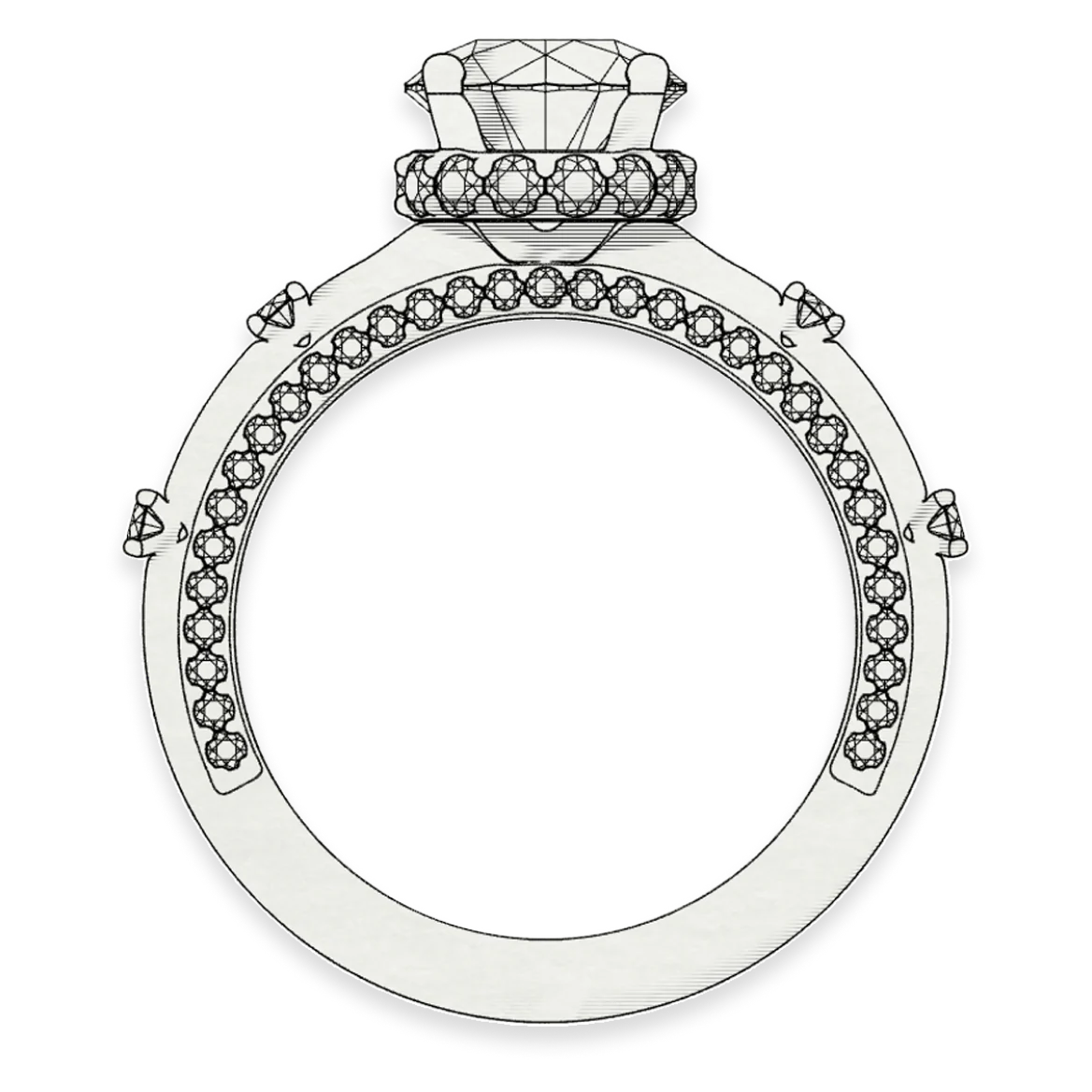
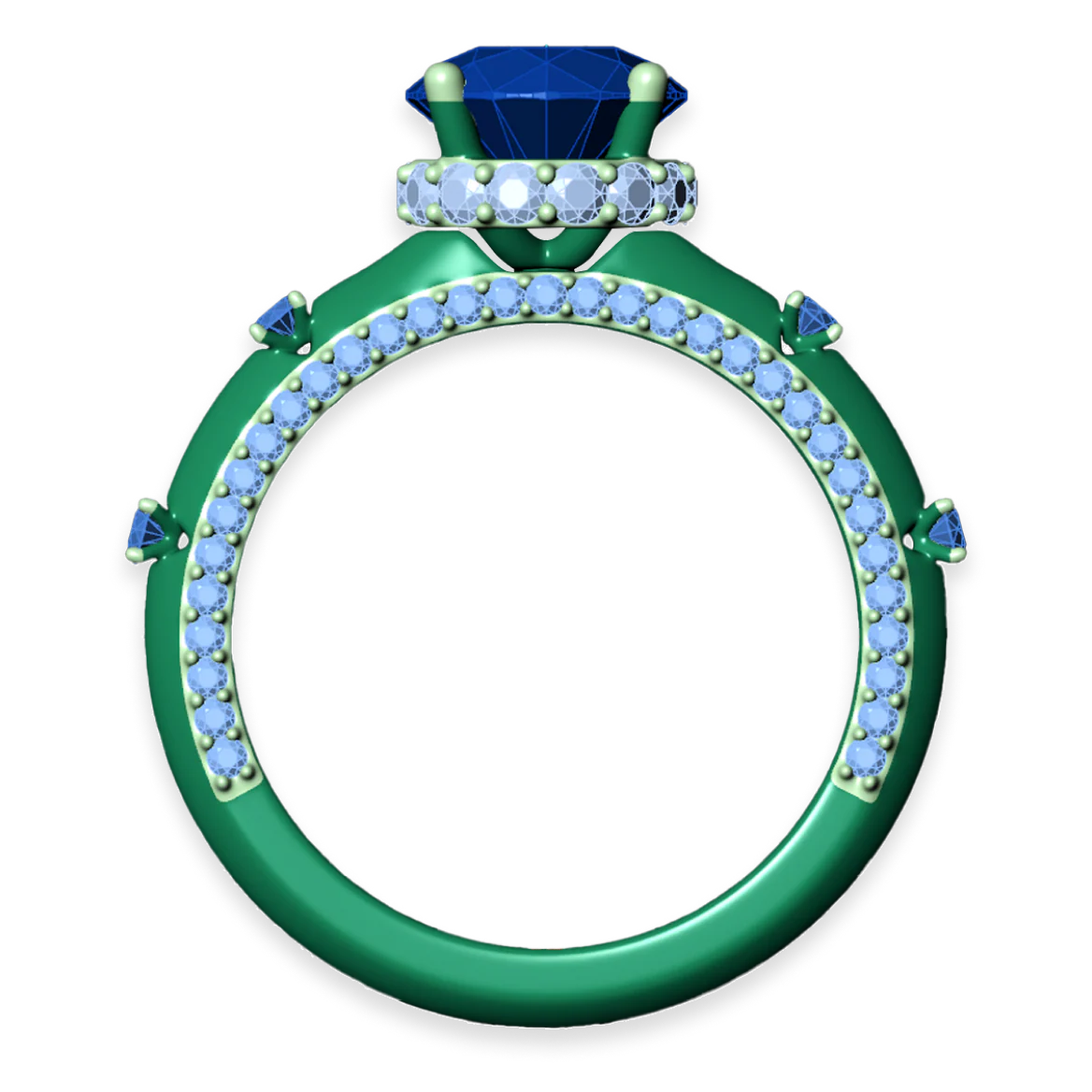
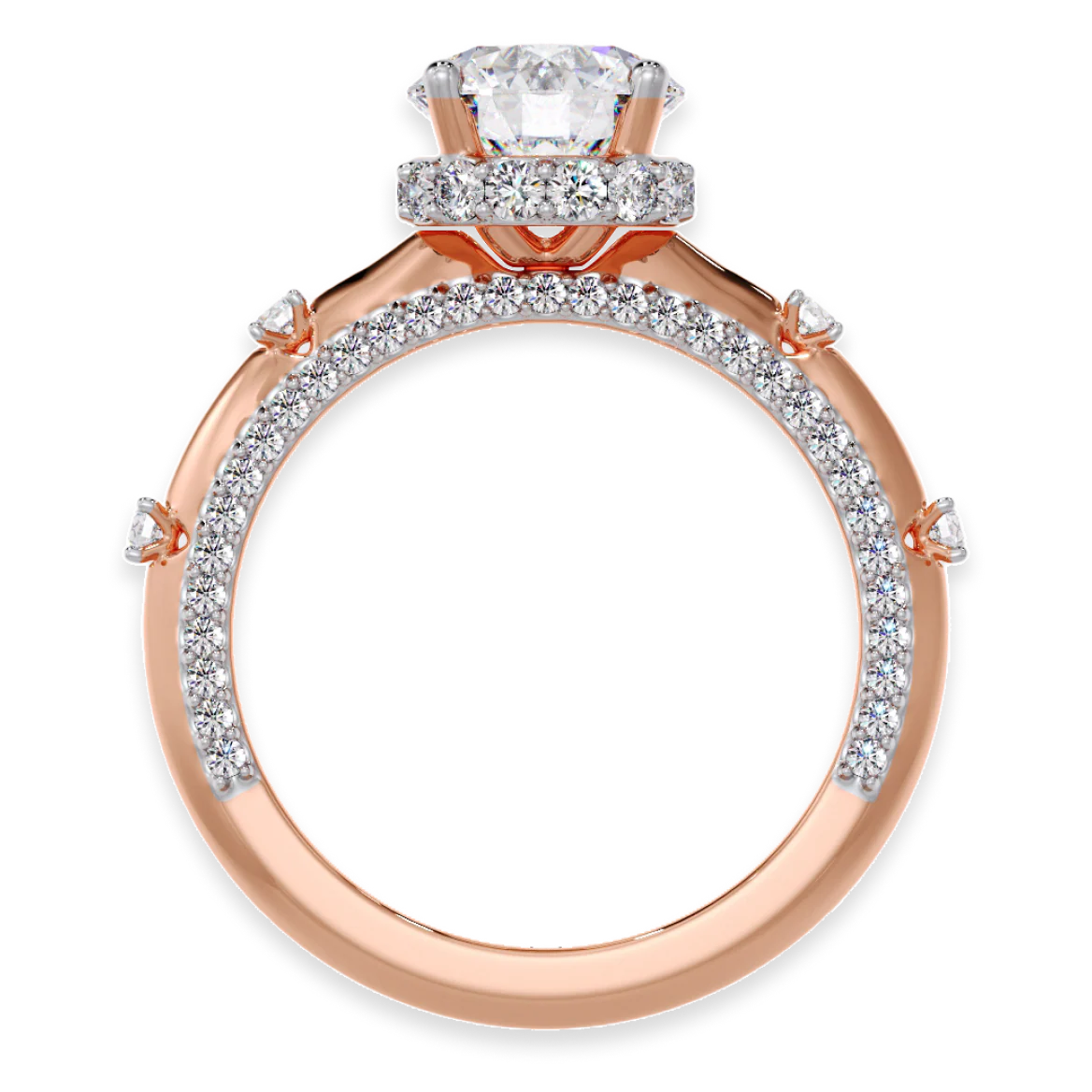
Solitaire Lab Grown Diamond Engagement Rings
One Stone. Every Decision Matters More.
A solitaire engagement ring doesn’t add anything. No surrounding diamonds to borrow light from, no halo to extend the visual footprint, no vintage faceting to create character independent of the stone. The design strips the purchase down to one question: how good is the diamond?
That’s not a warning — it’s a clarity. Every rupee or dollar goes directly into the stone. And because it goes there, the stone has to be right.
The primary keyword for this purchase is cut quality. On a halo engagement ring, a ring of calibrated accent diamonds can make a centre stone with slightly lower optical performance look better than it is. On a solitaire, there is nowhere for a mediocre cut to hide. Light either returns through the top of the stone cleanly, or it leaks out the sides and pavilion. The result is either fire and brilliance, or a diamond that looks smaller and duller than its carat weight suggests.
This is why the cut decision on a solitaire is different from every other ring style, and why Primira stocks only Ideal and Excellent cut lab grown diamonds across the entire solitaire collection.
What Cut Quality Actually Controls
Most buyers focus on carat weight because it’s the most visible number. But in a solitaire setting, cut grade determines how large and how bright that carat weight actually appears — and two diamonds of identical carat weight, graded at different cut levels, can look meaningfully different on the finger.
For a round brilliant lab grown diamond in a solitaire setting, the proportions that produce maximum light return are:
Table percentage: 54–57%. The table is the flat top facet — the large octagon you see when you look straight down at the stone. At 54–57%, white light enters efficiently and the diamond’s crown facets have enough angle to redirect it back up. A table above 60% produces more white brilliance but sacrifices fire (the coloured flashes). Below 54%, the stone can look darker face-up.
Total depth: 59–62.5%. Depth is measured from table to culet as a percentage of the diamond’s diameter. Too shallow (below 58%) and light exits through the pavilion rather than reflecting back — the stone looks glassy and shows a dark ring under the table, called a fisheye. Too deep (above 63%) and light leaks out the sides, making the stone appear smaller than its carat weight.
Crown angle: 34–35°. The crown is the upper portion between the table and the girdle. At 34–35°, the crown facets are angled to split light into the spectrum colours that create fire. A flatter crown produces a flatter, more commercial-looking stone.
Pavilion angle: 40.6–41°. The pavilion is below the girdle. At this range, light hitting the pavilion facets reflects at precisely the right angle to exit through the table rather than leaking through the sides.
These four numbers work together. A stone can hit one range while being outside another and still underperform. The IGI cut grade on a Primira solitaire covers all of them — Ideal or Excellent, not Very Good as a floor. The cut grade on the certificate isn’t a marketing label. It’s a measured specification.
Why the IGI Cut Grade Matters Differently on a Solitaire
On a multi-stone ring, the relationship between stones — calibration, arrangement, prong geometry — produces a visual effect beyond any single stone’s individual grade. The centre’s optical performance is real, but it’s in dialogue with everything around it.
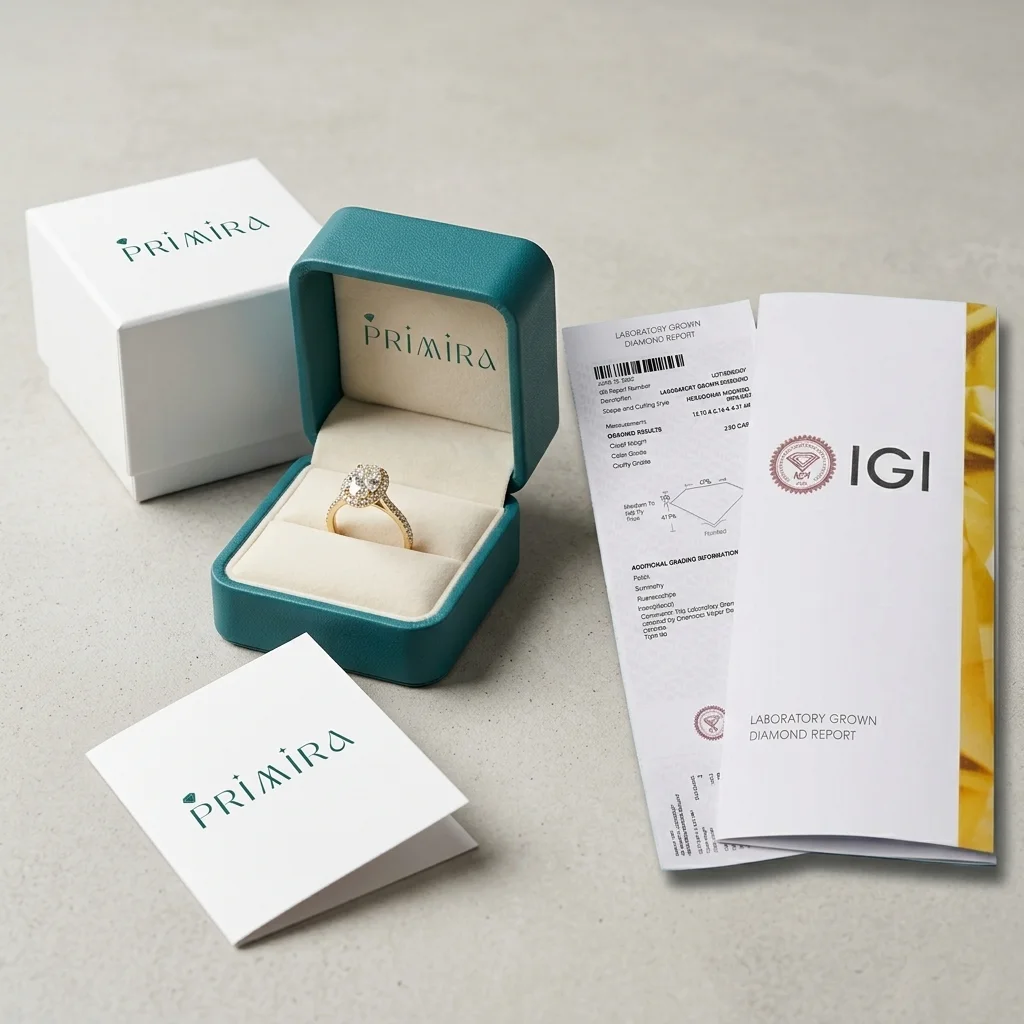
On a solitaire, the IGI cut grade is fully accountable. What the report says the stone does with light, the stone does — there’s nothing else in the setting compensating or supplementing. This is one reason serious solitaire buyers request their IGI report before anything else: the cut grade, table percentage, depth, and crown angle are all printed there, independently measured, and verifiable at igi.org using the report number laser-inscribed on the diamond’s girdle.
All lab grown diamonds cut at Primira’s Surat facility are independently submitted to IGI for grading before they reach the solitaire collection — not selected after grading from a supplier catalogue, but graded as part of the production process. The cut specification comes first; the grade confirms it.
Shapes for a Solitaire Setting
The solitaire setting works with any shape, but each shape performs differently when it’s the only stone in the design.
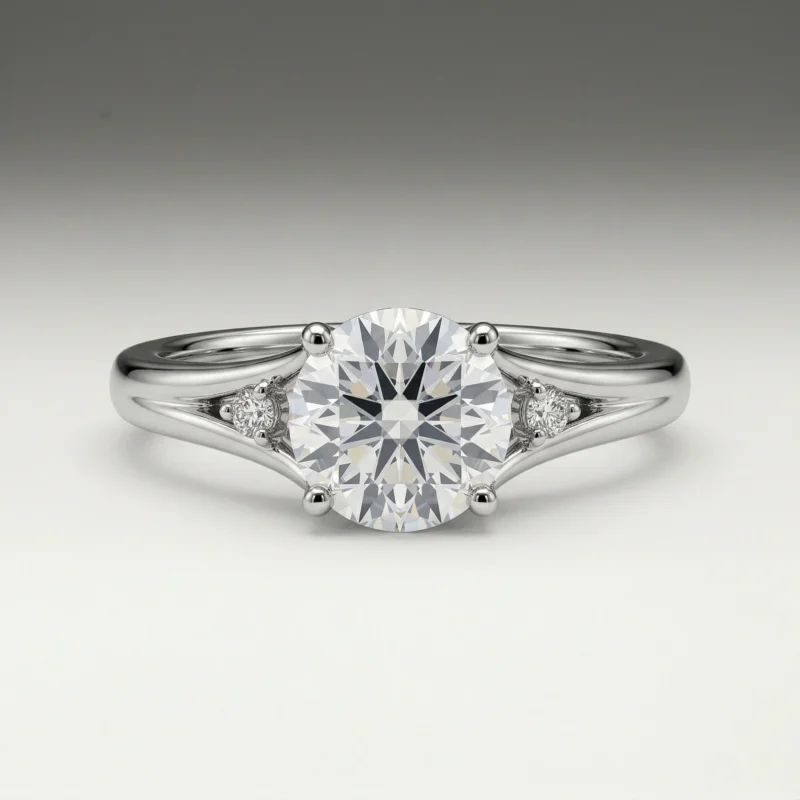
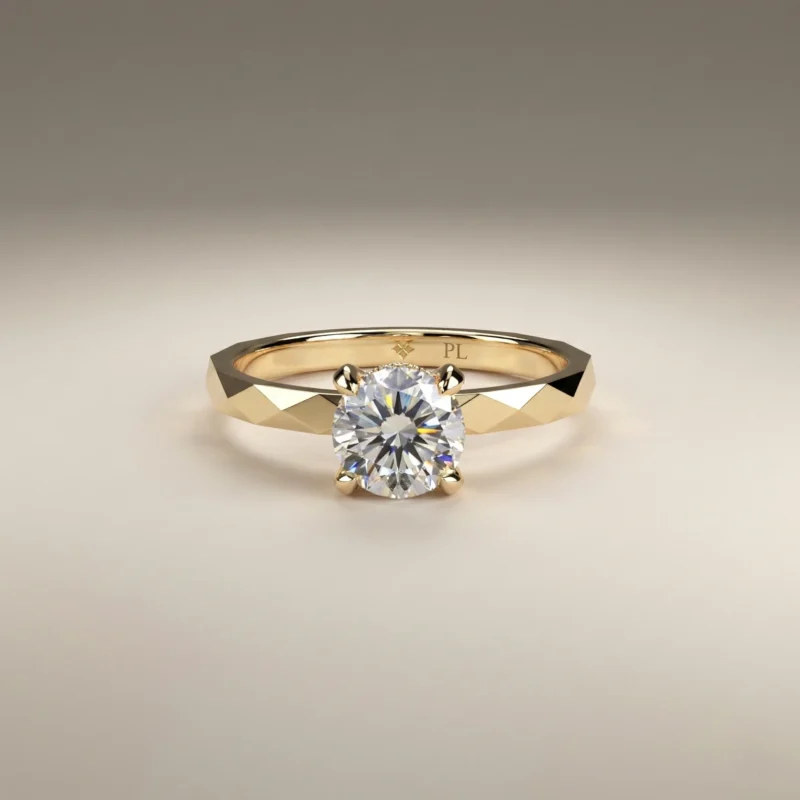
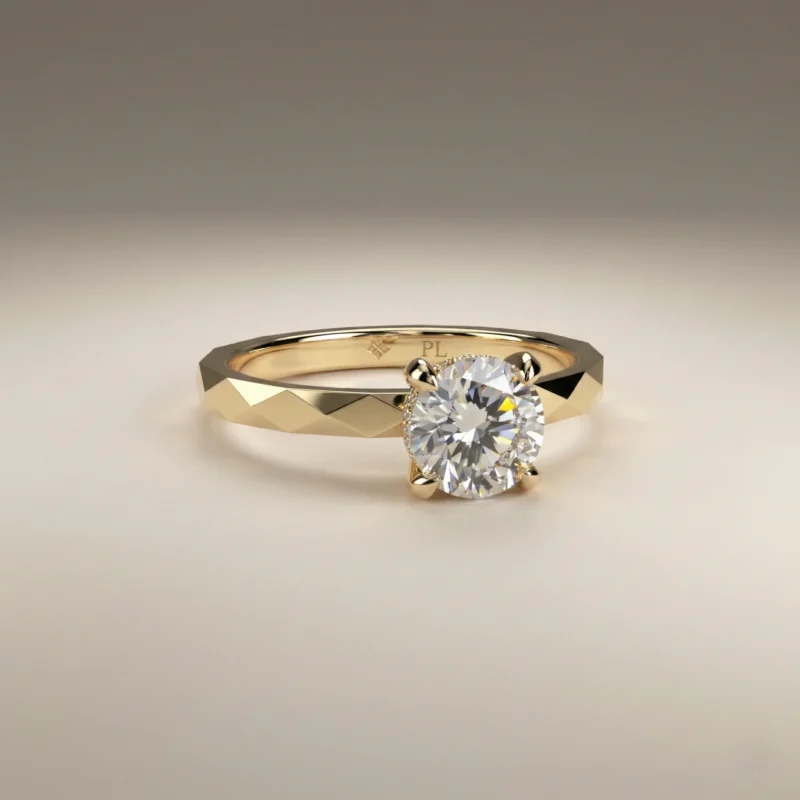
Round brilliant remains the most popular globally for exactly the reason a solitaire buyer cares about: 57–58 precisely arranged facets deliver the highest light return of any diamond shape. Maximum brilliance with no trade-offs. The most forgiving shape for colour and clarity too — the brilliant facet arrangement scatters inclusions and colour tint more effectively than step cuts.
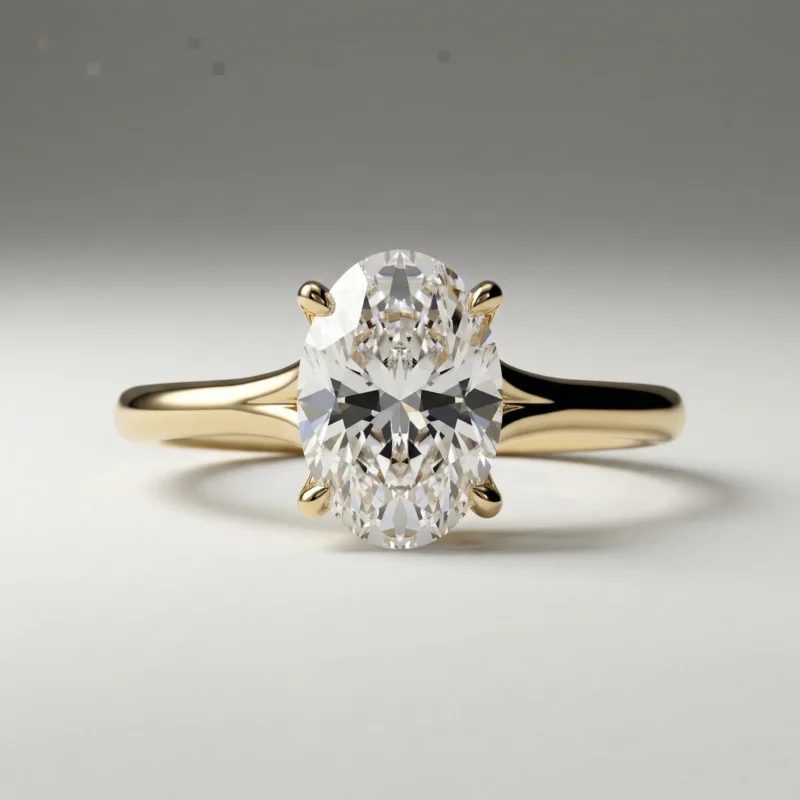
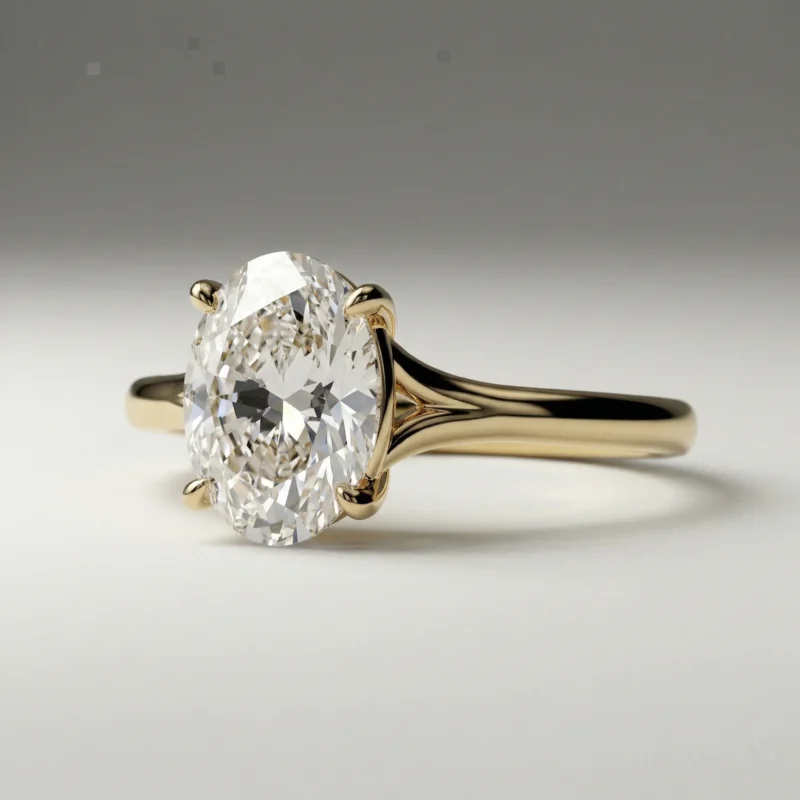
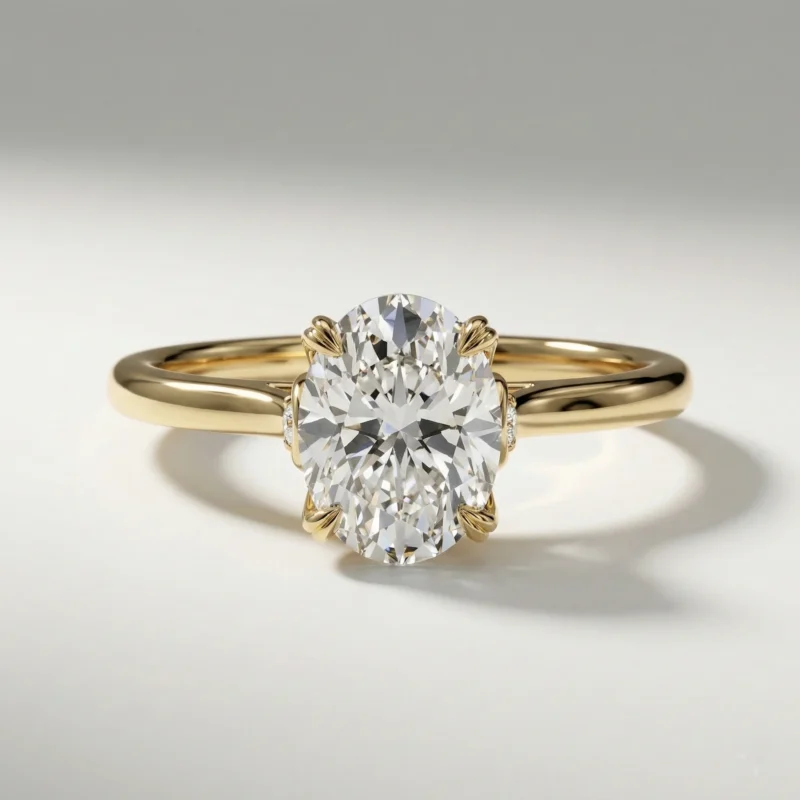
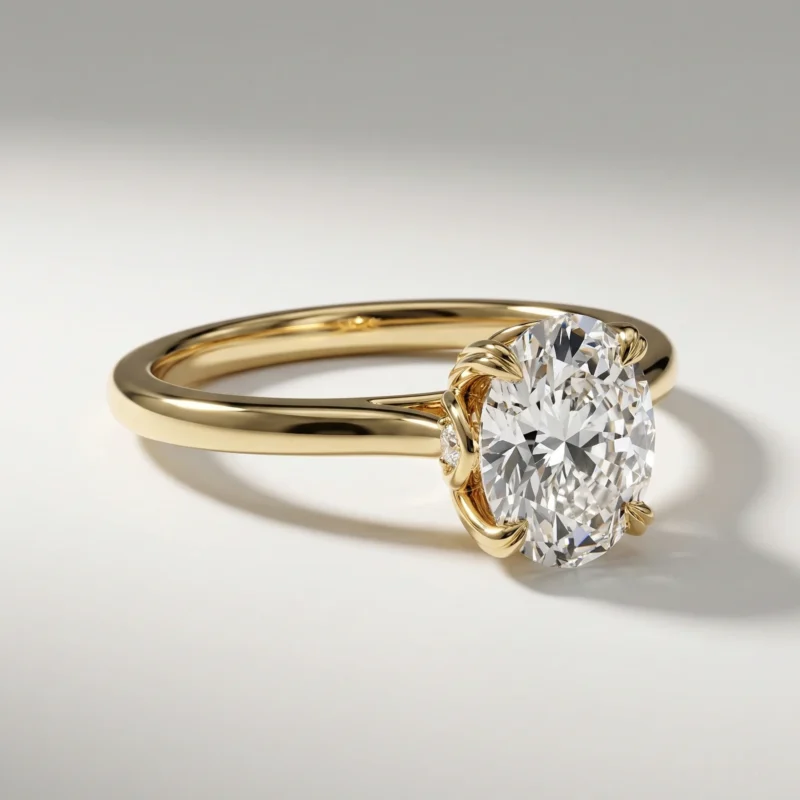
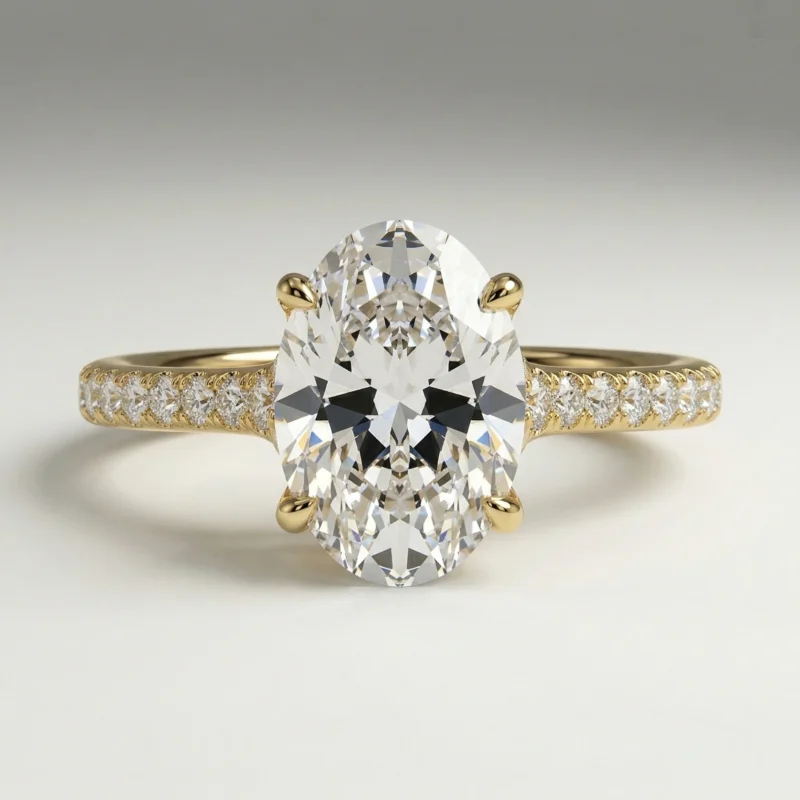
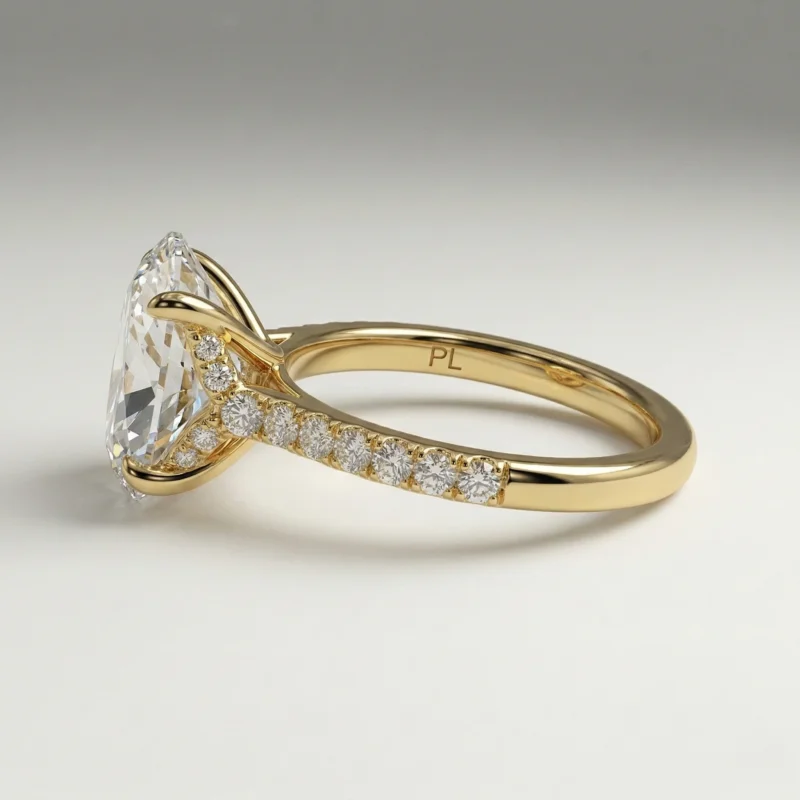
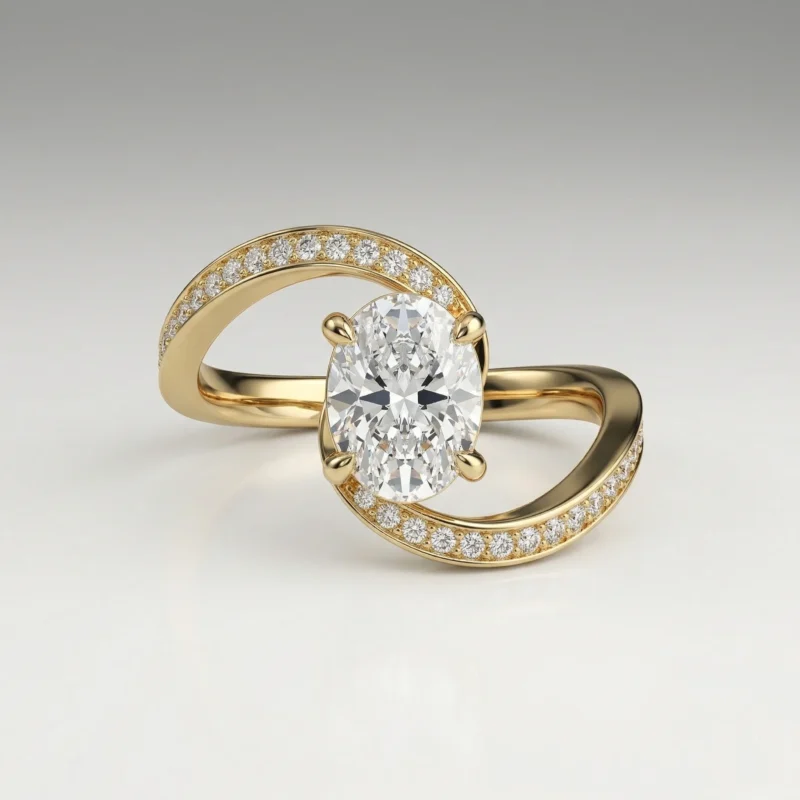
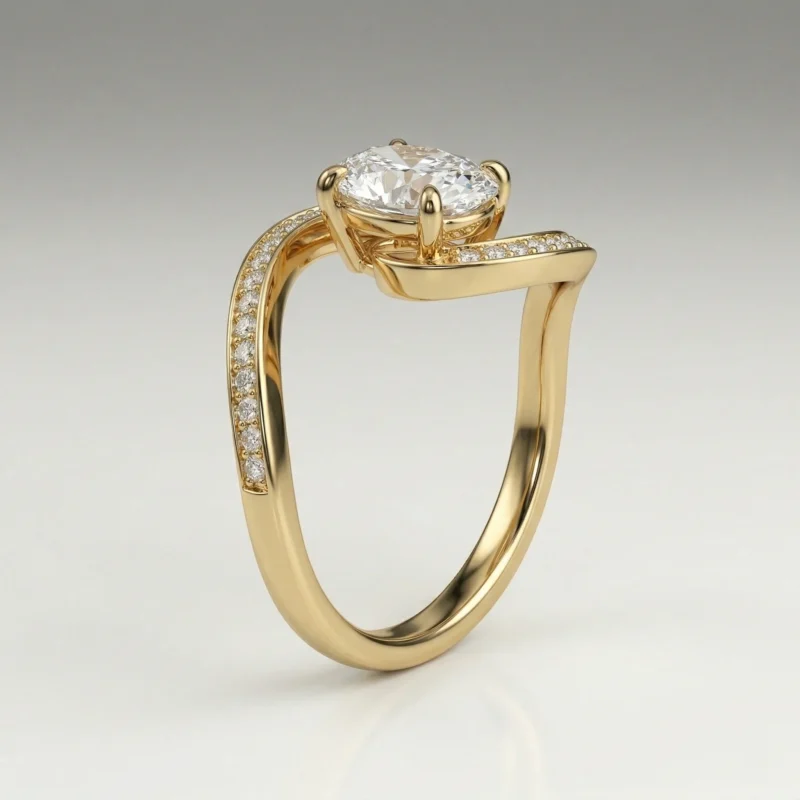
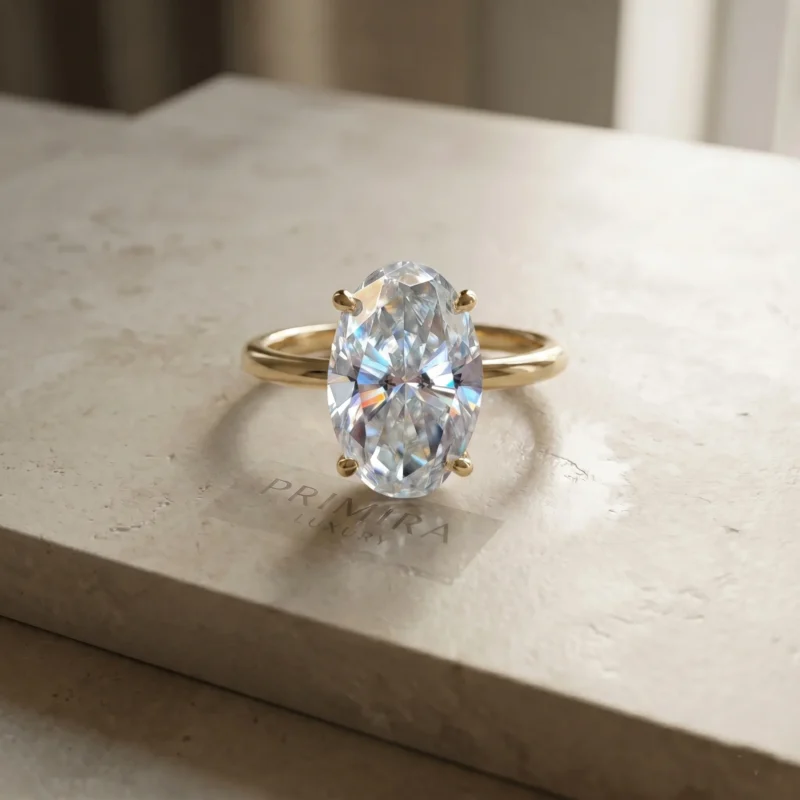
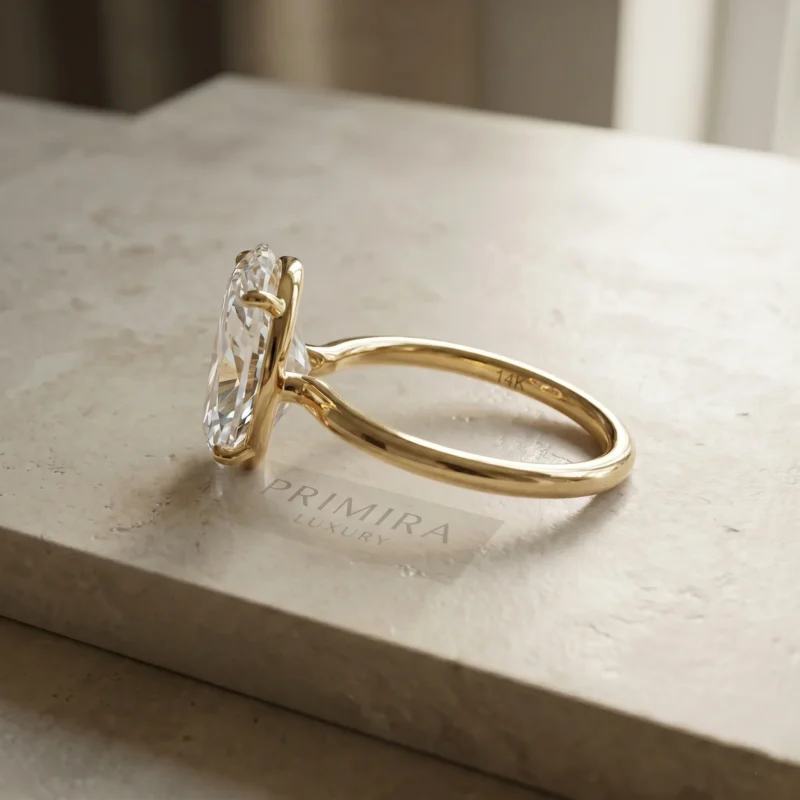
Oval is the fastest-growing solitaire shape in 2026 across both India and global markets. It delivers near-identical brilliance to round, with an elongated footprint that reads as larger face-up than a round of the same carat weight and creates a finger-lengthening effect on the hand. No pointed ends means no vulnerability at the tips. The one variable to watch: a poorly cut oval shows a bow-tie shadow across the centre. Primira’s oval inventory is pre-checked for bow-tie before it enters the solitaire collection.
Pear has a teardrop outline that orientates apex-down in an engagement ring setting, creating strong visual length. Requires a V-prong at the point to protect the tip — a flat prong at a pear point is a snag and chip risk. If you’re considering pear, see the loose pear-cut lab grown diamond specifications for length-to-width ratio guidance.
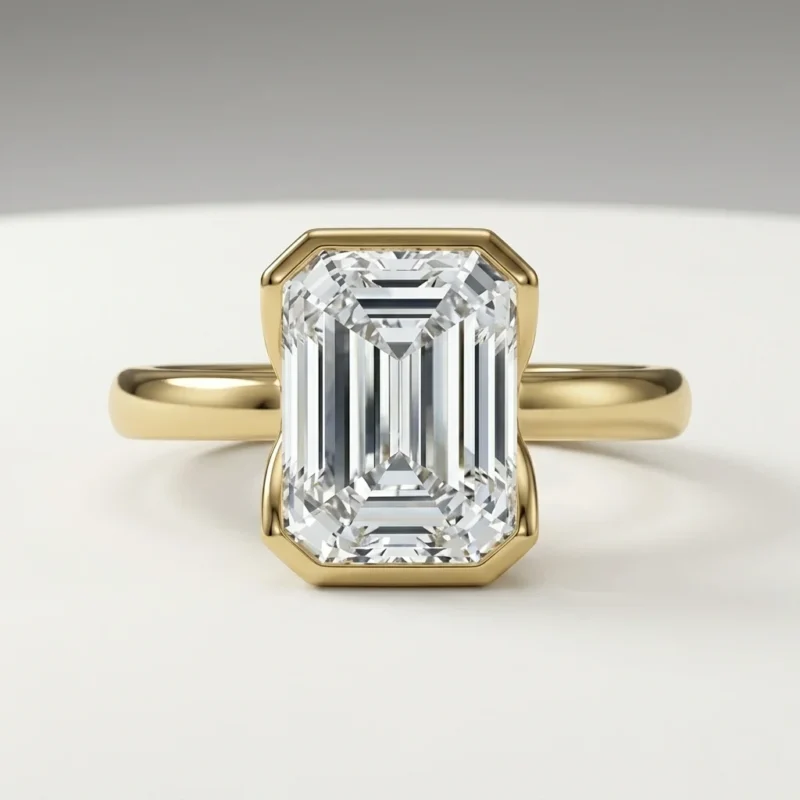
Cushion sits between round brilliant and emerald in character — the rounded corners and modified brilliant facets produce softer, larger flashes of light compared to the crisp scintillation of round. Works well in both prong and bezel solitaire settings.
Emerald is a step cut, not a brilliant — the long parallel facets create a hall-of-mirrors reflection rather than sparkle. In a solitaire, this means clarity matters more than in a brilliant cut. VS1 minimum is the honest starting point; inclusions that a round brilliant would hide are visible under the open facet structure of an emerald cut. If the architectural, calm visual character of a step cut appeals, clarity is the budget line worth protecting.
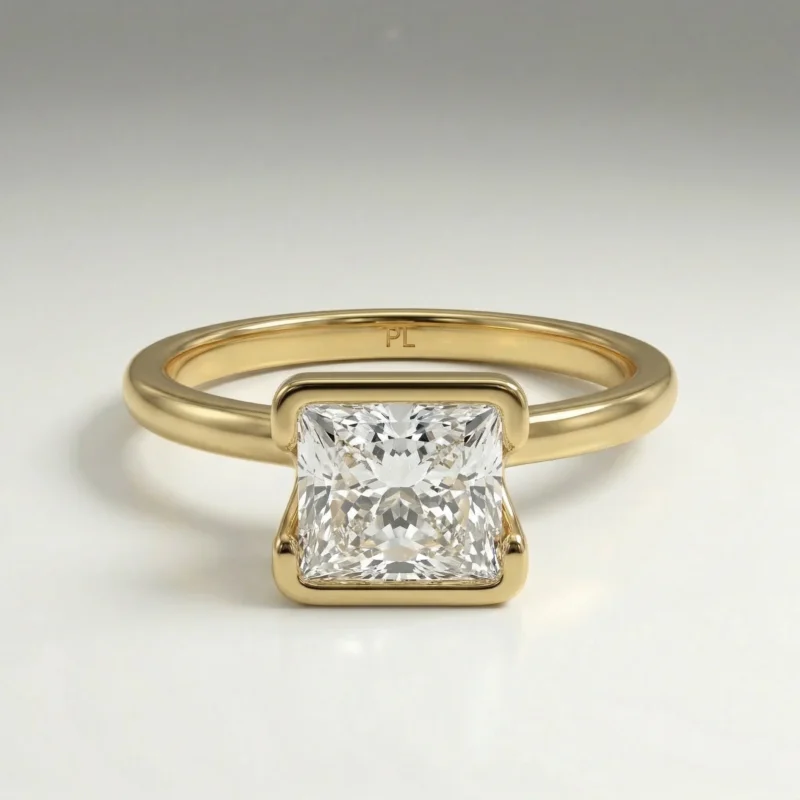
For any shape not listed here — marquise, princess, heart, Asscher, radiant, or a custom silhouette — all are available on a made-to-order basis. The solitaire setting is shape-agnostic; the setting engineering adjusts to the stone.
Prong Count and Profile — The Two Setting Decisions
Once the stone is chosen, the setting choices that follow are fewer than most buyers expect. A solitaire has two variables that actually affect daily wear: prong count and shank profile.
4-Prong vs. 6-Prong
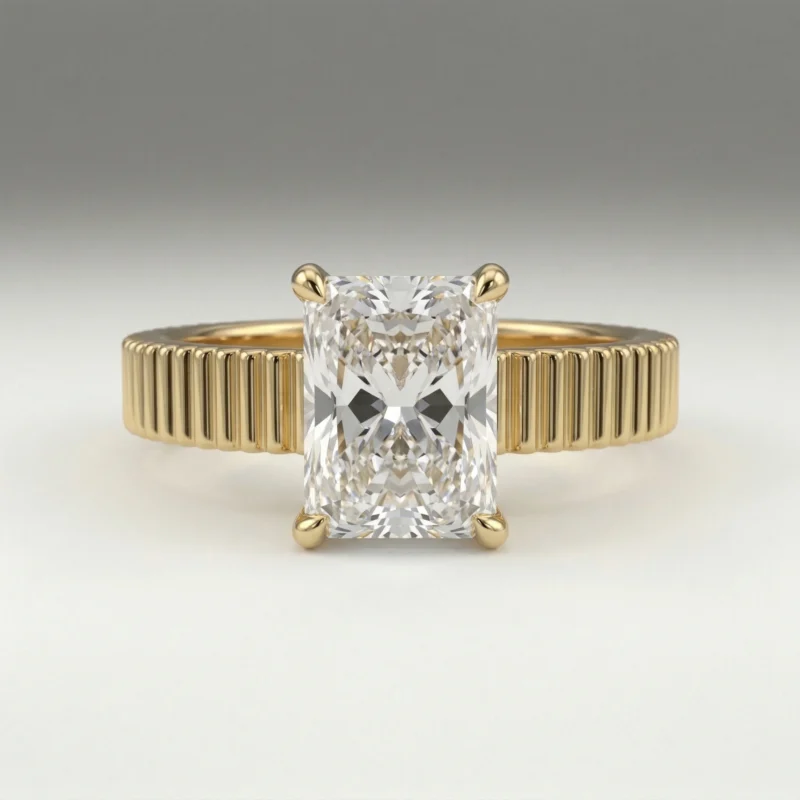
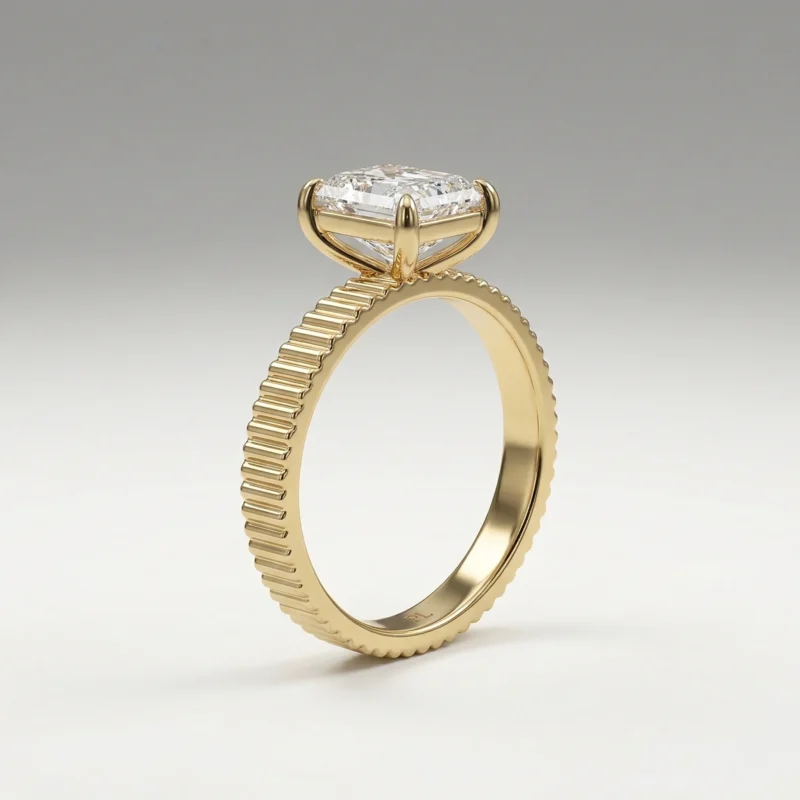
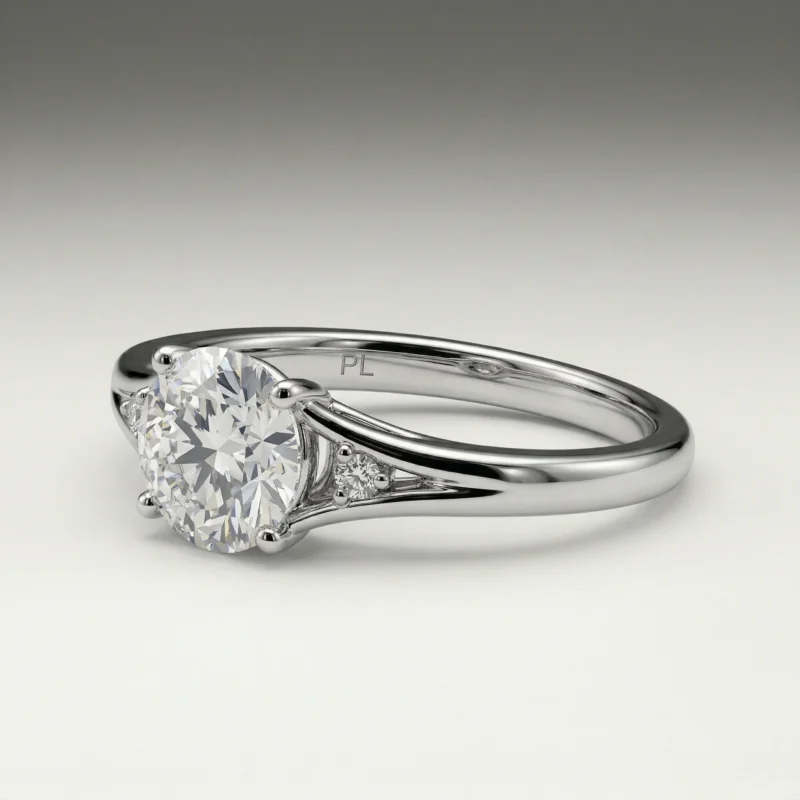
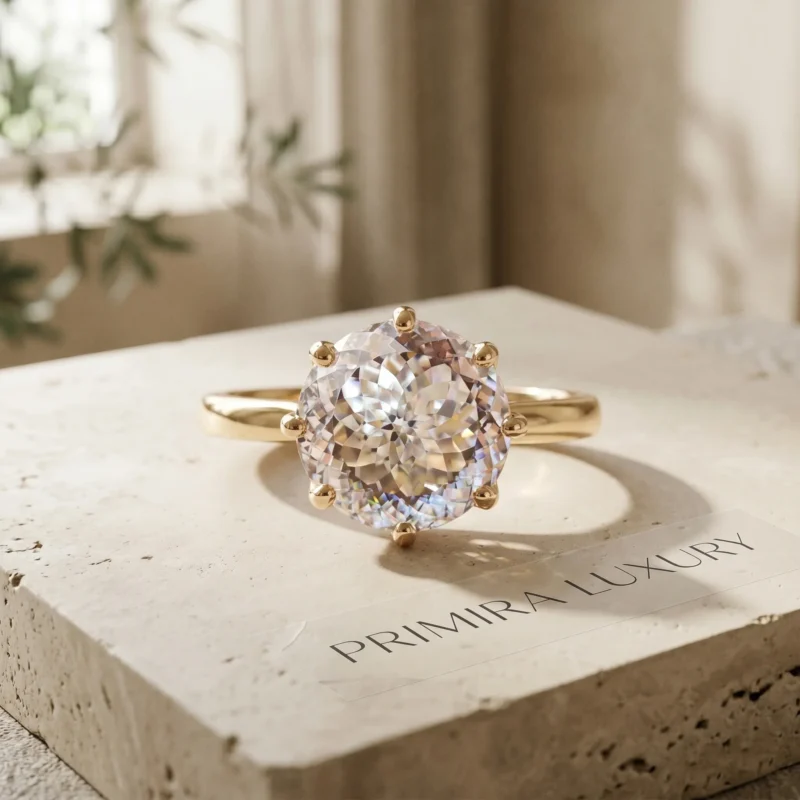
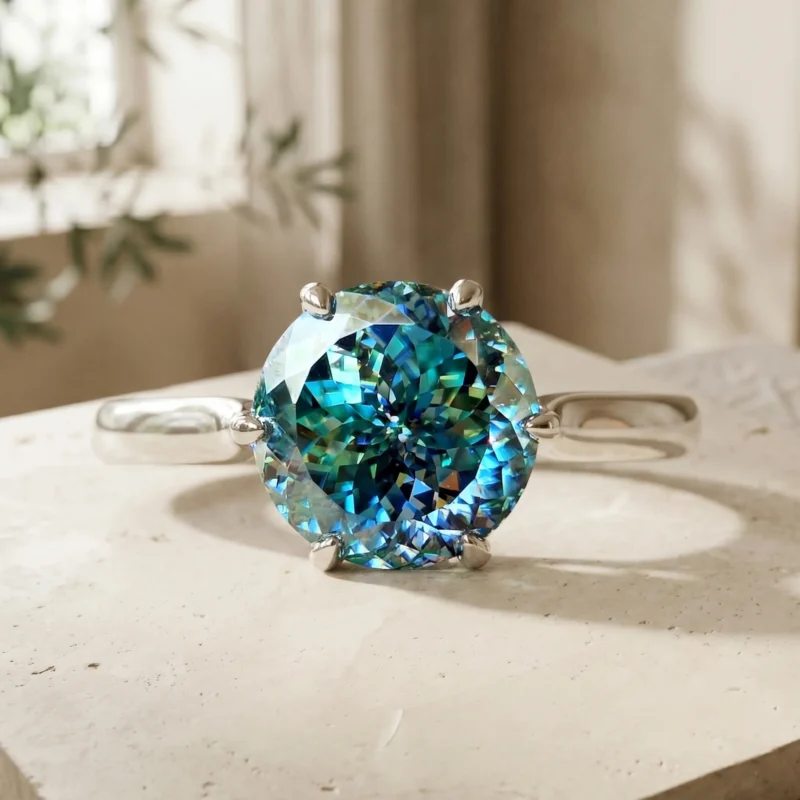
4-prong: Four claws at cardinal positions — 12, 3, 6, 9 o’clock, or rotated 45° to the 2/4/8/10 positions, which orients the stone slightly differently on the finger. Maximum light entry from all four open quadrants. Slightly less metal coverage means the diamond’s girdle is more visible from the side, which many buyers prefer aesthetically. The tradeoff: if one prong is damaged or comes loose, the stone has three remaining rather than five. Not a failure mode at normal jewellery wear, but a design reality worth understanding.
6-prong: The Tiffany configuration. Six thinner individual prongs, each lighter than a 4-prong claw but collectively providing more contact points with the girdle. If one prong loosens, five remain — significantly more margin. The thinner prong width on a properly made 6-prong setting means light entry is not meaningfully reduced despite the additional metal count. For stones at 2ct and above, or for buyers with active daily wear (hands-on professions, sports), 6-prong is the more conservative choice.
Cathedral vs. Low-Profile Shank
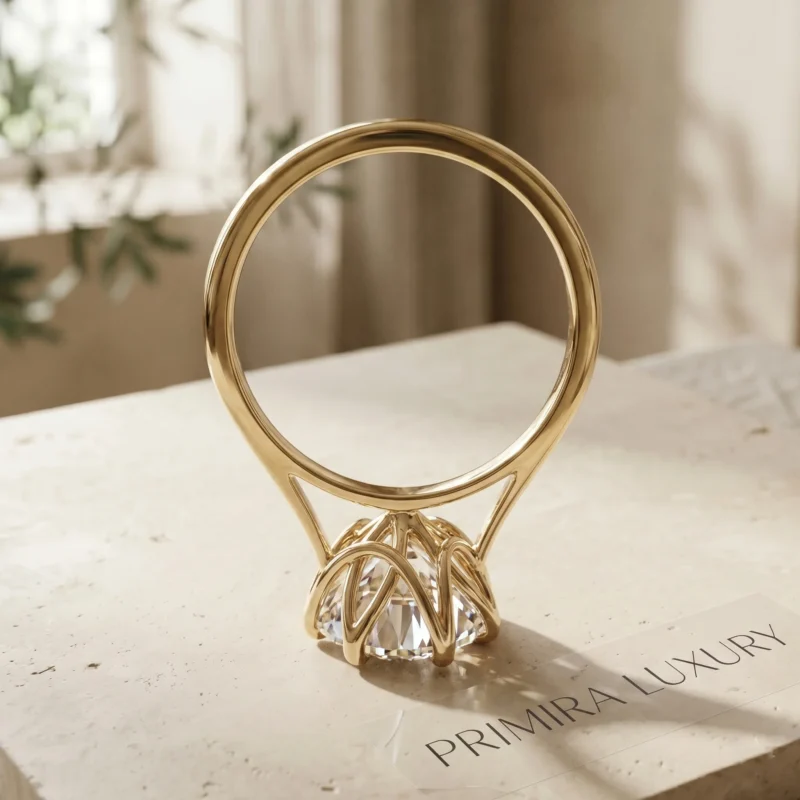
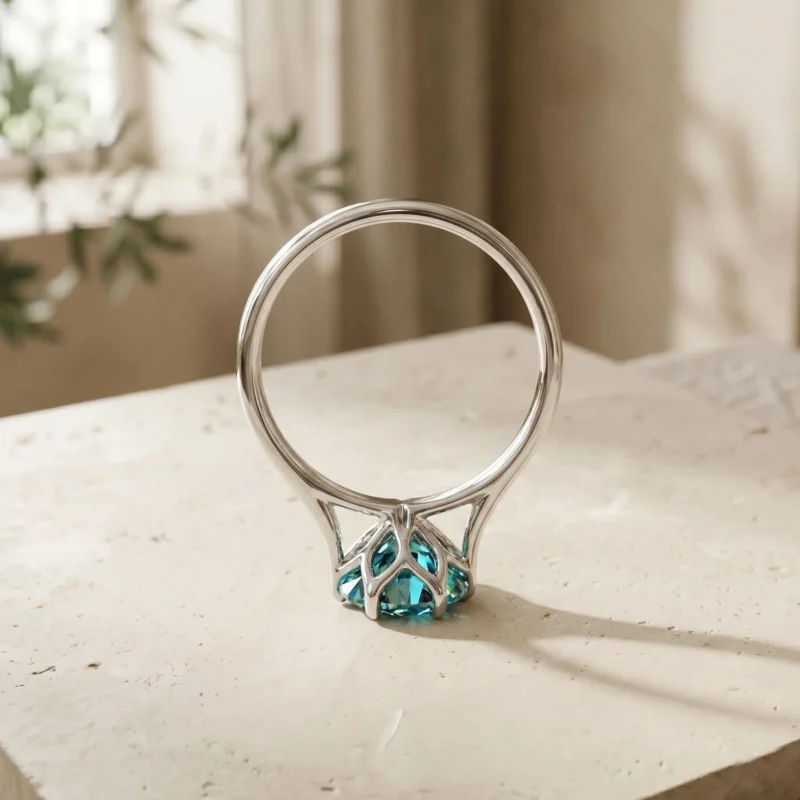
Cathedral: The shank arches up on either side of the stone, with curved metal shoulders supporting the basket from below. The stone sits higher above the finger — more presence, more drama. The arched metal also acts as a structural buffer, distributing impact force down into the thicker shank section rather than directly into the prong basket. The tradeoff: a high profile solitaire catches on knit fabrics and gloves, and wearing a tight wedding band flat against it can be uncomfortable.
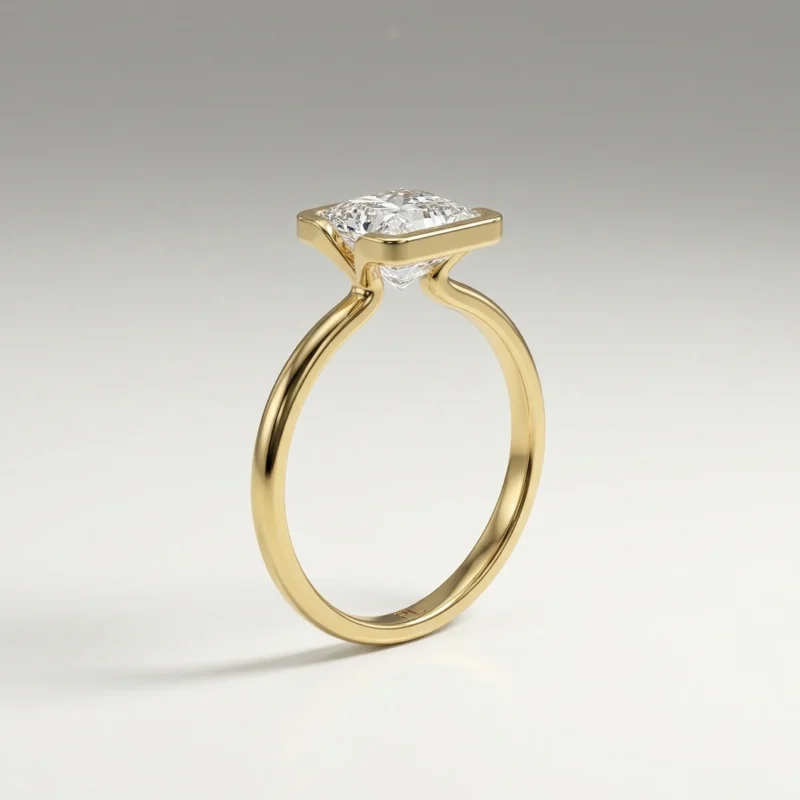
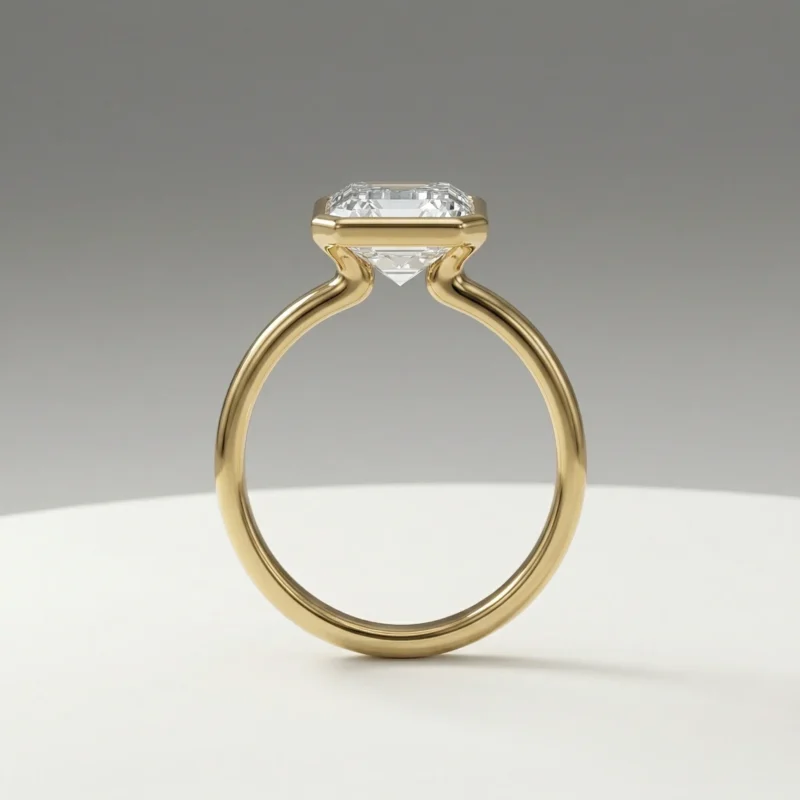
Low-profile / straight shank: The stone sits closer to the finger. Less presence in the hand but significantly more practical for daily wear — lower snag risk, more comfortable under gloves, easier to wear a straight wedding band alongside. For buyers in healthcare, active outdoor work, or gym-intensive lifestyles, low-profile is the more durable long-term choice.
Both are available across the solitaire collection. If you’re unsure, share your partner’s lifestyle with the Primira team at the specification confirmation stage — the decision is reversible until production begins.
Metal Choice for a Solitaire
The solitaire design amplifies the metal as much as the stone, because the shank and basket are fully visible with nothing else to draw the eye.
18K or 14K white gold (rhodium-plated) is the most common choice for solitaires — the neutral colour recedes visually and lets the diamond’s own brilliance dominate. 14K (58.5% gold) provides higher tensile strength than 18K for a plain shank that takes daily wear, which is worth considering for the low-profile cathedral arms. 18K (75% gold) is the better choice for a high-polish cathedral profile where the richer metal hue and depth of surface matter.
950 Platinum is the premium choice for a solitaire for one specific reason: prong durability. Platinum’s density means that platinum prongs, when worn thin by years of daily contact, don’t break — they compress. Gold prongs can snap. For a high-value stone in a 6-prong setting worn daily, platinum is the material choice that’s hardest to argue against.
Yellow and rose gold both read warmly against lab grown diamond white brilliance — the contrast is real and some buyers prefer it. Yellow gold at 18K particularly suits round brilliants with D–F colour, where the stone’s colourlessness creates a striking contrast with the warm metal.
All metal tiers are available in yellow, white, and rose tones. The solitaire setting is confirmed at the WhatsApp consultation stage before production starts — if you have a preference, it’s fixed there, not assumed.
Carat Weight in a Solitaire Setting
The most common question: how much carat weight is enough for a solitaire?
The answer depends on two things that aren’t the carat weight itself.
The cut grade comes first. A 1ct lab grown diamond with Ideal cut proportions shows more face-up diameter and more brilliance than a 1.2ct stone with a deep pavilion and flat crown. The extra 0.2ct is sitting inside a stone that doesn’t use it well. This is the single most important point in solitaire carat selection, and it’s the reason Primira’s collection floors at Ideal and Excellent cut rather than Good or Very Good.
The shank proportions matter. A thin 1.5mm band makes a 0.75ct stone read prominently. A wide 3mm shank can make a 1ct stone look proportionally smaller. The team can advise on band width during the WhatsApp confirmation stage based on the carat weight confirmed in your order.
Lab grown diamonds make larger carat weights financially accessible in a way mined stones don’t. Buyers who might consider 0.75ct in a mined stone can reach 1.5ct or 2ct in lab grown at the same budget. The quality thresholds don’t change — Primira maintains VVS1 to VS2 clarity and D–H colour across all carat weights — but the ceiling for what’s achievable shifts substantially.
For context: 0.25ct to 10ct are available on custom order. In-stock solitaire stones move fastest at 0.75ct–2ct for India buyers and 1ct–3ct for the USA/Europe market.
Care for a Solitaire Setting
A solitaire’s design vulnerability is concentrated in its prongs — four or six small metal claws doing all the retention work. For a halo or cluster, losing one prong is a repair before a risk. For a solitaire, a bent or broken prong is a more direct risk to the stone.
Two practical rules:
Check the prongs every six months — not with a loupe, just by running a fingernail over each claw tip and feeling for a rough edge or a tip that sits higher than the others. Either signals a prong that needs tightening before it becomes a stone-retention issue. Any jeweller can re-tip or retighten a prong.
Keep the cathedral arches clear of ultrasonic cleaning devices if the stone has any internal features near the girdle. A round brilliant VS1–VS2 is generally safe in an ultrasonic. An emerald cut VS2 with inclusions near the culet is less so — ask the team at the maintenance point.
The metal itself is low-maintenance. Rhodium plating on white gold wears through at the high-wear points (the basket interior, the underside of the shank) over three to five years. Re-rhodium is a routine process most goldsmiths offer — it takes the ring back to day-one white polish.
Custom Solitaire Orders
The specific detail that matters for a custom solitaire: you can specify the shape and the prong count independently of each other.
Most catalogue solitaires pair specific shapes with a default prong configuration — round goes into 6-prong, oval into 4-prong. Primira’s custom process doesn’t work that way. A round brilliant in a 4-prong cathedral shank is available. An oval in a 6-prong low-profile setting is available. The combination is confirmed in the WhatsApp consultation before production, including the specific carat target, colour grade, clarity tier, metal, tone, and finish.
For non-standard shapes — a custom silhouette, a marquise east-west set, a pear oriented apex-up rather than apex-down — reference images are accepted. The CAD design is confirmed before cutting begins.
Production: 15–35 business days from specification confirmation. Certified lab grown diamonds already in inventory ship within 48 hours of order confirmation.
Frequently Asked Questions
How many prongs should a solitaire engagement ring have?
Four prongs deliver maximum light entry and a clean, open profile that shows more of the stone from the side. Six prongs add two more contact points at the girdle and provide more retention margin if a prong is damaged — the stone is held by five remaining rather than three. For stones above 2ct or for buyers with active daily wear, 6-prong is the more conservative choice. For stones under 1.5ct in everyday wear conditions, 4-prong is equally secure at normal wear.
What cut grade should a solitaire lab grown diamond have?
Ideal or Excellent, with no exceptions worth making. For round brilliants, Primira targets table 54–57%, depth 59–62.5%, crown angle 34–35°, pavilion angle 40.6–41°. The IGI cut grade on the certificate is the verifiable confirmation — the report number is laser-inscribed on the girdle and checks out at igi.org. A solitaire setting gives a poor cut grade no cover; it shows on the finger exactly as the proportions predict.
Does a solitaire look smaller than a halo engagement ring?
Compared to a halo of the same centre-stone carat weight, yes — the halo’s ring of accent diamonds adds up to approximately 0.5ct of apparent visual size to the centre. But a well-cut solitaire with Ideal proportions will appear larger face-up than a same-carat stone in a halo with a mediocre cut, because optical performance drives perceived size more than the setting does. The comparison is cut-dependent, not style-dependent. See the halo engagement ring collection for the side-by-side consideration.
What is the best shape for a solitaire engagement ring in 2026?
Round brilliant remains the most popular globally for maximum light return and the most forgiving clarity/colour profile. Oval is the fastest-growing solitaire shape in 2026 — similar brilliance, elongated face-up footprint, larger apparent size per carat. Both are the strongest choices for a first-time buyer. Cushion, pear, emerald, and custom shapes are all available — the right shape depends on the wearer’s preference, not a ranking.
Is a cathedral or low-profile solitaire better for daily wear?
Low-profile for daily wear in active lifestyles — lower snag risk, more comfortable under gloves, easier to stack with a wedding band. Cathedral for presence and visual drama, and for buyers who prefer the elevated look of a raised stone. The choice is lifestyle-specific, not quality-specific. Both settings hold the stone equally securely.
What happens if I want to resize a solitaire ring later?
A plain solitaire shank — no channel-set stones along the band, no pavé shoulder — is the most resizable ring design in fine jewellery. A goldsmith can resize up or down by 1–2 sizes without affecting the setting or the stone. Solitaires with continuous stone bands (eternity-style shanks) are a different category and carry the same resizing limitations as an eternity wedding band. Standard plain-band solitaires: resizable without concern.
Purchase and Delivery
Every solitaire order starts with a WhatsApp and email confirmation from the Surat team within 24 hours — stone carat, colour, clarity, cut grade, metal, tone, and setting type all confirmed before manufacturing begins. This is the stage where any specification change is made, at no additional cost. Once production is confirmed and begins, the 15–35 business day window applies.
All shipments are insured from the Surat facility to your door. India orders above ₹10,000 ship free via Blue Dart or Delhivery. International orders ship free above USD $550 (express via DHL/FedEx/UPS). Standard international shipping is included on all orders, with tracking and insurance on every package.
The 7-day return window applies to solitaires delivered with a specification error or transit damage — the policy is specific. If the stone, metal, or setting delivered does not match what was confirmed in writing at the pre-production stage, the return process begins within 7 calendar days of delivery. For custom specifications confirmed and produced correctly, the buyback programme is available as an alternative recovery path.
Browse the full engagement ring collection to see all styles, or contact the team directly via WhatsApp at +91 9510640173 for a custom solitaire consultation.



 1-to-1 Custom Design
 Craft Your Vision
 HD video Preview
 Fully Customizable
 Choose Metal Tone:
 Handcrafted in Solid 10K · 14K · 18K
 Select Your Stone Type:
  Award winning
  Hallmarked &
  Personalized Care &
  Design Any Piece
 Chat on WhatsApp