Lab Grown Diamond Statement Rings — Bold Design, Built to Last
A statement ring is a calibration exercise before it’s a style choice. The question isn’t how bold — it’s bold relative to what. A design that reads as commanding on one hand can read as overwhelming on another, and the reverse is equally true: a ring that fills the frame on a narrower finger can sit quietly on a broader one. Most product pages skip this and show you the ring on the same model hand, in the same studio light, from the same overhead angle. The buying decision you’re actually making is different: whether this particular design, with its specific stone mass and metal frame, will carry on your hand the way it does in that photograph.
That’s the real brief for this page. Primira’s statement rings — what others call cocktail rings or dinner rings, terms that overlap without being identical — are built to translate accurately from photo to finger. Here’s what determines whether they do.
What Makes a Statement Ring Different From Other Fashion Rings
The term “statement ring” has drifted to mean any non-engagement ring that’s visually prominent. That’s too broad to be useful as a buying criterion. More precisely: a statement ring is a fashion ring in which the design volume — the total mass of metal and stone above the finger — is the primary design intention. A minimalist ring is designed around restraint. A cluster ring is designed around stone-count visual impact. A statement ring is designed around presence, which is an architectural quality, not a stone quality.
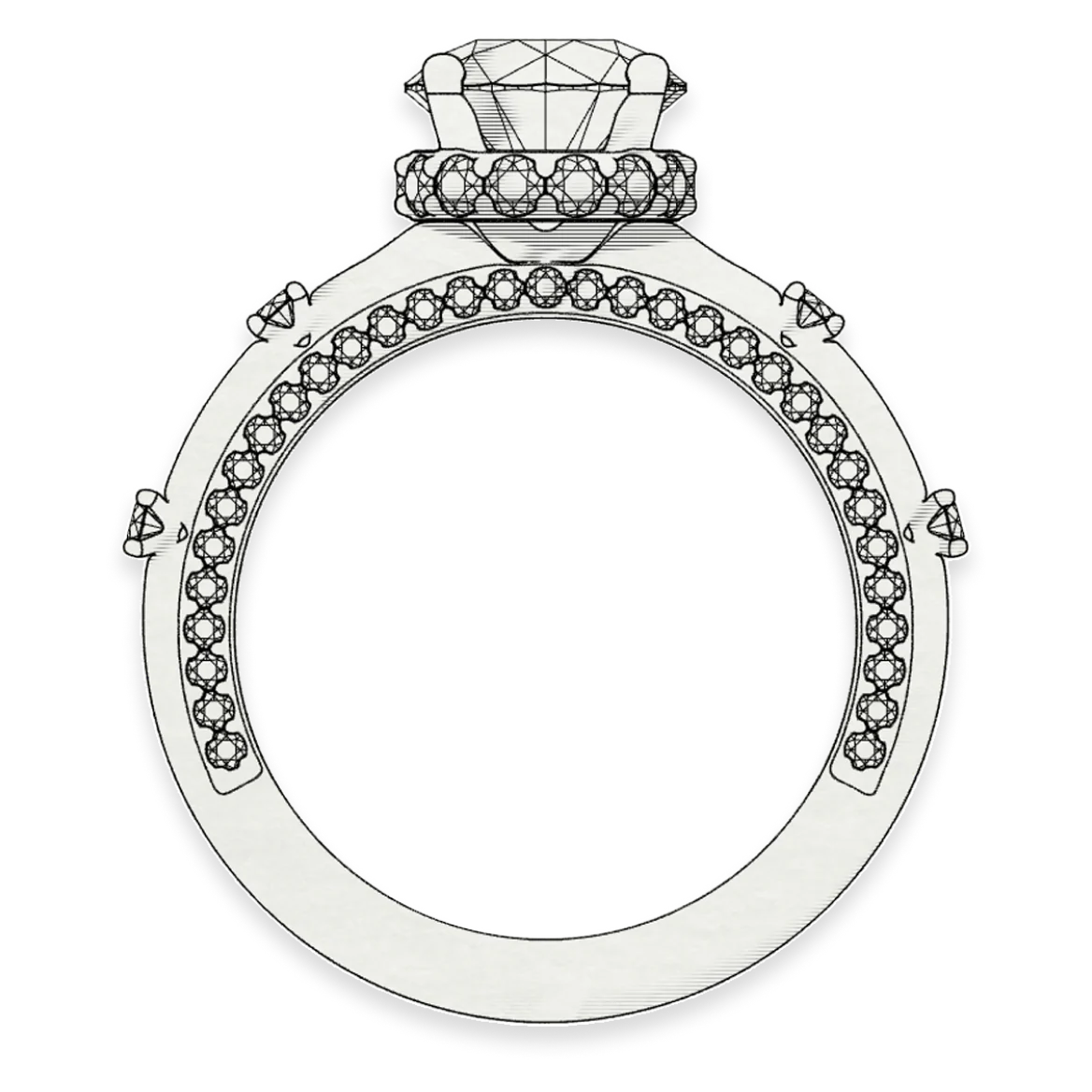
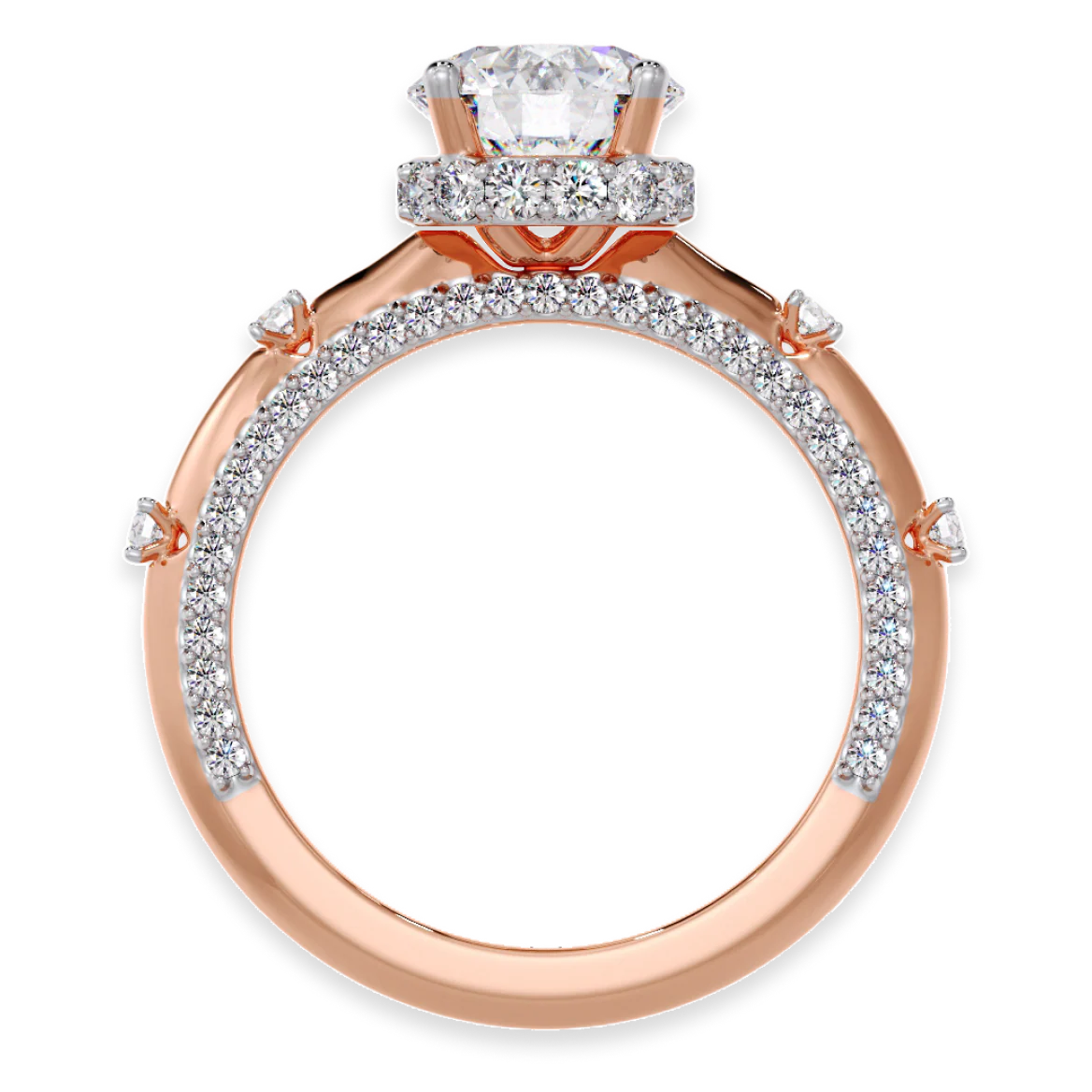
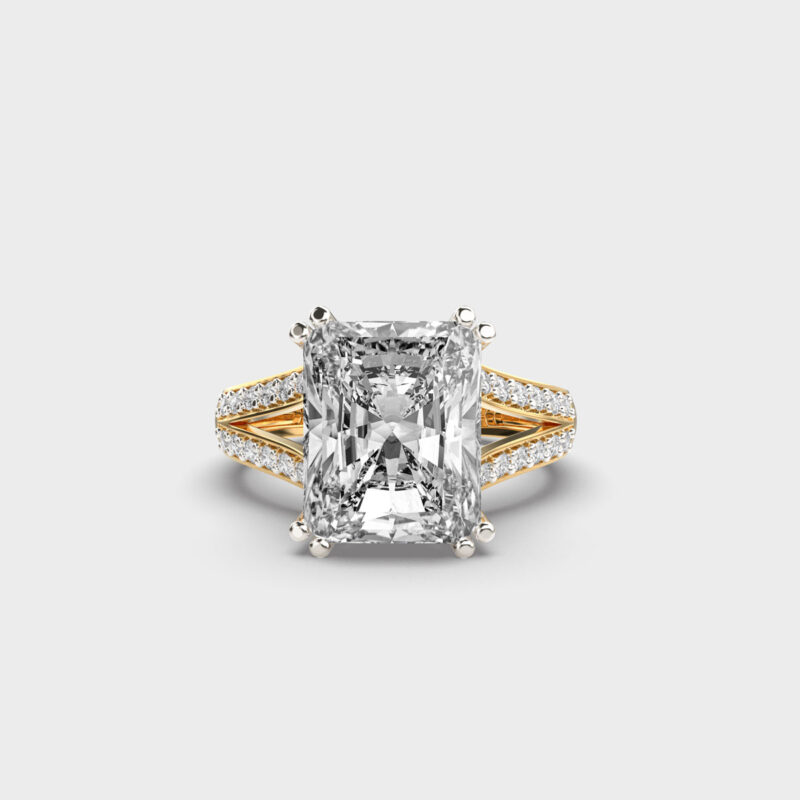
That distinction matters technically. The settings used in statement rings — multi-row chunky pavé walls, high-rise geometric Art Deco frames, wide shanks — create structural demands that a solitaire or minimalist ring never faces. A 4mm wide pavé wall is holding not just the stones on its surface but the geometry of the frame beneath them. If the casting lacks sufficient wall thickness behind the pavé surface, the frame deforms gradually under everyday finger-pressure. The ring looks identical in a photograph at the time of purchase and different six months later.
The pieces in this collection use 14K gold as the default structural tier — 14K’s 58.5% gold content gives it a higher tensile strength and better scratch resistance than 18K while maintaining the warm colour depth the designs require. Where a design has a high-rise crown or a particularly aggressive side-wall profile, Primira’s team calibrates the base shank width to counterbalance the overhead mass and prevent torquing at the mounting point. That decision happens at the casting stage; it’s not adjustable after the piece is made.
The Designs: What’s Actually in This Collection
Multi-Row Chunky Pavé
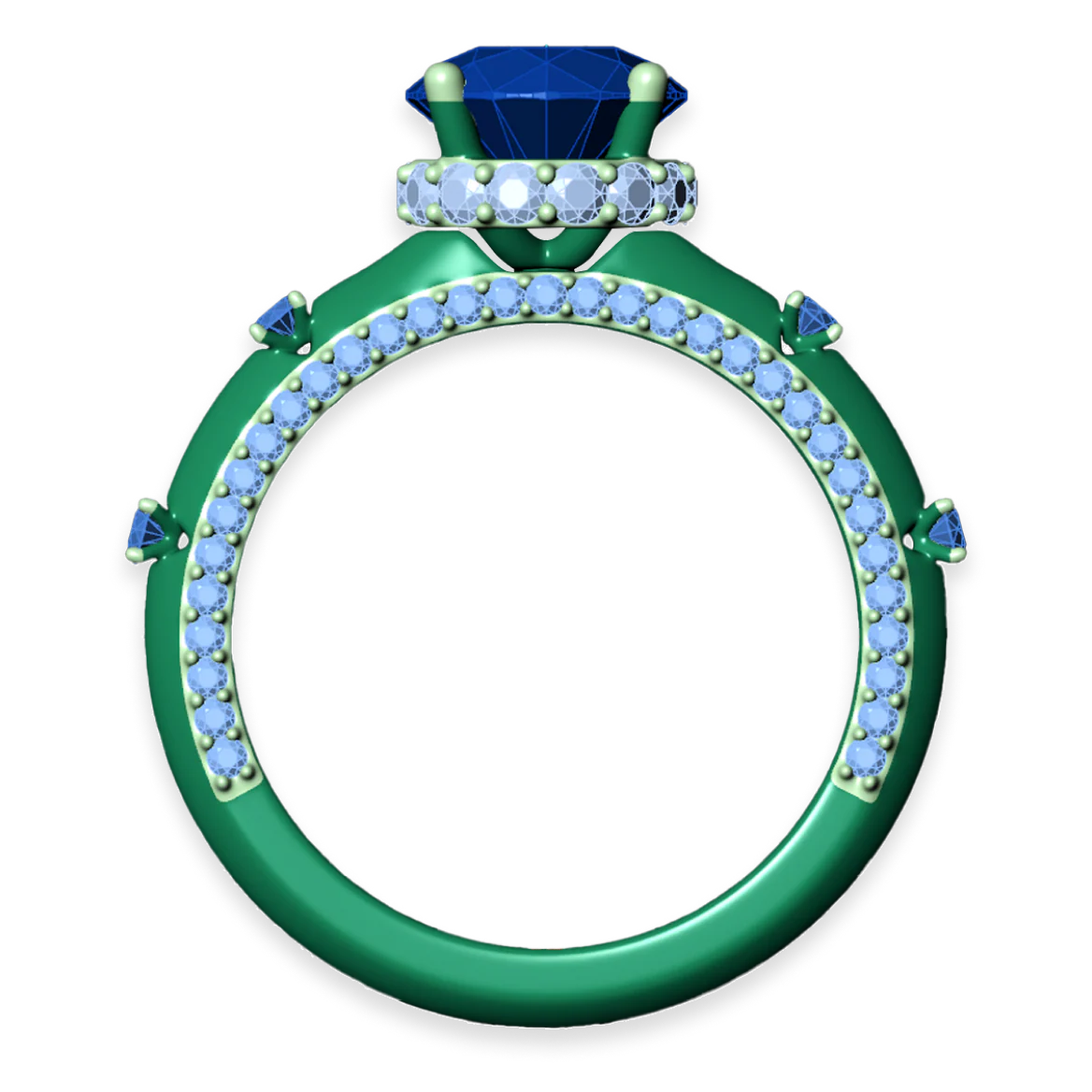
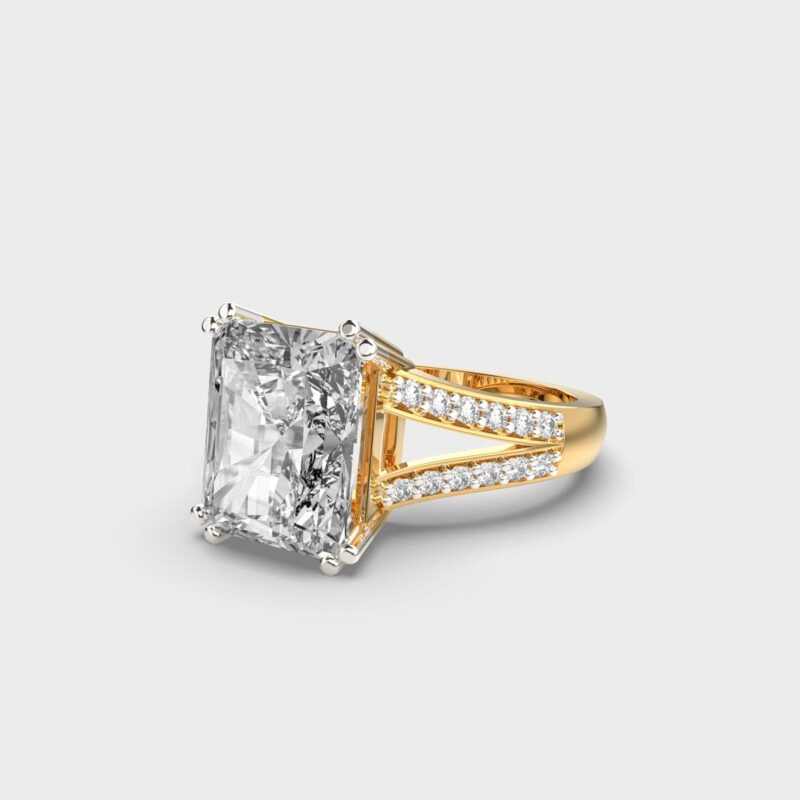
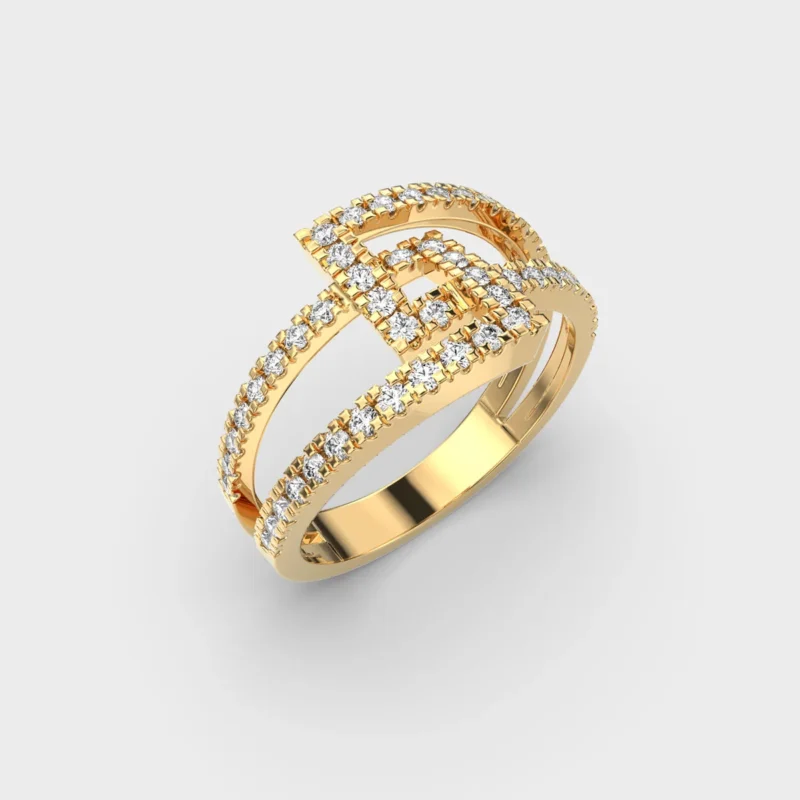
Multiple rows of lab grown diamond melee set across a wide pavé frame. The visual effect depends on two variables: melee calibration across the full setting (a ±0.01mm size tolerance for the stones ensures uniform height and spacing — a visible gap is the sign of an under-calibrated parcel) and wall height, which determines how much light the stones can gather from below. Under-height walls produce a flat, mat-finish appearance regardless of stone quality. Properly proportioned walls let the facet geometry of each melee stone interact with the next, creating a surface that reads as continuous light rather than individual flashes.
High-Rise Geometric Art Deco Frames
Square, rectangular, and step-cut inspired frames that place a large centre stone or a geometric stone arrangement inside an architecturally defined metal structure. These are the designs most directly descended from the 1920s cocktail ring tradition — bold, angular, high-crown profiles with visible metalwork as part of the aesthetic. Emerald-cut lab grown diamonds suit these settings well: the step-cut faceting and open table complement the geometric frame rather than competing with it. A round brilliant in the same frame can work at the right scale, but the design proportions need to account for the stone’s circular face-up outline against the angular mount.
Wide Shank Profiles
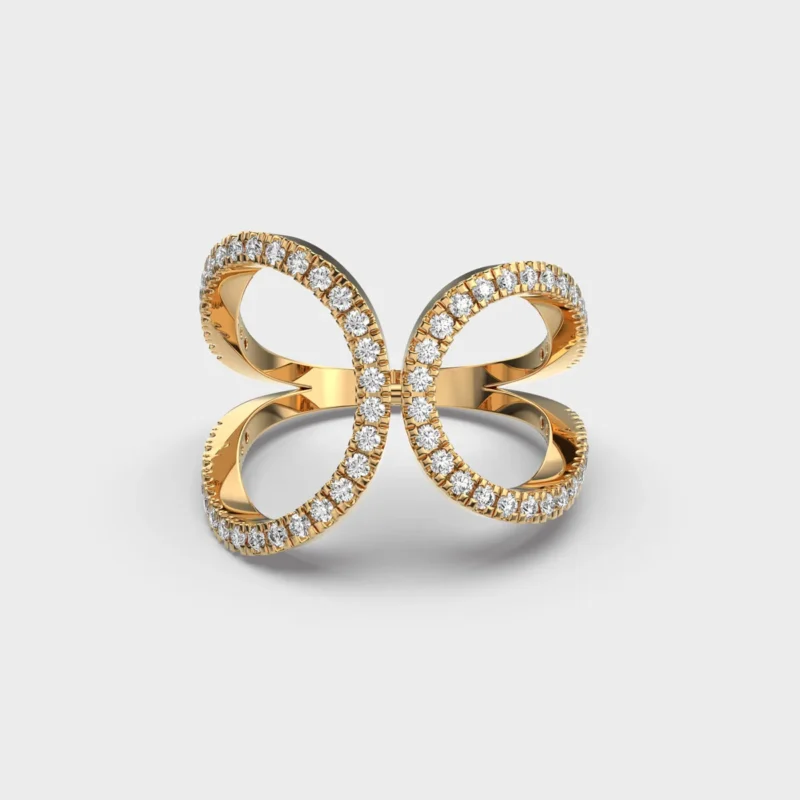
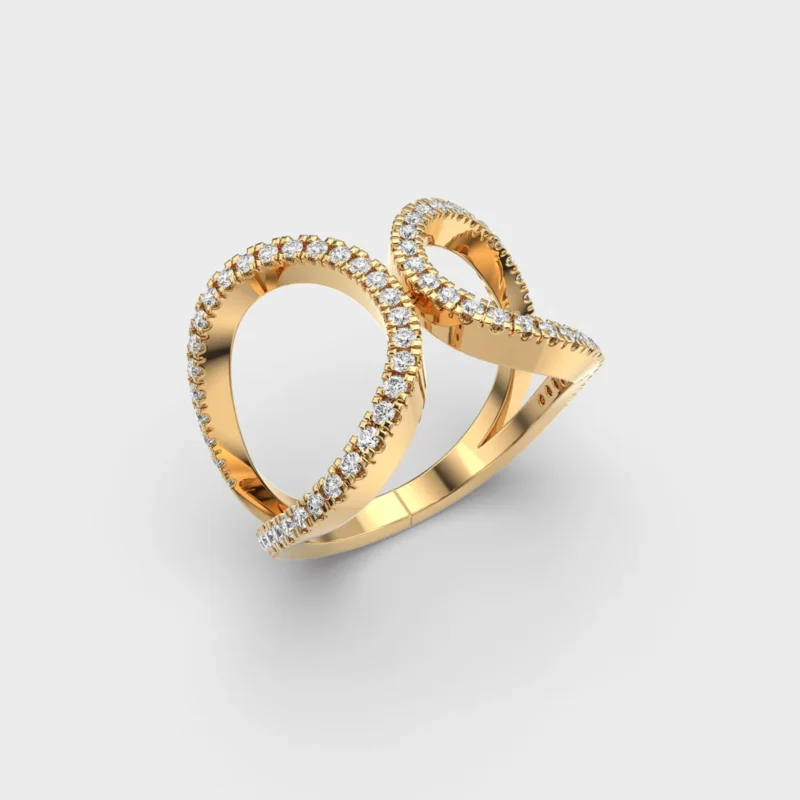
Statement rings in which the shank itself carries the design weight — either as a wide pavé-set band with a raised centre feature, or as an architectural metal band with inset stone rows. These read very differently from narrow-shank rings: the visual presence comes from horizontal extension across the finger rather than vertical height above it. On narrower hands, a wide shank can visually widen the finger, which is a genuine design trade-off worth considering against the design’s appeal.
Cluster-Centre Statement Rings
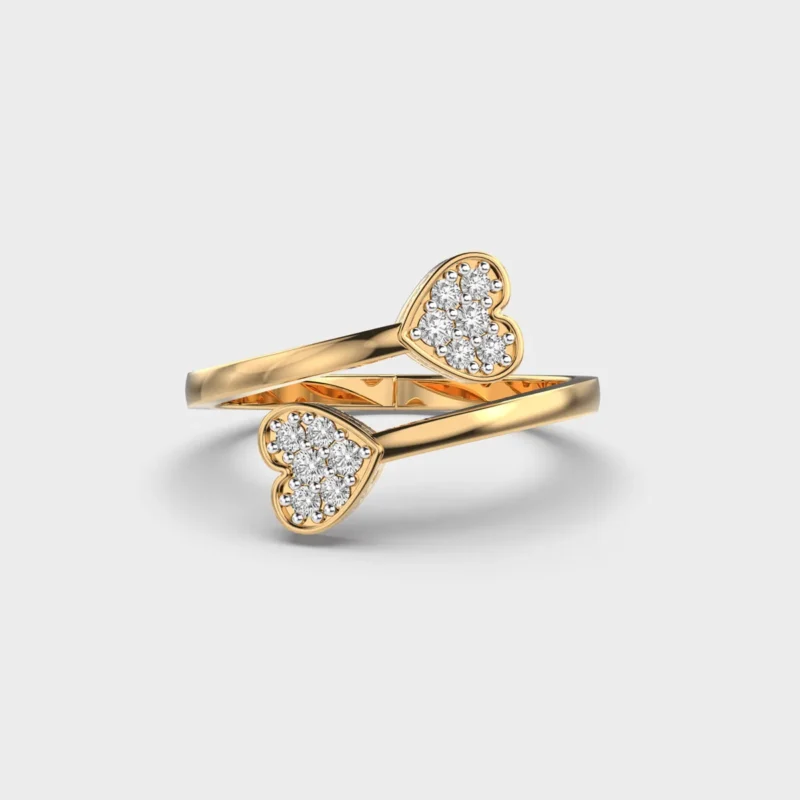
A centre visual mass built from multiple smaller stones rather than one large centre stone — typically in a floral, starburst, or irregular organic arrangement. Different from the cluster rings collection in that cluster rings are designed around their stone arrangement as the primary visual element, where statement versions use the cluster as the centre feature inside a more substantial metal frame with additional design elements. The distinction is architectural: cluster rings are often lower-profile, statement-format cluster rings have a higher overall mass profile.
Stone and Metal Specifications
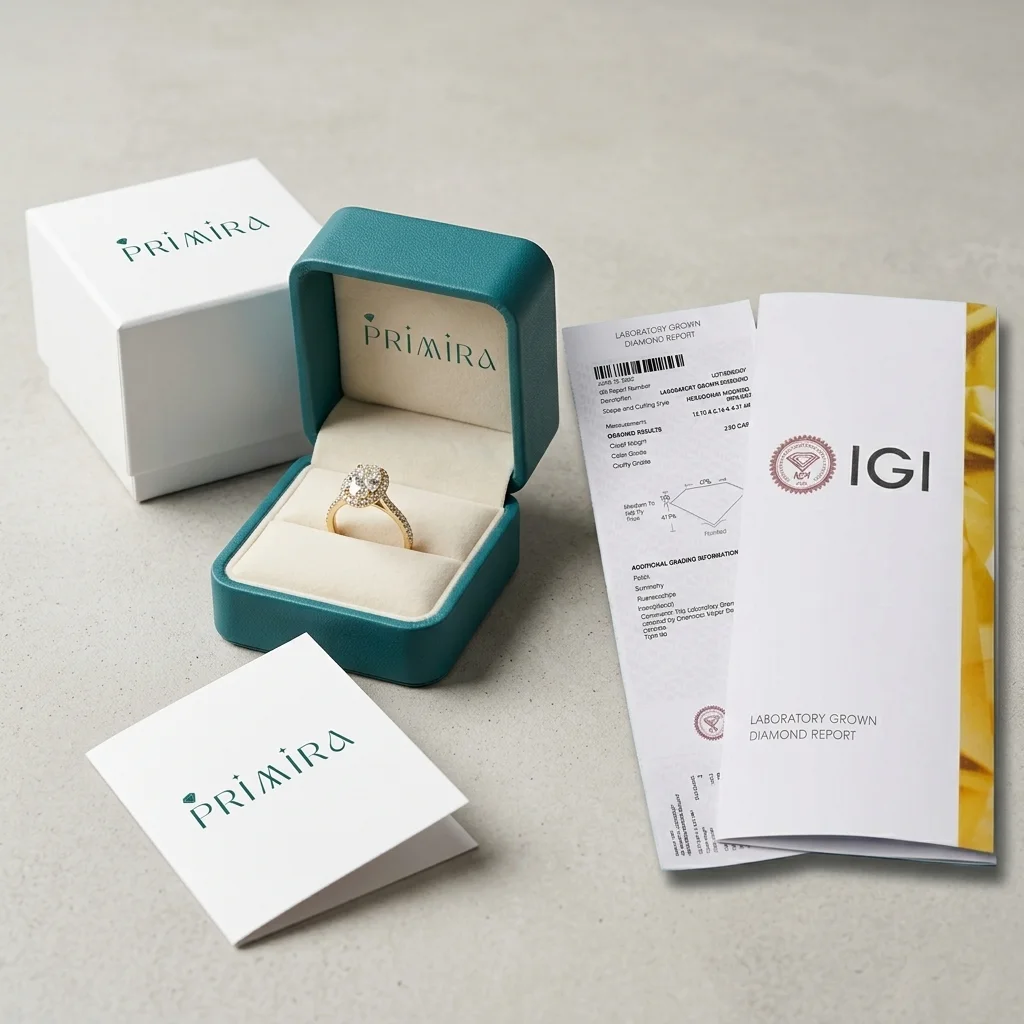
Lab grown diamonds across this collection carry IGI grading reports covering cut, colour, clarity, and carat — with the report number laser-inscribed on the girdle and verifiable at igi.org. For a statement ring, that documentation matters in a specific way: multi-stone designs have a total carat weight that represents a real stone-count and size commitment, and an IGI report on the centre stone (or, where relevant, a design-level certification) provides the accountability mechanism that a visual inspection alone cannot.
Colour grade in this collection runs D-F colorless as the primary stock, with G-H-I available as a value tier. In a heavily set pavé wall, the colour-match between adjacent stones is the relevant quality signal — a colour-mismatched stone in a closely packed row is visible in direct light. All pavé parcels sourced for this collection are matched within the same colour tier, not across tiers.
Clarity: VVS1 to VS2, all eye-clean. Primira does not stock SI2 or lower. In a statement ring with open-table step-cut stones, clarity has more bearing than in a pavé-set design — step cuts expose inclusions that brilliant cuts scatter away. The product pages note this where relevant; the pre-production WhatsApp confirmation is the right moment to ask if the specific design calls for a clarity decision.
Metal tiers: 14K gold (default), 18K gold (available where the casting profile suits it), 925 sterling silver (for lighter designs). Tone: yellow gold, white gold (rhodium-plated), rose gold. For a statement ring worn regularly, 14K over 10K makes sense — the higher gold content improves workability for complex frame designs without sacrificing durability on a piece that will see real contact.
How Size and Weight Translate to Your Hand
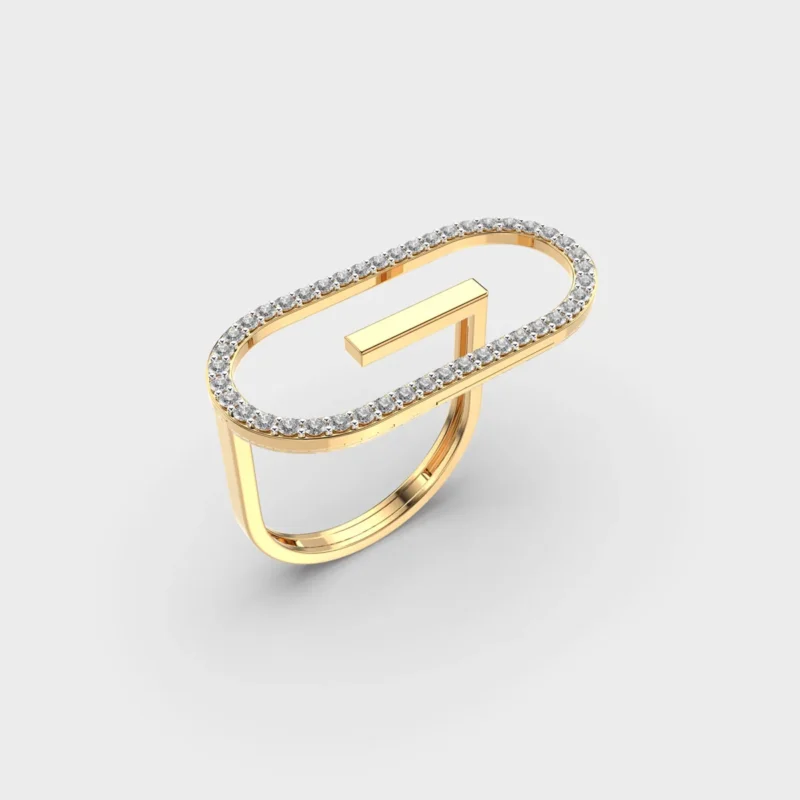
The most useful way to think about statement ring scale is in three measurements: face-up diameter (the stone or frame dimension you see from above), crown height (how much the design rises above the finger), and shank width (what you feel when the ring sits on your knuckle).
Photographs almost universally flatten crown height. A ring that photographs as a wide, planar design may sit considerably higher above the finger than the image suggests. This is worth asking about at the specification stage — the pre-production WhatsApp confirmation from Primira’s Surat team gives you the opportunity to confirm face-up dimension, crown height, and shank width in millimetres before production begins. These are the three numbers that determine whether the ring will feel like a statement or a burden.
For reference: a face-up diameter of 18–22mm reads as a confident statement on most hands without crossing into impractical territory. Above 25mm, the ring begins to interfere with finger movement unless the crown height is kept low. Most designs in this collection sit in the 18–24mm face-up range; the product pages include dimensional notes where scale is a relevant consideration.
A statement ring’s face-up diameter, crown height, and shank width in millimetres tell you more about how it will actually wear than any product photograph — crown height in particular is consistently flattened by studio lighting, and a ring that reads as planar in an image can sit 8–12mm above the finger in practice.
Custom Orders: What’s Genuinely Different Here
Statement rings are among the most custom-adapted category on the site, for a specific reason: the reference-image custom route works particularly well here. A buyer who has found a reference — a mid-century Art Deco frame, a specific geometric silhouette, a high-rise pavé profile they’ve seen somewhere — can send that image to Primira’s team via WhatsApp, and the Surat lapidary can evaluate whether the design is buildable in the specified metal and stone tier.
The distinction from a generic custom order: because Primira controls both the stone cutting and the metal setting under one roof, a reference design can be adapted at the stone-specification stage rather than fitted around existing inventory. If the reference design calls for a non-standard stone shape — a kite cut, a long baguette, a custom geometric outline — that stone can be cut to the frame before the frame is constructed, rather than the frame being built around whatever shape happens to be in stock. That’s a practical difference, not a marketing claim.
Wearing and Care
Statement rings with high pavé walls require different maintenance than engagement rings or minimalist rings. The micro-prongs that hold melee stones in a pavé wall are small enough that normal daily wear can shift them over time — not immediately, but gradually. An annual professional prong check is worth scheduling for any heavily pavé-set ring worn regularly. Primira’s team can advise on this during the WhatsApp confirmation; it’s also worth raising if you’re planning the ring as a daily-wear piece rather than an occasional piece.
For cleaning: avoid ultrasonic cleaners for pieces with a high-profile pavé wall where stones are set close to the wall edge — the vibration can shift micro-prongs that are already near the end of their service life. Warm soapy water and a soft brush, monthly, is the right routine.
Lab grown diamonds are as hard as their mined equivalents (Mohs 10) — but the frame and prongs are the vulnerability, not the stones. Store statement rings separately from other pieces to prevent frame-on-frame contact, which can dent the metal structure at the crown height where the design is most visually prominent.
Trust Close: Ordering Remotely
The specific challenge for ordering a bold ring without seeing it in person is verification of mass and construction — two things a photograph cannot convey. Primira addresses this at two points.
IGI grading reports cover every centre stone and are available for multi-stone designs on request. The report number is laser-inscribed and verifiable at igi.org before you confirm production — not an afterthought.
The pre-production WhatsApp confirmation covers the variables that matter specifically for a statement ring: face-up diameter, crown height, shank width, stone-count confirmation for multi-stone designs, pavé parcel colour matching, and metal tier. Production doesn’t begin until every specification is confirmed. That confirmation window is also when size queries, metal-tone preferences, and custom modifications can be locked in.
Shipping: every order is insured from Primira’s Surat facility to your door. International express delivery (DHL/FedEx/UPS, estimated 5–7 business days after dispatch) is complimentary on orders above USD $550. India orders above ₹10,000 ship free. If the piece delivered differs materially from the confirmed specifications, the 7-day return window and buyback program both apply — details in the shipping and returns policy.
Production: 15–35 business days from specification confirmation. Statement rings involving a custom stone cut or a complex frame may run toward the upper end of that range; Primira’s team will advise on timeline during the WhatsApp confirmation.
FAQ
What’s the difference between a statement ring and a cocktail ring?
The terms overlap almost completely. Cocktail ring refers to the original 1920s Prohibition-era style: a bold, oversized ring worn on the right hand at social occasions, traditionally featuring a prominent centre stone or elaborate setting. Statement ring is the modern, broader term for any ring where visual presence — rather than relationship significance — is the primary design intention. For practical purposes, if you’re searching for either term, you’re looking at the same category of ring. Both terms appear in this collection.
Can you wear a statement ring every day?
Yes, with the right design and setting type. A lower-profile wide-shank pavé design or a medium-height geometric ring is entirely practical for regular wear. High-crown Art Deco frames with significant overhang may interfere with everyday tasks — typing, carrying bags, wearing gloves. The pre-production WhatsApp confirmation is the right moment to specify daily-wear intent; Primira’s team can advise on whether a given design’s crown height suits regular use or is better suited for occasional wear.
What finger do you wear a statement ring on?
Traditionally the right ring finger — this kept it distinct from the left-hand engagement/wedding ring. The right index or middle finger also works well for statement rings with a wide shank profile, since the slightly broader knuckle on those fingers can anchor the ring more securely. There are no rules; the practical question is whether the ring’s shank width suits the knuckle-to-base ratio of your chosen finger.
What lab grown diamond cut works best for a statement ring?
Different formats have genuinely different answers. For high-rise geometric frames: emerald cut (step-cut faceting complements angular metalwork) or cushion brilliant (softer face-up outline softens geometric rigidity). For multi-row pavé walls: round brilliant melee gives maximum light return at small sizes. For large-format single-stone statement rings: oval and pear both elongate visually and suit high-mass frames better than round, which can read as too central and symmetrical against an asymmetric design. Fancy colour lab grown diamonds — particularly yellow, pink, and blue — are well suited to statement settings, where the non-reflective yellow-gold or white-gold backdrop enhances saturation rather than diluting it.
Are lab grown diamond statement rings real diamonds?
Lab grown diamonds have the same optical, physical, and chemical properties as mined diamonds — identical carbon crystal structure, the same hardness of 10 on the Mohs scale, the same refractive index. The difference is origin: lab grown diamonds are produced in a controlled manufacturing environment rather than extracted from the earth. Every lab grown diamond in Primira’s statement ring collection carries an IGI grading report using the same 4C grading criteria applied to mined stones.












 1-to-1 Custom Design
 Craft Your Vision
 HD video Preview
 Fully Customizable
 Choose Metal Tone:
 Handcrafted in Solid 10K · 14K · 18K
 Select Your Stone Type:
  Award winning
  Hallmarked &
  Personalized Care &
  Design Any Piece
 Chat on WhatsApp