Lab Grown Diamond Drop Earrings and Dangler Earrings
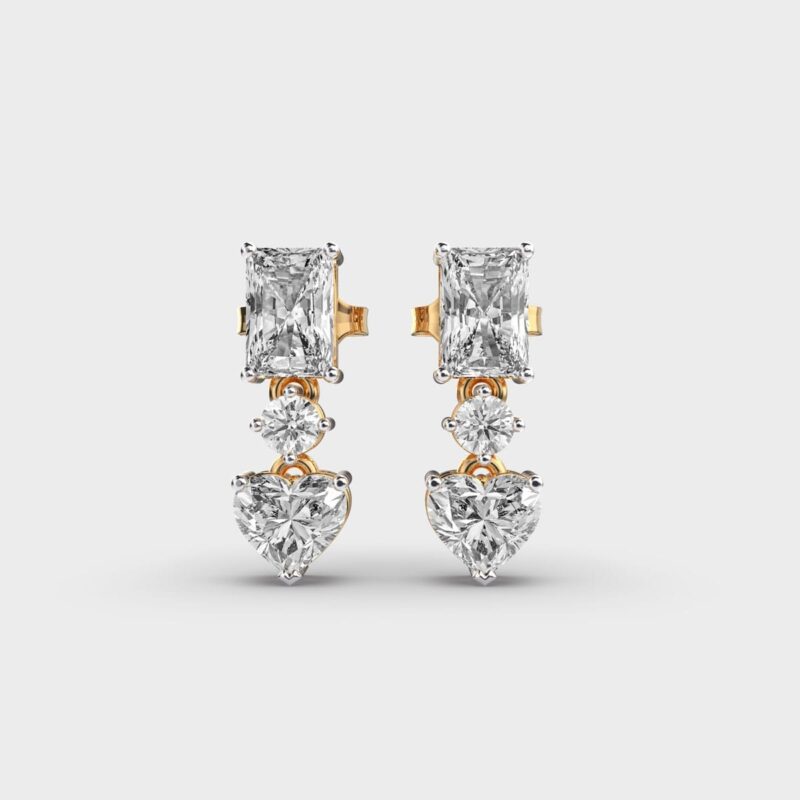
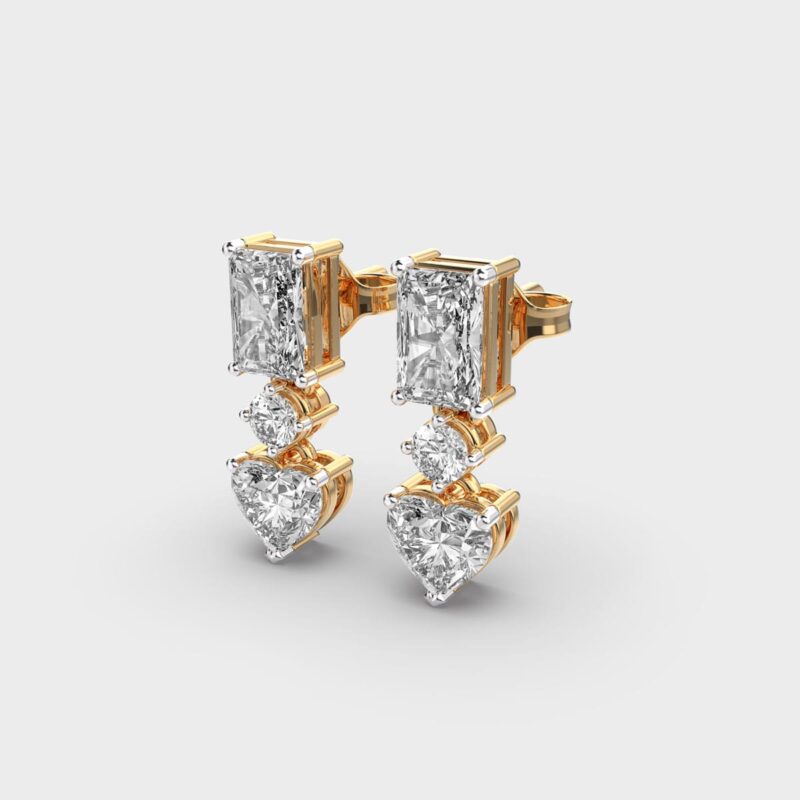
A stud sits against the earlobe and its job is to catch light from the front. A lab grown diamond drop earring or dangler has a different job entirely — it moves, it changes angle as you do, and it needs to look equally right when it’s still, when it swings, and when it’s catching light from the side. That’s a different design problem from a stud, and most category pages skip the part where they explain it.
The two questions most buyers actually carry into this decision are: will it look like fine jewellery or will it read as costume, and will the weight make it unwearable after two hours? Both have specific answers grounded in construction — not in style preference.
Drop Earrings vs Dangler Earrings — What’s Actually Different
The distinction that matters isn’t primarily aesthetic. Drop earrings have a largely stationary pendant element that hangs just below the lobe — the design reads well at rest, from the front. Dangler earrings (the India-specific term for dangle earrings used globally) are designed to swing. The pendant element is attached to an articulated connection — a hinge, chain, or loop — that gives it independent movement from the post. When you walk or turn your head, the diamond moves separately from the metal at your lobe.
That articulation is a construction decision, not just a style one. A single rigid drop has the same weight-to-post ratio whether it’s stationary or moving. An articulated dangler distributes torque differently — the joint absorbs directional pressure rather than transmitting it directly to the piercing. For longer, heavier designs worn through a three-hour wedding function, that difference registers as comfort vs. earlobe fatigue.
India search uses “dangler earrings” as the standard term. International search uses “dangle earrings” or “drop earrings” interchangeably. Primira’s collection covers both formats and both search contexts.
Why Movement Changes the Stone Choice
A lab grown diamond stud is optimised for one thing: face-up light return from the front. A round brilliant in a 4-prong stud setting performs exactly that job. Drop and dangler earrings are worn in motion — your face and neck create a different angle to available light with every gesture. This changes which stone shapes and faceting styles give the best result.
Elongated shapes — pear, oval, marquise — have directional facet arrangements. As the earring swings, these shapes catch and release light along their length in a way that a round brilliant, which distributes light radially, does not. A pear drop earring oriented apex-down on a chain delivers a different light character at 0°, 30°, and 60° rotation than it does face-up. That’s not a flaw — it’s the reason this format exists.
This is one of the production advantages Primira’s Surat lapidary brings to drop earrings specifically: stone shapes and faceting are optimised for how a given setting format will be worn, not just for face-up appearance on a grading report. An oval intended for a long dangler gets different pavilion-depth and shoulder-curve decisions than one intended for a solitaire ring, where static face-up appearance is the primary criterion.
Closure Types — The Engineering Decision Most Buyers Skip
The closure mechanism on a drop or dangler earring is not a finishing detail. It determines three things: security (will it stay on through movement), weight distribution (will the earring tilt forward), and comfort over hours of wear.
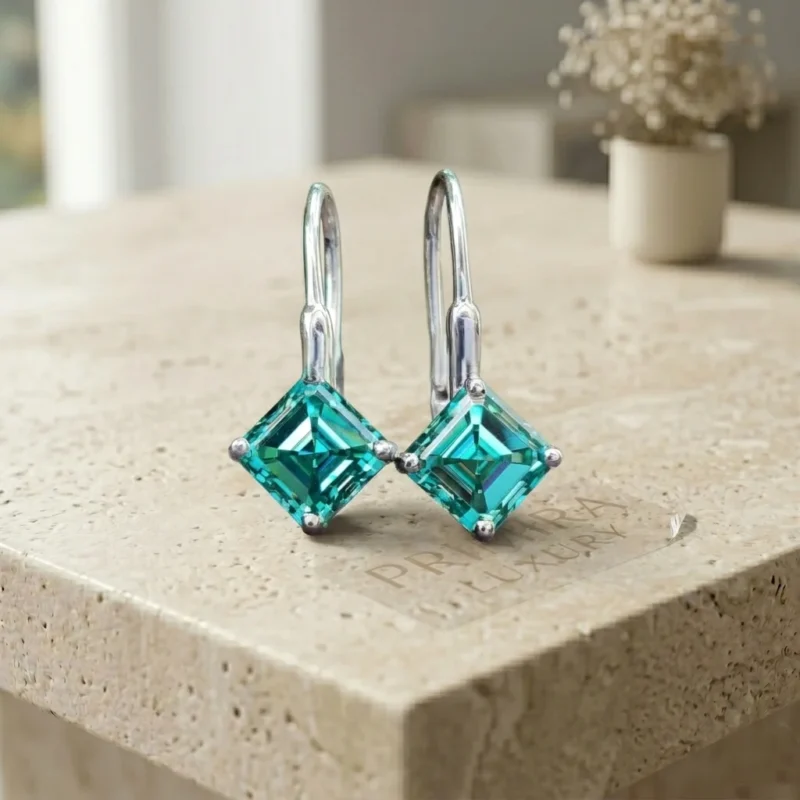
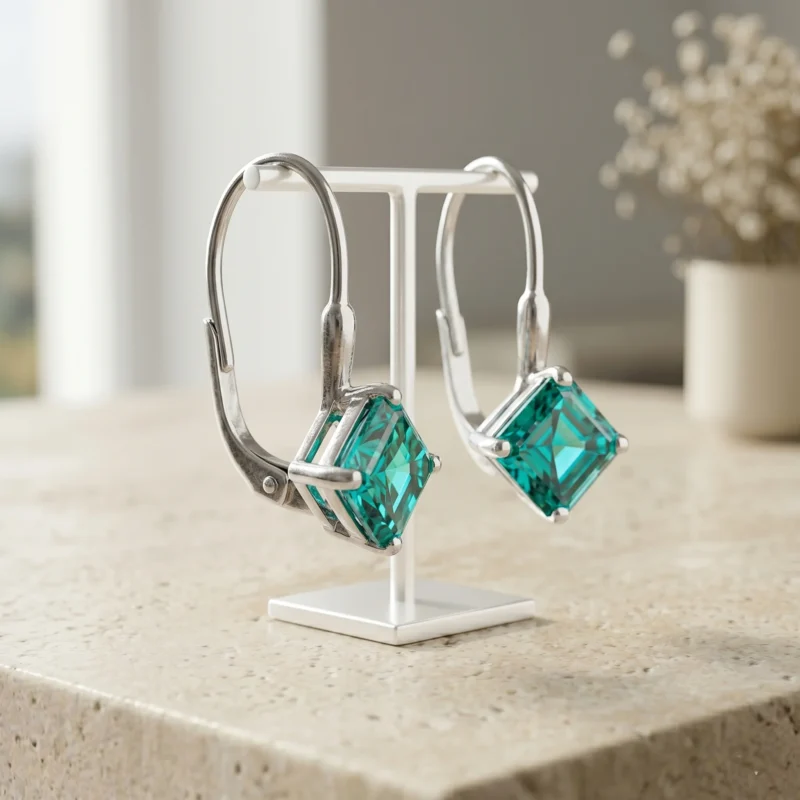
Leverback (lever back): A curved wire passes through the piercing and a hinged lever snaps closed behind the ear. This is the default recommendation for drop and dangle earrings of any significant weight because the hinged closure prevents the forward tilt that heavy pendants cause on open French hooks. The latch distributes weight behind the earlobe rather than concentrating it at the piercing hole. Leverbacks are more secure than French hooks and significantly easier to use than screw backs.
French hook (fish hook/shepherd hook): An open curved wire that passes through the piercing and relies on the earring’s own weight and the wire’s curvature to stay in place. Lightweight for delicate daily-wear drops. Less secure for anything with meaningful pendant weight, where forward tilt and slippage are real risks. A silicone stopper behind the wire adds reassurance for all-day wear.
Omega back: A hinged clip shaped like the Greek letter Ω that grips a broader area behind the lobe. Useful for heavier designs where even a leverback doesn’t fully prevent forward tilt. Less common in fine jewellery because the clip is visible from behind.
For Primira’s collection: shorter, lighter drops (0.25ct–0.50ct total weight) work well on French hooks for daily wear. Anything above 0.50ct total weight or involving articulated multi-element designs: leverback is the standard. Custom orders specify closure type at the WhatsApp confirmation stage.
Stone and Carat Guidance for Drop Settings
Carat weight: The range that works well in drop earrings is wider than studs because the pendant format reduces direct visual competition with the face. 0.25ct–0.50ct (combined) reads as refined daily wear; 0.75ct–1.00ct combined creates genuine presence at a dinner or event; 1.50ct–2.00ct combined is territory most buyers associate with formal occasion pieces, though in a pear or oval drop format it doesn’t overwhelm the way the same carat weight would in a stud.
Shape selection: Pear and oval work particularly well in drop formats — no pointed ends to chip against jewellery or hair, and the elongated outline creates an elongating effect for the neck and face. Marquise also performs well in a dangler at longer lengths. Round brilliant in a drop format is always appropriate but wastes some of the format’s specific advantage (movement-driven multi-angle light capture). Emerald cut in a drop setting produces the slow, wide reflective play of step-cut facets that reads more restrained than brilliant flash — a light character that carries differently at the longer lengths a formal drop earring demands, and that reads especially well when the earring is still.
Color and clarity in drop settings: D–F colorless. G–H is a value choice where the slight warmth is imperceptible once the earring is in motion. In drop format, where stone area may be smaller than in a ring, going to VS1 or VVS clarity is worth it — these stones often sit closer to eye level and are viewed more directly than, say, a ring stone worn on the hand.
Metals: White gold (14K or 18K rhodium-plated) and platinum keep the setting from competing with the stone’s colour character. Yellow gold works particularly well with champagne-toned or natural-warmth stones in a dangler format. Rose gold paired with near-colourless rounds (G–H) reads soft and contemporary in a shorter drop style.
Styles in the Collection
Solitaire drops: A single lab grown diamond — pear, oval, or round — in a prong or bezel setting on a short chain from a leverback post. The cleanest format, the most versatile daily-wear option in this category.
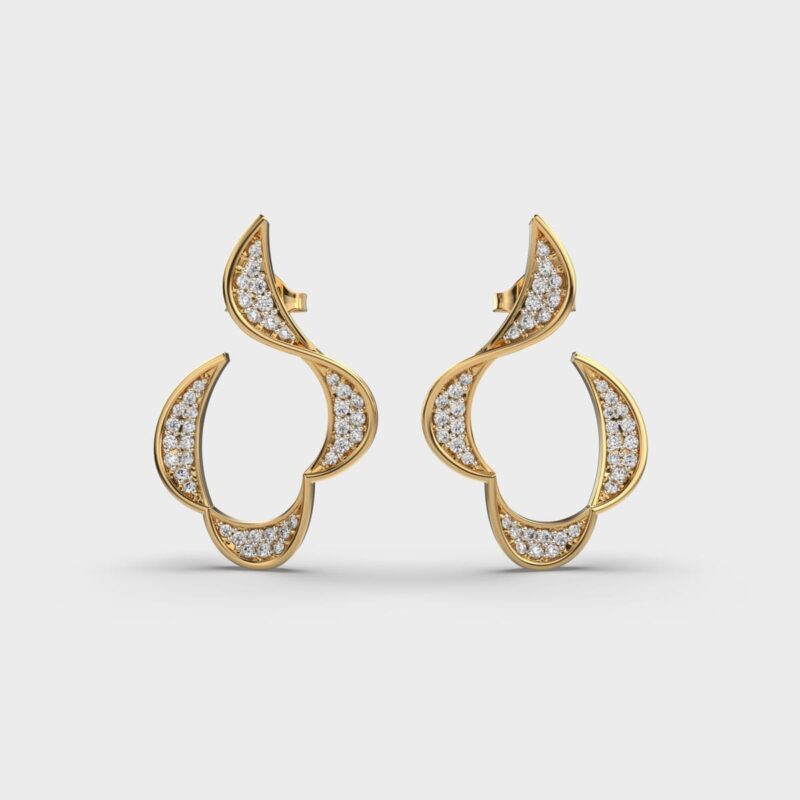
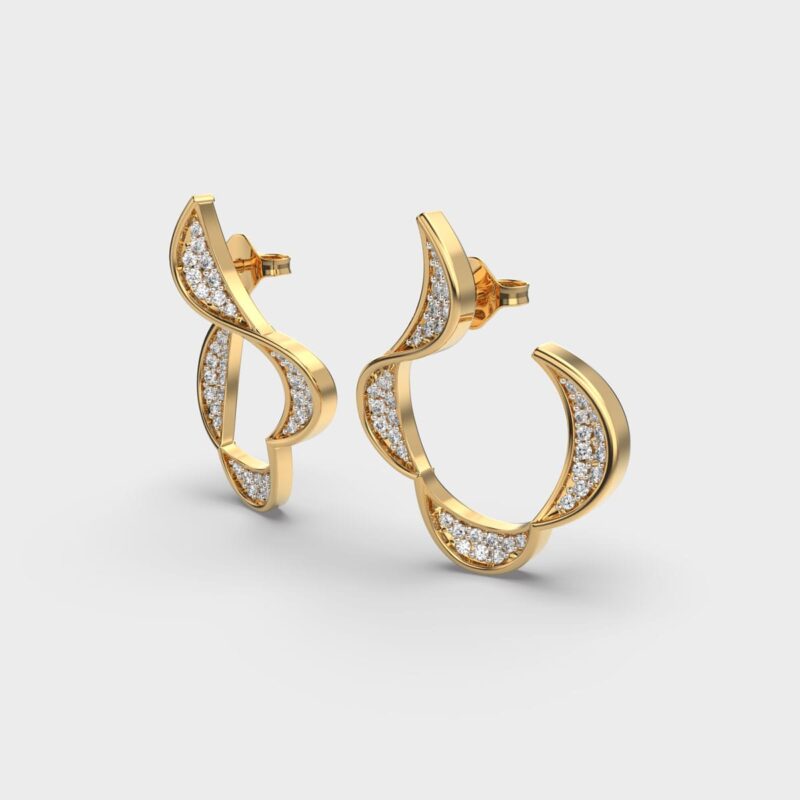
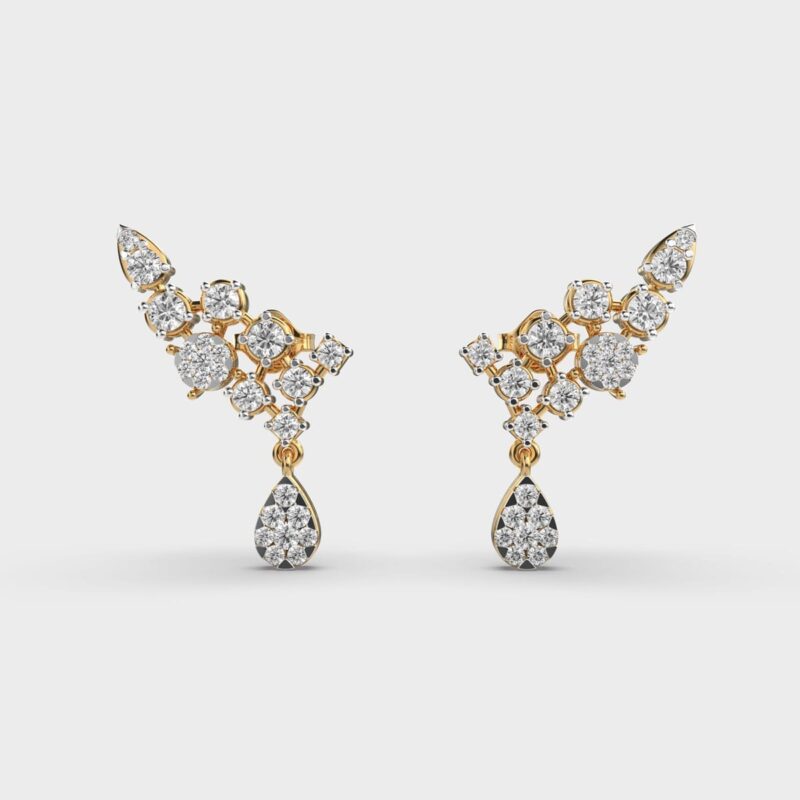
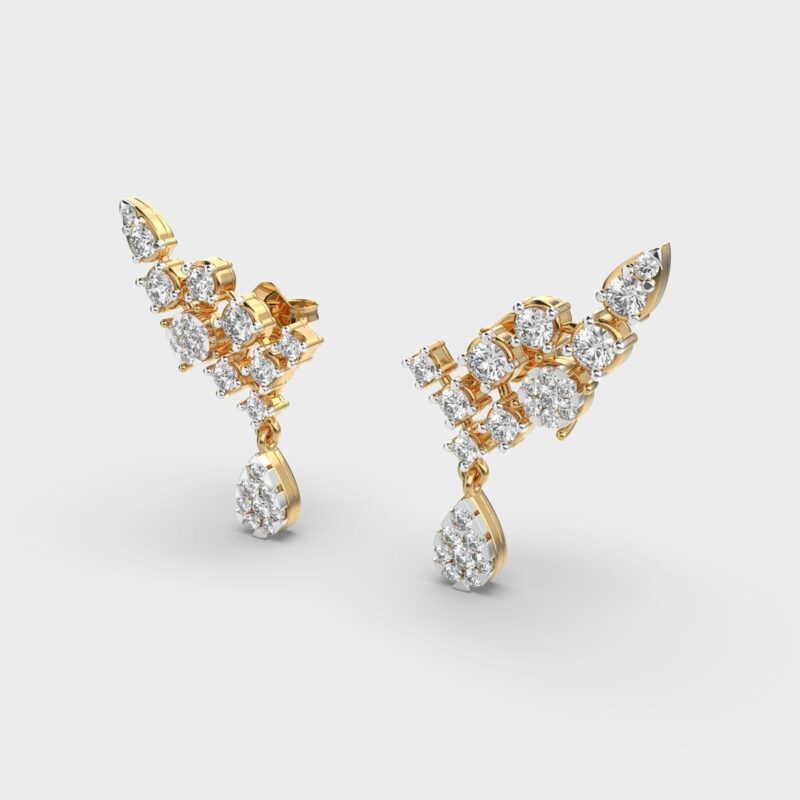
Cluster drops: Multiple smaller lab grown diamonds in a floral, geometric, or radial arrangement forming the pendant element. Total carat weight is distributed across melee stones — the visual impact per rupee/dollar is significant. The melee stones in Primira’s cluster drops are calibrated to ±0.01mm for uniformity; inconsistent calibration is what makes a cluster drop read as casual rather than fine.
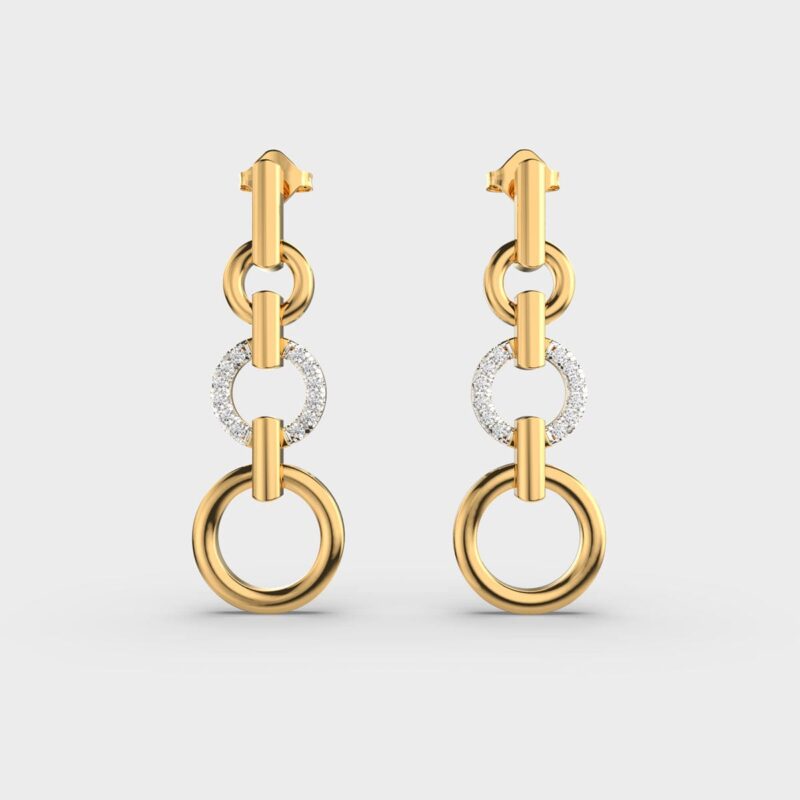
Linear danglers: A vertical bar or cascade of diamonds extending from the post down the length of the earring. These are the Indian festive dangler format — the elongating vertical line that frames the neck. Length is customisable in the pre-production WhatsApp confirmation.
Halo drops: A centre stone surrounded by a ring of smaller diamonds as the pendant element. The same calibration principle from halo engagement rings applies here — the halo is doing optical-illusion work, and accent-stone uniformity determines whether that illusion reads as elegant or as busy.
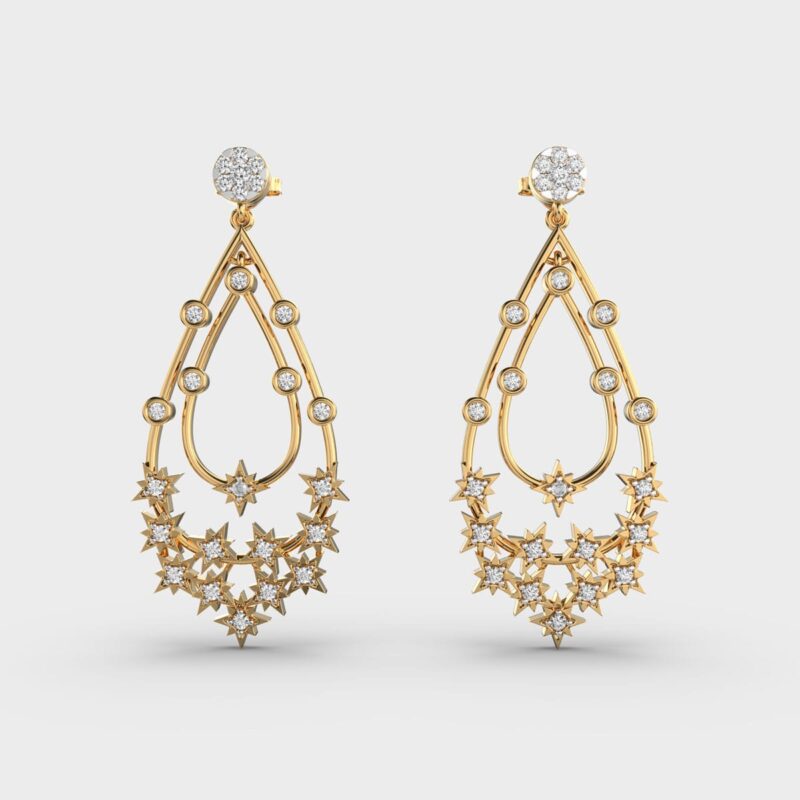
Chandelier earrings: Multi-tier cascading designs with stones at multiple levels. More dramatic, built for occasion wear. Weight distribution across tiers means the earring hangs well at longer lengths without concentrating mass at a single point.
Custom Drop and Dangler Earrings
Drop and dangler earrings are one of the most customised formats in Primira’s collection. The variables that matter — pendant length, articulation depth, stone shape and orientation, closure type, and whether a design is rigid or articulated — all change the wearing experience, not just the appearance.
The pre-production WhatsApp confirmation process (within 24 hours of order placement) is where the variables specific to drop earrings are agreed before anything is cast. For custom orders, this covers: stone choice (carat, shape, cut grade, colour, clarity), pendant length from post to bottom of stone, articulation style (rigid chain vs hinged joint), closure selection (leverback vs French hook), metal tier and tone. Reference photos are accepted and matched through Surat’s lapidary process — if a buyer sends an image of a dangler style they’ve seen, the production team works from that specification rather than a generic catalogue entry.
Care and Maintenance
The specific vulnerability in drop and dangler earrings is the connection point between the post and the pendant element — the jump ring, chain link, or joint that carries all the mechanical stress of movement and hanging weight. In lower-quality earrings, this point fatigues and fails first. In Primira’s designs, this connection is cast in solid metal (not hollow tube), sized to the specific weight load of each pendant design.
Cleaning: warm water and a soft brush to the pendant element and stone. Don’t submerge the closure mechanism — leverback hinges work better when kept dry and clean. For longer danglers with articulated multi-element sections, check periodically that every joint point is secure. Any looseness registers as a wobble before it becomes a failure point.
Hair and earring tangling: longer danglers worn with loose hair can snag. Clip hair back or wear an updo with chandelier and long dangle styles at events. For daily wear, shoulder-length and shorter drop styles (under 2.5cm pendant length) are reliably tangle-free.
Store drop earrings hanging rather than flat — this keeps the pendant element from distorting over time and protects articulated links from compression that shortens their life.
Trust Close
The articulated links in longer drop and dangler earrings are the point most vulnerable in transit — a link joint that takes impact in a box can loosen before the earring is worn. Primira ships every order fully insured from Surat to your door; if something arrives damaged, resolution is coordinated from the manufacturing end, not a customer service ticket. International express shipping (DHL/FedEx/UPS) takes 5–7 business days and includes tracking and signature confirmation; free express shipping on orders above USD $550. India domestic: free shipping on orders above ₹10,000, delivered in 2–7 business days.
The 7-day return window applies to any piece where what arrived is materially different from the confirmed specification. Made-to-order pieces are not returnable on preference — which is why the pre-production confirmation step exists: specific variables are agreed before production begins, not after.
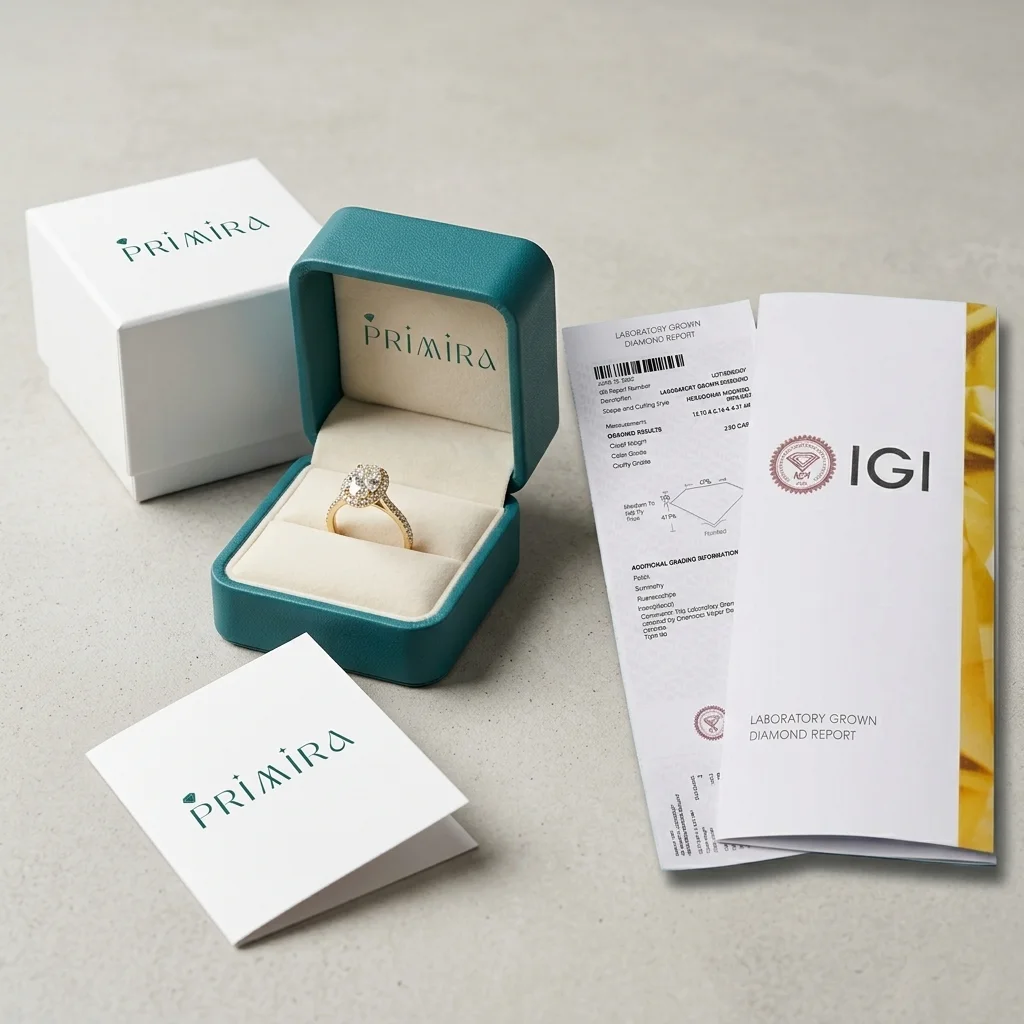
IGI certification is standard on loose lab grown diamonds; available on request for finished jewellery pieces. Each IGI report carries the stone’s report number laser-inscribed on the girdle, verifiable at igi.org — relevant here because drop earring stones at eye level are examined closely by people you’re actually talking to.
For the full range of earring styles, visit the earring collection. For lab grown diamond stud earrings, see the diamond stud earrings page.
If you’re looking for a single diamond to wear on a chain rather than from the ear, our lab grown diamond pendants cover solitaire and cluster styles.
FAQ
Q1: What’s the difference between drop earrings and dangler earrings?
Drop earrings have a stationary pendant element — the stone or design hangs below the lobe but doesn’t move independently. Dangler earrings (the term standard in India; “dangle earrings” globally) are built with an articulated connection between post and pendant, so the pendant swings independently with movement. The distinction matters for both comfort and light-catch behaviour — an articulated joint distributes torque differently from a rigid drop under long-wear conditions.
Q2: Are lab grown diamond drop earrings comfortable for all-day wear?
Comfort depends more on closure type and pendant weight distribution than on total carat weight. A 0.75ct pendant on a properly fitted leverback is more comfortable across eight hours than a 0.50ct pendant on an open French hook that tilts forward. Leverback closures are the standard specification for Primira’s drop earrings above 0.50ct total weight — the hinged lever keeps the earring upright and distributes weight behind the earlobe rather than concentrating it at the piercing.
Q3: Which stone shape works best in a drop earring?
As a drop earring swings, the facets of an elongated shape — pear, oval, marquise — change their angle to available light continuously; the stone delivers a different light event at 0°, 30°, and 60° of rotation than it does face-up, which is exactly what the format is built to exploit. Marquise works well in longer danglers. Emerald cut in a drop setting produces step-cut hall-of-mirrors light character that many buyers prefer for formal occasions over brilliant flash. Round brilliant is always appropriate but doesn’t leverage the drop format’s specific movement advantage as fully as the elongated shapes.
Q4: What’s the right carat weight for drop earrings?
0.25ct–0.50ct combined weight covers most daily-wear drop styles. 0.75ct–1.00ct combined works for earrings that cross from daily to occasion wear without feeling overdressed in either direction. Above 1.00ct combined, the earring is increasingly occasion-specific. The carat range is wider than studs because the pendant format has more visual context — the stone isn’t competing directly with the face, it’s framing it.
Q5: Can drop earrings be ordered in custom lengths?
Yes. Pendant length — the distance from post to the bottom of the stone — is confirmed in the pre-production WhatsApp conversation. Standard lengths for solitaire drops are 1.5cm and 2.5cm; linear danglers and chandelier styles can be specified longer. If you have a reference image, it can be matched at the Surat lapidary stage.
Q6: Can I wear dangle earrings with long hair?
Longer articulated danglers can snag with loose, long hair at the right angle. The practical solution for formal occasions with long hair is either an updo or shorter drop styles (under 2.5cm pendant length) that sit above the hair line on the neck. Daily-wear solitaire and cluster drops in the 1.5cm–2cm range are reliably snag-free. The length and articulation type are confirmed at the pre-production stage, so there’s an opportunity to flag hair length considerations before the earring is made.










 1-to-1 Custom Design
 Craft Your Vision
 HD video Preview
 Fully Customizable
 Choose Metal Tone:
 Handcrafted in Solid 10K · 14K · 18K
 Select Your Stone Type:
  Award winning
  Hallmarked &
  Personalized Care &
  Design Any Piece
 Chat on WhatsApp