Halo Lab Grown Diamond Engagement Rings
What Makes a Halo Look Luxurious — or Gaudy
That question is usually buried in forums and never answered directly. The honest answer isn’t about which style you choose — single, double, or hidden — it’s about what happens to the accent stones before the ring reaches you.
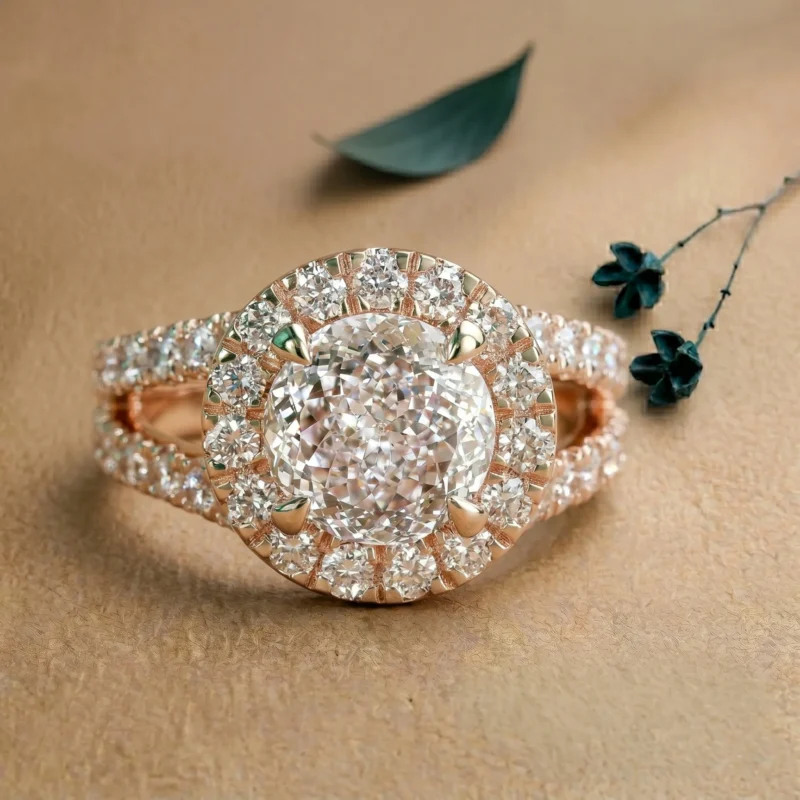
A halo is an optical engineering system. Anywhere between 20 and 40 melee diamonds encircle the centre stone, and when they’re matched to within ±0.01mm in diameter and calibrated in color and clarity to the centre, the ring reads as one unified field of light. When they’re not — when a supplier packs whatever melee is available that week into a pre-made setting — you see inconsistency. That’s the gaudy halo. The seams show.
At Primira, the melee in every halo comes from the same Surat cutting facility as the centre stone. Every accent stone is graded for color and clarity against the centre before setting. That’s a different standard than any retailer buying from a catalogue can offer.
What a Halo Actually Does
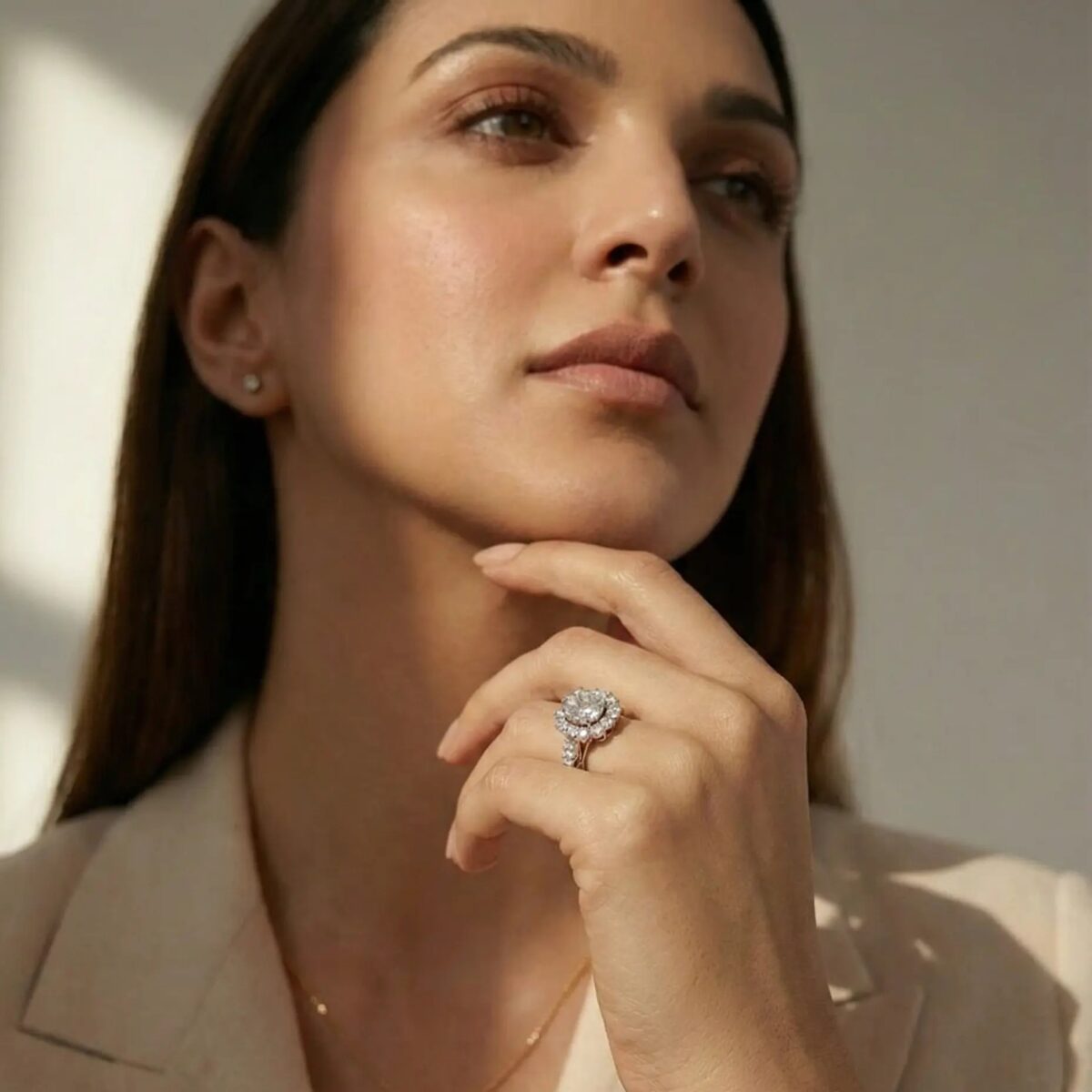
The centre stone sits inside a ring of smaller pavé or micro-pavé diamonds, typically 0.01–0.02ct each. Their combined surface area adds apparent size to the centre without changing the stone itself. The visual gain is roughly equivalent to 0.3–0.5ct of perceived centre size — a 1ct centre in a well-calibrated halo reads visually like a 1.3–1.5ct solitaire, at a small fraction of the cost of a larger stone.
Two things drive whether that illusion lands:
Stone uniformity. Every accent diamond in the ring needs to be the same diameter, or the halo edge becomes visually irregular. At Primira, melee is held to tight calibration tolerances — the same standard applied to the cluster and pavé work across our lab grown diamond cluster rings and eternity bands. That tolerance is the reason the ring looks like a single piece rather than a collection of parts.
Color and clarity matching. If the accent stones are noticeably warmer or more included than the centre, the halo draws attention to the mismatch rather than amplifying the centre. Primira stocks VVS-VS2 accent melee in D-F colorless and G-H near-colorless — and the pre-production WhatsApp confirmation includes the option to specify which tier of accent stone goes with which centre, something no pre-made setting allows.
Halo Styles — Single, Double, and Hidden
These aren’t just aesthetic variants. Each solves a different problem.
Single Halo
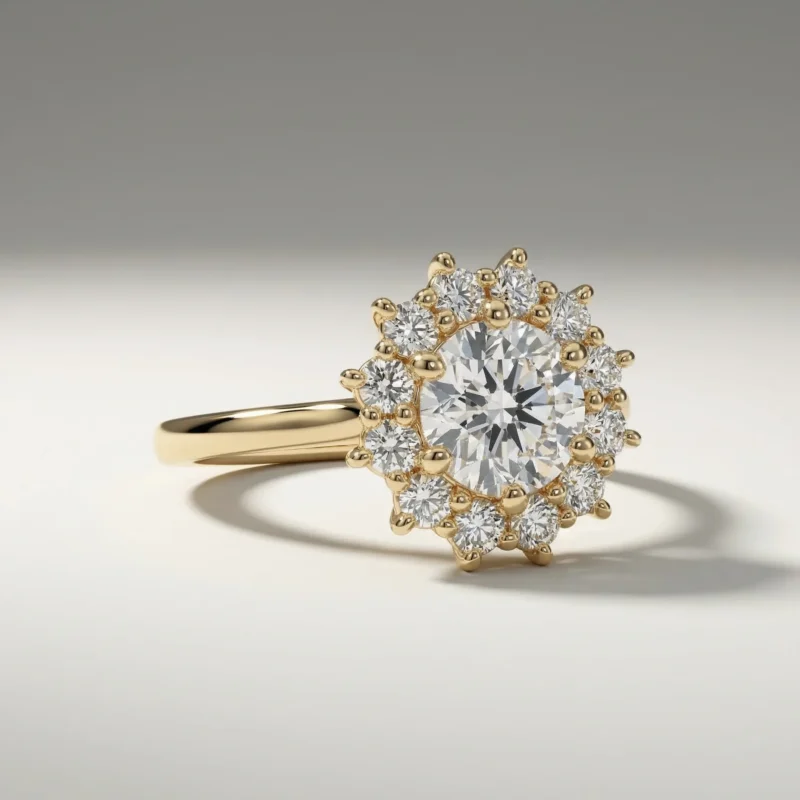
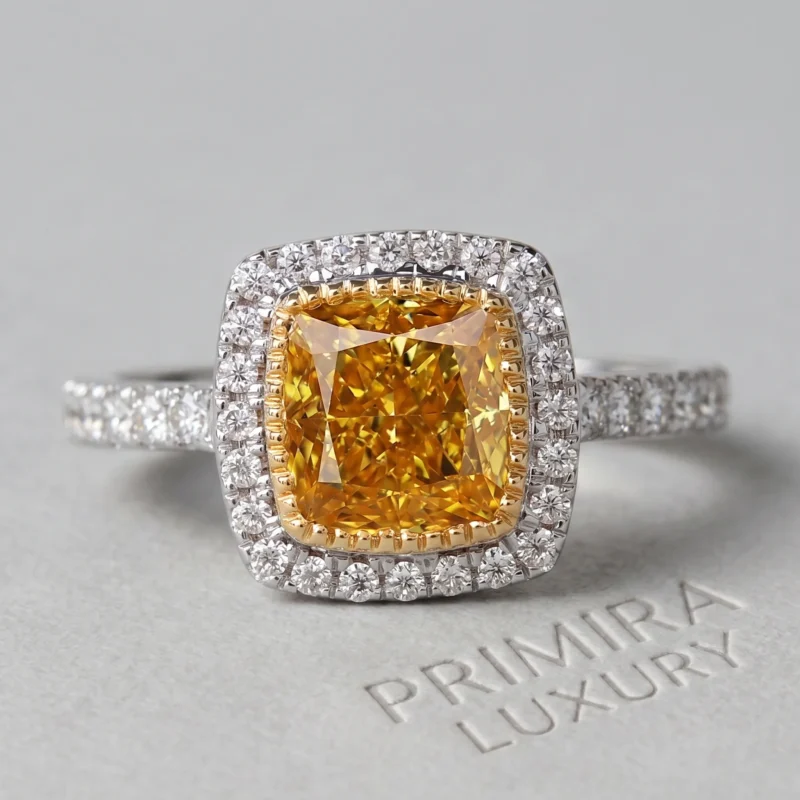
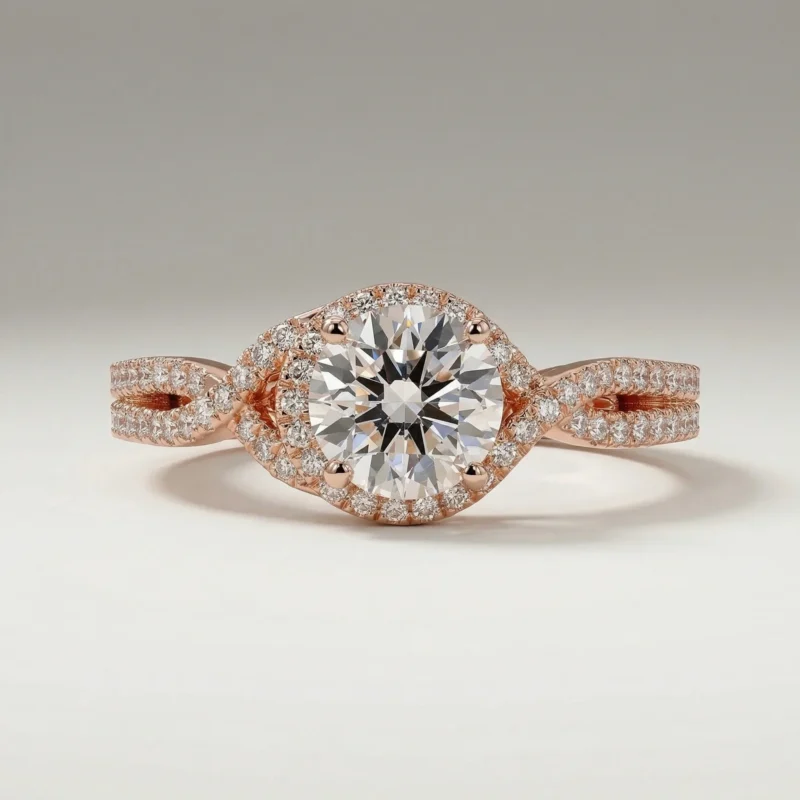
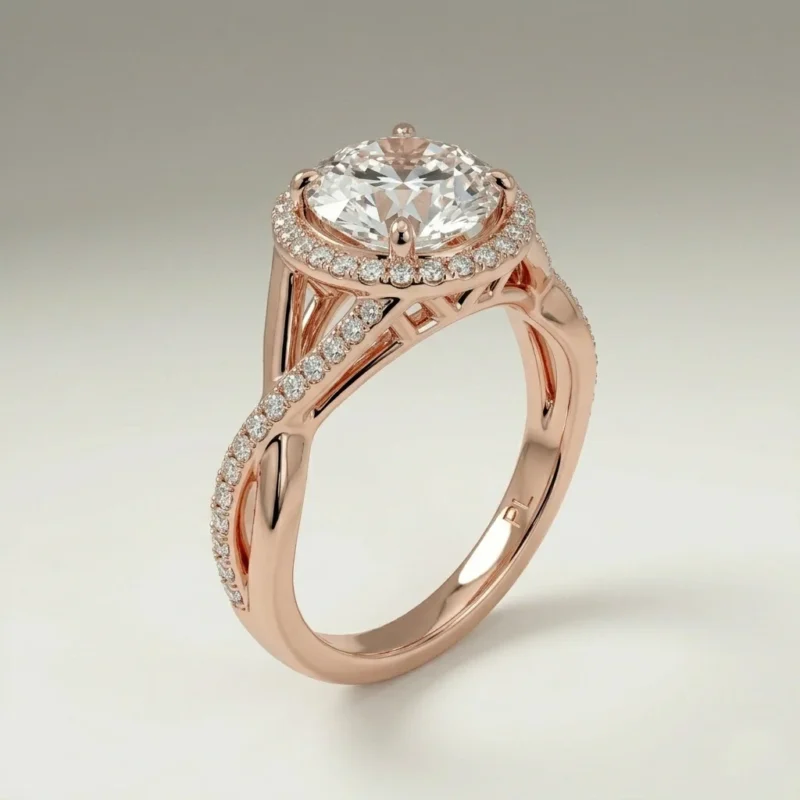
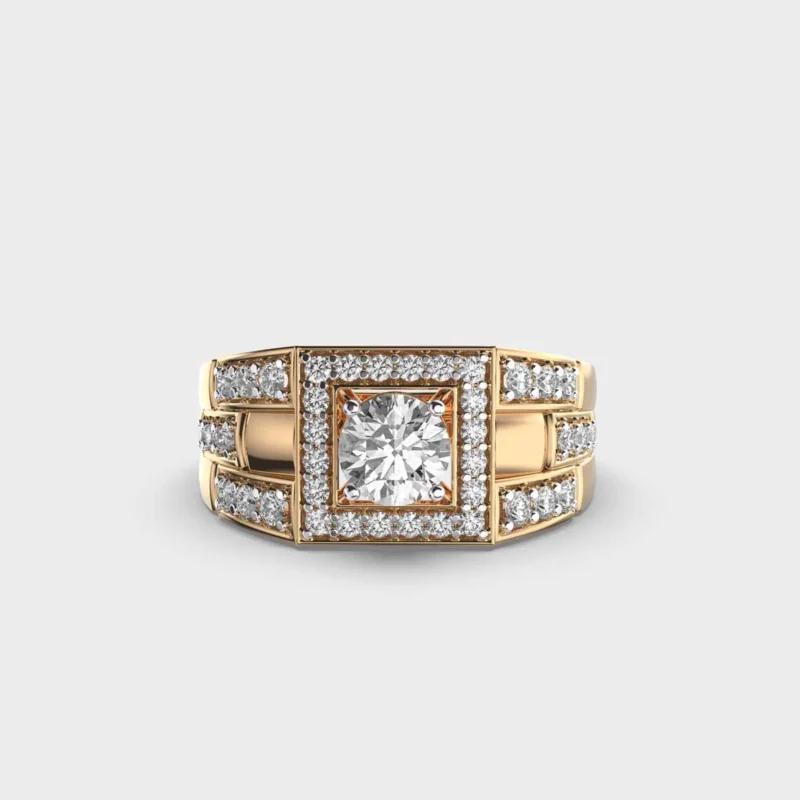
One ring of melee diamonds around the centre stone. The classic interpretation. Works with any centre shape and any band width. The accent ring sits flush against the centre’s girdle, which provides the tightest visual integration — no gap where the illusion could break. This is the most requested halo configuration and the one that ages best across multiple style cycles.
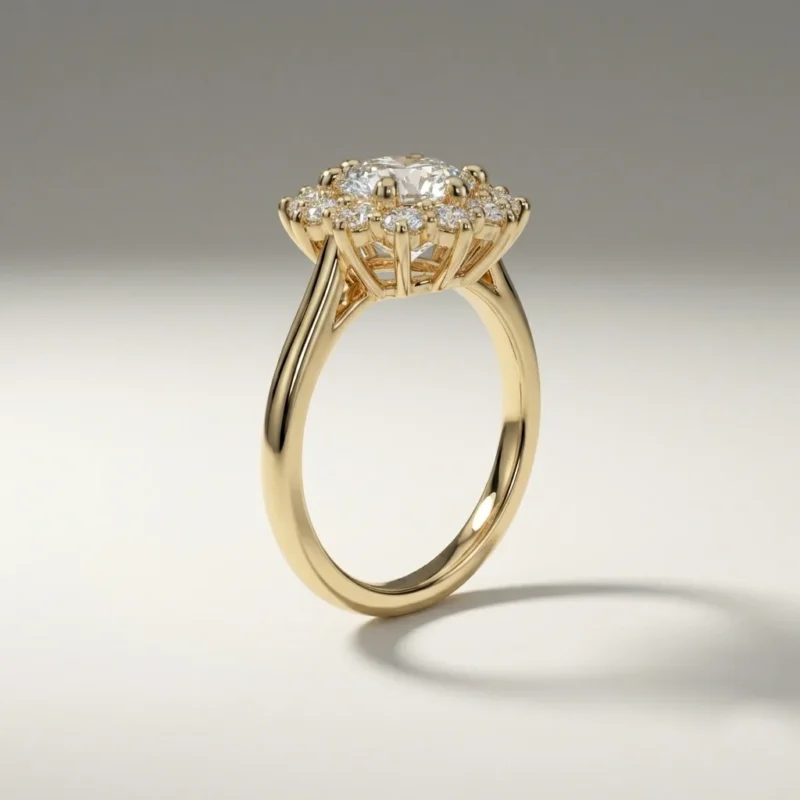
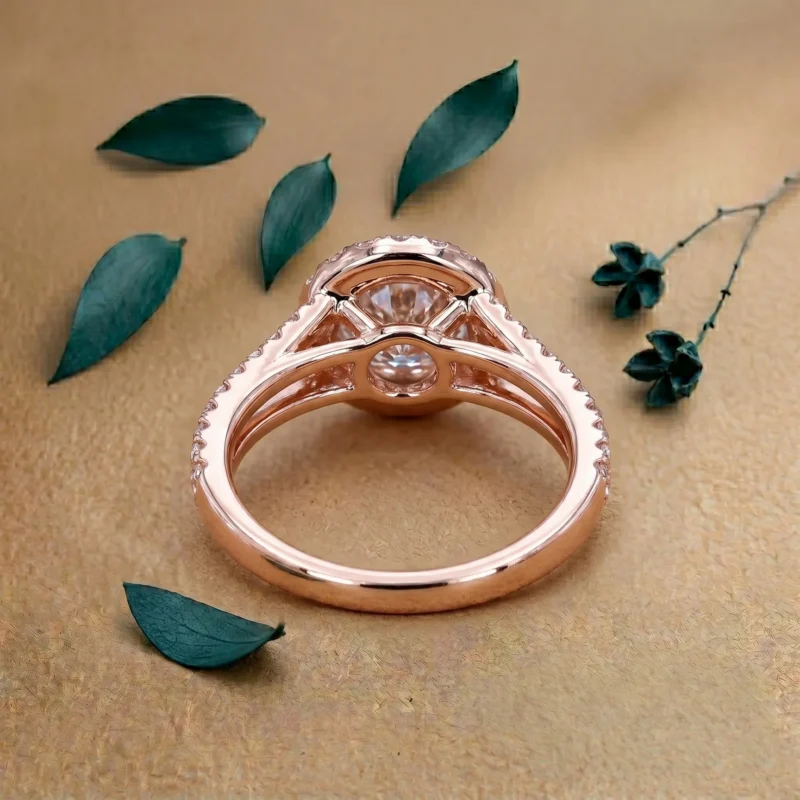
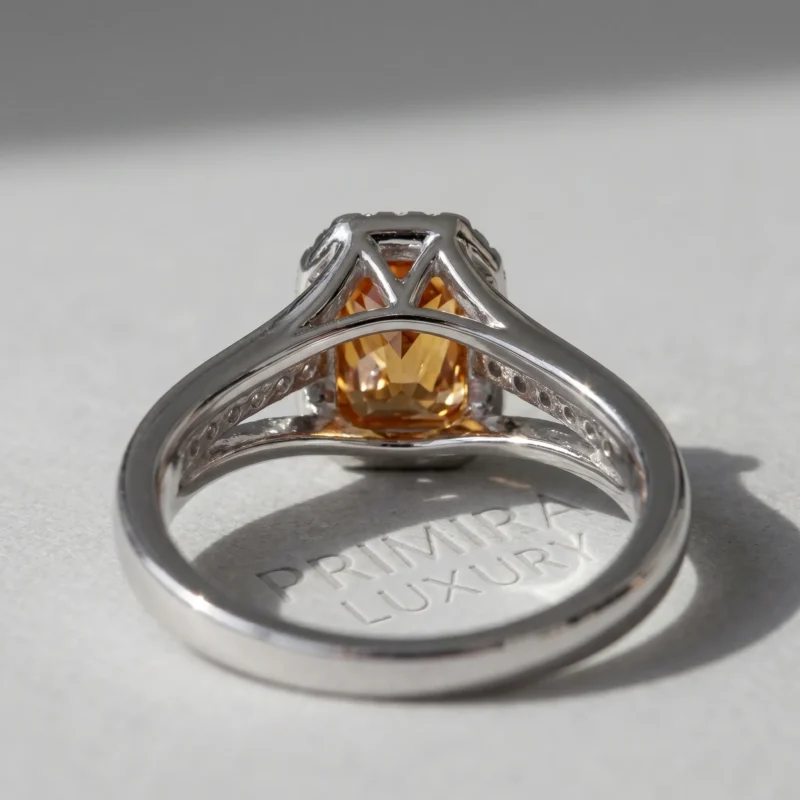
The setting’s main technical variable is basket height — how elevated the centre stone sits above the shank. A low basket keeps the centre closer to the finger, reduces snag risk, and suits everyday wear. A higher basket lets more light enter from the pavilion, which increases brilliance at the cost of a more prominent profile. At Primira, this is adjustable at the customisation stage and is one of the specific variables confirmed via WhatsApp before production begins.
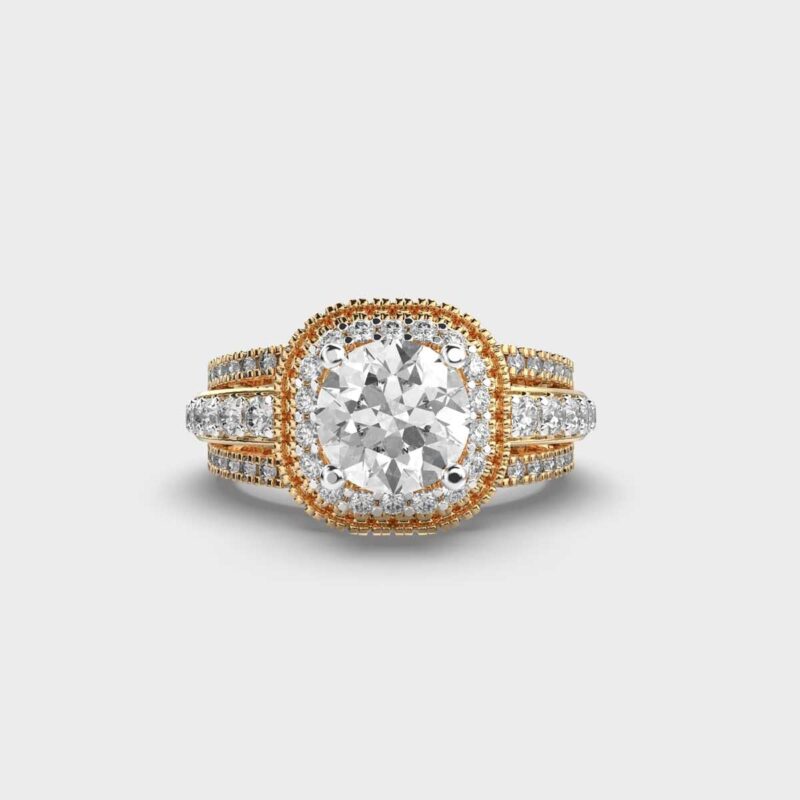
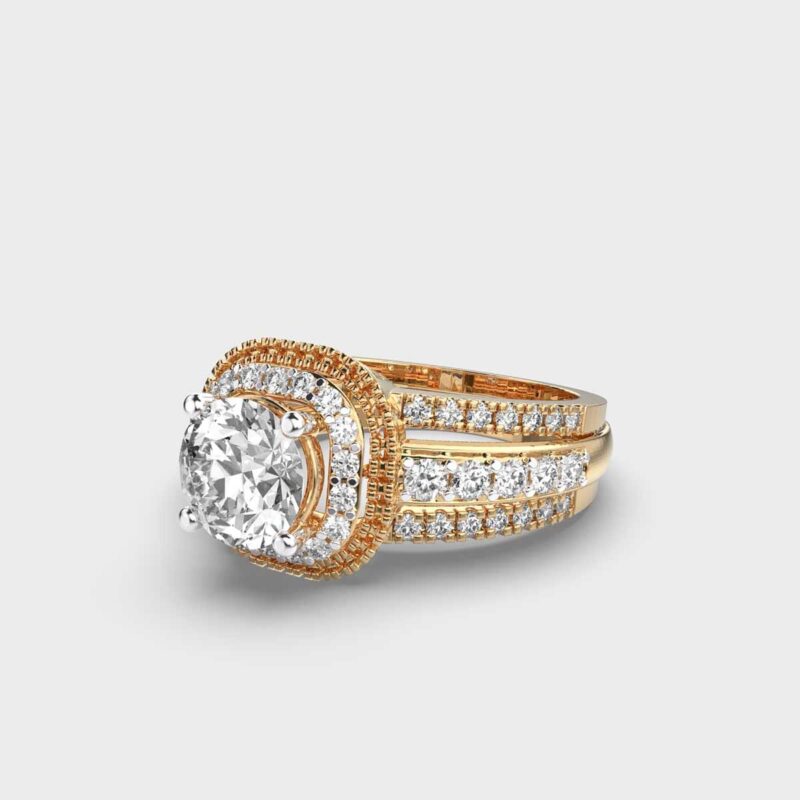
Double Halo
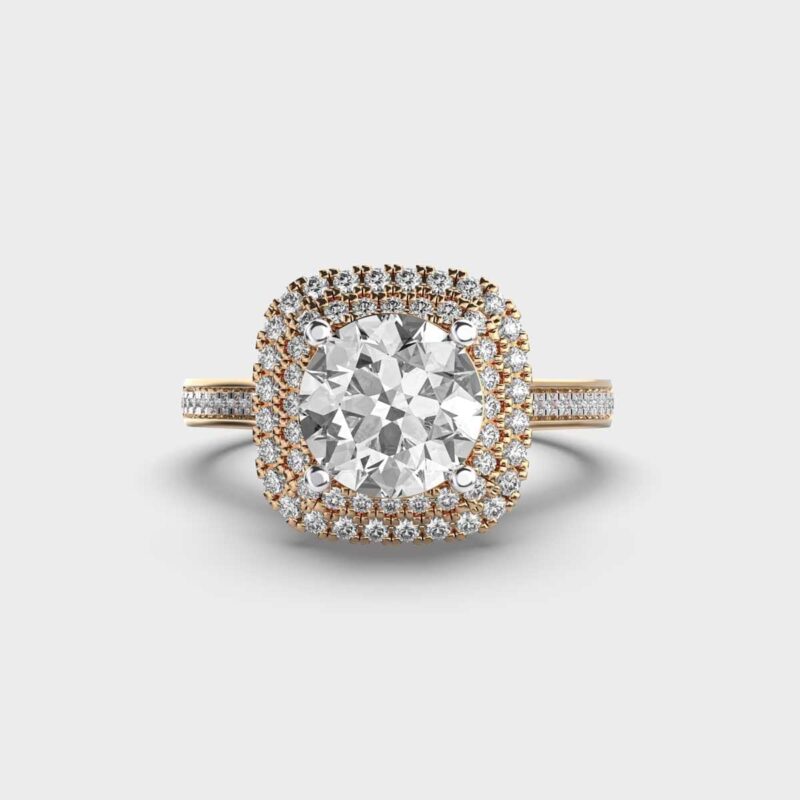
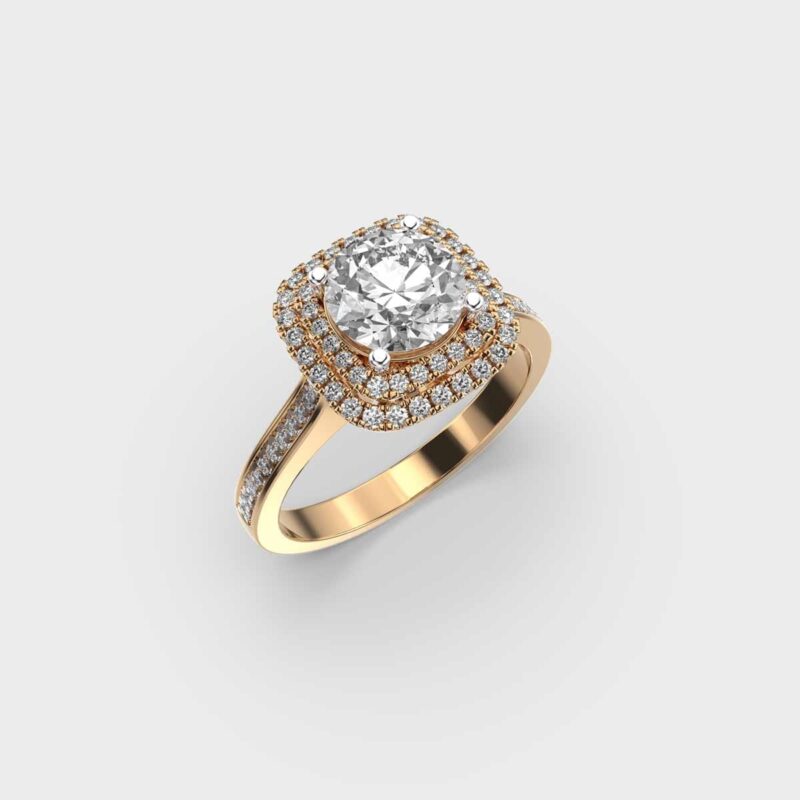
Two concentric rings of accent diamonds. The outer ring is typically set in slightly smaller melee than the inner ring, creating a graduating effect rather than two identical rings at different scales. The visual result is roughly 0.5–0.8ct of additional perceived centre size, plus a substantially larger face-up surface area.
The honest trade-off: a double halo is a bolder, more era-specific choice than a single halo. It reads more Victorian-inspired, more statement, and more demanding of maintenance — there are twice the number of micro-prongs to monitor. For buyers who want it, it delivers; for buyers who want longevity across style cycles, the single halo is the more durable choice.
Hidden Halo
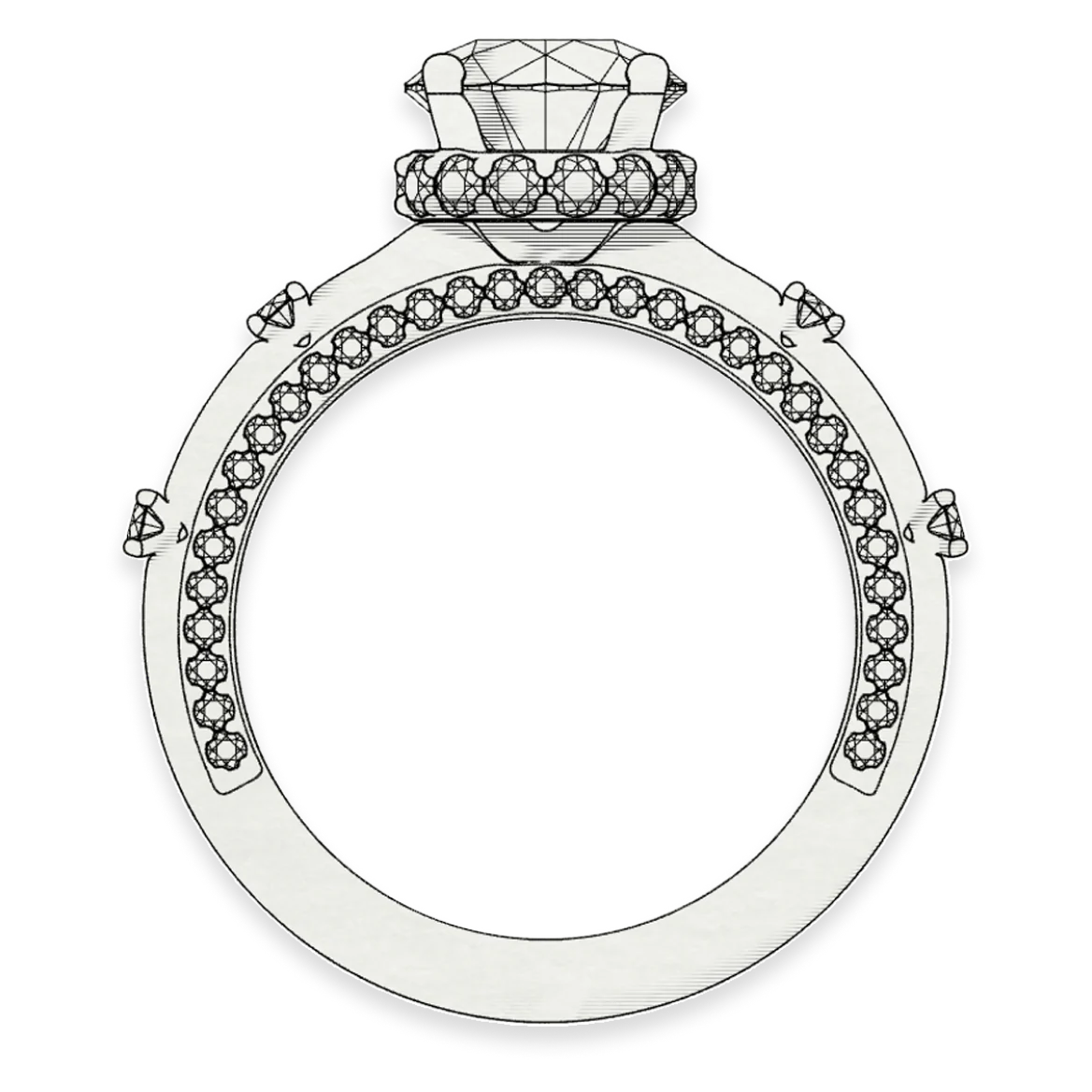
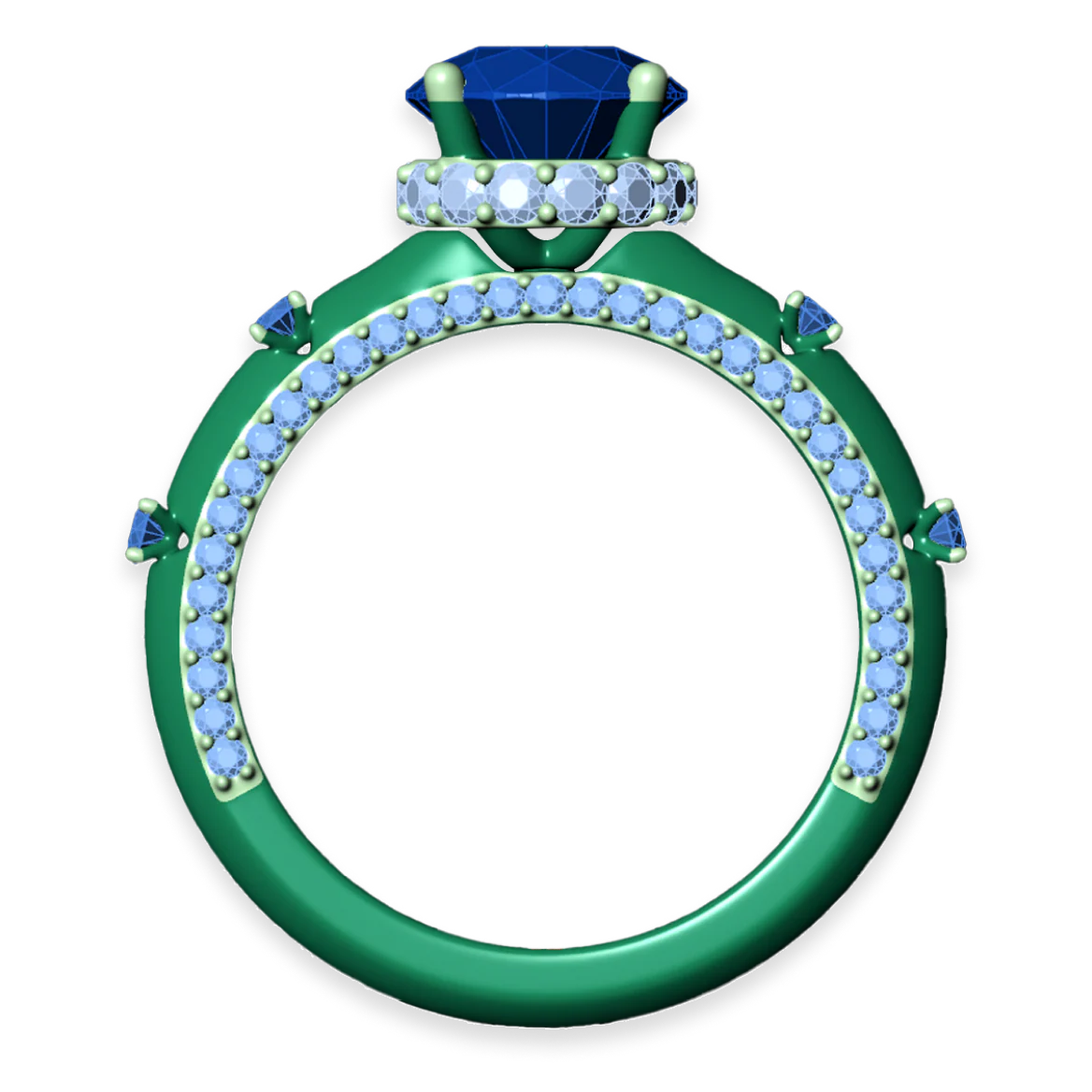
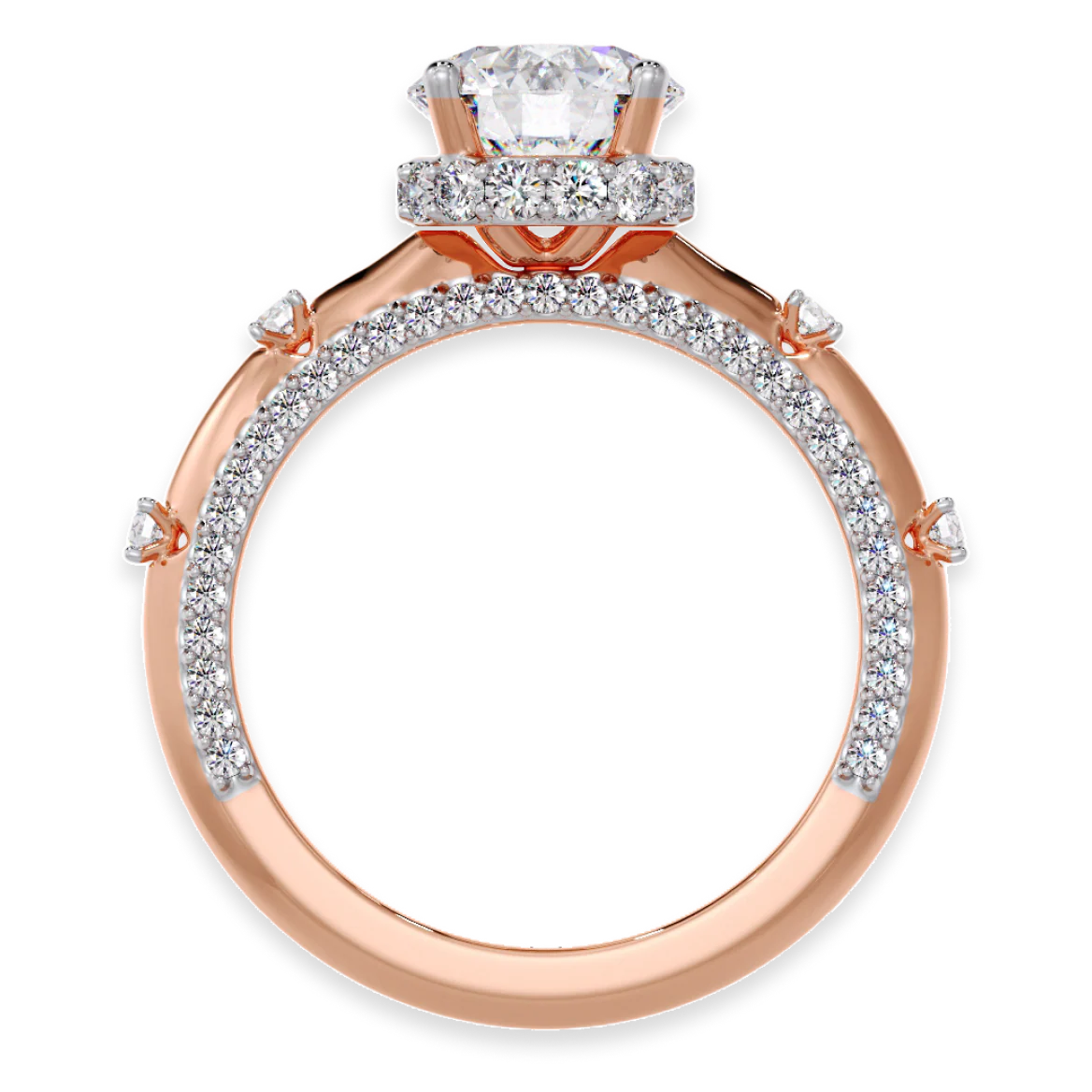
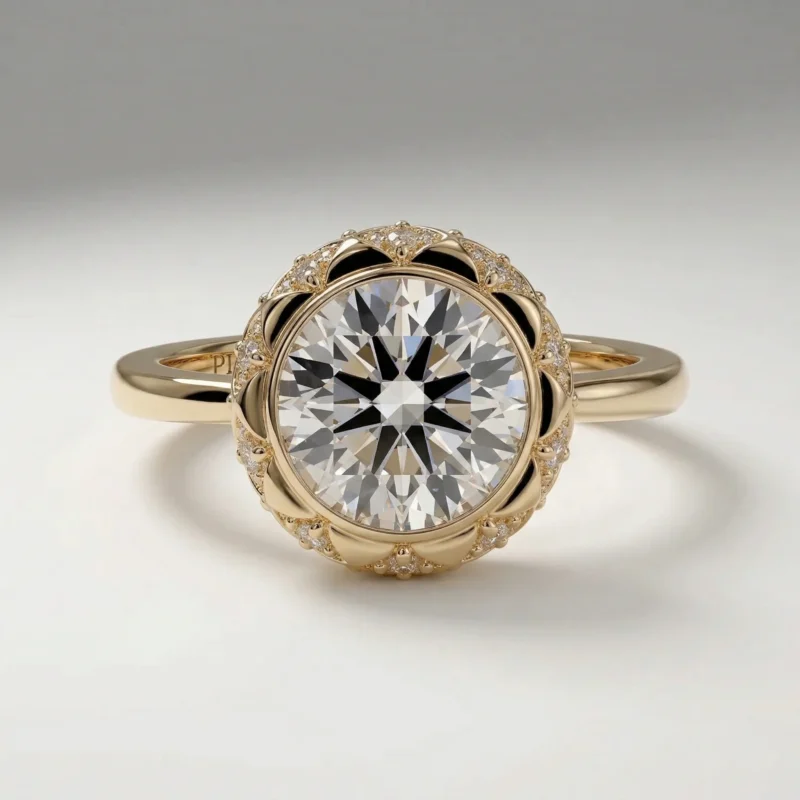
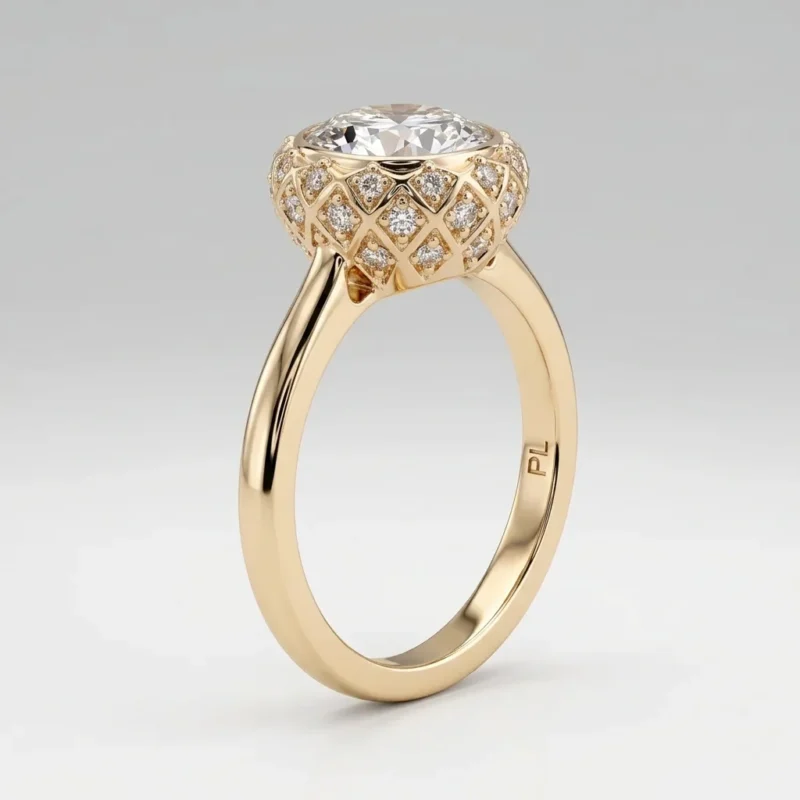
The accent ring sits beneath the centre stone, set into the underside of the basket rather than around the girdle’s perimeter. From directly above, the ring reads as a clean solitaire. From the side, the ring sparkles with a full ring of melee visible from the profile.
This is the fast-growing configuration in 2026 — buyers who love sparkle but find traditional halos too identifiable with a specific era are choosing hidden halos as the resolution. The technical execution is more demanding than a standard halo: the melee must be set into a recessed undercarriage machined into the basket, and the centre stone’s elevation above the finger increases meaningfully to accommodate it. The basket geometry required for a hidden halo is part of Primira’s production CAD process — not an aftermarket modification.
Centre Stone Shapes and Halo Behaviour
Not every shape behaves the same way in a halo setting.
Round brilliant — the most natural pairing. Symmetrical halo mirrors the stone’s symmetry exactly. No adjustment needed; the halo simply amplifies what’s already there.
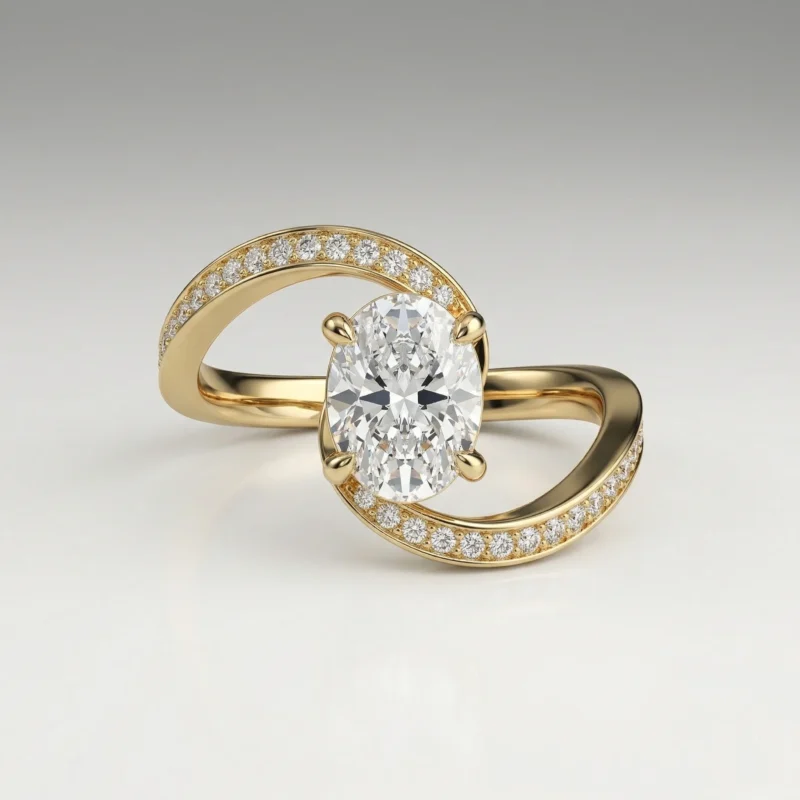
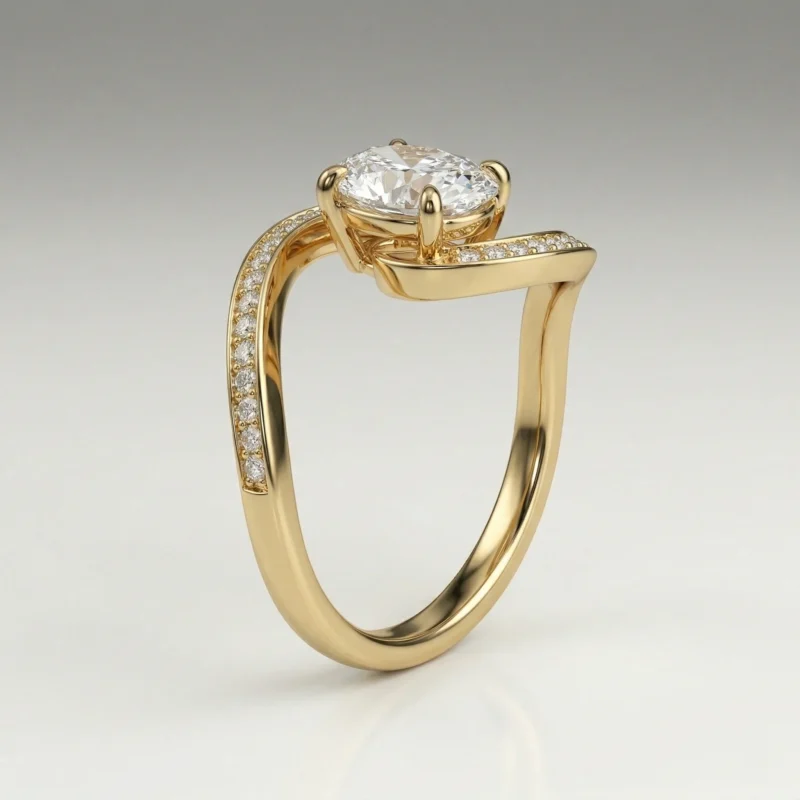
Oval — one of the most popular choices in 2026. The elongated halo traces the oval’s outline and extends apparent finger coverage. Technical note: the halo edge must clear the oval’s shoulder sufficiently to avoid the pavilion bow-tie being visually reinforced by the accent stone placement. At Primira, centre-to-halo clearance is specified in the CAD file before production.
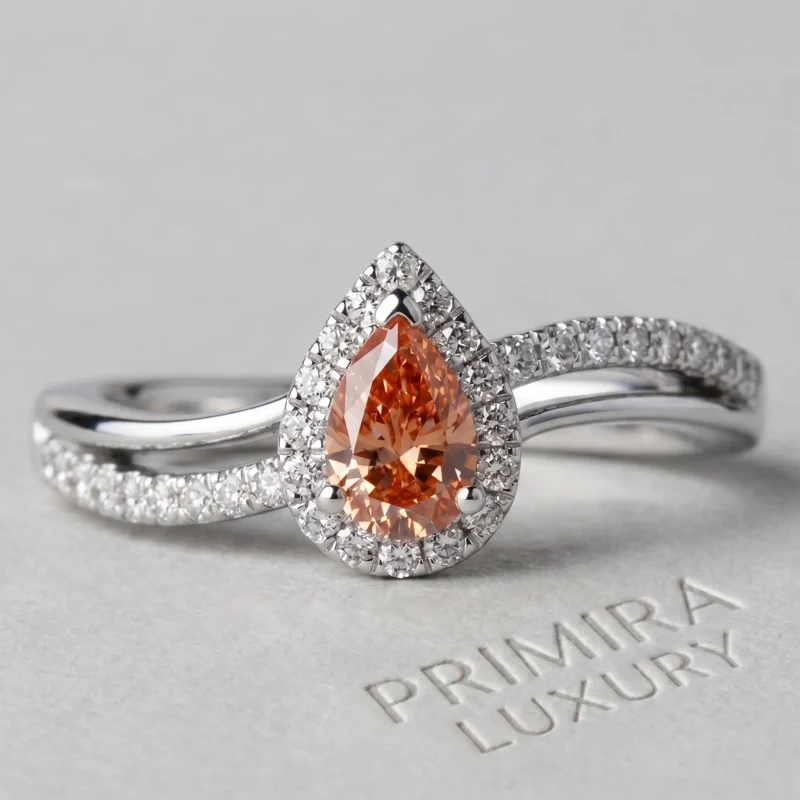
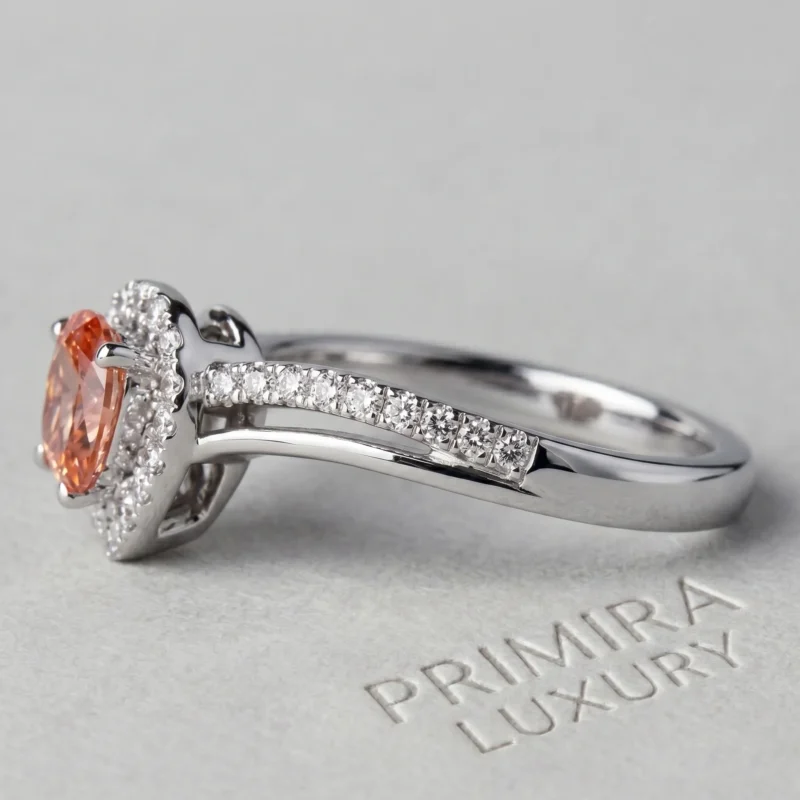
Pear — the V-prong at the tip transfers to the halo as well. The halo at the pointed end needs to trace the curve rather than blunting it, and that requires a custom-fitted setting rather than a generic round halo adapted to a pear stone. The halo also provides meaningful physical protection for the pear’s most fragile point.
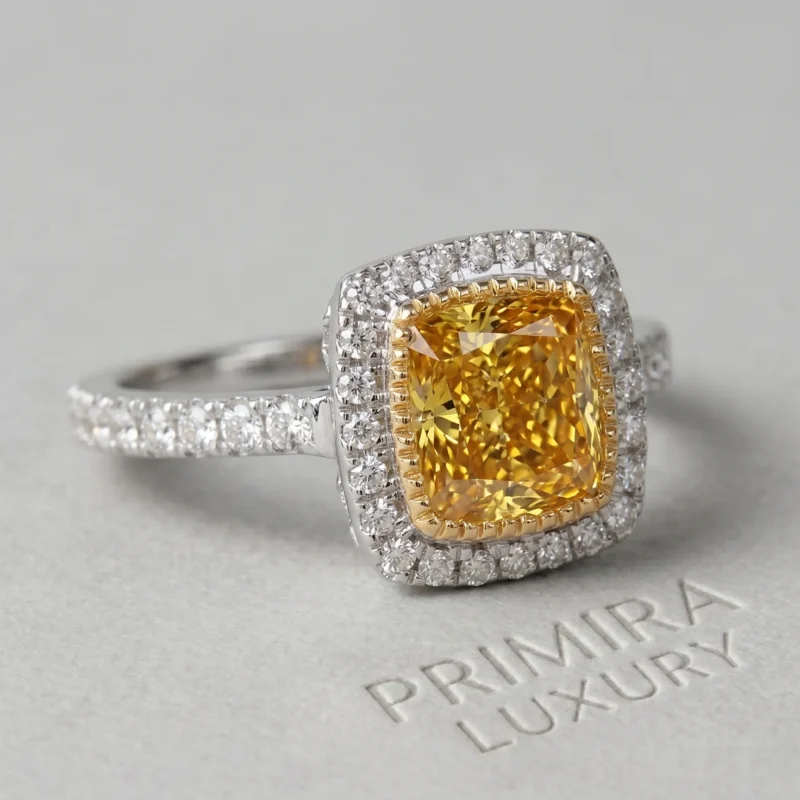
Cushion — traditionally paired with a slightly rounded halo edge to echo the cushion’s own soft corners. A square-edged halo on a cushion creates a modern, geometric contrast; a rounded halo creates a vintage-inflected warmth. Both are available and both are decisions made at the CAD stage.
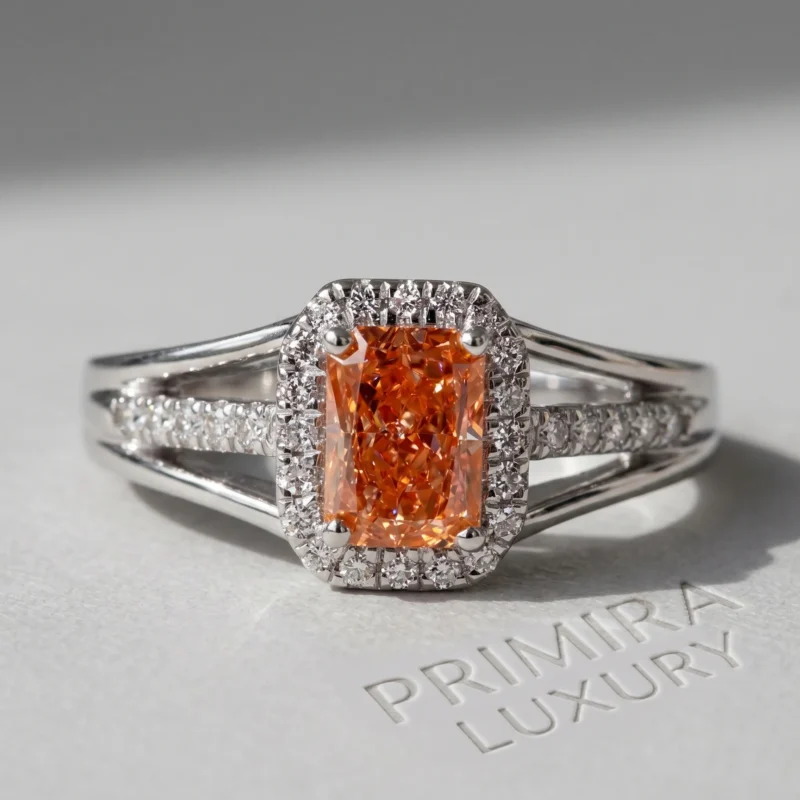
Marquise and emerald — less common in halos but strikingly different . Marquise halos are elongated and pointed at both ends; emerald halos use the step-cut’s architectural quality to create a very different effect from a brilliant halo. Both require a fitted setting rather than a round template.
Browse the full range of lab grown diamond engagement ring styles to see how halo designs sit alongside solitaire and three-stone options.
The 4Cs in a Halo Setting — Where the Guidance Changes
Standard 4Cs advice applies to the centre stone, but a halo changes the priorities at the margins.
Cut remains the non-negotiable. Ideal and Excellent only — this is Primira’s stock specification and doesn’t change regardless of setting. In a halo, a well-cut centre stone is what the entire optical system is amplifying; a poor cut means the halo is drawing attention to a dark, lifeless centre.
Color allows slightly more flexibility in a halo than in a solitaire. Because the accent ring surrounds the centre with its own light, a G or H centre in a D-F halo can read as whiter than it would in a solitaire. This is one genuine budget advantage of the halo setting — prioritising cut over color costs nothing visually. That said, Primira’s primary stock runs D-F colorless, with G-H-I as the value tier — either choice is fully eye-clean and the difference is in the certificate, not the appearance.
Clarity stays at VVS1-VS2 across Primira’s full range. SI2 and below are not stocked — a position stated explicitly because buyers comparing options will find retailers who disagree with it. In a halo, inclusions in the centre stone are slightly less visible than in a solitaire (the surrounding light competes for attention), but this is not a reason to drop to SI2; it’s a reason not to over-specify clarity when budget is a constraint.
Carat — the halo’s main value mechanism. You are buying apparent size, not actual carat weight. A 0.75ct centre in a halo with matched accent melee reads larger than a 1ct solitaire in many lighting conditions. Lab grown diamonds make large carat sizes financially accessible to begin with; a halo setting compounds that advantage.
Metals for Halo Settings
All five metal tiers are available across Primira’s halo range. For halos specifically:
18K gold (yellow, white, or rose) is the most common choice. White gold gives a neutral backdrop that keeps the accent diamonds as the visual focus; yellow gold creates warmth that suits oval and pear centres particularly well. The 75% gold content provides structural integrity for the prong work on both the centre basket and the accent stones.
14K gold is the daily-wear default — higher tensile strength than 18K, more scratch-resistant, and the difference in gold content is invisible to the eye. For buyers planning active daily wear, 14K is the right call.
950 Platinum is the premium choice for high-carat centres in halo settings. Its density means the micro-prongs holding melee stones are more resistant to deformation than gold prongs of equivalent gauge. For a 2ct+ centre where the halo micro-prongs are under more leverage stress, platinum is the specification worth considering.
All metal tones available in high polish (default), satin, and matte finish.
Customising a Halo Ring at Primira
The modular nature of a halo setting means customisation isn’t just possible — it’s expected. Every order goes through a pre-production WhatsApp confirmation in which the following can be adjusted from the catalogue default:
- Halo type: single / double / hidden
- Centre stone: shape, carat weight, color grade, clarity grade
- Accent stone tier: D-F colorless or G-H near-colorless, matched to centre
- Basket height: low-profile or elevated
- Metal tier and tone
- Band width and shank profile
- Ring size
This confirmation step exists specifically for rings like halos, where the interaction between centre stone proportions and halo geometry isn’t a one-size decision. Production begins only after specifications are confirmed — 15 to 35 business days from confirmation. Certified loose lab grown diamonds from Primira’s current inventory dispatch in 48 hours for buyers sourcing a centre stone separately.
For a fully bespoke design — a different centre shape than the standard range, a specific halo outline, a pavé shank — reference images are accepted. The process is CAD-designed and confirmed before any metal is cast.
Caring for a Halo Ring
Halo settings have more surface area to maintain than solitaires, and the melee’s micro-prongs are where attention is warranted.
The specific vulnerability: the junction between each accent stone’s prong and the metal rail can accumulate oils and debris. This traps material against the prong base, which over time works the prong loose at the root rather than at the tip — the kind of loosening that isn’t visible until a stone shifts. The practical prevention: a soft-bristle clean with warm soapy water weekly, focusing underneath the accent ring and into the underside of the basket. A professional inspection every six months is the standard recommendation for any micro-pavé ring.
Avoid ultrasonic cleaners for double halos or hidden halos specifically. The vibration that clears dirt from a solitaire is the same vibration that can work micro-prongs loose when there are 40+ of them in a compact geometry. Steam cleaning by a jeweller is the better option when a deep clean is needed.
Frequently Asked Questions
Do halo engagement rings make the diamond look bigger?
Yes — but the mechanism matters. The accent ring doesn’t change the centre stone’s carat weight; it creates a larger total face-up surface area of light. A well-calibrated single halo adds roughly 0.3–0.5ct to the perceived size of the centre. A double halo adds more. Whether that reads as larger depends on accent stone uniformity and color matching — a ring with mismatched melee can actually undermine the centre stone rather than amplifying it. At Primira, accent stone specification is confirmed against the centre grade before setting.
Are halo engagement rings outdated in 2026?
The traditional double halo from the 2010s has dated in the same way any maximalist trend does. Single halos, hidden halos, and fitted-shape halos (oval, pear, cushion) remain strongly in demand and have none of the era-specificity of the oversized double halo. Hidden halos in particular are the fastest-growing engagement ring configuration heading into the 2026 wedding season — they read as modern precisely because the top-down view is clean. A ring designed with restrained proportions and a classic accent size doesn’t date.
What’s the difference between a single halo and a double halo?
A single halo is one ring of melee diamonds around the centre. A double halo is two concentric rings, with the outer ring typically in smaller melee to create a graduated effect. Double halos add more visual presence and perceived size but require more maintenance (twice the micro-prong count) and read more heavily. The single halo is the more versatile choice for daily wear across style cycles; the double halo suits buyers who want maximum presence and are comfortable with the maintenance commitment.
What is a hidden halo engagement ring?
A hidden halo positions the accent ring beneath the centre stone, set into the underside of the basket rather than at the girdle perimeter. The top-down view reads as a solitaire; the profile view reveals a full ring of melee. It’s the configuration for buyers who want solitaire-style restraint with the light output of a halo. The engineering is more complex — the basket must accommodate the recessed accent ring, which increases the centre stone’s elevation. At Primira, hidden halo geometry is specified in the CAD design at the customisation stage.
Which centre stone shape works best in a halo setting?
Round brilliant and oval are the most natural pairings — both have curved profiles that a halo traces without complication. Pear benefits specifically from the halo’s physical protection at the pointed tip. Cushion halos read as vintage-inflected. Marquise and emerald halos are more architectural and less common but striking when done with a purpose-fitted setting rather than a round-template adaptation. The short answer: every shape works, but shapes with pointed tips (pear, marquise) benefit most from having a halo that’s physically fitted to their outline rather than approximated.
Can a halo engagement ring be resized?
The shank can typically be resized by one to two sizes in either direction without affecting the halo itself, provided the stone count and prong placement on the shank (if there’s a pavé shank) allow for it. At Primira, ring size is confirmed at the pre-production WhatsApp stage — this is the point to specify accurately, because post-production resizing on a pavé shank is more complex than resizing a plain band. If you’re uncertain about ring size, confirm the best available measurement before production begins, not after.
Certified, Confirmed, and Made at Source
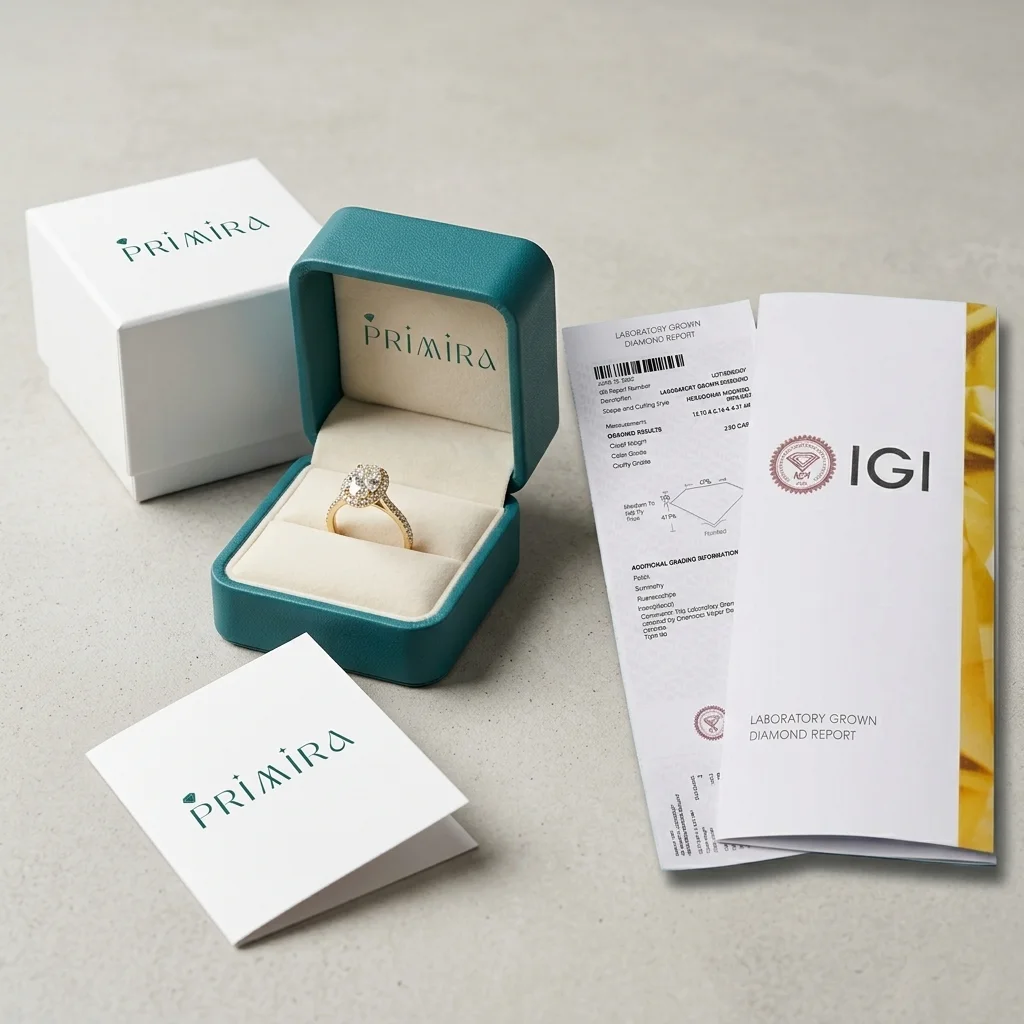
Every lab grown diamond at Primira — centre stone and accent melee — comes with IGI certification or is graded against IGI-standard specifications. For the centre stone, the IGI report number is laser-inscribed on the girdle and verifiable directly at igi.org. The report covers cut, color, clarity, and carat independently — not self-reported.
For an engagement ring purchase, the relevant policy facts: a 7-day return window on any piece that doesn’t match confirmed specifications, every shipment insured from dispatch to your door, and a buyback programme if circumstances change after delivery. The pre-production WhatsApp confirmation means every specification — halo type, centre grade, accent tier, metal, basket height — is written down and agreed before a single gram of metal is cast.
The full engagement ring collection includes solitaire, three-stone, vintage, and toi-et-moi styles alongside halos. If the comparison you’re working through is halo versus solitaire, the solitaire page covers that decision from the other side.




 1-to-1 Custom Design
 Craft Your Vision
 HD video Preview
 Fully Customizable
 Choose Metal Tone:
 Handcrafted in Solid 10K · 14K · 18K
 Select Your Stone Type:
  Award winning
  Hallmarked &
  Personalized Care &
  Design Any Piece
 Chat on WhatsApp