Three Stone Lab Grown Diamond Engagement Rings | Primira Luxury
Three Stones, Three Variables — and Why Proportion Decides Everything
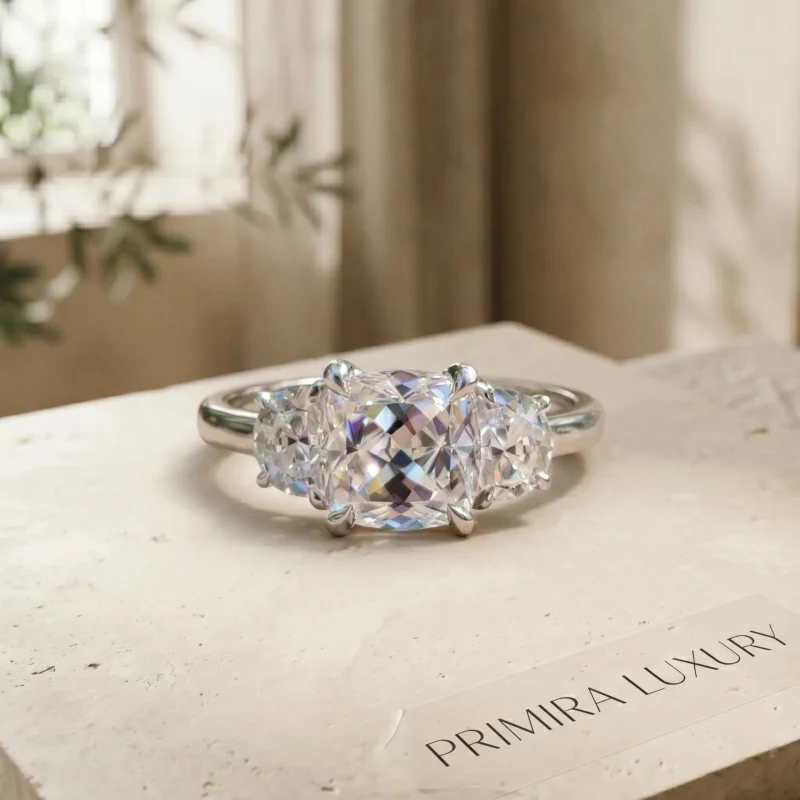
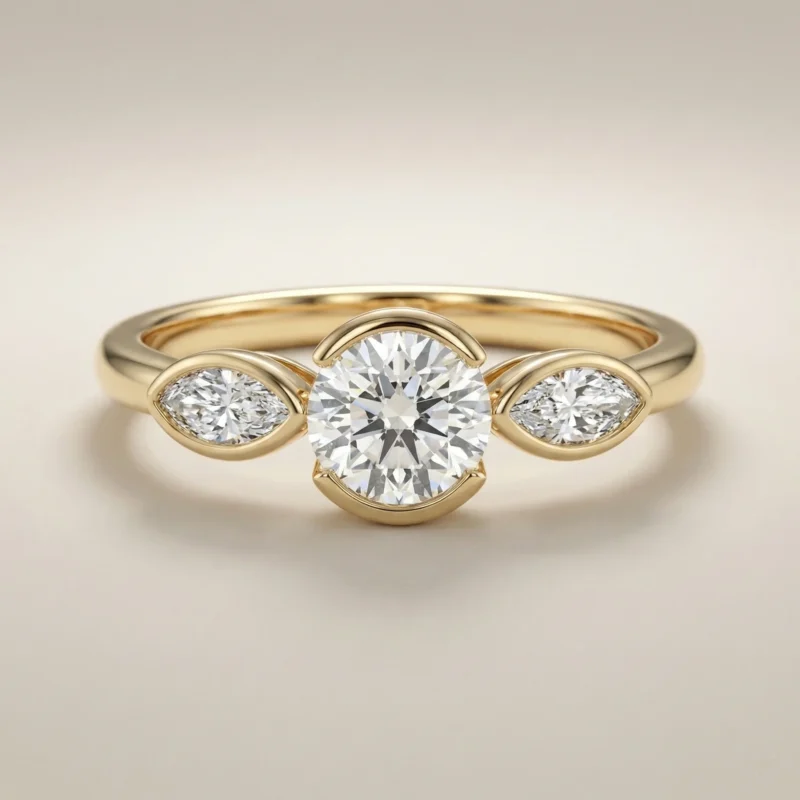
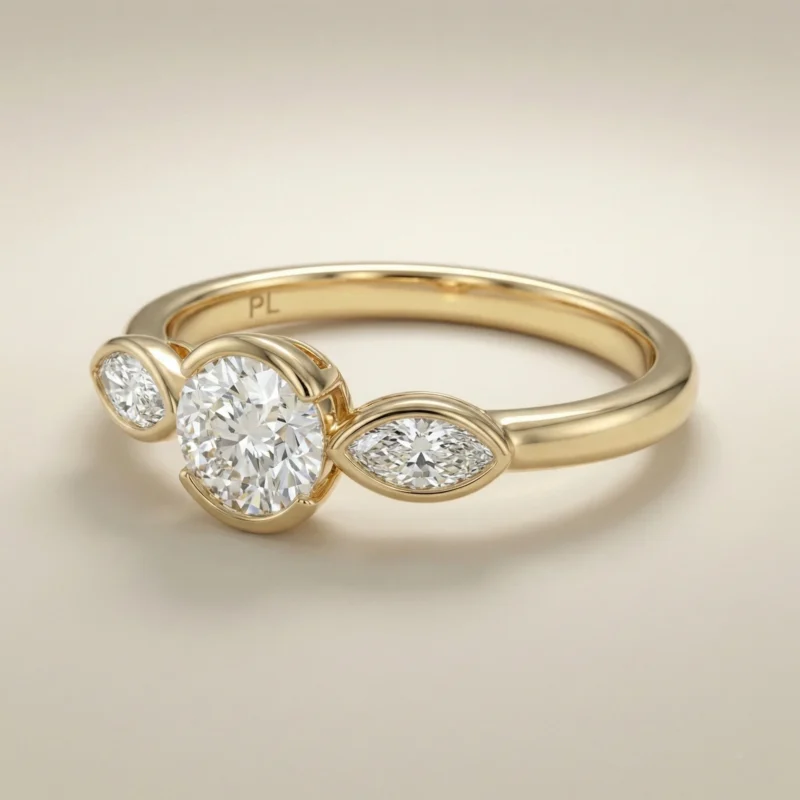
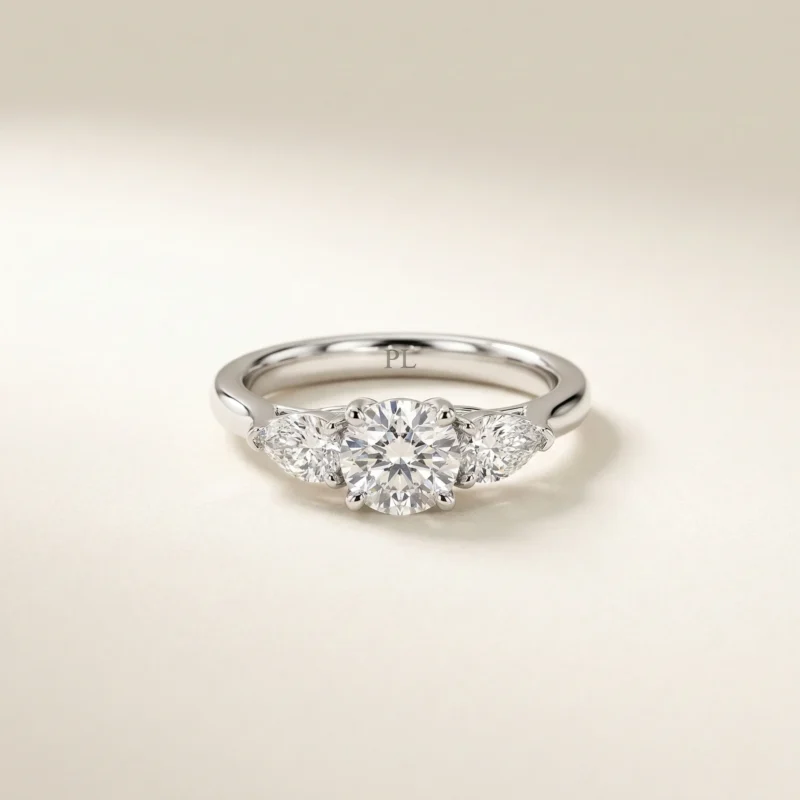
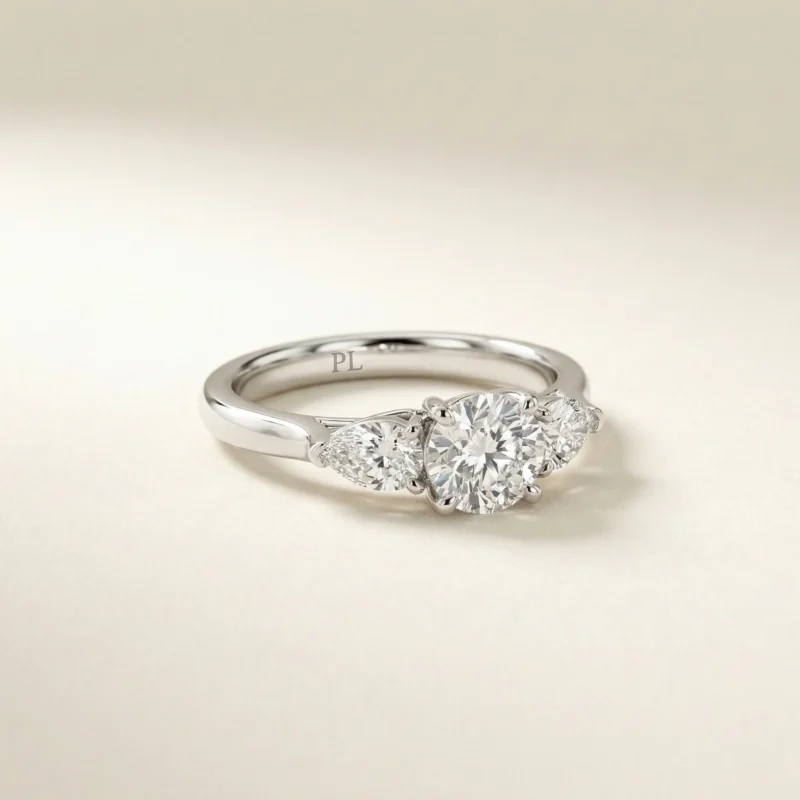
Most three stone engagement rings fail the same way: the side stones are either too large and fight the centre for attention, or too small and disappear into accents the eye can’t hold. Neither option delivers what the style is supposed to do — three stones of clear, distinct presence that read as a designed unit.Three stone lab grown diamond engagement rings — also called trilogy or past-present-future rings — are one of the most symbolically explicit styles in fine jewellery. Each stone has an assigned meaning. That’s exactly why proportion isn’t just an aesthetic call here: a ring where one stone visually dominates disrupts the symbolism as much as it disrupts the silhouette. Get it right and the three stones work as a system. Get it wrong and both the look and the meaning are simultaneously off.This page covers how to read proportion correctly, which shape combinations hold together well, what colour and clarity matching between the three stones actually involves, and how Primira’s custom-order process handles all three specifications before production starts.
What “Proportion” Actually Means in a Three Stone Ring
Most buying guides cite a single ratio: side stones should be approximately 50% of the centre stone’s carat weight. That’s a useful starting point, but it doesn’t account for the difference between carat weight and face-up diameter — and those are two different things.A 0.50ct round brilliant has a face-up diameter of approximately 5.0mm. A 0.50ct pear cut has a face-up length of approximately 7.0mm. If you’re pairing a 1.00ct round brilliant centre (approximately 6.4mm diameter) with 0.50ct pear side stones, the pears are visually longer than the centre is wide — the proportion maths on paper looks balanced, but the ring itself won’t be.
The practical framework:
- Face-up width ratio. Each side stone’s widest horizontal measurement should sit between 40% and 55% of the centre stone’s widest horizontal measurement. For an oval or elongated centre, use the width at the widest point, not the length.
- Carat weight ratio. The two side stones together typically equal 40–60% of the centre stone’s carat weight. The classic past/present/future reading uses the lower end (each side stone ~25–30% of centre weight); a more balanced-mass design sits at the upper end.
- What the ratio actually means visually. A 1.0ct centre with two 0.30ct sides reads as a prominent centre flanked by clear but subordinate companions. A 1.0ct centre with two 0.50ct sides shifts toward equal visual weight — all three stones are the story, not centre-plus-frame.
Neither is wrong. They’re different things. Understanding which one you want before specifying the ring is the first real decision.
The Shape Pairing Problem — and What Works
A three stone ring with three identical shapes (three round brilliants, three ovals) is the simplest setting to execute: the basket seat depths are the same for all three stones, and prong heights can be standardised across the mount. Shape-matched trios are still a strong choice, particularly for buyers who want clean visual symmetry.Mixed shapes introduce an engineering variable most discussions skip: when the centre and side stones have different pavilion depths, the basket seats must be independently calibrated so all three table planes sit flush at the top of the ring. A round brilliant pavilion is approximately 43% of the stone’s total depth. A pear pavilion runs slightly shallower at the apex end and deeper at the rounded end. Setting all three stones at the same nominal basket height produces a ring where the stone table planes sit at different elevations — visible from the top and from the side.This calibration happens at the bench, and it requires knowing the actual measured pavilion depth of the specific stones going into the ring — not an industry average. It’s one reason three stone rings with mixed shapes are worth specifying as a custom order rather than selecting from finished stock.
The most requested pairings in 2026, with what makes each work:
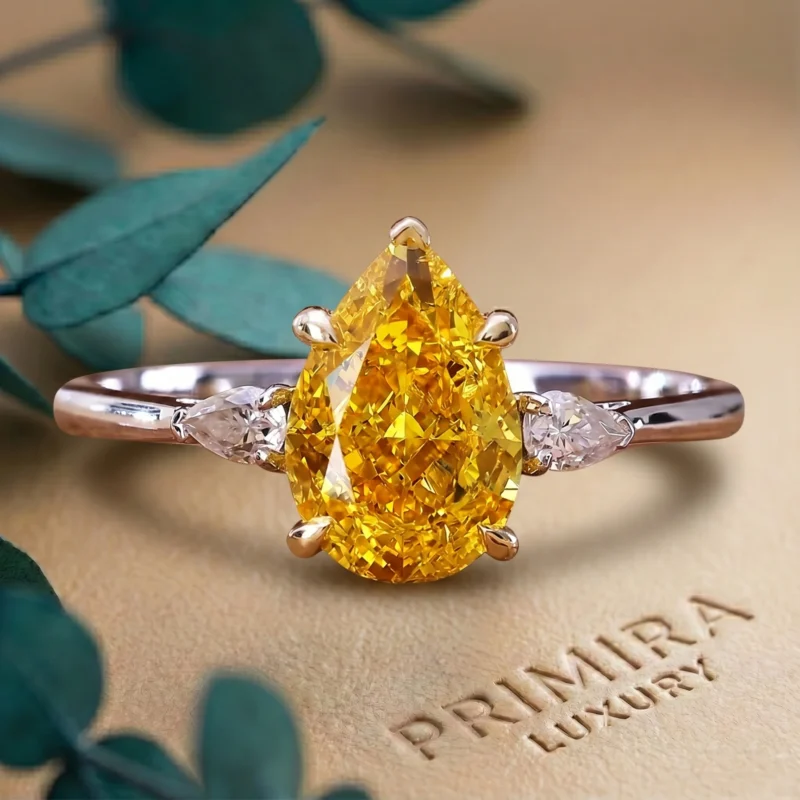
- Oval centre + pear sides (apex toward the centre). The curves of the pear apexes echo the rounded ends of the oval, creating a continuous flowing line when viewed from above. The pear pavilion depth differential is the variable to manage in the basket seat calibration. This is currently the highest-demand combination globally.
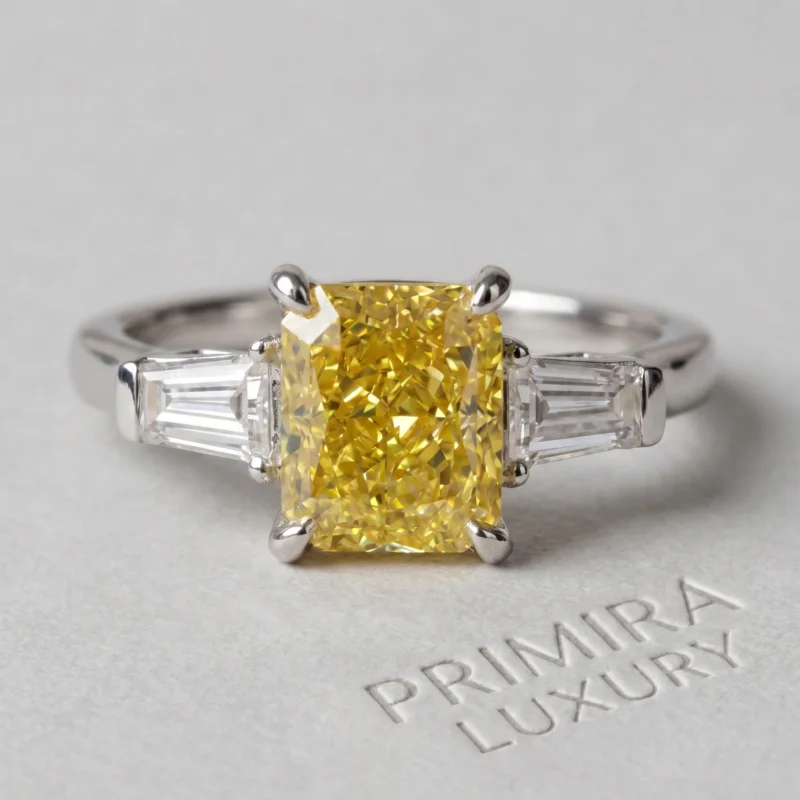
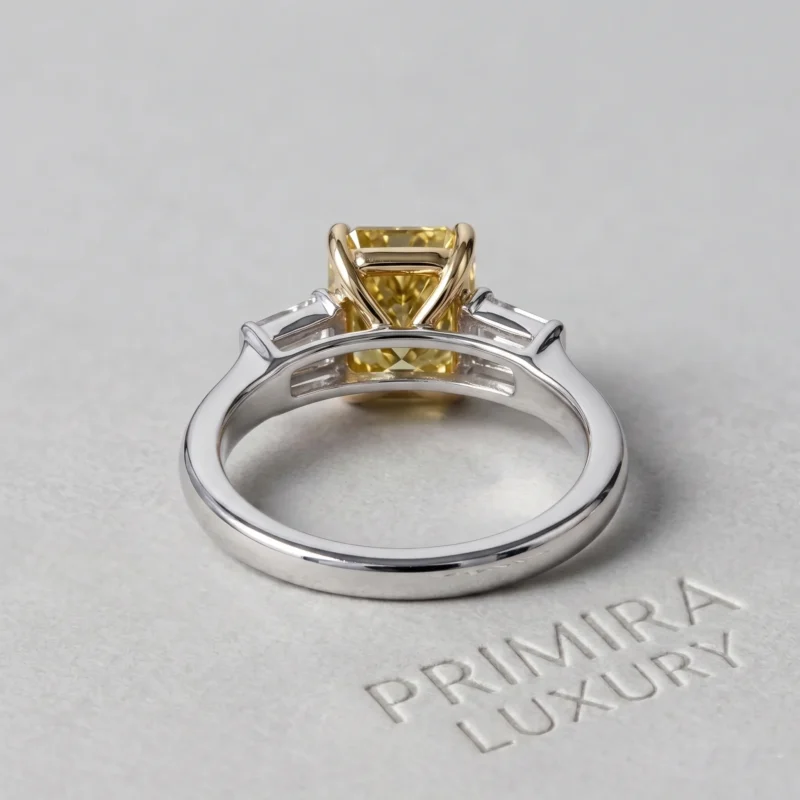
- Round brilliant centre + tapered baguette sides. The baguette’s step-cut facets (long parallel corridors) contrast directly with the brilliant’s scintillation — two completely different light characters sitting adjacent to each other. The baguette’s flat pavilion makes basket-height matching easier to get right.
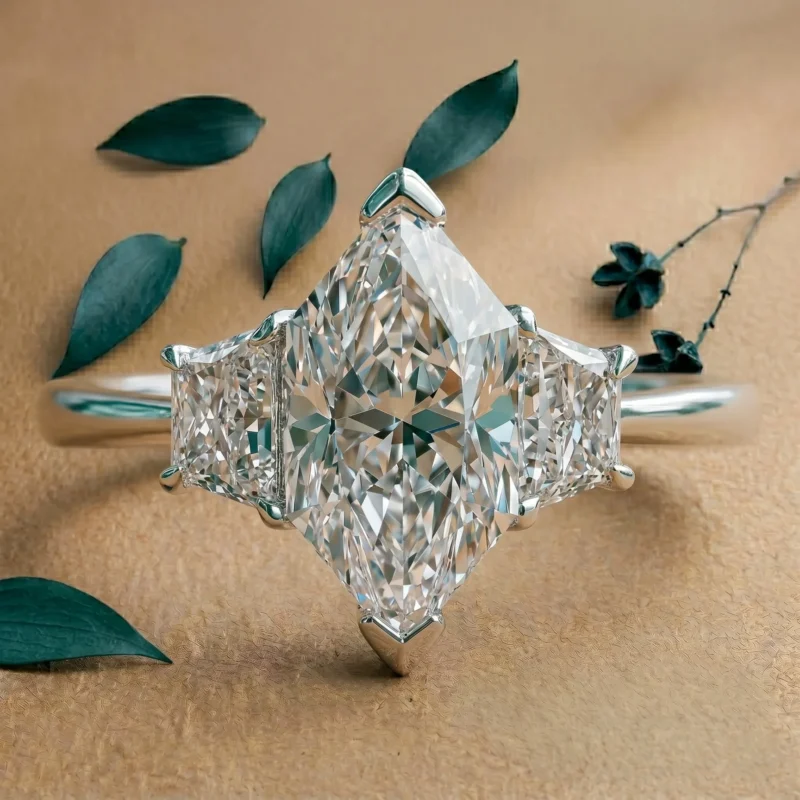
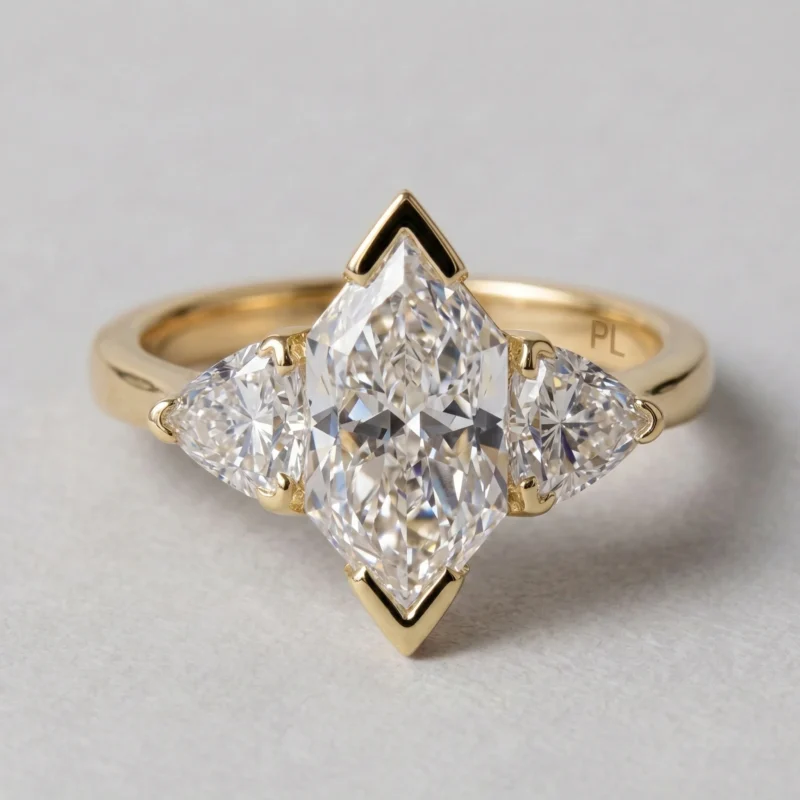
- Oval or cushion centre + trillion (trilliant) sides. The trillion’s three-sided outline has a triangular apex that points toward the centre stone, creating a strong architectural framing. The trillion facet count is typically 43 facets in a brilliant cut — good light return, but the pointed tips require V-prong protection at each corner.
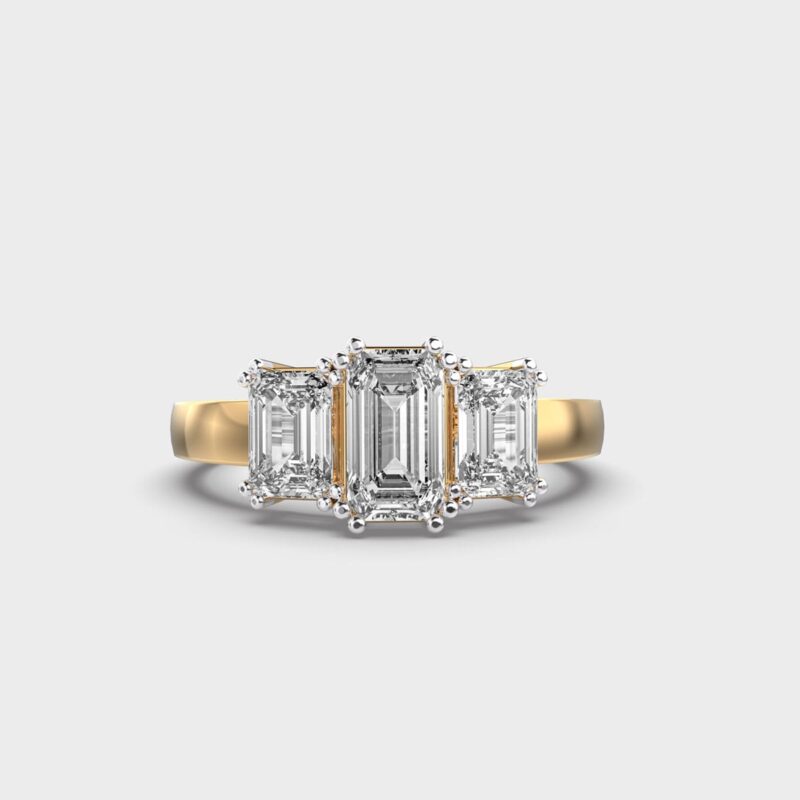
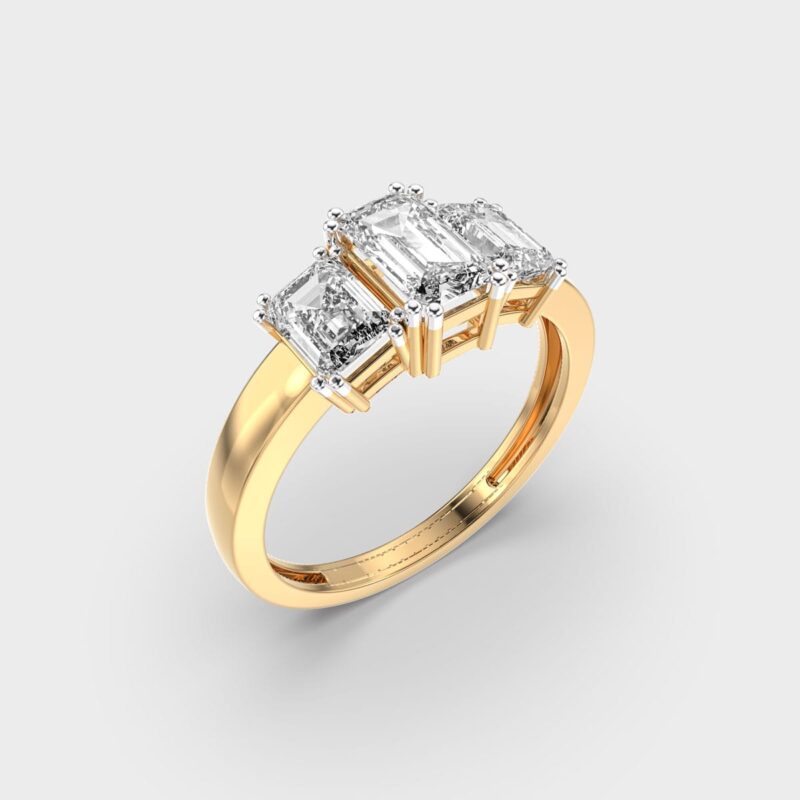
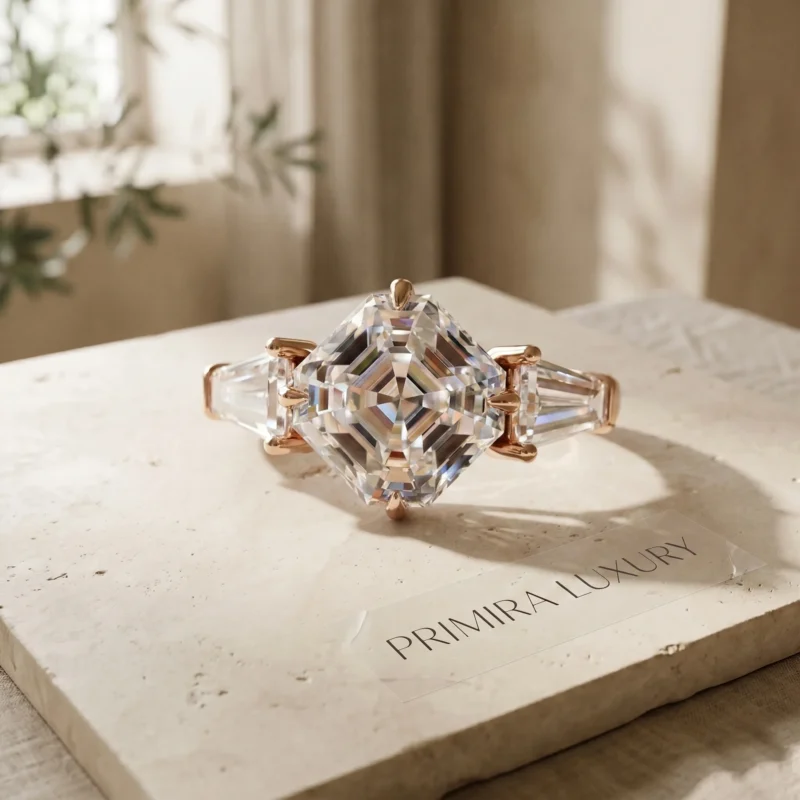
- Emerald centre + trapezoid sides. Both shapes are step cuts — the reflection corridor aesthetic of the emerald continues into the trapezoid shoulders. Extremely architectural. Requires VS1 minimum clarity in the centre stone since the step-cut facets make inclusions more visible.
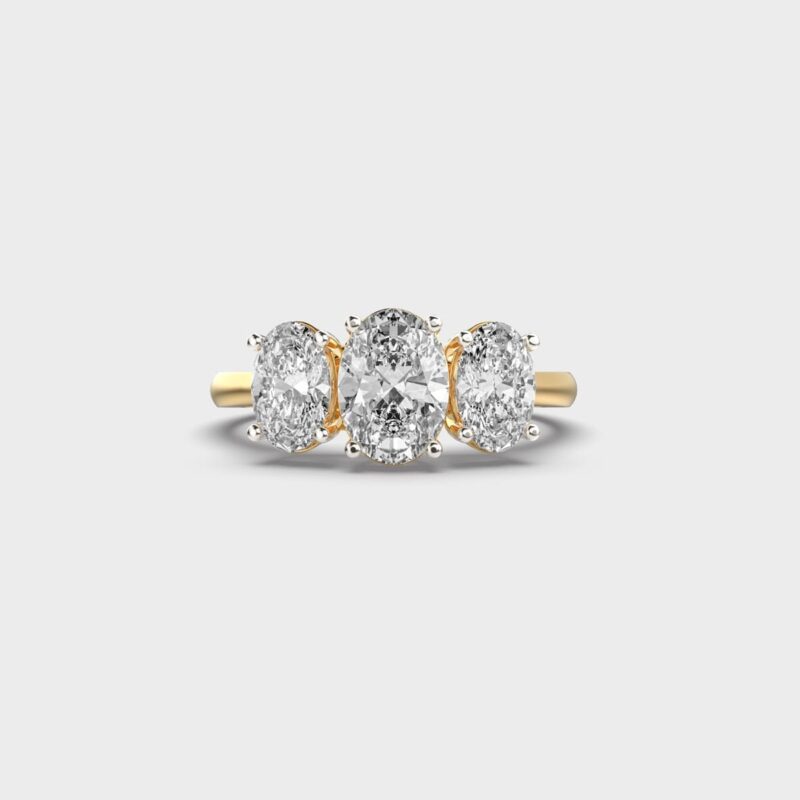
- Round brilliant centre + round brilliant sides (classic). Still the most globally searched combination, and not because buyers lack imagination — because it works. The prong heights standardise cleanly, the visual mass is easy to balance, and the ring photographs and wears consistently well.
Colour and Clarity Matching — the Detail No One Mentions
Three stones sit in different positions relative to the eye: the centre stone is slightly elevated and forward, the side stones sit at approximately 45-degree angles at the band junction. But they’re all in the same ambient light at the same moment.This matters for colour matching in a way solitaire buyers never have to think about. A D-coloured lab grown diamond centre stone paired with H-coloured lab grown diamond side stones — a four-grade difference — will show a visible warmth differential in daylight. The centre reads colourless. The sides carry a faint warmth. The ring looks like the side stones were added later from a different source, not selected as part of the same piece.The practical rule: keep the centre and side stones within two colour grades of each other. D-F centre with D-F or G sides works. D-F centre with H-I sides starts to show a differential under most light conditions.Primira stocks D-F colorless and G-H-I near-colourless lab grown diamonds across the full carat range. For a three stone order, the colour specification for all three stones is confirmed simultaneously during the pre-production WhatsApp session — you won’t discover a visual mismatch after the ring arrives.Clarity can be matched more loosely: VVS1 and VS2 stones look identical to the naked eye in both centre and side positions, and Primira doesn’t stock below VS2. The real clarity consideration is stone-type specific: if you’re using an emerald or baguette side stone, the step-cut facets make inclusions more visible, and VS1 minimum in those positions is worth specifying.
Setting Types for Three Stone Rings
Trellis (V-prong crossing) settings
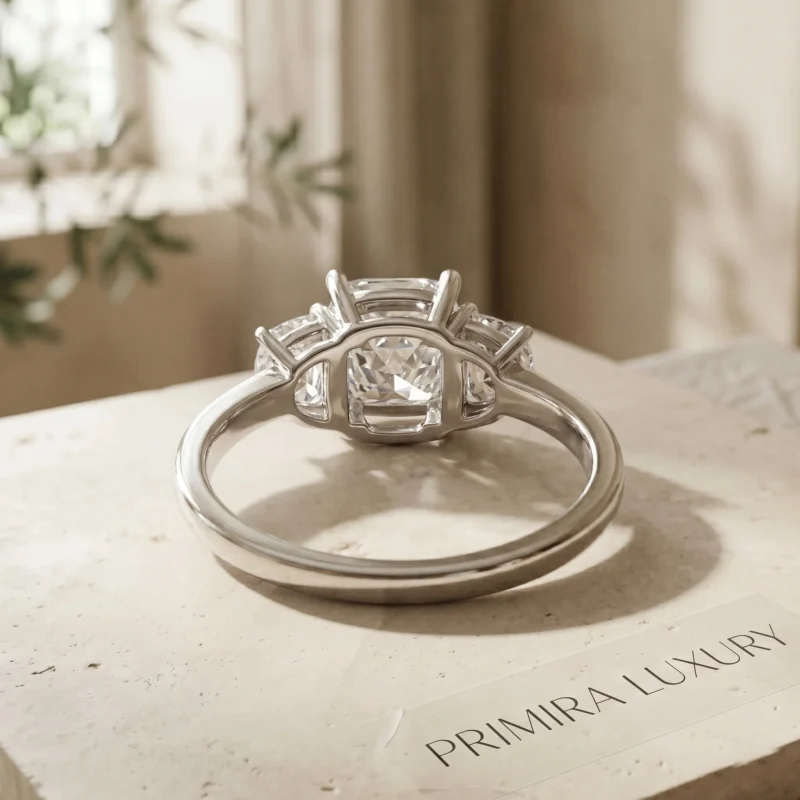
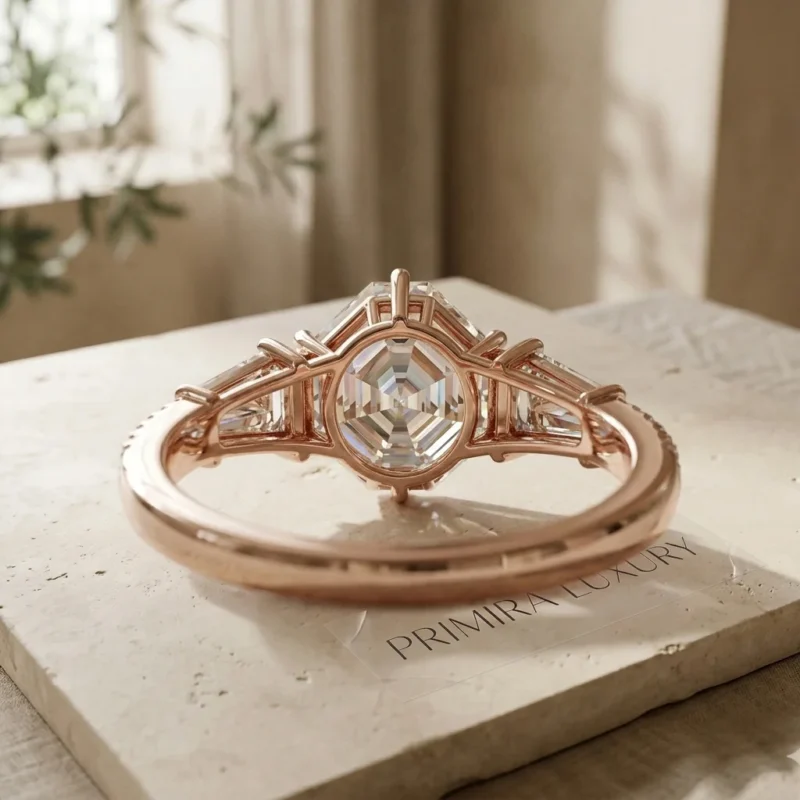
The most common three stone setting. The prongs at the junction between centre and side stones cross in a V or X configuration, which means adjacent stones share a visual prong structure while each remains independently seated. This gives the ring a strong centre-framing effect while reducing the visual metal between stones. The trellis geometry also provides a natural pathway for the claw to hold both the side stone’s girdle and the band shank — useful for structural integrity on rings that will be worn daily.
Basket settings
Each stone in its own individual seat, with no shared structural element between the three. Gives a cleaner visual separation between the stones — the three-stones-as-a-unit reading is slightly less immediate than trellis, but the setting is somewhat simpler to re-tip or re-prong individually if a claw wears over time.
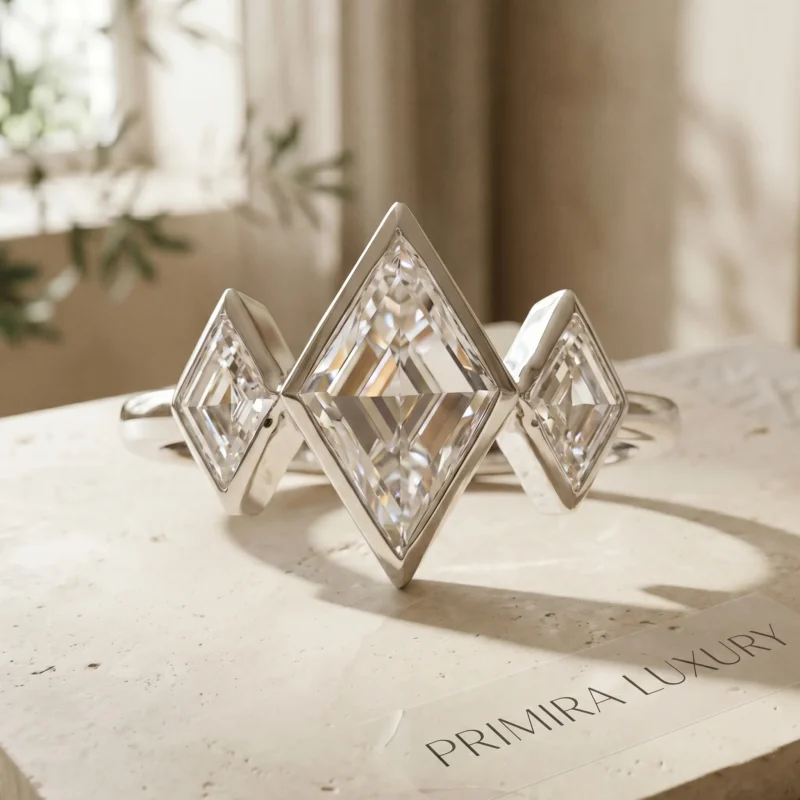
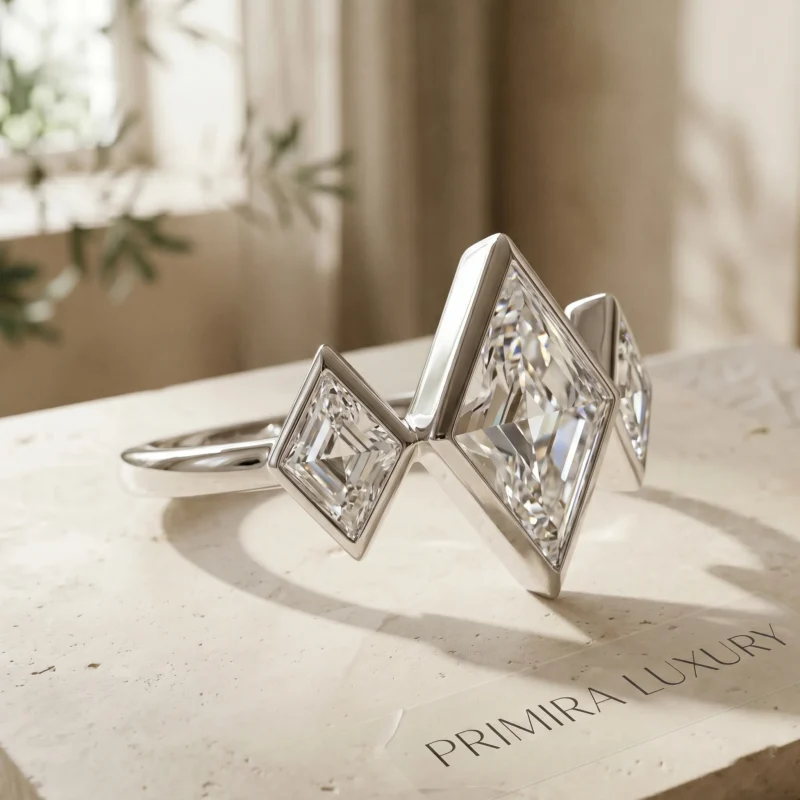
Bezel-set side stones with prong centre
A hybrid: the centre stone in a four or six-prong setting, the side stones in individual bezels. The bezel walls around the side stones reduce snagging risk at the band junction (the highest-wear point on a ring worn daily) while keeping the centre stone’s light exposure open. Works well for buyers who want the three-stone look with better durability at the sides.
Setting height and wedding band fit
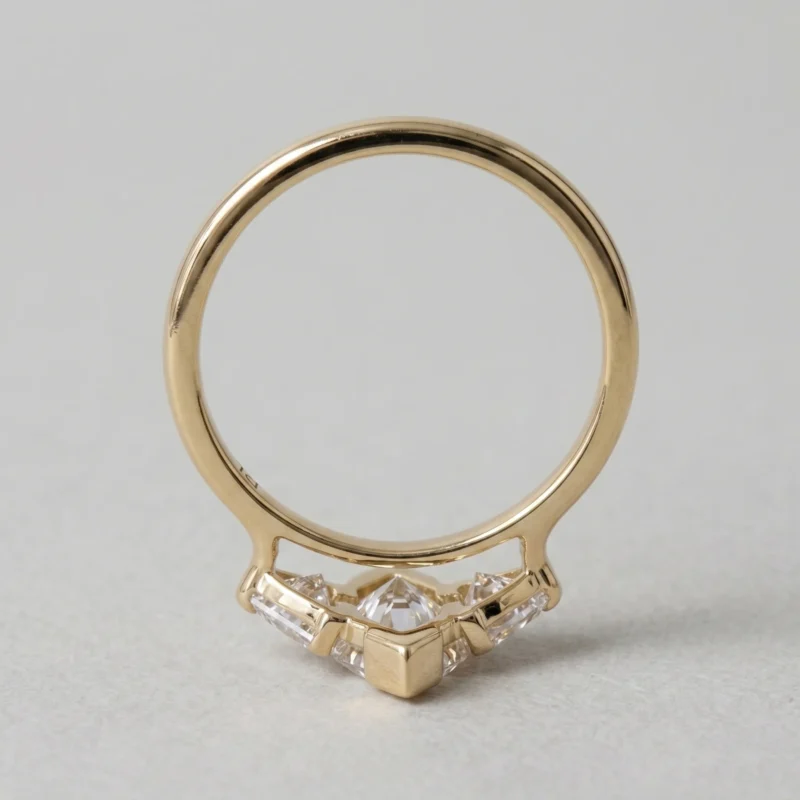
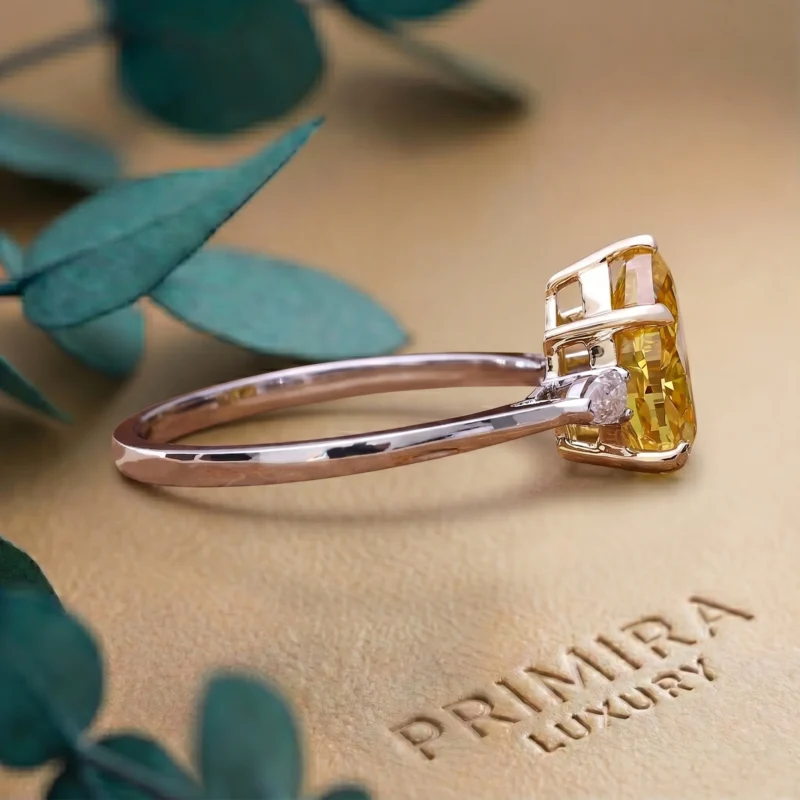
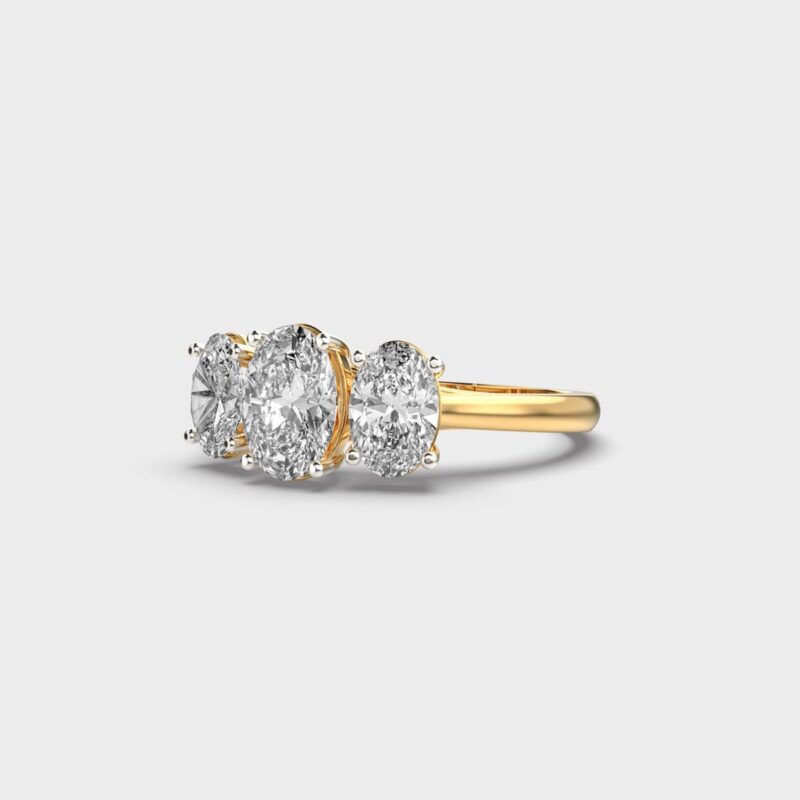
Three stone rings typically sit higher than solitaires — the side stone seat elevation adds profile height at the band junction, which means a straight-profile wedding band will hit the setting before it sits flush against the engagement ring. A curved or contoured wedding band is the practical solution, and it can be designed from the engagement ring’s actual dimensions once the engagement ring is confirmed.
The Custom Order Process for Three Stone Rings
Three stone rings involve more specification variables than any other style in Cluster A. The centre stone, both side stones, the shape combination, the colour and clarity matching, the proportion ratio, the setting type, and the metal all need to be confirmed as a coherent set before production starts — changing one often means adjusting another.Surat is where the specification actually becomes a ring. The stones are cut in the same facility to matched-depth specifications, not selected from existing inventory and fitted together after grading. For a three stone ring where girdle-height alignment matters, this is the difference between a ring where the three table planes actually sit flush and one where they’re close but not quite.The order process: once you complete checkout at primiraluxury.com, the Surat team contacts you within 24 hours via WhatsApp and email to confirm all three stone specifications before anything is cut or set. At that stage, you confirm centre carat and shape, side stone shape and proportion target, colour and clarity grades for all three stones, metal tier and tone, and setting type. Production begins only after every variable is agreed.Production runs 15–35 business days. IGI certification is available on request for finished jewellery. Every shipment is insured from the Surat facility to delivery confirmation.For buyers outside India: international express shipping (DHL/FedEx/UPS, 5–7 business days after dispatch) is available at approximately USD $50, with free express shipping on orders above USD $550.
Three Stone vs Solitaire — What Actually Differs
A solitaire lab grown diamond engagement ring concentrates all visual attention on one stone. The quality of that one stone — cut grade especially — is the entire story. A solitaire in an Ideal-cut 1.50ct stone delivers concentrated, directional light return.A three stone ring with a 1.00ct centre and two 0.35ct sides uses roughly the same total carat weight but spreads it horizontally across the finger. The aggregate light return is different — three separate light events rather than one concentrated point of scintillation — and the ring’s finger coverage is noticeably wider. Neither is objectively more impressive; they’re different optical experiences.The practical trade-off: a three stone ring’s total carat weight is spread across three IGI-certifiable stones (or three stones to be specified independently). For the same budget, a three stone ring often allows a more visually substantial ring than a solitaire at that carat weight, because the horizontal spread reads as larger than the equivalent single stone would.For buyers considering both styles: a 1.00ct solitaire and a three stone ring with a 0.70ct centre plus two 0.25ct sides (1.20ct total) will look meaningfully different on the hand, and the three stone option will typically cost more due to the complexity of the setting, not less.
Care and Longevity
The side stone settings are the highest-wear points on a three stone ring — the prongs at the junction between centre and side stones flex slightly every time the ring is put on or taken off. In a trellis setting, the crossing prongs at the centre-side junction take more cumulative flex stress than a solitaire’s outer prongs. This is normal; it means those prongs warrant a visual check every 12–18 months, and re-tipping every few years is standard maintenance for any fine jewellery worn daily.For lab grown diamonds specifically: the stones themselves are as hard as their mined counterparts (Mohs 10), so the stone won’t wear — the prong metal will eventually. Platinum prong tips hold their shape over time better than gold, which is one argument for specifying 950 platinum in a trellis setting, particularly if this ring is being bought for daily wear. 18K white gold is a reasonable alternative and the more common choice; the rhodium plating will need refreshing every 2–3 years to maintain the white colour.Cleaning: warm water, a soft brush, and a small amount of dish soap, once a week. Ultrasonic cleaners are fine for the lab grown diamonds themselves but not recommended if any side stones are bezel-set (the ultrasonic vibration can work metal bezels loose over time).
FAQ
What does a three stone engagement ring symbolise?
Each of the three stones represents a period of a couple’s relationship: the left side stone represents the past (shared history), the centre stone the present (current love and commitment), and the right side stone the future (what’s ahead together). This is the most common reading — occasionally called the past/present/future ring or trilogy ring. Some buyers assign different meanings entirely (faith, hope, and love; or the couple plus their future family), but the past-present-future interpretation is the original and most widely understood.
What is the correct ratio of centre to side stones?
There’s no single correct ratio — the right answer depends on what visual effect you want. A conservative traditional ratio has each side stone at approximately 50% of the centre stone’s carat weight, keeping the centre clearly dominant. A balanced-mass ratio brings the side stones to 70–75% of the centre weight, where the three stones read as near-equals. The more useful measure than carat weight is face-up diameter: each side stone’s widest measurement should sit between 40% and 55% of the centre stone’s widest measurement, so the visual proportions hold regardless of how the cut style affects carat-to-millimetre ratios. When ordering from Primira, this is confirmed as a specific measurement combination during the pre-production WhatsApp session before anything is cut.
Which shape combinations work best?
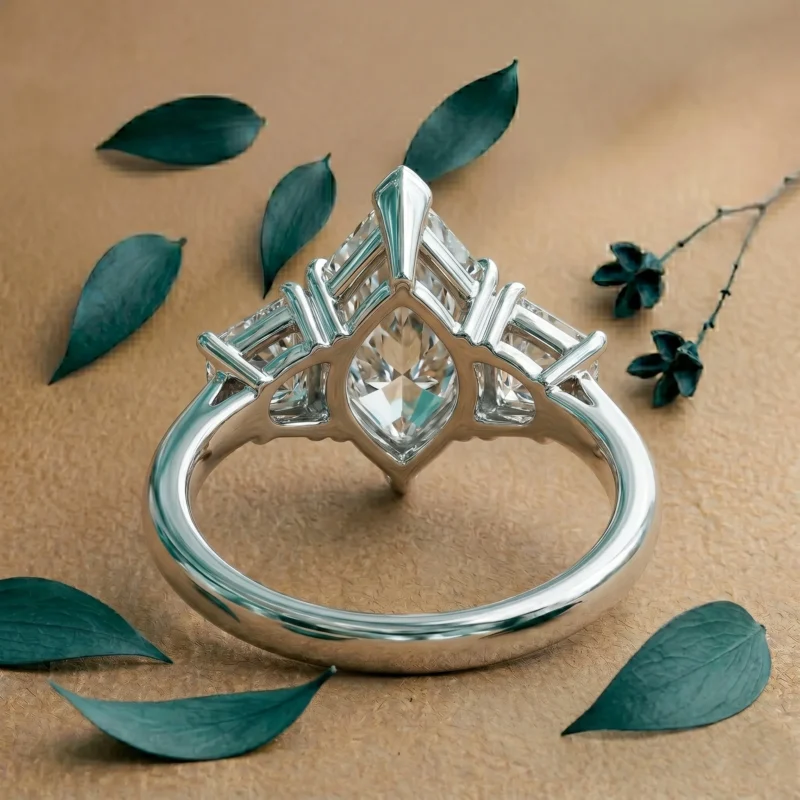
The most requested in 2026 is an oval centre with pear-shaped sides pointing their apex toward the centre stone — the curves align and the ring reads as a cohesive unit from the top. Round brilliant centre with round brilliant sides is still the most ordered globally, and for good reason: the proportion balance is simple to get right and the ring is highly consistent across different light environments. Emerald centre with trapezoid sides is a strong architectural option for buyers who want a step-cut ring throughout. For mixed shapes, the key variable is that side stone shapes with pointed tips (pear, marquise, trillion) need V-prong protection at those tips, which affects how the setting junction looks.
Can a three stone ring be resized?
Yes, with caveats. Resizing a three stone ring goes up or down approximately 1–2 sizes without affecting the stones. Larger resizes are possible but may require adjusting the shank profile — your bench jeweller will advise based on the specific setting. The constraint is that resizing stretches or compresses the metal shank, and the side stone seats are fixed — so a very large resize can alter the geometry at the junction between shank and side settings. If you’re uncertain about size at order time, specify the ring slightly small and size up at a local jeweller after delivery — sizing up is slightly easier than sizing down for most three stone designs.
Three stone vs solitaire — which is better for daily wear?
Both are suitable for daily wear when properly maintained. The difference is where maintenance attention is focused: a solitaire’s four or six prongs are at the outer edge of one stone; a three stone ring’s prongs include the junction points between adjacent stones, which see slightly more flex stress daily. Neither is fragile — these are standard fine jewellery prong settings, not delicate filigree. A bezel-set side stone variant (bezel sides, prong centre) is available on custom order and is slightly more robust at the junction for buyers with very active daily wear.
How long does a custom three stone ring take?
Production runs 15–35 business days from the date all specifications are confirmed via WhatsApp, not from the order date. The confirmation step happens within 24 hours of your order; the 15–35 business day window starts after that. In cases involving complex sourcing (custom side stone shapes or specific colour combinations that require stone selection) the maximum is 45 business days. Certified loose lab grown diamonds already in inventory dispatch within 48 hours of order confirmation.
Three stone rings are one of five engagement ring styles in the Primira collection. See also:



 1-to-1 Custom Design
 Craft Your Vision
 HD video Preview
 Fully Customizable
 Choose Metal Tone:
 Handcrafted in Solid 10K · 14K · 18K
 Select Your Stone Type:
  Award winning
  Hallmarked &
  Personalized Care &
  Design Any Piece
 Chat on WhatsApp