Round Lab Grown Diamonds — Proportion Over Outline
A round lab grown diamond almost always costs more, carat for carat, than an oval, cushion, or emerald cut of the same color and clarity. That isn’t a markup decision — it’s what gets left on the cutting wheel to get there.
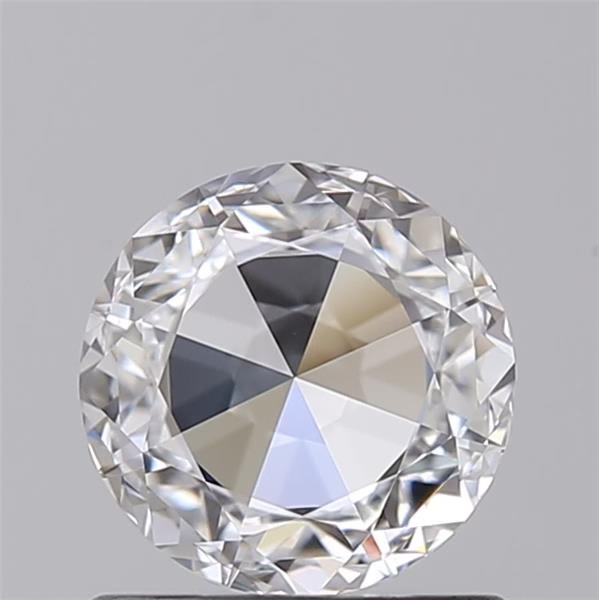
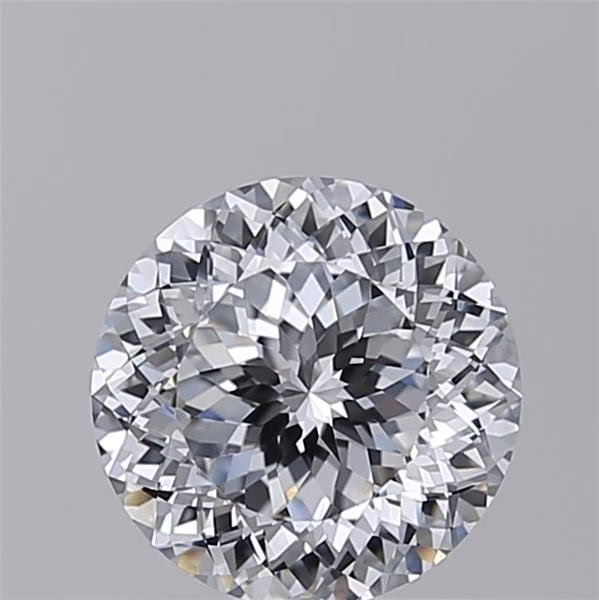
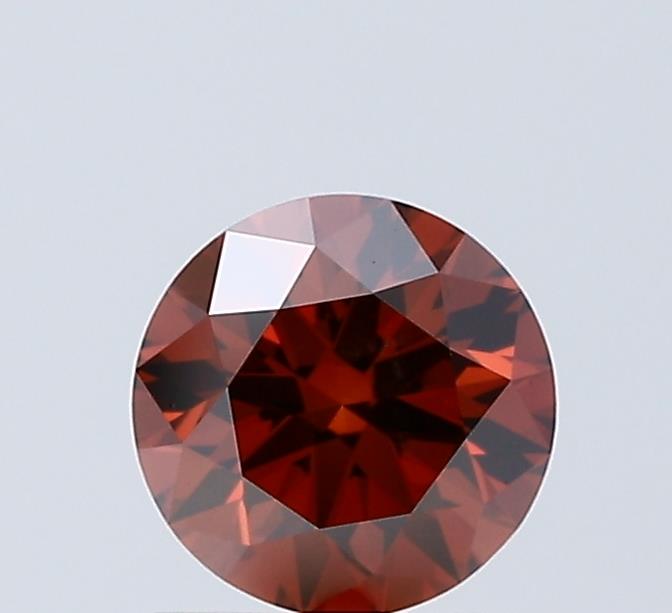
Round brilliant is the 58-facet cut every other shape gets measured against: 8 main crown facets, 8 main pavilion facets, a table, and bands of star and girdle facets between them, all built around true rotational symmetry. That symmetry is also the entire reason round costs what it does. A fancy shape — oval, pear, cushion, emerald — can be oriented to follow the natural outline of the rough crystal, keeping more of the original material in the finished stone. Round can’t do that. Hitting Ideal proportions means grinding away whatever doesn’t fit a true circle, regardless of how the rough happened to form. Across the cutting industry, a well-cut round typically retains somewhere in the 40–50% range of its starting rough weight; a princess or emerald cut routinely keeps 75–80%. That gap in retained material — not demand on its own — is the real driver behind round’s premium over other shapes, and it holds inside lab grown stock exactly as it does for mined rough, because the geometry problem is identical either way.
We cut and grade round lab grown diamonds at our own facility in Surat, the district that processes the largest share of the world’s rough diamond supply, lab grown and mined together. That matters specifically for round because the yield decision above isn’t pulled from a supplier’s spec sheet — it’s a call our own cutters make on every stone, weighing how much rough to sacrifice against what’s needed to clear Ideal or Excellent grade. If you’re set on a round, you’re already paying for that decision; the question worth asking any seller is whether they made it or just marked up someone else’s.
The Proportions That Actually Determine a Round’s Light Return
Outline can’t hide a flaw on a round the way it can on a fancy shape — there’s no corner, no point, no elongated silhouette to draw the eye. Everything a round has to offer comes down to four measurements working together.
Table, Depth, and Crown Angle
Table — the flat top facet — performs best between 54% and 57% of the stone’s diameter. Go wider and light starts leaking straight through instead of bouncing back; go narrower and the stone loses brightness for no real gain. Total depth, measured table-to-culet as a percentage of diameter, holds its best light return between 59% and 62.5%. Crown angle — how steeply the upper facets rise from the girdle — sits at 34° to 35° in that same well-cut range; a degree off in either direction measurably shifts the balance between brilliance (white light return) and fire (colored flashes).
Pavilion Angle, Star Facets, and Lower Girdles
Pavilion angle, the slope of the facets below the girdle, needs to land within 40.6° to 41.0° — this is the angle doing most of the work of bouncing light back up through the table rather than out the bottom. Star facets (the small triangular facets just below the table) perform best between 50% and 55% of crown length, and lower girdle facets between 75% and 80% of pavilion length. None of these numbers means much in isolation; a round graded Ideal or Excellent has all of them working in the same direction at once, which is precisely why we don’t stock anything below Excellent cut in round — Good and Fair grades exist because at least one of these measurements has drifted out of range, and on a shape with nowhere to hide that, it shows.
Hearts and Arrows — Why It’s Exclusive to Round
A true hearts-and-arrows pattern — eight even hearts visible from the pavilion side, eight even arrows from the crown side under a viewer — only exists on round. The reason is structural, not stylistic: it requires 8 main crown facets and 24 subsidiary crown facets, 8 main pavilion facets and 16 subsidiary pavilion facets, every pair aligned to within roughly half a degree of its mirror opposite around the full circumference. A fancy shape can’t meet that requirement because it isn’t built on true rotational symmetry in the first place — an oval or pear has a long axis and a short axis, not eight identical repeating segments. It’s not that nobody has tried to engineer a hearts-and-arrows fancy shape; the geometry simply doesn’t support it the way a circle does.
Hearts-and-arrows isn’t a separate grade from Ideal or Excellent — it’s closer to a visible confirmation that the proportions above were actually hit, segment by segment, rather than averaging out to an acceptable number overall.
Round vs Oval Lab Grown Diamond
Round and oval are now close enough in popularity that the comparison is worth making honestly rather than defaulting to “round is the classic choice.” The two shapes trade off in opposite directions on nearly every variable that matters at purchase:
Face-up size. An oval’s elongated outline spreads the same carat weight over more visible surface area, so it reads larger from above than a round of identical weight. Round concentrates that weight into a smaller, denser footprint.
Light behavior. Round’s symmetry is what makes consistent, all-around brilliance achievable at all — light enters and exits through a uniform facet pattern with no weak points. Oval can show a bow-tie — a dark shadow across the center caused by uneven light return between the ends and the middle — if its own proportions aren’t controlled carefully. Round has no equivalent failure mode; the same symmetry that drives its cost also makes that particular flaw structurally impossible.
Cost. For the reason explained above, round commands a real premium over oval at matched color, clarity, and cut grade — oval’s outline lets a cutter retain meaningfully more of the rough.
Most buyers land on one or the other based on whether they want maximum face-up spread per carat (oval) or maximum concentrated brilliance with the fewest variables to get wrong (round). If you’re set on the elongated look instead, our oval lab grown diamonds page covers the L:W ratio and bow-tie-avoidance specifics in full.
Choosing a Setting for a Round Brilliant
4-Prong vs 6-Prong
A 4-prong setting holds the stone with four claws, leaving the maximum facet surface exposed to light — the classic choice when the goal is letting a well-cut round perform at its brightest, since every percentage point of proportion accuracy discussed above is more visible with less metal in the way. A 6-prong setting trades a small amount of that light exposure for meaningfully more security, distributing grip across two more contact points — worth the trade on larger stones, active daily wear, or anywhere peace of mind matters more than the last fraction of brilliance. Neither is more “correct”; it’s a security-versus-light-return decision specific to how the stone will actually be worn. If a finished solitaire ring is the end goal rather than a loose stone, our solitaire lab grown diamond engagement ring page covers cathedral versus low-profile basket design in more depth — round is the shape it’s written around, since round is what most buyers land on for a solitaire setting in the first place.
Clarity and Carat Guidance Specific to Round
Round’s brilliant facet pattern scatters light in a way that genuinely helps conceal small inclusions — a VS2 round can look just as clean face-up as a VVS stone, because the same faceting that maximizes sparkle also breaks up the sightlines an inclusion needs to be visible. That’s a real point of difference from a step-cut shape, where open facets show inclusions plainly; round is the more forgiving end of our clarity range, not the stricter one. We stock VVS1 through VS2 across the board and don’t carry SI2 or below in any shape, so the practical decision on round comes down to budget allocation rather than visible risk — color grade or carat size will move the needle on appearance more than clarity will, once you’re inside our standard range.
On carat, round’s cost behavior above means the same budget buys a visibly larger stone in oval, cushion, or emerald — worth knowing going in if face-up size matters more to you than the shape itself. If round is the shape you actually want, lab grown production is what makes larger sizes realistic in the first place; 2-carat-plus rounds that would carry serious scarcity pricing in mined stock are a standard custom order here.
Custom-Cut and Verified Hearts-and-Arrows Requests
Standard stock covers most round orders, but round is also the one shape where a buyer can meaningfully ask for tighter performance than the standard Ideal grading band guarantees. Because we cut in-house, a request for proportions narrower than the standard Ideal range — say, a crown angle held to a half-degree window instead of the full 34°–35° band — is a production specification, not a sourcing problem. The same applies to a verified hearts-and-arrows request: confirming the eight-fold symmetry above actually holds on the specific stone being cut, rather than trusting that an Ideal grade implies it. Both are confirmed via WhatsApp before cutting begins, the same pre-production step every custom order on the site goes through.
Handling and Symmetry-Preserving Repair
A round brilliant carries one repair consideration most other shapes don’t: if a girdle chip or facet damage ever needs minor re-polishing, the work has to be mirrored across all eight symmetrical segments to preserve light performance, not spot-fixed at the point of damage. A fancy shape can sometimes tolerate a localized touch-up without disturbing the overall look; round’s entire optical performance depends on that eight-fold symmetry staying intact, so a repair that only addresses one segment can leave the stone measurably less bright than before, even though the visible damage is gone. Worth knowing before any loose round goes to a third-party jeweller for resetting or repair work — ask specifically whether they’re equipped to maintain full-circumference symmetry, not just polish out a chip.
Certification, Verification, and From Order to Your Door
Cut grade carries more weight on a round’s IGI report than on almost any other shape’s, precisely because outline can’t disguise a weak one — there’s no halo, no elongated silhouette, nothing to distract from a table that runs too wide or a crown angle that’s drifted off-spec. That’s the field worth checking first on any round’s report, and it’s also why we don’t carry Good or Fair cut grade in round at all: on this shape specifically, a mediocre cut has nowhere to hide and nothing to compensate for it. Every round ships with IGI certification by default, report number laser-inscribed on the girdle and verifiable independently at igi.org — not a claim you have to take on our word.
In-stock certified rounds dispatch within 48 hours of order confirmation. A custom-cut request — a tighter proportion spec, a verified hearts-and-arrows order, a size outside standard stock — runs 15 to 35 business days, occasionally up to 45 where sourcing or certification coordination adds time. Every round that ships — standard Ideal stock or a custom proportion order — goes out fully insured from our Surat facility to your door, and our Surat team confirms the exact specification by WhatsApp and email within 24 hours of checkout, before anything goes into production. A loose round graded to a custom proportion spec isn’t what the buyback program is built around — that program evaluates finished jewelry after wear, not a stone that hasn’t been set yet. The 7-day return window applies in the standard way if what arrives doesn’t match the confirmed specification.
For the full shape range beyond round, our loose lab grown diamonds collection is the starting point.
Frequently Asked Questions
Why are round lab grown diamonds more expensive than other shapes?
Round’s symmetry requirement means a cutter can’t follow the rough crystal’s natural outline the way a fancy shape allows — hitting true round proportions means sacrificing significantly more of the original rough. A well-cut round typically retains 40–50% of its starting rough weight, against 75–80% for a shape like princess or emerald. That yield gap, not demand alone, is what drives the price difference, and it applies inside lab grown stock the same way it does to mined rough.
What are the ideal proportions for a round brilliant cut?
Table 54–57% of diameter, total depth 59–62.5%, crown angle 34°–35°, pavilion angle 40.6°–41.0°, star facets 50–55% of crown length, and lower girdle facets 75–80% of pavilion length. All six work together — a round graded Ideal or Excellent has each of these in range simultaneously, not just one or two.
What is a hearts and arrows diamond, and can lab grown rounds have it?
It’s a round cut whose facets are aligned precisely enough — 8 main and 24 subsidiary crown facets, 8 main and 16 subsidiary pavilion facets, each mirrored to within about half a degree — that eight even hearts appear from the pavilion side and eight even arrows from the crown side under viewing. It’s achievable in lab grown rounds exactly as it is in mined ones; the pattern depends entirely on cutting precision, not on how the rough diamond formed.
Round vs oval lab grown diamond — which should I choose?
Oval spreads the same carat weight over more visible surface area, so it looks larger face-up; round concentrates that weight into a denser, more uniformly brilliant stone and costs more for it. Oval can show a bow-tie shadow if its proportions aren’t controlled; round’s symmetry makes that particular flaw structurally impossible. The choice comes down to whether face-up spread or concentrated brilliance matters more to you.
Is round still the most popular engagement ring shape in 2026?
Yes, narrowly. Recent bridal survey data puts round at roughly 26% of choices against oval at 25% — still the leading shape, but no longer the clear default it was a few years ago. That narrowing gap is part of why cut precision, not just shape choice, is worth paying attention to on a round specifically.
What setting works best for a round lab grown diamond?
4-prong exposes the most facet surface to light and suits buyers who want a well-cut round performing at its brightest. 6-prong trades a small amount of that light exposure for more security, which matters more on larger stones or active daily wear. Neither is objectively better — it’s a light-versus-security decision based on how the ring will actually be worn.
Can I request tighter cut proportions than standard Ideal grading on a custom order?
Yes. Because cutting happens in-house, a narrower proportion target than the standard Ideal range — or a verified hearts-and-arrows confirmation on the specific stone — is a production specification we confirm via WhatsApp before cutting begins, the same pre-production step every custom order goes through.


 1-to-1 Custom Design
 Craft Your Vision
 HD video Preview
 Fully Customizable
 Choose Metal Tone:
 Handcrafted in Solid 10K · 14K · 18K
 Select Your Stone Type:
  Award winning
  Hallmarked &
  Personalized Care &
  Design Any Piece


 Chat on WhatsApp