Is Moissanite Good for an Engagement Ring?
An engagement ring is more than jewelry – it’s a lifelong symbol of love and commitment. When choosing the perfect center stone, many couples ask: is moissanite good for an engagement ring? The answer is yes. A moissanite engagement ring offers exceptional brilliance, impressive durability, and ethical lab-grown origins – making it a smart and beautiful alternative to a lab grown diamond engagement ring.
In this guide, we’ll break down everything you need to know – from sparkle and durability to value – so you can confidently choose the perfect ring for your forever moment.
Summery
Moissanite is an excellent choice for engagement rings, offering exceptional brilliance, durability, and ethical lab-grown origins. With a high refractive index, it delivers more sparkle than traditional stones while remaining highly resistant to scratches, making it ideal for daily wear. Compared to other options, moissanite provides outstanding value, allowing couples to choose larger, eye-catching designs at a more accessible price. Available in a variety of shapes and styles, it suits both classic and modern preferences. While its sparkle differs slightly, moissanite remains a popular, sustainable alternative for couples seeking beauty, performance, and affordability in a meaningful engagement ring.
Table of Content
1. Why Moissanite Is Popular for Engagement Rings
3. Why Choose Moissanite for Your Engagement Ring?
4. Pros and Cons of Moissanite Engagement Rings
5. Moissanite vs Lab Grown Diamond: A Side-by-Side Comparison
6. Understanding the 4Cs for Moissanite
7. Best Moissanite Shapes & Styles for Engagement Rings
8. Moissanite in Real Life: Stories Worth Telling
9. How to Care for a Moissanite Engagement Ring
Why Moissanite Is Popular for Engagement Rings in 2026
Moissanite has quickly become one of the most searched alternatives to traditional engagement stones. Modern couples are prioritizing ethical sourcing, better value, and bigger visual impact, and moissanite delivers on all three. With its intense sparkle and accessible pricing, it allows buyers to choose larger, more eye-catching designs without compromising quality or responsibility.
What Is Moissanite? Origin, Composition & Meaning
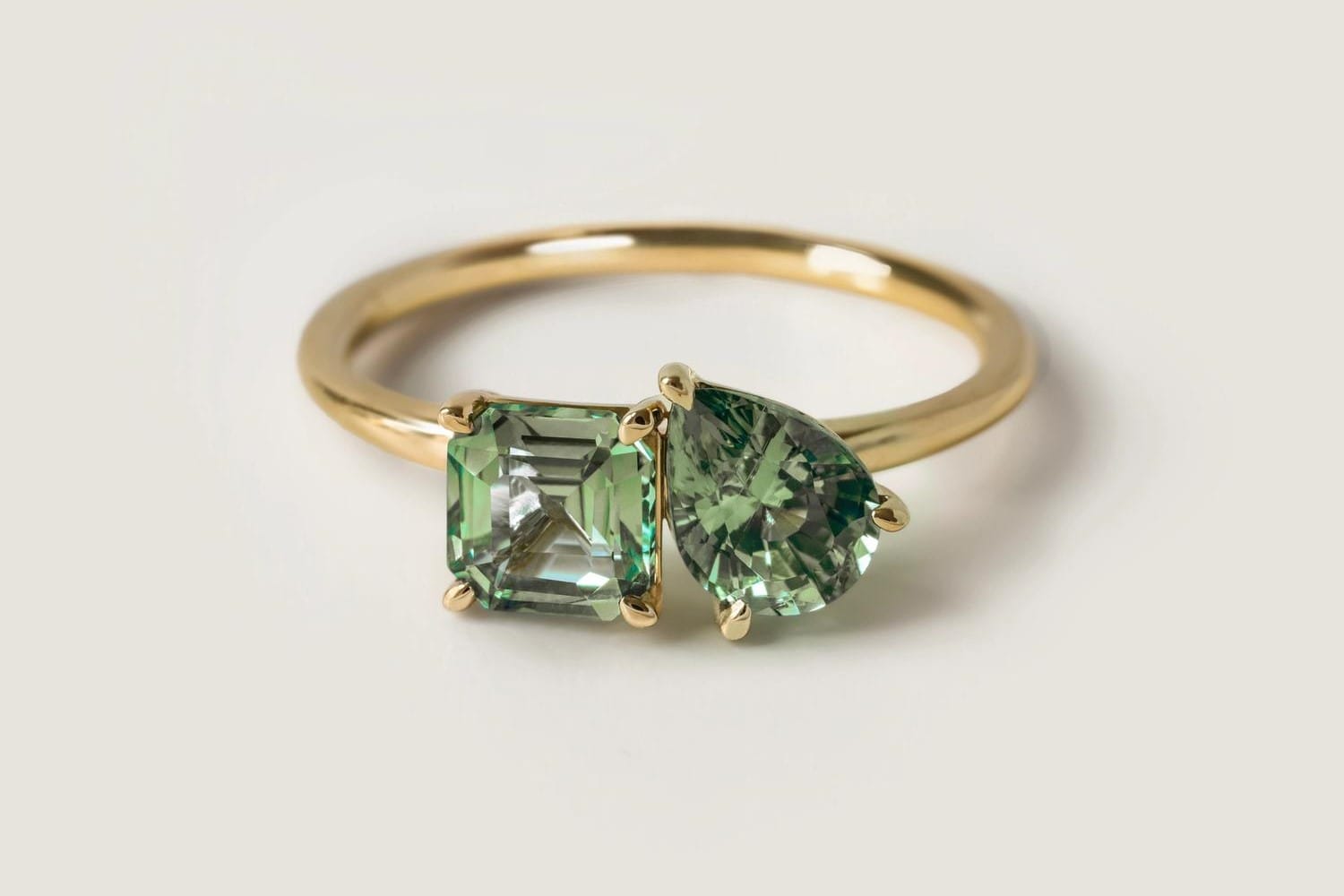
Moissanite’s story is one of cosmic origins. It was first discovered in 1893 by French scientist Henri Moissan in a meteor crater in Arizona. Initially mistaken for diamond, this rare mineral – silicon carbide – proved even rarer on Earth than in the stars. Natural moissanite is nearly impossible to find in jewelry-quality sizes, so the moissanite you see in engagement rings today is lab-created with exceptional precision.
This creation process not only ensures consistent quality and stunning clarity, but also makes moissanite an ethical and environmentally responsible choice. It’s a stone born from science yet inspired by the brilliance of the cosmos, making it ideal for modern couples who appreciate beauty with a backstory.
Why Choose Moissanite for Your Engagement Ring?
Choosing the right engagement ring is not just about the stone – it’s about finding a piece that reflects your love, lifestyle, and priorities. Moissanite offers unique advantages that appeal to a growing number of brides- and grooms-to-be:
- Unmatched Brilliance – Moissanite’s refractive index is higher than that of a diamond, meaning it often sparkles even more vividly, especially in warm candlelight or natural sunlight.
- Ethical Origins – Lab-grown moissanite eliminates the concerns associated with diamond mining, making it a conscious choice for socially and environmentally aware couples.
- Exceptional Durability – Scoring 9.25 on the Mohs scale of hardness, moissanite is one of the hardest gemstones available, second only to diamond.
- Better Value – Moissanite typically costs a fraction of what a diamond of similar size and appearance would, allowing couples to invest in larger stones or more intricate settings without breaking their budget.
- Timeless Beauty – With proper care, moissanite retains its sparkle and integrity for a lifetime, ensuring your ring remains as captivating as the day you said “yes.”
Explore our moissanite engagement ring collection to discover designs that match your style and story.
Pros and Cons of Moissanite Engagement Rings
Transparency is key when making such a meaningful purchase. Here’s a balanced look at moissanite’s pros and cons:
Pros :
- Brilliance & Fire – More sparkle than many diamonds due to its higher refractive index.
- Durability – Suitable for daily wear, resisting scratches and chips.
- Ethical & Sustainable – Lab-created with minimal environmental impact.
- Affordability – Larger stone sizes possible without exceeding budget.
- Variety – Available in a range of shapes, sizes, and settings.
Cons :
- Different Sparkle Quality – Moissanite’s fiery rainbow flashes can be more pronounced than a diamond’s subtler sparkle, which some may find less traditional.
- Perception – While beautiful, moissanite is not a diamond, and some people may prefer the status or tradition associated with diamonds.
- Perception – While beautiful, moissanite is not a diamond, and some people may prefer the status or tradition associated with diamonds.
- Color Tones – Some larger moissanites may display a slight warmth or yellowish hue in certain lighting, depending on the grade.
Moissanite vs Lab Grown Diamond: A Side-by-Side Comparison
When considering moissanite for an engagement ring, it’s natural to compare it to the traditional diamond. Here’s a quick breakdown:
Feature | Moissanite | Diamond |
Brilliance | Higher refractive index (sparkles more) | Classic white brilliance |
Durability | 9.25 on Mohs scale | 10 on Mohs scale |
Cost | Significantly lower | Higher, especially for larger stones |
Ethics | Lab-created, conflict-free | Can be mined or lab-grown |
Appearance | May have rainbow-like flashes | More subtle sparkle |
If you’re comparing options, explore our lab grown diamond engagement rings to understand differences in brilliance, pricing, and appearance.
Understanding the 4Cs for Moissanite
The 4Cs – cut, color, clarity, and carat – are traditionally used to grade diamonds, but they can also help you choose the best moissanite for your ring.
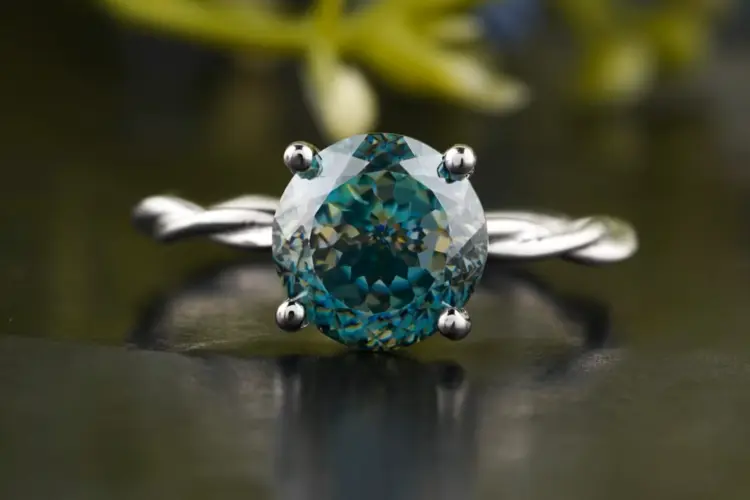
1. Cut : The cut determines how well the stone reflects light. Round brilliant cuts ring maximize sparkle, while oval ring, pear ring, and cushion ring cuts offer a softer, more romantic look. For example, a round moissanite solitaire like this one can radiate dazzling brilliance from every angle.
2. Color : High-quality moissanite is graded from colorless to near-colorless. Many couples choose “colorless” (D–F) for a diamond-like appearance, while others embrace faint warm tones for a vintage charm.
3. Clarity : Because moissanite is lab-grown, inclusions are rare. Look for stones graded “eye-clean” for a flawless appearance without paying extra for microscopic perfection.
4. Carat (Size) : Carat weight measures the size of the stone, though moissanite is lighter than diamond, so the same carat weight will appear slightly larger. This means you can enjoy a more impressive size without exceeding your budget.
Best Moissanite Shapes & Styles for Engagement Rings
Choosing the right shape is just as important as choosing the stone itself. The shape of a moissanite engagement ring defines its overall personality – whether you prefer timeless elegance, modern minimalism, or vintage romance.
Here are some of the most popular moissanite shapes and styles to consider:
Round Cut Moissanite Rings
The round brilliant cut is the most popular choice for a moissanite engagement ring. It maximizes sparkle and fire, making it perfect for those who want a classic yet radiant look.
Oval Moissanite Rings
Oval moissanite rings offer a modern and elegant feel. Their elongated shape creates the illusion of longer fingers and appears larger than other cuts of the same carat weight.
Cushion Cut Moissanite Rings
Cushion cuts combine a soft square shape with rounded edges, giving a romantic and vintage-inspired appearance. They are ideal for those who love a timeless yet unique style.
Pear Shaped Moissanite Rings
Pear-shaped moissanite rings blend the brilliance of round cuts with a distinctive teardrop silhouette. This shape adds a bold and sophisticated touch to any engagement ring.
Emerald Cut Moissanite Rings
Emerald cuts feature step-cut facets that create a clean, mirror-like effect. This style is perfect for those who prefer understated elegance over intense sparkle.
Moissanite in Real Life: Stories Worth Telling
Imagine a couple standing on a quiet cliffside, the ocean stretching endlessly beneath them. He opens a velvet box, revealing a moissanite ring that catches the golden hues of the sunset. She gasps, not because it’s “not a diamond,” but because it’s everything she dreamed of — brilliant, meaningful, and perfectly them.
Or picture an anniversary dinner lit by flickering candles. As she lifts her glass, her moissanite ring bursts into a prism of colors, each flash recalling years of shared laughter, tears, and triumphs. These moments aren’t defined by the origin of the stone, but by the love it symbolizes.
How to Care for a Moissanite Engagement Ring
Moissanite is durable, but a lifetime of sparkle requires mindful care:
- Clean gently with warm soapy water and a soft brush.
- Avoid harsh chemicals that can dull the shine.
- Store in a separate pouch or box to prevent scratches.
- Have your setting checked annually to ensure the stone remains secure.
Is Moissanite Right for You?
At its heart, an engagement ring is a symbol of commitment, not conformity. If you value exceptional beauty, ethical sourcing, and incredible value, moissanite can be a breathtaking choice that honors both your love and your lifestyle.
For couples who see their love as a blend of tradition and individuality, moissanite offers the perfect balance – a stone that shines as brightly as your story deserves. Whether you choose a classic solitaire, a modern halo, or a vintage-inspired setting, your ring will be a daily reminder of the promise you made and the future you’re building together.
FAQs About Moissanite Engagement Rings
Is moissanite better than a lab grown diamond?
Moissanite offers more sparkle and lower cost, while lab grown diamonds provide a more traditional look. The right choice depends on your preference.
Does moissanite get cloudy over time?
No, moissanite does not become cloudy. It maintains its brilliance with simple cleaning.
Can people tell the difference between moissanite and diamond?
Most people cannot tell the difference without close inspection. Moissanite may show more rainbow sparkle under light.
Is moissanite good for everyday wear?
Yes, with a hardness of 9.25, it is highly durable and suitable for daily wear.
Final Thought
Your engagement ring should reflect your story – not just tradition. If you’re looking for a stone that offers brilliance, durability, and exceptional value, moissanite is a powerful choice.
Explore our moissanite engagement rings and find a design that feels uniquely yours – crafted for your forever.



 Chat on WhatsApp