
Primira Luxury Blog
“Jewelry is more than an accessory; it’s a timeless tale waiting to be told.”
“Like a well-crafted gem, true beauty comes from within. Let your jewelry amplify it.”


Discover Your Perfect Price
Filter by Stone Type and Metal to view accurate, variation-based pricing
Transparent, personalized, and effortless - explore designs that match your style, metal, and budget.
- Tip: Choose one stone type and one metal type to see your exact price.
- If prices seem off, just uncheck and re-apply your filters – the page will refresh with accurate pricing.
 1-to-1 Custom Design
Experience
 Craft Your Vision
Today with a 10% Starte
 HD video Preview
Before It Ships
 Fully Customizable
- Stone, Metal & Budget
 Choose Metal Tone:
Yellow, White or Rose Gold
 Handcrafted in Solid 10K · 14K · 18K
Gold, 925 Silver or 950 Platinum
 Select Your Stone Type:
 Lab-Grown Diamond or Moissanite
 Award winning
 craftmanship and detailing
 Hallmarked &
 Certified (IGI / SGL)
 Personalized Care &
 Expert Support
 Design Any Piece
Within Your Budget
1-to-1 Custom DesignExperience
Craft Your VisionToday with a 10% Starte
HD video PreviewBefore It Ships
Fully Customizable- Stone, Metal & Budget
Choose Metal Tone:Yellow, White or Rose Gold
Handcrafted in Solid 10K · 14K · 18KGold, 925 Silver or 950 Platinum
Select Your Stone Type: Lab-Grown Diamond or Moissanite
Award winning craftmanship and detailing
Hallmarked & Certified (IGI / SGL)
Personalized Care & Expert Support
Design Any PieceWithin Your Budget
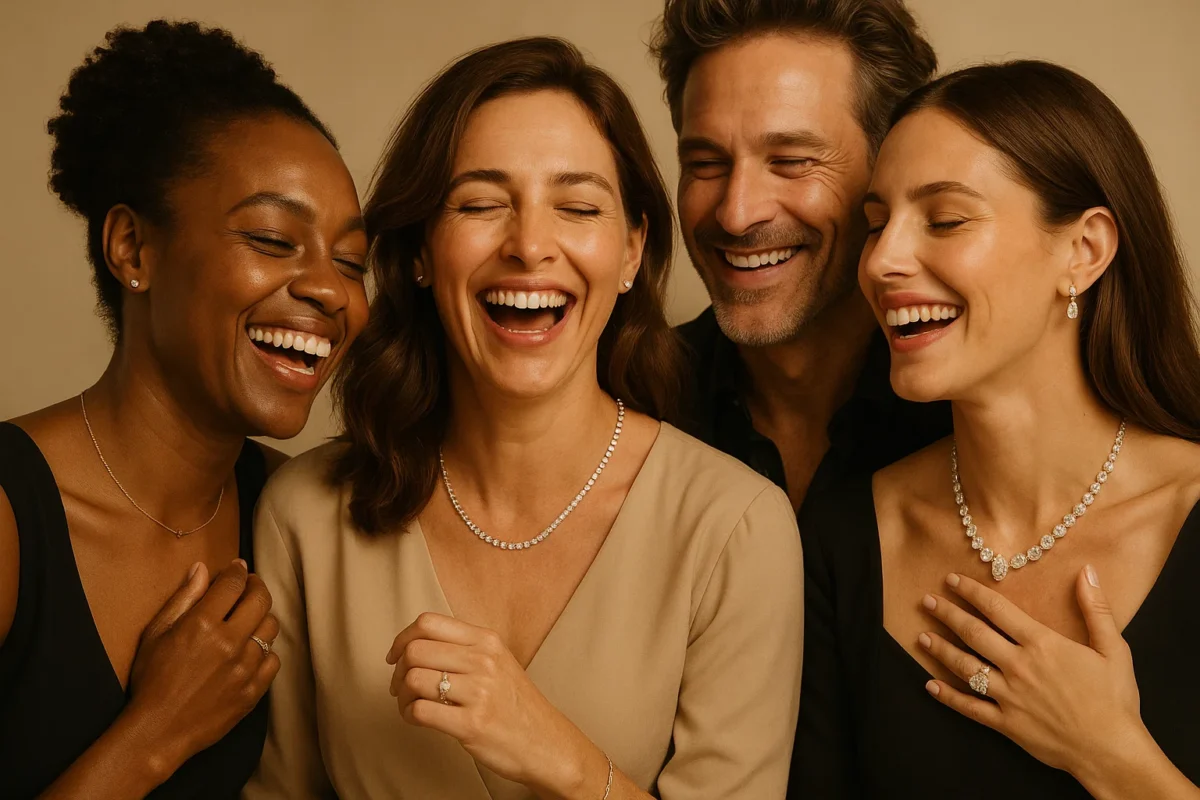
Primira's
Real Reviews From Real Customers
Lifetime
Warranty
100% Money
Back Guarantee
Easy
Customization
7 Days
Return
14 Days
Exchange
Insured
shipping
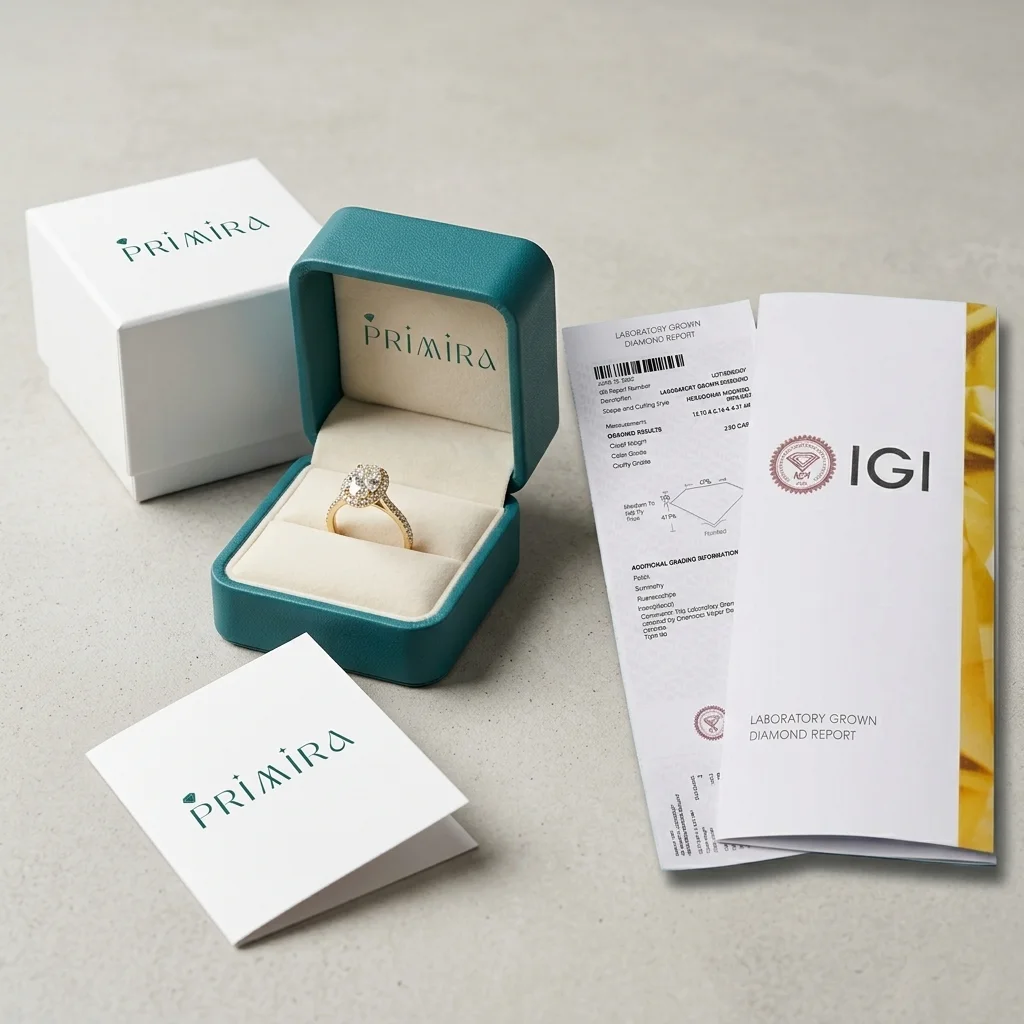
sustainable, beautiful packaging
Give your precious pieces a home they deserve with our stylish, soft-lined jewelry boxes made for effortless organization.
Read Our Article Behind Every Collection
Each design at Primira Luxury is handcrafted with precision, purpose, and emotion. From the first sketch to the final polish, our artisans turn your vision into a piece that feels personal, ethical, and timeless.
Read More
Lab Grown Diamond Choker Necklace — Designs, Fit Guide & Custom Orders
A 15-inch lab grown diamond choker on one person sits precisely at the base of the neck, hugging the collarbone in exactly the way the design intends. On the next person, with a slightly wider neck or a stronger cervical curve, the same 15-inch piece floats mid-throat and shifts when they move. Length on a tag tells you where a choker wants to sit. Fit — which is a function of neck circumference, curve profile, and the piece’s own structural construction — tells you whether it actually will.This is the purchase decision most choker buyers don’t surface until they’re holding the piece. It’s why this page covers construction before it covers style, and it’s why we produce chokers to measured specifications rather than standard sizes.
Rigid or Flexible: The Construction Decision That Comes Before Style
The single most consequential variable in a diamond choker isn’t the stone count or the metal. It’s whether the piece is rigid or flexible, and that’s a manufacturing decision with real structural consequences — not a style synonym for bold versus delicate.
Flexible Pavé Chokers
A flexible diamond choker has a diamond-set front section — typically 10–12 cm of pavé, channel, or shared-prong stone work — and a plain link or chain adjustment section at the back. The plain back accommodates neck circumference variation and allows the piece to move slightly with the wearer.The production variable that most buyers can’t assess from a photograph is the join point: the connection between the diamond-set front and the plain back section. At a well-made join, the transition is clean and the clasp sits cleanly behind the neck, invisible from the front. At a poorly calibrated join, the clasp rotates toward the side, the front section shifts, and the pavé line breaks its clean horizontal run. This happens at the bench, during fabrication — it can’t be corrected after the piece is complete.Flexible chokers suit most neck circumferences, layer well with longer necklaces, and work for daily wear. The adjustment section typically gives 2–4 cm of range, which matters if you’re on the edge of a standard size.
Rigid Collars and Torques
A rigid choker — collar, torque, or bar necklace — is a fixed structure that holds its shape when worn. It requires either a hinge opening mechanism or a back gap designed to flex over the widest point of the neck. The diameter of the collar has to be calibrated to the wearer’s actual neck circumference: too tight and the piece cannot be put on; too close in fit and it presses the skin uncomfortably; too wide and it tilts forward at the centre, creating a gap between the metal and the throat that makes the piece look ill-fitting rather than architectural.A rigid collar produced to a specific neck measurement sits flush, sits still, and frames the neck with exactly the structural presence that makes this format worth choosing. Produced to a generic standard, it’s a piece that never looks quite right.Our Surat facility produces rigid chokers to supplied neck measurements — the collar diameter and hinge mechanism are calibrated to your specific circumference before a single stone is set. This is the decision that separates a collar that looks like a heirloom from one that looks like it belongs to someone else.
Lab Grown Diamond Choker Styles
Continuous Pavé Chokers
The most searched lab grown diamond choker format: a band of diamonds set in micro-pavé or shared-prong across the full visible front of the piece. The result is a continuous ribbon of light at the base of the neck. The design logic is the same as a tennis necklace, compressed to choker length and width — the difference is proximity. At 14–16 inches, every stone is at conversation distance and slightly elevated compared to a longer necklace. Cut quality matters more here than in any pendant format; there’s no layering depth to distract from a stone that doesn’t return light correctly.
Station and Bar Chokers
Diamonds set at intervals along a fine chain or bar, with plain metal between them. Less total diamond coverage than continuous pavé, but the diamond placements at choker height are highly visible and the design reads lighter and more contemporary. Works well as a layering base — the plain sections give longer necklaces room to sit without visual competition.
Cluster and Centre-Stone Chokers
A focal cluster or single larger centre stone on a fine chain or plain band. The contrast between the stone’s visual weight and the simplicity of the surround is the design logic. Common in fine jewelry and popular for occasions. Centre stone options across all shapes — round brilliant, pear, oval, emerald cut — with prong or bezel setting depending on the profile you want.
Rigid Collar and Torque
Structured metal collar with diamond accents or pavé set into the surface. Architectural in character — the piece holds its form rather than conforming to the neck. The boldest format in the choker range, most at home with off-shoulder or open necklines. Custom-produced to neck measurement.
Neckline Compatibility — The Practical Variables
The styling guidance for chokers is consistent across every source: they work with open, low, or off-shoulder necklines. That’s correct as far as it goes, but it omits the construction-level consideration.A flexible pavé choker with a plain back section adjusts to the neck and drapes naturally regardless of neckline. A rigid collar with a fixed diameter works with necklines that don’t compete for the same space — high necklines create a visual clash, not because of aesthetics but because rigid metal and fabric can’t occupy the same plane.For high necklines or structured Indian occasion wear, a flexible design that sits closely but adjusts is almost always the better engineering choice, even if a rigid collar looks more dramatic on a stand.
Diamond Chokers for Indian Occasions
The choker has always been present in Indian fine jewelry, long before the Western trend cycle rediscovered it. Kundan chokers, polki chokers, and bridal diamond collars sit at the top of traditional Indian neckpiece hierarchy. The contemporary lab grown diamond version occupies a different register — it bridges that bridal and formal occasion gravity with the precision of modern gem-cutting and the practicality of a design that transitions across occasions.For weddings, chokers work at multiple registers: as the sole neckpiece with statement earrings, as the short anchor layer in a stacked bridal look, or as the contemporary alternative to a traditional heavy necklace. The lab grown diamond version achieves comparable visual presence in lighter, more wearable formats — a meaningful difference for events that span an entire day.For festivals — Diwali, Karva Chauth, Navratri — a diamond choker is occasion-appropriate without requiring the full weight of bridal jewelry. The contemporary slim designs trending in 2026 (fine rows of diamonds rather than heavy pavé layers) are specifically well-suited to festive wear where you want presence without bulk.Custom bridal chokers are produced to your specific design brief via WhatsApp consultation, with full CAD approval before production begins.
Stone and Metal Specifications
Clarity: VVS1 to VS2 across all stones — all eye-clean. At choker height and viewing distance, the stones are more visible than in most other jewelry formats, which is exactly why we don’t stock SI2 or lower in this range.Color: D-F colorless for maximum light return across the pavé run; G-H-I near-colorless for buyers prioritising value at larger total carat weights. In a continuous pavé choker, color consistency across the full melee parcel matters — all stones in the front section come from matched-parcel sourcing.Cut: Ideal/Excellent cut only in round melee. For shaped stones in centre-stone or cluster formats, cut quality is assessed by the same proportion standards applied to our loose stone range.Metals: 14K gold in yellow, white, or rose is the default — the hardest-wearing gold alloy, which matters on a piece that sits close to the neck and makes consistent skin contact. 18K gold for richer colour depth on statement pieces. 925 sterling silver for the fashion-register designs. Platinum for the fine-pavé continuous formats where prong security at small stone sizes is the priority.
Lab Grown Diamond Choker vs Tennis Necklace
Both are continuous-diamond formats. The differences are structural, not just aesthetic.A tennis necklace runs 16–18 inches or longer, sits below the collarbone, and is almost always flexible — the design is built for the drape and movement of a longer piece. A diamond choker runs 14–16 inches, sits at or just above the collarbone, and can be either rigid or flexible — the short length makes both constructions viable in ways they aren’t for longer pieces.The visual consequence: a tennis necklace distributes diamond coverage across a longer run, each stone at pendant-viewing distance. A choker concentrates the same coverage at a shorter, higher, closer-to-face position. The same total carat weight produces a more prominent visual result in choker format because of that proximity.Layering: a flexible choker and a tennis necklace are natural layering partners — different lengths, different densities, no competition. A rigid collar doesn’t layer well with anything because the fixed structure doesn’t allow a longer piece to sit naturally underneath.
Care and Longevity
A close-fitting necklace accumulates skin contact more than any other jewelry format. Perspiration, oils, and product residue reach the inside surface of a choker before they reach the stones — the practical care implication is that the inner surface of the band needs cleaning as frequently as the stone-set exterior.For flexible pavé designs: clean the diamond-set front section with a soft brush and mild soap, then rinse the plain back link section separately. The join point between the two sections is where residue concentrates; work around it rather than over it.For rigid collars: clean the inner curve particularly — this is the highest-contact surface and the area most likely to show dull deposits first. Avoid submerging a rigid piece with a hinge mechanism; clean the hinge point with a dry brush after submersion to prevent mineral deposit build-up in the joint.Store separately from other pieces — at choker length, a piece stored loosely in a shared compartment will catch on adjacent settings immediately.
Custom Lab Grown Diamond Chokers
Custom choker orders work differently from most custom jewelry orders because the fit variable is part of the specification. What gets confirmed in the pre-production WhatsApp exchange:
- Rigid or flexible construction
- Neck circumference (for rigid formats: measured at the exact point where the piece will sit)
- Diamond-set front section length — determines how much of the front is covered versus plain
- Stone setting style across the front: continuous pavé, station, cluster, centre-stone
- Join-point preference for flexible designs: hidden clasp at back-centre vs. offset position
- Chain/link type for the adjustment section
- Metal tier and tone
- Stone color and clarity tier
The one production detail specific to this format: for continuous pavé chokers, we source the melee parcel for the full front section from the same growth cycle batch before the piece enters production, so colour consistency across the run is verified before a single stone is set. This is the same matched-parcel principle applied in our tennis necklace collection, applied here to a shorter but more visually prominent run.Production runs 15–35 business days. Rigid collar formats sit at the longer end because collar diameter calibration and hinge fitting happen after the basic collar form is produced. Every order ships insured from Surat directly to your door.
IGI Certification
IGI certification is available on request for pieces with centre stones of 0.25 ct and above. For continuous pavé and melee-dominant chokers, the matched parcel carries a parcel-grade IGI certificate documenting the colour, clarity, and cut range across the full lot — this is the certificate that verifies the consistency claim, not just the individual stone. The report number is issued on dispatch.For pieces with a larger focal stone, the stone carries its own individual IGI report with girdle laser inscription, verifiable at igi.org, covering the exact cut, colour, clarity, and carat weight of that specific stone.
Frequently Asked Questions
What length is a diamond choker necklace?
A true choker sits at the base of the neck and runs 14–16 inches in length (35–40 cm). At the shorter end of that range, the piece hugs the throat more closely; at 16 inches, it sits just above the collarbone and gives a little more breathing room. If you’re on the boundary between sizes, we’d recommend confirming your preferred placement point during the pre-production WhatsApp exchange — that conversation is specifically where fit variables like this are resolved before production begins.
What is the difference between a rigid and flexible diamond choker?
A rigid choker — collar, torque, or bar — holds its form and requires a hinge or fixed opening mechanism calibrated to your neck circumference. A flexible choker has a diamond-set front section with a plain link or chain adjustment back, which adapts to neck width variation. Rigid pieces give a more architectural, sculptural result; flexible pieces are more forgiving in fit and are better suited to layering and daily wear. Both are available in custom production — for rigid formats, neck measurement is a required specification.
Can I wear a diamond choker every day?
Flexible chokers in 14K gold with channel or bezel settings are built for regular wear — there are no exposed prong tips at the inner surface to catch skin or fabric, and 14K is the most durable gold alloy for a piece making consistent skin contact. Continuous pavé chokers with micro-prong settings require a little more care with catches and fabric but are also worn daily. Rigid collars in their fine formats are occasion pieces — the hinge mechanism is a precision joint that benefits from occasional rather than constant use.
Does a choker suit all neck types?
The structural answer: a flexible choker suits almost all neck circumferences because the adjustment back accommodates variation. A rigid collar must be calibrated to your specific circumference, so fit is entirely controlled at the production stage. Beyond circumference, the visual effect of a choker — drawing attention upward, framing the face, elongating the perceived neckline — works across neck types, though the specific length within the 14–16 inch range affects how it reads on different proportions. Shorter within the range emphasises the throat; longer within the range reads more like a short necklace than a true choker.
How do I layer a diamond choker with other necklaces?
A flexible choker with a plain-link back section layers naturally because the adjustment mechanism allows a longer piece to hang without interference. The most reliable combination: choker at 14–15 inches + a pendant or chain necklace at 18–20 inches, with enough length difference that the two pieces occupy different depth planes and don’t tangle. Our diamond chain necklace collection is specifically built with layering in mind — adjustable station spacing and bolo slider designs give you full control over where the longer piece sits relative to the choker.
What is the difference between a diamond choker and a tennis necklace?
A diamond choker runs 14–16 inches and sits at the base of the neck; a tennis necklace runs 16–18 inches and sits at or below the collarbone. A choker can be rigid or flexible; a tennis necklace is always flexible. The same total carat weight reads as more prominent in a choker format because of the higher placement and shorter stone run. See our tennis necklace collection if you’re deciding between the two — the comparison section there covers the structural differences in more detail.
Ordering and Delivery
Every choker order begins with a WhatsApp exchange within 24 hours of checkout, where construction type, fit specifications, stone tier, and front-section design are confirmed before any production begins. For rigid collar formats, neck measurement is provided at this stage.Production: 15–35 business days. Certified loose stones already in stock dispatch within 48 hours of order confirmation. All shipments are insured from our Surat facility to delivery confirmation.India orders above ₹10,000 ship free via Blue Dart or Delhivery, arriving 2–7 business days after dispatch. International orders qualify for free express shipping via DHL or FedEx on orders above USD $550 — diamond choker necklaces at larger carat weights or in 18K gold frequently reach this threshold. Standard international shipping via USPS/India Post is also available.Returns are accepted within 7 days of delivery for pieces delivered materially different from confirmed specifications. Custom and personalised pieces are final sale except in those circumstances. The buyback programme is available as an alternative to a return — value is assessed at invoice price minus making and processing charges.Browse our full necklace collection for tennis and chain styles, or reach us via WhatsApp at +91 9510640173 to start a custom choker brief.

 Chat on WhatsApp