
Primira Luxury Blog
“Jewelry is more than an accessory; it’s a timeless tale waiting to be told.”
“Like a well-crafted gem, true beauty comes from within. Let your jewelry amplify it.”


Showing the single result
- ₹15,764 – ₹65,856Price range: ₹15,764 through ₹65,856
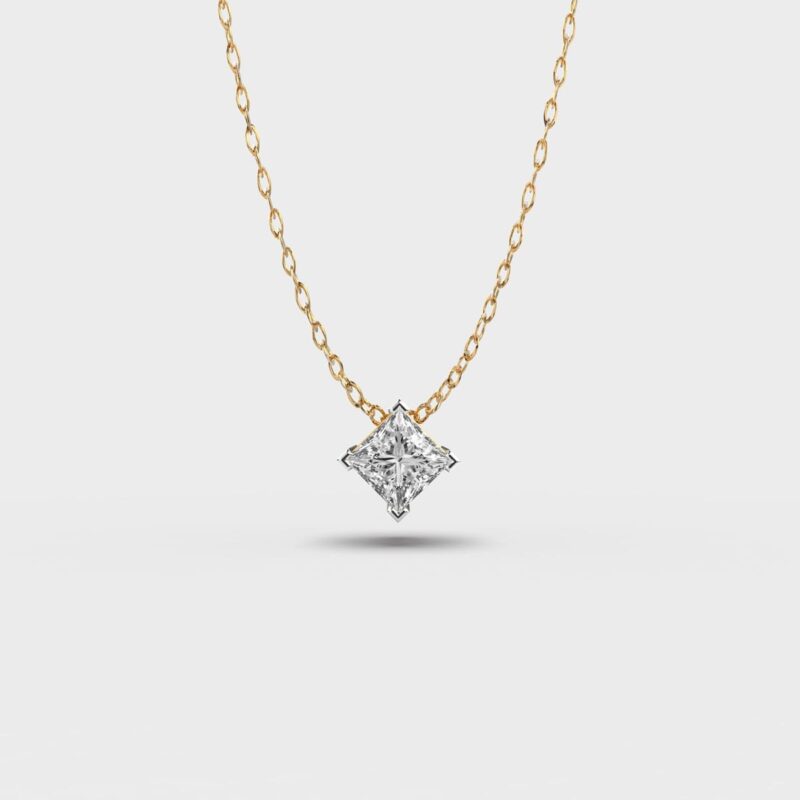

Showing the single result
Discover Your Perfect Price
Filter by Stone Type and Metal to view accurate, variation-based pricing
Transparent, personalized, and effortless - explore designs that match your style, metal, and budget.
- Tip: Choose one stone type and one metal type to see your exact price.
- If prices seem off, just uncheck and re-apply your filters – the page will refresh with accurate pricing.
 1-to-1 Custom Design
Experience
 Craft Your Vision
Today with a 10% Starte
 HD video Preview
Before It Ships
 Fully Customizable
- Stone, Metal & Budget
 Choose Metal Tone:
Yellow, White or Rose Gold
 Handcrafted in Solid 10K · 14K · 18K
Gold, 925 Silver or 950 Platinum
 Select Your Stone Type:
 Lab-Grown Diamond or Moissanite
 Award winning
 craftmanship and detailing
 Hallmarked &
 Certified (IGI / SGL)
 Personalized Care &
 Expert Support
 Design Any Piece
Within Your Budget
1-to-1 Custom DesignExperience
Craft Your VisionToday with a 10% Starte
HD video PreviewBefore It Ships
Fully Customizable- Stone, Metal & Budget
Choose Metal Tone:Yellow, White or Rose Gold
Handcrafted in Solid 10K · 14K · 18KGold, 925 Silver or 950 Platinum
Select Your Stone Type: Lab-Grown Diamond or Moissanite
Award winning craftmanship and detailing
Hallmarked & Certified (IGI / SGL)
Personalized Care & Expert Support
Design Any PieceWithin Your Budget

Primira's
Real Reviews From Real Customers
Lifetime
Warranty
100% Money
Back Guarantee
Easy
Customization
7 Days
Return
14 Days
Exchange
Insured
shipping

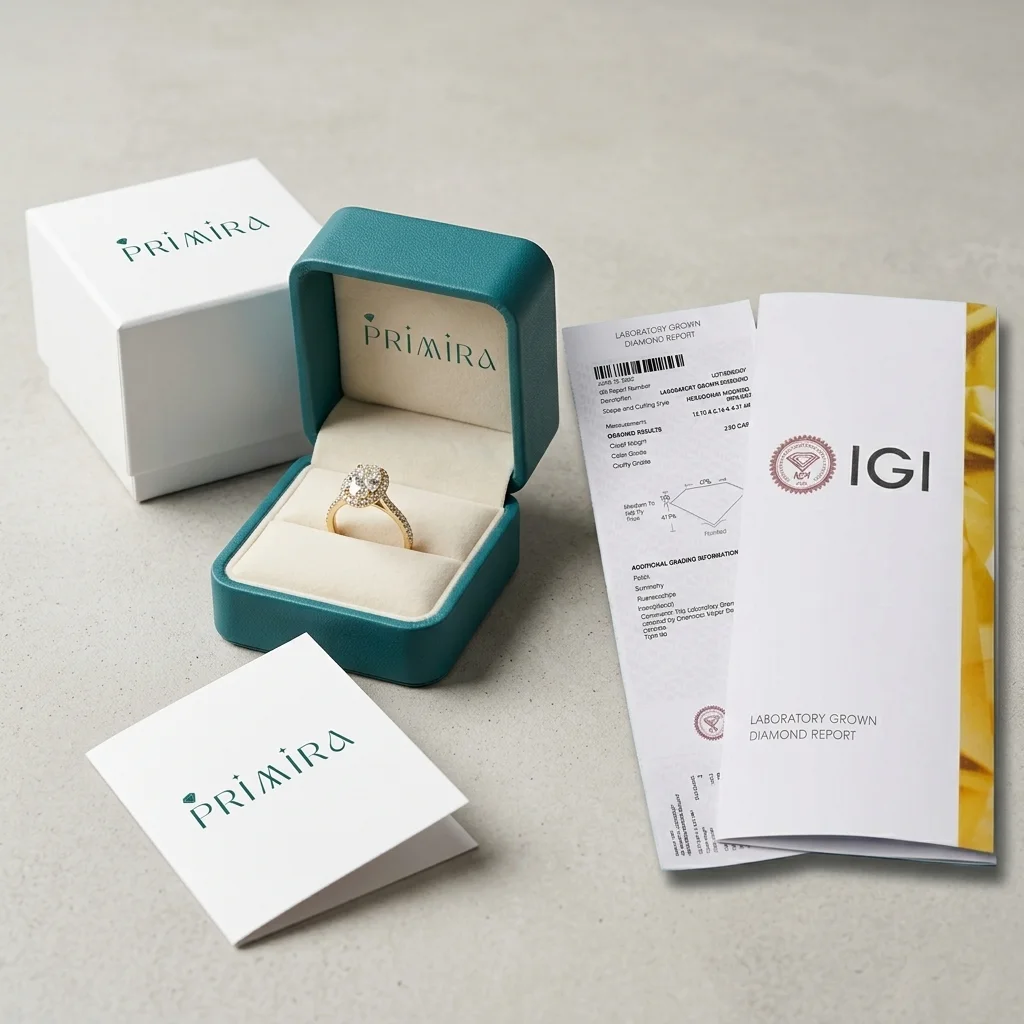
sustainable, beautiful packaging
Give your precious pieces a home they deserve with our stylish, soft-lined jewelry boxes made for effortless organization.
Read Our Article Behind Every Collection
Each design at Primira Luxury is handcrafted with precision, purpose, and emotion. From the first sketch to the final polish, our artisans turn your vision into a piece that feels personal, ethical, and timeless.
Read More
Lab Grown Diamond Chain Necklaces
A tennis necklace and a chain necklace both put diamonds at your neckline. The construction logic is opposite. A tennis necklace runs uniform stones through one continuous setting from clasp to clasp — the diamonds are the chain. A diamond chain necklace reverses that: the links carry the piece, and diamonds are placed within or along them, either at regular intervals or integrated into the link structure itself. That distinction matters before you buy, because it changes how the piece wears, how the diamonds behave in motion, and which setting types are even mechanically possible.
Primira’s lab grown diamond chain necklaces are complete pieces — not a pendant plus a bare chain, but a chain necklace in which the diamond placement is part of the link design. If you arrived here looking for a pendant on a chain, the pendant collection is the right starting point.
How Link Geometry Determines Diamond Placement
This is where chain necklaces become a manufacturing question, not just a style one.
Flat links — herringbone, paperclip, bar — present a consistent horizontal surface. Lab grown diamonds in flush or bar settings can be seated directly into that surface with low prong profiles, making them nearly snag-free. The stone sits level with the link face and catches light as the chain moves. This is the architecture behind diamond-accented paperclip chains and geometric bar-link designs: the link shape enables the setting, not the other way around.
Round or oval links — cable, rope, Figaro — have a different profile. A round cable link is essentially a wire loop: you cannot flush-set a diamond into the side of a round wire without weakening the link. Instead, stones are set into the link connectors (the small elements between links), into bezel-capped stations spaced along the chain, or into elongated link elements specifically widened to accept a prong setting. Rope chains reflect light from their twisted-strand structure regardless of diamond accents; adding diamonds along a rope chain typically means inserting set stations between rope sections rather than modifying the rope links themselves.
The practical result: when you’re choosing a diamond chain necklace, you’re choosing both a link style and a diamond placement architecture. Primira’s production team works from this starting point — the link profile is confirmed at the bench before diamond placement spacing is set.
Link Styles in the Collection
Paperclip and elongated oval links produce a flat, graphic profile that lies close to the skin. Diamonds flush-set into widened link panels read cleanly, with minimal metal visible around the stone. Strong 2026 trend: worn alone at a single length or layered with a longer rope or cable underneath.
Cable links (round or oval, uniform size) are the most versatile pendant-chain format and a natural standalone piece at heavier gauges. Lab grown diamond stations appear at even or alternating intervals, creating a rhythm along the chain rather than continuous sparkle. The piece reads differently at different lengths — 16 inches sits high at the collarbone where individual diamonds read clearly; 20 inches falls lower where the chain reads as a whole piece.
Figaro links alternate between one long oval link and two or three shorter round links. The variation in link size creates natural placement points: diamonds typically appear in the longer links, with the shorter links providing visual separation. This is the chain format where diamond placement feels most intentional — the link rhythm dictates the stone rhythm.
Rope links have a high-polish twisted structure that already reflects light intensely. Diamond stations appear as punctuation rather than decoration — they shift the piece from a bare rope chain into something with a clear fine-jewellery register.
Geometric and statement links (Cuban, anchor, box, Byzantine) carry their own visual weight. Lab grown diamond accents in bar or bezel settings add a specific kind of authority — these are not delicate pieces, and the diamond placement reflects that. Box links with bezel-set stones across the top surface produce one of the most minimal, architectural looks in the collection.
Adjustable Length: Why It Matters More Than You’d Expect
Most chain necklaces ship at a fixed length — 16, 18, or 20 inches — and that’s final. The problem: the same length reads completely differently depending on collar height, neckline, and how a person carries their frame. A paperclip chain at 16 inches worn over a high-neck blouse disappears; the same chain at 18 inches over an open neckline reads exactly as intended.
Primira’s adjustable slider bolo designs solve this through a different clasp mechanism entirely. A bolo closure loops through a central slider that tightens or loosens along the chain body, giving the wearer continuous control over drop length without an extender. The slider tension is set at the production bench to hold position without creeping — too loose and it slides mid-wear; too tight and it jams. This is a production tolerance call, not a retail selection.
For lobster clasp chains in fixed lengths, the standard range is 16–22 inches, with extenders available on order. Custom lengths — an unusual collarbone drop, an extra-long chain for layering, a shortenned length for a very petite frame — can be specified before production via WhatsApp confirmation.
Stone Quality on a Chain Necklace
The same VVS1–VS2 / D-F colorless and G-H-I near-colorless stock Primira holds for rings and earrings applies here. SI2 and below are not stocked.
On a chain necklace, stone quality produces a slightly different visual argument than on a solitaire or stud. At typical necklace viewing distance — 18–24 inches — colour grade is more visible than clarity grade, because the stones are seen from the front in ambient light rather than under focused illumination. A D-E-F stone on a gold chain reads distinctly white; a G-H-I stone at the same scale reads slightly warm. Neither is wrong. The choice depends on the metal tone: white gold and platinum amplify the warmth contrast, making D-F more appropriate for cold metal pairings; yellow gold absorbs the warmth in G-H-I stones and softens any colour differential.
Carat per station versus total carat weight is the chain necklace buyer’s decision that most product pages skip. A 0.05ct stone set every 20mm produces a different visual result from a 0.10ct stone set every 40mm, even at the same total carat weight. Primira specifies station size and spacing as separate variables, confirmed before production.
Metal
14K gold is the default for chain necklaces — enough tensile strength for articulated links that flex with movement, a higher alloy content than 10K for better colour depth, and significantly more durable than 18K for a format that takes daily wear stress at every link junction. Available in yellow, white (rhodium plated), and rose tone.
18K gold is available on order for higher-value pieces or where colour richness is the priority — yellow gold at 18K has a noticeably deeper, warmer hue than 14K, and some buyers choose it specifically for that reason on yellow Figaro or rope chain designs.
925 sterling silver is available for buyers who want a high-contrast bright-white finish without the white-gold premium. Silver is a viable daily-wear metal for chain necklaces; it develops a subtle patina over time that some buyers consider part of the piece’s character.
Diamond Chain Necklace vs Tennis Necklace
The comparison matters because both formats show up in searches for “diamond necklace” and serve genuinely different purposes.
A tennis necklace is a single-purpose piece: continuous uniform stones in one unbroken setting, encircling the full neckline. The stone uniformity is everything — any variation in colour or cut grade between adjacent stones reads immediately. It doesn’t layer easily with other necklaces because the continuous stone line is the whole visual register.
A diamond chain necklace is a versatile daily-wear piece. The links are the structure; the diamonds are an element within it. You can layer it with other chains (a bare cable underneath a diamond paperclip, a diamond Figaro over a plain rope), adjust the length for different necklines, and wear it in contexts where a full tennis necklace would read as occasion-specific.
Neither replaces the other. For buyers considering both: the tennis necklace is the higher-commitment, higher-visual-impact piece; the diamond chain necklace is the one that earns daily wear. Primira’s lab grown diamond tennis necklaces are covered on a separate page.
Custom Chain Necklace Orders
The specific custom detail for this format: Primira can produce matched chain-and-diamond configurations where the link gauge, stone spacing, and clasp type are all specified before production begins. This matters most for buyers who want an unusual length, a non-standard station size, or a specific link profile that isn’t available in the standing collection.
Custom chain necklaces are confirmed via WhatsApp before production starts — link style, stone carat per station, total length, clasp mechanism (lobster vs bolo slider vs toggle), and metal tone all documented before any metal is worked. Production timeline: 15–35 business days. Stones are cut in Surat; the chain is produced in the same facility.
For buyers who want to build a layering set — two or three chain necklaces at calibrated lengths designed to sit together without tangling or competing — Primira can produce them as a coordinated set rather than separate pieces, with link gauges scaled so each layer reads at its own visual weight.
Care
Lab grown diamond chain necklaces have one vulnerability that stone-in-setting pieces don’t: link junctions. Every point where two links connect is a flex point, and over months of daily wear, those junctions collect dust and oils before any visible accumulation appears on the link surface itself. A soft brush and warm soapy water along the junction points — not just the visible link surface — is the cleaning move that actually maintains sparkle.
For herringbone and flat-link chains specifically: these are designed for the link surface to lie flat against the skin. Rolling them or storing them folded rather than flat will create a permanent kink in the link pattern. Lay flat in a fabric-lined compartment or on a jewelry stand.
For rope chains with diamond stations: the twisted-link structure catches debris in the inter-strand gaps. A jeweller’s cleaning dip is appropriate here where a brush can’t reach. Inspect station prongs annually — rope chain flex stress concentrates at the station attachment points.
Trust and Order Process
Every Primira chain necklace order goes through the same pre-production WhatsApp confirmation within 24 hours of checkout. For chain necklaces, this covers variables that matter and that a product photograph cannot resolve: the exact link gauge, bolo slider tension specification, diamond station spacing, and chain length. If you’re ordering based on a reference image, send it through at the WhatsApp stage — Primira’s production team can confirm whether the link profile is achievable in the specified metal and gauge.
Each lab grown diamond in the chain carries its own IGI grading where stone size is 0.25ct or above. For interval-set stones below that threshold, stones are supplied from a graded parcel with documented colour and clarity confirmation. Every order ships insured from Surat to your door — international express (DHL/FedEx/UPS, 5–7 business days) is complimentary on orders above USD $550, which most diamond chain necklaces reach.
If the piece delivered doesn’t match what was confirmed in your WhatsApp specification: 7-day return window applies. For pieces you’ve owned and want to move on from: the buyback programme is available.
The full lab grown diamond necklace collection covers all styles. For a complete piece you’ll wear continuously rather than as a special-occasion item, this format is worth considering seriously.
Frequently Asked Questions
What is a diamond chain necklace, and how is it different from a pendant necklace?
A diamond chain necklace is a complete necklace where lab grown diamonds are set into or along the chain links themselves — the chain is the finished piece, worn without anything added. A pendant necklace is a chain plus a separate hanging element (a stone, charm, or design) attached at the centre. If you want to wear a stone at your neckline without a bare chain visible, a pendant necklace is the format. If you want the chain itself to carry the diamonds, a chain necklace is the format. Primira’s pendant collection is separate from this page.
What chain link style is best for daily wear with lab grown diamond accents?
Cable and Figaro links are the most durable for continuous daily wear — round or oval links at standard gauge can handle the flex stress of everyday movement without fatiguing at the junctions. Flat-link profiles (herringbone, paperclip) wear well but are more vulnerable to kinking if stored folded. Rope links are structurally strong but trap debris between strands, so they need more regular cleaning if worn daily. Metal choice also affects this: 14K gold is the recommended tier for chain necklaces worn every day — hard enough at the link junctions where flex stress concentrates.
What is an adjustable bolo chain necklace, and does the slider hold its position?
A bolo slider is a closure mechanism where the chain loops through a central element and the wearer adjusts the drop length by pulling the two ends. Unlike an extender chain (which gives you 2–3 fixed length options), a bolo gives continuous adjustment from collarbone to mid-chest. Primira sets the slider tension at the production bench to hold position through daily wear — it should require deliberate adjustment to move, not slide freely. Specify your preferred wearing length in the WhatsApp confirmation and the slider will be pre-set to that position.
Can a lab grown diamond chain necklace be layered with other necklaces?
Yes — this is one of the format’s strengths over a tennis necklace. For layering: vary both length and link gauge. A 16-inch diamond paperclip chain pairs well with a plain 20-inch rope or cable underneath, and a 24-inch plain chain below that. Keep diamond accents to one or two layers of the stack; more becomes visually competitive. Avoid herringbone links in a layered stack — their flat profile tangles with round-link chains at the clasp. If ordering a set specifically to layer together, Primira can calibrate the link gauges and lengths as a coordinated unit.
What carat weight of lab grown diamond makes sense for a chain necklace?
The decision is station size versus station spacing, not total carat weight alone. A 0.05ct stone at 20mm intervals creates a delicate, evenly-distributed look suited to thin cable or Figaro links at shorter lengths. A 0.10–0.15ct stone at wider intervals reads as a deliberate accent rather than a texture. For statement chain necklaces at heavier gauges, stations from 0.20ct upward sit in proportion with the link scale. Primira specifies both variables before production — the WhatsApp confirmation covers station carat and spacing together.
Are the lab grown diamonds in chain necklaces IGI certified?
Stones 0.25ct and above carry individual IGI reports, with the report number laser-inscribed on the girdle and verifiable at igi.org. Stones below 0.25ct — typical for close-set interval stations on delicate chains — are supplied from a graded parcel with documented colour (D–F or G–H–I) and clarity (VVS1–VS2) confirmation. Primira does not stock SI2 or lower clarity in any piece.

 Chat on WhatsApp