Loose Moissanite Stones — Hand-Faceted in Surat
The Disco-Ball Question — and the Answer From the Cutting Bench
Most moissanite buyers eventually land on the same concern: will it look like a disco ball?
It is a fair question, and it has a specific answer. Moissanite has a refractive index of 2.69, compared to 2.42 for a diamond. A higher refractive index means the stone bends light more sharply, which produces more fire — those flashes of spectral colour that make moissanite distinctly brilliant. Alongside that, moissanite has a dispersion value of 0.104, more than double a diamond’s 0.044. The fire is real. The question is whether it presents as something beautiful or as something that overwhelms.
The answer is a cutting decision.
Machine-cut moissanite is almost universally faceted using the same geometry as a round brilliant diamond — 57 to 58 facets arranged to maximise light throughput at speed and at volume. Applied to a stone with moissanite’s refractive properties, that geometry produces the strobe-flash effect people mean when they say disco ball: rapid, fragmented, chaotic rainbow pulses rather than broad, coherent flashes.
Hand-faceting changes what happens. When a cutter controls the table proportion, facet size, and crown angle individually — rather than running the stone through a machine program designed for diamond — the result is fire that moves in wider, slower patterns. The same RI, the same dispersion, different light behaviour. Primira’s moissanite is cut by hand in Surat, the same facility and the same cutters who work our antique and specialty cut lab grown diamonds and round brilliant lab grown diamonds. The cutting decisions are made per stone, not defaulted from a production template.
That is the technical reason to care about where your moissanite was cut, not just where it was purchased.
What Moissanite Is — and What It Isn’t
Moissanite is silicon carbide (SiC), not carbon. It is not a diamond, not a diamond simulant, and not a synthetic version of a diamond. It is a distinct gemstone with its own optical properties, its own grading considerations, and its own reason to exist as a choice.
Natural moissanite was first identified in 1893 in a meteorite crater. Natural deposits are so rare they have essentially no commercial presence — every moissanite in jewellery today is laboratory-created. That is a straightforward fact, not a drawback: lab-created moissanite is chemically and physically identical to its natural counterpart, and it has been produced commercially since the mid-1990s.
The properties that make it worth buying:
Hardness: 9.25 on the Mohs scale. Below diamond (10) but above every other gemstone used in fine jewellery including sapphire and ruby (9). Suitable for daily wear in rings, pendants, earrings, and bracelets without practical risk of surface scratching from everyday contact.
Refractive index: 2.69. The number that explains both its exceptional fire and the importance of cut decisions — described above.
Durability: Does not cloud, does not yellow, does not lose its optical properties over time. Surface oil from daily handling will temporarily dull the appearance — cleaned easily, returns fully. This is maintenance, not degradation.
Price: Significantly less than a lab grown diamond of equivalent size. The gap has narrowed as lab grown diamond prices fell in 2023–2025, but moissanite remains the option for buyers who want maximum visual impact from a larger stone at a fixed budget. That positioning is real and unchanged.
Primira’s Moissanite — The Specifications
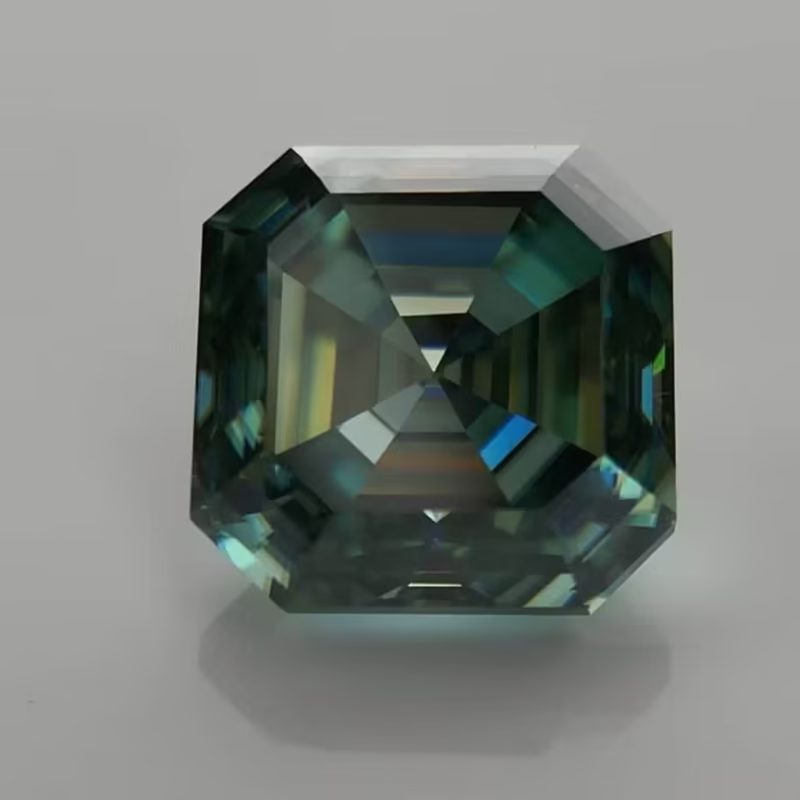
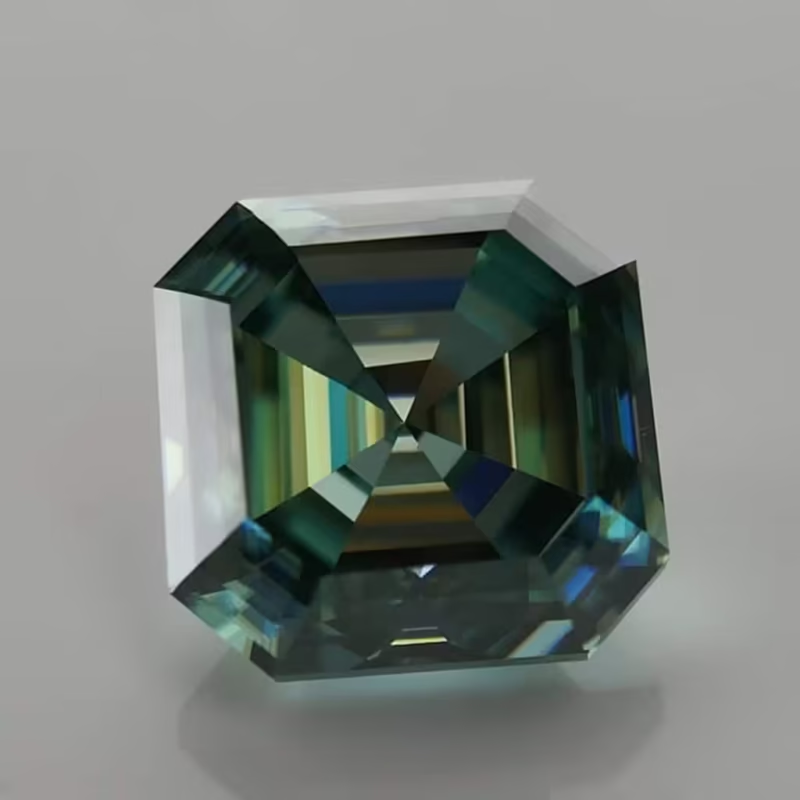
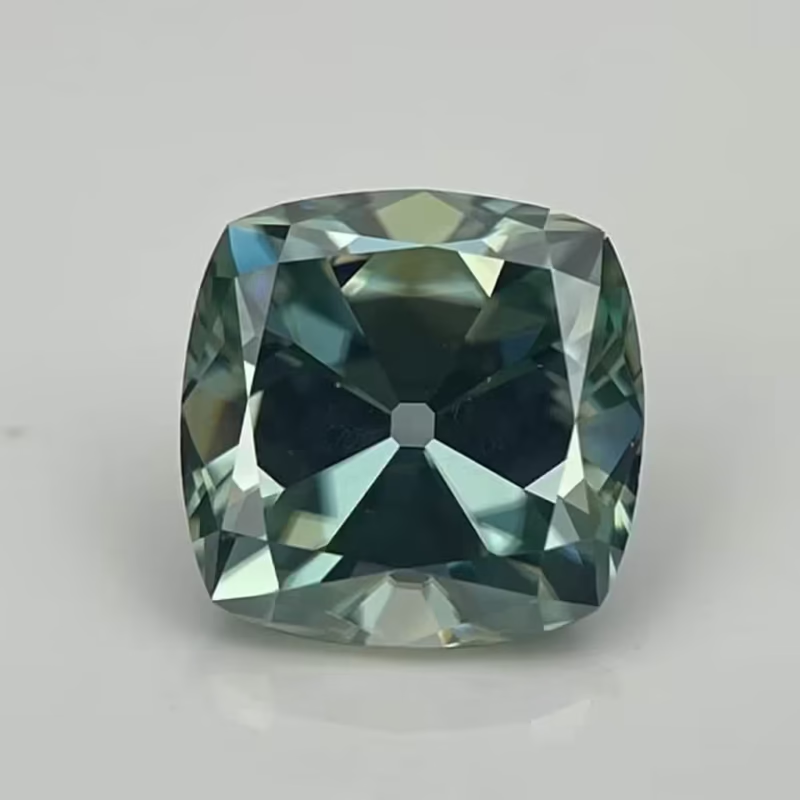
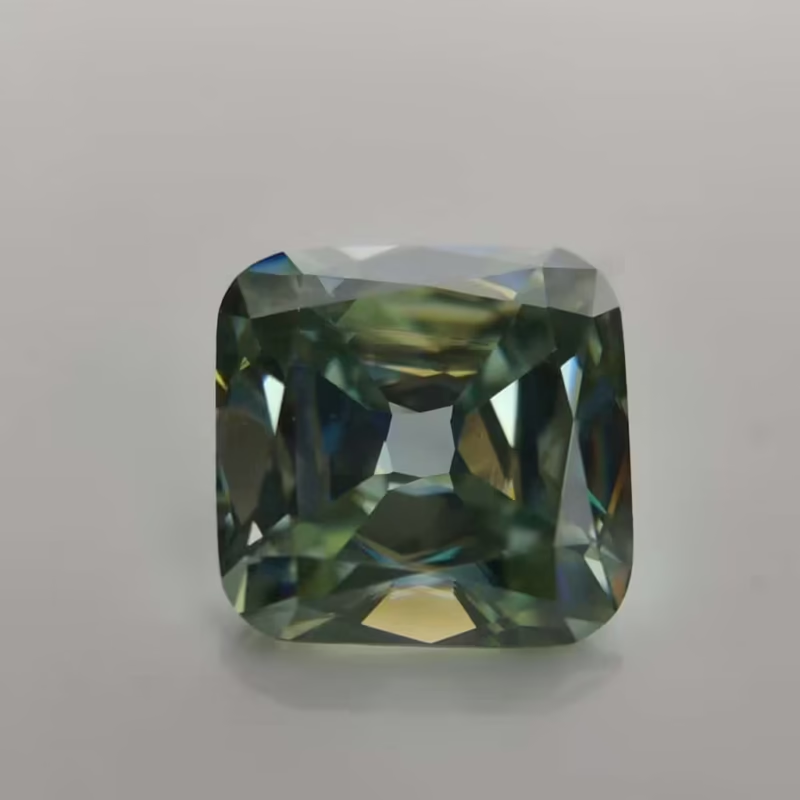
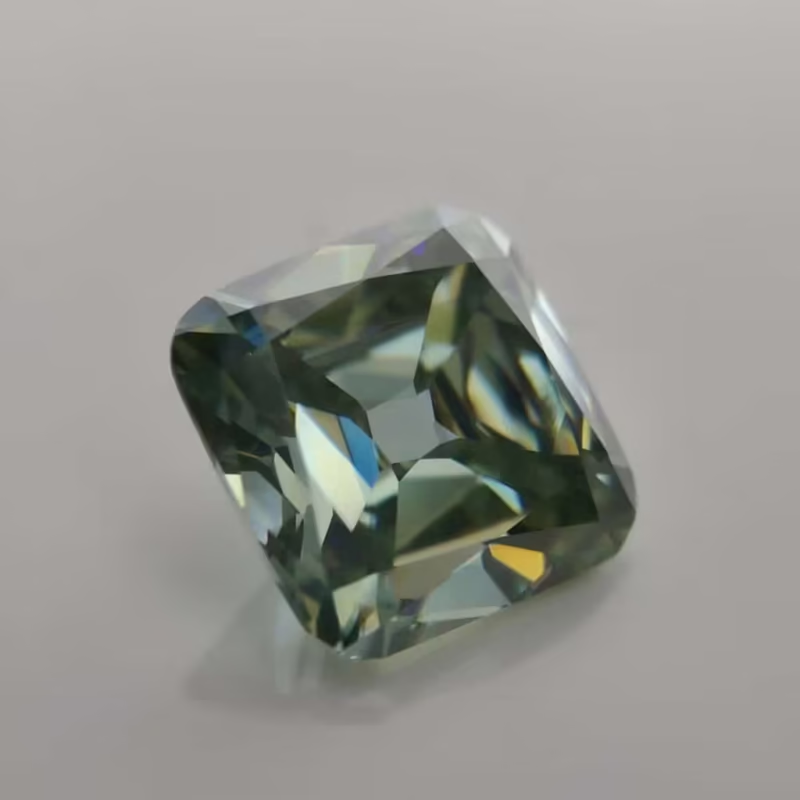
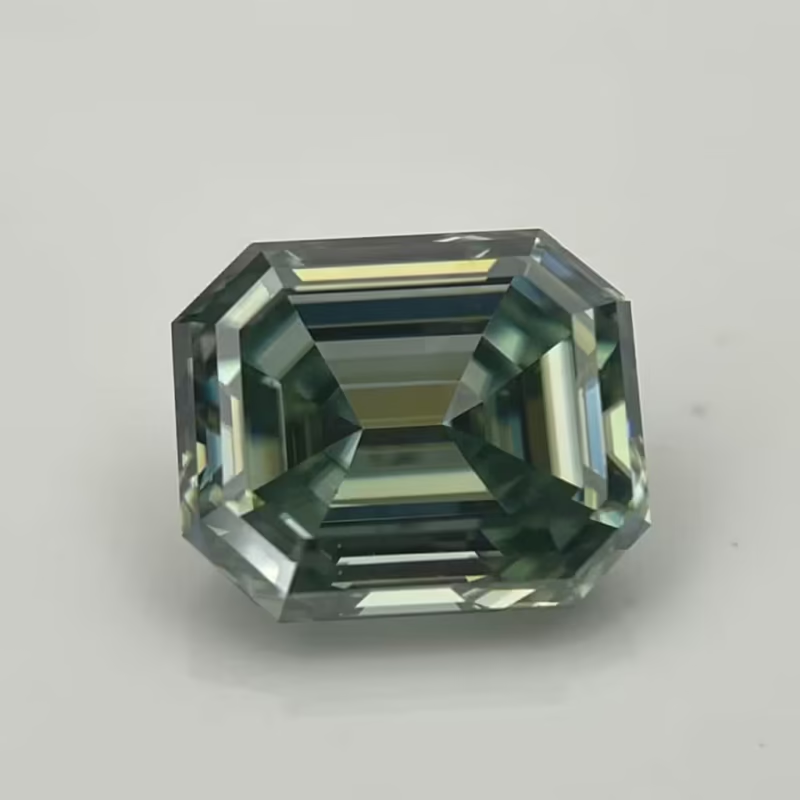
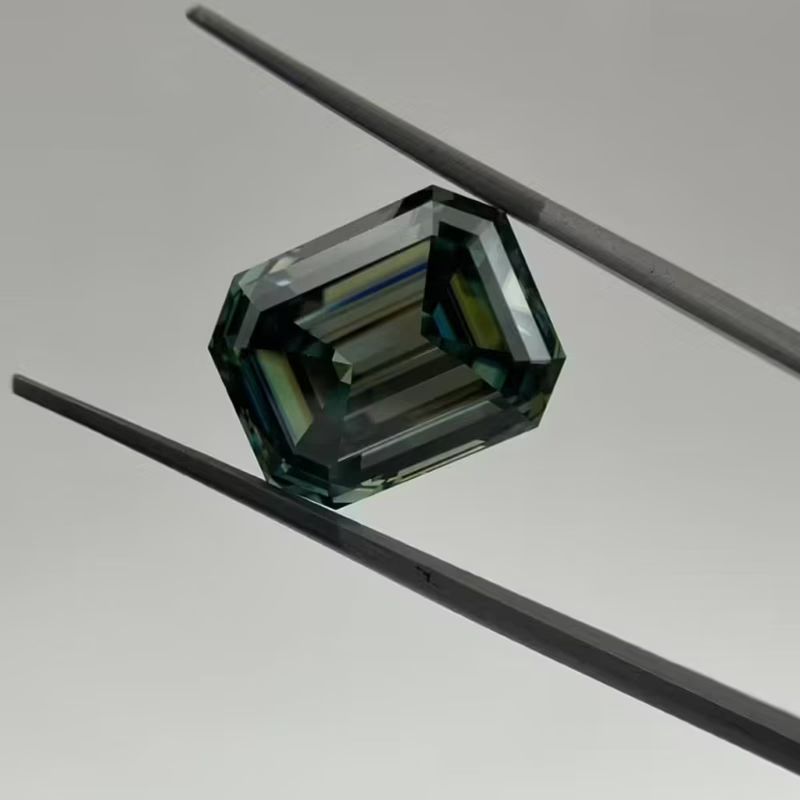
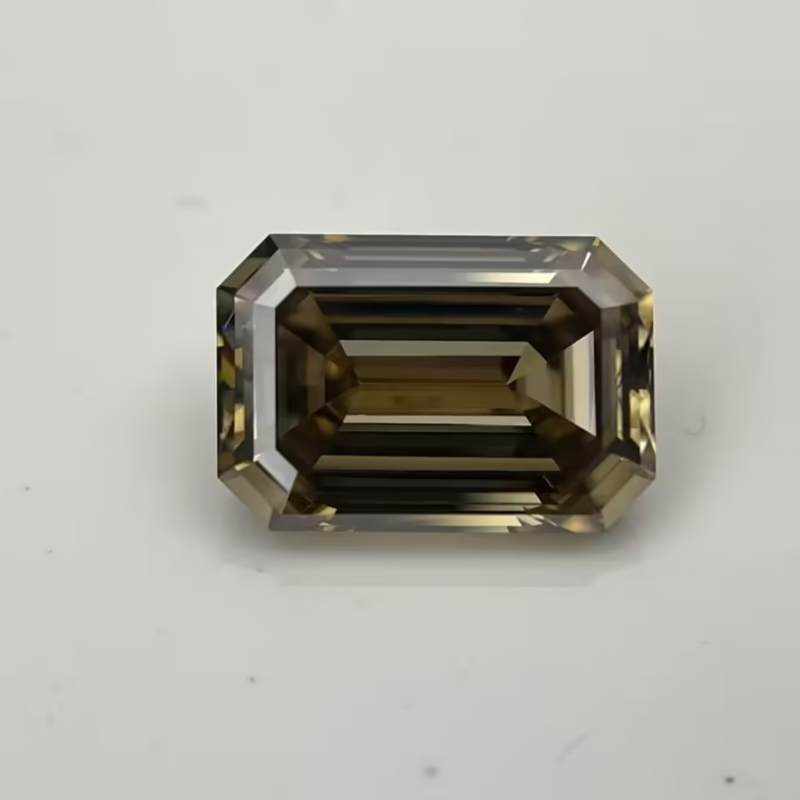
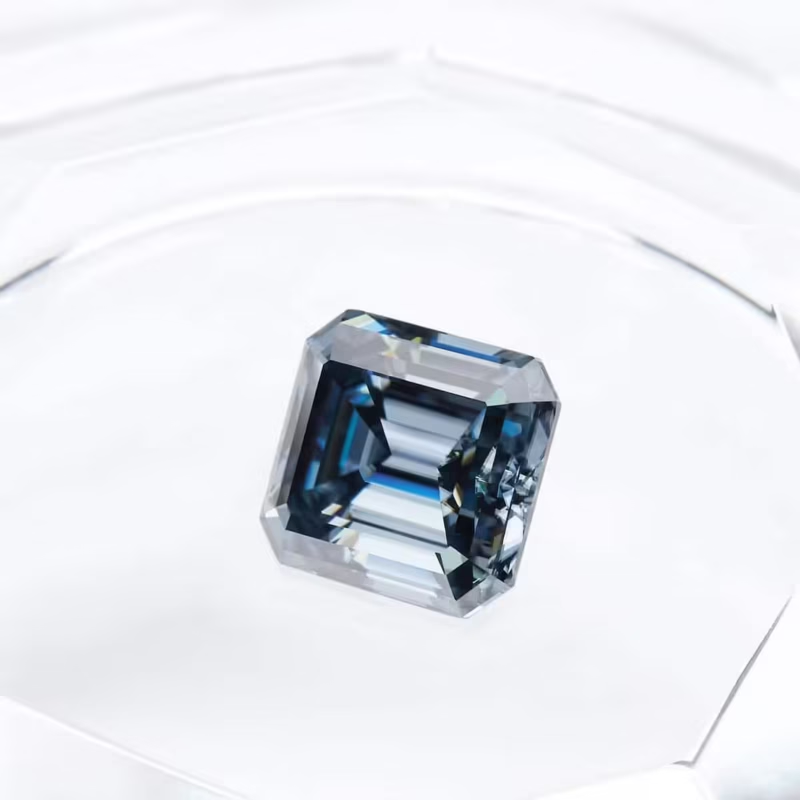
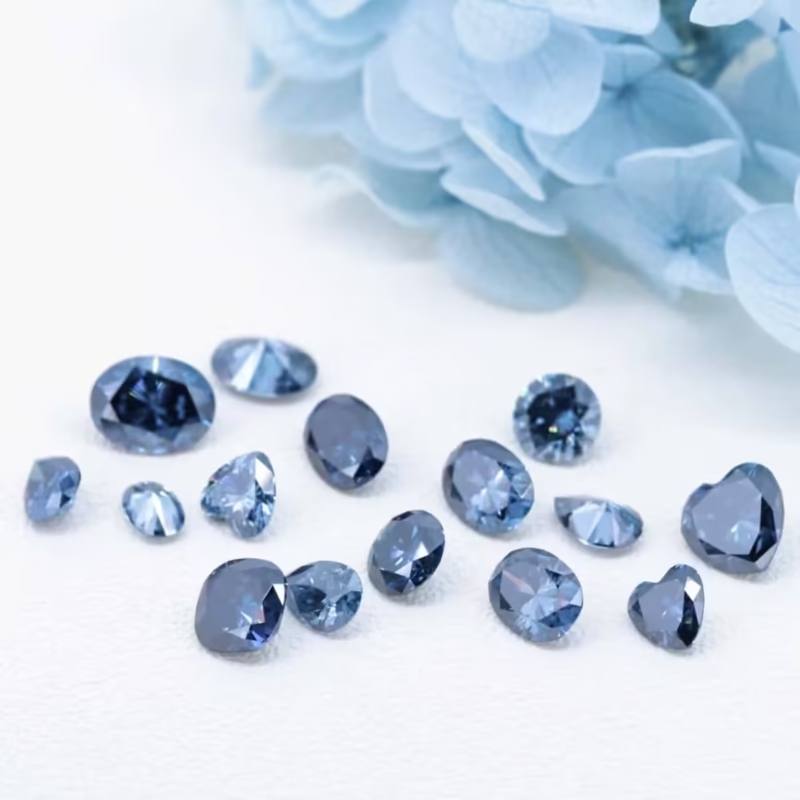
Color: D-E-F colorless (primary stock). Fancy color on custom order — the same color range available in our fancy color lab grown diamonds is available in moissanite on request: Pink, Blue, Yellow, Green, Grey, Black, Champagne.
Clarity: VVS standard across the collection. Moissanite does not follow the diamond clarity grading system, but VVS-equivalent eye-cleanliness is the floor Primira holds — not a marketing grade applied loosely.
Cut: Hand-faceted. Not machine-cut. Every stone cut to controlled table proportions and facet sizing by Surat lapidaries, specifically to manage the RI at the cutting stage rather than after the fact.
Size range: Available from sub-carat to larger stones on custom order. Moissanite is priced and sold by millimetre diameter, not by carat weight — a 6.5mm round moissanite is commonly described as “1-carat equivalent” but weighs approximately 0.88ct due to moissanite’s lower density relative to diamond. When comparing sizes across stone types, work from the millimetre measurement, not the carat equivalent weight.
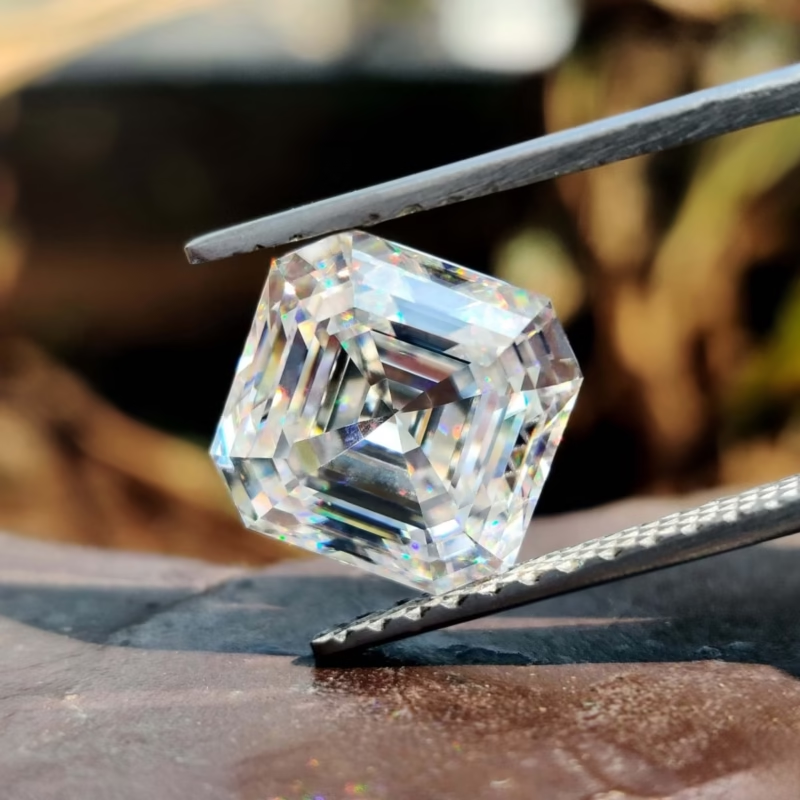
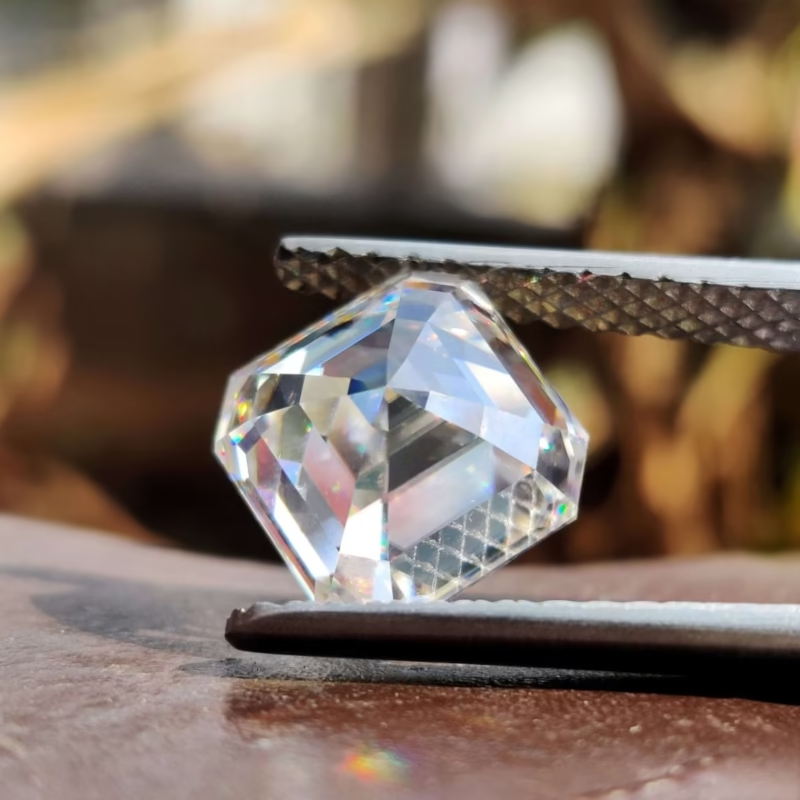
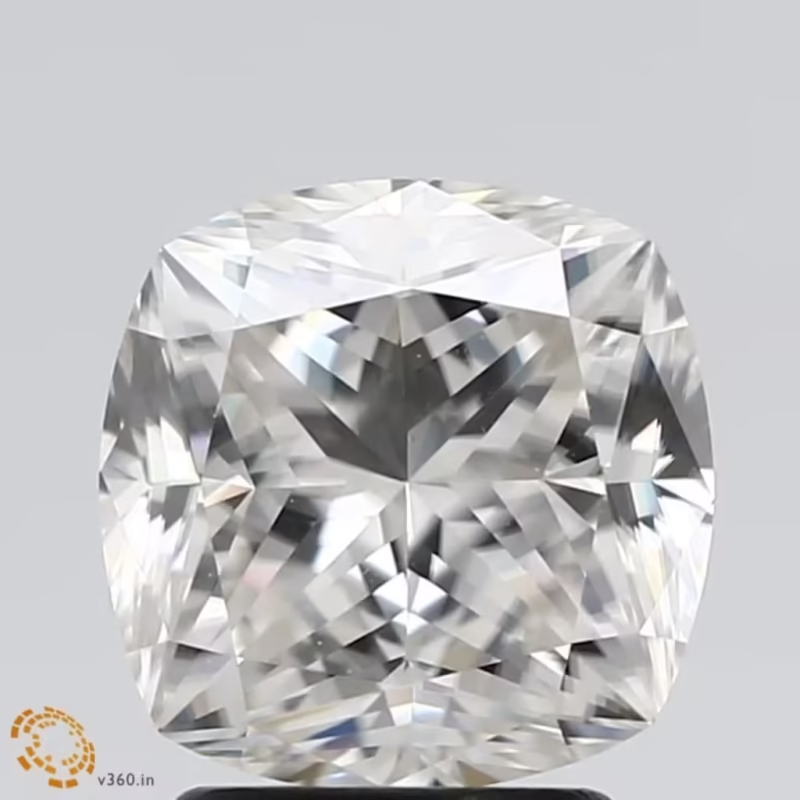
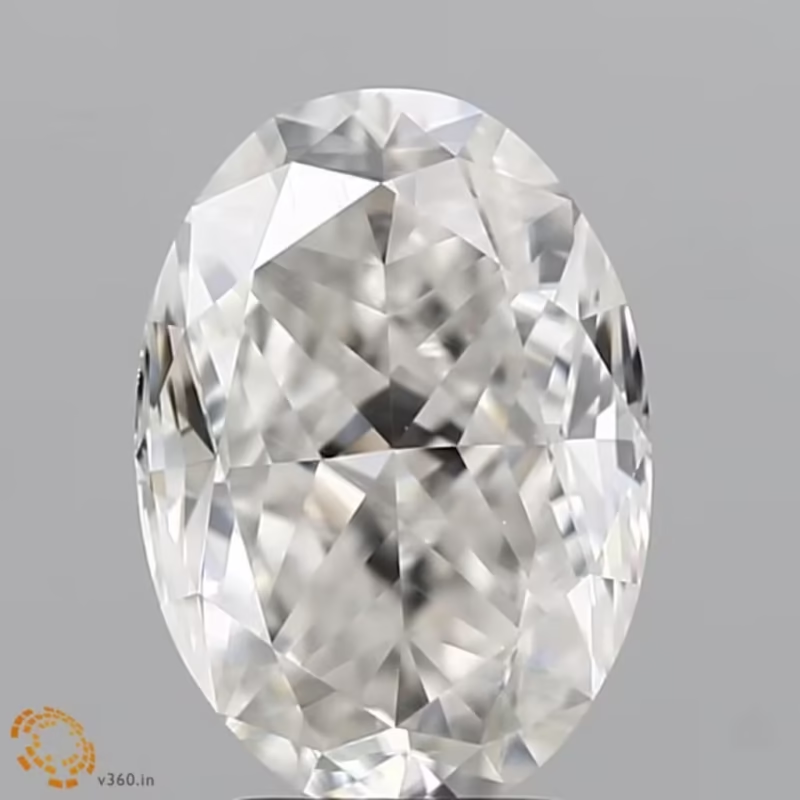
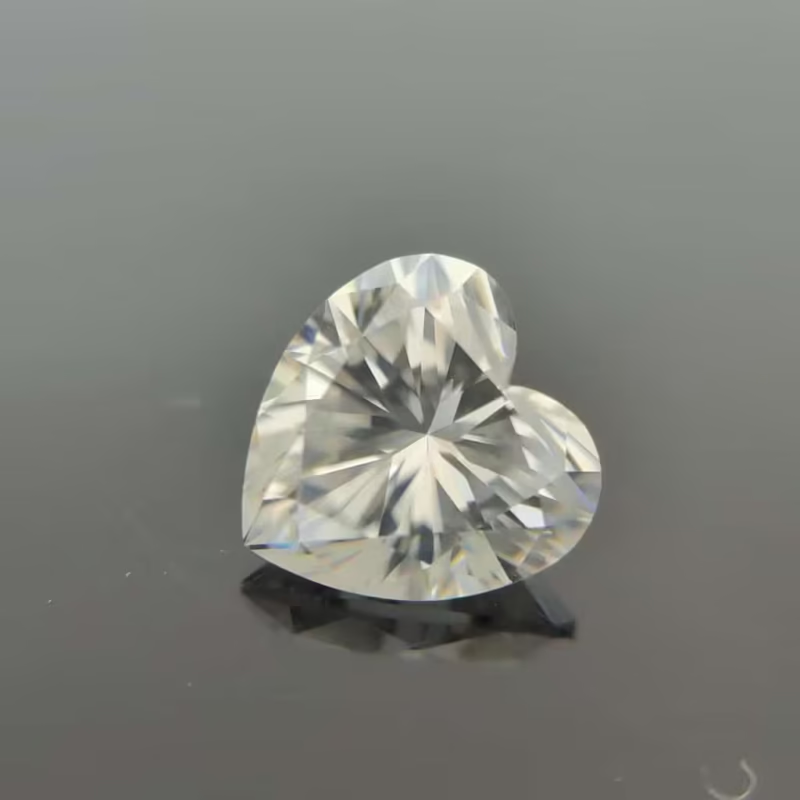
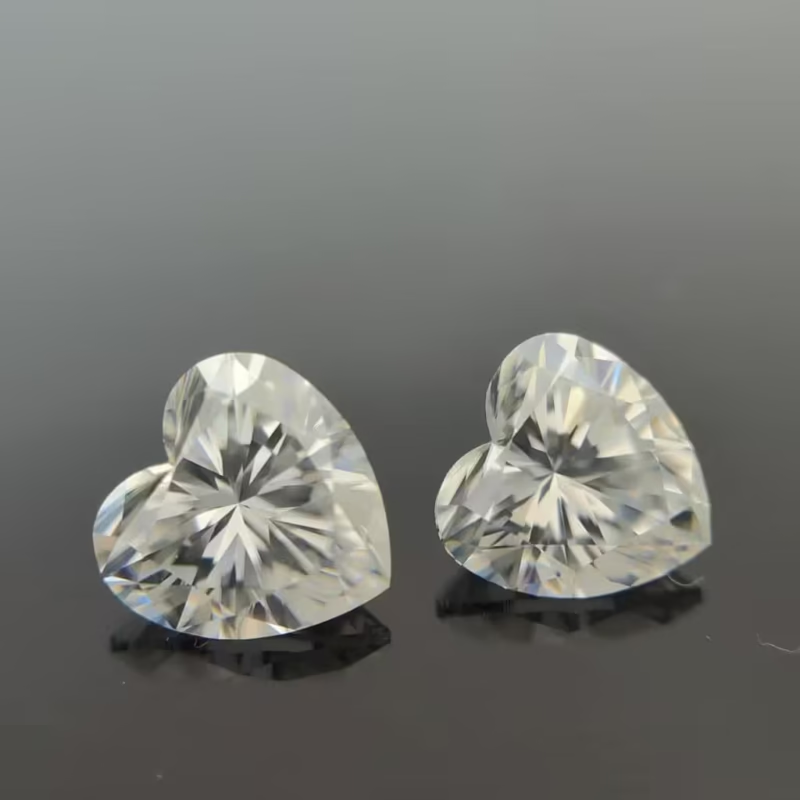
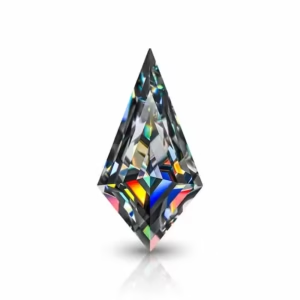
Shapes: All standard shapes in stock or available: Round Brilliant, Oval, Pear, Cushion, Emerald, Radiant, Princess, Marquise, Heart, Asscher. Specialty and custom shapes — Rose Cut, OEC, Portuguese, and any of the custom silhouette shapes from our Surat lapidary — on order. If the shape exists in our diamond range, it can be cut in moissanite.
Colorless and Fancy Color — Different Buyers, Different Decisions
Colorless Moissanite (D-E-F)
D-F colorless moissanite reads as white under most lighting conditions. The fire is present but, with hand-controlled faceting, it presents as broad flashes rather than the rapid multi-colour strobing common in machine-cut stones. Buyers who want the fire of moissanite without the obvious visual separation from diamond are looking at this grade and this cut approach.
One honest note: under direct, intense lighting — full sun, stage lights, a single-point spotlight — any moissanite’s higher dispersion will produce more visible colour play than a diamond of the same size. This is the stone’s nature, not a defect. If that distinction matters to you, lab grown diamonds are the better fit. If you want maximum fire and you understand what produces it, moissanite is the choice.
Fancy Color Moissanite
Fancy color moissanite behaves differently from colorless — and differently from fancy color diamonds. The color is in the body of the stone, not produced by light interaction. This means the color reads consistently regardless of the lighting environment, and the fire from the high RI adds a dimensional quality that fancy color diamonds produce differently.
Setting metal matters here exactly as it does for fancy color diamonds: yellow moissanite in yellow gold intensifies the saturation; blue and pink moissanite in white metal or platinum read cleaner. Available on custom order only — specify color, saturation level, and shape via WhatsApp before ordering.
Moissanite Versus Lab Grown Diamond — An Honest Comparison
This comparison comes up in almost every moissanite research journey, and it deserves a direct answer rather than a deflection.
They are different stones. A lab grown diamond is carbon, chemically and physically identical to a mined diamond. Moissanite is silicon carbide. They look similar at a glance under many lighting conditions. A trained gemologist with the right equipment can distinguish them. Most people in most rooms cannot.
The optical character is genuinely different. Lab grown diamonds produce the classic white brilliance with restrained colour flash — the look people associate with diamond. Moissanite produces more fire and more colour play from its higher refractive index. Neither is better in absolute terms. One is preferred for traditional diamond appearance. The other is preferred for maximum visual impact and fire.
The price difference is real and significant. Moissanite costs substantially less per carat than a lab grown diamond of equivalent size. At any fixed budget, moissanite allows a meaningfully larger stone, or a more complete set.
Resale value: Neither lab grown diamonds nor moissanite has significant secondary market value in the way natural diamonds traditionally did. Moissanite has essentially no resale market — it is priced as an aesthetic purchase, not an asset. This is worth understanding before buying, not discovering afterward. Buy moissanite because the stone is beautiful and the value at size is real. Not because you expect to recover the investment.
The full loose lab grown diamond range is available alongside this collection for buyers making that comparison directly.
Antique Cuts in Moissanite — the 2026 Case for OEC and Rose Cut
One of the strongest arguments for moissanite specifically — not just moissanite in general — is in antique cut formats.
The Old European Cut (OEC) has 58 facets arranged around a small table and high crown, with an open culet visible from the face-up position. The larger facets and fewer facet count slow the light return and transform moissanite’s high dispersion into broad, pastel-tinted flashes rather than rapid strobe cycles. The stone reads warmer, softer, and more intimate than a modern brilliant cut moissanite — a completely different aesthetic register from the same material. This is one of the specific cases where the “disco ball” concern essentially disappears: the facet geometry does the work.
Rose cut moissanite takes this further. With a flat base, domed crown, and between 3 and 24 facets, a rose cut moissanite has no pavilion to bounce light back — it glows rather than sparkles, with a quiet depth that bears no resemblance to the strobe effect common in round brilliant cuts. It is also flat-based, which produces a larger face-up appearance relative to carat weight than any domed cut.
Both cuts are available on custom order. Surat lapidary produces OEC and Rose Cut moissanite to the same facet-pattern standards applied to the antique cut lab grown diamond range.
Custom Order — What Is Possible
Any stone in the collection can be ordered in a specified size, shape, and color. The process:
- Contact via WhatsApp (+91 9510640173) with your size, shape, color, and saturation requirements.
- The Surat team confirms specifications, cut approach, and timeline before production begins.
- Production and cutting: 15–35 business days. Custom antique cuts or unusual shapes may require up to 45 business days in exceptional cases.
The one detail specific to custom moissanite orders that doesn’t apply in the same way to standard stones: facet-pattern confirmation. For OEC, Rose Cut, Portuguese, or custom silhouette shapes, the exact faceting approach — table percentage, crown angle, facet arrangement — can be specified at order stage and confirmed in writing before cutting begins. This is the step that makes the difference between a hand-cut stone and a generic machine-run equivalent. Use it.
Caring for Moissanite
Moissanite does not degrade. It does not cloud, yellow, or change optically over time. The one genuine maintenance requirement is cleaning frequency — more than diamond.
The high refractive index means oil transfer from the skin, lotion, or soap creates a visible film on the surface much faster than it would on a diamond. The film partially blocks the light interaction that produces the fire. A stone that seems to have lost its brilliance has almost always just accumulated surface oil. Clean with warm water, a drop of mild dish soap, and a soft brush. Rinse thoroughly. The brilliance returns immediately and completely.
Ultrasonic cleaners are safe for moissanite. Steam cleaners are safe. Both are effective at removing the oil buildup that surface cleaning may miss.
Storage: keep moissanite loose stones in separate pouches or compartments. At 9.25 on the Mohs scale, moissanite will not scratch from contact with most everyday materials — but it will scratch softer stones stored alongside it.
FAQ
What is the difference between moissanite and a lab grown diamond?
Lab grown diamonds are carbon — chemically and physically identical to mined diamonds, graded on the same 4C system, certified by IGI or GIA. Moissanite is silicon carbide — a distinct gemstone with a higher refractive index (2.69 vs 2.42), more fire, and a significantly lower price per carat. They look similar in many lighting conditions. They are different materials with different optical behaviour. The decision comes down to whether you want diamond-specific optical character or maximum fire and size at a given budget.
Does moissanite look fake?
Under most everyday lighting, most people cannot distinguish moissanite from diamond. The visual difference — more colour play in moissanite, more restrained white brilliance in diamond — becomes more apparent in direct, intense light and at larger sizes. Machine-cut moissanite amplifies the colour play into the “disco ball” effect many buyers want to avoid. Hand-faceted moissanite with controlled table proportions produces broader, slower fire that reads more elegantly. The stone does not look fake. It looks like moissanite, which is a different thing from looking like a diamond.
What size moissanite should I buy?
Moissanite is sold by millimetre, not carat weight — the density difference from diamond means a “1ct equivalent” moissanite weighs approximately 0.88ct actual. For rings, the face-up diameter (millimetres) is what determines visual presence on the finger. A 6.5mm round reads as roughly 1ct-equivalent face-up size. For pendants and earrings, a slightly smaller stone often works better with moissanite than with diamond because the higher fire carries more visual weight than the millimetre measurement suggests.
Does moissanite lose its sparkle over time?
No. Moissanite does not degrade optically. What reads as lost brilliance is almost always surface oil — the high refractive index makes oil film visible faster on moissanite than on diamond. A thorough clean with warm soapy water and a soft brush restores the stone completely. The brilliance is not gone; it is temporarily blocked. Clean regularly and the stone looks the same in thirty years as it does today.
Can I get moissanite in the same shapes as lab grown diamonds?
Yes. Any shape available in Primira’s lab grown diamond range is available in moissanite on custom order — including OEC, Rose Cut, Portuguese cut, and all custom silhouette shapes. Standard shapes (round, oval, pear, cushion, emerald, radiant, princess, marquise, heart, asscher) are available in stock or short-order. Specialty and antique cuts require a custom order via WhatsApp.
Is moissanite a good investment?
Moissanite has essentially no secondary market. It cannot be resold in the way a natural diamond can, and unlike lab grown diamonds (which carry limited but measurable secondary market value), moissanite resale is close to zero. This is not a reason to avoid it — it is a reason to buy it with clear expectations. Buy moissanite because the stone is beautiful, because the fire is exceptional, and because the price makes a larger stone possible. Not as an asset expected to retain or recover value.
Why Surat, Why Hand-Cut
There is a structural difference between moissanite purchased from a brand-name reseller and moissanite cut in a facility where the lapidary makes per-stone decisions. Surat processes the overwhelming majority of the world’s rough diamonds — the cutting infrastructure here, and the human expertise behind it, does not exist at the same depth anywhere else. Primira’s moissanite is faceted by the same people who cut Portuguese diamonds with 161 facets and custom silhouette shapes to reference-image accuracy. The RI of 2.69 means moissanite responds to cutting decisions more dramatically than almost any other stone — the same cutter skill that distinguishes a precise antique cut from a generic one distinguishes a stone with controlled, elegant fire from one that strobes.
Certified loose stones are dispatched within 48 hours of order confirmation. Every shipment is insured from our Surat facility to your door. For orders above ₹10,000, shipping within India is free. International orders above USD $550 ship express at no charge.
Comparing stone types directly? Our full loose lab grown diamond collection covers the complete shape and specification range.
For stone specifications, shape requests, or custom order enquiries: WhatsApp +91 9510640173 or email contact@primiraluxury.com. The team confirms every specification before cutting begins.





 1-to-1 Custom Design
 Craft Your Vision
 HD video Preview
 Fully Customizable
 Choose Metal Tone:
 Handcrafted in Solid 10K · 14K · 18K
 Select Your Stone Type:
  Award winning
  Hallmarked &
  Personalized Care &
  Design Any Piece
 Chat on WhatsApp