Lab Grown Diamonds — Loose, IGI Certified, Cut in Surat
Lab grown diamonds bought loose are a different purchase than lab grown diamonds bought already set into a ring or pendant. There’s no setting to look past, no styling to evaluate around — just the stone against its grading report. Primira Luxury cuts, polishes, and certifies lab grown diamonds at our own facility in Surat, and we sell them loose to buyers who want to evaluate the stone on its own terms first: working jewellers sourcing inventory, clients building a fully custom piece, and individual buyers who already know roughly what specification they’re after.
Surat cuts and polishes over 90% of the world’s rough diamonds, lab grown and mined alike. In FY 2025–26, India’s polished lab grown diamond exports reached 18.8 million carats — surpassing polished natural diamond exports of 16 million carats for the same period. Buying loose from a facility operating at that scale means the person confirming your specification is the same operation doing the cutting, not a reseller relaying a supplier’s catalogue.
What a Lab Grown Diamond Actually Is
Lab grown diamonds have the same optical, physical, and chemical properties as mined diamonds — identical crystal structure, identical hardness, identical fire and dispersion. The only difference is origin: a lab grown diamond forms in a controlled growth chamber over weeks instead of underground over geological time. Every lab grown diamond Primira sells is laboratory-grown carbon — no blend, no mined-diamond inventory mixed in — and every listing states the stone type plainly, both because it’s required and because buyers comparing specs deserve to know exactly what they’re pricing.
CVD or HPHT — and Why It’s Worth Knowing Which
Primira stocks lab grown diamonds grown by both Chemical Vapour Deposition (CVD) and High Pressure High Temperature (HPHT) — and the method behind a specific stone is worth asking about, because it affects what that stone is naturally suited for.
CVD diamonds are grown atom-by-atom inside a vacuum chamber filled with carbon-rich gas, without a metal catalyst. That process produces a diamond with the same nitrogen-free crystal structure (Type IIa) found in the rarest fraction of natural diamonds — exceptionally pure, with very uniform internal structure, which is why CVD is the default growth method for colorless white stock.
HPHT diamonds are grown under intense pressure and heat with a metal catalyst — closer to the mechanism that forms diamonds underground, compressed into weeks. HPHT is the more efficient method for larger carat sizes and for reaching saturated fancy colors, since the catalyst environment itself influences how color centers form in the crystal. If a stone’s color comes from its growth method rather than a post-growth treatment, that’s worth knowing before you buy it — and it’s the kind of distinction a grading report and a direct conversation with the people who cut the stone can settle, where a generic listing usually can’t.
If a fancy color stone is what you’re actually after, HPHT-grown color is covered in more depth on our fancy color lab grown diamonds page.
The 4Cs, As Primira Actually Stocks Them
Cut: Ideal, Excellent, and Very Good only — no Good or Fair grades enter inventory, loose or set. Cut is the variable a cutting facility controls directly, and it’s the one we won’t compromise on.
Color: D-E-F colorless is primary stock — no visible warmth even in larger stones. G-H-I near-colorless is also available as a genuine value choice, not a downgrade: at G-H-I the color difference isn’t visible to the naked eye, and the saving is real.
Clarity: VVS1 to VS2, all eye-clean. Primira does not stock SI2 or lower in loose lab grown diamonds — worth stating directly, since SI2-and-below stock is common enough elsewhere that it’s worth knowing what you’re comparing against.
Carat: standard stock runs from 0.25ct upward; sizes beyond standard inventory, up to 10ct+, are cut to order. Lab grown production is what makes that range realistic to offer at all — carat sizes that would carry scarcity pricing elsewhere are a production decision here.
Lab Grown Diamond or Moissanite
Not every loose-stone buyer wants a diamond specifically. If the goal is maximum visual fire per rupee or dollar rather than diamond composition, Primira’s hand-cut moissanite stones are worth comparing against. Moissanite has a higher refractive index than diamond (2.69 vs. 2.42), meaning more optical fire — hand-faceted by the same Surat cutters to keep that fire from tipping into an artificial-looking sparkle. It’s a different stone with a different optical signature, not a lesser diamond, and worth evaluating on its own terms rather than assumed as the budget version of one.
Shop Loose Lab Grown Diamonds by Shape
Each shape below has its own proportion standards, orientation considerations, and setting implications, covered in full on its own page.
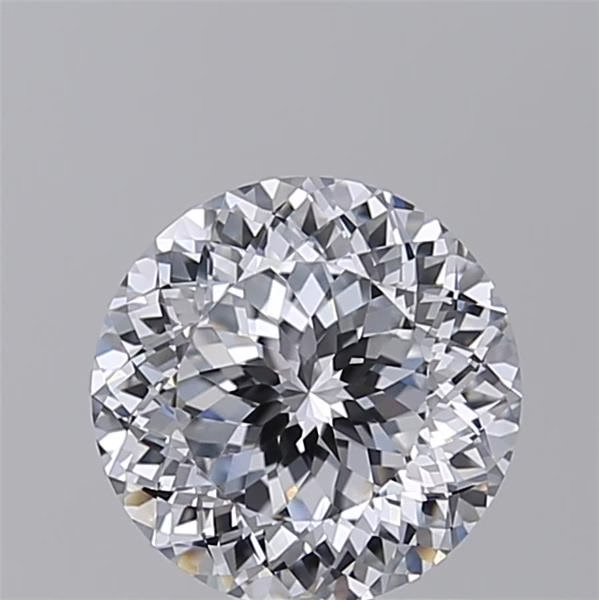
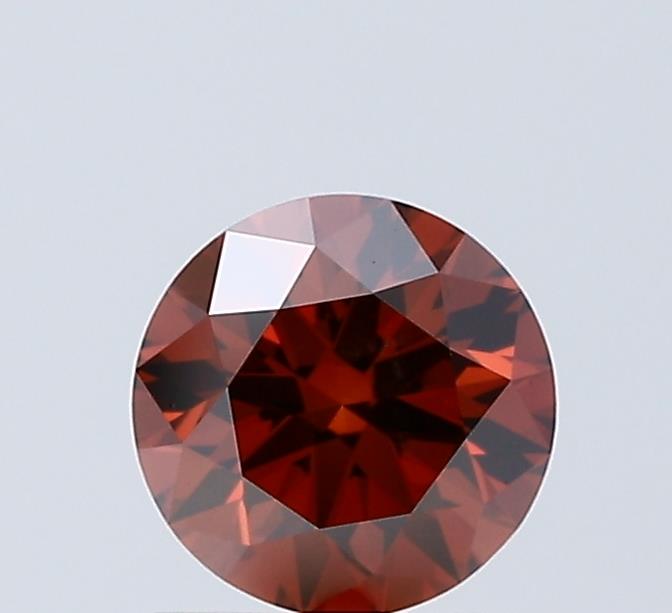
Round Brilliant — the most popular shape globally, and the one judged almost entirely on proportion rather than outline: table percentage, depth percentage, and crown angle determine how much light a round actually returns. Full round brilliant specifications →
Pear — an elongated brilliant where orientation is a real design decision: apex-up or apex-down depending on whether the stone is going into a ring, pendant, or earring. Pear shape buying guidance →
Oval — elongated like pear or marquise but without a pointed end to chip or snag, making it the forgiving choice for elongated-shape elegance. Oval cut specifications →
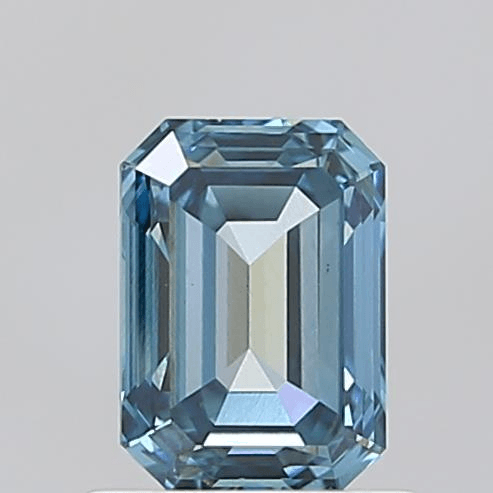
Emerald — a step cut where clarity matters more than standard advice suggests; open facets show inclusions a brilliant cut would hide. Emerald cut buying guide →
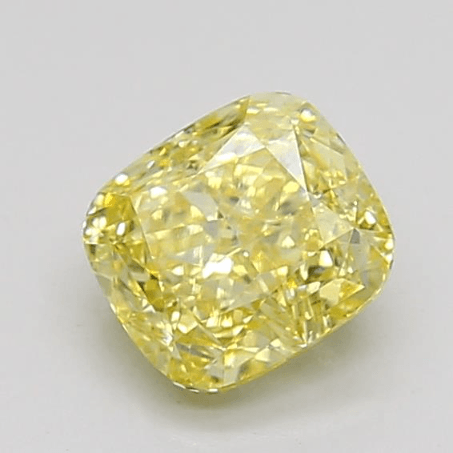
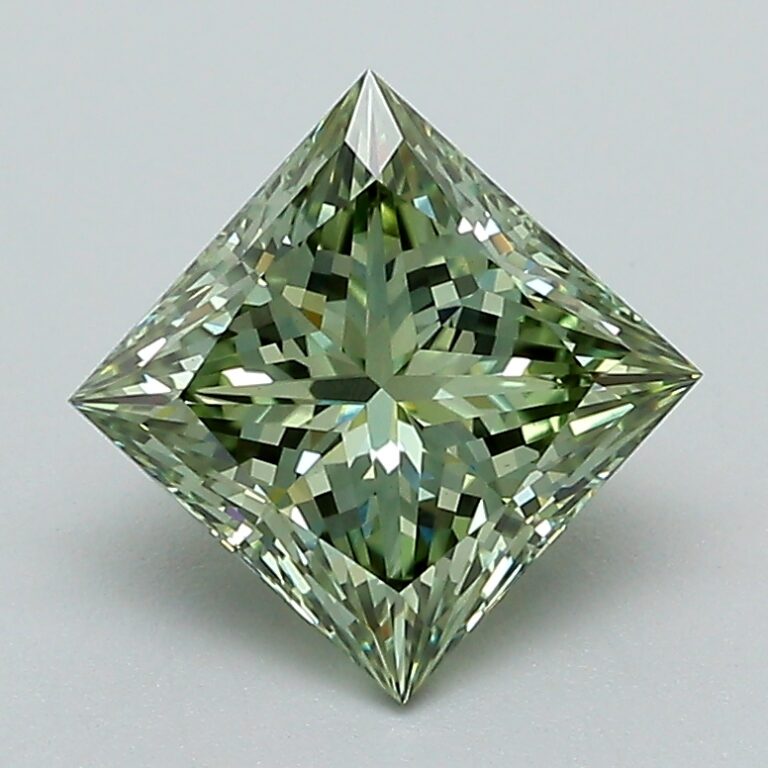
Fancy Color — pink, blue, yellow, green, grey, black, champagne, and orange, graded on saturation and hue rather than the white-diamond color scale. Fancy color lab grown diamonds →
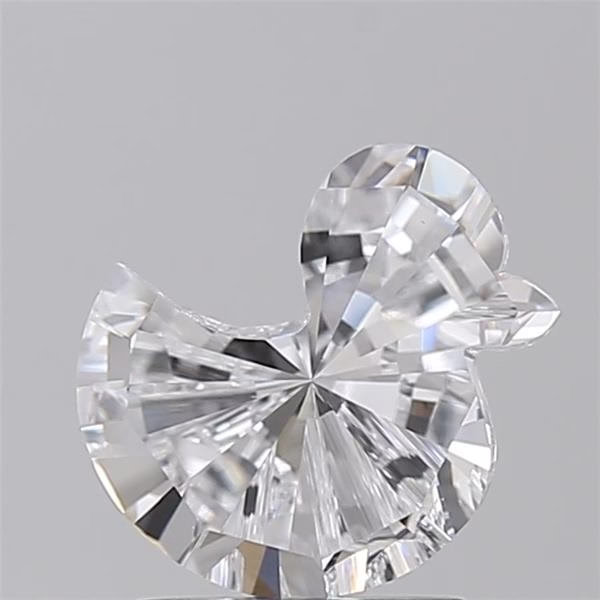
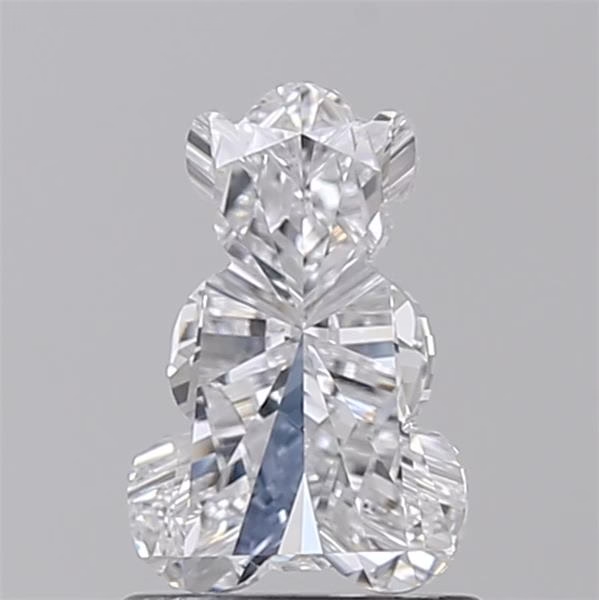
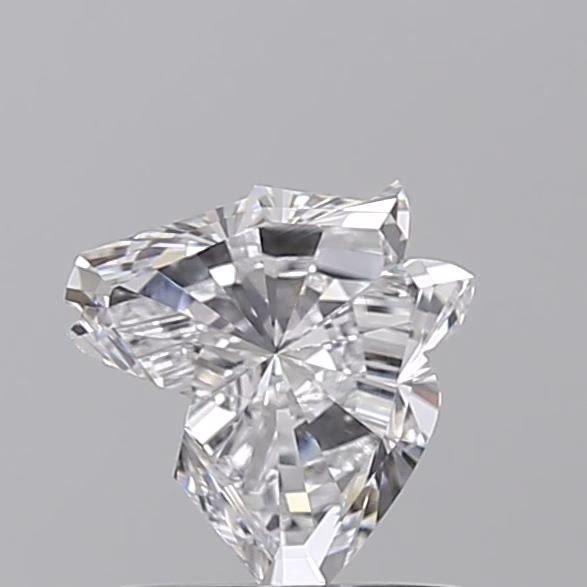
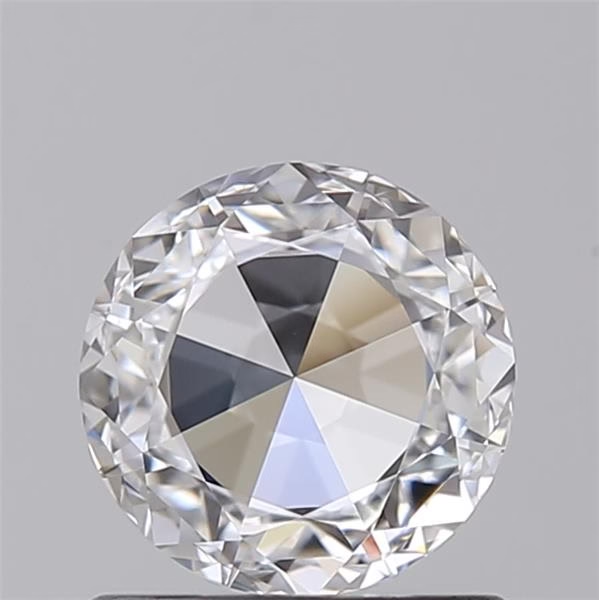
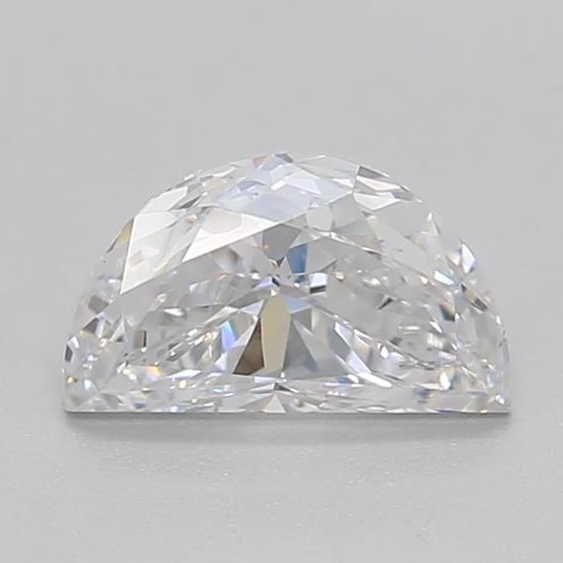
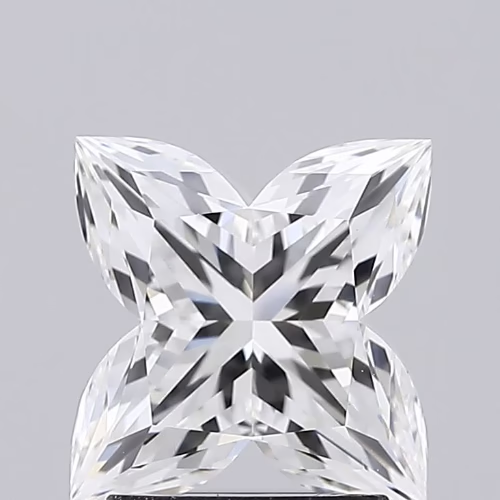
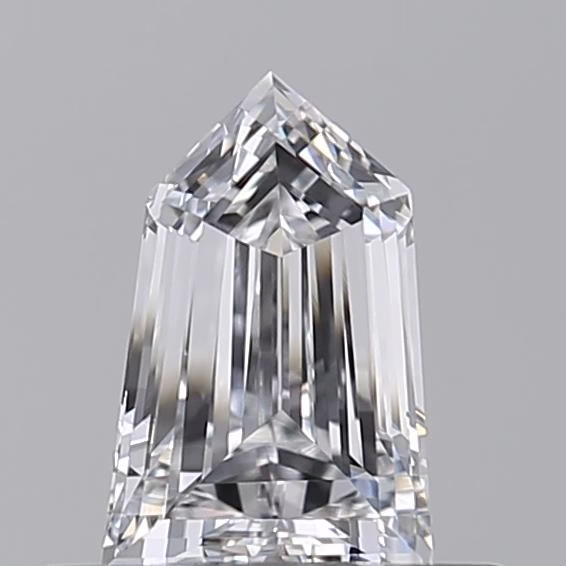
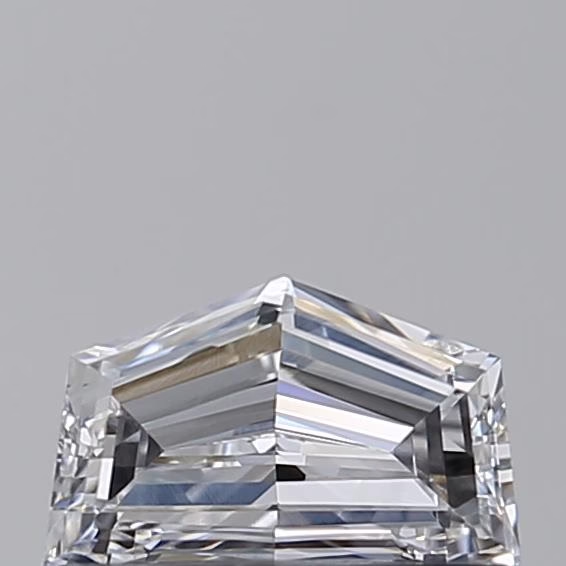
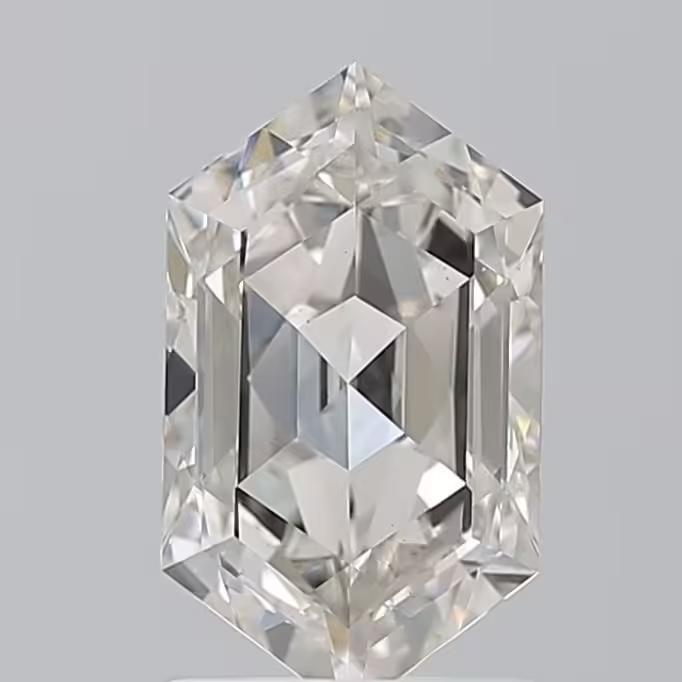
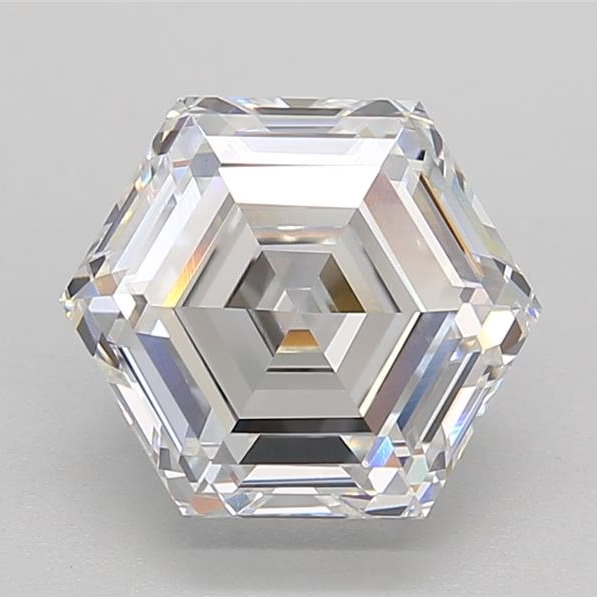
Specialty and Antique Cuts — Portuguese (161+ facets), Rose Cut, Old European Cut, Old Mine Cut, and custom silhouette shapes cut to order from Surat lapidary. Specialty and antique cut lab grown diamonds →
Looking for a finished piece instead of a loose stone? Start with the engagement ring collection if that’s the occasion, or browse fashion rings, pendants, and earrings from the main navigation.
Custom Specifications
Standard stock covers most of what buyers need, but loose-stone buyers are also the buyers most likely to want something outside it — a specific carat weight rather than the nearest standard size, a particular saturation tier within a fancy color, or a specialty cut grown and faceted to a reference image. Because Primira cuts in-house, that’s a production conversation, not a sourcing one: carat, color grade, clarity grade, growth method (CVD or HPHT), and shape are all confirmed via WhatsApp before production starts — the same confirmation step that applies to every made-to-order piece on the site.
Handling and Storing a Loose Diamond
A loose stone carries different handling risk than one already set. Diamond is the hardest natural material, which means a diamond is one of the few things that can scratch another diamond — never store two loose stones together in the same compartment; a box with individual stone papers or a compartmented case prevents girdle-to-girdle contact. When examining a stone against light, hold it by the girdle edge rather than the table or crown — finger oil on the table temporarily dulls light return, which can make a well-cut stone look less brilliant than it is mid-inspection. Keep the certificate with the stone until it’s set; the report number on the document should match the laser inscription on the girdle, and checking that match is the easiest verification step available to you or to whichever jeweller eventually sets it.
From Order to Your Door
Certified lab grown diamonds already in inventory dispatch within 48 hours of order confirmation. Anything outside standard stock — a custom carat, a specific saturation tier, a cut-to-order specialty shape — runs 15 to 35 business days, occasionally up to 45 in cases involving genuine sourcing or certification complexity. That gap matters more for loose stones than for finished jewelry, because a loose-stone buyer is often working against a setting timeline of their own; knowing which category your order falls into is worth confirming upfront.
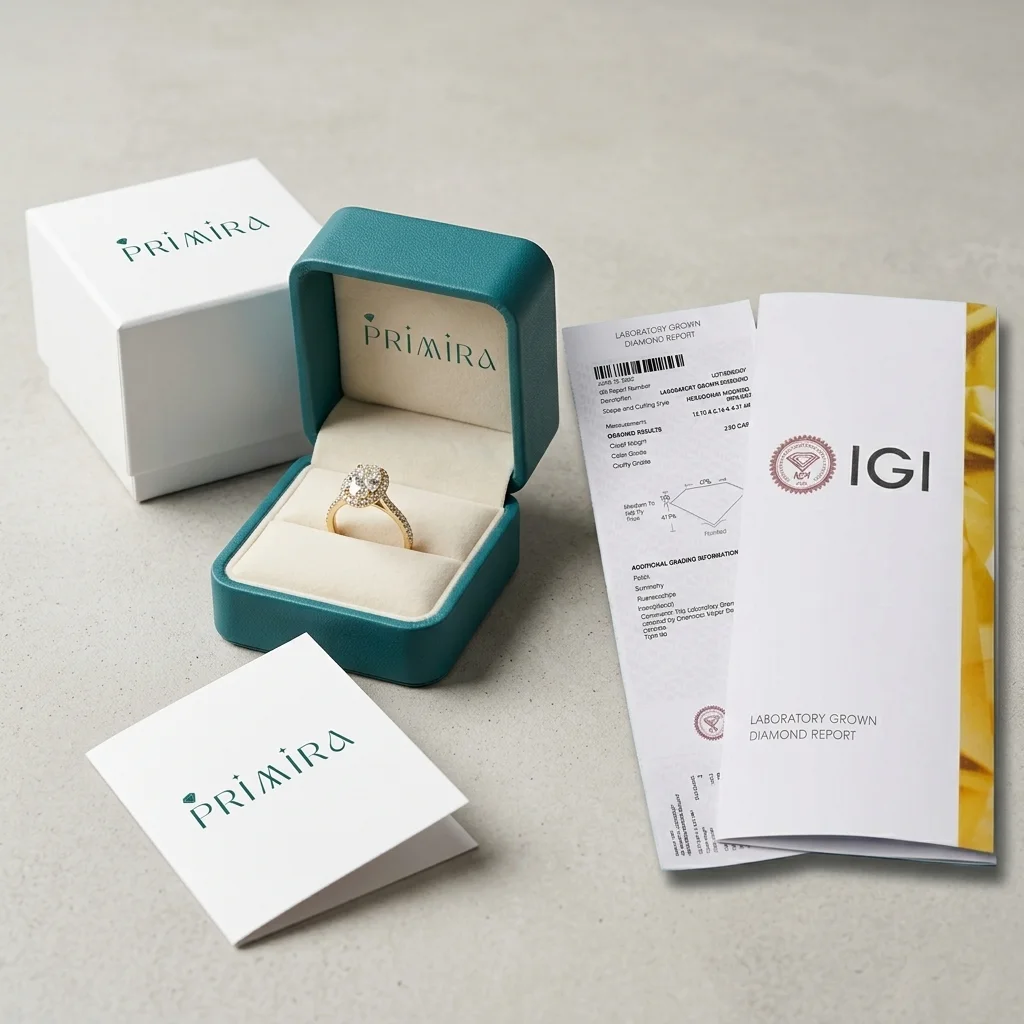
Every loose lab grown diamond ships with IGI certification by default, and the report number on that certificate is laser-inscribed on the stone’s girdle — checkable independently at igi.org, not just taken on Primira’s word. SGL certification is available on request as a secondary option. Every shipment, certified loose stones included, is insured from dispatch to delivery confirmation; international express delivery (DHL/FedEx/UPS, signature required) ships free on orders above USD $550, and our Surat team confirms your exact specification by WhatsApp and email within 24 hours of checkout, before anything goes into production.
Frequently Asked Questions
What’s the difference between CVD and HPHT lab grown diamonds?
CVD diamonds are grown atom-by-atom in a vacuum chamber without a metal catalyst, producing a nitrogen-free Type IIa structure naturally suited to colorless white stock. HPHT diamonds are grown under extreme pressure and heat with a metal catalyst — closer to the natural formation mechanism — and is the more efficient method for larger carats and saturated fancy colors. Both are available at Primira; which one suits a given order depends on the spec you’re after.
Do lab grown diamonds have the same properties as mined diamonds?
Yes — lab grown diamonds have the same optical, physical, and chemical properties as mined diamonds: identical crystal structure, identical hardness, identical fire. The only difference is origin and, as a direct result, price.
How is a loose lab grown diamond IGI certified, and how do I verify it myself?
Each stone is independently graded by IGI for cut, color, clarity, and carat, and the report number is laser-inscribed on the girdle. You can enter that report number at igi.org and confirm it matches the physical stone — a check that doesn’t depend on taking any seller’s word for it.
Why are lab grown diamonds priced the way they are?
Lab grown diamond pricing reflects production cost rather than scarcity — carat, color, clarity, and cut still drive price, but the underlying cost structure is a manufacturing one, not a mining one. That’s also why larger carat sizes are realistic at this price point in a way they historically haven’t been.
Can I buy a loose stone from Primira and have it set by another jeweller?
Yes. The stone and its IGI certification are yours once dispatched; nothing about the purchase requires setting it with Primira. Most loose-stone buyers either set it locally or come back to commission a custom piece once the stone is in hand.
How long does a custom order take compared to an in-stock stone?
In-stock certified stones dispatch within 48 hours of order confirmation. Anything requiring a custom carat, color, clarity, or cut-to-order shape runs 15 to 35 business days, occasionally up to 45 for orders involving additional sourcing or certification coordination.


 1-to-1 Custom Design
 Craft Your Vision
 HD video Preview
 Fully Customizable
 Choose Metal Tone:
 Handcrafted in Solid 10K · 14K · 18K
 Select Your Stone Type:
  Award winning
  Hallmarked &
  Personalized Care &
  Design Any Piece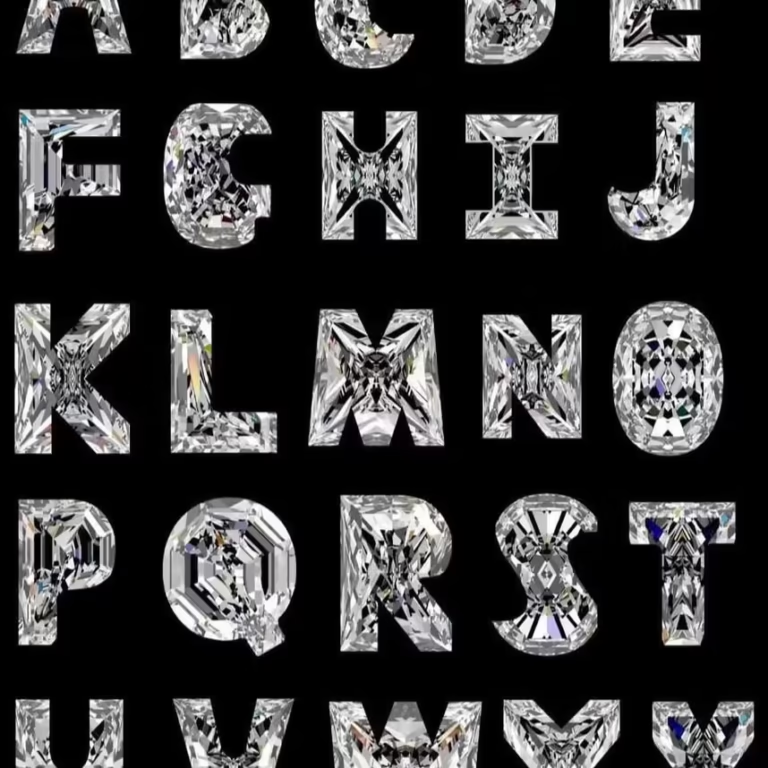



 Chat on WhatsApp