Lab Grown Diamond Earrings — Styles, Settings and Buying Guide
The Earring You Actually Wear
Most earring purchases are made on appearance. The piece looks good in a photo, the stone catches the light, the price works. Then it sits in a drawer.
The difference between the earring that gets worn daily and the one that doesn’t usually comes down to three things the product photo doesn’t show: how the closure holds under real-world conditions, how heavy the stone feels on the post by hour six, and whether a matched pair actually matches when worn side-by-side in the same light.
These aren’t afterthoughts. They’re manufacturing decisions — the kind that get made at the bench, not selected from a dropdown at checkout.
Primira’s lab grown diamond earrings are designed around all three. Every style below is built at our Surat facility — where stones are cut from the same rough parcels used to supply international retailers — matched, and finished before a single order ships.
Lab Grown Diamond Earrings: The Five Styles
Each style below has its own technical brief and dedicated collection page. What follows is the one deciding factor that’s genuinely different for each — not a description of how it looks, but what makes it work.
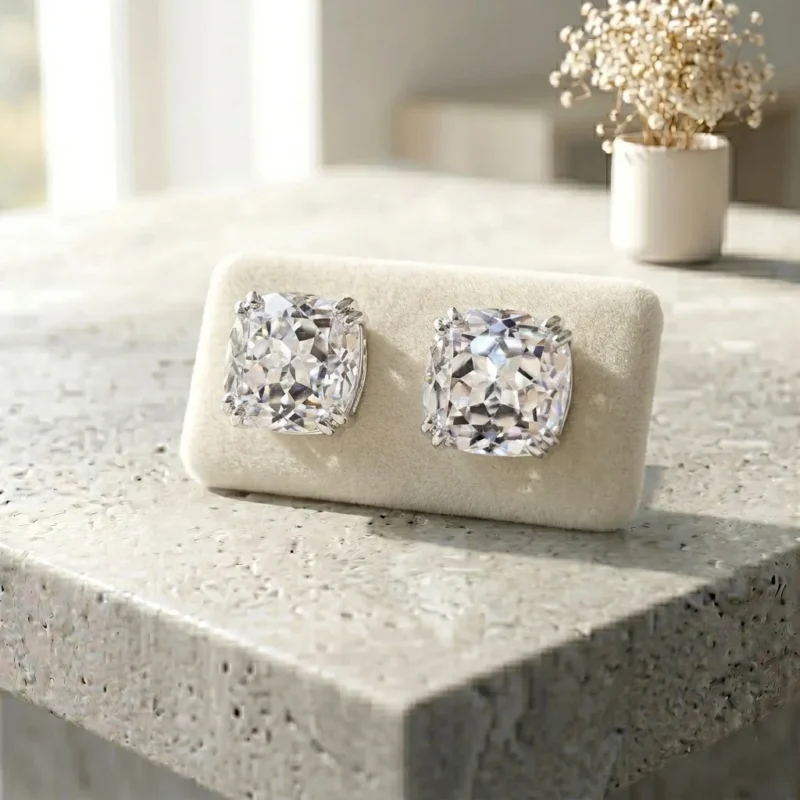
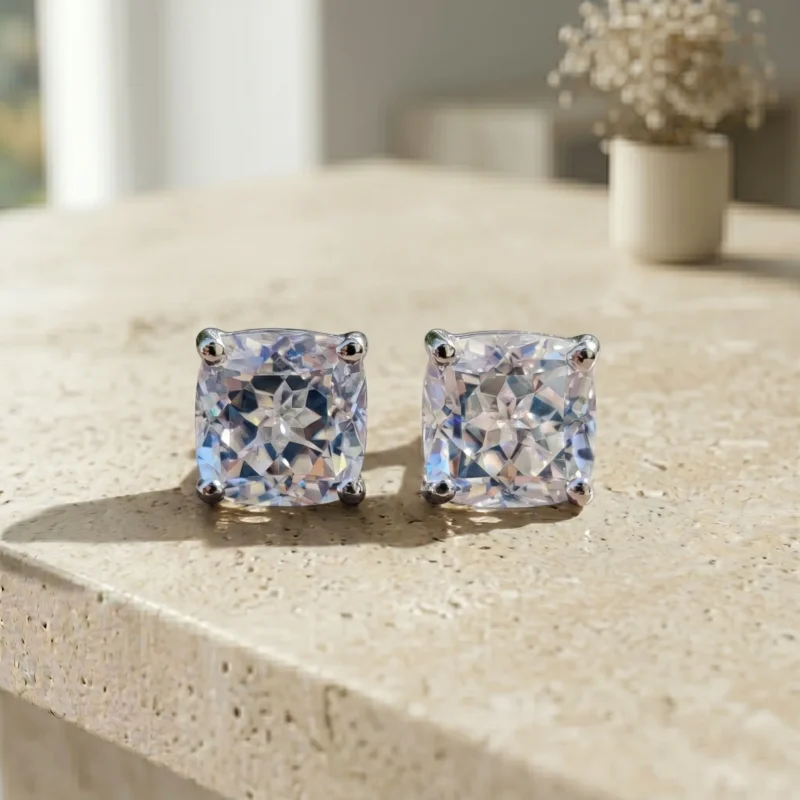
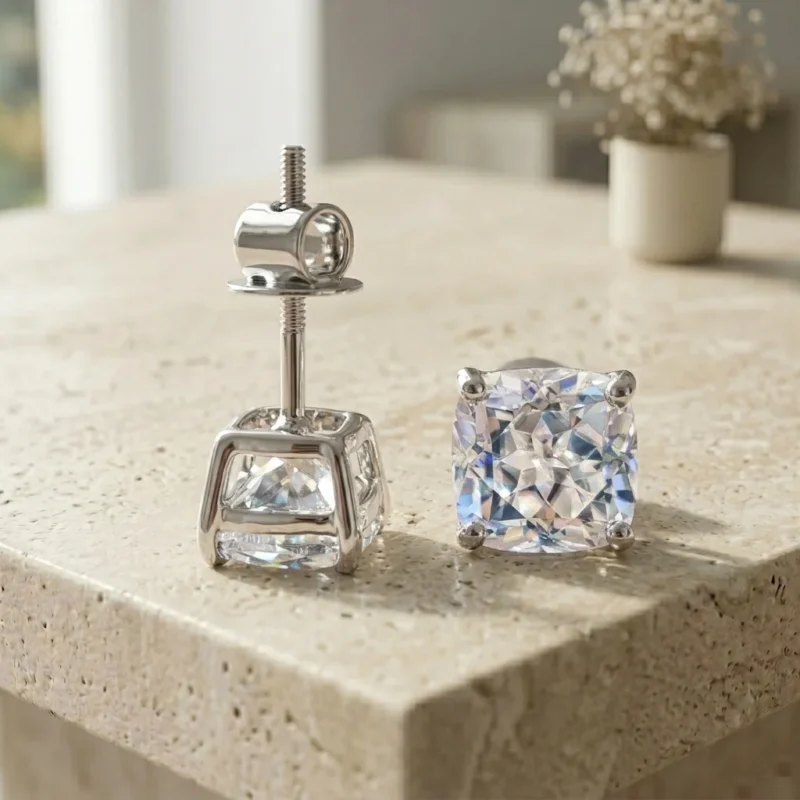
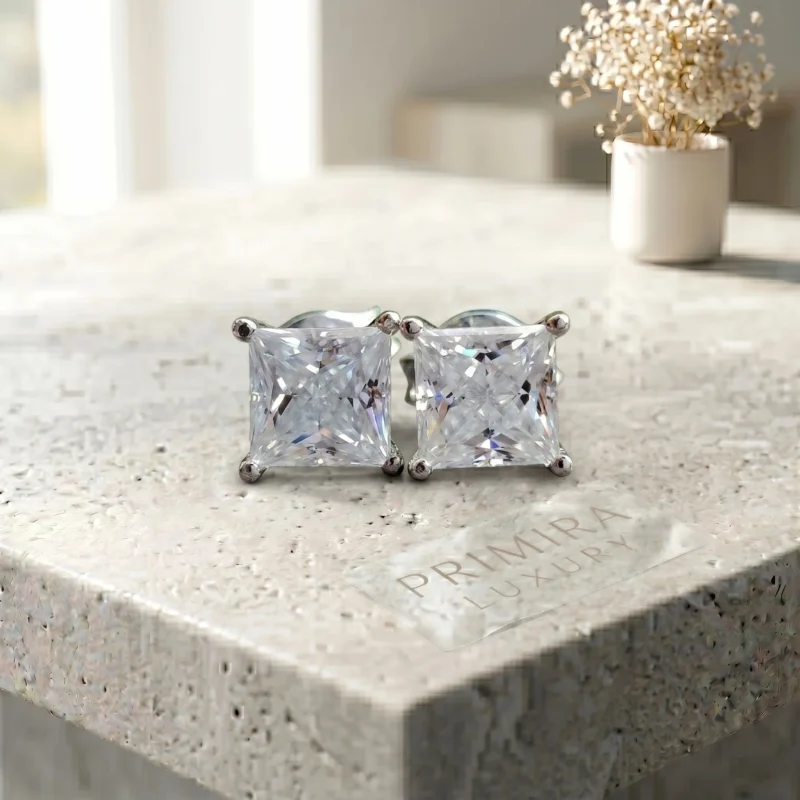
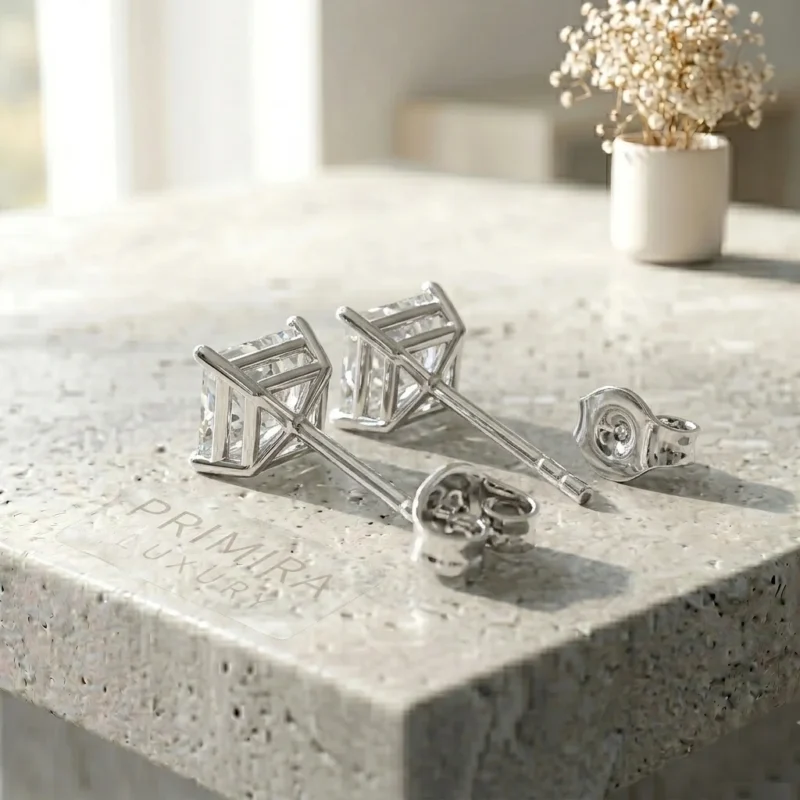
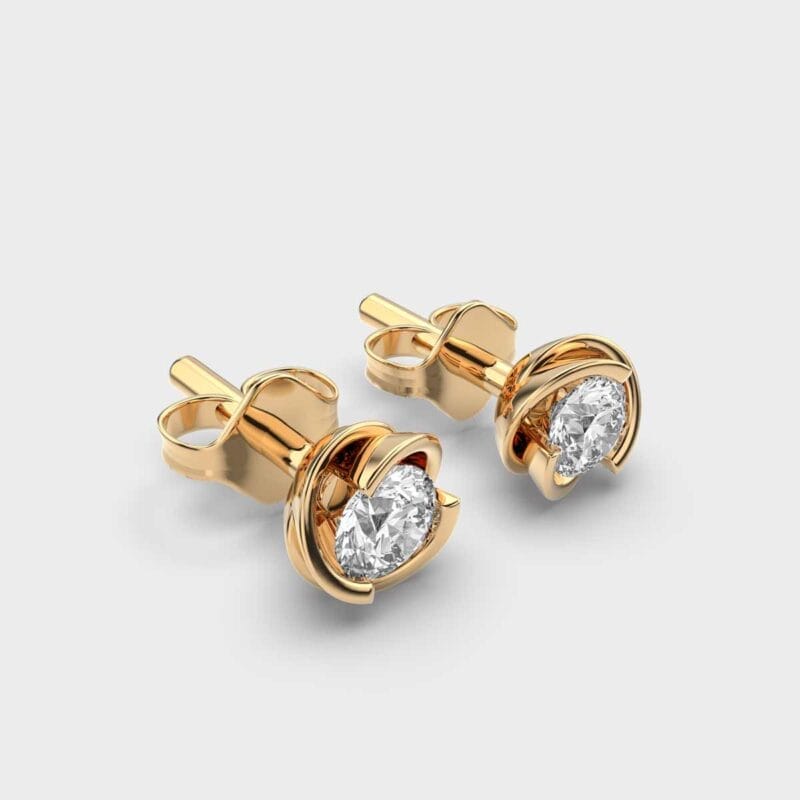
The most worn earring style globally, and the one most buyers underestimate at purchase. The stone sits on a post directly on the lobe — which means post gauge, basket depth, and backing mechanism bear the full weight load without the structural help a hoop’s circumference or a drop’s counterbalance provides.
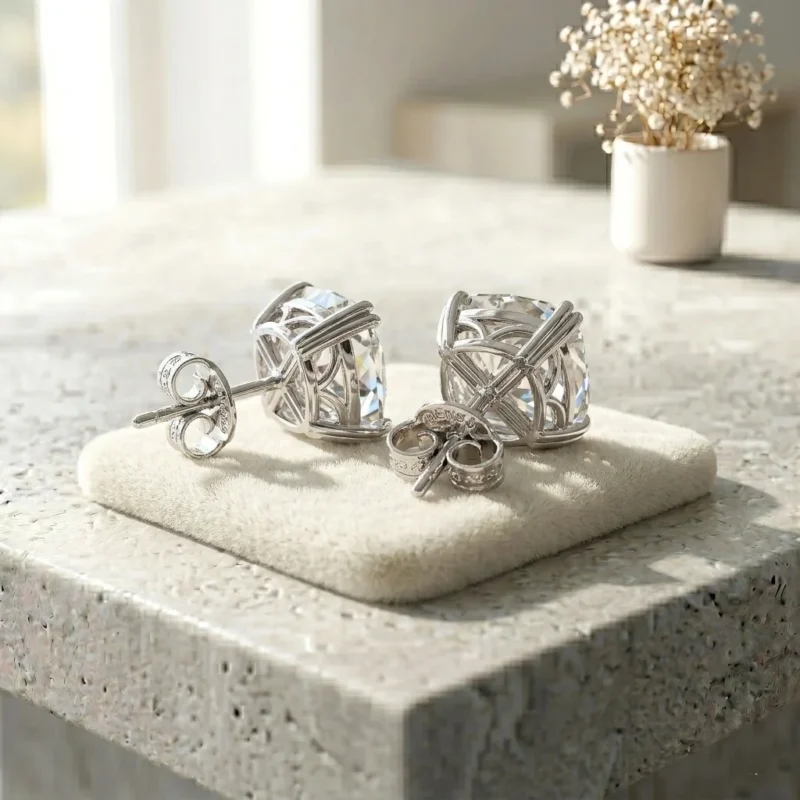
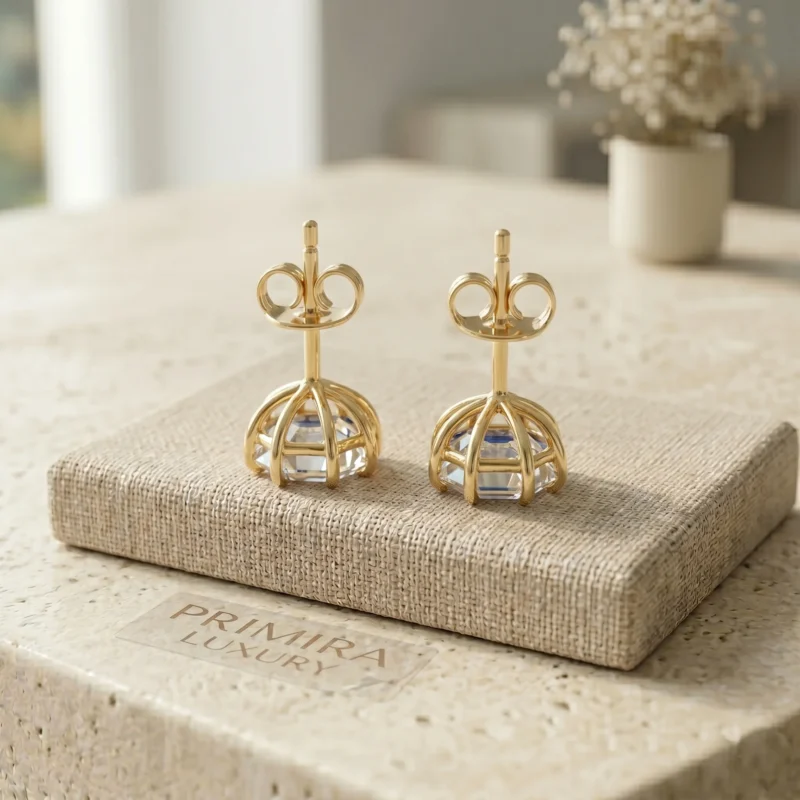
The deciding variable: screw-back vs. push-back closure. Screw-back threading creates a mechanical lock — the backing cannot slide unless actively unscrewed. Push-back (butterfly) closures use friction alone, which decreases over time with the natural oils from the lobe. For a daily-wear piece with a stone above 0.50ct, screw-back is the production default that protects the investment.
→ Full setting and closure guide:
lab grown diamond stud earrings
Two distinct products under one name: the huggie (sits tight against the lobe, low clearance) and the standard hoop (extends outward from the lobe). Different engineering entirely — confusing them at purchase leads to a piece that either feels too close or moves too freely.
The deciding variable: the hinge mechanism. A seamless click-hinge that closes with audible resistance is a precision manufacturing specification — the hoop interior needs to be hyper-polished to avoid catching the skin, and the hinge tension calibrated so the closure engages cleanly rather than requiring force. Pavé-set interiors (inside-out hoops, where stones face outward on both sides) add weight that the hinge tolerates only if the mechanism is built for it.
→ Full huggie vs. hoop guide:
lab grown diamond hoop earrings
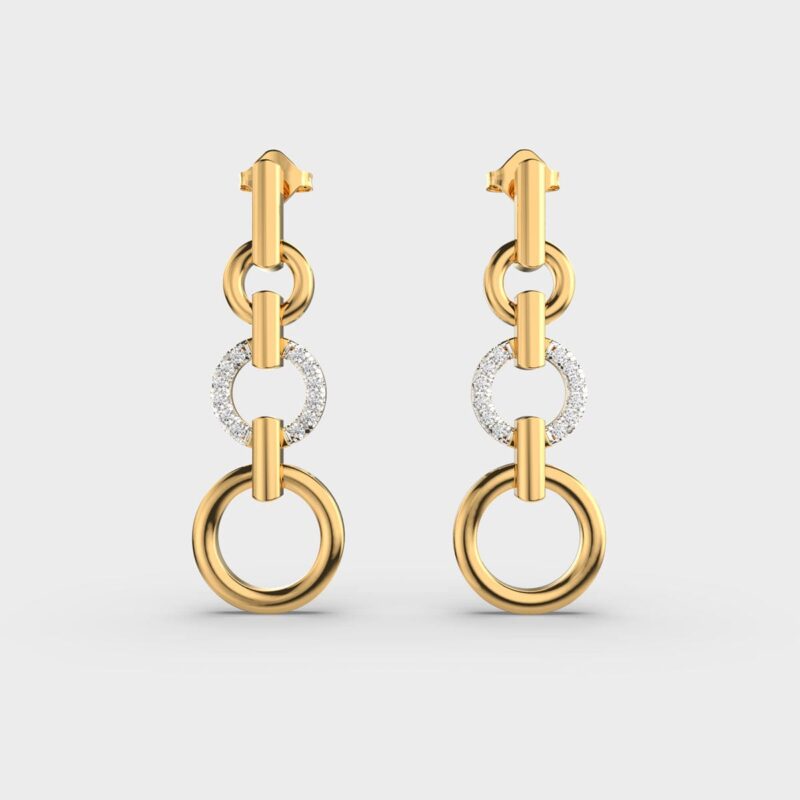
Two terms, two distinct things. Drop earrings hang below the lobe with controlled, limited movement — the stone or design element travels a short distance. Dangler earrings (the Indian-market term for a longer, more articulated hanging style) travel further and move more freely, which is how they catch light from multiple angles simultaneously.
The deciding variable: post-sag engineering. Any earring with meaningful length and weight creates a forward tilt on the post if the weight distribution is poorly balanced — the piece leans toward the stone rather than hanging straight from the lobe. Articulated links distributed across the drop’s length resolve this, but only if each link joint is set at the correct angle for the stone’s weight at that point in the drop.
→ Full drop and dangler earring guide:
drop earrings and dangler earrings
The 2026 trend style that most buyers still encounter without knowing the mechanism: a two-part system, where a front stud piece goes through the piercing in the normal way, and a separate back jacket wraps behind the lobe to create a second visible design element. One piercing. Two looks — the stud alone, or the full front-and-back combination.
The deciding variable: fit between the stud post and the jacket aperture. The jacket’s entry hole needs to be sized to the specific stud’s post gauge — a loose fit causes the jacket to shift around the post rather than sitting flat, which is the failure mode that makes this style look unfinished when it’s done badly. At Primira, the stud and jacket are produced as a matched system rather than interchangeable parts.
→ Full ear jacket guide:
lab grown diamond ear jackets
Single stud, typically round brilliant or geometric shape, set in a flush or bezel configuration that sits close to the lobe without projecting outward. The screw-back backing is the standard for men’s single-stud wear — a piece worn daily through physical activity needs a mechanical lock rather than friction-dependent retention.
→
Men’s lab grown diamond earrings
The Matched-Pair Question: What Competitors Don’t Tell You
Every earring sold as a pair contains two separate diamonds. In a solitaire ring, the stone is seen in isolation — small optical inconsistencies in color temperature or light return don’t register because there’s nothing beside it to compare. In earrings, both stones are worn simultaneously, often at the same distance from a viewer and under the same lighting conditions. What was invisible in a ring becomes visible in a pair.
The specific things that create mismatch in a matched pair:
Color temperature.
A D-color stone and a G-color stone are both described as white. Set side-by-side in earrings worn at close range, the D reads cooler and the G reads marginally warmer. Most buyers don’t notice this during a retail transaction. They notice it in photos, or under daylight, or when someone else points it out. The correct fix is sourcing both stones from the same color-graded parcel — not two individually-graded stones from different lots that happen to share the same letter designation.
Cut-grade light return.
Two Excellent-grade stones can return measurably different amounts of light if one was graded at the top of the Excellent band and one at the bottom. In a ring, this doesn’t register. In earrings, where both stones are seen at the same angle simultaneously, one appears brighter than the other.
Physical face-up diameter.
Two 0.50ct round brilliant stones from different cuts can have slightly different face-up diameters because total depth percentage varies. The heavier stone may look smaller. The lighter stone may look larger. Carat weight and visual size are not the same variable.
At Primira’s Surat facility, earring stone pairs are sourced from matched parcels of the same growth-cycle run, confirmed at the same color, cut grade, and measured face-up diameter before setting. Both stones carry individual IGI reports — a separate report number laser-inscribed on each girdle — so the match is verifiable, not claimed.
This is the earring-specific reason the Surat manufacturing model matters in a way it doesn’t matter for single-stone pieces. A retailer selecting from mixed inventory can match stones to the letter on the certificate. A facility that cuts and sources its own parcels can match stones to the actual optical character.
Stone Specs for Earrings
The 4Cs read slightly differently at earring scale than at ring scale.
Cut:
The most important variable in earrings, identical to its importance in solitaire rings. Primira stocks only Ideal and Excellent cut grades. The matched-pair matching described above operates at this cut-grade tier — two Excellent-grade stones from the same parcel, not two arbitrarily-graded stones that happen to be certified.
Color:
D-F colorless is the primary stock. G-H-I near-colorless is available as a value tier with no visible color to the naked eye in isolation — though as explained above, the matched-pair context makes consistent color more important in earrings than in single-stone pieces. Both stones in a pair are confirmed at the same color designation from the same parcel.
Clarity:
VVS1 to VS2, all eye-clean. Primira does not stock SI2 or below. In earrings, clarity is less immediately scrutinized than in an emerald-cut ring under direct inspection — but the VVS1–VS2 floor is maintained across all categories, not loosened for earring settings.
Carat:
Stud earrings typically range from 0.25ct to 1.50ct total weight (combined, across both stones) for everyday wear. Larger carat weights in studs require heavier post gauges and typically screw-back closures to manage the weight distribution correctly. Custom orders up to 5ct+ per stone available on request.
Fancy color lab grown diamonds
are available in all earring styles. Pink and yellow are the most requested for studs and drops. At earring scale, the side-by-side wear makes matched-parcel hue-and-saturation confirmation even more important for color stones than for white — two Fancy Intense Pink stones from different growth runs can read as noticeably different saturations in direct light.
Metal and Setting Choices for Earrings
Metal:
14K gold is the default across all earring styles — sufficient structural strength for prong and bezel constructions while maintaining workability for thin post gauges. 18K gold is available and preferred for studs where a richer metal color is the point. Platinum is the recommended tier for high-value stones above 1.50ct per earring, where prong security and hypoallergenic wear matter most. 925 silver is available for fashion earring styles.
All gold tones: yellow, white (rhodium-plated), rose.
Setting by style:
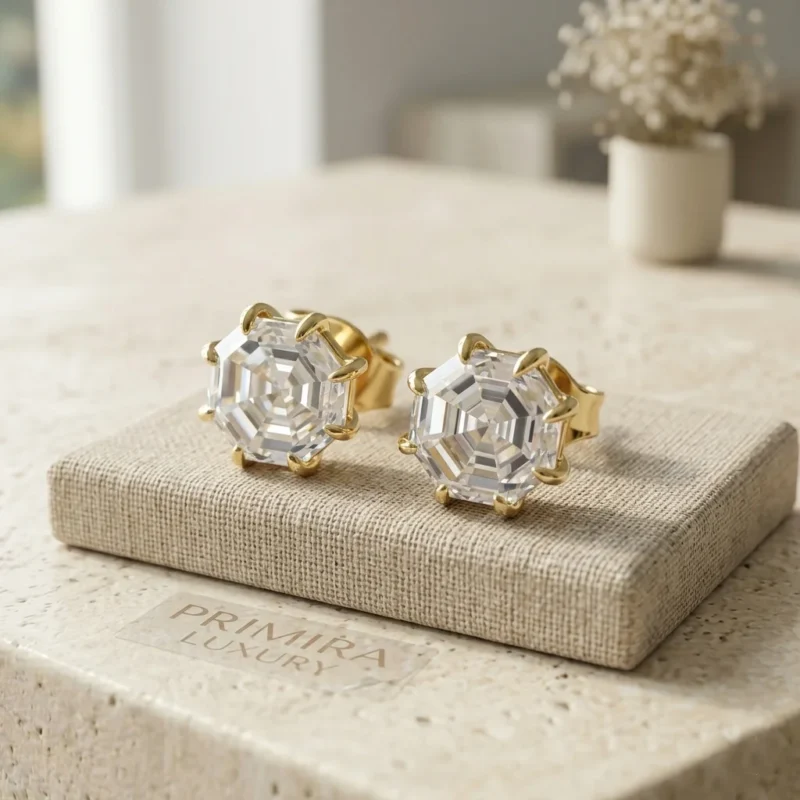
- Studs: 4-prong basket (most common — maximum light enters from all angles), bezel (full wrap, most secure for active daily wear), or 6-prong (traditional, slightly more secure grip).
- Hoops: Inside-out pavé (stones face outward on the hoop’s exterior), channel (flush stone line along the hoop’s inner face), or tension-hinge plain metal with stone-set front section.
- Drops and danglers: Multi-element articulated settings — each link joint set and polished individually. Stone-at-base prong constructions follow the same 4-prong or bezel logic as studs.
- Ear jackets: Front post piece typically bezel or 4-prong. Back jacket piece designed as a matching or complementary element produced as a paired system with the front.
Daily Wear and Care
Lab grown diamonds are 10 on the Mohs hardness scale — they do not scratch, chip under normal wear conditions, or cloud with age. The care questions for earrings are mostly about the metal setting and the closure mechanism, not the stones.
The things that actually affect earrings over time:
Rhodium plating on white gold wears through with daily skin contact, typically over 12–24 months of daily wear. The stone is unaffected. Re-plating is a standard jeweller service. Yellow and rose gold don’t require this — their metal tone doesn’t depend on surface plating.
Screw-back threading accumulates skin oil and dust in the threads over months of daily wear, which can make the backing harder to thread cleanly. A soft toothbrush with warm water clears this. Don’t soak earrings in ultrasonic cleaners if the settings include prong constructions — ultrasonic vibration loosens prong tips over time.
Hoop hinges should be checked every 6–12 months. A hinge that no longer closes with clear resistance should be adjusted by a jeweller before the earring is worn further. This is a maintenance item, not a defect — all hinged mechanisms experience some wear at the contact point.
Haircare products, perfume, and sunscreen applied directly to earrings accelerate metal tarnish on silver and hasten rhodium wear on white gold. Haircare products and perfume applied directly to the earring post or setting accelerate rhodium wear on white gold and tarnish on silver — both easily avoidable by letting those products dry before the earrings go on.
Custom Earrings
Custom-order earrings at Primira cover the full range of specifications: stone shape, carat, color grade, clarity, cut grade, metal tier, metal tone, setting type, closure type (including upgrades to screw-back on any stud), and — specific to earrings — matched-pair stone confirmation before production begins.
For two-stone custom requests, the matched-parcel sourcing process is confirmed in the pre-production WhatsApp consultation: both stones’ IGI grades, face-up diameter measurements, and physical stone selection are confirmed before any metal is cast.
Reference images are accepted. Primira’s lapidaries in Surat also cut custom stone shapes on order — geometric, silhouette, initial cuts — that can be set into studs, drops, or jacket systems. This is different from selecting a stone shape from a catalog; it’s a stone being cut to a specific outline, then set.
The order process: complete checkout on primiraluxury.com, and the Surat team contacts you within 24 hours via WhatsApp and email to confirm every specification before production begins. Production is 15–35 business days. Loose lab grown diamond pairs already in stock are dispatched within 48 hours of confirmation.
Certification
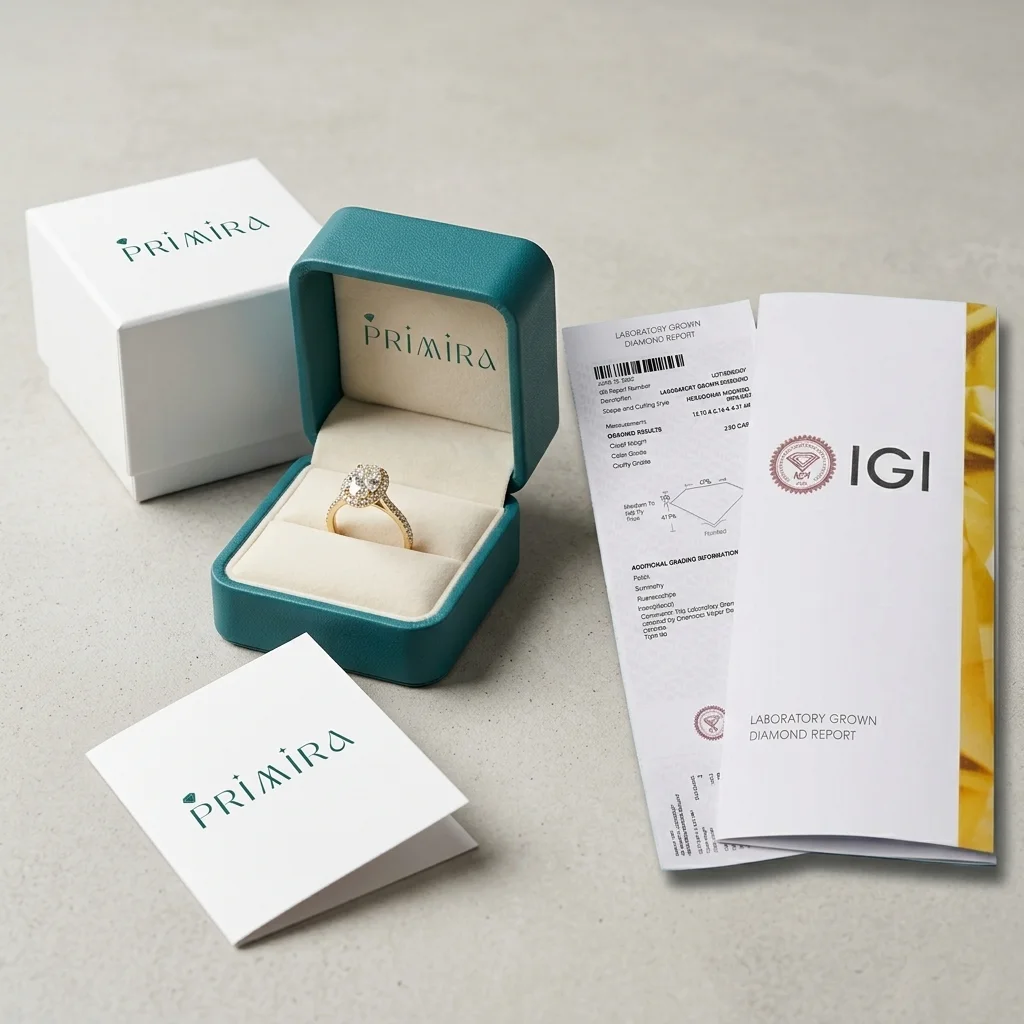
All lab grown diamond earrings at Primira use IGI-certified stones (International Gemological Institute). Each stone in a matched pair carries its own individual IGI report — a separate report number laser-inscribed on the girdle of that specific stone, verifiable at igi.org.
IGI certifies each stone for cut, color, clarity, and carat independently. For earrings, having both stones individually certified means the matched-pair specification isn’t just claimed by the seller — it’s documented on two separate reports that can be compared side-by-side. Cut grade on report A, cut grade on report B. Color on report A, color on report B.
SGL certification is available on request as a secondary option.
FAQ
Q: Can I wear lab grown diamond earrings every day?
Yes — the stone itself is not the maintenance variable. The practical daily-wear decision is really about setting and closure:: bezel-set or screw-back stud constructions handle the most active wear, while drop and dangler styles with articulated links are better suited to occasions than to daily wear involving physical activity. For hoops, check the hinge resistance every few months and have it adjusted if it no longer closes with clear resistance.
Q: What’s the difference between screw-back and push-back earring closures?
Screw-back closures thread onto the post mechanically — the backing cannot slide off unless actively unscrewed. Push-back (butterfly) closures use friction against the post, which decreases with time and lobe oils. For any stud with a stone above 0.50ct, or for a piece worn daily, screw-back is the more secure choice. Primira offers screw-back as an upgrade option on any stud order, confirmed via the pre-production WhatsApp consultation.
Q: How do I know if a matched pair of earrings actually matches?
Ask for the individual IGI report numbers for both stones and compare the color, cut grade, and measured dimensions (table %, depth %, diameter in mm). Two stones graded Excellent and D-color are not automatically matched — one might be at the top of the Excellent band and one at the bottom. At Primira, matched pairs are sourced from the same growth-cycle parcel and confirmed on both IGI reports before setting, so the match is a specification, not an assumption.
Q: What carat size works best for everyday stud earrings?
0.25ct to 0.75ct per stone (0.50ct to 1.50ct total weight) is the practical daily-wear range for most people — substantial enough to read clearly at conversational distance, light enough that post weight doesn’t create forward tilt. Above 1ct per stone, a heavier post gauge and screw-back closure are recommended. Custom orders go up to 5ct+ per stone.
Q: What is the difference between drop earrings and dangler earrings?
Drop earrings hang below the lobe with controlled, limited movement — typically one or two articulated elements. Dangler earrings (the standard Indian-market term) involve longer articulated chains or cascading elements with more free movement, designed to catch light from multiple angles as the wearer moves. Both styles are available; the full technical breakdown is on the
drop and dangler earring page
.
Q: Are lab grown diamond earrings real diamonds?
Lab grown diamonds have the same optical, physical, and chemical properties as mined diamonds — pure crystallized carbon, 10 on the Mohs hardness scale, identical light return under the same cut grade. The difference is origin: grown in a controlled facility rather than mined. The BIS standard IS 19469:2025, effective January 2026 in India, classifies them separately from natural diamonds — the terminology “laboratory-grown diamond” is the legally required description, and it’s what Primira uses throughout.
Shipping, Returns and Policy
The Surat team contacts you within 24 hours of every order via WhatsApp and email — for earrings specifically, this is when matched-pair stone specifications are confirmed before anything is cast. After that: all orders are insured from dispatch to delivery confirmation. Within India, orders above ₹10,000 ship free via Blue Dart or Delhivery (2–7 business days after dispatch). International standard shipping via USPS/India Post runs 17–19 business days after dispatch; express via DHL/FedEx/UPS runs 5–7 business days (approximately USD $50, free on orders above USD $550).
Returns are accepted within 7 calendar days of delivery where the piece delivered differs from confirmed specifications, arrived damaged, or is incorrect — provided the earrings are unworn and in original packaging with the original invoice and IGI reports. Custom-order and engraved pieces are final sale except in those specific cases.
If a piece doesn’t work out for any other reason, the buyback program is the structured alternative: value calculated at invoice price minus making charges, metal at prevailing gold rate on the evaluation date.












 1-to-1 Custom Design
 Craft Your Vision
 HD video Preview
 Fully Customizable
 Choose Metal Tone:
 Handcrafted in Solid 10K · 14K · 18K
 Select Your Stone Type:
  Award winning
  Hallmarked &
  Personalized Care &
  Design Any Piece
 Chat on WhatsApp