
Primira Luxury Blog
“Jewelry is more than an accessory; it’s a timeless tale waiting to be told.”
“Like a well-crafted gem, true beauty comes from within. Let your jewelry amplify it.”


Showing all 2 results
-
 ₹23,939 – ₹108,256Price range: ₹23,939 through ₹108,256
 -
₹15,253 – ₹73,089Price range: ₹15,253 through ₹73,089
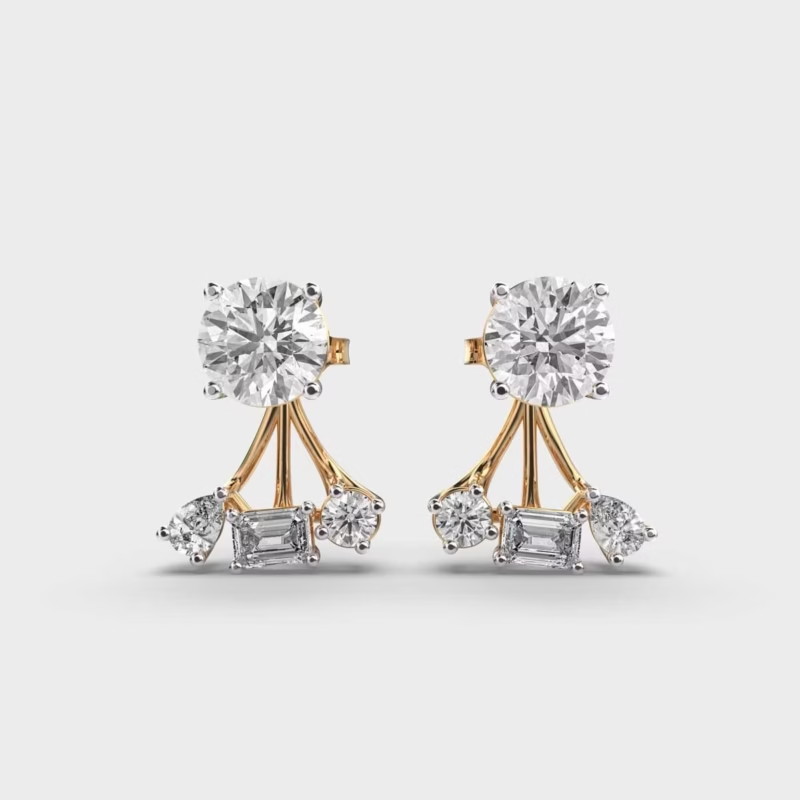
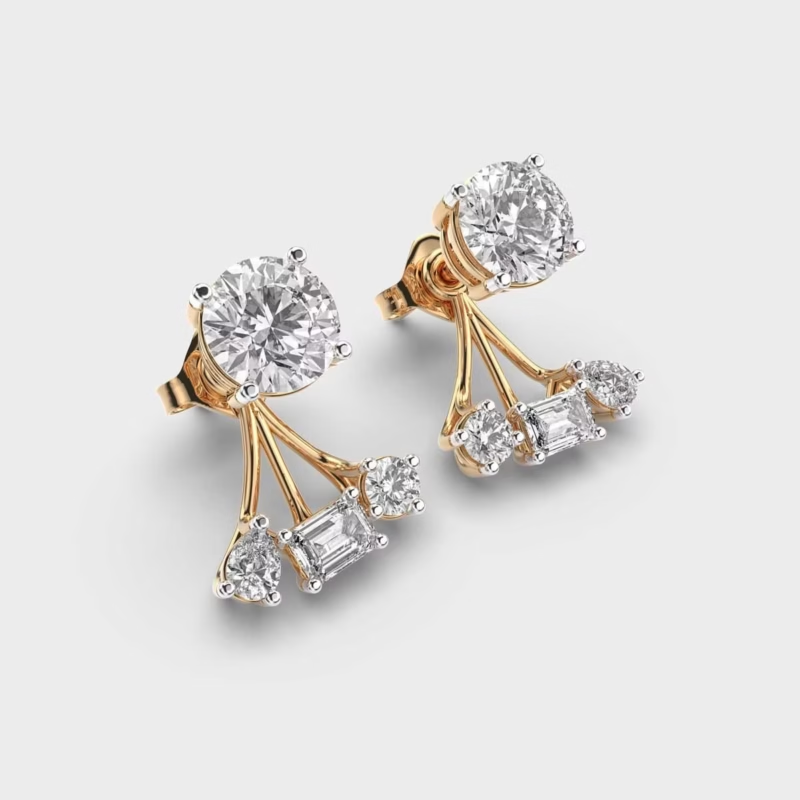


Showing all 2 results
Discover Your Perfect Price
Filter by Stone Type and Metal to view accurate, variation-based pricing
Transparent, personalized, and effortless - explore designs that match your style, metal, and budget.
- Tip: Choose one stone type and one metal type to see your exact price.
- If prices seem off, just uncheck and re-apply your filters – the page will refresh with accurate pricing.
 1-to-1 Custom Design
Experience
 Craft Your Vision
Today with a 10% Starte
 HD video Preview
Before It Ships
 Fully Customizable
- Stone, Metal & Budget
 Choose Metal Tone:
Yellow, White or Rose Gold
 Handcrafted in Solid 10K · 14K · 18K
Gold, 925 Silver or 950 Platinum
 Select Your Stone Type:
 Lab-Grown Diamond or Moissanite
 Award winning
 craftmanship and detailing
 Hallmarked &
 Certified (IGI / SGL)
 Personalized Care &
 Expert Support
 Design Any Piece
Within Your Budget
1-to-1 Custom DesignExperience
Craft Your VisionToday with a 10% Starte
HD video PreviewBefore It Ships
Fully Customizable- Stone, Metal & Budget
Choose Metal Tone:Yellow, White or Rose Gold
Handcrafted in Solid 10K · 14K · 18KGold, 925 Silver or 950 Platinum
Select Your Stone Type: Lab-Grown Diamond or Moissanite
Award winning craftmanship and detailing
Hallmarked & Certified (IGI / SGL)
Personalized Care & Expert Support
Design Any PieceWithin Your Budget

Primira's
Real Reviews From Real Customers
Lifetime
Warranty
100% Money
Back Guarantee
Easy
Customization
7 Days
Return
14 Days
Exchange
Insured
shipping
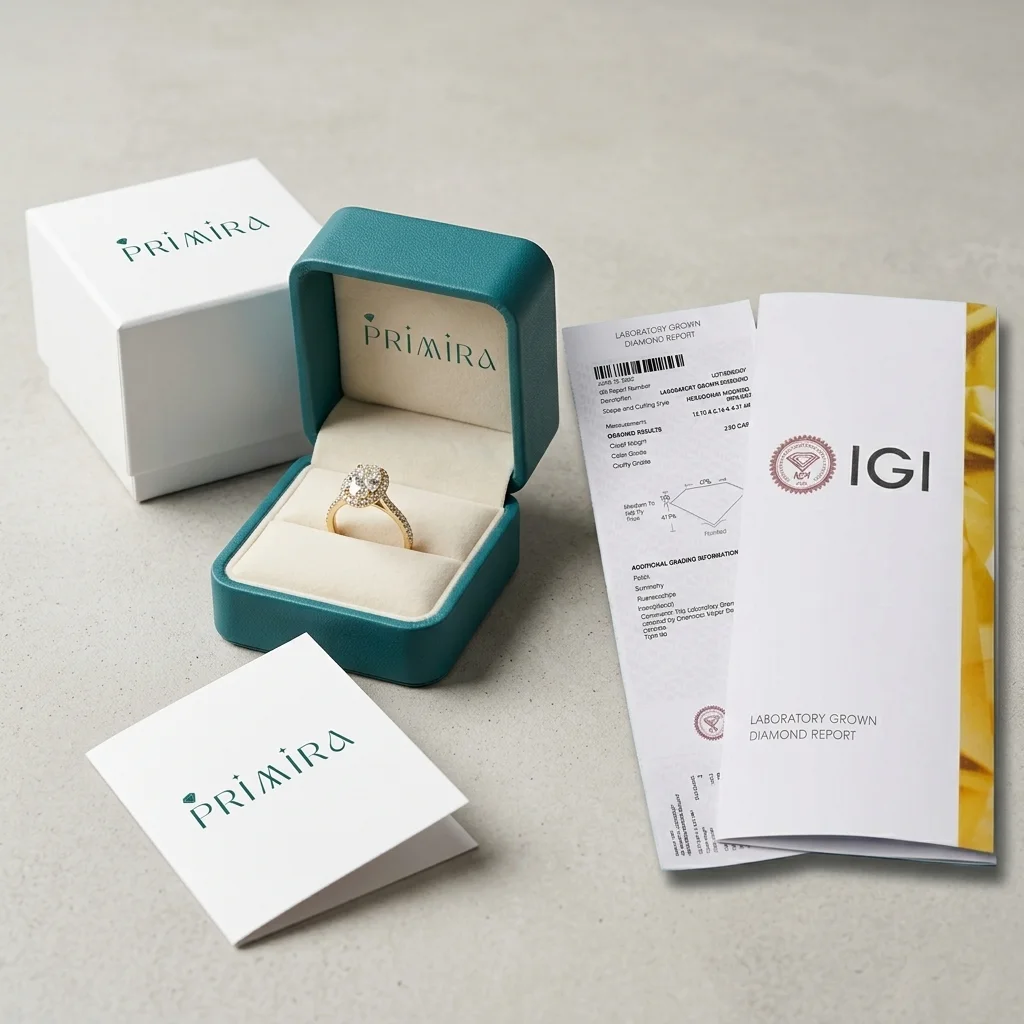
sustainable, beautiful packaging
Give your precious pieces a home they deserve with our stylish, soft-lined jewelry boxes made for effortless organization.
Read Our Article Behind Every Collection
Each design at Primira Luxury is handcrafted with precision, purpose, and emotion. From the first sketch to the final polish, our artisans turn your vision into a piece that feels personal, ethical, and timeless.
Read More
Lab Grown Diamond Ear Jackets — Two Looks, One Piercing
Before buying, most people have the same question: how does this actually work?
A lab grown diamond ear jacket is a two-component earring. The front is a standard stud. The second piece — the jacket — has a small hole at its centre; your stud post passes through it. The jacket sits either flush against the front face of the lobe or hangs down behind it, depending on the design, and your regular earring back secures the whole assembly. One piercing. Two completely different looks depending on whether the jacket is on or off.
What no buying guide explains clearly: the jacket only works visually if its stone grade matches your stud’s stone grade. A D-colour, VS1 stud paired with a J-colour jacket reads as two different earrings at face-level distance — the colour temperature difference is visible. This isn’t a styling point. It’s a manufacturing specification problem, and it’s the real thing to verify before you buy.
How the Two-Piece System Works
The stud and jacket are separate pieces, but they function as a matched assembly once worn together. A few things to understand about the mechanics:
Post diameter. The jacket’s centre hole is engineered to a post gauge. Standard fine-jewelry posts run 0.8–1.0mm diameter. If the jacket hole is sized for a thicker fashion-jewelry post, it won’t seat correctly on a finer fine-jewelry stud — it tilts or slips. Primira’s jackets are cut for standard fine-jewelry post gauges.
Face-up diameter compatibility. The jacket’s internal geometry is designed around the stud stone’s face-up diameter, not its carat weight. A 0.50ct round brilliant has a face-up diameter of approximately 5.1mm; a 0.50ct oval, depending on ratio, reads wider. A halo jacket designed for a 5mm stone will gap visibly around a 3.5mm stone. Before ordering, confirm your stud stone’s shape and approximate face-up size — confirming exact fit before production begins.
Weight distribution. The jacket adds mass to the post, which increases the load on the piercing. Well-engineered fine-jewelry jackets use open metal frames with strategically placed stones rather than solid cast backs — this keeps the jacket structurally rigid while controlling weight. Chain and fringe jackets are lighter than halo or pavé-fill designs for the same visual footprint.
Wear positions. Jackets can be placed in front of the lobe (creating a halo or frame effect around the stud face) or behind the lobe (the element hangs below the ear, giving a drop-like appearance). Some designs work both ways. The position changes the look entirely — one piece with two distinct characters.
Jacket Styles: What Each Does
Halo jacket
A ring of smaller lab grown diamonds surrounds the stud face, seated in front of the lobe. The effect is similar to a halo engagement ring — the stud appears significantly larger, the centre stone is framed rather than isolated, and the overall look reads as a single statement piece rather than two components. This is the most popular jacket style for fine jewelry because it works with any stud stone shape. Stone matching matters most here: the halo accent stones need to be colour-matched to the stud or the assembled piece looks assembled.
Drop/dangle jacket
The jacket body hangs below the lobe. The stud floats at lobe level, the jacket element provides downward movement and length without requiring a separate piercing. Geometric forms, pavé bars, pear-cut drops, and fan shapes are common. This style transitions a plain stud from daytime to evening in thirty seconds.
Fringe/fan jacket
Multiple slim metal arms radiate from the post attachment point, creating a starburst or feather effect below the ear. Lower stone density than a halo, more architectural and sculptural. Because the arms are individually set rather than a continuous pavé run, Surat bench-setting allows for tighter control over arm alignment and pavilion-tip exposure. For buyers who want the fringe arms themselves to carry shaped stones rather than round melee, Primira’s lapidary cuts custom silhouettes to order — the same capability documented on the specialty cut lab grown diamond page.
Geometric/bar jacket
Clean-lined — a bar, chevron, or open rectangle that hangs from the post. The stud and jacket read as two deliberate design elements rather than one continuous stone arrangement. Suited to buyers who already wear the stud daily and want an evening version that doesn’t replace it.
Stone Matching: The Specification That Determines Whether It Works
The two-piece nature of an ear jacket introduces a matching problem that single-stone earrings don’t have: the jacket stones and the stud stone are worn simultaneously, in close proximity, at face level. Any grade mismatch is visible.
Colour. A stud cut from D-colour rough and a jacket whose stones come from a different growth run — or worse, a different growth method — can show colour temperature variance that’s immediately apparent under indoor lighting. Primira’s lab grown diamond ear jackets use jacket stones sourced from the same growth-cycle parcel as the stud stones where possible, or matched to the same colour grade before production begins. The pre-production WhatsApp confirmation records both components’ colour grades.
Cut grade. A stud with an Ideal-cut round brilliant and a jacket with a poorly cut accent parcel will produce different light-return behaviour — the stud fires at one rate, the jacket accent diamonds at another. Primira stocks Ideal/Excellent/Very Good cuts only; the same floor applies to jacket accent stones.
Clarity. For halo jackets where the accent stones are small melee (0.03–0.10ct), VS2 to SI1 is standard — stones this size are eye-clean at SI1. For larger drop or dangle elements using stones 0.25ct+, VS2 is the minimum.
If you’re adding a jacket to studs you already own, bring their IGI report number to the pre-production WhatsApp consultation. The team can match the jacket’s accent parcel to your stud’s recorded colour grade.
Ear Jacket vs. Ear Cuff: They’re Different Products
These terms appear together in searches but describe completely different mechanics.
An ear jacket requires a standard lobe piercing. The stud post passes through the jacket, through the piercing, and the back secures everything. The jacket is held in place by the post and back, not by gripping the ear. This makes it stable, comfortable for all-day wear, and zero-slip — the back prevents movement.
An ear cuff grips the outer cartilage of the ear without any piercing. It pinches onto the helix or conch, and the tension of the metal holds it in position. No post, no piercing, no back. The trade-off: cuffs can slip with movement and aren’t suitable for the lobe position.
The looks can appear similar in photographs, which is why the confusion is so common. For anyone with a standard lobe piercing who wants a two-component look, the jacket is the more secure and structurally stable option.
Metal and Setting Options
Ear jacket components are available in 14K gold (yellow, white, rose), 18K gold, and 950 platinum. A few practical considerations specific to jackets:
Metal matching. The jacket and stud should ideally be in the same metal tier and tone. 14K white gold against 18K yellow gold creates both a hardness differential (affecting wear against each other on the post) and a visible colour contrast. If you’re ordering a jacket to pair with existing studs, note the karat and tone of your current studs before ordering.
Platinum jackets provide the most secure post-fit due to density and grip, and are hypoallergenic throughout the assembly — relevant since the jacket adds a second metal component to the piercing’s immediate environment.
Setting style. Halo jackets are typically micro-pavé or shared-prong; both allow maximum light entry into the accent stones at the face-up position. Drop and fringe elements use four-prong or bezel settings depending on stone shape. Bezel-set drop elements are the most snag-resistant for active daily wear — no exposed prongs to catch on hair.
What Makes a Good Ear Jacket for Daily Wear
Not all ear jackets are built for daily use. Several variables determine whether a jacket will work for someone wearing it every morning:
Adjustability. Quality jackets have two or three vertically spaced holes in the centre rather than one, allowing micro-adjustment of the jacket’s hang position to match different earlobe depths. A single-hole jacket may sit correctly on one person’s lobe and gap or tilt on another’s.
Post clearance. The jacket’s centre hole needs enough clearance to slide on and off without requiring force, but tight enough to prevent rattling during wear. This is a production-level tolerance — too loose and the jacket migrates on the post; too tight and it’s difficult to remove.
Back compatibility. Screw-back studs add slightly more length behind the lobe than push-backs. Some jacket designs assume a push-back profile and sit awkwardly if the back extends further. Primira’s standard is screw-back for studs 0.50ct per stone and above; Confirm your preferred back type at the pre-production stage so the jacket’s rear clearance is designed to the correct profile.
Hair and collar clearance. Drop and fringe jackets that hang more than 10–12mm below the lobe require checking against hairstyle and collar neckline. Unlike a free-hanging drop earring, the jacket doesn’t swing fully with movement — it’s semi-fixed by the post — which actually reduces tangling risk compared to standard drop earrings of similar length.
IGI Certification for Ear Jackets
Every lab grown diamond in a Primira ear jacket — both the stud stone and the jacket stones — is sourced to Ideal/Excellent cut, D-to-I colour, VVS1-to-VS2 clarity. The stud stone carries an individual IGI certificate with a report number laser-inscribed on the girdle, verifiable at igi.org.
For jacket accent stones individually under 0.25ct: these are graded by parcel rather than stone-by-stone, with the parcel’s color and clarity range documented. For jacket drop or dangle elements using a single larger stone (0.25ct+), an individual IGI report is standard.
Surat’s role here is specific: the same facility that cuts the stud stones cuts the jacket accent parcel. There’s no middleman sourcing a separate matched accent lot from a different supplier — the colour-temperature consistency is confirmed at the cutting bench before the stones go to the setter.
The Custom Order Process for Ear Jackets
Because an ear jacket is a two-component piece, the custom order confirmation covers more variables than a single-piece earring:
- Stud stone specifications (shape, carat, colour, clarity, cut grade)
- Jacket style (halo, drop, fringe, geometric/bar)
- Jacket stone specifications (accent parcel colour and clarity range, or individual stone specs for larger drop elements)
- Metal (karat, tone) for both components
- Post type (screw-back or push-back) and gauge
- Jacket centre-hole sizing relative to your specific stud’s face-up diameter
- Wear position preference (front-of-lobe, behind-lobe, or dual-position design)
If you’re ordering a jacket to pair with studs you already own rather than ordering both components together, bring your existing stud’s details to the WhatsApp consultation — stone shape, face-up size (or carat + shape as a proxy), metal karat, and post type. The jacket is then produced to fit your specific existing studs.
The 7-day return window applies to any piece delivered materially different from confirmed specifications — and for ear jackets, the pre-production confirmation is the mechanism that makes that protection meaningful: post gauge, face-up diameter, stone colour grade, and back type are all agreed in writing before production begins. If those match what arrives, the piece is as confirmed. Production time: 15–35 business days. All orders are insured from our Surat facility to delivery confirmation. International express shipping (DHL/FedEx) is available; free express shipping on orders above USD $550.
The 7-day return window covers pieces delivered materially different from confirmed specifications — given the two-component nature of ear jackets, the pre-production WhatsApp confirmation is the primary mechanism for getting this right before production, not after.
Browse the full diamond earrings collection or start with the diamond stud earrings that pair naturally with a jacket.
FAQ
What is an ear jacket and how does it work?
A lab grown diamond ear jacket is a two-piece earring: a stud and a separate jacket component with a centre hole. Your stud post passes through the jacket, through your lobe piercing, and your earring back secures both pieces. The jacket sits either in front of the lobe (framing the stud face) or hangs below it (creating a drop effect), depending on the design. One standard lobe piercing is all that’s required — no second piercing needed.
Does an ear jacket fit any stud earrings?
Not universally. Three things determine compatibility: post diameter (the jacket’s centre hole must match your stud’s post gauge), face-up diameter (the jacket’s internal geometry is designed around the stud stone’s face-up size, not just carat weight), and metal profile at the back (screw-back vs. push-back affects rear clearance). When ordering a jacket to pair with studs you already own, bring your stud’s specifications to the pre-production WhatsApp consultation so the jacket is produced to the correct fit.
How do I match the jacket stones to my existing studs?
The critical grade to match is colour. If your studs are D-colour and the jacket’s accent stones are J-colour, the colour temperature difference will be visible at face level — they’ll read as two mismatched pieces rather than a coherent assembly. If your studs have an IGI report, bring the report number to the WhatsApp consultation; the team can match the jacket’s accent parcel to your stud’s recorded colour grade before production begins.
What is the difference between an ear jacket and an ear cuff?
An ear jacket requires a standard lobe piercing — the stud post holds the jacket in place and the earring back secures the assembly. An ear cuff grips the outer cartilage without any piercing, using tension to stay on. Cuffs can slip with movement; jackets are post-secured and stable. The looks can appear similar in photos, but the mechanics are different.
Can ear jackets be worn daily?
Yes, with some design-dependent considerations. Halo and simple geometric jackets with no protruding elements are the most practical for daily wear. Drop and fringe designs that extend below the lobe are best avoided during sleep or high-impact activity. If daily wear is the primary use, choose a jacket with multiple centre holes for adjustability to your specific earlobe depth, and confirm post-and-back compatibility during the order process.
Can I order just the jacket without the stud?
Yes. Primira produces the jacket as a standalone component for buyers who already own compatible studs. Bring your stud specifications to the WhatsApp consultation — shape, face-up size, metal karat and tone, post type — and the jacket is designed to your specific existing studs. Both the jacket and a matched full set (stud + jacket) are available.
 Chat on WhatsApp