
Primira Luxury Blog
“Jewelry is more than an accessory; it’s a timeless tale waiting to be told.”
“Like a well-crafted gem, true beauty comes from within. Let your jewelry amplify it.”


Showing all 3 results

 ₹20,468 – ₹106,478Price range: ₹20,468 through ₹106,478
- ₹37,942 – ₹241,768Price range: ₹37,942 through ₹241,768
- ₹24,799 – ₹143,722Price range: ₹24,799 through ₹143,722
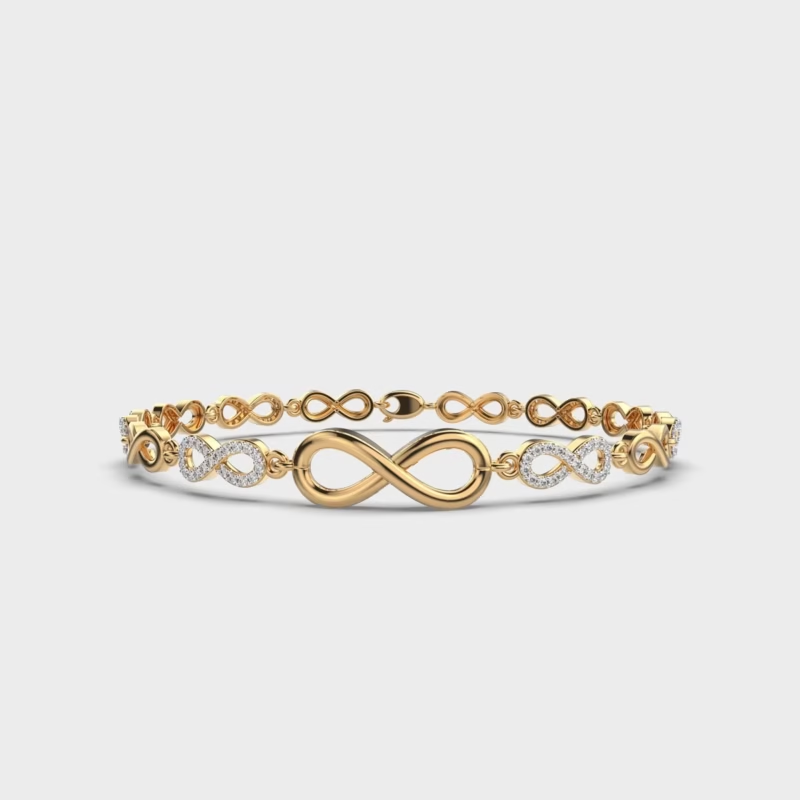
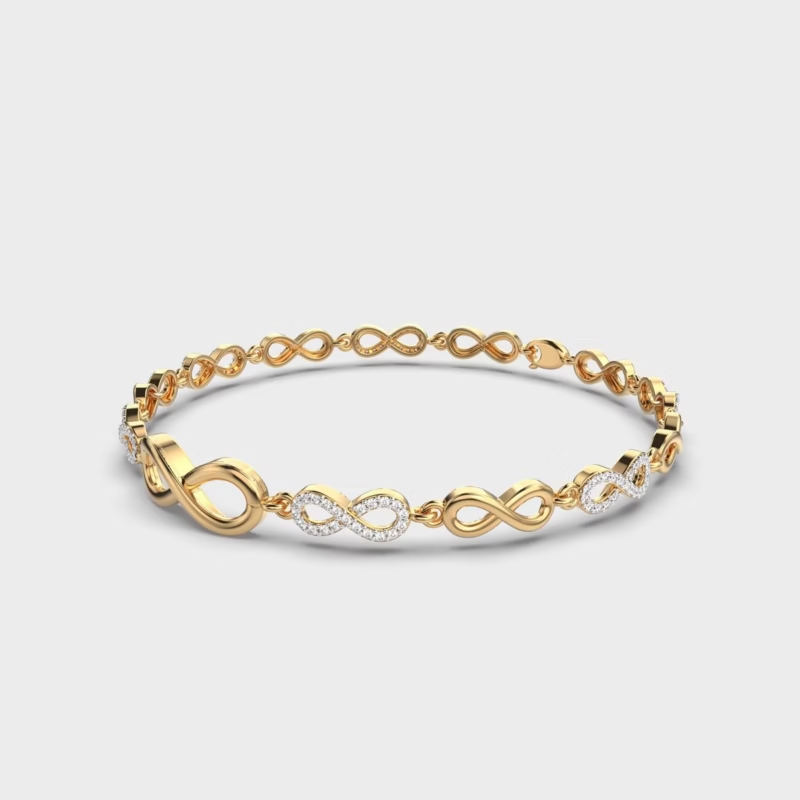
Showing all 3 results
Discover Your Perfect Price
Filter by Stone Type and Metal to view accurate, variation-based pricing
Transparent, personalized, and effortless - explore designs that match your style, metal, and budget.
- Tip: Choose one stone type and one metal type to see your exact price.
- If prices seem off, just uncheck and re-apply your filters – the page will refresh with accurate pricing.
 1-to-1 Custom Design
Experience
 Craft Your Vision
Today with a 10% Starte
 HD video Preview
Before It Ships
 Fully Customizable
- Stone, Metal & Budget
 Choose Metal Tone:
Yellow, White or Rose Gold
 Handcrafted in Solid 10K · 14K · 18K
Gold, 925 Silver or 950 Platinum
 Select Your Stone Type:
 Lab-Grown Diamond or Moissanite
 Award winning
 craftmanship and detailing
 Hallmarked &
 Certified (IGI / SGL)
 Personalized Care &
 Expert Support
 Design Any Piece
Within Your Budget
1-to-1 Custom DesignExperience
Craft Your VisionToday with a 10% Starte
HD video PreviewBefore It Ships
Fully Customizable- Stone, Metal & Budget
Choose Metal Tone:Yellow, White or Rose Gold
Handcrafted in Solid 10K · 14K · 18KGold, 925 Silver or 950 Platinum
Select Your Stone Type: Lab-Grown Diamond or Moissanite
Award winning craftmanship and detailing
Hallmarked & Certified (IGI / SGL)
Personalized Care & Expert Support
Design Any PieceWithin Your Budget
Primira's
Real Reviews From Real Customers
Lifetime
Warranty
100% Money
Back Guarantee
Easy
Customization
7 Days
Return
14 Days
Exchange
Insured
shipping
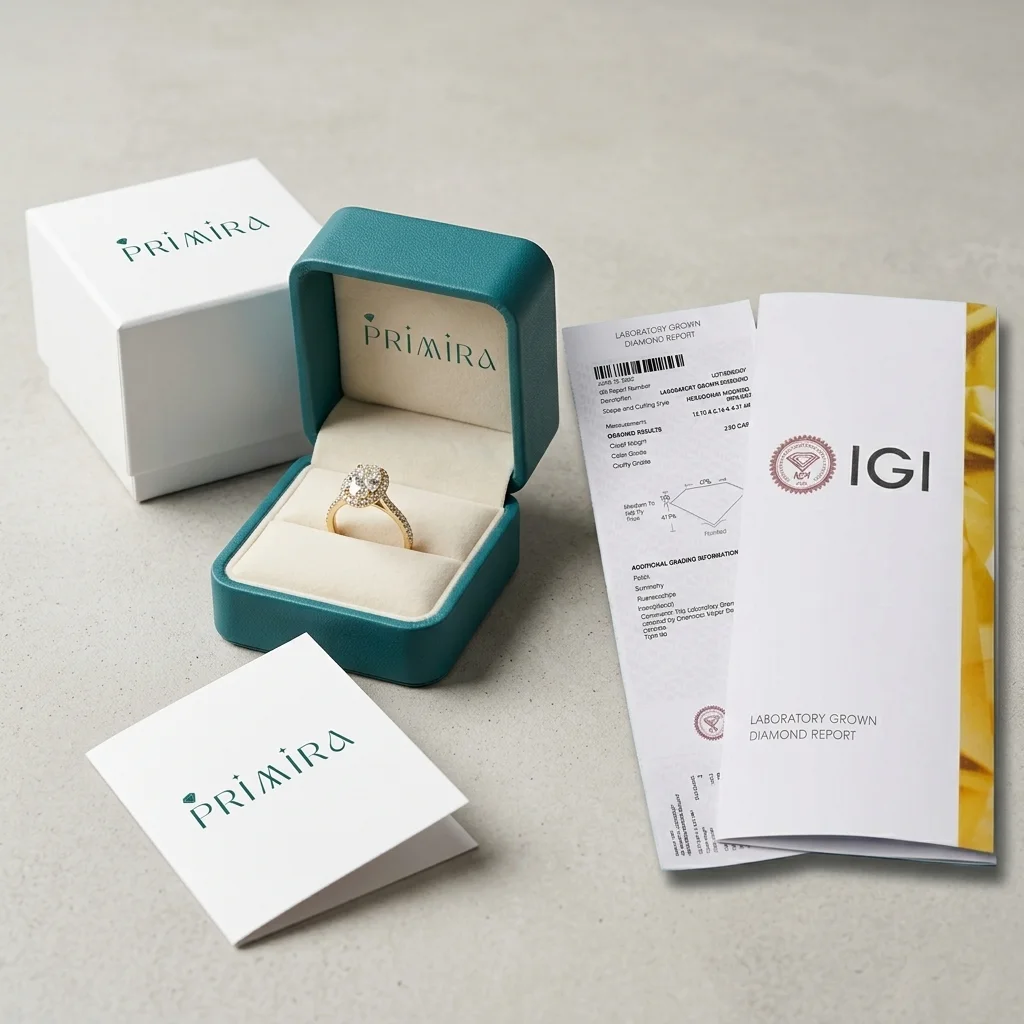
sustainable, beautiful packaging
Give your precious pieces a home they deserve with our stylish, soft-lined jewelry boxes made for effortless organization.
Read Our Article Behind Every Collection
Each design at Primira Luxury is handcrafted with precision, purpose, and emotion. From the first sketch to the final polish, our artisans turn your vision into a piece that feels personal, ethical, and timeless.
Read More
Lab Grown Diamond Charm Bracelets — Custom, Collectible, Surat-Cut
A charm bracelet is the only fine jewelry purchase that is explicitly unfinished. Every other bracelet on this site — the tennis, the bangle, the chain — is a complete object. A charm bracelet is infrastructure. The first order is the base; the collection grows from there.
That changes how it should be built. The chain gauge, the link style, and the clasp type you choose at the start determine what charms can attach properly, how much weight the closure can carry as pieces accumulate, and whether the bracelet can be worn every day or only for occasions. Get the base right and every charm added afterward works. Get it wrong and the collection you build has a structural problem at its centre.
Primira’s lab grown diamond charm bracelets are available in 14K gold (yellow, white, rose), 18K gold, and 950 platinum. The base chain — the piece charms are attached to — comes in three link profiles: round cable, box link, and belcher/rolo. Each has a different charm attachment behaviour, covered in the technical section below.
The Base Bracelet: What Determines Charm Compatibility
Most charm bracelet buyers focus on the first charm they want. The more consequential decision is the chain.
Chain Link Profile and Jump Ring Gauge
A charm attaches to a bracelet through a jump ring — a small wire loop that passes through both the charm’s bail and a chain link. The inner diameter of the charm’s bail and the gauge of the jump ring must be matched to the chain’s link dimensions. At fine jewelry scale (14K/18K/platinum), this is a precision problem, not a styling choice.
Three link profiles and their practical implications:
Round cable link (1.2–1.8mm wire, 4–5mm link length): The most common base for diamond charm bracelets. Jump rings sit cleanly through the rounded link; charms hang with natural rotational freedom, which distributes movement and reduces fatigue at the attachment point. Works with the widest range of bail apertures.
Box link (square cross-section, 3–4mm outer dimension): Cleaner profile, slightly more resistance to charm rotation. Heavier feel on the wrist. Works well when the bracelet is designed to hold a smaller number of substantial charms rather than a growing collection of lighter pieces.
Belcher/Rolo link (round, chunky, 4–5mm link diameter): The widest link in our range. Allows larger bail apertures and heavier charm weights without stressing individual links. Better suited for collecting significant lab grown diamond pieces over time than for starting with a single lightweight charm.
The link gauge also affects clasp load. A box clasp on a fine cable chain carrying eight diamond charms is under materially different stress than the same clasp on a three-charm bracelet. When you confirm your base bracelet via WhatsApp pre-production, the team confirms your anticipated charm count alongside your chain selection — because the clasp specification follows from that conversation, not from the chain alone.
Clasp Options for Charm Bracelets
The trigger clasp (lobster claw style) is the standard for most charm bracelets: it opens with one hand, closes with a click, and adds no additional width to the bracelet profile. Suitable for collections up to approximately five to six lab grown diamond charms of moderate individual weight.
For heavier collections — seven or more charms, or any configuration where individual charms exceed approximately 2g — the box clasp with safety latch is the recommended upgrade. It requires two motions to open (intentional, not inconvenient for daily wear) and distributes clasp-stress load across a wider housing.
Both clasp types are available across all metal tiers.
Lab Grown Diamond Charms: What Custom Means at Charm Scale
Primira’s charm capability comes from the same Surat lapidary that produces personalised pendants, specialty antique cuts, and custom silhouette loose stones. At charm face-up dimensions — typically 8–14mm — the precision requirements per mm² are higher than at pendant scale. A viewer examines a pendant at collarbone distance; a charm at wrist level during handshake distance. The channel walls on a heart-shaped charm or an Om outline at 10mm face-up must be as clean as a much larger piece, in a fraction of the space.
Lab Grown Diamond Charm Types
Solitaire charms: A single lab grown diamond set in a minimal prong or bezel mount, attached via a bail. Round brilliant is the most popular; pear and heart shapes are also commonly ordered for charms. The prong count and bail orientation (fixed vs. swivel) affect how the stone faces when worn — a swivel bail keeps a pear or heart diamond correctly oriented regardless of wrist movement; a fixed bail holds the stone in a set plane.
Symbol and silhouette charms: Custom-cut lab grown diamond shapes at charm scale. Heart, star, Om, cross, crescent, infinity symbol, initial letters. These are cut-to-order shapes, not stamped or cast outlines — the diamond itself is the shape. At 8–12mm, the channel perimeter is machined by the same lapidary bench that produces pendant-scale custom silhouettes, with the same ±0.01mm wall tolerance requirement.
Milestone charms: Date charms, initial charms, and numeral charms. These combine a custom silhouette stone with an engraved or channel-set metal element. Typically ordered as a series over time — one per year, one per milestone — which is why the base bracelet’s clasp and link gauge matter from the first order.
Accent diamond charms: Geometric or floral motifs set with lab grown diamond melee in pavé or micro-pavé. The diamond coverage is across the surface of the charm shape rather than a single stone. Total carat weight per charm typically 0.05–0.30ct depending on charm size and melee coverage. These carry more weight per piece than solitaire charms and are the primary reason to consider a belcher/rolo base chain for a planned long-term collection.
Stone Specifications for Charm Lab Grown Diamonds
The 4Cs at charm scale differ in emphasis from pendant or ring buying.
Cut: For solitaire charms at 0.10–0.30ct, cut quality determines virtually everything about the stone’s visual impact — there are no accent stones, no halo, no surrounding metal to compensate for a weak cut. Primira stocks Ideal and Excellent cut grades only. At a small individual carat weight, a well-cut stone punches well above its face-up size; a poorly cut stone disappears.
Colour: D–F (colorless) is the primary stock. G–H near-colorless is a practical value choice for melee accent charms, where the aggregate sparkle effect matters more than the individual stone’s grade distinction. At solitaire charm scale (one stone, close examination), the colorless range is worth the specification.
Clarity: VVS1–VS2, all eye-clean. For solitaire charms in prong or bezel settings at 0.10–0.30ct, VS2 is a reasonable floor — inclusions at this size are not visible to the naked eye, and the price difference frees budget for additional charms in the collection. For custom silhouette charms with open channel walls (where the stone’s interior is more visible), VS1 is the recommended minimum.
Carat: Charm-scale solitaires typically run 0.10–0.50ct per stone. At 0.25ct round brilliant, face-up diameter is approximately 4mm — proportionally significant at 8–10mm charm face-up size. At 0.50ct, the charm becomes a statement piece rather than a collectible accent. Custom-carat solitaire charms from 0.10ct to 2ct+ available on order.
Moissanite is available as an alternative for any charm type. Hand-faceted by the same Surat lapidary at the same tolerances — relevant for charm-scale custom silhouettes where the faceting decision affects how the fire reads at wrist-level examination distance.
Charm Bracelet vs Pendant: A Genuine Disambiguation
The buyer deciding between a charm bracelet and a pendant necklace is often thinking about the same emotional intent — a collectible, wearable record of significant moments — but arriving at two genuinely different products.
A pendant collection grows on a necklace chain: each piece is visible at collarbone to chest height, viewed straight-on. A charm collection grows at the wrist: pieces move with the hand, are seen from multiple angles during normal activity, and are observed at closer range during interactions.
The practical implication is that the viewing distance and orientation for charm diamonds differs from pendant diamonds. A charm that faces correctly when the arm is at rest may rotate out of position with wrist movement — which is why swivel bails are specified for pear and heart solitaire charms, and why fixed bails suit round and geometric shapes where any orientation reads correctly.
If the intent is a single meaningful piece rather than a growing collection, the solitaire lab grown diamond pendant offers a focused answer. If the intent is a base piece that accumulates meaning over time, the charm bracelet’s architecture is specific to that purpose.
Wearing and Building Your Collection
A new charm bracelet typically starts with either the base alone or the base plus one anchor charm. Subsequent charms are added at intervals — anniversaries, travel, milestones, birthdays. The bracelet becomes a timeline.
A few practical considerations for building over time:
Spacing: Charms need room to hang without tangling or overlapping. A standard cable chain bracelet comfortably holds five to seven charms without crowding; belcher/rolo bases handle eight to ten. When ordering a fourth or fifth charm for an existing bracelet, the WhatsApp pre-production confirmation covers whether the current base length still accommodates the planned addition without requiring a length extension.
Weight balance: A bracelet carrying charms predominantly on one section of the chain will slide to that section under gravity. If this matters aesthetically, subsequent charm orders can be spaced to counterbalance. This is the kind of practical wrist-weight detail that a manufacturer who produces both the base and the charms can advise on — because both pieces are in the same production record.
Adding charms from Primira to an existing bracelet: If you have an existing chain (not a Pandora-style threaded system), send the chain gauge or a close-up photo via WhatsApp when ordering a new Primira charm. The bail diameter on the charm is specified to your chain before production — the fit is confirmed before anything is made.
Care Notes for Diamond Charm Bracelets
The movement in a charm bracelet — charms contacting each other and the chain — is the primary wear consideration. Lab grown diamond is Mohs 10, so diamond-on-diamond contact does not scratch the stones. Metal-on-metal contact at the jump ring and link junction is different: over years, the jump ring wire may show slight rounding at contact points. Annual inspection of jump ring tension and closure integrity is the relevant maintenance cadence — the same jeweller who made the original piece can check and retighten without replacement in most cases.
The box clasp with safety latch on a heavier multi-charm bracelet warrants inspection every twelve to eighteen months if worn daily. The trigger clasp on a lighter collection is lower maintenance but worth checking annually for click-spring tension.
Ultrasonic cleaning is safe for solid prong-set diamond charms. Avoid it for any charm with enamel or non-diamond stone accents — gentle warm water with mild soap is sufficient. For pavé-set charms, ensure prong integrity before cleaning; loosened melee is more likely to dislodge under ultrasonic vibration than under gentle hand cleaning.
The Order Process
Every charm bracelet at Primira is made to order. Within 24 hours of checkout, the Surat team contacts you via WhatsApp and email to confirm three base-bracelet-specific variables before production begins: chain link gauge and profile, clasp type, and anticipated charm count (which determines clasp specification). If you are ordering a first charm to add to an existing bracelet rather than a new base, send the chain photo or gauge detail at that stage.
Production: 15–35 business days. Custom silhouette charms (Om, initial, heart at custom dimensions) follow the same timeline as other custom-cut pieces — the cutting happens at the Surat lapidary bench, not through a catalog selection.
IGI certification is available on request for any solitaire charm stone of 0.25ct and above. Loose lab grown diamond solitaires over 0.25ct dispatched for charm mounting come with IGI certification by default.
Every order is insured from the Surat facility to your door. India: free shipping above ₹10,000. International express (DHL/FedEx/UPS, estimated 5–7 business days after dispatch) is free on orders above USD $550.
The 7-day return applies to specification-error cases — wrong stone grade delivered, wrong charm size produced. Custom-cut charms and personalised pieces (initial letters, name charms, symbol charms) are final sale except where the delivered piece materially differs from the confirmed specification. The pre-production WhatsApp confirmation — covering charm shape, stone spec, bail type, and attachment method — is the mechanism that resolves these variables before anything is made.
If your circumstances change after confirmation but before production completes, the 48-hour cancellation window applies from order placement. The buyback program is available as a value-recovery alternative for any piece after delivery.
Explore the Bracelet Collection
- Diamond charm bracelets — this page
- Lab grown diamond tennis bracelets
- Diamond bangles and kadas
- Lab grown diamond chain bracelets
- Men’s lab grown diamond bracelets
- Full bracelet collection
FAQ
What is a lab grown diamond charm bracelet?
A charm bracelet is a chain or link base to which individual charms — small decorated pendants — are attached via jump rings or direct bail connections. A lab grown diamond charm bracelet uses lab grown diamonds in the charms themselves: as solitaire stones in individual mounts, as stones in custom silhouette-cut shapes, or as melee in pavé-covered charm forms. The base chain and the charms are two separate products; the base can be built gradually as the collection grows.
Can I add more charms to my Primira bracelet later?
Yes — and the base bracelet is specified with that in mind. When you order your first piece, the pre-production WhatsApp confirmation covers your anticipated charm count so the clasp type and chain link gauge are appropriate for where the collection is going, not just what you’re buying today. Additional charms ordered later are matched to your existing base’s chain gauge and clasp loading.
What’s the difference between a charm bracelet and a pendant necklace for adding personal diamonds?
Both serve the same broad intent — a wearable, growing collection of meaningful diamond pieces — but the architecture differs. A pendant collection hangs at collarbone height, viewed straight-on at a fixed orientation. A charm collection sits at the wrist, moves with the hand, is seen from multiple angles, and accumulates on a single base that you wear daily. Which one is right depends on how you wear jewelry and whether the wrist or the neckline is where you want the collection to live.
How many charms can a charm bracelet hold?
Practically: five to seven on a standard cable link base before crowding becomes an issue. Eight to ten on a belcher/rolo base. Beyond that, the clasp load and the weight distribution across the chain become considerations — which is why heavier long-term collections benefit from specifying the box clasp with safety latch from the first order, and from using a wider link profile. The production team can advise based on your planned charm types.
Are custom silhouette diamond charms — hearts, initials, Om — actually cut from the diamond itself?
Yes. These are not stamped metal shapes with a diamond accent — the diamond is cut to the shape. A heart-shaped charm from Primira is a heart-shaped lab grown diamond, cut at the Surat lapidary to that outline. The same goes for Om, star, cross, initial letters, and other custom silhouettes. At 8–14mm face-up dimensions, the cutting precision required is equivalent to — in some cases exceeding — pendant-scale custom shapes, because the proportional margin for error is smaller.
Is IGI certification available for charm diamonds?
IGI certification is available on request for solitaire charm stones of 0.25ct and above. Loose lab grown diamonds of 0.25ct+ sent for charm setting come with IGI certification as standard — the report number is laser-inscribed on the stone’s girdle and verifiable at igi.org. For pavé-set or melee-dominant charms below 0.25ct per stone, parcel-grade documentation (confirming colour, clarity, and cut range across the batch) is available on request.
 Chat on WhatsApp