
Primira Luxury Blog
“Jewelry is more than an accessory; it’s a timeless tale waiting to be told.”
“Like a well-crafted gem, true beauty comes from within. Let your jewelry amplify it.”


Discover Your Perfect Price
Filter by Stone Type and Metal to view accurate, variation-based pricing
Transparent, personalized, and effortless - explore designs that match your style, metal, and budget.
- Tip: Choose one stone type and one metal type to see your exact price.
- If prices seem off, just uncheck and re-apply your filters – the page will refresh with accurate pricing.
 1-to-1 Custom Design
Experience
 Craft Your Vision
Today with a 10% Starte
 HD video Preview
Before It Ships
 Fully Customizable
- Stone, Metal & Budget
 Choose Metal Tone:
Yellow, White or Rose Gold
 Handcrafted in Solid 10K · 14K · 18K
Gold, 925 Silver or 950 Platinum
 Select Your Stone Type:
 Lab-Grown Diamond or Moissanite
 Award winning
 craftmanship and detailing
 Hallmarked &
 Certified (IGI / SGL)
 Personalized Care &
 Expert Support
 Design Any Piece
Within Your Budget
1-to-1 Custom DesignExperience
Craft Your VisionToday with a 10% Starte
HD video PreviewBefore It Ships
Fully Customizable- Stone, Metal & Budget
Choose Metal Tone:Yellow, White or Rose Gold
Handcrafted in Solid 10K · 14K · 18KGold, 925 Silver or 950 Platinum
Select Your Stone Type: Lab-Grown Diamond or Moissanite
Award winning craftmanship and detailing
Hallmarked & Certified (IGI / SGL)
Personalized Care & Expert Support
Design Any PieceWithin Your Budget
Primira's
Real Reviews From Real Customers
Lifetime
Warranty
100% Money
Back Guarantee
Easy
Customization
7 Days
Return
14 Days
Exchange
Insured
shipping
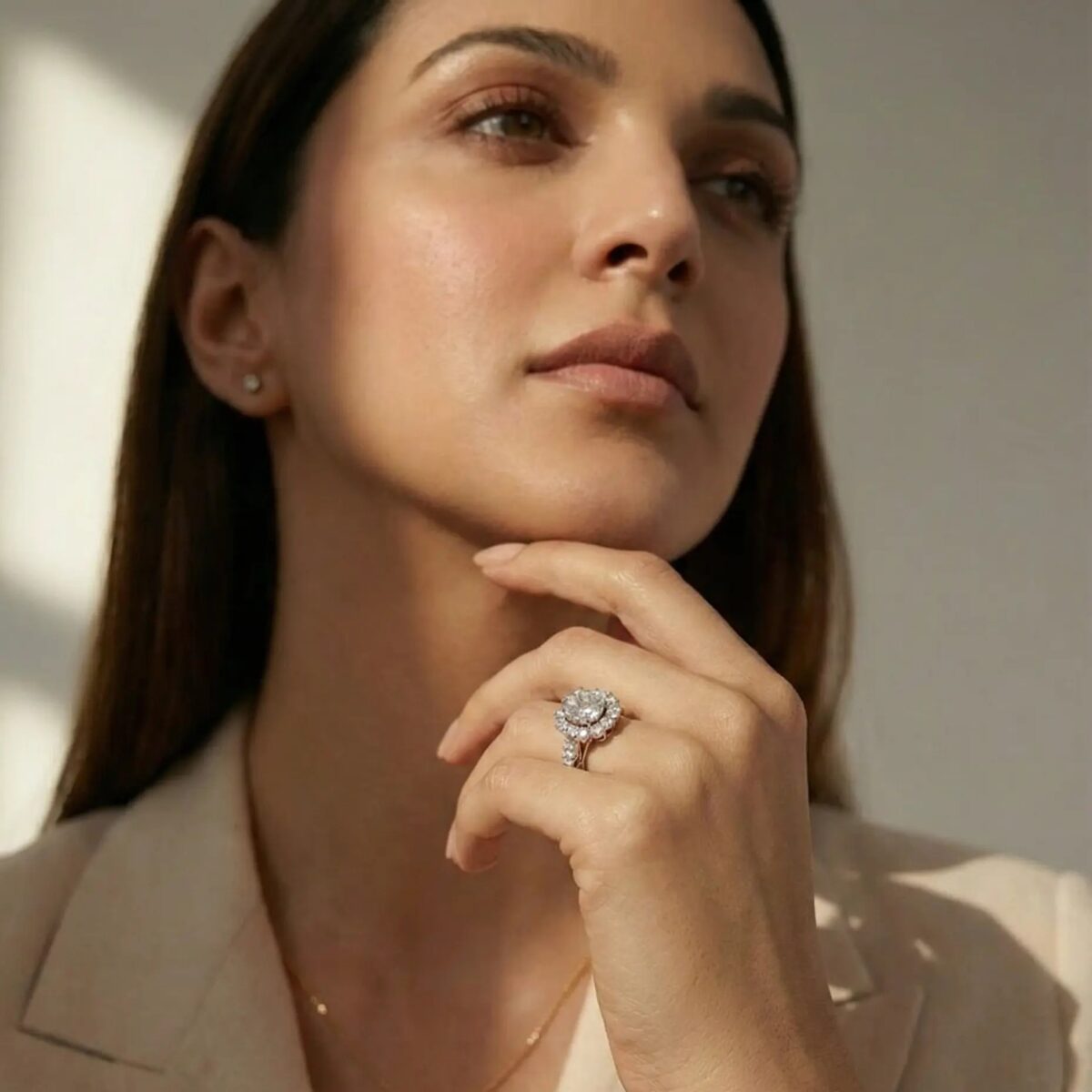
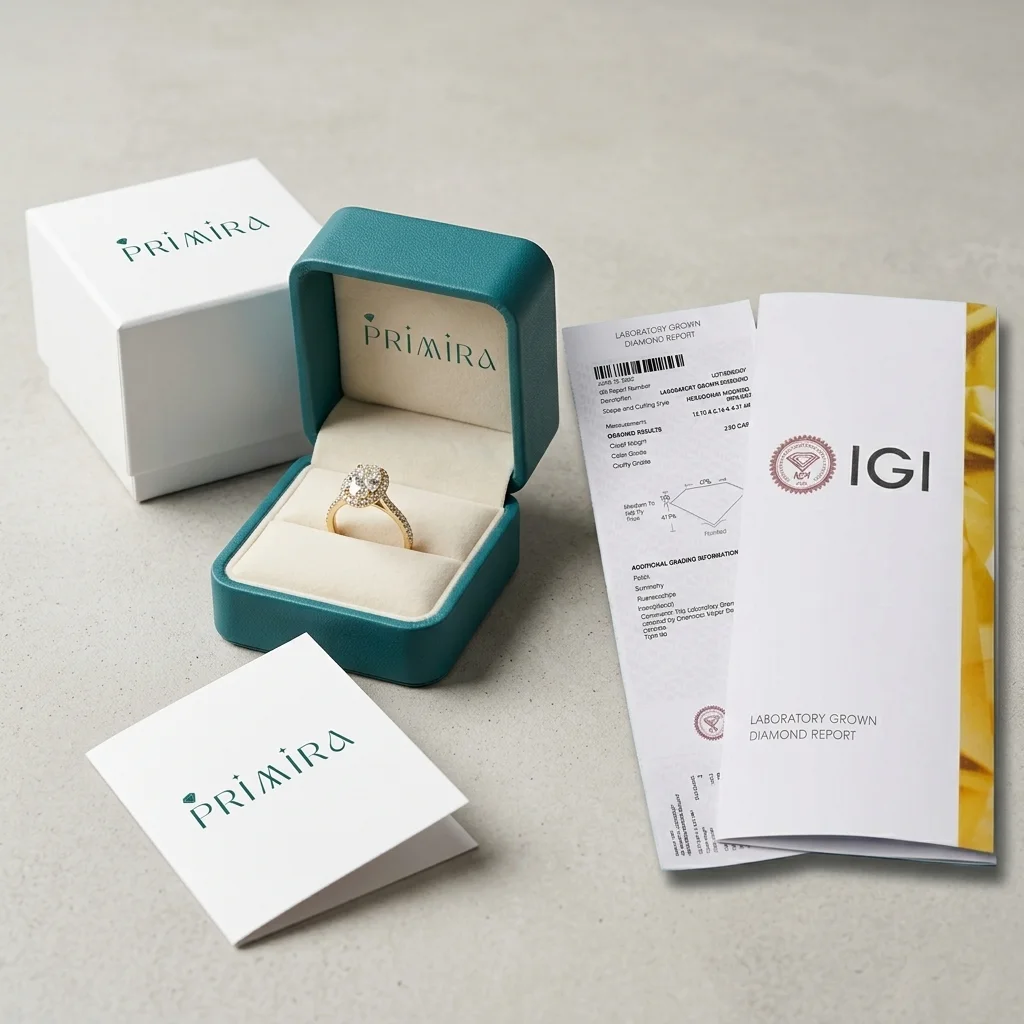
sustainable, beautiful packaging
Give your precious pieces a home they deserve with our stylish, soft-lined jewelry boxes made for effortless organization.
Read Our Article Behind Every Collection
Each design at Primira Luxury is handcrafted with precision, purpose, and emotion. From the first sketch to the final polish, our artisans turn your vision into a piece that feels personal, ethical, and timeless.
Read More
Men’s Lab Grown Diamond Bracelet — Built for Daily Wear
Most men choosing a diamond bracelet spend their decision time on metal tone and stone size. The question that actually determines whether a piece holds up — and keeps looking like it was bought yesterday rather than three years ago — is the setting type and link construction. A bar-set bracelet wears differently from a channel-set one, and both wear differently from a brushed-platinum wide-link piece. None of that is obvious from a product image.
This page covers what those differences actually are, which metal and finish choices suit wrist-wear conditions specifically, and why the construction decisions made at a Surat manufacturing bench translate directly into how a piece performs beside a watch or through a working day.
Why Setting Choice Matters More for Bracelets Than Rings
Men’s rings and men’s bracelets share several setting types — bar, channel, flush/gypsy — but the wear conditions are categorically different. A ring faces vertical snag and rotational torque. A bracelet faces lateral contact: watch lugs, table edges, bag straps, jacket cuffs. The setting that protects a stone in a bracelet needs to keep the stone plane close to flush with the link face, so there’s no raised element to catch on anything running along the wrist.
Bar Setting
Two vertical metal bars bracket each stone on opposing sides, leaving the long faces of the stone open to light. The stone sits slightly below bar height, so the bars absorb contact before the stone does. For men’s bracelets, this is the setting that holds up longest under daily-wear conditions — the bar profile is low enough not to catch on a watch buckle, and the open long faces mean the diamond still returns light despite being well-protected. Stone cleaning is straightforward: nothing accumulates between the bars at the same rate it does in channel settings.
Channel Setting
Stones run continuously between two parallel metal walls, with no individual prongs or bars. The result is the smoothest exterior profile of any men’s setting — nothing protrudes, nothing catches. The trade-off is light entry: channel walls limit light from the sides, so the stone returns less fire than it would in bar or open-face settings. Channel setting suits men who want the bracelet to read as a structural piece with embedded diamonds rather than a diamond piece with a metal carrier. It’s also the right choice when the bracelet will be worn against a polished watch bracelet — no friction points at all.
Flush/Gypsy Setting
The stone is drilled into the link itself and sits at or just below metal surface level, held by a thin burnished collar rather than prongs or bars. Maximum protection for the stone — there is genuinely nothing for lateral contact to find. The trade-off is the visual: only the table and upper crown are visible, so the diamond reads as a precise point of light rather than a full stone. For men who want a piece that reads clean and substantial with diamond accents rather than a diamond-forward design, flush setting works well across wide-link and signet-style bracelets.
What Primira Doesn’t Stock for Men’s Bracelets
Prong settings — including standard 4-prong and 6-prong basket constructions — are available on many women’s bracelet styles and on some unisex designs, but they’re not the right engineering choice for a piece intended to be worn daily beside a watch. Prongs that extend above the link face are exactly the profile that catches on watch lugs and bag hardware. This isn’t a style opinion. It’s the reason all three settings above — bar, channel, flush — dominate men’s fine jewelry construction across the industry.
Link Construction and Metal Volume
The difference between a men’s diamond bracelet that reads substantial and one that reads delicate isn’t just visual. It’s the wall thickness of each link and the depth of the seat machined for each stone.
On a women’s diamond bracelet, link walls are typically 1–1.5mm at the thinnest point. On a men’s piece, walls run 2.5–4mm. That additional metal volume does three things: it increases the bracelet’s weight and wrist presence, it provides a deeper stone seat so flush and bar-set stones are fully secured in the link body rather than surface-mounted, and it gives the piece long-term structural integrity when worn alongside a metal watch band that applies constant lateral pressure.
At Primira’s Surat facility, link casting controls wall thickness and stone-seat depth as a production specification — not something adjusted during setting. The cutter knows before the stone enters the seat exactly how deep the stone will sit and how much metal remains above it. That precision is harder to achieve in assembly-based manufacturing, where links and stones arrive as separate components and the setter works to what’s available.
For men’s bracelets, the widths available run from 4–5mm (slim, watch-compatible, reads as a refined accent) to 10–12mm (bold profile, statement weight, architectural). Width choice is driven by wearing context, not just preference.
Brushed vs High-Polish Finish — The Honest Answer
This is the question most retailer pages skip. The answer matters for men’s daily wear more than it does for most jewelry categories.
A high-polish finish is a mirror surface. It reflects light sharply and reads as premium in product photography and on first wear. It also records every contact mark: a table edge, a watch lug, a door handle. On a piece worn daily, a polished surface accumulates micro-abrasions that dull the finish progressively and become increasingly visible at certain light angles. Polished surfaces can be re-polished by a jeweller, but that’s maintenance most people don’t do annually.
A brushed finish is a directionally worked surface — fine parallel micro-grooves cut into the metal during finishing. Because the surface already has controlled texture, new contact marks from daily wear align with the existing grain rather than standing out against a mirror plane. The bracelet looks like itself after six months of daily wear rather than like a polished piece that’s been scratched. Brushed doesn’t photograph as well as polished, which is why it’s underrepresented in product images despite being the more durable choice for active daily wear.
The practical guidance: for a piece worn every day beside a watch, brushed finish on the links; high-polish reserved for the stone settings and any edge detail where reflectivity is genuinely functional. Two-tone finishing — brushed body, polished edges — is available on custom order.
Metal choice for finish durability: 14K gold and 925 silver hold brushed texture well and are the standard for men’s pieces. 950 platinum takes an exceptionally fine brushed surface and hardens further with wear — unlike gold, platinum doesn’t lose metal when scratched, it displaces it. For a piece intended as a long-term daily wear item, platinum’s hardening characteristic makes it worth considering at the higher investment tier.
Stone Specifications for Men’s Bracelets
The 4Cs apply the same way they do in any lab grown diamond piece. The emphasis shifts slightly for men’s bracelet contexts.
Cut: Ideal and Excellent only — Primira doesn’t stock Good or Fair cuts. For bar and channel settings where only the stone’s top and upper crown are visible, cut quality determines how much light the stone returns despite the restricted profile. A well-cut stone in a channel setting still performs. A poorly cut stone in the same setting goes flat.
Clarity: VS1–VS2 is the practical standard for men’s bracelet stones. At the sizes used in most bracelet settings (0.10–0.25ct per stone in accent work, 0.50–1.50ct for single-stone centrepieces), VS2 is eye-clean and delivers the same visual result as VVS stones at meaningfully different economics. VVS stones are available if specification requires them.
Color: D-F colorless is primary stock. G-H-I near-colorless is a reasonable value choice for accent stones in yellow gold settings — the warm metal tone makes the color differential invisible in context. In platinum and white gold, D-F holds its visual edge more clearly.
Carat: For accent-set men’s bracelets (multiple stones across the link pattern), total carat weight across the piece is the relevant figure, not per-stone weight. A bracelet with twenty 0.10ct bar-set stones across 18cm of links reads very differently from the per-stone number. Custom orders available from 0.25ct total to 10ct+ across large statement pieces.
IGI certification is available on request for individual stones above 0.50ct used in men’s bracelet centrepieces. For calibrated accent stones, the consistency of the cut and clarity batch is confirmed at the Surat sourcing stage.
Design Reference — What’s in the Men’s Collection
The collection runs from understated to architectural. These are the recurring design families rather than individual SKUs, since the full range is available through the collection page.
Wide-link bar set: 8–12mm link width, round or princess-cut lab grown diamonds bar-set at intervals across the links, brushed finish with polished bar details. Reads as bold without being decorative. Yellow or white 14K gold.
Slim accent band: 4–5mm links, channel-set round brilliants, continuous stone run across the front section of the bracelet. Watch-compatible width. Polished or brushed in 14K or 925 silver.
Single-stone centrepiece: One 0.50–2.00ct lab grown diamond, bezel or bar set at the bracelet’s centre, plain chain or slim link carrier. Clean, focused, modern. Available in all metal tiers.
Geometric statement: Wide profile with architectural geometry — hexagonal or rectangular links, flush-set accent stones at corner intersections, brushed platinum or 18K gold. For buyers who want a piece with obvious material presence and minimal sentimentality.
Custom configurations are available on any combination: stone shape, carat weight, link width, metal tier, finish, and clasp type confirmed before production begins.
Men’s Bracelet Sizing and Wearing Context
Standard men’s bracelet length runs 19–21cm (7.5–8.25in). The right fit depends on whether the bracelet will be worn snug, with moderate movement, or with deliberate drape. For a piece worn against a watch, moderate movement (0.5–1cm of clearance above the wrist) avoids constant contact between the bracelet and the watch case.
Wrist circumference — not watch size — determines the base measurement. The production team confirms exact length at the pre-production WhatsApp call, along with clasp preference: box clasp for security, toggle clasp for ease, lobster claw for adjustment flexibility.
Custom length available. If you’re between standard sizes or stacking with an existing watch bracelet, note that in your order confirmation — the team works through the geometry before casting begins.
Custom Order — What’s Different for Men’s Pieces
Custom orders are handled through the same WhatsApp process as all Primira pieces, but the decision points specific to men’s bracelets are worth naming:
Link width and wall thickness: this is the first decision, because it determines how the piece wears, not just how it looks.
Setting type: bar, channel, or flush — if you’re wearing the bracelet daily beside a watch, the team will ask about that context specifically because it affects the recommendation.
Finish: brushed, high-polish, or two-tone — decided at confirmation, not post-production.
Stone shape: round brilliants dominate men’s bracelet work because they perform in every setting orientation, but princess, emerald, and baguette cuts are used in geometric designs where the shape contributes to the link’s architectural lines.
Engraving: available on the inner face of box-clasp covers and wide links. A date, initials, or a short phrase — the engraving is cut on the production bench, not laser-etched.
Specialty and custom-silhouette stones from Primira’s loose diamond collection — including Portuguese-cut, OEC, and custom shapes — can be specified as centrepiece stones in men’s bracelet designs.
Care and Longevity for Men’s Bracelets
The vulnerabilities specific to this design type rather than generic jewelry care:
Clasp wear: box clasps in men’s bracelets are opened more often than equivalent clasps in women’s pieces because the bracelet typically goes on and off daily (unlike a tennis bracelet worn continuously). The tongue-to-housing tolerance on a box clasp tightens or loosens with use. Check once a year that the clasp closes with clear resistance — a clasp that closes too easily is a clasp that can open under load. If it’s loosening, the production team can tighten the tongue without dismantling the bracelet.
Stone inspection for flush/gypsy settings: in flush-set pieces, the burnished metal collar around each stone can wear thin over years of daily use, particularly in softer gold alloys. VS this annually by running a fingernail across each stone — a stone that has shifted will feel different from the surrounding metal surface. If you find one, stop wearing the piece and have the collar re-burnished before continuing.
Brushed finish maintenance: a brushed surface is self-concealing for micro-abrasions but doesn’t resist deep gouges. Remove the bracelet before gym work, climbing, or anything with high-impact wrist contact. A jeweller can restore the directional grain on a brushed surface; this is a simpler re-finishing job than re-polishing a mirror surface.
Ultrasonic cleaning: safe for bar-set and channel-set pieces with secure stones. Not recommended for flush-set pieces where the collar may have thinned — the ultrasonic vibration can accelerate loosening of a stone that’s already beginning to shift.
Frequently Asked Questions
Can I wear a lab grown diamond bracelet every day beside a watch?
Yes — with the right setting. Bar, channel, and flush settings are all engineered for this. What to avoid: prong-set designs, where the prong tips sit above the link face and contact the watch lug directly. If you’re buying specifically for daily wear alongside a watch, tell the team at pre-production confirmation and they’ll advise on link width relative to your watch lug width.
Is bar setting or channel setting better for a men’s bracelet?
Different practical outcomes. Bar setting keeps the long faces of the stone open to light, so the diamonds return more brilliance — but there’s a small gap between the bar and the stone where debris can collect over time. Channel setting is the smoother exterior and requires less maintenance, but the walls limit side-entry light. For a piece where the diamonds’ fire matters: bar. For a piece where low-maintenance and a clean profile matter: channel.
Should I get a brushed or polished finish?
For daily wear: brushed. High-polish is excellent for occasional-wear pieces and photographs well, but it records contact marks from daily use that a brushed surface conceals. If you already have a polished watch bracelet and want the diamond bracelet to sit visually with it, a two-tone approach — brushed links, polished edges — bridges the two.
How wide should a men’s diamond bracelet be?
Wearing context drives this. If the bracelet will be worn on the same wrist as a watch: 4–6mm sits within most watch lugs without competing. If worn on the opposite wrist or solo: 8–12mm reads as the intended weight and presence for a men’s piece. Custom width available — if you want to send the team your watch’s lug width at confirmation, they’ll advise on fit.
Can I specify a custom shape or engraving?
Custom configurations are fully available: stone shape (including specialty cuts from Primira’s loose diamond range), link width, metal tier, finish, and clasp type. Engraving on the inner face of the clasp cover or wide links is bench-cut, available on any custom order. The team confirms all specifications at the pre-production WhatsApp call before any metal is cast or stones are set.
What’s the production timeline for a men’s custom bracelet?
Standard production runs 15–35 business days from specification confirmation. Custom configurations at the more complex end — engraving, specialty cuts, non-standard link widths — run toward the longer end of that window. Every international shipment is insured from dispatch to delivery confirmation. If the piece needs to arrive by a specific date, flag it at the confirmation call.
Explore the Full Bracelet Collection
The lab grown diamond bracelet collection covers the full range of styles across all five categories:
- Lab grown diamond tennis bracelets — continuous matched-parcel stone lines, the original daily diamond bracelet
- Diamond bangles and kadas — hinged circular and solid traditional wristwear, India-specific engineering
- Diamond chain bracelets — geometric link designs with adjustable bolo sliders
- Diamond charm bracelets — custom silhouette charms on a base bracelet, accumulated over time
For the stone specifications behind any piece, the lab grown diamond collection covers what Primira stocks, what’s available on custom order, and how IGI certification applies across different stone types and sizes.

 Chat on WhatsApp