Fancy Color Lab Grown Diamond Rings
Why the Metal Behind a Colored Diamond Matters More Than the Design
White lab grown diamond rings are designed to maximize light return — every setting choice, every metal selection, is optimized so that light enters the stone, bounces off internal facets, and exits as brilliance. Fancy color lab grown diamond rings work on a different optical principle entirely. The color comes from inside the crystal lattice, and the setting’s job isn’t to maximize light return — it’s to make that color as saturated and visible as possible from the outside.
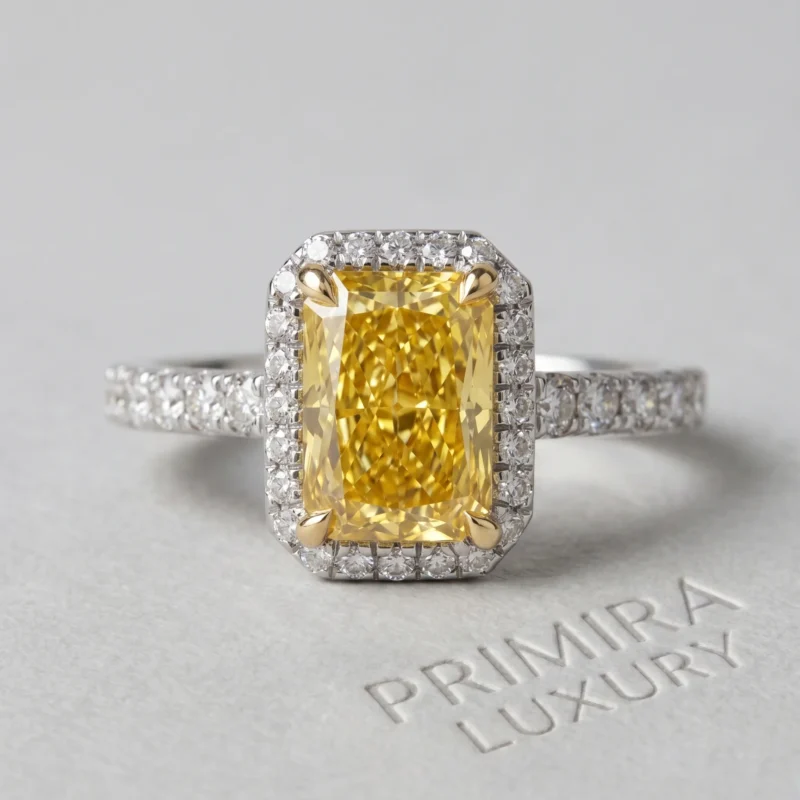
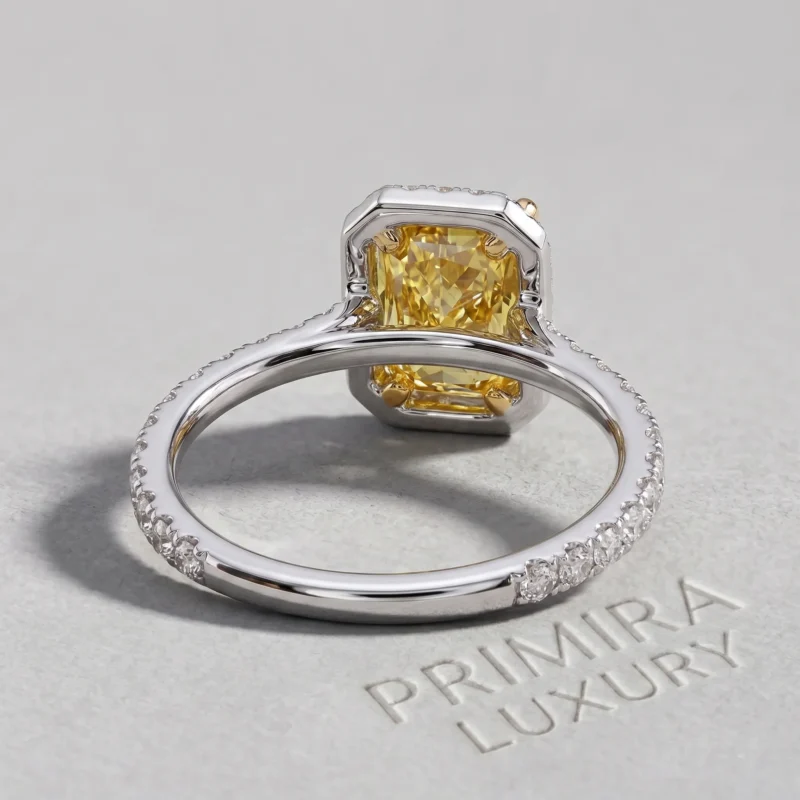
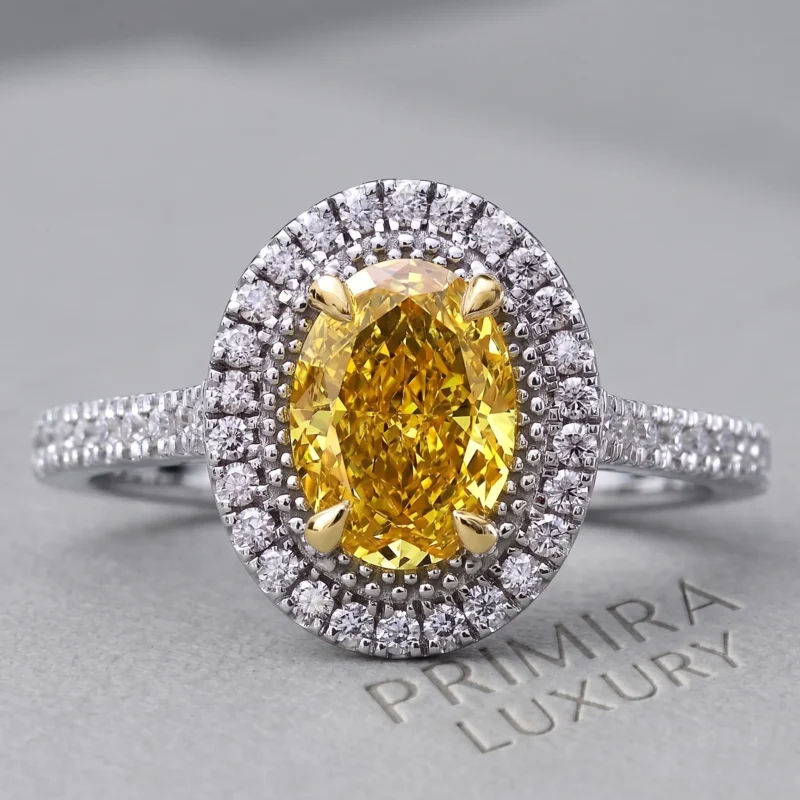
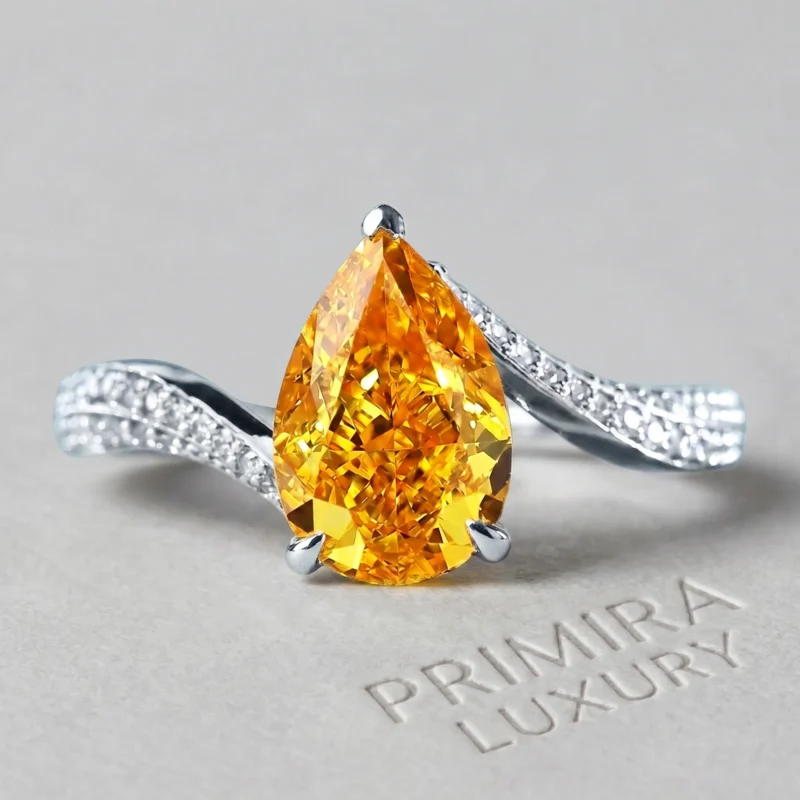
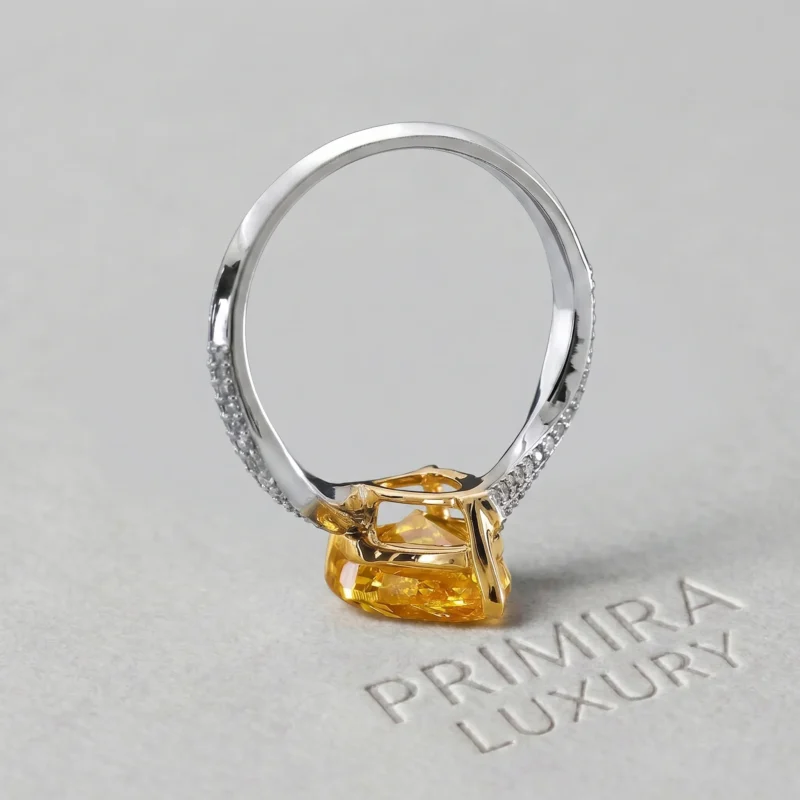
This is why the metal choice matters more for a colored stone than for a white one. Yellow gold creates a warm-toned reflective backdrop inside the setting’s interior walls. That reflected warmth enhances yellow and champagne stones — the metal’s reflection merges optically with the stone’s hue at the girdle, deepening the apparent saturation. Put the same vivid yellow lab grown diamond in a platinum or white gold setting and a portion of what you see through the table is cool white light reflecting up from the prong shoulders, which dilutes the yellow at the stone’s visual center. The stone hasn’t changed. The metal changed what you see.
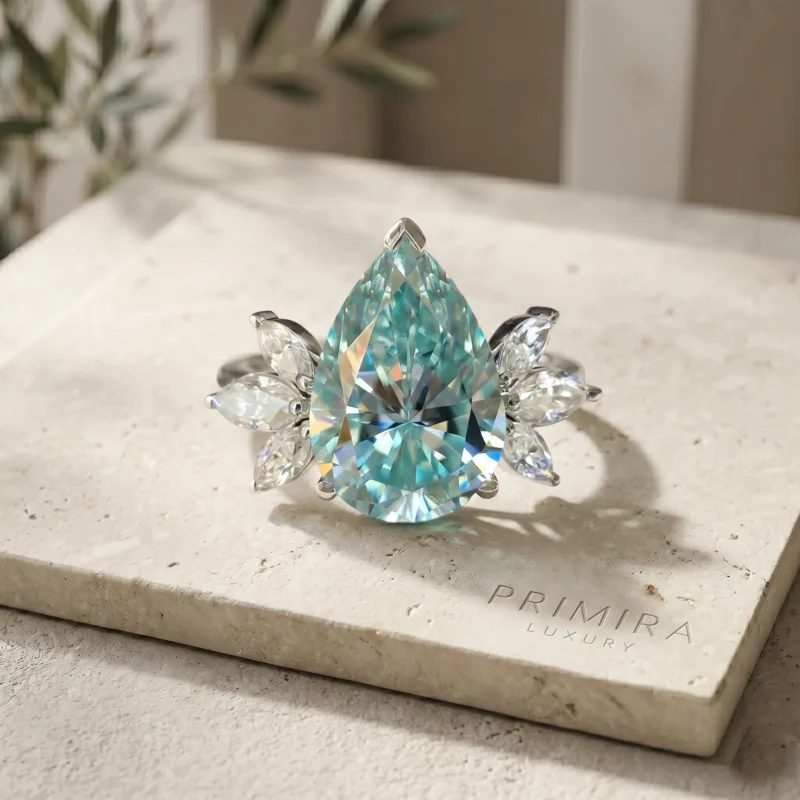
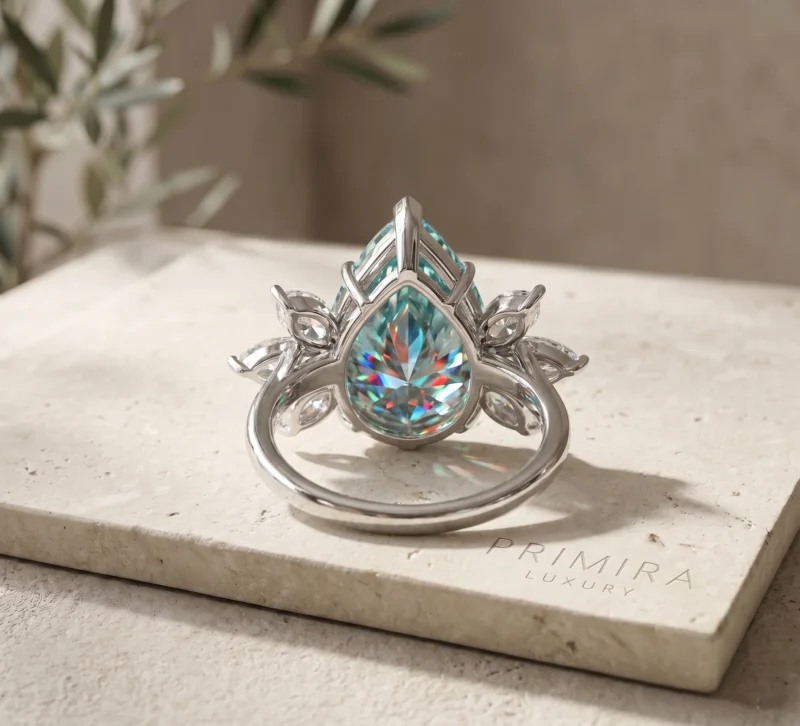
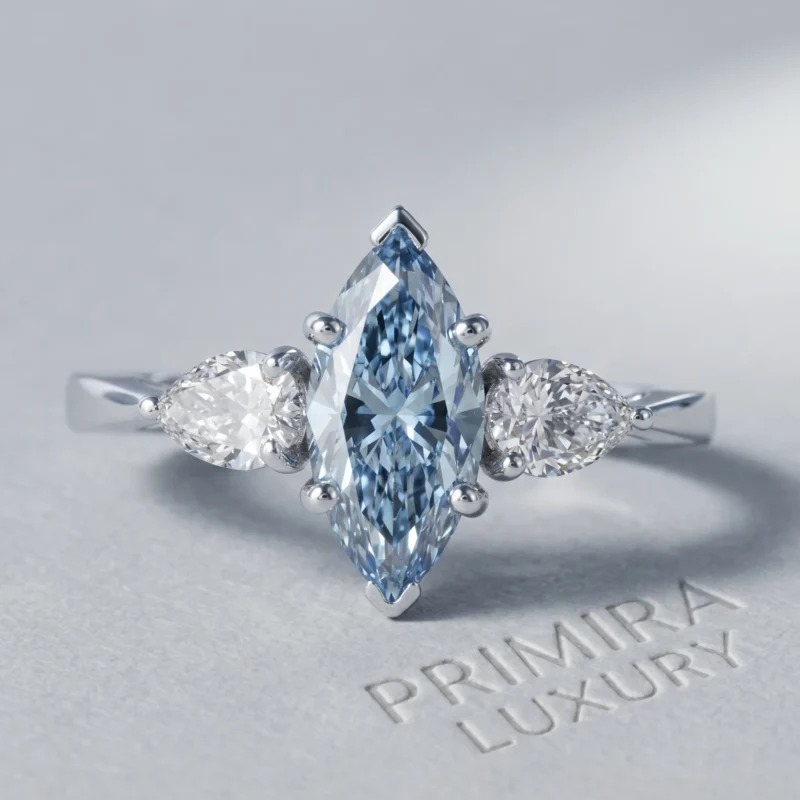
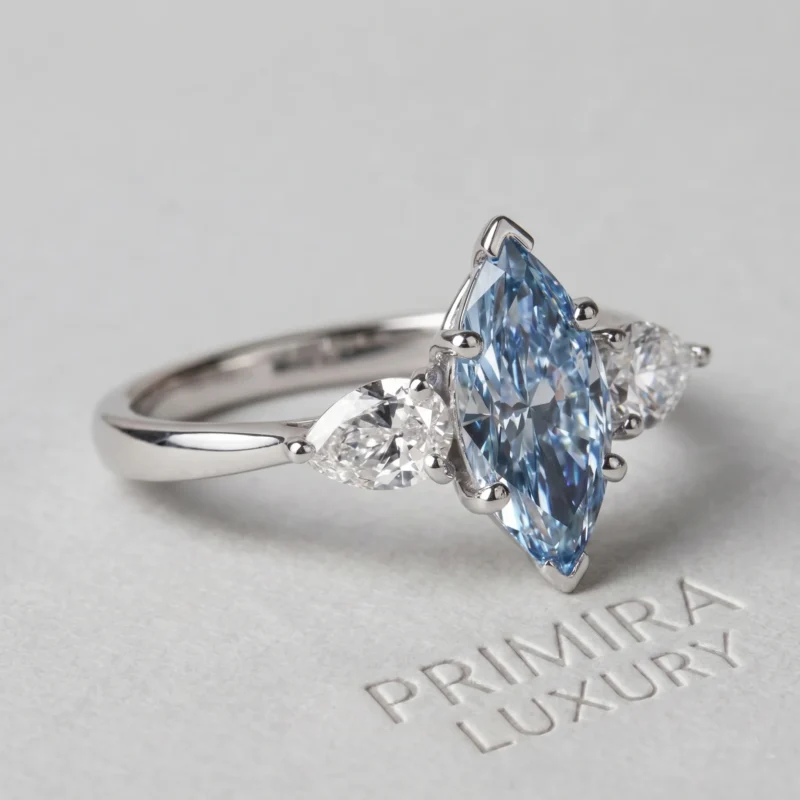
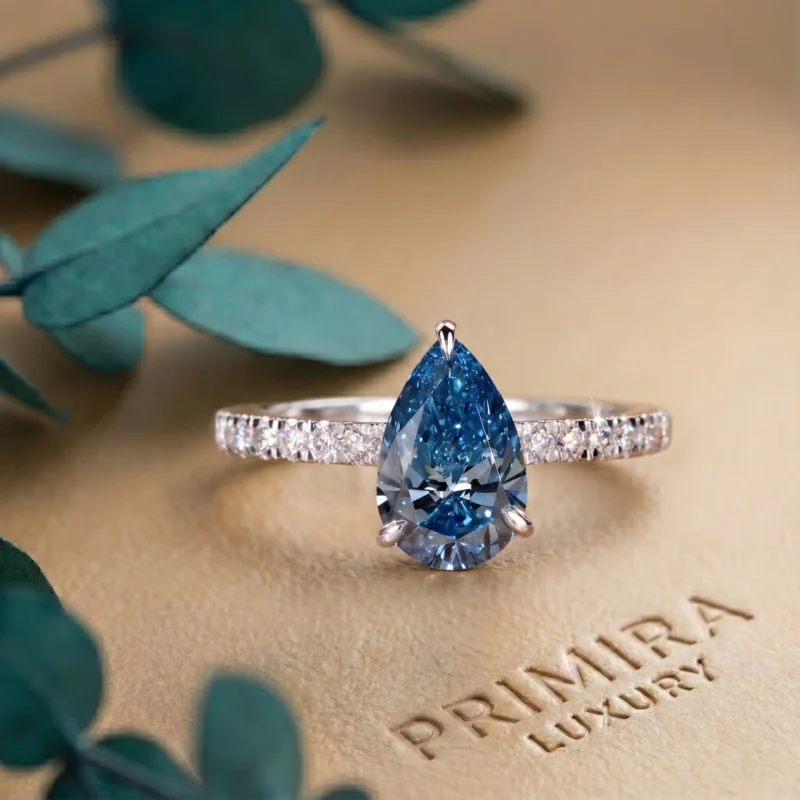
Blue and pink lab grown diamonds behave in the opposite direction. White gold or platinum keeps the backdrop neutral to cool, which lets the stone’s color read cleanly without interference from a warm-toned reflector. This isn’t aesthetic preference — it’s how light actually behaves inside a setting cavity with colored stones.
These are the mechanics behind every ring in this collection. The stone-to-metal pairings aren’t arbitrary; they’re built around what each color actually needs.
The Colors
Primira’s fancy color lab grown diamond rings are available in eight color families, each with saturation tiers:
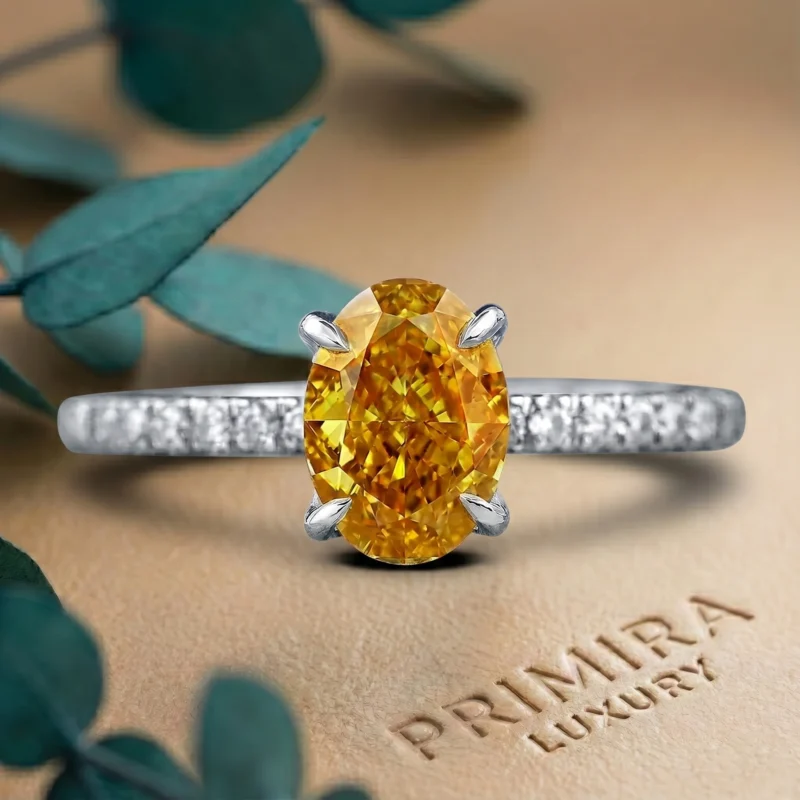
Yellow (Vivid Canary / Intense / Light): The most-searched fancy color for rings globally. Vivid Canary is a fully saturated bright yellow; Intense Yellow has depth without the high-chroma punch; Light Yellow reads as warm rather than bold. All three work in yellow gold; white-gold settings are for Light Yellow buyers who want the warmth dialed back. Cushion and radiant cuts distribute yellow color across a broader face-up area than round brilliant — worth considering for Intense and Light tiers where saturation is doing less work on its own.
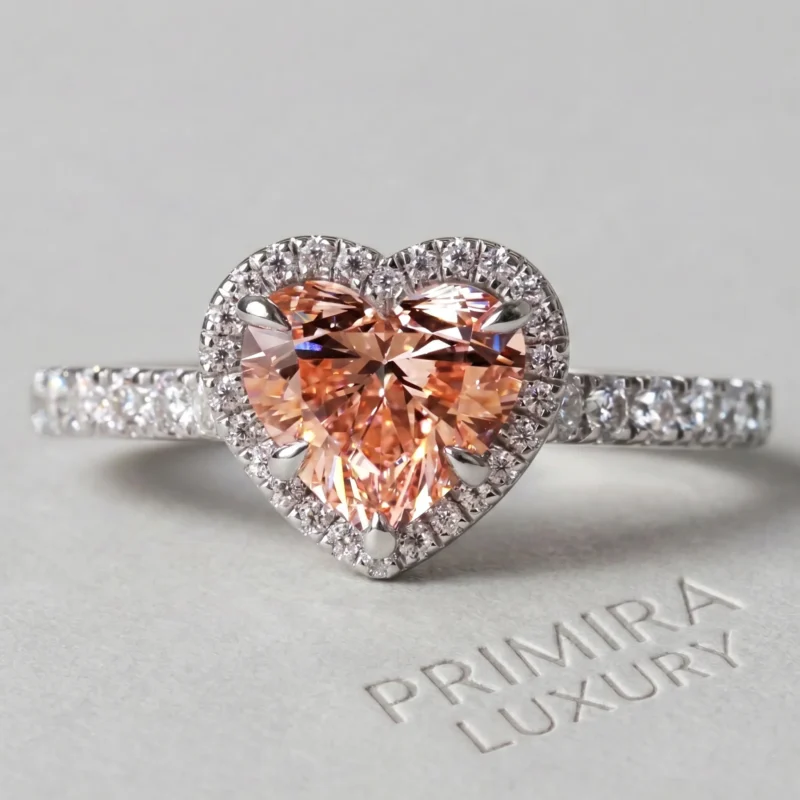
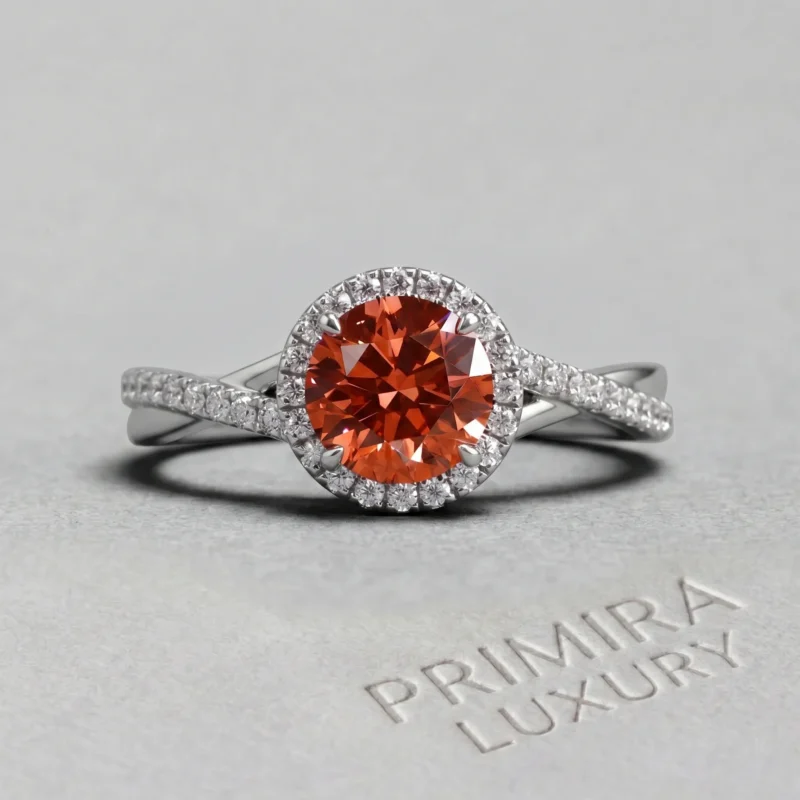
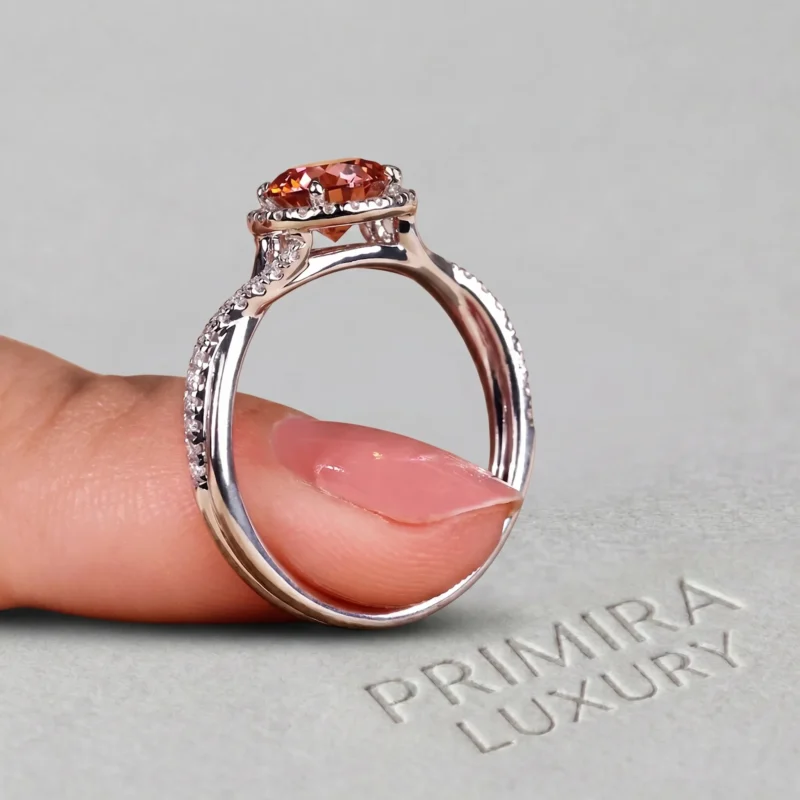
Pink (Fancy Vivid Pink / Reddish Pink / Brownish Pink): Rose gold amplifies the warmth in pink stones — the alloy’s copper content sits on the same tonal spectrum. White gold or platinum suits buyers who want the pink to read cooler. HPHT-grown pink lab grown diamonds typically hold saturation more evenly across the stone than irradiation-treated stones; both are available on order.
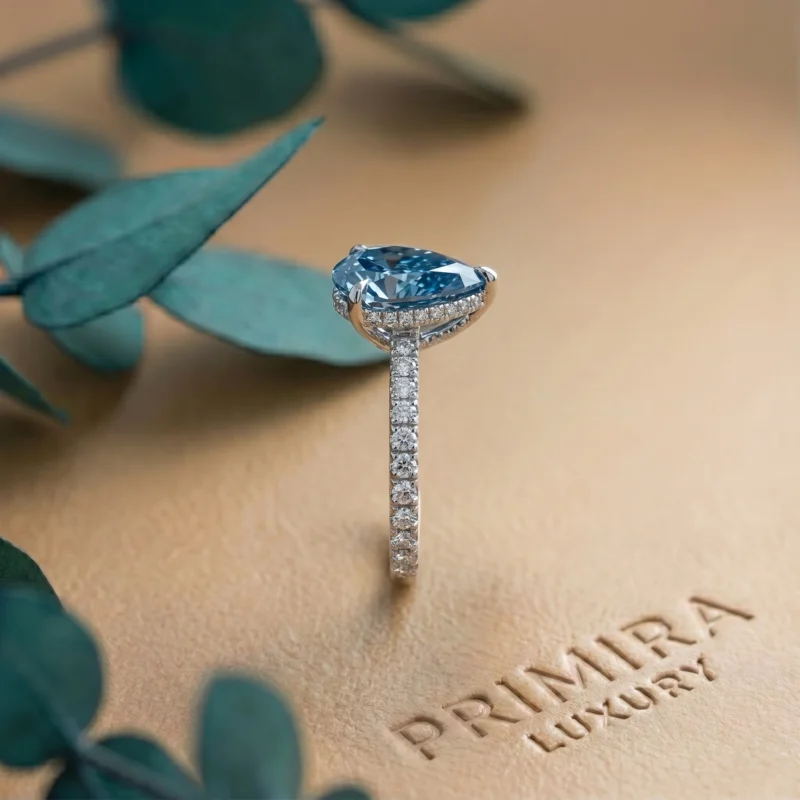
Blue (Royal Blue / Fancy Blue): Grown via boron incorporation during the CVD or HPHT process. Platinum is the traditional pairing; white gold at 18K is a functional alternative. Blue lab grown diamonds in emerald cut produce a hall-of-mirrors effect in the blue rather than sparkle — a different reading than round brilliant, entirely a matter of which optical effect the buyer is after.
Green (Forest Green): Less searched than yellow/pink/blue but growing strongly. The green in lab grown diamonds comes via irradiation and annealing after initial growth. Yellow gold or rose gold framing tends to shift a green stone toward the warmer end; white gold keeps it cooler and more clearly green. Oval and pear cuts maximize the face-up color display for green stones.
Grey: A flat, non-chromatic fancy color — the stone absorbs light evenly across the spectrum rather than transmitting one hue. Reads as sophisticated rather than bold. Pairs well with both white and yellow gold, since the grey isn’t competing with a warm or cool backdrop. Hexagonal and kite silhouettes have a particular visual logic in grey stones — the geometric cut matches the stone’s structural, non-sparkle character.
Black: Lab grown black diamonds are fully opaque — they absorb nearly all light. The effect is matte rather than refractive. White metal contrast (white gold, platinum) produces the strongest visual definition against a black stone; yellow gold creates a more tonal, unified look. Bezel and flush settings work particularly well for black stones since there are no light-return angles to protect.
Champagne: A warm, brownish-yellow stone — quieter than Vivid Yellow, with a natural warmth that reads as understated. Rose gold or yellow gold enhances the warmth. Growing rapidly in India and globally as buyers look for something distinctive that doesn’t read as a statement piece.
Orange: The rarest color in the collection on custom order. Requires specific nitrogen distribution conditions during growth. Vivid orange lab grown diamonds are among the most technically difficult to produce consistently.
Saturation Tiers — How to Read Them
Fancy color lab grown diamond rings are graded on a different axis from white diamonds. The standard D-Z color scale measures how absent color is. Fancy color grading measures how present color is — specifically its saturation and hue distribution.
The saturation tiers Primira stocks:
Vivid: Maximum saturation — the color is the first thing visible from across a room. Vivid stones command higher prices because the growth conditions required to produce even, fully saturated color are more specific and the yield lower.
Intense: Strong, clearly identifiable color at normal viewing distances. The practical choice for buyers who want visible color without the premium of Vivid grading.
Light: The color is present and confirmed by IGI grading, but subtle — a warm whisper rather than a bold statement. Frequently preferred for everyday rings where a very saturated stone would feel overdressed for daily wear.
The IGI grading report for each fancy color lab grown diamond in this collection records the color grade, hue, saturation tier, and distribution — meaning whether the color is even across the stone or concentrated in zones. When specifying a custom order, the saturation tier is often the most important variable to confirm, more so than carat weight or clarity grade.
Settings That Work for Colored Stones
Setting construction affects color visibility in ways specific to fancy stones:
Bezel (full): The metal rim creates a uniform visual frame around the stone. For very dark or highly saturated colors (Vivid Blue, Black), a full bezel can slightly constrain perceived color at the girdle since the metal wall limits the viewing angle. For lighter saturation tiers (Light Yellow, Champagne), a full bezel can actually improve the apparent color by preventing the light from washing out the stone’s edge.
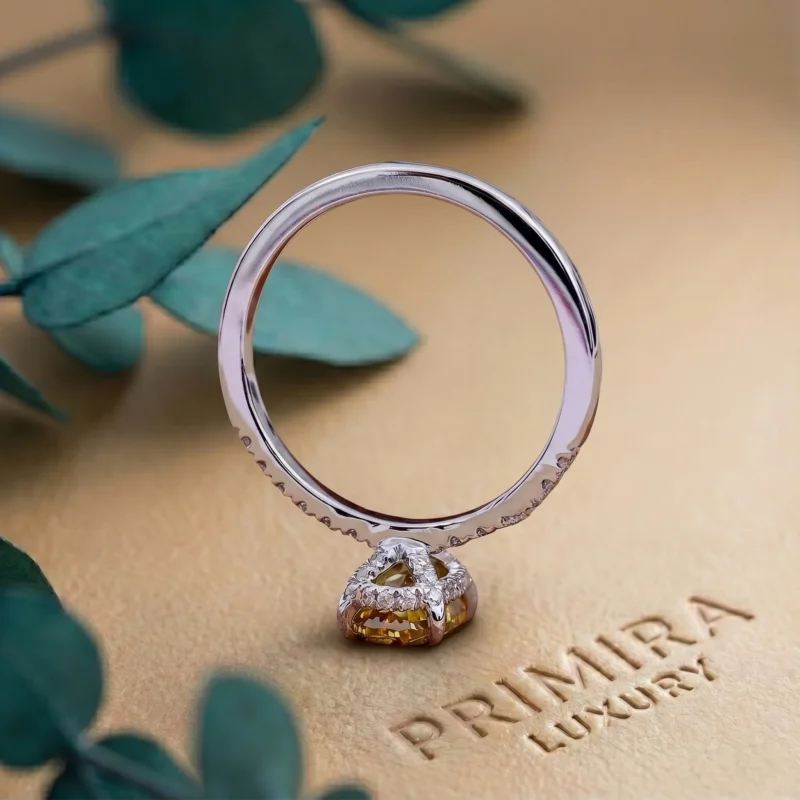
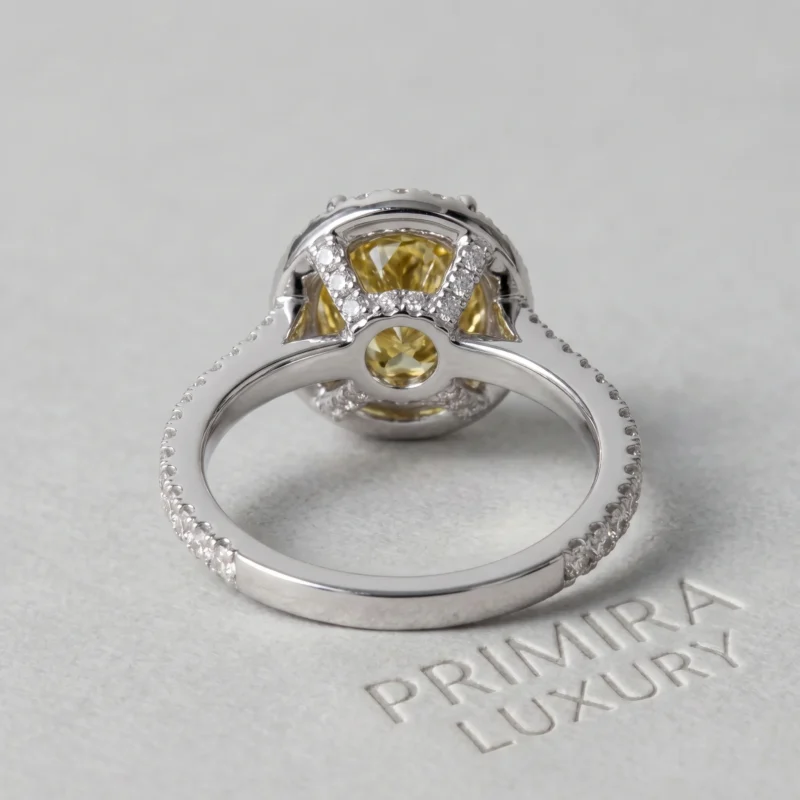
4-prong and 6-prong: Prong shoulders inside the setting cavity contribute to the reflective-backdrop effect described above. Metal tone (yellow, white, rose) at the prong base matters for colored stones — confirm this when ordering.
Pavé shoulders with colored centre: The contrast between colorless accent stones and a fancy color centre can be striking (white pavé + pink centre) or tonal (yellow pavé accents + yellow centre). Both are possible on custom order; the design logic is different for each.
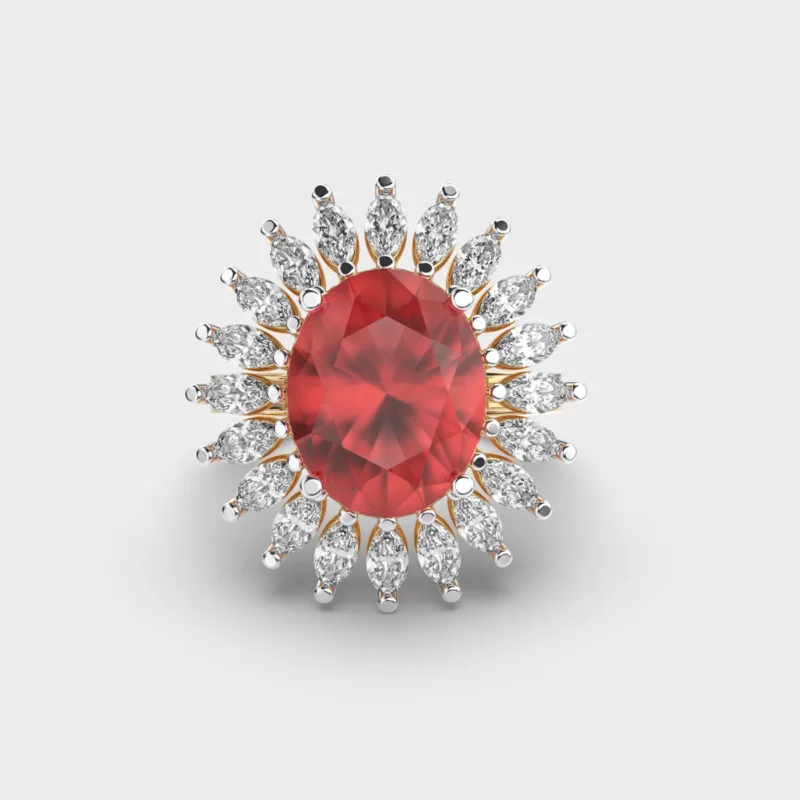
Cluster with fancy color: A full-color cluster — multiple fancy color lab grown diamonds in a shared-prong arrangement — produces a different effect from a single-stone ring. The color appears across the entire face-up area rather than concentrated in a single point of light. Available on custom order in any color family.
For custom ring orders featuring fancy color lab grown diamonds, Primira’s Surat facility handles the rough-to-finished stone in-house. The cutter’s decision about rough orientation — which face of the rough crystal aligns with the table of the finished stone — directly affects how the color zone distributes across the face-up area. This is a manufacturing decision that can’t be made from a standard inventory picker; it’s why factory-direct matters for colored stones specifically.
Which Color for Which Occasion?
This is the question with the least right answer. A few observations that are actually useful:
Yellow lab grown diamond rings work across contexts — statement enough to read as special, classic enough to not feel seasonal. The widest buyer base in this category.
Pink lab grown diamond rings have historically skewed toward occasion purchases (engagements, milestone gifts) in Western markets, and are growing for self-purchase in India. Reddish Pink stones read warmer and deeper than pure pink; Brownish Pink reads more muted.
Blue lab grown diamond rings are the strongest choice for buyers who want something genuinely unusual — it’s the color most associated with high-end natural rarity, and the lab grown version delivers it at a fraction of the natural price.
Grey, Champagne, and Black are the choices for buyers who want something distinctly different from the yellow/pink/blue conversation entirely. Growing segment, less competitive search landscape, stronger for standing out in a jewelry wardrobe.
The Collection Against Its Siblings
These fancy color lab grown diamond rings are one style within a broader collection of lab grown diamond rings — which also includes minimalist diamond rings for everyday-wear buyers and lab grown diamond statement rings for bold, high-presence designs in white or near-colorless stones. If the stone color is the primary decision rather than the ring architecture, this is the right starting point. If the stone is colorless and the ring’s visual impact will come from its layout and design, the cluster diamond rings or statement rings page will be more useful.
For buyers interested in loose fancy color lab grown diamonds for custom setting or resale, the loose fancy color lab grown diamond collection covers the full specification range with B2B ordering available.
Custom Fancy Color Orders
Custom orders in this category have a specific wrinkle: saturation, hue, and cut shape all interact, and these interactions are most accurately confirmed against a physical stone rather than a spec sheet. For custom fancy color lab grown diamond rings, Primira’s order process includes a pre-production stone selection step via WhatsApp — the Surat team shares stone options at the confirmed saturation tier before the setting is produced, so the buyer approves the actual stone going into the ring.
One custom capability with no direct equivalent elsewhere: custom silhouette fancy color stones. Surat’s lapidary can cut vivid yellow or pink lab grown diamonds into butterfly, lotus, kite, or other non-standard outlines and set them into finished rings. If you’ve seen a reference piece with an unusual shape in a fancy color, this can be produced to order.
Production on standard fancy color rings: 15–35 business days. For custom silhouettes or rare saturation tiers requiring specific rough sourcing, the full window of up to 45 business days may apply — the Surat team will confirm at order before production begins.
Care for Fancy Color Lab Grown Diamond Rings
Fancy color lab grown diamonds carry the same hardness (Mohs 10) as colorless diamonds — the color is structural, not a treatment or coating that can wear. The rings don’t require any special care beyond what applies to any fine ring:
Avoid ultrasonic cleaning if the setting uses pavé shoulders where individual stones are held by micro-prongs — vibration can work prong tips loose over time. Warm soapy water with a soft brush is the reliable cleaning method for any setting style. For bezel-set colored stones, check periodically that the bezel rim maintains even contact with the stone — this is the main setting-specific maintenance point for bezel constructions.
Ordering
Every order is confirmed before production via WhatsApp (+91 9510640173). For fancy color ring orders, this confirmation covers: stone color family, saturation tier, IGI report preview, metal choice, metal tone, ring size, and setting style. The 48-hour cancellation window runs from order placement, provided production hasn’t begun.
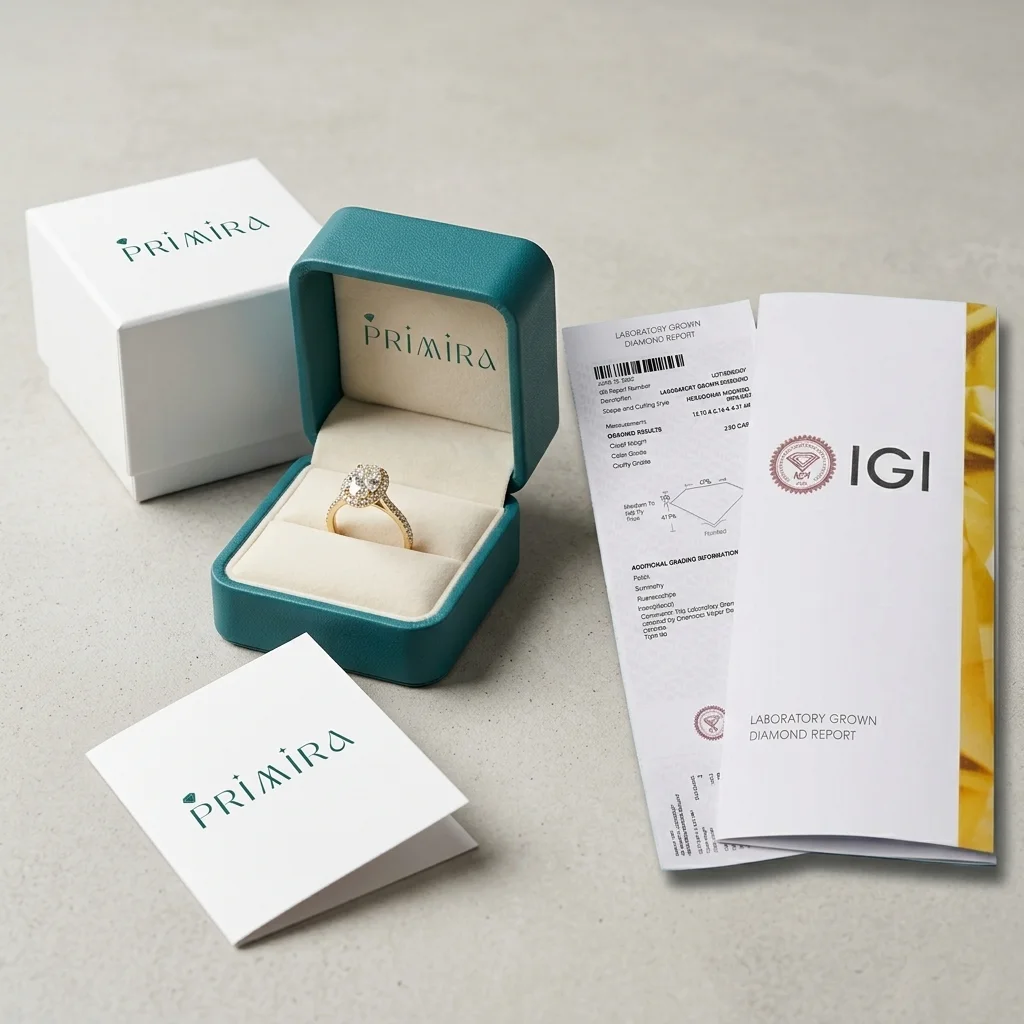
IGI certification on the center stone is available on request. The IGI report for fancy color lab grown diamonds includes color grade, hue, saturation, distribution, and origin — the full grading record that confirms the stone’s color characteristics independently.
Shipping to India is free above ₹10,000, with estimated delivery 2–7 business days after dispatch via Blue Dart or Delhivery. International express shipping via DHL or FedEx is complimentary above USD $550. All orders are insured from dispatch through delivery.
The 7-day return window applies to any order where the delivered piece doesn’t match the confirmed specification. Made-to-order rings — which includes most custom color and silhouette orders — are final sale except in this case.
FAQ
Does the color in a fancy color lab grown diamond ring fade over time?
No. The color in a lab grown fancy color diamond is part of the crystal structure itself — nitrogen incorporation for yellow, boron for blue, irradiation and annealing for pink and green. There’s no surface treatment or coating. The color is as permanent as the diamond.
What’s the difference between Vivid, Intense, and Light saturation grades?
These are IGI saturation tier labels that measure how strongly the color reads. Vivid is maximum saturation — the color is bold and immediate. Intense is clearly visible at normal viewing distances without the high-chroma punch of Vivid. Light means the color is present and confirmed on the grading report but subtle at wearing distance. The right tier depends on how present you want the color in everyday wear.
Which metal matches which color in fancy color diamond rings?
Yellow gold enhances yellow, champagne, and green stones by creating a warm-toned reflective backdrop inside the setting. White gold or platinum suits blue and pink stones, keeping the backdrop neutral so the stone’s color reads without interference. Rose gold amplifies the warmth in pink and champagne stones. Black diamonds read well in either white or yellow gold — the contrast effect (white metal vs. black stone) or the tonal approach (yellow metal, more unified) is a style choice rather than an optical one.
Are fancy color lab grown diamond rings more expensive than white diamond rings of the same size?
Pricing depends on the saturation tier and color family more than on any direct comparison to colorless stones. Vivid saturation commands a premium over Intense and Light at equivalent carat weight, because the growth conditions for even, fully saturated color are more specific and the yield lower. Champagne and grey stones at Light saturation are often less expensive than D-E-F colorless stones at equivalent carat weight.
Can I order a fancy color ring in a non-standard shape?
Yes. Custom silhouette cuts — butterfly, lotus, kite, flame, and others from the Surat lapidary — are available in fancy color stones on order. This is confirmed during the WhatsApp specification step before production begins, with stone options shared at the confirmed saturation tier.
What IGI information appears on a fancy color diamond’s grading report?
The IGI report for a fancy color lab grown diamond records: color grade (e.g., Fancy Vivid Yellow), hue, saturation tier, distribution (even or concentrated in zones), cut quality, clarity, and carat weight. It also confirms origin as laboratory-grown. The report number is laser-inscribed on the stone’s girdle and verifiable at igi.org.





 1-to-1 Custom Design
 Craft Your Vision
 HD video Preview
 Fully Customizable
 Choose Metal Tone:
 Handcrafted in Solid 10K · 14K · 18K
 Select Your Stone Type:
  Award winning
  Hallmarked &
  Personalized Care &
  Design Any Piece
 Chat on WhatsApp