Lab Grown Diamond Wedding Bands — Styles, Stacking and the Fit Question
Lab Grown Diamond Wedding Bands — Styles, Stacking and the Fit Question
The engagement ring gets the spotlight. The wedding band is the one you’ll actually feel on your finger every day for the next forty years.
Most buying guides treat these two purchases as separate decisions — pick a style you like, buy it, done. In practice, a wedding band sits against an engagement ring on the same finger under the same daily pressure. The wrong profile at the inner shank creates a gap that collects residue and accelerates prong wear on the ring beside it. The wrong gauge width relative to your engagement ring’s shank height throws off the visual balance of the whole stack. The wrong metal alloy tier against a different alloy tier means the harder metal slowly carves into the softer one over years of contact.
None of this means the decision is complicated. It means the decision has one real question at the centre: what does this band need to do when it’s sitting alongside something you already own?
This page covers how Primira’s lab grown diamond wedding bands are made, what the three main styles are and when each one works, and how to think about the fit and metal question before you order.
What makes a Primira wedding band different
Primira is a manufacturing facility in Surat — the district that processes 90% of the world’s rough diamonds. That’s not a branding claim; it’s an industrial fact about where the stones in your band are cut.
For a wedding band, what this means practically: when both your engagement ring and your wedding band come from the same cutting and manufacturing source, the band’s inner shank profile can be produced to the actual measured dimensions of your ring, not approximated from a standard curvature chart. A flush fit is a manufacturing precision problem first, a design decision second.
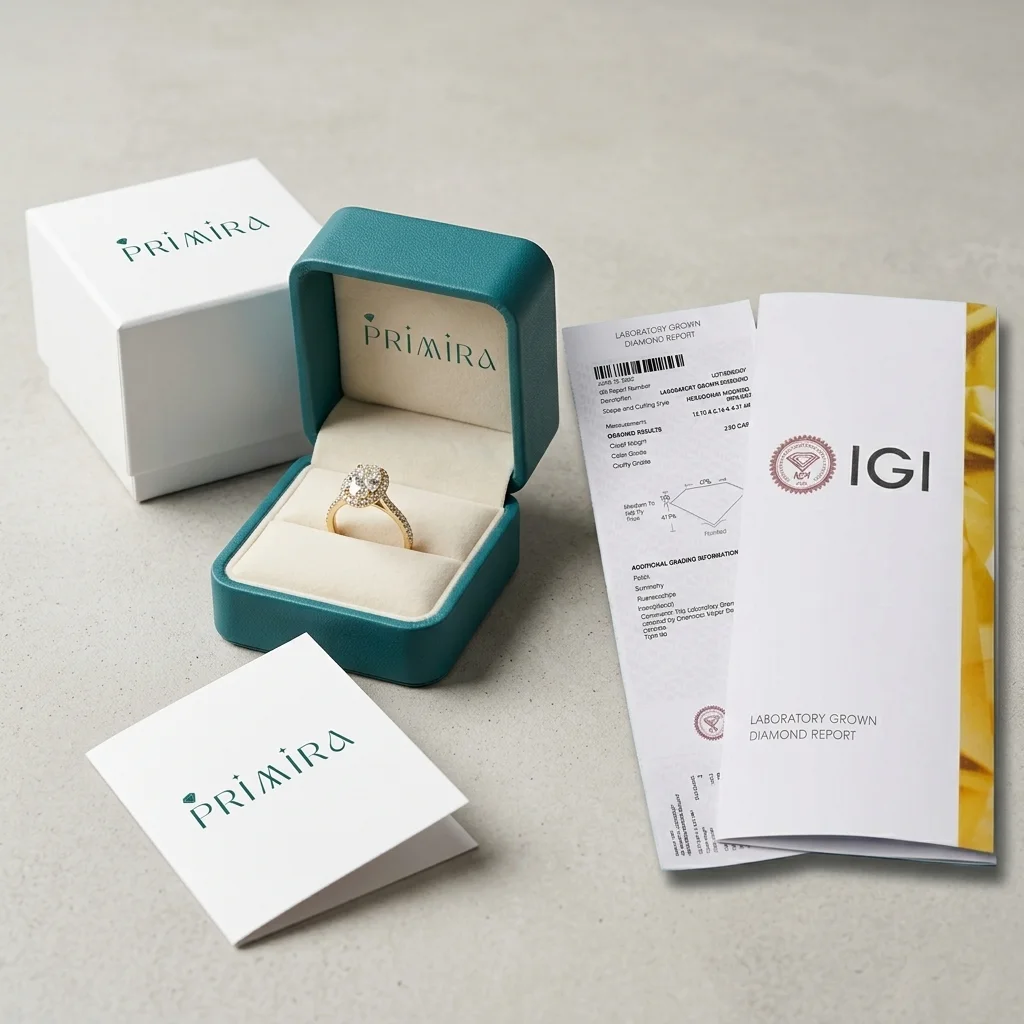
Every lab grown diamond in Primira’s wedding bands is VVS1 to VS2 clarity, D-F colorless or G-I near-colorless, cut to Ideal or Excellent grade only. For a band with continuous stones — eternity or pavé — uniform colour and clarity across the entire line matters more than it does for a single-stone ring. Inconsistency across a continuous line is visible to the naked eye. IGI certification on these bands covers the stone grades, and the report number on each individual stone is laser-inscribed on its girdle, verifiable at igi.org. For a band where you’re trusting the uniformity claim, that verification matters.
All bands are available in 18K gold, 14K gold, 10K gold, 925 silver, and 950 platinum — in yellow, white (rhodium-plated), and rose. The metal choice for a wedding band is also, in part, a compatibility question with the ring beside it (more on that below).
The three styles
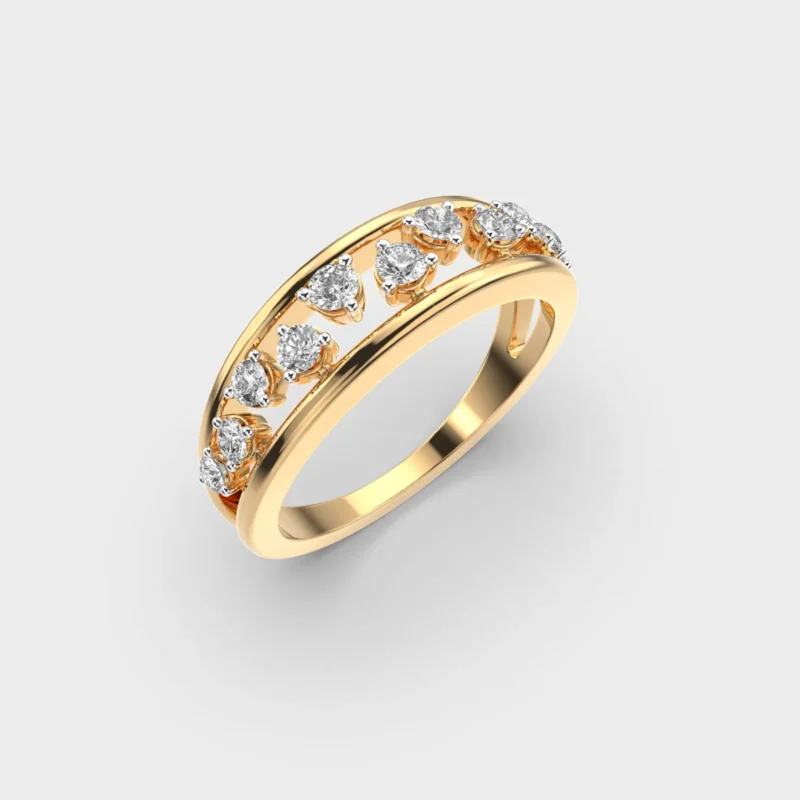
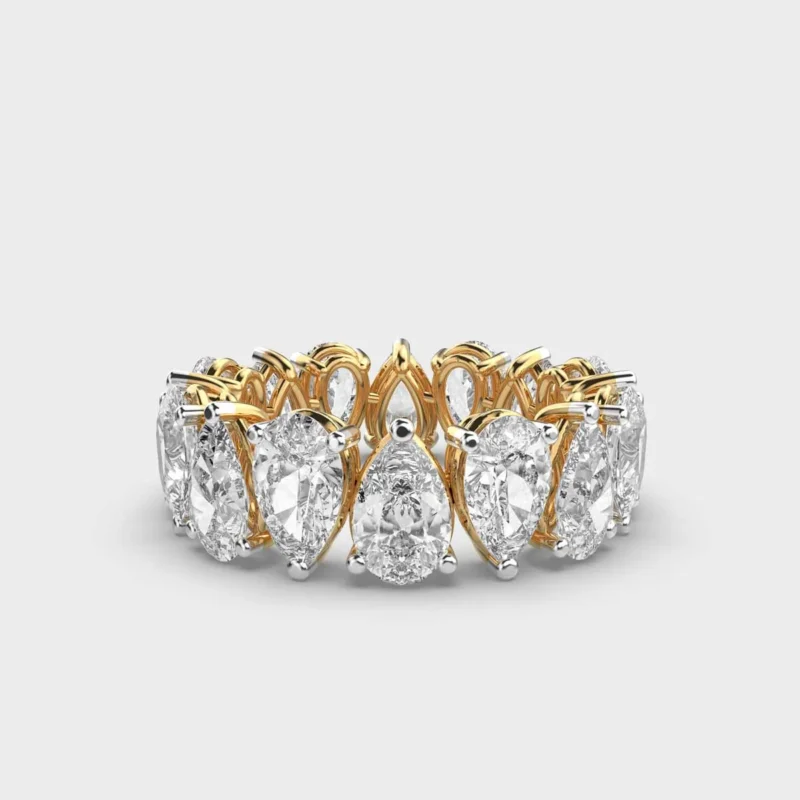
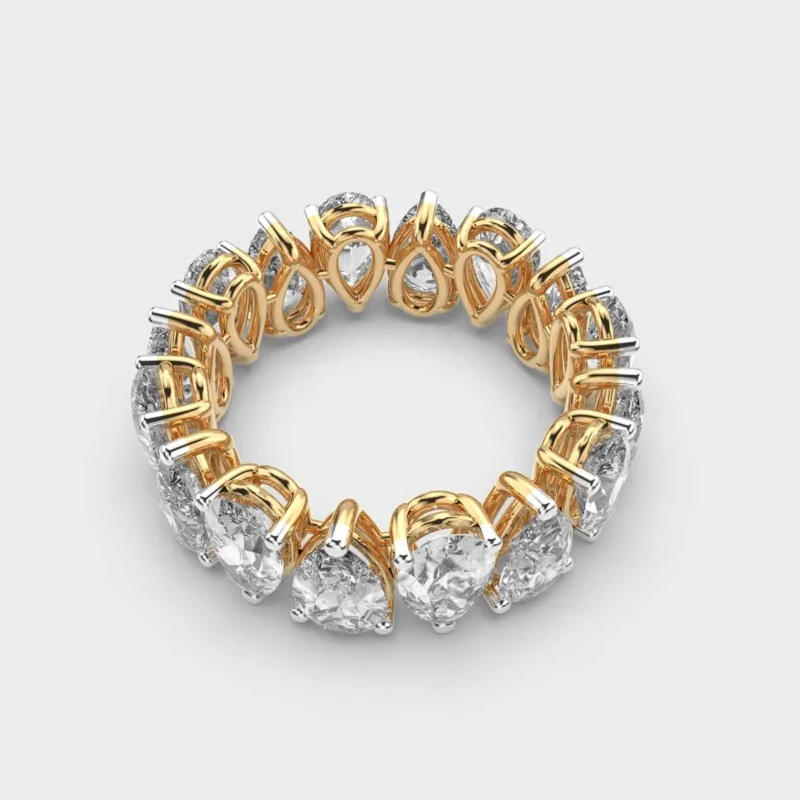
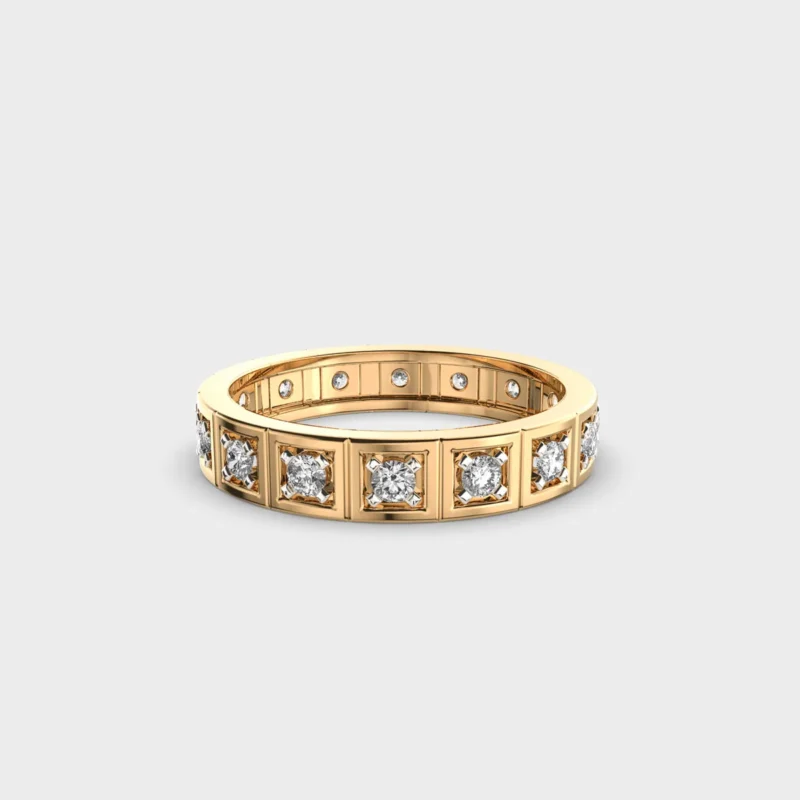
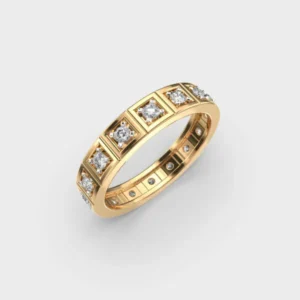
Eternity bands
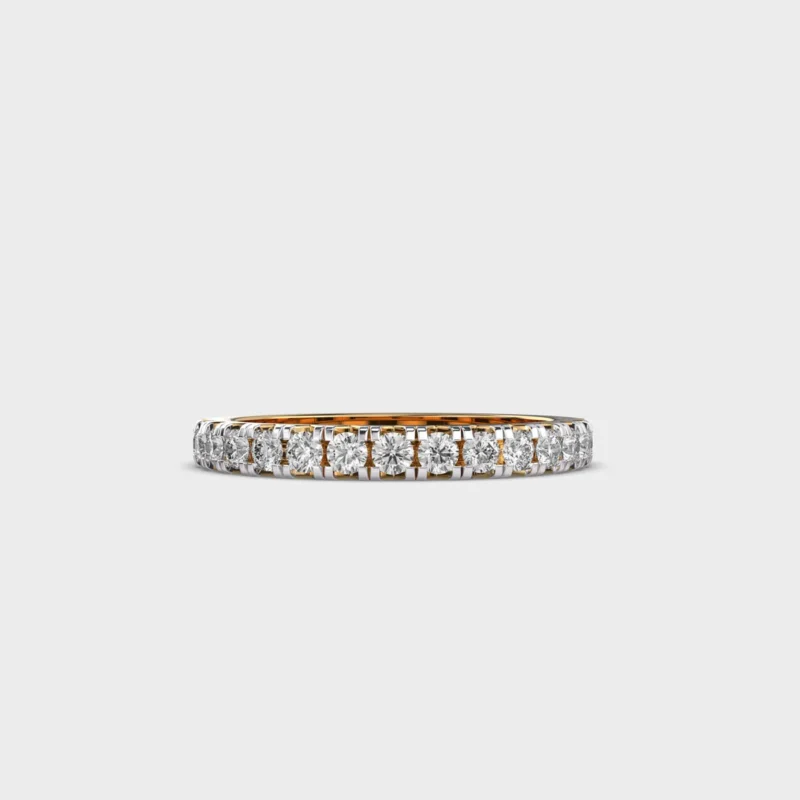
A full eternity band runs 360° around the shank — continuous lab grown diamonds with no break. Channel setting or shared-prong pavé are the two setting approaches; the technical difference is whether there are metal walls on each side of the stone line (channel) or shared prongs between adjacent stones (shared-prong). Channel reads cleaner and more architectural. Shared-prong pavé shows more stone surface.
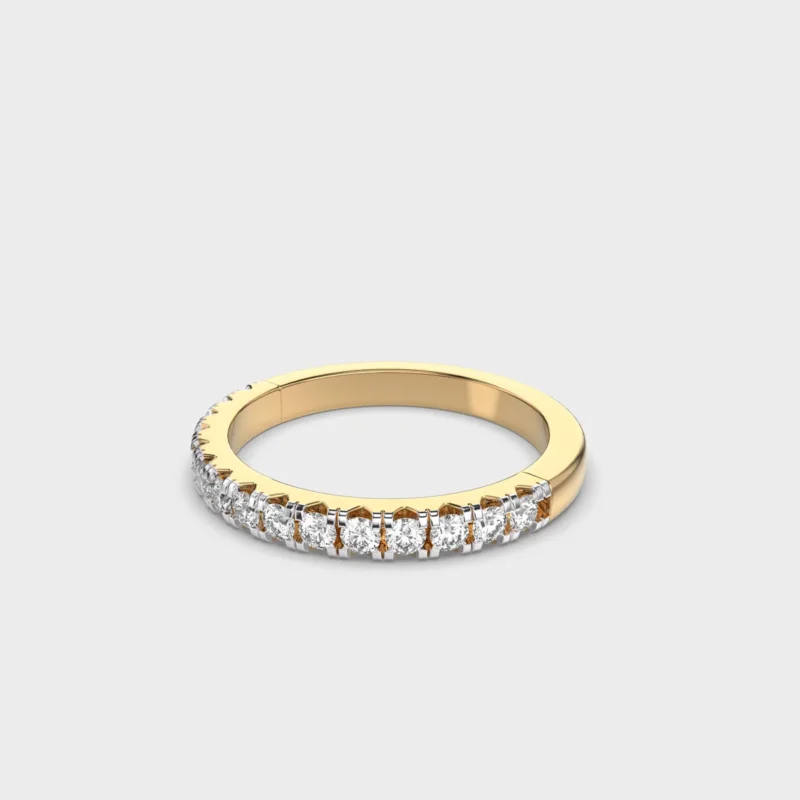
The one real constraint of a full eternity band: it cannot be conventionally resized. 360° of stones leaves no plain metal section for a jeweller to cut and expand. This is true regardless of manufacturer — it’s a structural feature of the design, not a quality difference. If your finger size is likely to change or you’re uncertain about your size, a half-eternity band (stones on the top half, plain metal underneath) is the practical alternative, or the size should be confirmed carefully before production.
For the IGI grading on eternity bands: stone colour uniformity is the specific variable to confirm. Primira’s eternity band stones are matched for colour grade before setting — D-F stones across the entire band, not a D on one side and an F on the other.
Stackable bands
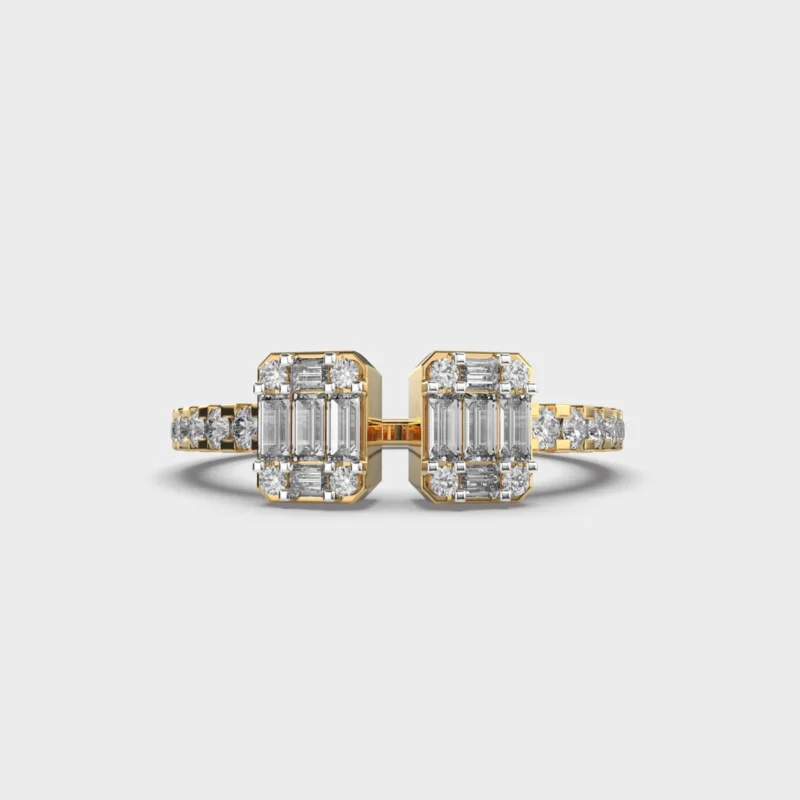
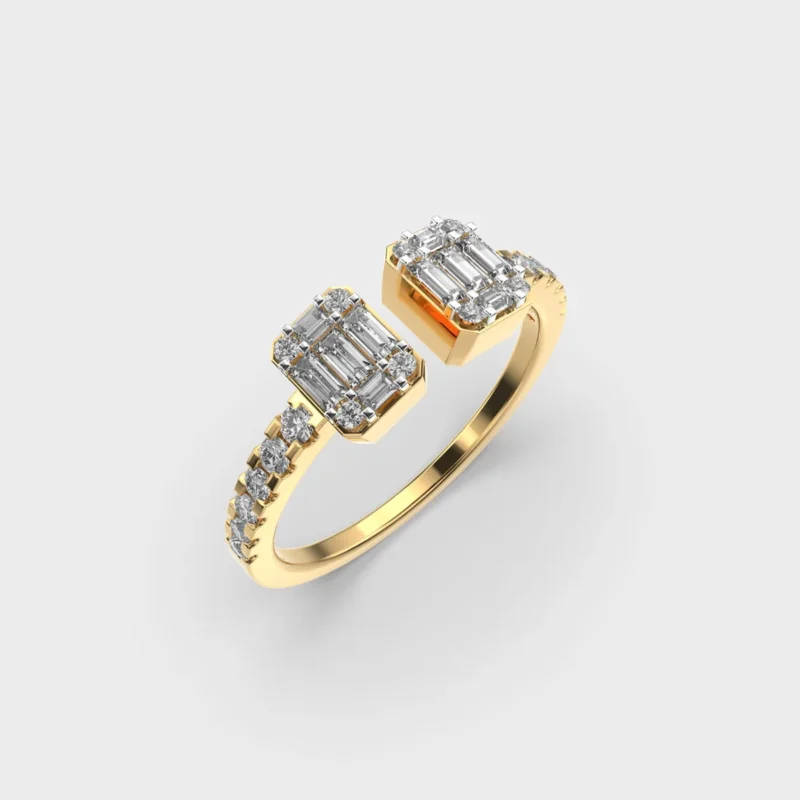
A stackable band is designed to sit alongside rings you already own — an engagement ring, a prior anniversary band, or additional pieces over time. The design requirements are different from a standalone ring.
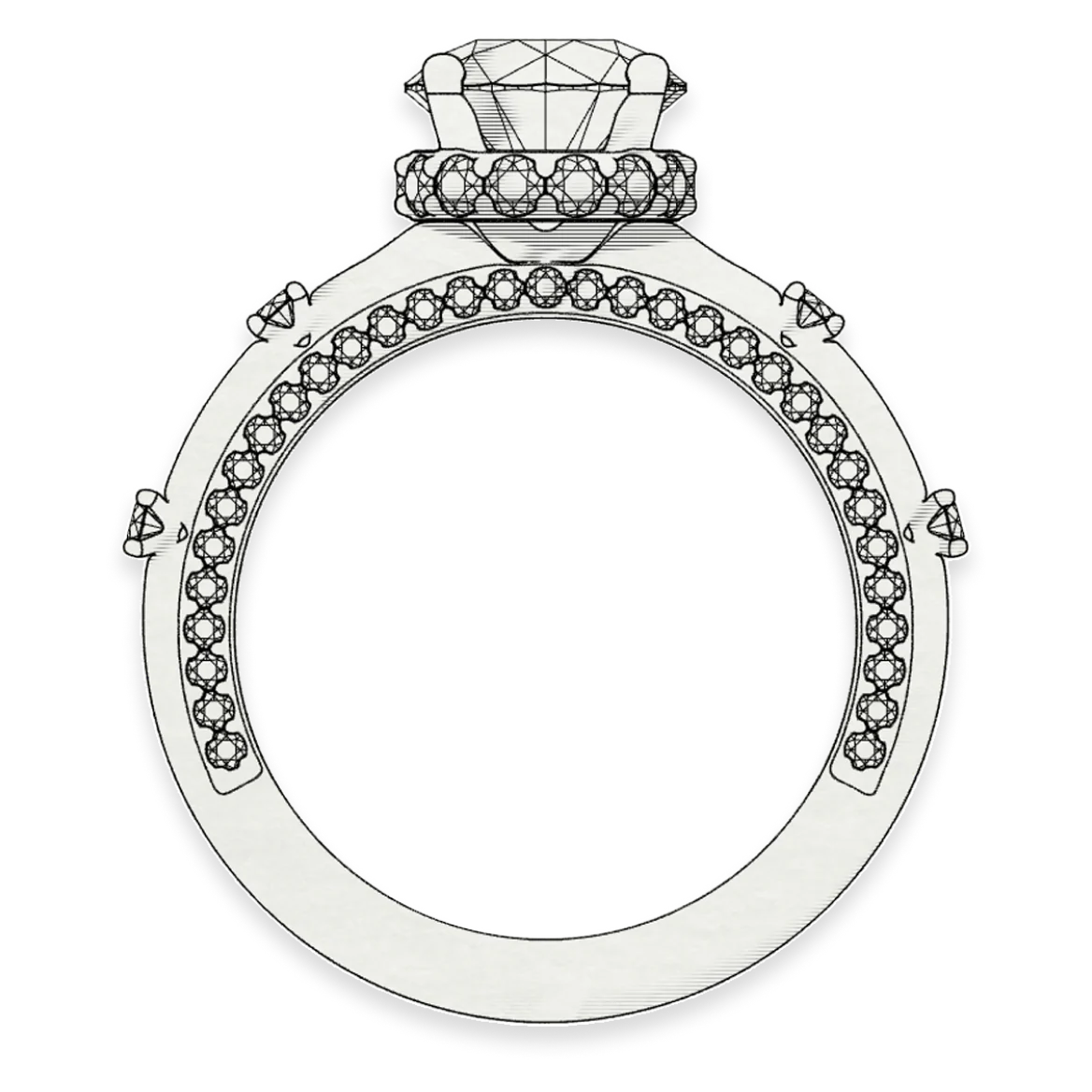
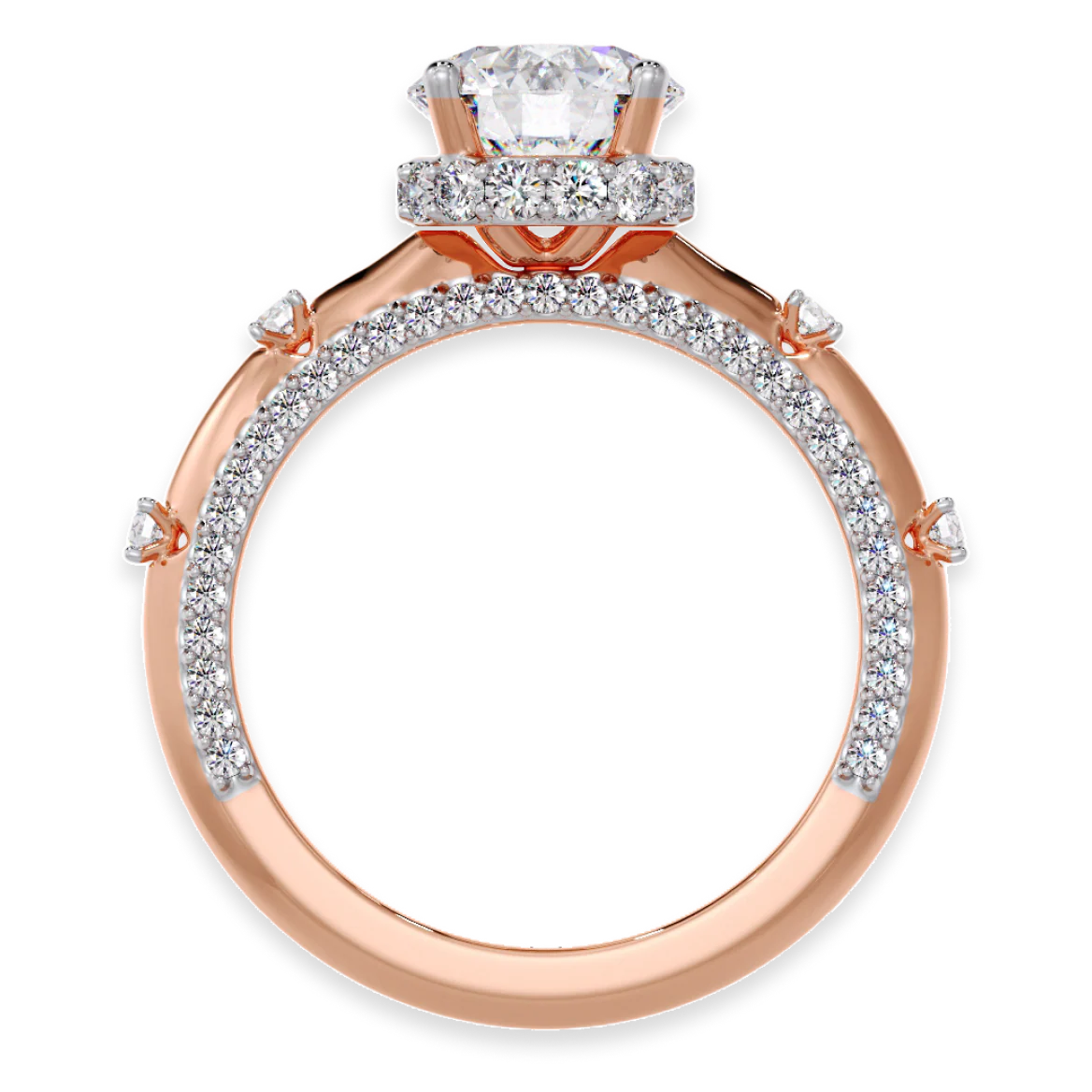
Crown-arch compatibility is the specific engineering consideration: if your engagement ring has a raised crown — a cathedral solitaire, a halo with a prominent basket, a high-set vintage piece — a straight-profile stackable band will sit flush on the finger but leave a visible gap at the sides where the crown rises. A curved stackable band, cut to follow the outer profile of the ring beside it, eliminates that gap.
Gauge width is the proportional question. A thin 1.5–2mm band reads delicate and lets the engagement ring remain the visual centre. A 2.5–3mm band starts to share visual weight with the ring beside it — which can work well for a solitaire engagement ring, less so for a ring that’s already visually complex (halo, cluster, vintage).
Metal-on-metal wear between two rings is also worth planning for here — alloy tier and tone are two different decisions, covered fully below.
Bridal sets
A bridal set is an engagement ring and wedding band designed and manufactured together — flush-fit, same metal, same design language. The band’s inner shank is cut to the specific profile of the engagement ring shank beside it before either piece is made.
The advantage is a level of fit precision that’s not achievable when matching a band to an existing ring from a catalogue. The limitation is that the two pieces should be ordered at the same time, or the engagement ring needs to be sent back to have the band cut to match it.
For custom bridal sets at Primira: the engagement ring specifications and the band design are confirmed together via WhatsApp before production begins — stone grades, metal tier, band width, shank profile on both pieces. Both pieces are produced from the same stone lot where possible, so clarity and colour match across the pair. See the lab grown diamond engagement ring collection for the engagement ring styles this pairs with.
The metal-matching question
The short version: match the alloy tier, choose the tone deliberately.
Alloy tier (18K, 14K, 10K, silver, platinum) affects hardness and the rate at which two rings in contact wear against each other. Matching tiers means both rings age at the same rate. Mismatching means the harder alloy slowly inscribes itself into the softer one over years of daily contact — a visible surface change, not a structural failure, but one that accumulates.
Metal tone — yellow, white (rhodium-plated), rose — is a visual decision. Matching tones creates continuity and makes the stack read as a coherent set. Mixed tones (yellow engagement ring with white band) create intentional contrast — a valid aesthetic choice, increasingly common in 2026, but deliberate rather than incidental. If you’re mixing tones, the visual logic works better when one tone clearly dominates and the other is the accent.
Rhodium-plated white gold needs repolishing over time — every 1–3 years depending on wear — to maintain the white surface. This is true of white gold in any tier. Platinum maintains its tone permanently without replating; the surface develops a fine matte patina over time (platinising) that most platinum wearers prefer to a polished rhodium surface.
Custom orders and the fit confirmation process
Every Primira wedding band order goes through a specification confirmation before production begins. Within 24 hours of your order, the Surat team contacts you via WhatsApp and email to confirm the specific variables before anything is made: stone grade and colour tier, metal alloy and tone, band width, shank profile (straight or curved), finish (high polish, satin, matte, hammered), and ring size.
For customers ordering a wedding band to pair with an existing engagement ring from another source: share a clear photograph of your engagement ring alongside your order, and the team will advise on shank profile compatibility and band width proportion before cutting begins. This is where the manufacturing-facility advantage is most direct — the band’s curvature can be adjusted to your ring’s actual profile, not a generic standard.
For customers ordering a full eternity band: ring size should be confirmed carefully at this stage, since resizing after setting is not possible. If your size is uncertain, the team can advise on half-eternity alternatives at the same stage.
Custom dimensions, stone shapes, and setting combinations — a pavé eternity band in a non-standard width, a stackable with baguette accents, a bridal set with a specialty-cut stone in the band — are all available. Every custom order is confirmed via WhatsApp before production begins.
Care specific to stacked wedding bands
Two rings in constant contact wear differently than either ring worn alone. The main practical considerations:
Metal-on-metal friction concentrates at the inner shank contact point. Inspect the inner shanks of both rings every 6–12 months for wear marks. Early detection means the surface can be repolished before any structural thinning occurs.
For pavé or shared-prong eternity bands: the prongs in a continuous-stone setting are smaller than the prongs on a solitaire engagement ring. Smaller prongs accumulate wear from the ring beside them more quickly. Annual professional inspection of prong integrity is specifically relevant for eternity bands worn in a stack, not just general jewellery advice.
Rhodium plating on white gold wears faster at the contact point between two rings than on the exposed surfaces. If you notice a yellowing at the shank of your white gold band before the outer surfaces show it, this is normal — the contact point receives more friction. Replating restores the surface; the frequency depends on how much you wear both rings simultaneously.
Lab grown diamonds are the same hardness as mined diamonds — 10 on the Mohs scale. The stones themselves do not wear against metal or each other in any meaningful timeframe. The maintenance concerns for wedding bands are all in the metal and the prong structures, not the stones.
Ordering and policies
Certified loose lab grown diamonds from inventory ship within 48 hours of order confirmation. Wedding band production runs 15–35 business days after specification confirmation, with a maximum of 45 business days where stone sourcing or certification coordination requires additional time.
All orders ship insured from Surat to your door. Within India, shipping is free on orders above ₹10,000 — delivered via Blue Dart or Delhivery in 2–7 business days after dispatch. International standard shipping (free) runs 17–19 business days after dispatch; international express shipping (approximately USD $50, or free on orders above USD $550) runs 5–7 business days via DHL, FedEx, or UPS, with signature required on delivery.
The 48-hour cancellation window runs from order placement, provided production has not yet commenced — the advance payment is refunded minus 3–4% administrative charges. If the band arrives and the fit against your engagement ring isn’t right — not what was specified and confirmed, not what was agreed in the WhatsApp confirmation — returns are accepted within 7 calendar days of delivery, in original packaging with invoice and certification. The buyback program provides a value-recovery alternative where preferred: buyback value is calculated at invoice value minus making charges, taxes, gateway charges, and processing fee, with gold value at the prevailing rate on the evaluation date.
Frequently asked questions
Can a lab grown diamond eternity band be resized?
A full eternity band — 360° continuous stones — cannot be conventionally resized. The continuous stone setting leaves no plain metal section to cut and expand. If your ring size may change or you’re uncertain of your size, a half-eternity band (stones set across the top portion, plain metal shank underneath) is the practical alternative. At Primira, ring size is confirmed via WhatsApp before production begins — this is the point to raise size uncertainty, not after the band is made.
Should my wedding band match my engagement ring’s metal exactly?
Match the alloy tier (18K, 14K, 10K, platinum) for practical reasons — matching tiers wear at the same rate, mismatching tiers means the harder alloy marks the softer one over years of daily contact. Metal tone (yellow, white, rose) is a visual choice and can be mixed intentionally. If you’re mixing tones, a dominant-tone-plus-accent-tone approach reads more deliberate than a 50/50 mix.
How do I know if a stackable band will sit flush against my engagement ring?
The key variable is your engagement ring’s crown height. A plain solitaire or low bezel-set ring typically stacks flush with a straight-profile band. A cathedral solitaire, a halo with a raised basket, or a high-set vintage piece requires a curved band cut to follow the profile of the ring beside it. Share a photograph of your engagement ring at order confirmation; the team will advise on shank profile before cutting begins.
Is a bridal set the same thing as an engagement ring and matching wedding band?
A bridal set is specifically designed and manufactured as a flush-fit pair — the band’s inner shank is cut to the exact profile of the engagement ring shank before either piece is produced. Buying a matching wedding band separately (even from the same collection) achieves visual continuity but not the same mechanical precision of fit. For bridal sets at Primira, both pieces are ordered and produced together from a confirmed specification.
What IGI grading applies to a continuous diamond wedding band?
For eternity and pavé bands, IGI grades the individual stones for cut, colour, and clarity before setting. The critical variable for a continuous band is colour consistency — matching grade across the full line, not just the average. Primira’s eternity bands use stones matched for colour grade before setting. The IGI certification covers the stone grades; the grading report is included with the order.
Can I order a wedding band to pair with an engagement ring I already own?
Yes. Share a photograph of your existing engagement ring at order confirmation. The Surat team will advise on band width and shank profile compatibility before production begins, and the band’s curvature can be adjusted to the actual profile of your ring rather than a standard chart approximation.
Explore the wedding band collection
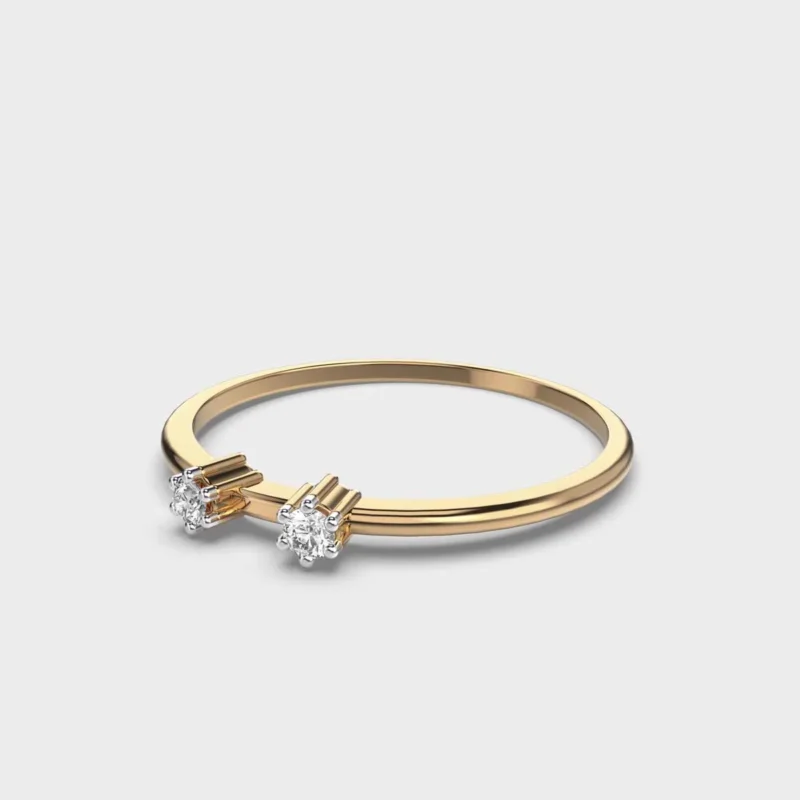
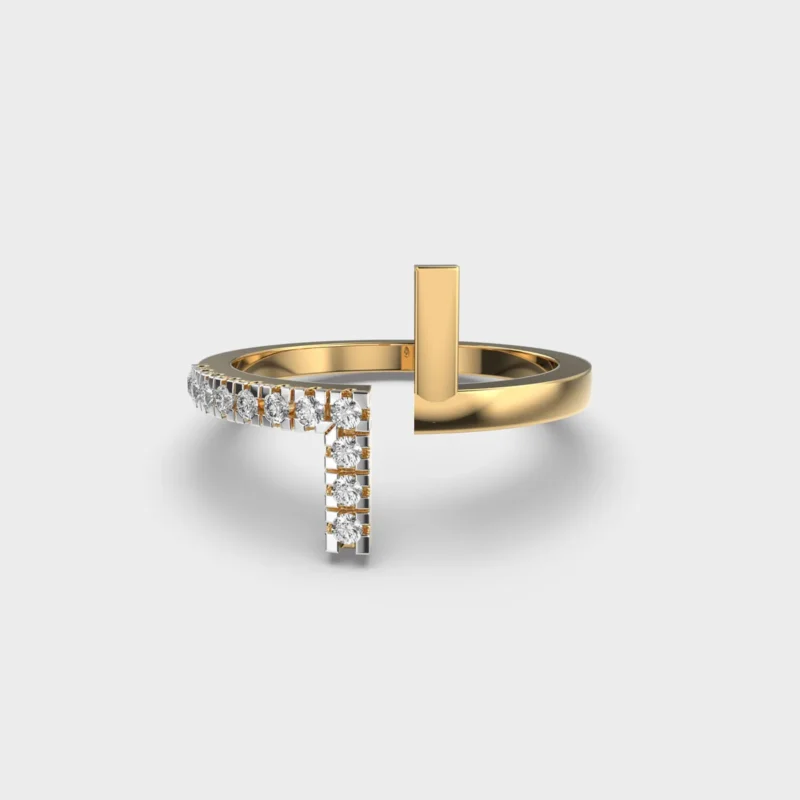
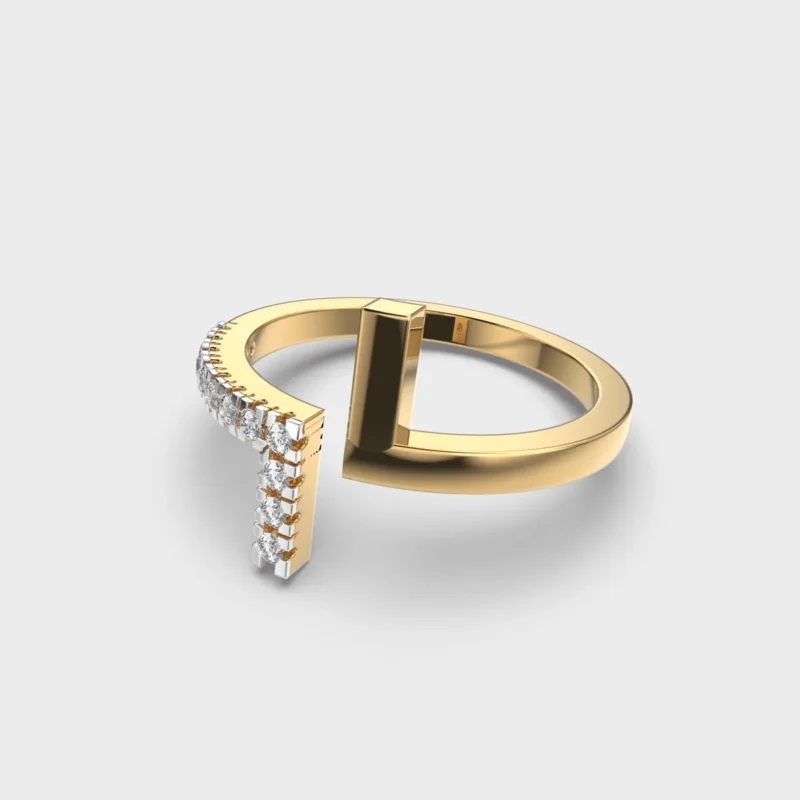
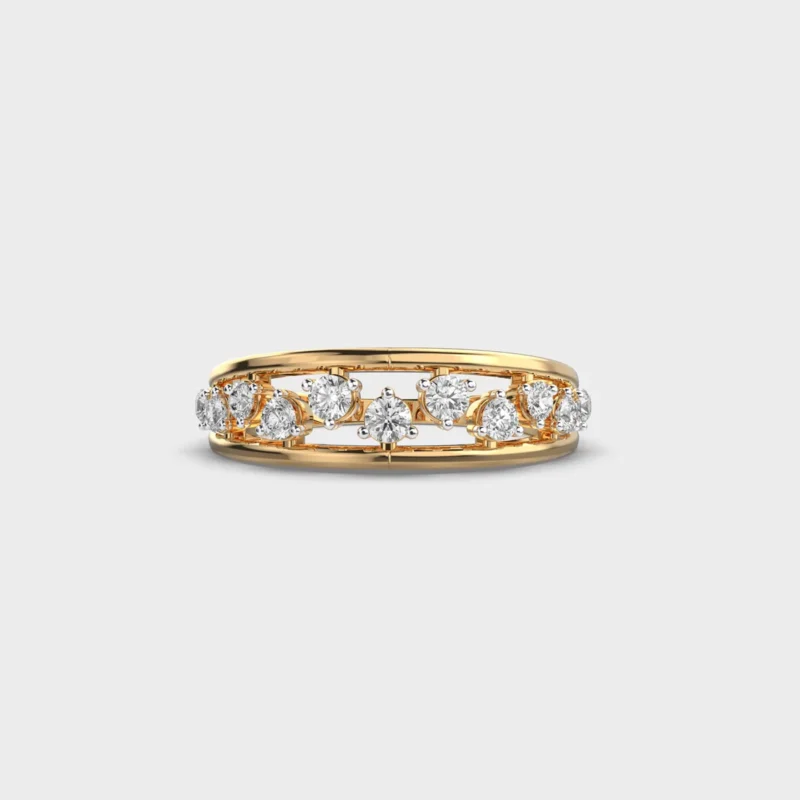
Three styles, each engineered for a specific relationship to the ring beside it:
For anyone building a ring stack that includes the engagement ring: the lab grown diamond engagement ring collection covers all five engagement ring styles with stacking notes specific to each. Shopping for the groom specifically? See men’s lab grown diamond rings for standalone styles built for daily wear.








 1-to-1 Custom Design
 Craft Your Vision
 HD video Preview
 Fully Customizable
 Choose Metal Tone:
 Handcrafted in Solid 10K · 14K · 18K
 Select Your Stone Type:
  Award winning
  Hallmarked &
  Personalized Care &
  Design Any Piece
 Chat on WhatsApp