
Primira Luxury Blog
“Jewelry is more than an accessory; it’s a timeless tale waiting to be told.”
“Like a well-crafted gem, true beauty comes from within. Let your jewelry amplify it.”


Showing 13–24 of 30 results
 ₹47,218 – ₹280,065Price range: ₹47,218 through ₹280,065
- ₹73,157 – ₹455,469Price range: ₹73,157 through ₹455,469
- ₹83,147 – ₹488,905Price range: ₹83,147 through ₹488,905
- ₹53,499 – ₹330,733Price range: ₹53,499 through ₹330,733
- ₹78,632 – ₹448,737Price range: ₹78,632 through ₹448,737
- ₹68,119 – ₹384,392Price range: ₹68,119 through ₹384,392
- ₹37,742 – ₹227,100Price range: ₹37,742 through ₹227,100
- ₹76,644 – ₹505,314Price range: ₹76,644 through ₹505,314
- ₹58,105 – ₹361,579Price range: ₹58,105 through ₹361,579
- ₹56,533 – ₹321,373Price range: ₹56,533 through ₹321,373
- ₹69,259 – ₹409,667Price range: ₹69,259 through ₹409,667
- ₹41,321 – ₹241,074Price range: ₹41,321 through ₹241,074
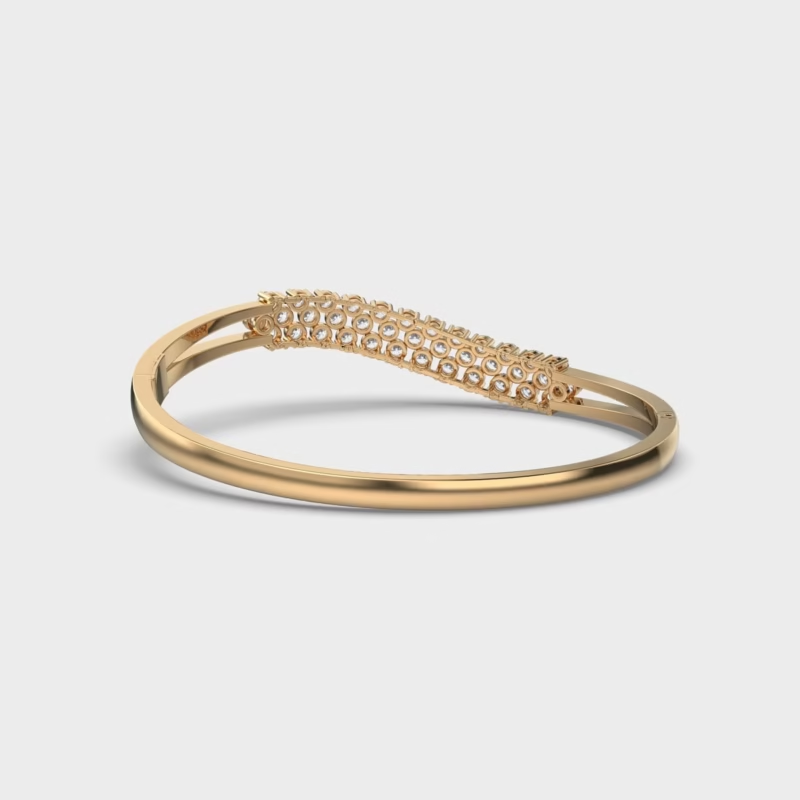
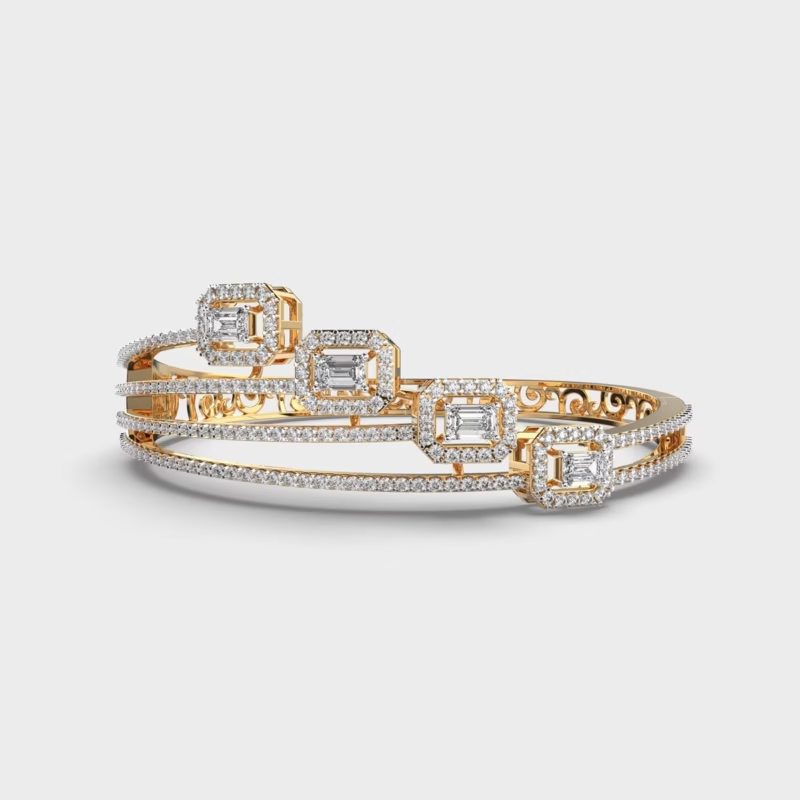
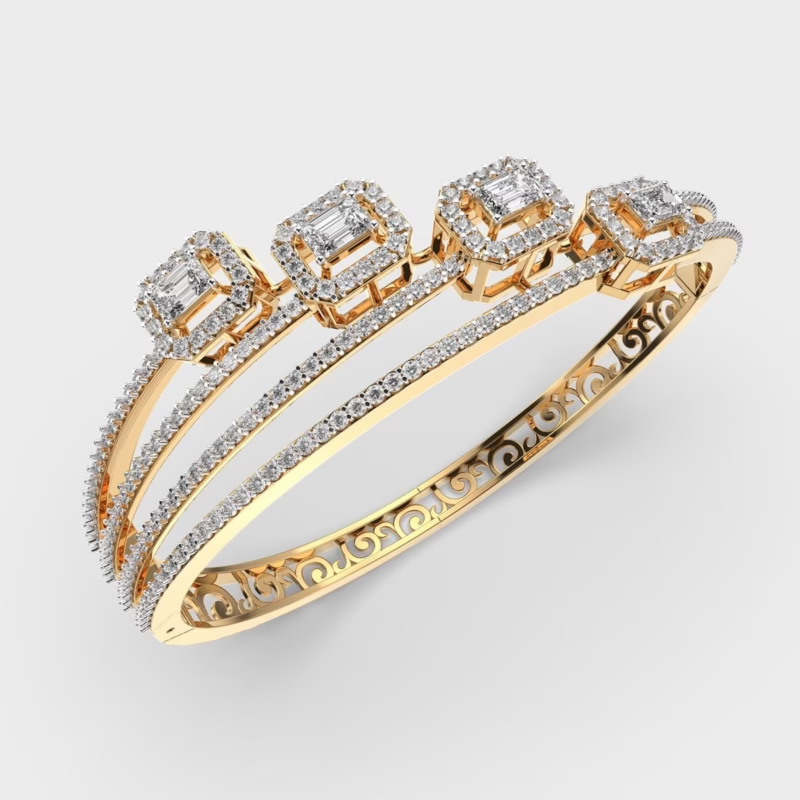
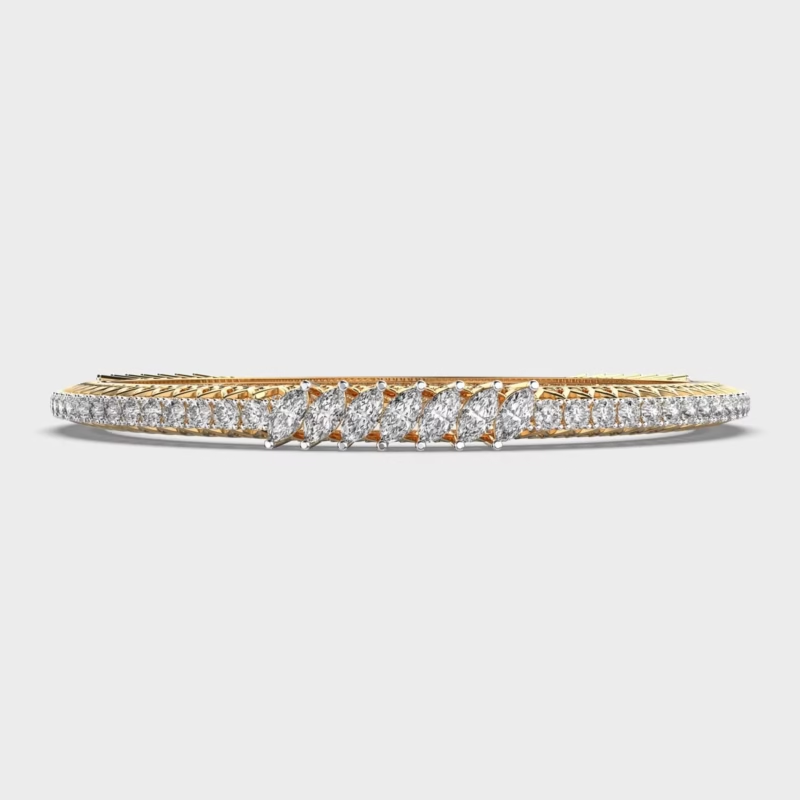
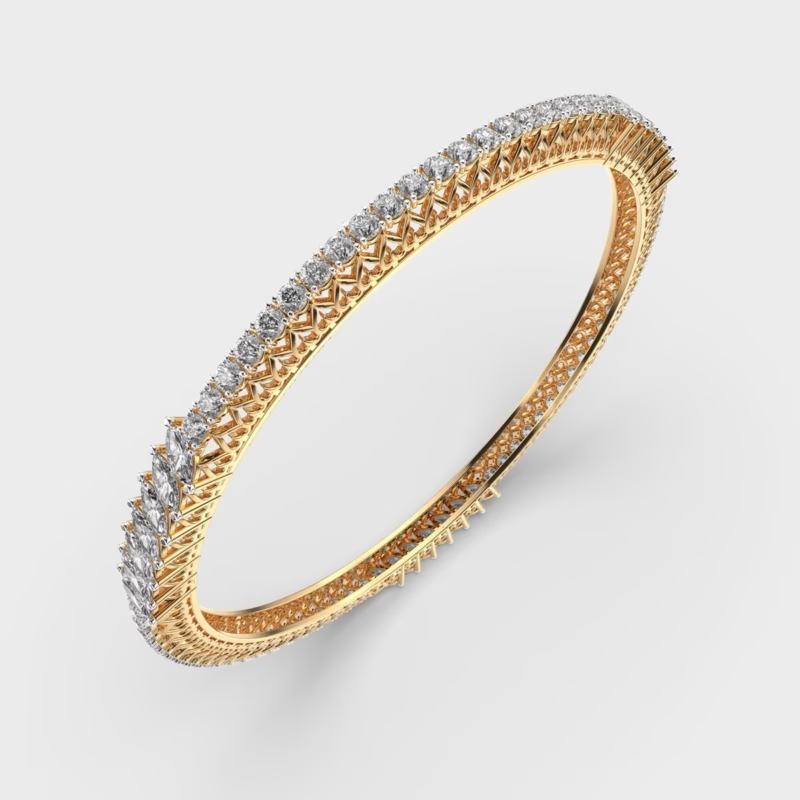
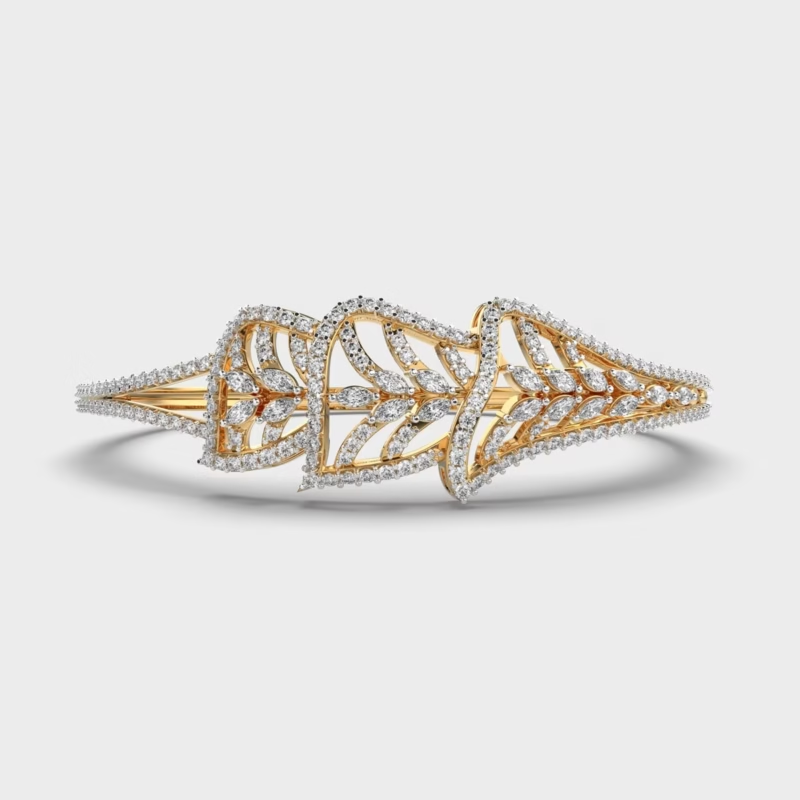
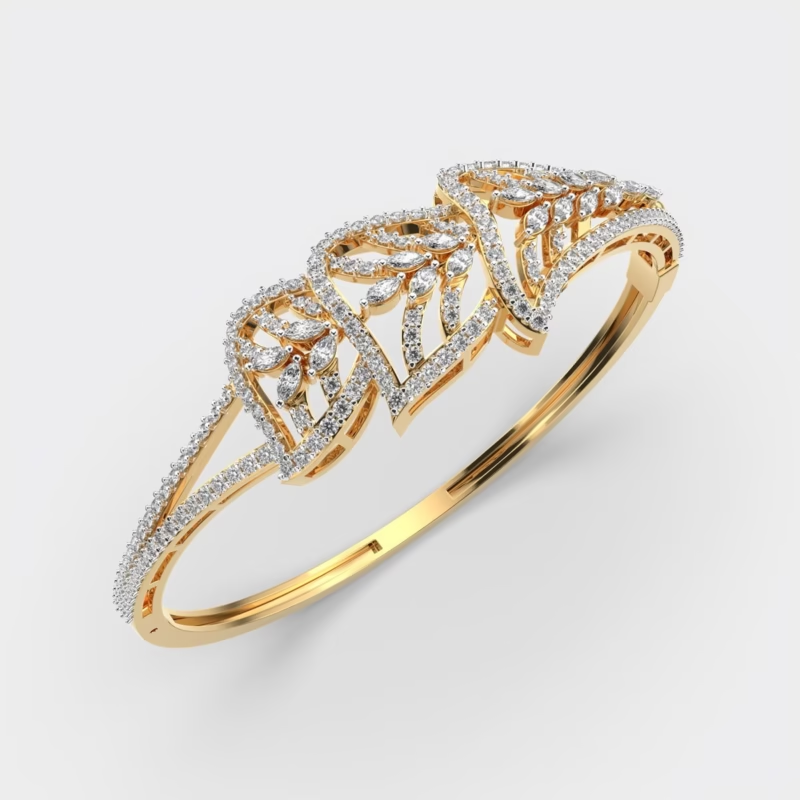
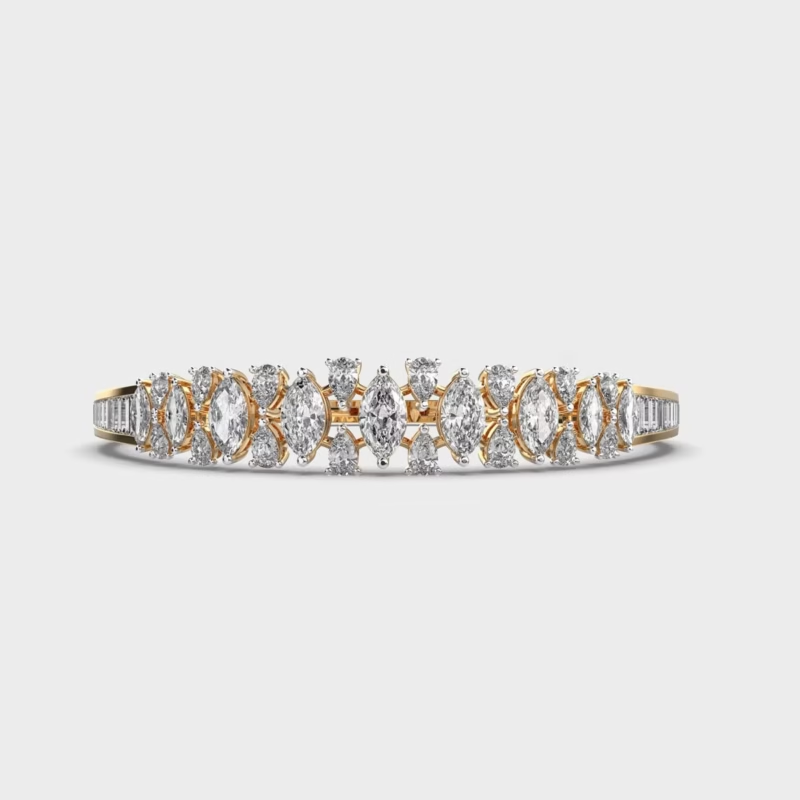
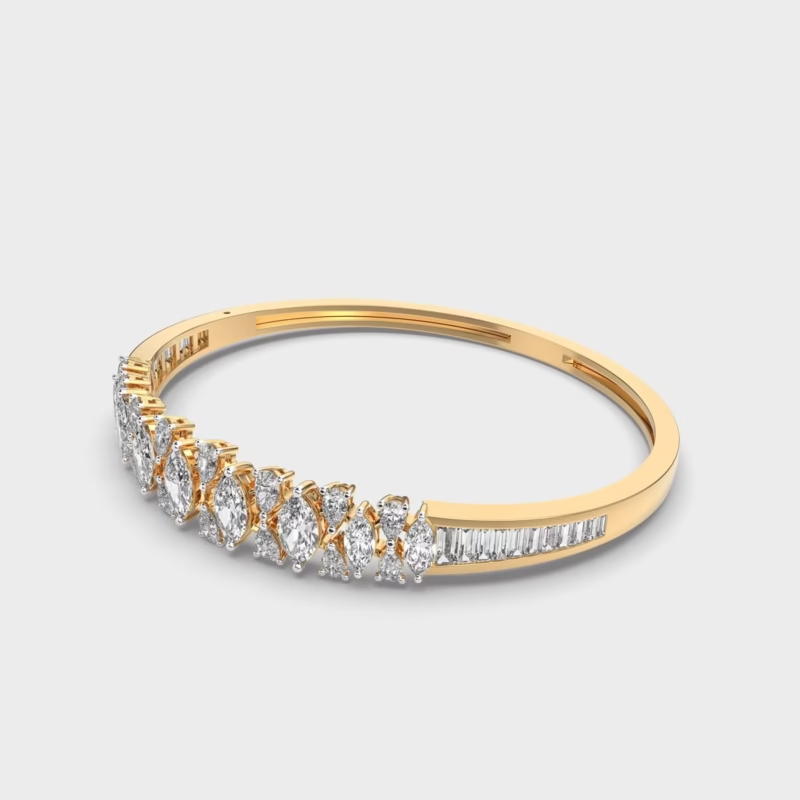
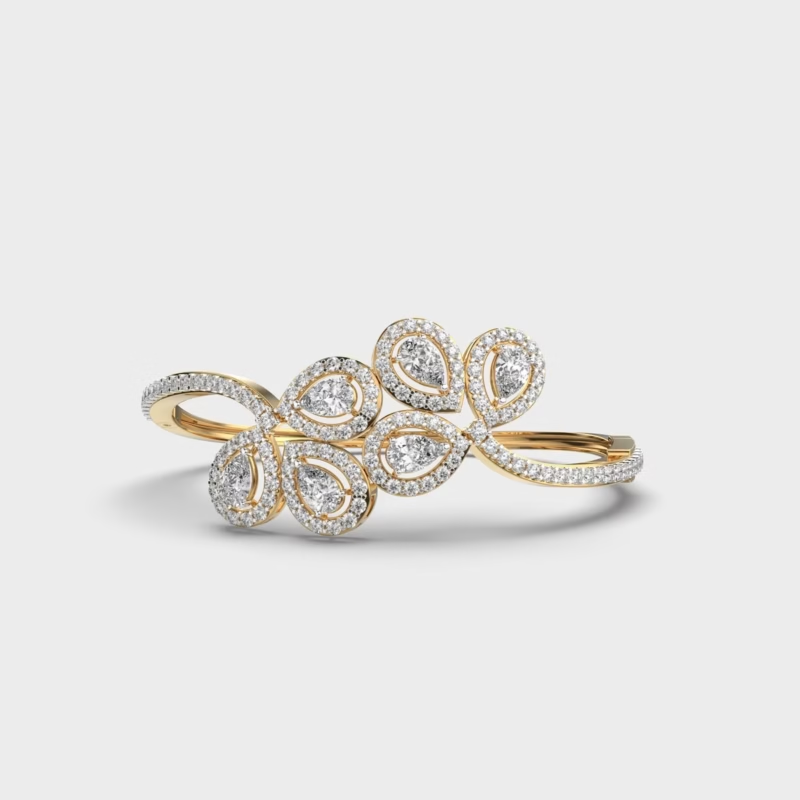
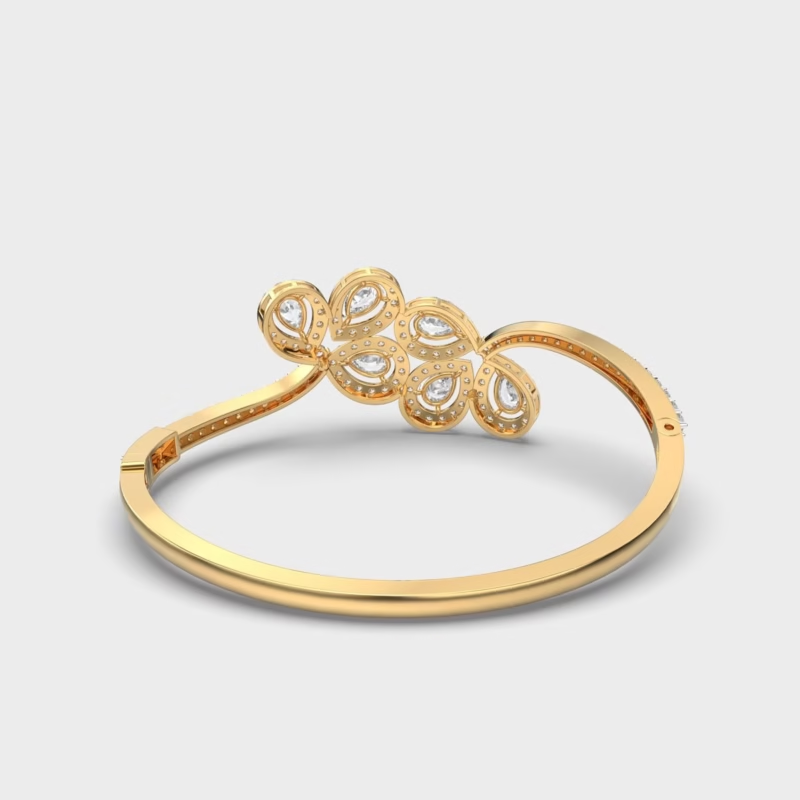
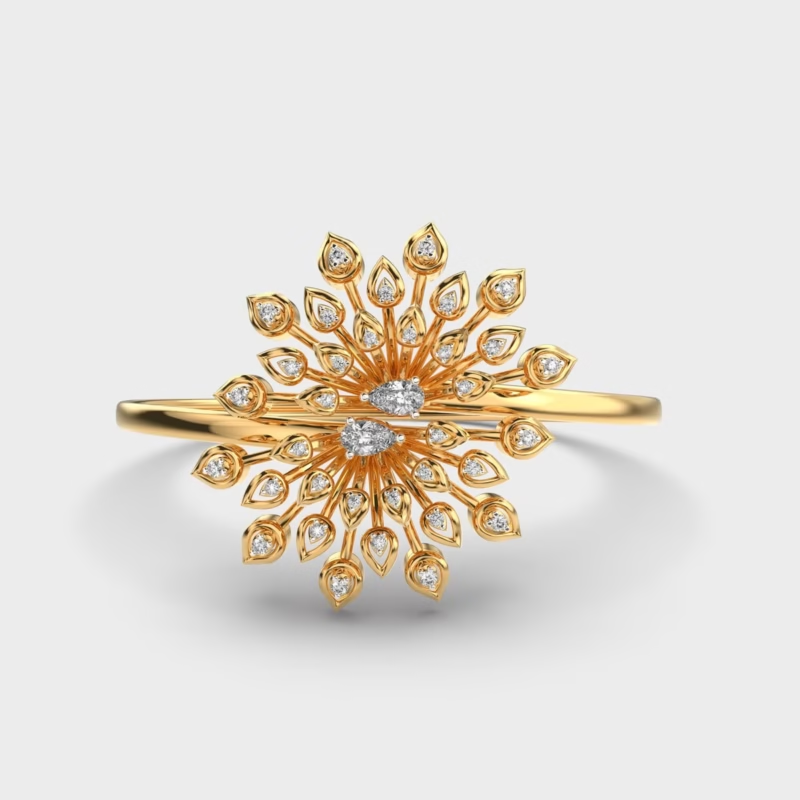
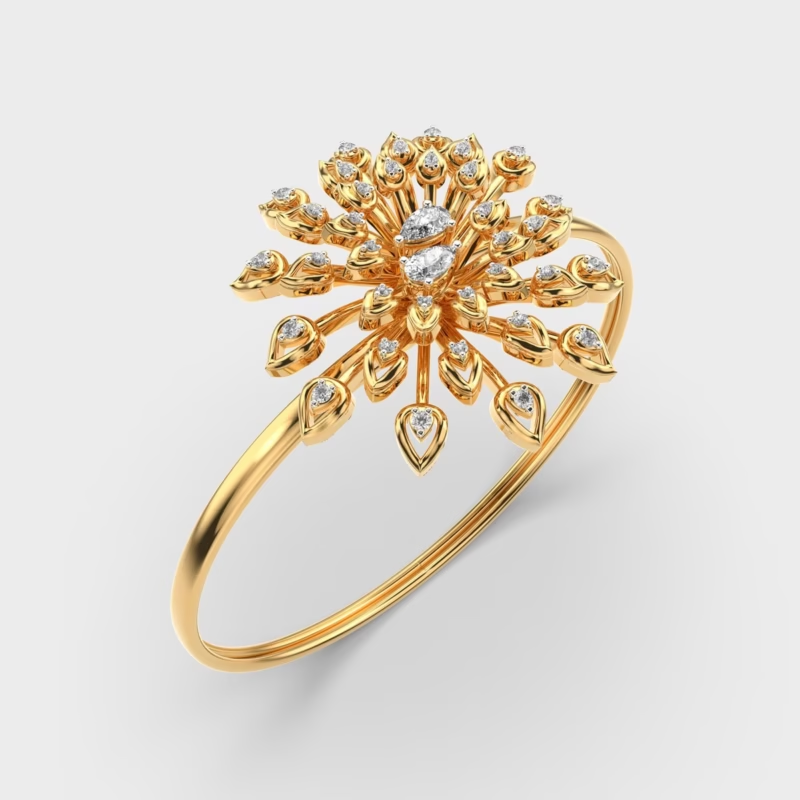
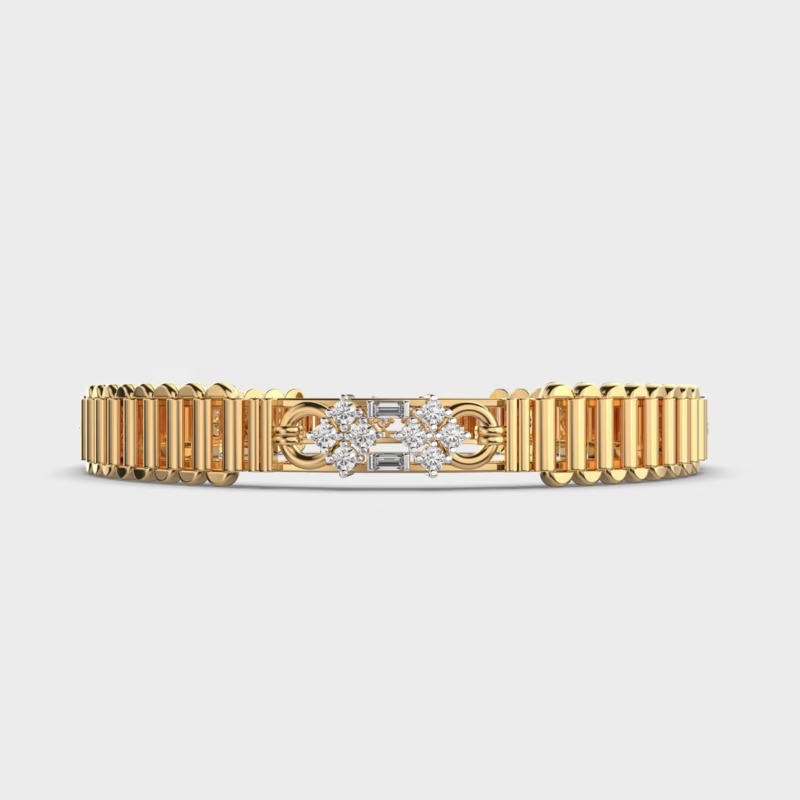
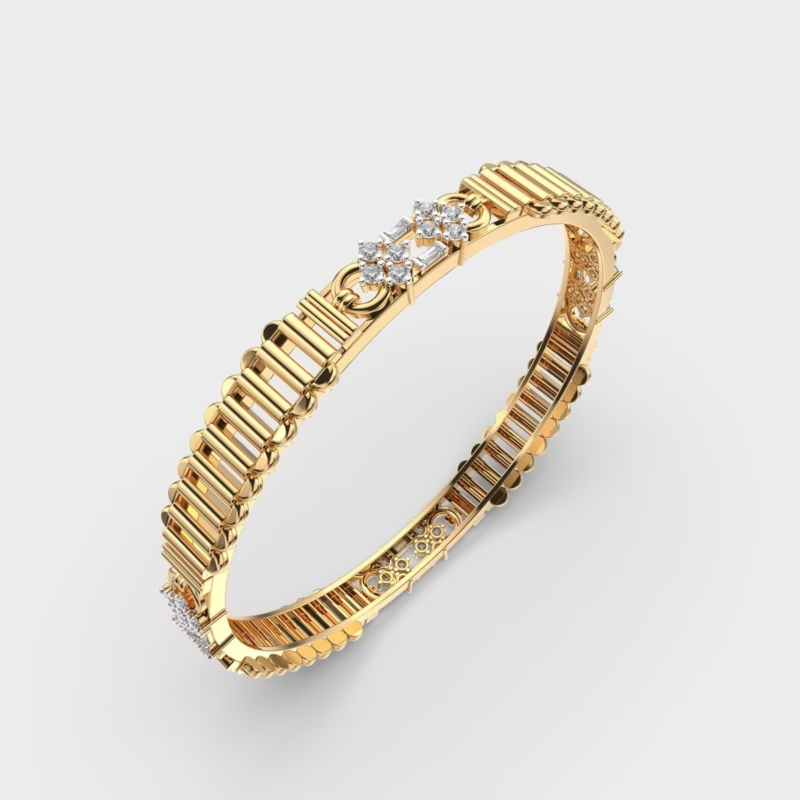
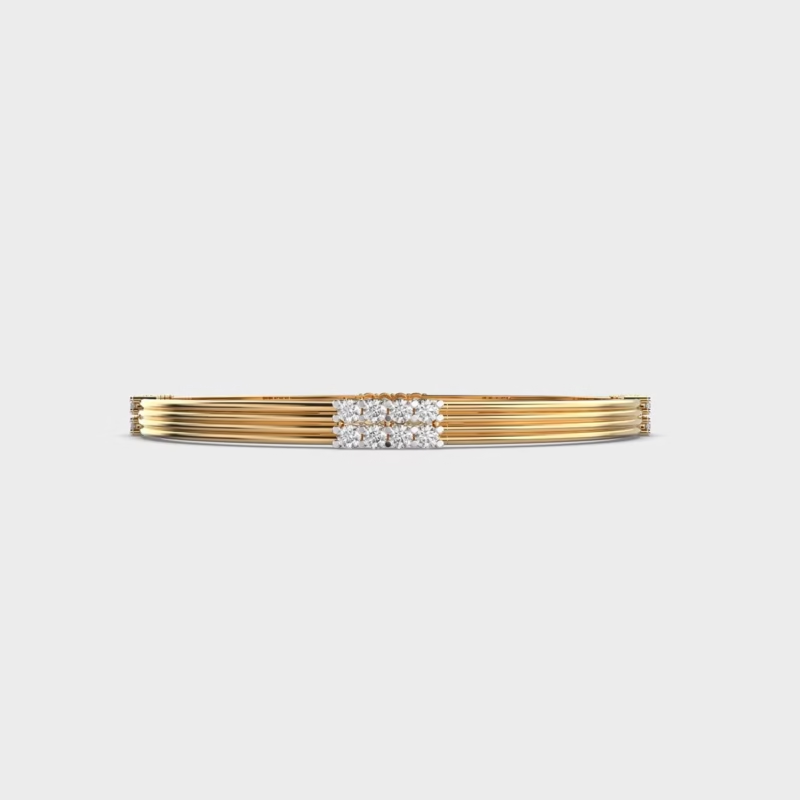
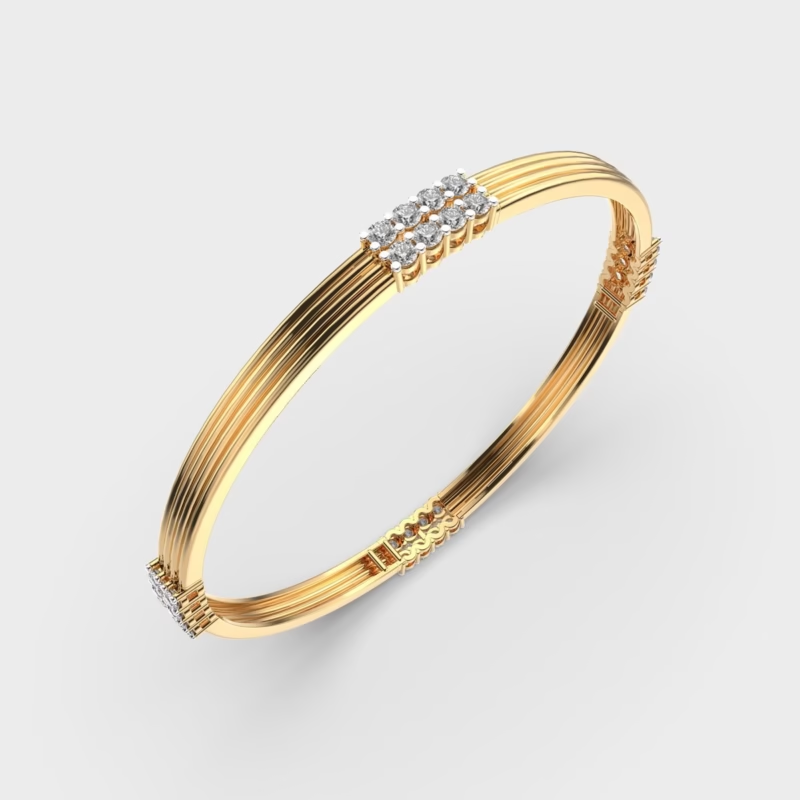
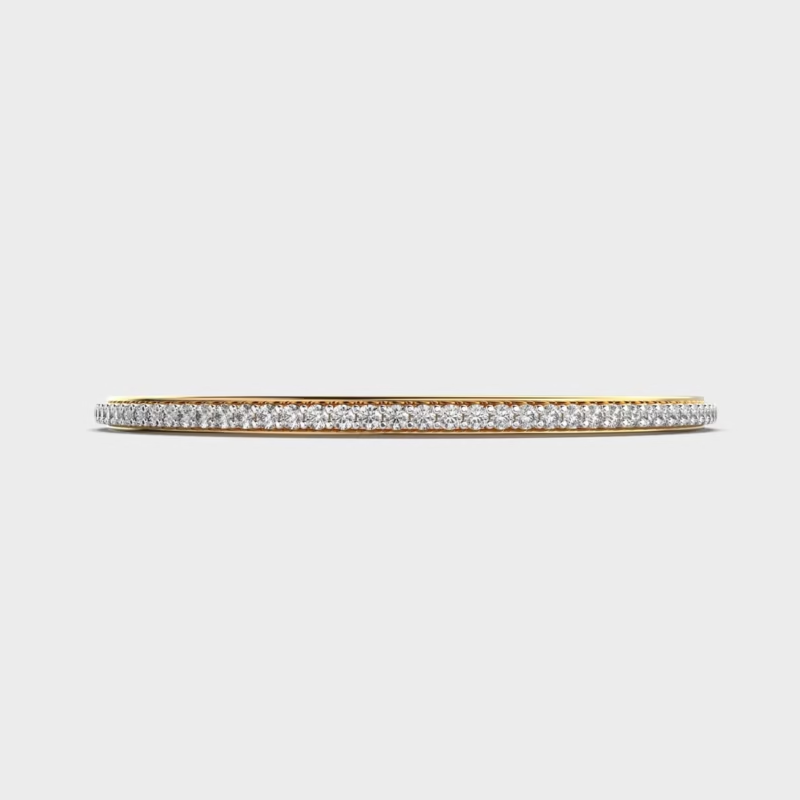
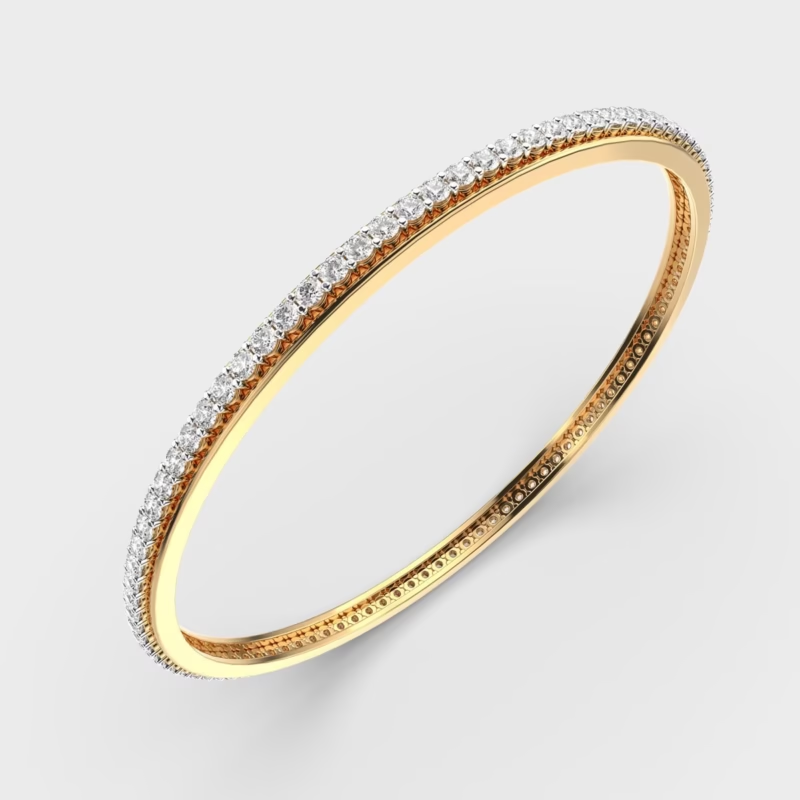
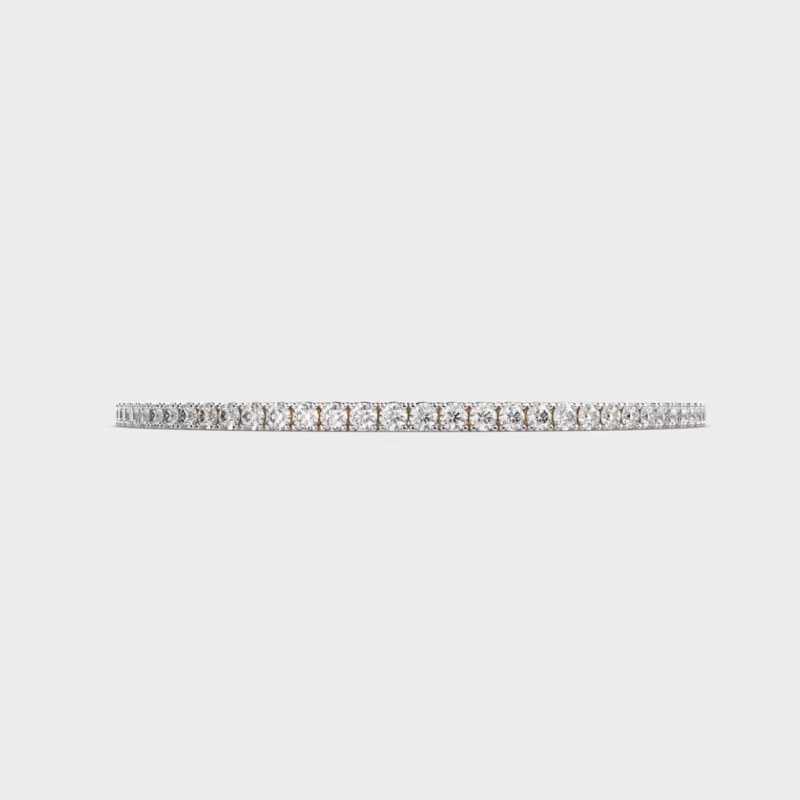
Showing 13–24 of 30 results
Discover Your Perfect Price
Filter by Stone Type and Metal to view accurate, variation-based pricing
Transparent, personalized, and effortless - explore designs that match your style, metal, and budget.
- Tip: Choose one stone type and one metal type to see your exact price.
- If prices seem off, just uncheck and re-apply your filters – the page will refresh with accurate pricing.
 1-to-1 Custom Design
Experience
 Craft Your Vision
Today with a 10% Starte
 HD video Preview
Before It Ships
 Fully Customizable
- Stone, Metal & Budget
 Choose Metal Tone:
Yellow, White or Rose Gold
 Handcrafted in Solid 10K · 14K · 18K
Gold, 925 Silver or 950 Platinum
 Select Your Stone Type:
 Lab-Grown Diamond or Moissanite
 Award winning
 craftmanship and detailing
 Hallmarked &
 Certified (IGI / SGL)
 Personalized Care &
 Expert Support
 Design Any Piece
Within Your Budget
1-to-1 Custom DesignExperience
Craft Your VisionToday with a 10% Starte
HD video PreviewBefore It Ships
Fully Customizable- Stone, Metal & Budget
Choose Metal Tone:Yellow, White or Rose Gold
Handcrafted in Solid 10K · 14K · 18KGold, 925 Silver or 950 Platinum
Select Your Stone Type: Lab-Grown Diamond or Moissanite
Award winning craftmanship and detailing
Hallmarked & Certified (IGI / SGL)
Personalized Care & Expert Support
Design Any PieceWithin Your Budget

Primira's
Real Reviews From Real Customers
Lifetime
Warranty
100% Money
Back Guarantee
Easy
Customization
7 Days
Return
14 Days
Exchange
Insured
shipping
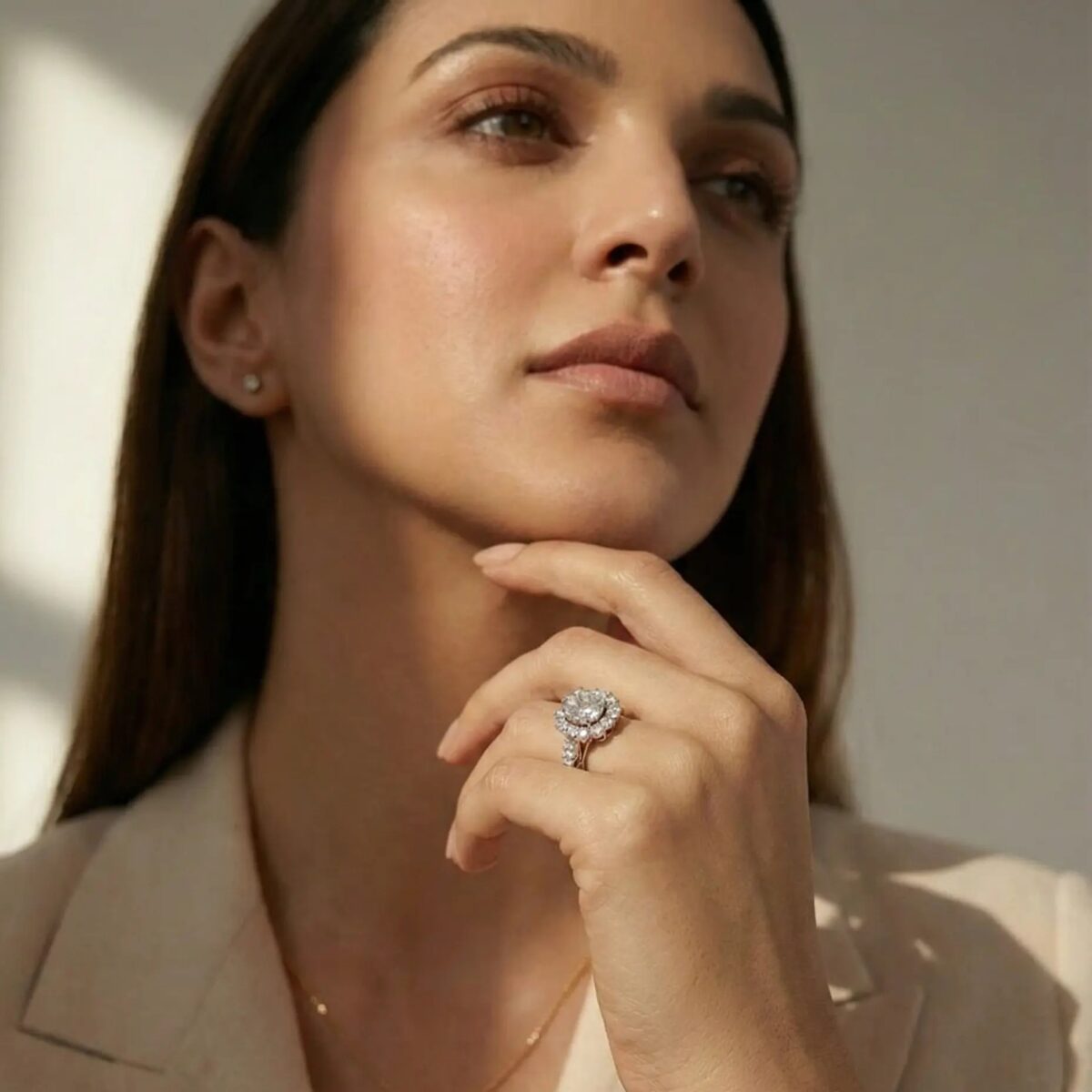
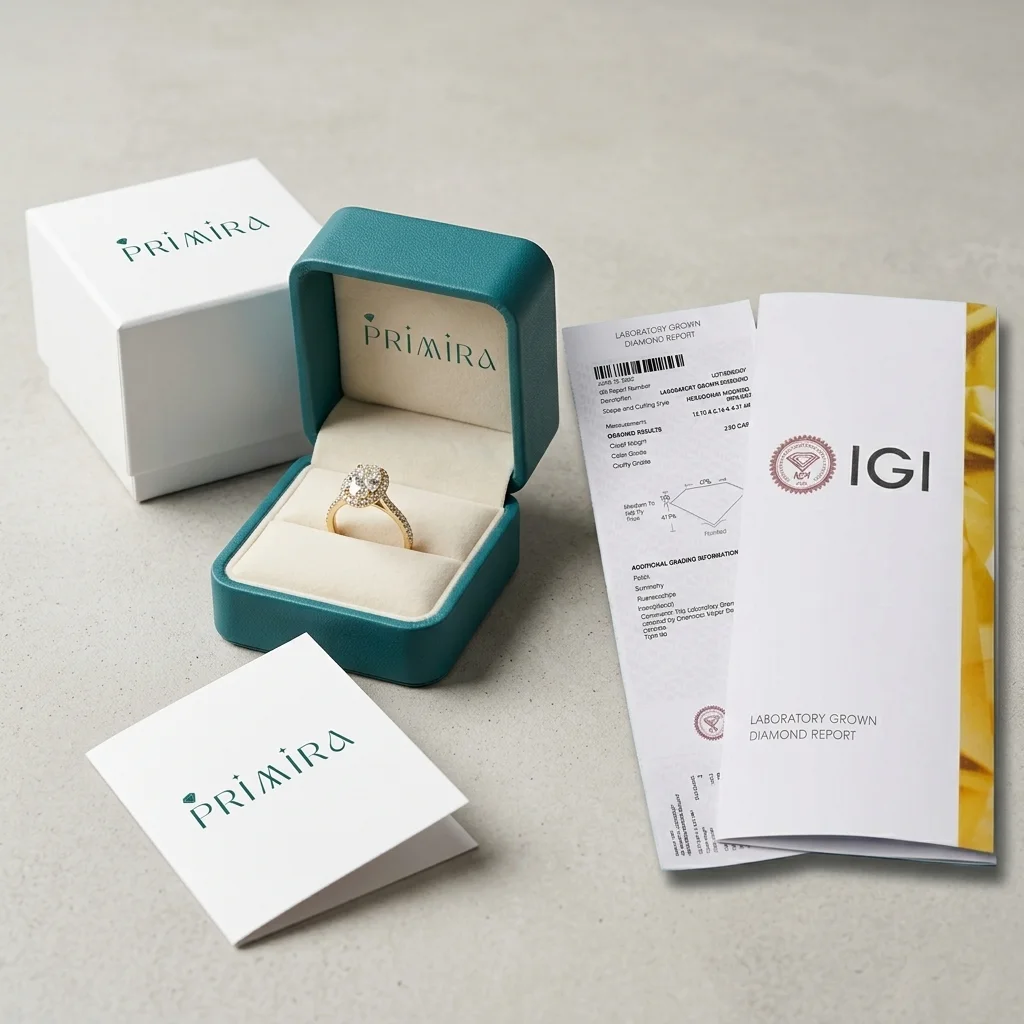
sustainable, beautiful packaging
Give your precious pieces a home they deserve with our stylish, soft-lined jewelry boxes made for effortless organization.
Read Our Article Behind Every Collection
Each design at Primira Luxury is handcrafted with precision, purpose, and emotion. From the first sketch to the final polish, our artisans turn your vision into a piece that feels personal, ethical, and timeless.
Read More
Lab Grown Diamond Bangles and Kadas
When you buy a diamond ring or pendant online, the sizing decision is relatively forgiving — rings can be resized, pendant length is usually adjustable. A rigid diamond bangle is different. It has to pass over your knuckles before resting on your wrist, which means the measurement that matters is your hand, not your wrist. Buy a size too small and the piece won’t go on. Buy a size too large and it slides to your elbow when you raise your arm. That one variable — inner diameter measured at the knuckle — is the specific thing this page resolves before you order.
The same logic applies to kadas, but the engineering is different. A bangle is generally set with diamonds along the top face or around the full circumference; a kada is a solid, broad-profile piece with significantly more metal mass. They sit on the wrist differently, wear differently against daily clothing and adjacent jewelry, and require different construction to hold their form. Both are covered here.
Bangles and Kadas: Two Different Objects
Bangle and kada are used interchangeably in casual conversation, but they’re not the same piece.
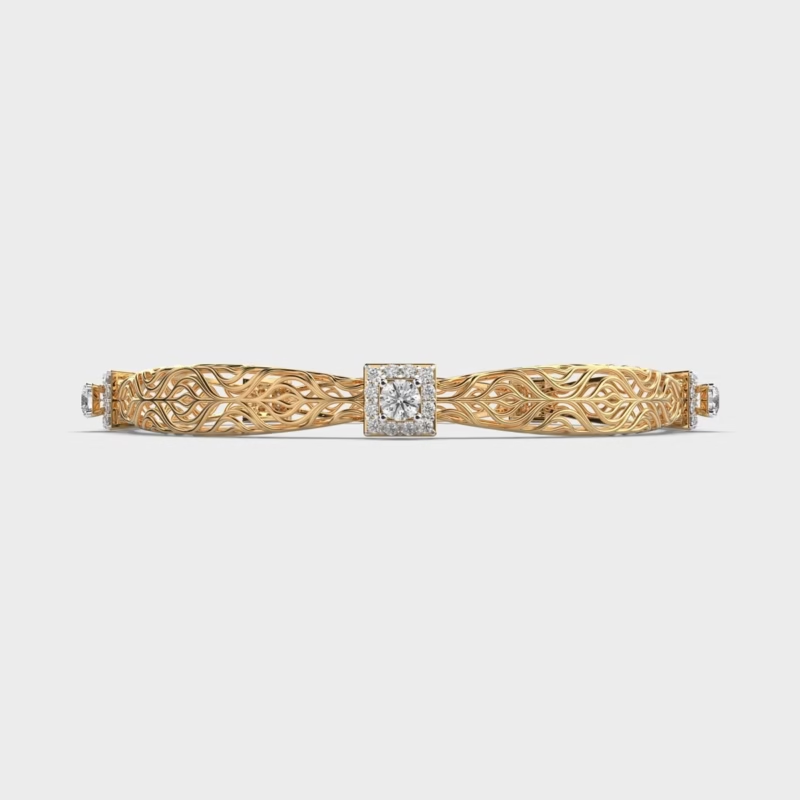
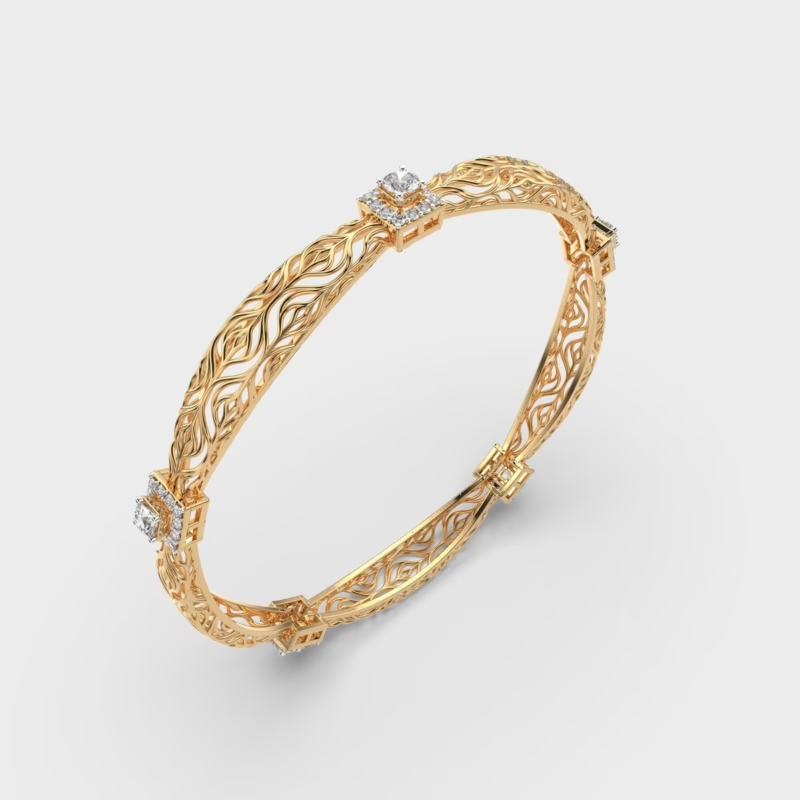
A bangle is typically circular, relatively slim in profile, and worn either as a rigid closed piece (which must pass over the knuckle) or as a hinged piece (which opens at a barrel-hinge and clasps shut at the wrist). Diamond-set bangles from Primira are almost always hinged, because a rigid diamond track that has to be forced over the hand risks prong stress at the setting level. The hinge eliminates that problem — the piece opens, rests on the wrist, and closes with a box-clasp backup.
A kada is traditionally a solid, broader piece — heavier, more substantial in cross-section, worn as a statement wrist piece rather than stacked with other slim bangles. Historically unisex and culturally significant across several Indian communities, the contemporary lab grown diamond kada replaces traditional hand-engraved gold work with precision-set stones along the outer face, while retaining the substantial metal profile that gives the piece its physical presence. Kadas from Primira are typically openable via a precision barrel-hinge at the inner wrist, because a fully rigid kada with meaningful stone coverage would require significant hand compression to put on or take off.
How to Measure Your Size
For Bangles
Indian bangle sizes are expressed as internal diameter in inches and fractions — 2.2, 2.4, 2.6, 2.8, and 2.10. These are the distances straight across the inner opening of the bangle, not the wrist circumference.
To measure: fold your thumb into your palm so your hand is as narrow as it will go (the posture you’d use to actually slide on a rigid bangle). Wrap a measuring tape or strip of paper around the widest point of your knuckles at that position. Mark where it overlaps and measure the length — this is your hand circumference. Divide by π (approximately 3.14) to get the required inner diameter in centimeters, then convert to inches. Most adult women in India fall between 2.4 and 2.6.
For Primira’s hinged bangles specifically: because the piece opens at the hinge, you’re sizing to wrist circumference rather than knuckle circumference. The inner diameter of a hinged piece should match the wrist comfortably — not the hand — so it closes neatly without gap. This is one of the variables confirmed during the pre-production WhatsApp call before the piece is cast.
For Kadas
Kadas have more tolerance than rigid bangles because they’re wider and sit with more surface contact across the wrist. However, a kada that’s sized too loosely rotates on the wrist, which means the diamonds face down rather than up — not a comfort issue, but an aesthetic failure. Measure the knuckle circumference as above and aim for an inner diameter that clears the hand with 5–8mm of clearance. Custom sizing is available on all orders.
The Engineering Inside a Hinged Diamond Bangle
Most descriptions of hinged bangles stop at “it opens for easy wear.” That’s not the engineering story.
A barrel-hinge on a diamond-set bangle consists of three components: the hinge barrel itself (a small cylindrical collar), the hinge pin running through it, and the knuckle joint where the two halves of the bangle meet. The failure mode in lower-quality pieces is deformation of the barrel over repeated open/close cycles — the barrel walls are thin enough that daily wear eventually distorts them, causing the bangle to sit slightly crooked when closed. The pin gauge matters too: a hinge pin that’s too fine relative to barrel bore diameter allows lateral play, which means the two halves don’t close in perfect alignment.
Primira’s hinged bangles use a box-clasp backup alongside the barrel-hinge — two mechanical elements rather than one. The box-clasp engages a tongue into a recessed channel when the bangle closes, so even if the hinge develops tolerance over time, the clasp holds the join tight. On kadas, where the piece is heavier and the hinge bears more stress, a second safety backup pin is added inside the clasp housing — the same mechanism used on high-end tennis bracelets, applied here where the mass and daily-wear context make it equally necessary.
This construction level isn’t available from a retailer selecting from a supplier catalog. It’s available when the hinge and the setting are produced on the same bench by the same team.
Stone Specifications and Carat Weight
What to Choose for Daily Wear
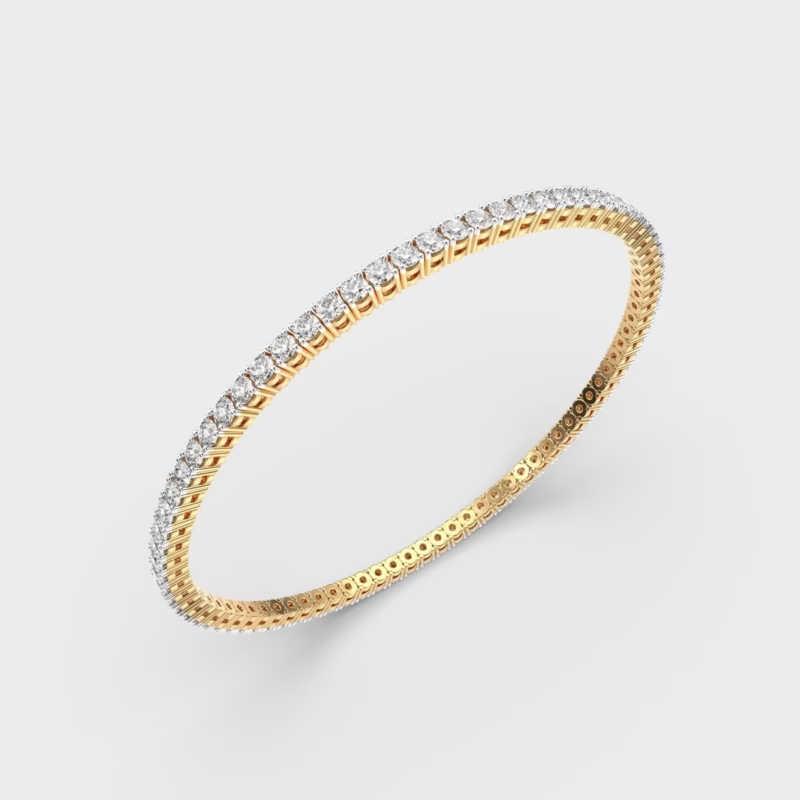
For a daily-wear diamond bangle, the setting type matters as much as carat weight. Channel-set bangles — where stones sit flush between two metal rails with no prongs — are the most durable for pieces worn continuously. Shared-prong settings offer more stone coverage and visual impact, but the prong tips sit slightly above the metal surface, which means more cleaning maintenance and slightly more snag risk on fabrics.
The sweet spot for a diamond bangle in daily rotation is typically 0.50ct to 1.50ct total carat weight, distributed across a half-cover or full-cover track. A quarter-cover bangle (diamonds on the visible top quarter only) reads as more understated and sits well with watches or stacked with other pieces.
Kadas: Stone Coverage and Metal Profile
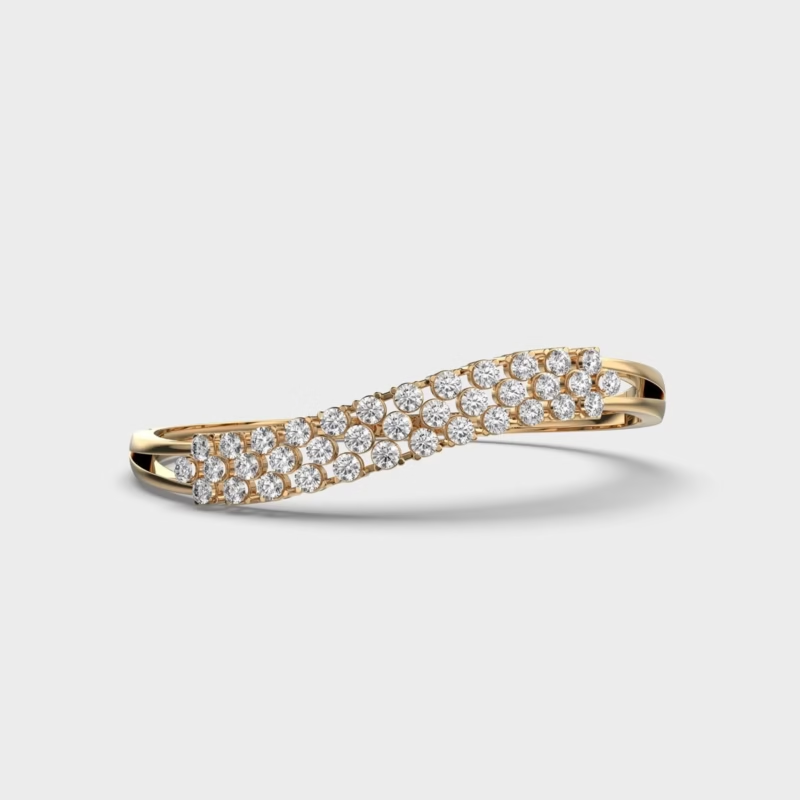
A diamond kada typically features stones set along the outer face — either a continuous diamond track across the broad top face, or cluster groupings flanking a plain central element. The metal profile of a kada is wider than a standard bangle (typically 8–15mm across), which means the stone coverage can go significantly larger in total visual impact without requiring a high individual stone carat weight. A kada with 1.50ct total weight distributed across a 12mm-wide face has substantially more visual presence than a 1.50ct eternity bangle on a 4mm track.
All Primira lab grown diamonds are stocked in VVS1 to VS2 clarity, D–F colorless primary or G–H near-colorless value tier, Ideal or Excellent cut only. Primira does not stock SI2 or lower — relevant here because a bangle setting places stones side by side at close range, and lower clarity grades are more visible in a continuous track than in a standalone solitaire.
The Matched-Parcel Detail
Both the bangle track and the kada stone array are set from matched parcels — stones from the same growth cycle, graded together for colour consistency, sized to ±0.01mm calibration tolerance before setting. This is a production-floor specification carried out in Surat, where the same facility that grows and cuts the diamonds sets them into the piece. Colour drift across a continuous track — where one stone reads slightly warmer than the next — is the quality failure most buyers can’t name but immediately perceive. Matched-parcel sourcing is why it doesn’t happen.
Metal for Bangles and Kadas
Yellow 18K gold is the traditional choice for Indian bangles and kadas — and for a functional reason beyond aesthetics. 18K yellow gold (75% gold content) offers both the warm hue that reads as traditional and sufficient structural integrity for a piece with meaningful metal mass. The 14K tier (58.5% gold, higher alloy ratio) is harder and more scratch-resistant, making it a practical option for pieces worn against daily activity, though the colour is slightly less saturated.
White gold with rhodium plating suits diamond-set pieces where the metal backdrop is intended to recede — particularly relevant on bangles where the diamonds, not the metal, are the visual subject. Rose gold has strong current demand in the 20–35 buyer demographic across India for pieces that read modern rather than traditional.
Platinum is available on request for kadas — particularly relevant for a wider piece where the metal mass becomes significant, as platinum’s density gives the piece a noticeably different weight and wear character that some buyers specifically seek.
For a kada worn alongside a watch or other metal pieces: the alloy pairing matters. A softer metal against a harder alloy will show microscopic abrasion marks over time along the contact edge. Matching metal tier — or at minimum matching alloy hardness category — across wrist pieces reduces this. Discussed and confirmed during the WhatsApp specification call before production.
Bangle vs. Kada: The Practical Fork
The honest answer to “should I choose a bangle or a kada” is a question about daily context, not occasion:
Choose a bangle if: you want something that layers alongside watches, tennis bracelets, or other bangles; you want a piece that reads as refined rather than bold; you prefer something lighter in physical weight; or you’re buying a first fine diamond wrist piece to wear continuously.
Choose a kada if: you want a single substantial wrist piece rather than a layered stack; the piece needs to carry traditional cultural weight as well as visual presence; you want diamond coverage that reads from a distance rather than on close inspection; or you wear it as a standalone statement on the wrist.
Both are available in the same lab grown diamond and metal specifications. The difference isn’t quality tier — it’s object type, and the construction answer for each genuinely differs.
Custom Order
Every bangle and kada leaves Surat on confirmed specifications — the one detail that makes online fine jewelry work for a rigid wrist piece. Custom options confirmed before production begins:
- Inner diameter (the one measurement no product page can standardise — confirmed via WhatsApp)
- Stone coverage: quarter, half, three-quarter, or full circumference
- Stone total carat weight and individual stone size per position
- Metal tier, tone, and finish (high polish, satin, brushed, two-tone)
- Setting type: channel, shared-prong, micro-pavé, cluster groupings
- For kadas: face width, engraving options on plain sections, stone arrangement layout
Reference photos accepted. All confirmed in a WhatsApp conversation with the Surat team before production begins. Production timeline: 15–35 business days from specification confirmation.
Care for Diamond Bangles and Kadas
A hinged bangle’s vulnerability points are the hinge itself and the box-clasp join. Clean along the hinge barrel with a soft brush — lint and body residue accumulate in the gap between the hinge knuckles and dull the metal finish without affecting the mechanism. The clasp should be tested monthly: press the clasp tongue fully into its housing and confirm the safety pin engages with a click. If the click becomes soft, the safety pin spring needs attention.
For kadas: the inner surface of a kada — the face that contacts the wrist — accumulates skin oils and fabric fibres in any engraved or textured areas. A brief soak in warm soapy water followed by a soft-bristle clean and a thorough dry restores it. Avoid contact with chlorinated water (swimming pools, hot tubs) which over time affects rhodium plating on white gold pieces and can slowly affect the alloy finish on all gold tiers.
Diamond settings in both pieces can be cleaned with the same warm soapy water approach. Prong-set stones should be inspected every 12–18 months to confirm prong tips haven’t shifted — a standard maintenance interval for any fine diamond piece worn daily.
Ordering and Policies
Every Primira order — including custom-sized bangles and kadas — is confirmed via WhatsApp and email within 24 hours of checkout. Specification changes are possible at the confirmation stage at no additional cost. This is the point where inner diameter is locked.
Production: 15–35 business days. In rare cases involving custom stone sourcing: maximum 45 business days.
Returns: accepted within 7 days of delivery where the delivered piece differs materially from confirmed specifications, is damaged in transit, or an incorrect item was dispatched. Custom-made jewelry — which includes every bangle and kada produced to a confirmed inner diameter — is final sale except under these conditions. The buyback program is available as the structured value-recovery alternative if circumstances change.
Shipping: insured from the Surat facility to delivery confirmation. India free shipping above ₹10,000 via Blue Dart / Delhivery, estimated 2–7 business days post-dispatch. International express (DHL/FedEx/UPS) free above USD $550; otherwise approximately USD $50, estimated 5–7 business days post-dispatch.
Explore the full bracelet collection to see all wrist jewellery styles including tennis bracelets, chain bracelets, charm bracelets, and men’s diamond bracelets.
Frequently Asked Questions
What is the difference between a diamond bangle and a diamond kada?
A bangle is typically circular, slimmer in profile, and worn either as a rigid piece (which passes over the knuckle) or as a hinged piece with a box-clasp. A kada is a broader, heavier wrist piece with significantly more metal mass — traditionally solid, though diamond-set kadas are almost always made openable via a precision hinge because the width and weight would make a fully rigid piece impractical to put on and take off. Both can feature identical lab grown diamond specifications; the difference is object type and construction approach.
How do I measure my bangle size for an online order?
For rigid bangles, fold your thumb into your palm and measure around your knuckles at their widest point. Divide the circumference by 3.14 to get the inner diameter. Standard Indian sizes run 2.2 to 2.10 (in inches of inner diameter); most women fall between 2.4 and 2.6. For Primira’s hinged bangles, the sizing is confirmed during the pre-production WhatsApp call — you measure wrist circumference rather than knuckle circumference, and the Surat team walks through the sizing before the piece is cast.
Can a diamond bangle be resized after production?
Rigid diamond bangles cannot be resized without dismantling the stone setting, which is why the inner diameter is confirmed before production begins on every Primira order. Hinged bangles with a clasp have slightly more tolerance. The pre-production WhatsApp confirmation step exists specifically to lock this variable before the piece enters the casting stage.
What carat weight should I choose for a diamond bangle?
For a daily-wear piece, 0.50ct to 1.00ct total carat weight is the practical range — present enough to read as a diamond piece without requiring careful handling. For a statement bangle or a full-circumference coverage, 1.00ct to 2.00ct+ distributes well across the track. For a kada with a broad face, 1.00ct to 1.50ct achieves maximum visual impact because the same total weight covers more surface area. The pre-production confirmation covers the total carat weight allocation relative to the face width so the coverage looks intentional rather than sparse.
Are lab grown diamonds suitable for a bangle worn every day?
Lab grown diamonds have the same physical properties as mined diamonds — hardness of 10 on the Mohs scale. The daily-wear limitation on a diamond bangle isn’t the stone; it’s the setting. Channel-set tracks are the most protective for continuous wear because stones sit flush between metal rails with no prong tips exposed. Primira’s standard stock runs VVS1 to VS2 clarity, all eye-clean, with Ideal and Excellent cut grades only — specifications chosen for pieces that will be examined closely and worn continuously.
What does the IGI certificate cover on a diamond bangle?
The IGI certification on a Primira bangle documents the total carat weight of the diamond set, the colour grade range of the parcel, the clarity grade, and the stone type (lab grown diamond). The certification also confirms the diamonds are set from a matched parcel — not a collection of individually sold stones assembled after grading. For pieces with individual stones of 0.30ct or larger, the report number is laser-inscribed on the girdle of each qualifying stone and verifiable at igi.org. IGI is recognised by jewellers and buyers across India, the USA, and Europe.

 Chat on WhatsApp