Lab Grown Diamond Eternity Bands — Full Setting Guide
Lab Grown Diamond Eternity Bands — Full Setting Guide
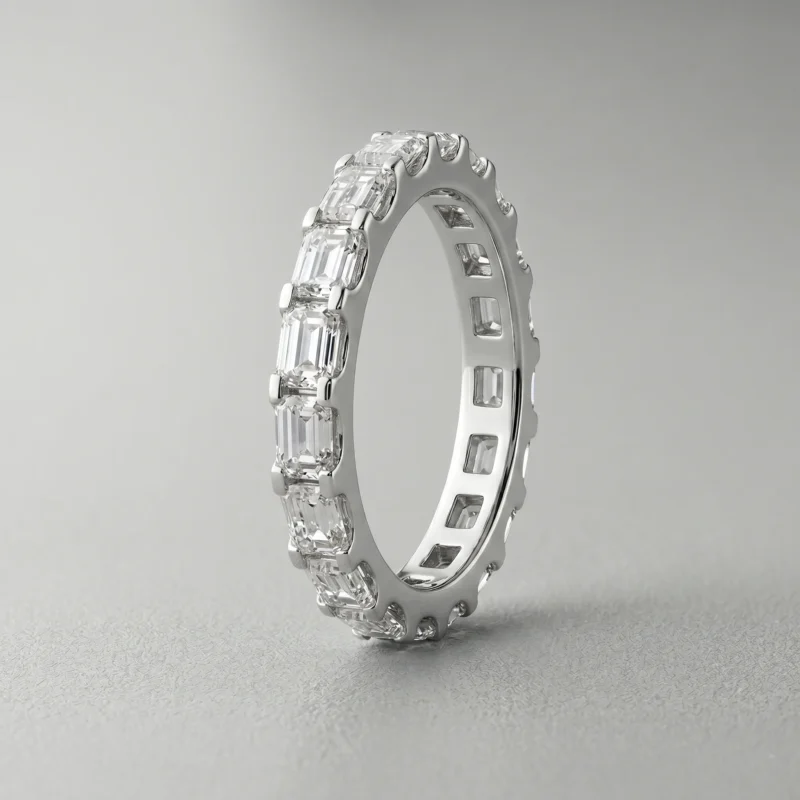
Before anything else, the thing every buyer deserves to know upfront: a full eternity band — 360° of lab grown diamonds, no gap at the back — cannot be resized once made. Not easily, not economically, and in most cases not without compromising the setting. This isn’t a flaw in the design; it’s the structural consequence of continuous stone coverage. The solution isn’t to avoid eternity bands — it’s to order to your exact finger measurement at the time of purchase, accounting for the band’s width (wider bands fit tighter than narrow ones on the same finger). The pre-production specification call Primira runs via WhatsApp before every order is built exists precisely for this moment: ring size, band width, stone count, and total carat weight are all confirmed before a single prong is set.
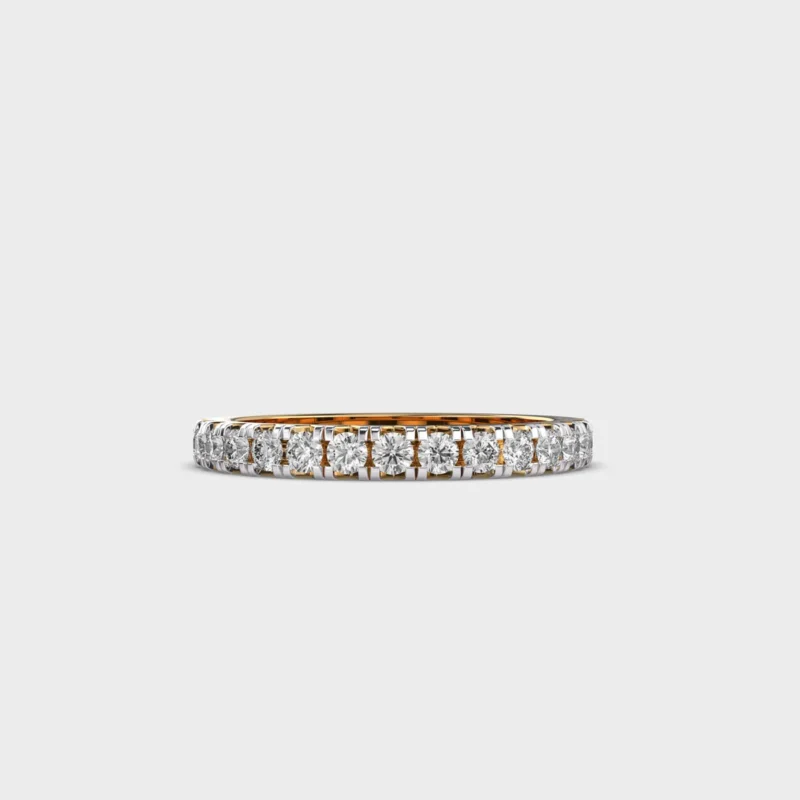
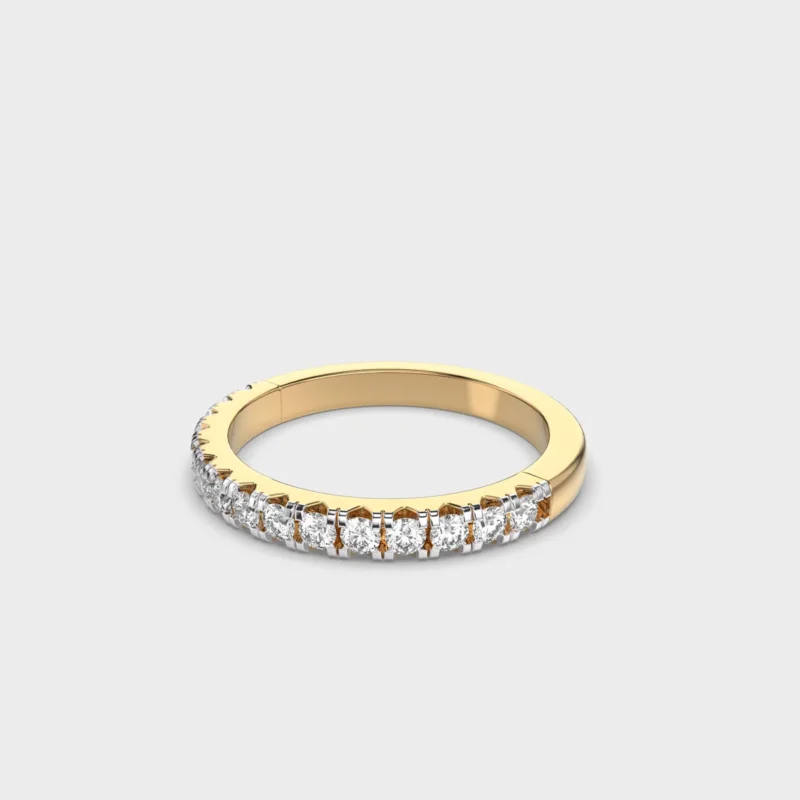
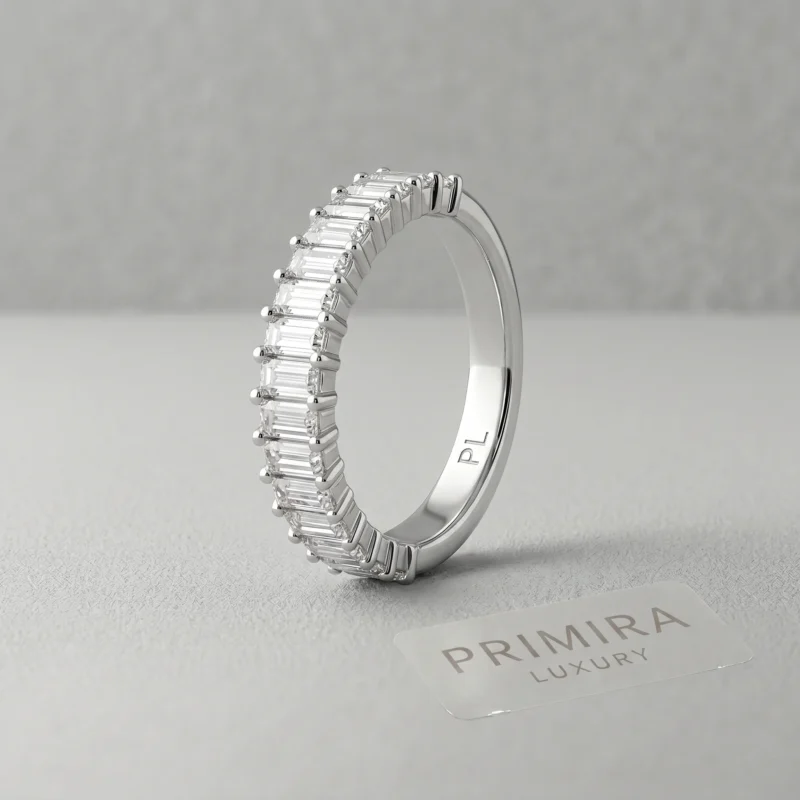
If you need the flexibility to resize in future — whether due to expected finger changes or general uncertainty — a half-eternity band, with stones across the top two-thirds and a plain metal back, is the more practical choice. It gives up some of the 360° sparkle effect but gains the structural room a jeweller needs to add or remove metal. Both styles sit in this collection; which fits your situation is a real question, not a style preference.
Browse the full wedding band collection
What Makes an Eternity Band Different from Other Wedding Bands
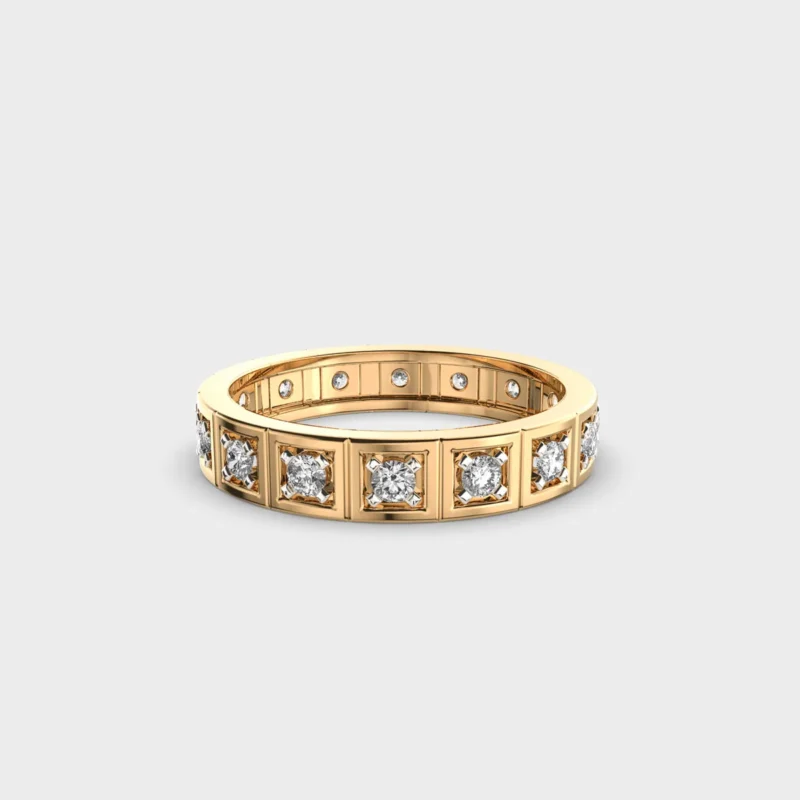
A wedding band becomes an eternity band when the stone setting runs the full circumference with no plain-metal gap. Every stone sits in direct visual line with every other stone, which changes two things: how the band looks, and what matters most about how it’s built.
The visual difference is immediate — an unbroken circle of light rather than a ring with a diamond section on top. The technical difference is less obvious but more important: in a solitaire or halo ring, individual stones are evaluated on their own terms. In an eternity band, stones are evaluated next to each other, continuously. A slight colour variation that would be invisible in isolation becomes readable when the stone sits directly beside a better-matched neighbour. This is why stone uniformity — not just stone quality — is the actual manufacturing challenge in this style.
Channel Set vs. Shared Prong: The Real Fork in the Road
Most buyers approach this decision as a style choice. It is, but it’s also an engineering choice with real daily-wear consequences.
Channel Setting
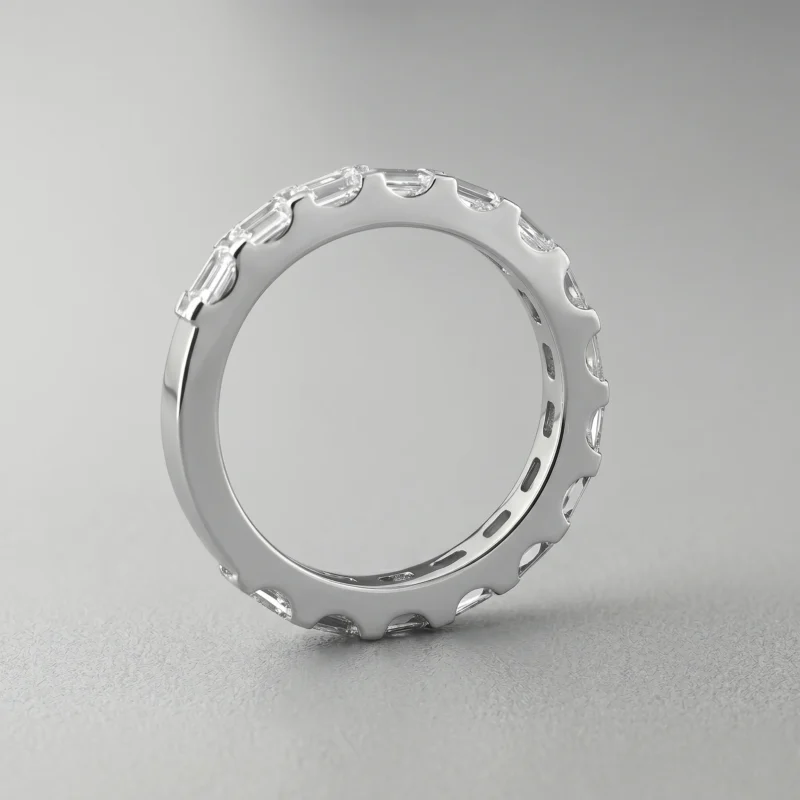
Stones sit inside a groove milled into the band’s metal walls, held by the channel edges rather than individual prongs. The result is a smooth exterior with no exposed metal above or below each stone — lower profile, no snag risk, and substantial protection from daily knocks. The trade-off: the channel walls partially block lateral light entry, which slightly reduces the fire and scintillation compared to prong settings of the same stone quality. Channel-set bands also tend to wear cleaner over time, since there are no prong tips to accumulate residue.
Shared Prong (Pavé-Style)
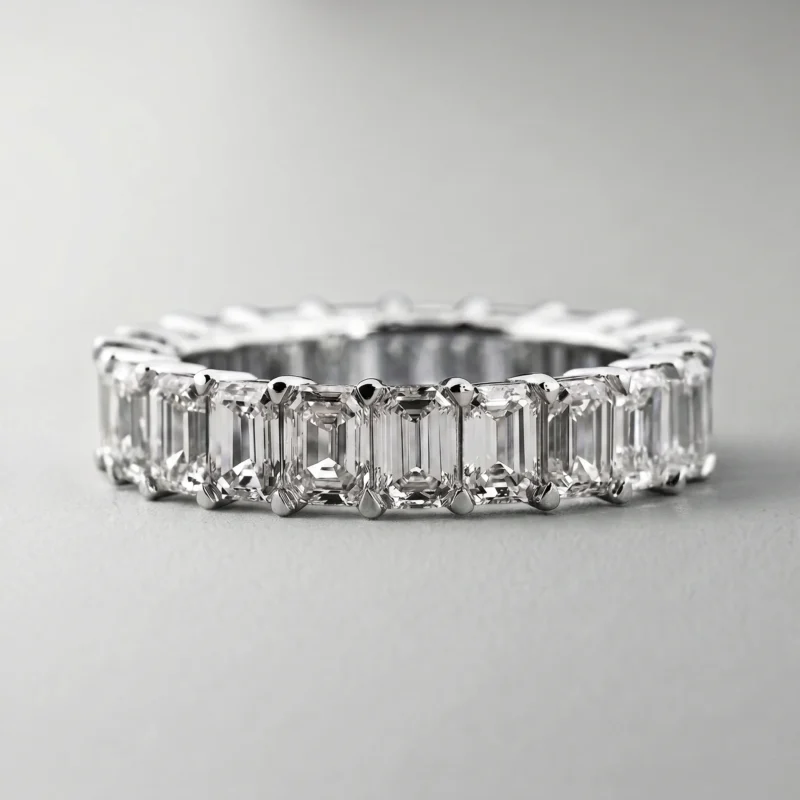
Each stone is held by two metal prongs shared with the adjacent stones. The prongs sit above the stone surface, which means light can enter from a wider angle — more optical fire, more visible scintillation. The trade-off: the exposed prongs are a snag point for fine fabrics and require periodic inspection (every 12–18 months of daily wear) to confirm the prong tips haven’t flexed outward. A good shared-prong band is more visually active than a channel-set band of identical stone quality; a poorly maintained one is a stone-loss risk.
For daily wear stacked against an engagement ring: channel-set bands are less likely to scratch the softer metal of the ring beside them. Shared-prong bands, particularly with stones on the band’s sides, can abrade the setting of a neighbouring ring over time. If your engagement ring has micro-pavé shoulders, a channel-set eternity band alongside it is the lower-maintenance combination.
Stone Uniformity — Why It Matters More Here Than Anywhere Else
In a standard eternity band, a 1.5 CTW (carat total weight) round band on a US size 7 finger might contain 18–22 stones, depending on per-stone carat weight and band width. Those stones sit beside each other for the life of the ring. If two of them carry slightly different colour grades — say one D and one G — the visual difference that’s undetectable on a solo solitaire becomes visible in side-by-side comparison under good lighting.
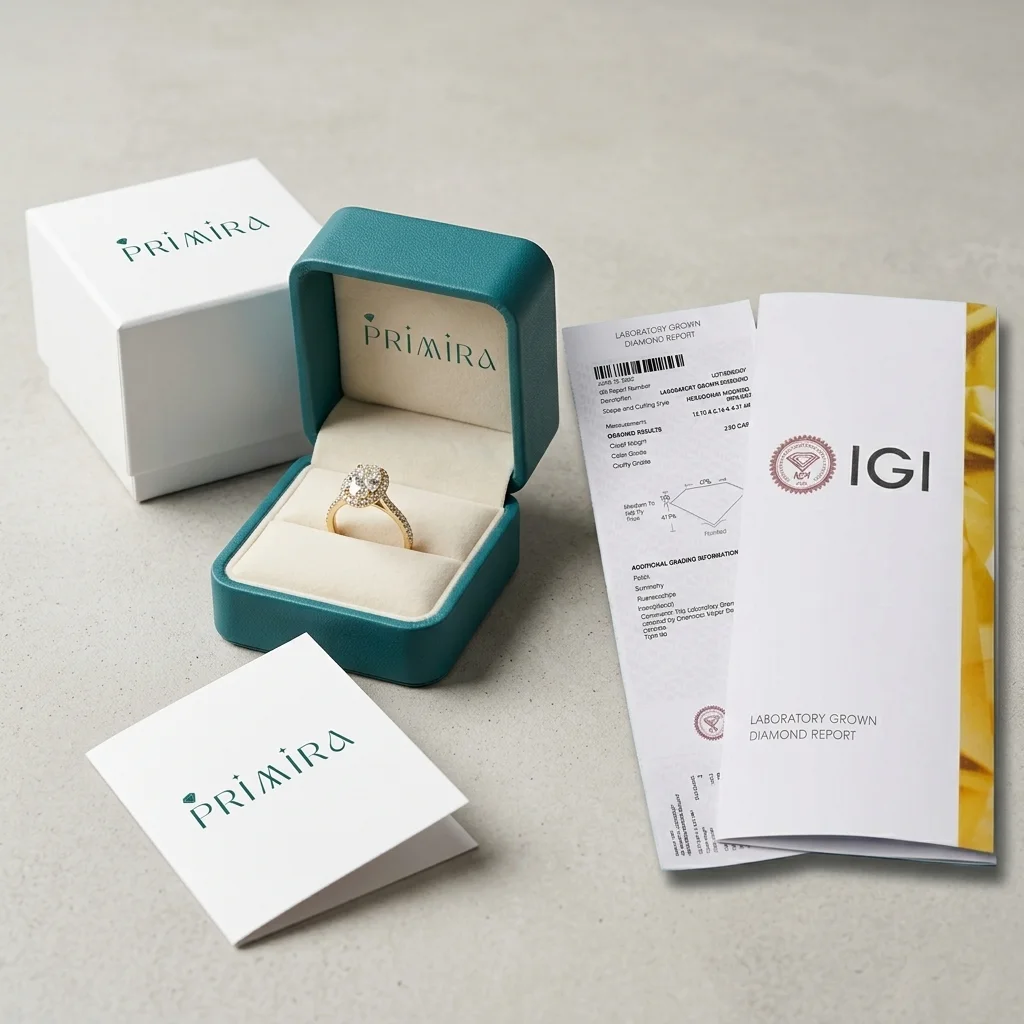
Premium eternity bands are built from matched parcels: stones selected from the same production batch, calibrated to the same colour and clarity tier, sized within ±0.01mm of each other so the setting seats them at equal depth and the prong heights are consistent. At Primira, this selection happens at the Surat facility before the band goes into production — stones sorted from the same lab grown diamond growth cycle, matched visually and by specification, then set in sequence. The IGI certification covering the complete piece documents total carat weight, colour range, and clarity grade across the band as a system, not just as individual stones.
Primira stocks VVS1–VS2 clarity exclusively, all eye-clean. D–F colorless is the primary colour tier; G–H is available as a value choice with no visible difference under normal wearing conditions. SI2 and below are not part of the inventory. For an eternity band in particular, maintaining the colour floor at G or better across the full stone count is worth the specification discipline.
Understanding CTW: What the Carat Weight Number Actually Means
The carat weight listed for an eternity band is the carat total weight across all stones in the band — not the weight of any single stone. A 2 CTW round eternity band on a US size 7 finger is made from roughly 20 stones at approximately 0.10ct each. The same 2 CTW specification on a US size 9 finger requires more stones to cover the larger circumference — so either per-stone carat weight drops (smaller individual stones) or the total stone count increases and the CTW adjusts. This is why Primira confirms ring size before production: the stone count and per-stone carat weight are derived from the actual finger circumference, not set in advance.
For buyers wanting a larger individual-stone appearance within a fixed budget, elongated shapes — oval, emerald, marquise — cover more visible face-up area per carat than round brilliants, making a given CTW appear more substantial on the finger.
Setting and Metal Guidance Specific to Eternity Bands
Metal Selection
Platinum (950): The densest, most scratch-resistant metal for a band worn daily alongside other rings. Prong tips in platinum maintain their grip longer under repeated wear than gold alloys. For a shared-prong eternity band intended for daily wear, platinum is the functional recommendation, not just a prestige upgrade.
18K white gold (rhodium-plated): Visually identical to platinum, lighter on the finger, and the right choice if comfort-weight matters more than absolute durability. Rhodium plating will need refreshing every 2–4 years depending on wear frequency; factor this into long-term care.
14K yellow or rose gold: The best option for buyers pairing an eternity band with a yellow or rose gold engagement ring. 14K’s higher alloy content gives it better scratch resistance than 18K for a band that sits alongside another ring and takes daily friction.
925 sterling silver: Lower price point, appropriate for less intensive wear. Not recommended as a primary pairing with a platinum or gold engagement ring due to the different metal hardness — silver will show wear faster.
Width and Profile
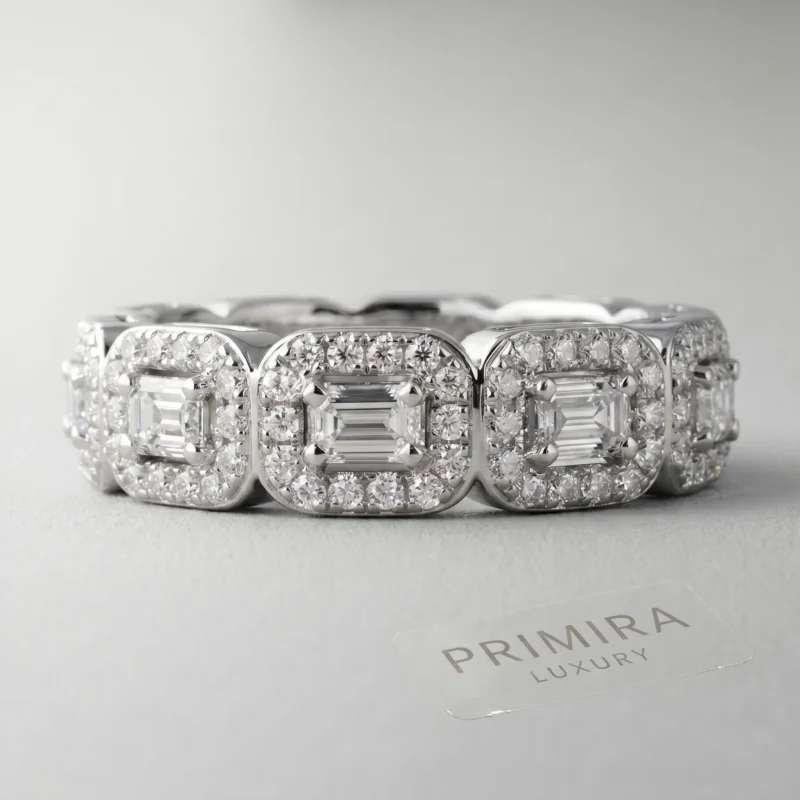
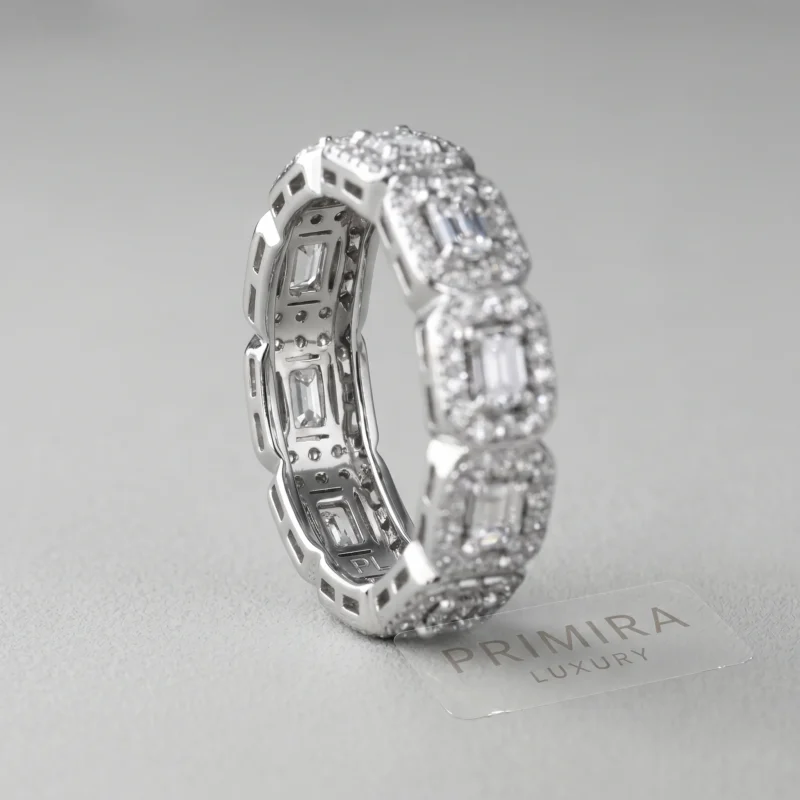
Eternity bands typically run 2–3mm wide for a single-row setting, 3–4mm for wider pavé builds. A band wider than the engagement ring’s shank can visually crowd the centre stone; a band narrower than the ring’s shoulder setting can disappear alongside it. The ideal proportional relationship is for the band to complement rather than compete — typically 0.5–1mm narrower than the engagement ring’s widest point.
For buyers stacking two eternity bands on either side of an engagement ring, matching band width across all three pieces creates visual balance. Mismatched widths can make a thoughtfully planned stack look accidental.
Shapes in Eternity Settings
Round brilliants are the standard choice — maximum light return from a symmetrical facet arrangement, and the round profile allows shared prongs to seat at uniform height around the full circumference. This makes round-set eternity bands the most consistent in appearance at every finger angle.
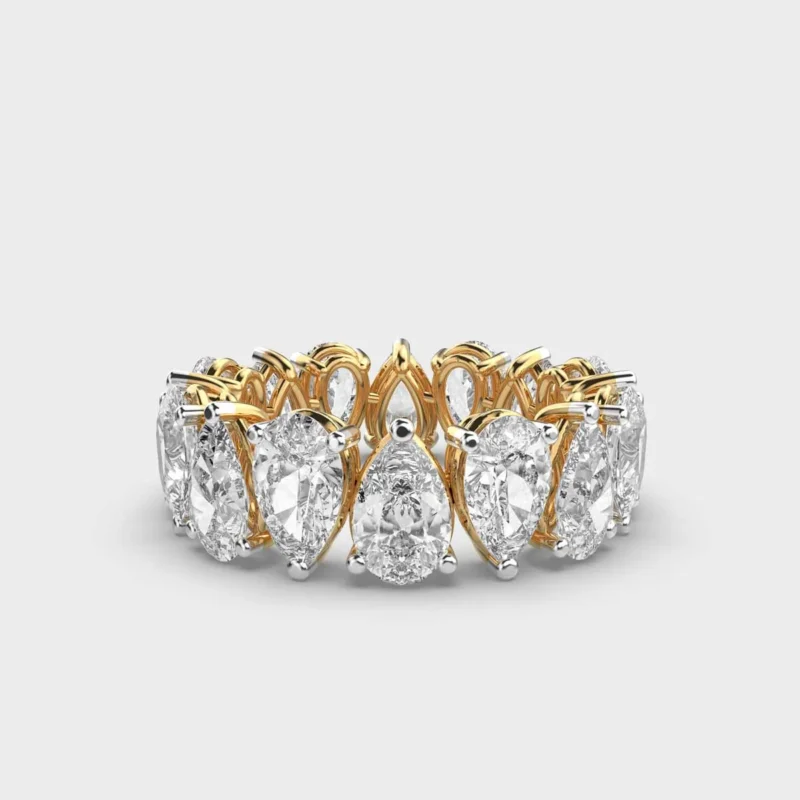
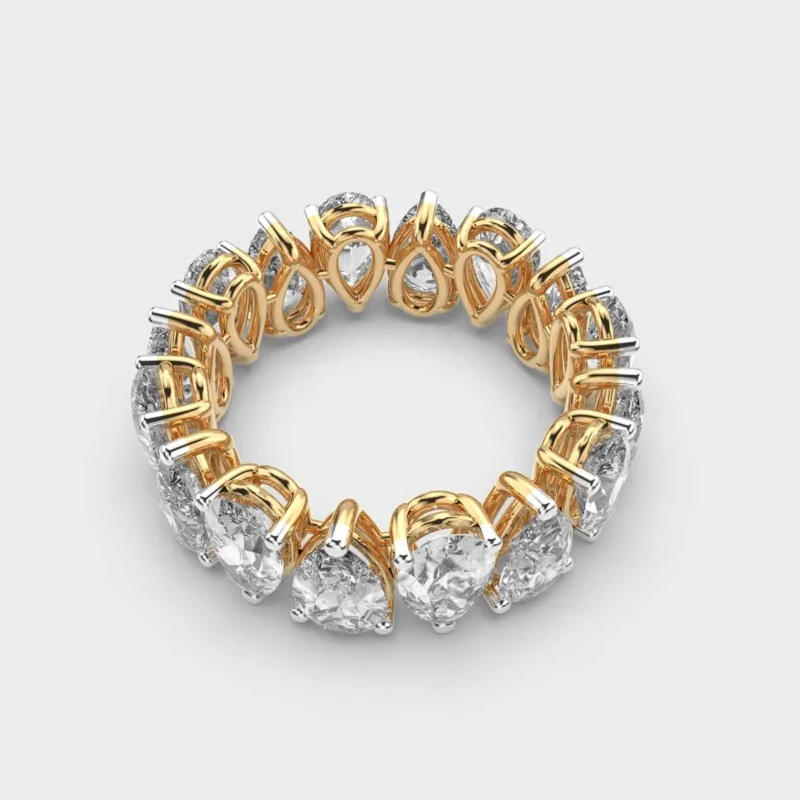
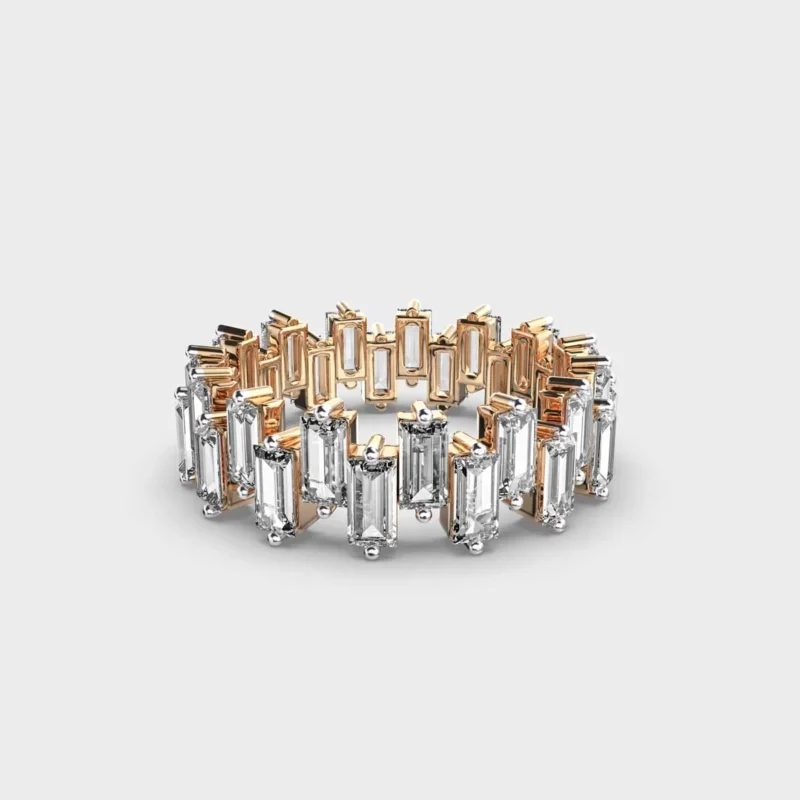
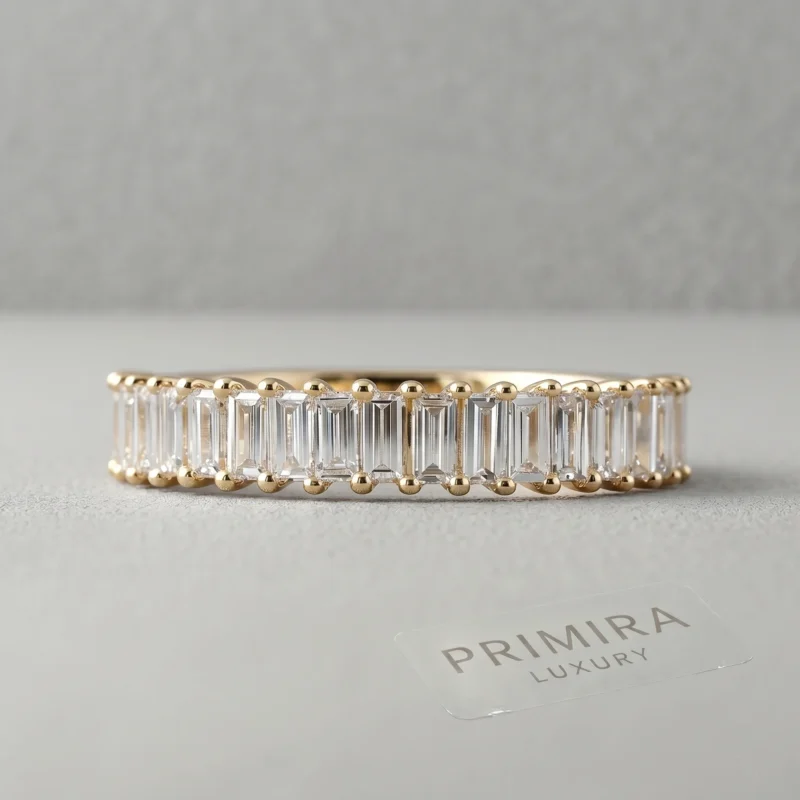
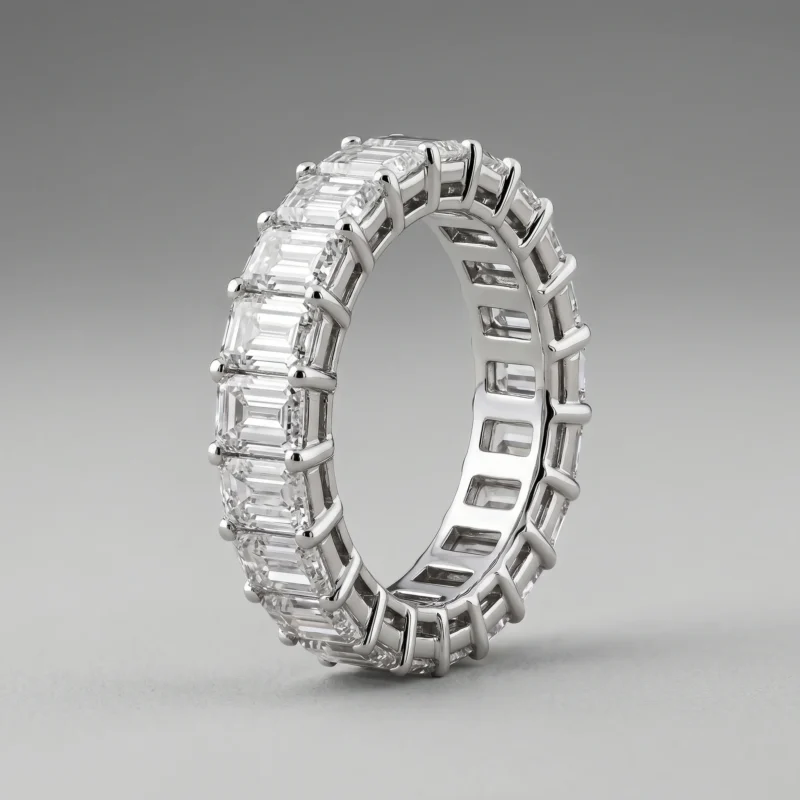
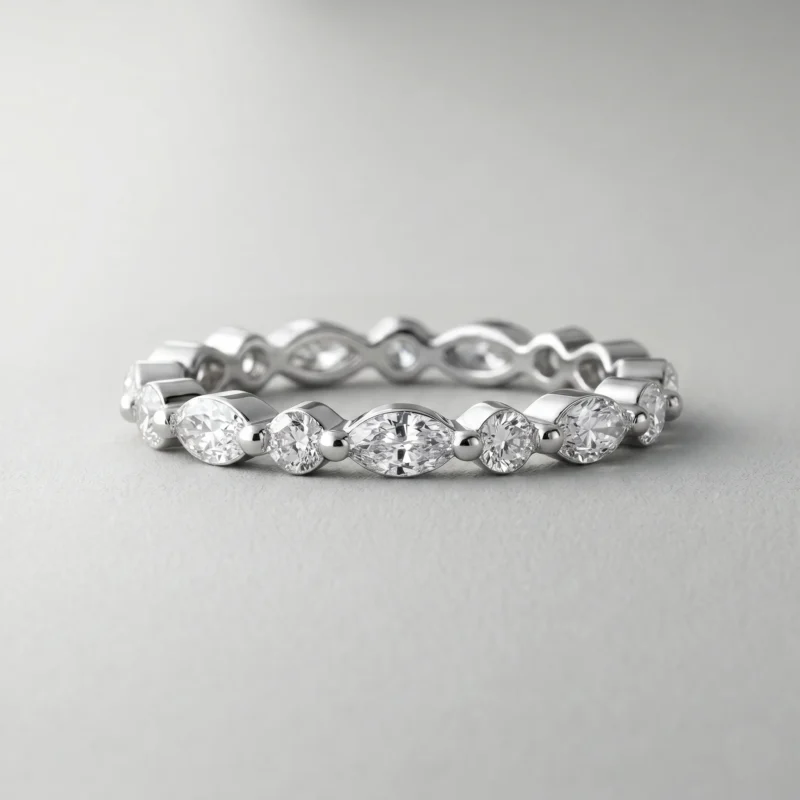
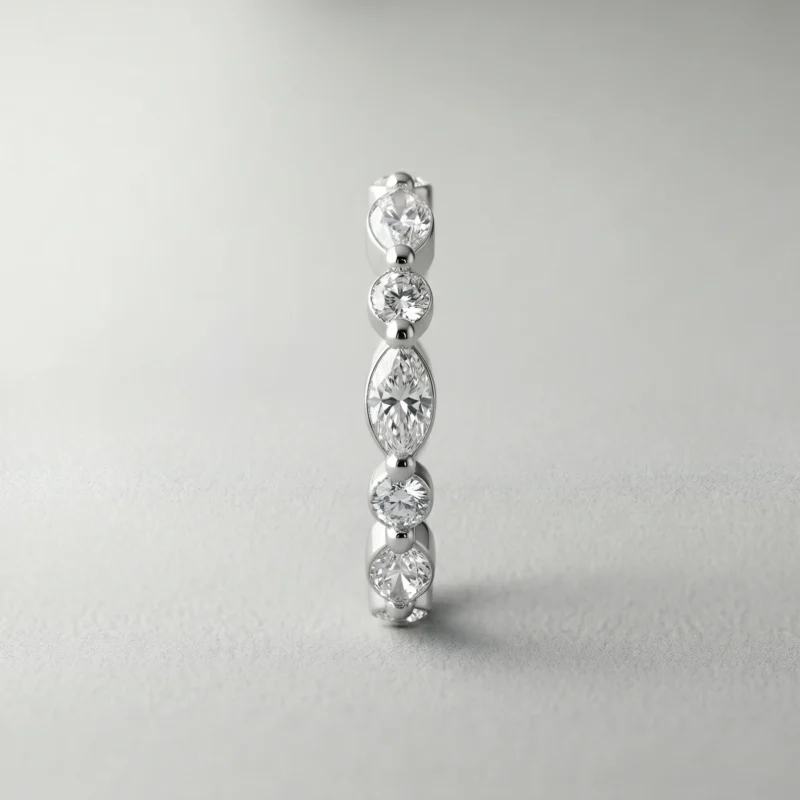
Elongated shapes (oval, emerald, marquise) in eternity settings create a more fashion-forward look: more face-up coverage per stone, and a different light character as the band moves. The trade-off is setting complexity — the prongs for pointed shapes (marquise, pear) require additional reinforcement at the stone tips, and the east-west orientation of each stone must be precisely consistent for the row to read as uniform. This is a setting discipline that matters more in an eternity band than in a single-stone piece, because any inconsistency in orientation is visible across the full row.
Emerald-cut eternity bands have seen strong search and purchase interest in 2026 — the step-cut facets create a different, more architectural light quality than brilliant cuts, and the rectangular outline gives these bands a modern, graphic look that pairs particularly well with emerald-cut engagement rings.
Custom Orders: What’s Specific to Eternity Bands
Every eternity band configuration at Primira is a custom production — stone count, per-stone carat weight, setting type, metal, and width are all derived from the specific combination of ring size and CTW preference. Nothing is pulled pre-made off a shelf.
The one detail unique to eternity band custom orders: the band’s total CTW specification and the finger size are interdependent. Share both when starting a custom conversation — not just the desired look. The WhatsApp consultation before production confirms: ring size (measured in mm, not assumed from a US or Indian size number), preferred per-stone carat weight or total CTW target, stone shape, setting type, metal tier, and tone.
Fancy colour lab grown diamonds are available in eternity configurations on custom order — yellow and pink are the most requested. For colour eternity bands, metal backdrop matters: yellow lab grown diamonds in a yellow gold channel setting read as warmer and more saturated; the same stones in white gold or platinum appear brighter and cooler. The metal choice isn’t just aesthetic for colour stones; it affects how the saturation reads. Explore fancy color lab grown diamond options if a colour eternity band is on your radar.
Production time for eternity bands runs 15–35 business days from specification confirmation.
Care and Longevity
A channel-set eternity band is among the lower-maintenance settings Primira produces — no exposed prong tips, no snagging points, and the enclosed stones are well-protected. Cleaning is simple: warm water, mild dish soap, soft brush at the channel seams to clear soap and residue buildup, then a rinse and dry.
A shared-prong eternity band requires more attention. The exposed prong tips are the inspection point: once every 12–18 months, check that none have flexed outward or caught on fabric without being noticed. A Primira or local goldsmith can retip prongs before any stone movement occurs; catching it early avoids a reset job later. The underside of the band — the section that contacts the finger — accumulates product residue faster than the top; a thorough clean there is worth doing monthly.
Do not wear an eternity band, particularly a shared-prong style, into situations of high mechanical risk: heavy lifting, gym sessions with grip-intensive equipment, or work involving vibration. The continuous stone setting distributes force across more stones than a solitaire does, but repeated mechanical stress on the prong tips accelerates wear.
Frequently Asked Questions
Can a lab grown diamond eternity band be resized?
A full eternity band — stones running the complete 360° circumference — generally cannot be resized. Resizing requires cutting the band and adding or removing metal, which disrupts the stone continuity and often requires removing and resetting several stones at the point of the cut. In most cases the result is a visible structural compromise. This is why getting the ring size right before production is the priority: Primira confirms ring size in millimetres (not assumed from a size number) during the pre-production WhatsApp call. If ring size uncertainty is a real concern, a half-eternity configuration — stones across the top two-thirds, plain metal back — retains resizability while keeping most of the visual effect.
What’s the difference between channel set and shared prong for an eternity band?
Channel setting holds stones inside metal walls — smooth exterior, no snagging, slightly lower light entry. Shared prong uses exposed prong tips shared between adjacent stones — more fire and scintillation, periodic inspection required to check prong tips. For daily wear stacked beside an engagement ring, channel-set causes less metal-on-metal abrasion. For maximum visual impact, shared prong delivers more. Both settings are available; the choice depends on your wear pattern and tolerance for maintenance.
What does CTW mean on an eternity band, and does ring size affect it?
CTW (carat total weight) is the combined weight of all stones in the band. A 2 CTW band on a size 6 finger contains fewer, slightly heavier individual stones than a 2 CTW band on a size 8 finger, which needs more stones to cover the larger circumference. If you want a specific per-stone size rather than a specific total weight, tell us both the ring size and your per-stone preference — the production spec is built around both variables together.
Does diamond colour grade matter more in an eternity band than in a solitaire?
Yes, for one specific reason: in a solitaire, a stone is graded on its own. In an eternity band, every stone sits directly beside the next one. A colour variation that’s undetectable in isolation becomes readable when two differently graded stones are side by side under good lighting. Primira sources stones from matched production batches for eternity band orders, keeping colour within a single grade tier across the full stone count. The minimum colour tier stocked is G, with no SI2 or below in the inventory.
When is an eternity band the right choice — wedding day, anniversary, or another occasion?
Eternity bands work across all three contexts. As a wedding band, they pair well with a solitaire or minimalist engagement ring where the band is meant to carry visual weight. As an anniversary gift (typically the first, fifth, or tenth), they mark a milestone with a piece that can be stacked alongside an existing set. As a standalone ring worn on any finger, they function as fine everyday jewellery without requiring an occasion to justify them. The 2026 trend is toward wearing eternity bands independently — on the right hand, or stacked with other bands — rather than reserving them for bridal context exclusively.
What is the difference between a full and half eternity band?
A full eternity band has stones running the complete circumference — 360° of continuous setting. A half-eternity band has stones across roughly the top half to two-thirds of the band, with a plain metal back. Full eternity delivers more all-around sparkle and the symbolic continuous-circle effect; it cannot be resized. Half eternity is more comfortable for some wearers (no stones pressing into adjacent fingers from the back), easier to resize, and less expensive at the same per-stone quality. The right choice depends on whether the symbolic and visual effect of continuous coverage matters enough to accept the resizing limitation.
Why a Factory-Direct Eternity Band Is Technically Different
Stone matching for an eternity band is only possible when the manufacturer controls the selection process. A retailer assembling from a supplier catalogue works with pre-sorted parcel lots — the colour and size calibration was done by someone else, to someone else’s tolerances, before the retailer ever sees the stones. Primira sources and cuts lab grown diamonds in Surat, which means the stone matching for an eternity band order happens at the production facility, to the specific specification of that order. Stones are selected from the same growth cycle, sized and colour-sorted before the band goes into production.
The result is a band where uniformity across the row isn’t a quality claim — it’s a process outcome.
Ordering, Delivery, and Trust
Every eternity band order starts with a specification confirmation. Within 24 hours of placing your order, the Surat team contacts you via WhatsApp and email to confirm ring size (in mm), CTW target, per-stone carat weight, stone shape, setting type, metal tier, and tone. Production begins only after you’ve confirmed every variable.
Production runs 15–35 business days. Every shipment is insured from the facility to confirmed delivery. Express international delivery (estimated 5–7 business days after dispatch) is available, with free express shipping on orders over USD $550. If your order arrives and the specifications don’t match what was confirmed — stone count, setting type, metal — the 7-day return window and replacement process applies.
For a piece where the ring size cannot be adjusted later, the pre-production confirmation step is the moment that matters most. Use it.
Explore all wedding band styles · View lab grown eternity band options








 1-to-1 Custom Design
 Craft Your Vision
 HD video Preview
 Fully Customizable
 Choose Metal Tone:
 Handcrafted in Solid 10K · 14K · 18K
 Select Your Stone Type:
  Award winning
  Hallmarked &
  Personalized Care &
  Design Any Piece

 Chat on WhatsApp