
Primira Luxury Blog
“Jewelry is more than an accessory; it’s a timeless tale waiting to be told.”
“Like a well-crafted gem, true beauty comes from within. Let your jewelry amplify it.”


Showing 37–48 of 155 results
 ₹20,546 – ₹98,817Price range: ₹20,546 through ₹98,817
 ₹20,546 – ₹98,817Price range: ₹20,546 through ₹98,817
- ₹19,936 – ₹94,298Price range: ₹19,936 through ₹94,298
- ₹16,532 – ₹68,216Price range: ₹16,532 through ₹68,216
- ₹15,087 – ₹61,023Price range: ₹15,087 through ₹61,023
- ₹27,708 – ₹208,608Price range: ₹27,708 through ₹208,608
- ₹27,708 – ₹208,608Price range: ₹27,708 through ₹208,608
- ₹21,573 – ₹104,501Price range: ₹21,573 through ₹104,501
- ₹29,799 – ₹167,360Price range: ₹29,799 through ₹167,360
- ₹19,281 – ₹88,374Price range: ₹19,281 through ₹88,374
- ₹22,444 – ₹101,676Price range: ₹22,444 through ₹101,676
- ₹45,181 – ₹266,129Price range: ₹45,181 through ₹266,129










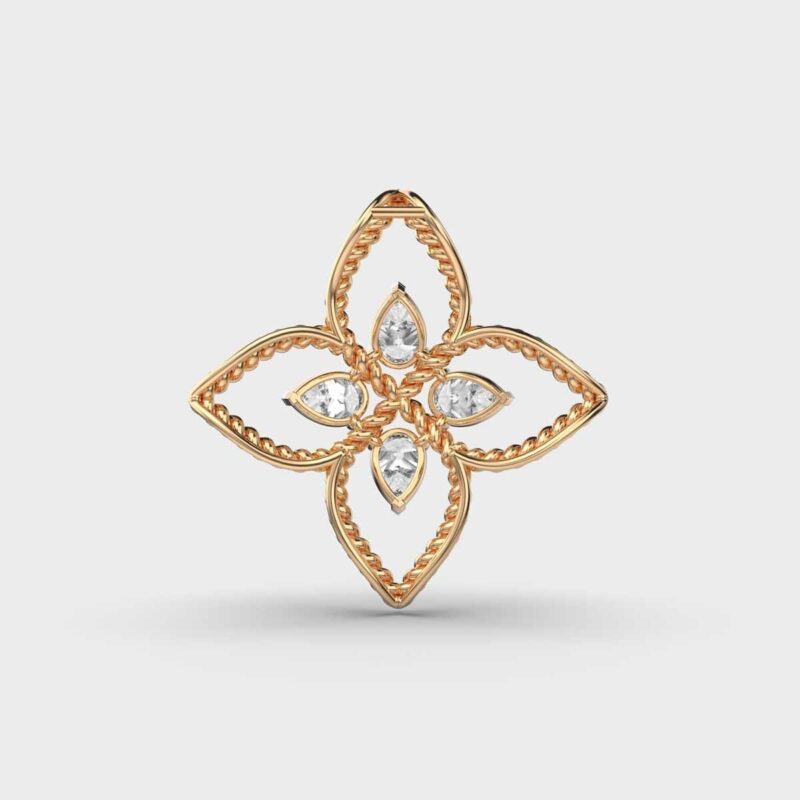
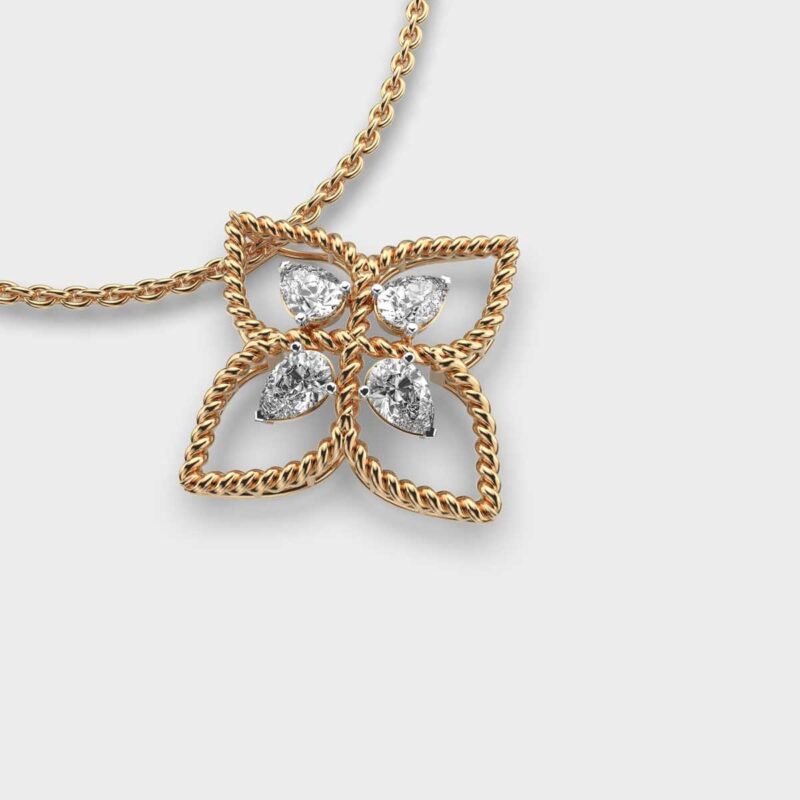

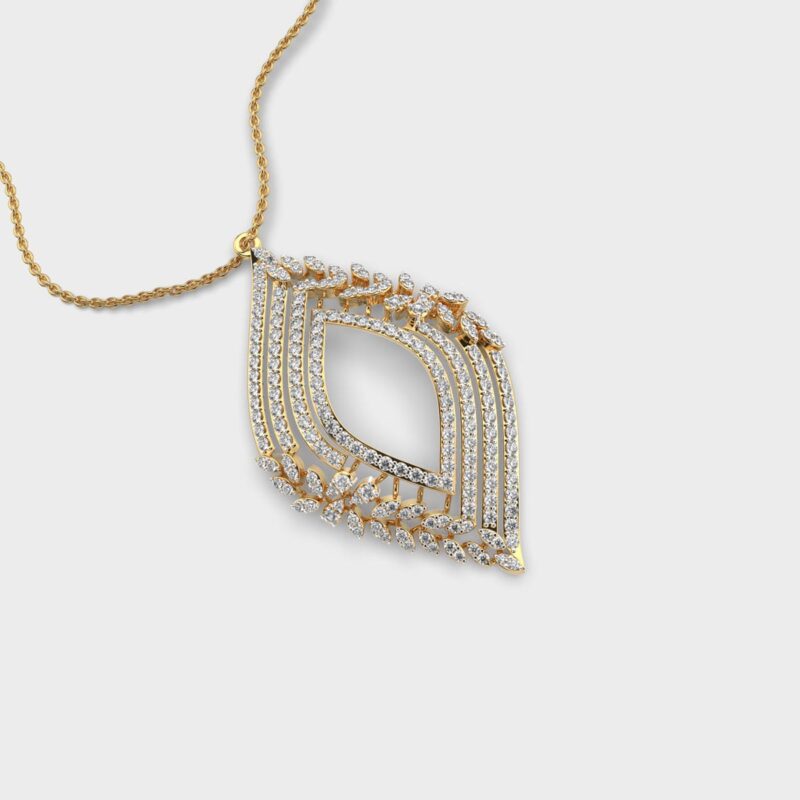
Showing 37–48 of 155 results
Discover Your Perfect Price
Filter by Stone Type and Metal to view accurate, variation-based pricing
Transparent, personalized, and effortless - explore designs that match your style, metal, and budget.
- Tip: Choose one stone type and one metal type to see your exact price.
- If prices seem off, just uncheck and re-apply your filters – the page will refresh with accurate pricing.
 1-to-1 Custom Design
Experience
 Craft Your Vision
Today with a 10% Starte
 HD video Preview
Before It Ships
 Fully Customizable
- Stone, Metal & Budget
 Choose Metal Tone:
Yellow, White or Rose Gold
 Handcrafted in Solid 10K · 14K · 18K
Gold, 925 Silver or 950 Platinum
 Select Your Stone Type:
 Lab-Grown Diamond or Moissanite
 Award winning
 craftmanship and detailing
 Hallmarked &
 Certified (IGI / SGL)
 Personalized Care &
 Expert Support
 Design Any Piece
Within Your Budget
1-to-1 Custom DesignExperience
Craft Your VisionToday with a 10% Starte
HD video PreviewBefore It Ships
Fully Customizable- Stone, Metal & Budget
Choose Metal Tone:Yellow, White or Rose Gold
Handcrafted in Solid 10K · 14K · 18KGold, 925 Silver or 950 Platinum
Select Your Stone Type: Lab-Grown Diamond or Moissanite
Award winning craftmanship and detailing
Hallmarked & Certified (IGI / SGL)
Personalized Care & Expert Support
Design Any PieceWithin Your Budget
Primira's
Real Reviews From Real Customers
Lifetime
Warranty
100% Money
Back Guarantee
Easy
Customization
7 Days
Return
14 Days
Exchange
Insured
shipping
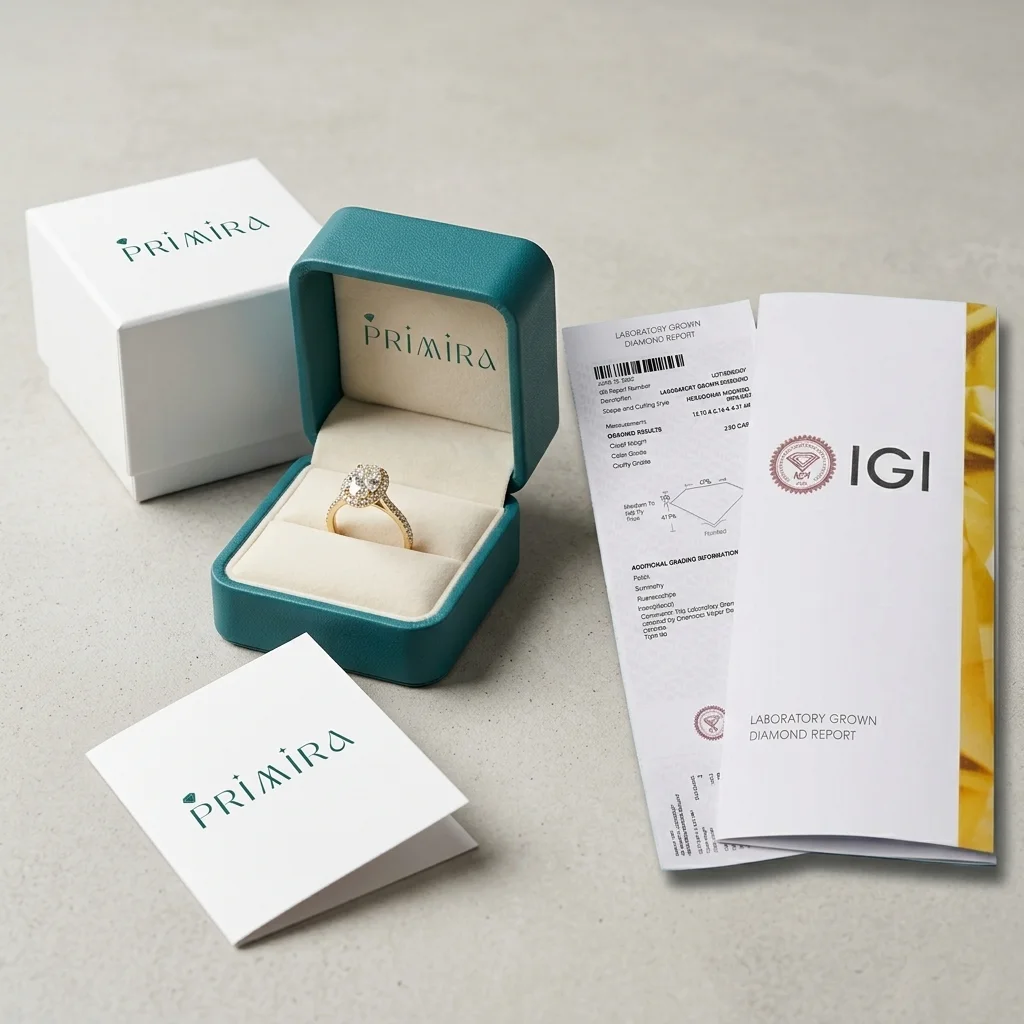
sustainable, beautiful packaging
Give your precious pieces a home they deserve with our stylish, soft-lined jewelry boxes made for effortless organization.
Read Our Article Behind Every Collection
Each design at Primira Luxury is handcrafted with precision, purpose, and emotion. From the first sketch to the final polish, our artisans turn your vision into a piece that feels personal, ethical, and timeless.
Read More
Lab Grown Diamond Pendants — Styles, Settings & Custom Orders
A pendant and a necklace are not the same thing. A necklace is a complete piece — the diamonds are set into the chain itself, and the chain is the design. A pendant is the stone in its setting: a distinct piece with a bail that slides onto a chain, which means the stone, the setting style, and the chain length are three separate decisions rather than one fixed product off a shelf. That distinction matters practically, because it changes what you can specify when you order.
At Primira Luxury, those three decisions — stone, setting, chain — are each adjustable at the production stage. The chain length that places a pendant exactly at your collarbone, the bail type that keeps a heavier stone centred and face-up, the setting profile that determines how much light enters from below: these aren’t choices from a dropdown menu. They’re specifications confirmed before production begins, from a facility in Surat, Gujarat, where the lab grown diamonds are cut and set in the same building.
India searches “diamond pendant” more than almost any other fine jewellery term. This page covers every style Primira makes, the technical decisions that separate a pendant that wears well from one that doesn’t, and how custom orders work.
What Kind of Diamond Pendant Are You Looking For?
Each pendant style Primira makes is a genuinely different design with different engineering requirements, not the same piece in different sizes. Here’s what each one is and when it makes sense.
Cluster Pendants
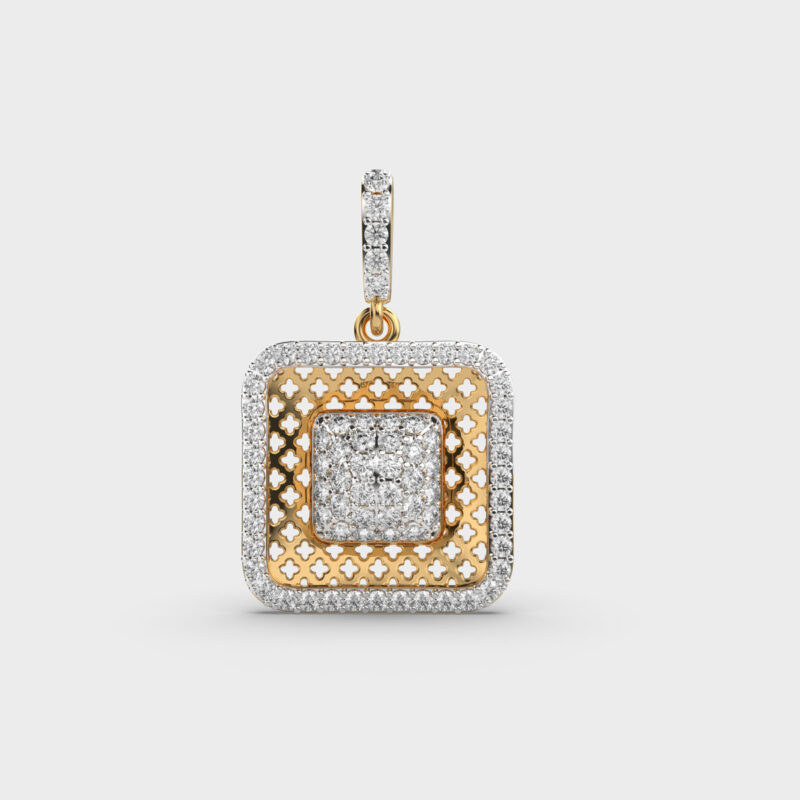
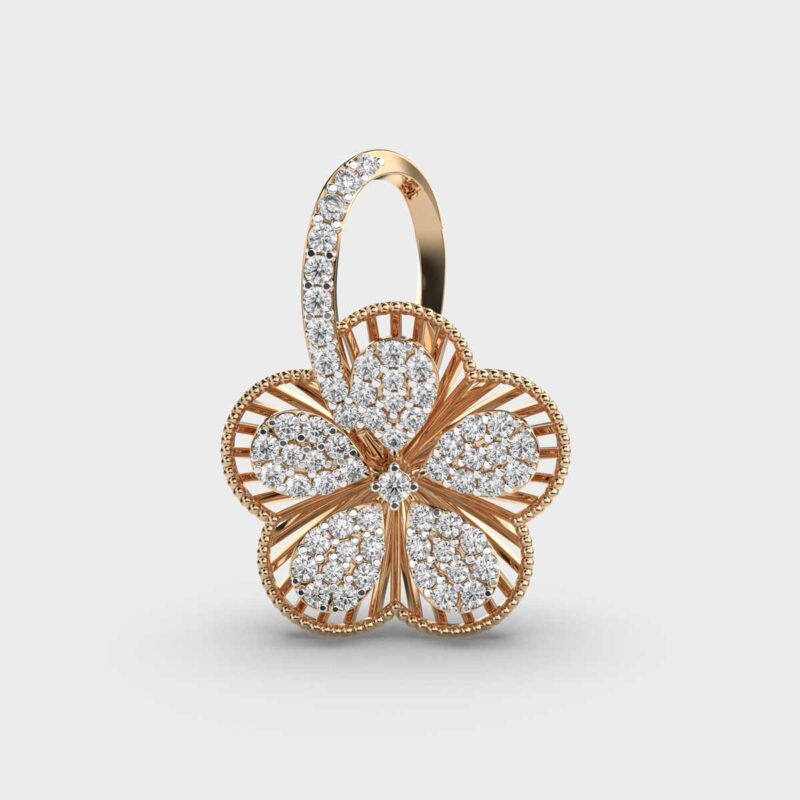
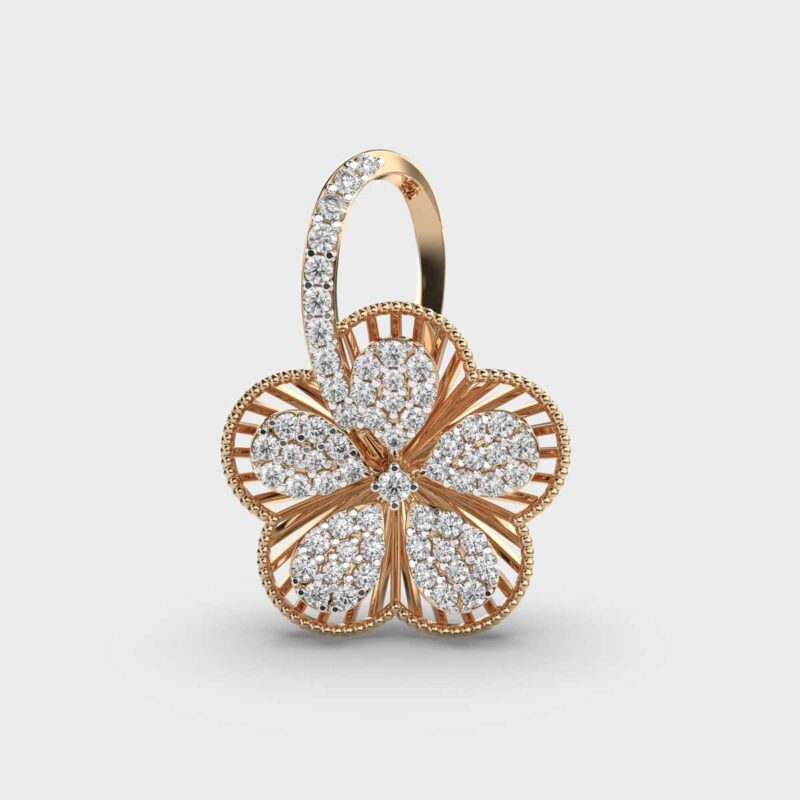
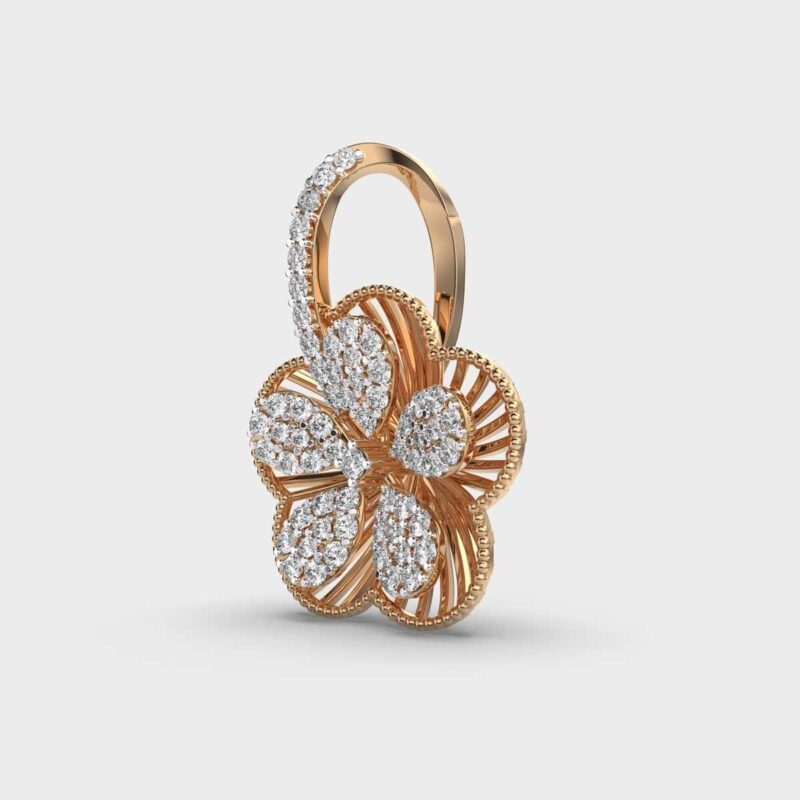
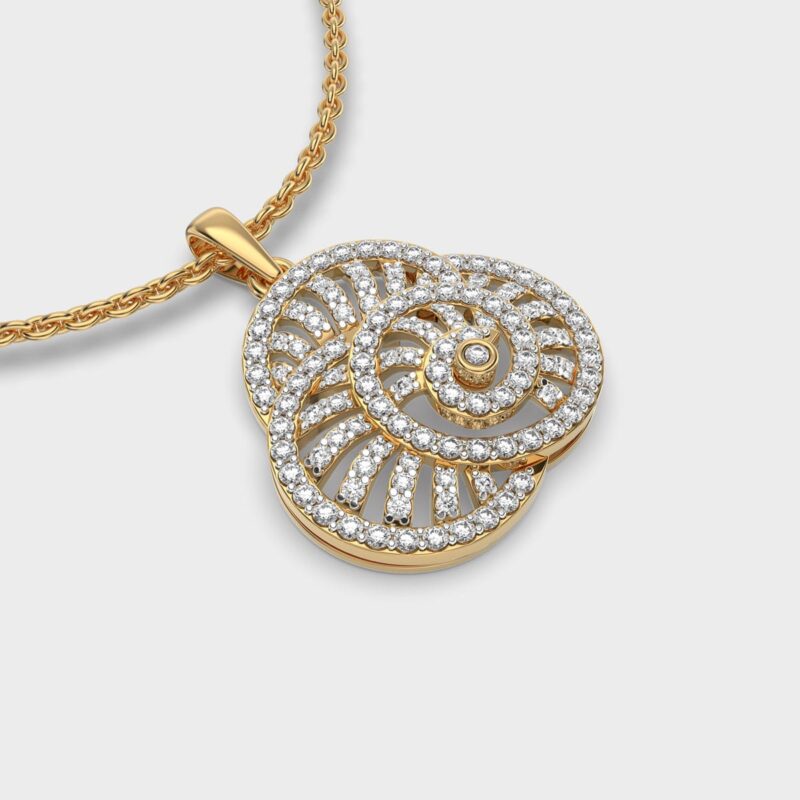
Multiple lab grown diamonds arranged in a radial, floral, or geometric layout — the largest category in Primira’s pendant range. Visual impact comes from arrangement, not from a single large stone. Individual melee stones are calibrated to ±0.01mm for a unified look; shared-prong setting between adjacent stones maximises stone coverage while minimising visible metal. A cluster pendant reads as considerably larger than its total carat weight suggests, because the eye reads the overall footprint of the design rather than any individual stone. Browse cluster diamond pendants.
Solitaire Pendants
One stone, one chain, everything concentrated on how that single diamond performs in pendant context. Pendant viewing distance is roughly 45–50cm from a standing observer — significantly further than ring viewing distance — which shifts the priority toward face-up brightness over sparkle pattern complexity. Cut quality becomes the decisive variable: a stone with a weak cut grade loses far more of its visual presence at pendant distance than it does when examined up close. Primira stocks Ideal and Excellent cuts only, which is not an incidental policy on a solitaire pendant. Browse solitaire lab grown diamond pendants.
Personalised Pendants
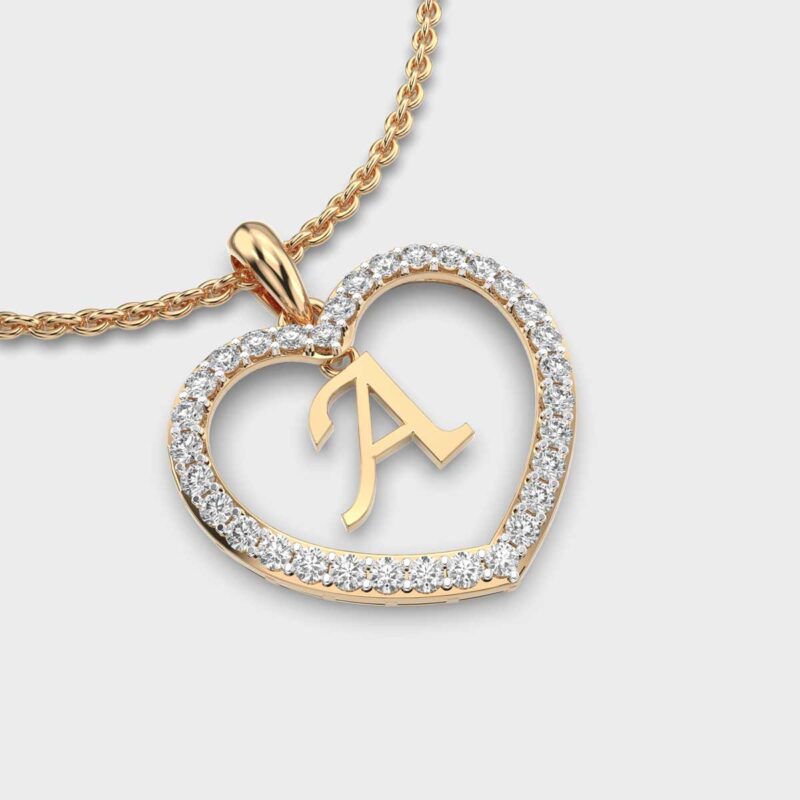
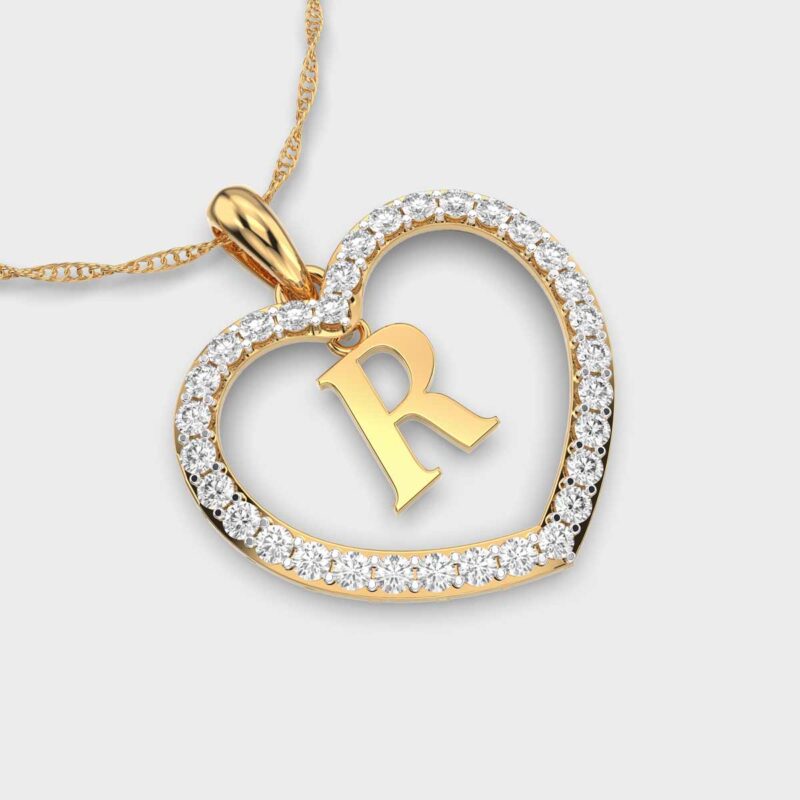
Initial and alphabet pendants, name pendants, symbol pendants — cut from Surat lapidary into custom letter or shape outlines, not a font stamped on metal. Each letter is a precision diamond shape with its own perimeter channel framework. This is genuinely different from a retailer printing a name on a pendant: the diamond itself is the letter. Browse personalised diamond pendants.
Religious Pendants
Om, Ganesh, cross, star, crescent — religious symbols cut as diamond silhouettes or rendered in diamond-set precious metal. Each symbol carries its own design logic and proportional requirements; a Ganesh pendant and a crescent pendant are different custom-cutting problems, not the same shape at different scales. Custom religious symbol cutting available on order. Browse religious diamond pendants.
Men’s Pendants
Bold geometric designs, heavier metal weight, lab grown diamond accents or a single centre stone. A growing category in India and globally — designed with weight and visual presence appropriate to how men actually wear pendants, not as a resized version of a women’s piece. Browse men’s lab grown diamond pendants.
The Bail Engineering Problem — Why Pendants Flip, and How It’s Solved
The most commonly reported frustration with pendant necklaces is a pendant that won’t stay centred — it flips, tilts to one side, or rotates face-down against the skin. This is a production engineering problem, not an incidental annoyance, and it has specific causes.
What causes a pendant to flip: A bail that’s too light relative to the stone’s carat weight creates an asymmetric weight distribution — the pendant rotates until the heaviest point (the stone) drops below the bail’s attachment point. On a sliding bail where the chain passes through a loop, if the bail diameter is too wide for the chain, the chain tilts inside the bail and the pendant rotates sideways. A pendant set with a thin, high-profile prong basket is more prone to catch on fabric and tilt than a lower-profile bezel or flush-set design.
Hidden bail design: Primira’s standard for pendants above 0.50ct is a hidden bail — the bail is integrated into the back of the setting so the chain appears to emerge directly from the stone. This removes the visible metalwork at the top that a standard loop bail adds, and it places the chain’s contact point closer to the stone’s actual centre of gravity. The result is a pendant that hangs naturally perpendicular to the chain without tending to rotate.
Anti-flip balance point: The geometry matters: the bail attachment point should sit directly above the pendant’s centre of mass, not above the crown table. For complex cluster or asymmetric designs — where the stone arrangement shifts the visual and physical centre off-axis — this requires calculating the actual weight distribution of the finished piece before setting the bail position. This is a bench decision, not a catalog selection, and it’s one reason the pre-production confirmation process includes bail type as a confirmed specification rather than an assumed default.
Bail type by stone weight: For stones below 0.30ct, a slim sliding bail works well — the stone is light enough that it self-centres regardless. From 0.30ct to 0.75ct, a hidden integrated bail produces a cleaner face-up result. Above 0.75ct, a double-clasp hidden bail or a partial-bezel frame at the bail junction prevents rotation under the stone’s own weight. These aren’t rigid rules — setting profile, stone shape, and chain thickness all interact — but they’re the starting point that Primira’s production team works from.
Stone Specifications for Pendant Settings
Pendant buyers often ask whether the 4Cs matter differently here than in a ring. The answer is yes, in two specific ways.
Cut: At pendant viewing distance, fire and brightness are more visible than scintillation pattern. A round brilliant or oval at Ideal/Excellent cut grade performs well at 45cm viewing distance. Fancy cuts with long facet sequences — emerald cut, French cut, OEC — show their light character more dramatically in a pendant format than in a ring, because the observer sees the stone face-on and stationary rather than in constant micro-motion. Primira does not stock Good or Fair cuts at any carat weight.
Colour: Colour is slightly less visible in a pendant than in a ring, because the stone is further from the eye and the light path through the stone is shorter on average at that angle. A G-H colour lab grown diamond that reads as very slightly warm in a close-held engagement ring setting often reads as colourless in a pendant at typical wearing distance. Primira’s D–F colourless stock is the primary recommendation for white metal settings; G–H is a sensible value choice for yellow gold pendant settings, where the warm metal naturally harmonises with near-colourless stones.
Clarity: VVS1–VS2, all eye-clean, is Primira’s full clarity range — SI2 and below are not stocked. In a pendant context, a VS2 is typically indistinguishable from a VVS1 to the naked eye at pendant distance, so VS2 represents strong value for buyers who want maximum visual performance per rupee or dollar without paying for clarity that can’t be seen in normal wear.
Carat: Lab grown diamonds make larger carat weights financially accessible in pendant format. A 1ct lab grown diamond solitaire pendant sits at a price point where mined diamond buyers would typically be looking at 0.25–0.40ct stones. The practical range most buyers consider: 0.25–0.50ct for a subtle daily-wear piece, 0.50–1.0ct for a statement solitaire that reads clearly at pendant distance, 1ct+ for a pendant designed to be noticed.
Metal and Setting for Pendants
14K gold is Primira’s default metal recommendation for pendants across all styles. It offers the right balance of gold content (58.5%) and tensile strength — pendant settings take directional stress at the bail attachment point that a pure-gold alloy would eventually show. Available in yellow, white (rhodium-plated), and rose.
18K gold suits pendants with heavier metal weight requirements: complex cluster settings with significant gold volume, or men’s pendants where the design calls for visible metal mass.
Platinum 950 is the recommended choice for pendants with very small accent stones (micro-pavé borders, delicate cluster melee) where prong durability at fine gauge matters most. Platinum’s density means a platinum prong at 0.3mm gauge holds stone grip that would require a 0.5mm gold prong, which affects both the visual weight of the setting and the stone’s face-up coverage.
Setting styles most suited to pendant format: bezel (full or partial) for daily-wear durability and anti-flip stability; 4-prong basket for solitaires where maximum light entry is the priority; cluster/shared-prong for multi-stone designs; hidden bail integration is compatible with bezel and prong settings alike.
Chain Length — The Decision Most Buyers Make Last, Which Should Be Made First
Standard pendant chains run 16–18 inches for most buyers. 18 inches sits a finger’s width below the collarbone — the universally flattering position for a pendant across most necklines, and the length that produces the best proportional relationship between stone size and visual context. 16 inches works for smaller pendants (0.25–0.50ct) where a close-to-throat placement reads as intentional and refined. 20 inches drops the pendant to the upper chest, which works for larger cluster and statement pendants that need visual breathing room.
For Indian buyers: the 16–18 inch range works for western necklines and some saree blouses. For a pendant that will be worn primarily with high-collared or traditional necklines, 20–22 inches ensures the pendant clears the fabric and remains visible. This is confirmed specifically in the pre-production WhatsApp stage.
Chain length is adjusted at no extra cost on all Primira pendant orders. Because it’s a production specification rather than a post-setting alteration, any length between 14 and 24 inches can be specified; the chain is produced to that length rather than a standard length being shortened after the fact.
Custom Pendant Orders
Every pendant style Primira makes is available as a custom order. The custom-specific capability worth knowing for pendants:
A pendant is inherently a three-part design: the stone, the setting and bail, and the chain. In a standard retail purchase, these three elements are pre-fixed as a unit. At Primira, they’re confirmed as separate specifications — which means a buyer can bring a reference image of a setting they like, specify a stone grade independently, and choose a chain length that suits their actual wardrobe, rather than adapting to a fixed product. The lab grown diamond itself can be selected to specification: carat, colour grade, clarity tier, and cut grade are all confirmed before the stone is set.
Custom silhouette pendants — initial cuts, name shapes, symbolic or decorative outlines cut from lab grown rough by Surat lapidaries — are the category where Primira’s manufacturing position is most directly expressed. These aren’t decorative metal pieces with diamond accents: the diamond itself is shaped to the silhouette. See personalised diamond pendants for the full range.
Reference images accepted via WhatsApp (+91 9510640173). CAD design review before production begins. Production timeline: 15–35 business days after specification confirmation.
Care for Diamond Pendants
The specific vulnerability of pendant settings is at the bail attachment point, not the stone itself. A lab grown diamond at VVS–VS2 clarity and 10 on the Mohs hardness scale is more durable than the metal it’s set in. What to watch:
Bail junction: Where the bail meets the setting, metal fatigue from repeated chain movement can develop over years of daily wear. An annual check by a jeweller to confirm the bail solder joint is intact costs very little and prevents the more expensive problem of losing the pendant. Hidden bails, being integrated rather than soldered as a secondary element, are structurally more stable at this junction.
Prong tips: On solitaire and cluster pendants with prong settings, prong tips are the most exposed part of the setting. The tips face outward rather than downward (as they do in a ring), so they’re more visible but less subject to surface abrasion. Check prong height uniformity annually — a single low prong can allow stone movement.
Cleaning: A pendant spends most of its time against skin, which means it accumulates body oil and product residue faster than most ring settings. Soak in warm water with a drop of dish soap, use a soft toothbrush around the bail junction and under the stone, rinse, dry with a soft cloth. Avoid ultrasonic cleaners on settings with pavé or micro-accent stones — vibration can loosen small prongs.
Frequently Asked Questions
What is the difference between a diamond pendant and a diamond necklace?
A diamond pendant is the stone in its setting — a distinct piece with a bail that slides onto a chain. A diamond necklace is a complete piece where the diamonds are set into the chain itself (think tennis necklace or station necklace — the chain and the stones are inseparable). Most of what people call a “diamond necklace” when they mean a pendant-plus-chain is technically a pendant necklace. The practical difference: a pendant can be moved between chains of different lengths or styles; a necklace cannot.
What carat size should I choose for a diamond pendant?
At pendant viewing distance (roughly 45–50cm from the observer), stones below 0.25ct are visible but subtle. 0.30–0.50ct is the range for a piece that reads clearly as a diamond pendant without being a statement piece. 0.50–1.0ct covers the statement solitaire range. 1ct and above is for a pendant designed to be noticed. These are general guidelines — face-up diameter (which depends on cut and shape, not just carat) matters as much as carat weight at pendant distance.
Which is better — a solitaire or a cluster diamond pendant?
Different things, not ranked against each other. A solitaire pendant concentrates everything on one stone’s quality — it’s personal and understated when the stone is smaller, striking when it’s larger. A cluster pendant creates visual impact through arrangement: the footprint of the design reads larger than its total carat weight because the eye sees the overall shape. Cluster pendants suit buyers who want presence without committing to a large single stone. See both: solitaire diamond pendants and cluster diamond pendants.
How do I stop my diamond pendant from flipping?
Pendant flipping is caused by mismatched weight-to-bail geometry: the stone is heavier than the bail can counterbalance, or the bail loop is wide enough to let the chain tilt inside it. The practical fixes are a hidden integrated bail (removes the exposed loop, positions the chain contact point directly above the stone’s centre of gravity) and a setting profile that’s low-profile enough not to catch on fabric. Primira’s production team calibrates bail type to stone weight as a standard part of the build — it’s confirmed in pre-production specification, not assumed from a catalog default.
What chain length should I choose?
18 inches is the universally flattering starting point — it sits just below the collarbone and works across most necklines. 16 inches for a pendant you want close to the throat; 20 inches for larger pendants or to ensure visibility over high necklines. For traditional Indian necklines or saree blouses, 20–22 inches is often the better choice. Primira produces chains to your specified length rather than starting from a standard and shortening, so any length between 14 and 24 inches is available at no extra cost.
Can I get a fully custom pendant design?
Yes. The stone, setting and bail design, and chain length are confirmed as separate specifications before production begins. Reference images accepted via WhatsApp; CAD design review before any metal is cast or stone is set. Custom silhouette shapes — alphabet, initial, symbolic, geometric — are cut from lab grown diamond rough by Surat lapidaries, so the diamond itself is the shape, not a metal piece with a diamond accent.
Buying with Confidence
A pendant that won’t stay centred, or a chain that’s wrong for your neckline, are specification problems — not stone problems. Both are entirely preventable before production begins, because both are confirmed before any metal is cast or stone is set.
Within 24 hours of checkout, the Surat team contacts you via WhatsApp and email to confirm the two variables a product page cannot resolve: chain length and bail type. These are not afterthoughts — they’re the decisions that determine whether the piece wears as designed or becomes the pendant you stop reaching for.
The lab grown diamond itself carries IGI certification. The report number is laser-inscribed on the girdle and verifiable at igi.org — by anyone, independently, without Primira’s involvement. That’s a different kind of assurance from a seller’s in-house grading card.
Returns are accepted within 7 days of delivery on any pendant where the delivered piece differs materially from the confirmed specification. All shipments are insured from the Surat facility to your door. Express international shipping (DHL/FedEx/UPS) available; free on orders above USD $550. India: free shipping on orders above ₹10,000.
For any question before ordering — stone grade, setting style, chain length, custom design — contact the Surat team directly at +91 9510640173 (WhatsApp) or contact@primiraluxury.com.
 Chat on WhatsApp