
Primira Luxury Blog
“Jewelry is more than an accessory; it’s a timeless tale waiting to be told.”
“Like a well-crafted gem, true beauty comes from within. Let your jewelry amplify it.”


Showing 13–14 of 14 results
- ₹20,524 – ₹100,637Price range: ₹20,524 through ₹100,637
- ₹23,808 – ₹117,739Price range: ₹23,808 through ₹117,739


Showing 13–14 of 14 results
Discover Your Perfect Price
Filter by Stone Type and Metal to view accurate, variation-based pricing
Transparent, personalized, and effortless - explore designs that match your style, metal, and budget.
- Tip: Choose one stone type and one metal type to see your exact price.
- If prices seem off, just uncheck and re-apply your filters – the page will refresh with accurate pricing.
 1-to-1 Custom Design
Experience
 Craft Your Vision
Today with a 10% Starte
 HD video Preview
Before It Ships
 Fully Customizable
- Stone, Metal & Budget
 Choose Metal Tone:
Yellow, White or Rose Gold
 Handcrafted in Solid 10K · 14K · 18K
Gold, 925 Silver or 950 Platinum
 Select Your Stone Type:
 Lab-Grown Diamond or Moissanite
 Award winning
 craftmanship and detailing
 Hallmarked &
 Certified (IGI / SGL)
 Personalized Care &
 Expert Support
 Design Any Piece
Within Your Budget
1-to-1 Custom DesignExperience
Craft Your VisionToday with a 10% Starte
HD video PreviewBefore It Ships
Fully Customizable- Stone, Metal & Budget
Choose Metal Tone:Yellow, White or Rose Gold
Handcrafted in Solid 10K · 14K · 18KGold, 925 Silver or 950 Platinum
Select Your Stone Type: Lab-Grown Diamond or Moissanite
Award winning craftmanship and detailing
Hallmarked & Certified (IGI / SGL)
Personalized Care & Expert Support
Design Any PieceWithin Your Budget
Primira's
Real Reviews From Real Customers
Lifetime
Warranty
100% Money
Back Guarantee
Easy
Customization
7 Days
Return
14 Days
Exchange
Insured
shipping
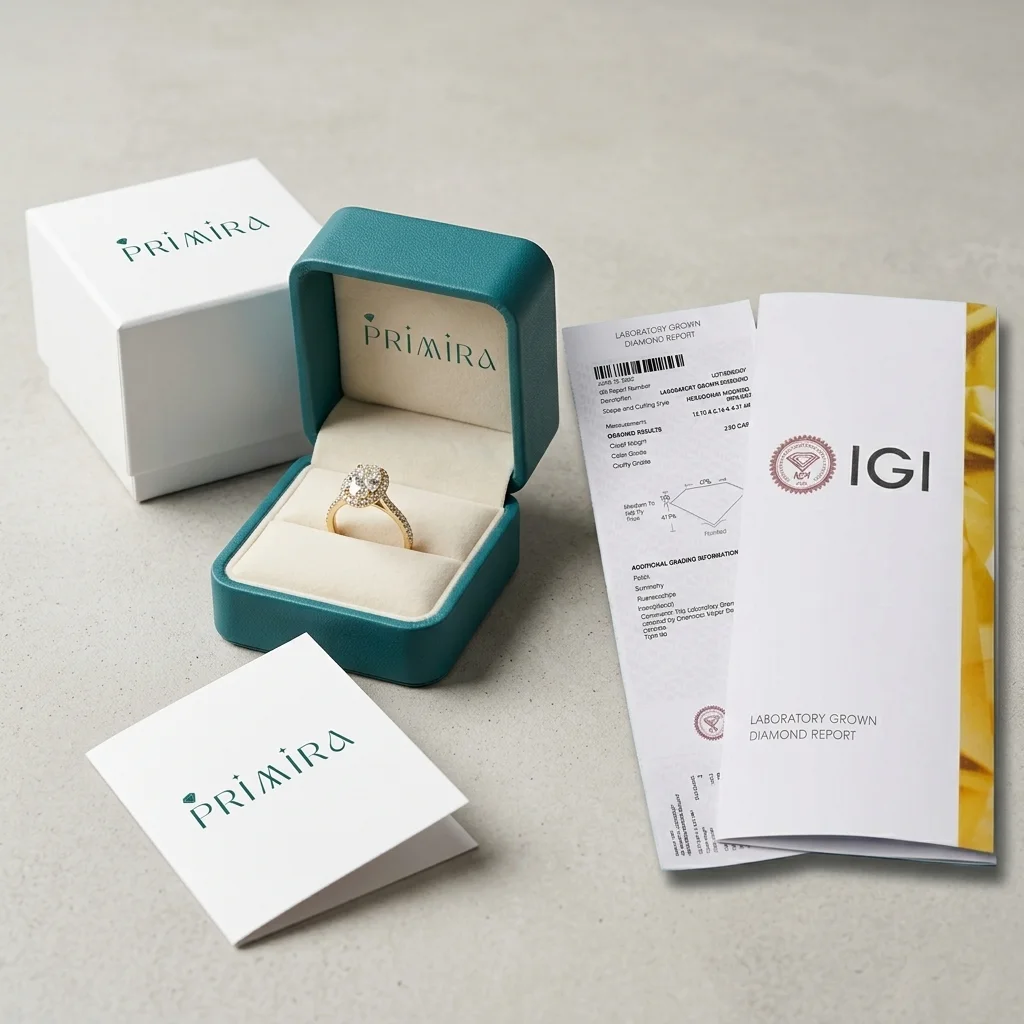
sustainable, beautiful packaging
Give your precious pieces a home they deserve with our stylish, soft-lined jewelry boxes made for effortless organization.
Read Our Article Behind Every Collection
Each design at Primira Luxury is handcrafted with precision, purpose, and emotion. From the first sketch to the final polish, our artisans turn your vision into a piece that feels personal, ethical, and timeless.
Read More
Toi et Moi Lab Grown Diamond Rings — Two-Stone Engagement Ring
Toi et Moi Lab Grown Diamond Rings — Two-Stone Engagement Ring
Most engagement rings are chosen. A toi et moi ring is engineered — for two specific stones, two specific shapes, and the exact way those two shapes are going to sit together on your finger for the next several decades. That’s the thing most buyers don’t know when they start looking: the challenge isn’t picking the shapes, it’s making them work as a pair. Two lab grown diamonds of different cuts don’t share pavilion depths, girdle profiles, or visual centre lines. Set them side by side without accounting for those differences and the ring rotates on the finger, or one stone sits fractionally higher than the other and the whole axis tilts. The design looks deliberate on paper and wrong in person.
Solving it happens on the bench, not the mood board. It’s also why this category suits a cutting facility specifically — because the stones can be cut to a matched spec rather than selected from existing inventory and fitted together by luck.
What a Toi et Moi Ring Actually Is
Toi et moi is French for “you and me.” The style places two stones side by side in a single shared setting, each stone a primary focal point, neither subordinate to the other. Where a three-stone ring has a hierarchy — larger centre, smaller accents — a toi et moi has two equals. The symbolic reading is built into the construction.
The style dates to 1796: Napoleon Bonaparte’s proposal to Joséphine used a pear-cut diamond alongside a pear-cut sapphire, both roughly 1 carat, set on a plain gold band. It resurfaced through the Art Deco period and has been a recurring presence in fine jewelry ever since. What’s different in 2026 is the volume of demand — this is the most-searched and most-saved engagement ring style of the year — and lab grown diamonds as a practical enabler. Two-stone rings were historically expensive because quality stones are expensive twice over. Lab grown diamond pricing reflects manufacturing cost rather than scarcity, which changes the maths considerably on a two-centre design.
Primira’s toi et moi collection is available in lab grown diamond and hand-cut moissanite. Both stone types are available across all shapes and in the metal of your choice at checkout.
The Engineering Behind the Setting
The Rotation Problem
A toi et moi ring carries more top weight than a solitaire. Two lab grown diamonds of combined 2–3ct total sit on a band that’s designed for the mass of one stone. Without counterbalancing, the ring spins on the finger — the stones end up pointing sideways by the afternoon.
The solution is a combination of band mass distribution and stone-to-stone positioning. The two stones are set close together and anchored low to the band, minimising the lever arm that causes rotation. On asymmetric pairings — an oval next to a pear, a round next to a marquise — the heavier or larger stone typically anchors the setting, with the band’s metal mass distributed to compensate on the lighter side. This isn’t visible in a photo. It’s what separates a ring you wear daily from one you wear carefully.
The Girdle Height Problem
A pear-cut lab grown diamond and an oval-cut lab grown diamond have different pavilion depths. The pear’s pointed tip is the shallowest part of the stone; the oval’s belly is the deepest. When set side by side with standard prong heights, one stone will sit visibly higher than the other and the visual axis between them tilts.
The fix is independently calibrated prong heights — the claws holding each stone are set at different elevations, bringing both table surfaces to the same visual plane. For contrasting shapes with significant pavilion differences (pear+emerald, marquise+cushion), this calibration is critical. For closely related shapes (oval+pear), the difference is smaller but still present.
Where Primira differs from a retailer selecting pre-existing inventory: both stones in a custom-paired set can be cut to complementary pavilion specs from the start, reducing the compensation required at the prong level and producing a cleaner, more unified result.
Band Configuration Options
Three band structures are available depending on the pairing:
A shared-base setting keeps both stones close together on a single continuous band. This is the cleanest silhouette and the most secure configuration for daily wear — the stones support each other at the girdle, reducing individual snagging risk.
A bypass shank curves the band so each end rises to hold one stone, meeting at a gentle arch in the middle. This is the most historically influenced configuration — closer to Napoleon’s original — and works particularly well when the two stones are intentionally angled toward each other.
An open-split setting separates the stones on a split band with a deliberate gap between them. Modern, architectural, and the most forgiving for very different stone heights — but less secure for everyday wear and less suited to pointed cuts like pear or marquise at the outer edge.
Stone Pairings — What Works and Why
Every toi et moi pairing resolves a single visual question: do the two shapes create a continuous line across the hand, or a tension between two objects? Both approaches work. The choice depends on whether you want the ring to read as unified or dynamic.
Continuous-line pairings
Oval + Pear — the most-requested combination in 2026. The oval’s soft elongated curve transitions naturally into the pear’s tapered point. The apex of the pear points outward; the oval anchors the setting’s mass. These two shapes share enough visual language that the ring reads as designed rather than assembled.
Pear + Pear (opposing) — both stones facing outward from a central point, creating a wing or chevron silhouette. Classic, symmetrical, and the closest a toi et moi comes to a coherent single shape. Requires very close carat weight matching — a visible size difference breaks the mirror.
Round + Marquise — the round’s uniformity grounds the setting; the marquise’s elongated point creates directional energy. The contrast is legible at a distance. The marquise’s tip requires a V-prong at the outer end, which affects the setting’s overall profile.
Contrast pairings
Oval + Emerald — soft curves against hard architectural lines. These two shapes have the most different visual languages of any common pairing. The result reads clearly as a statement. Requires care on stone sizing — an emerald’s footprint reads larger than its carat weight suggests, so the oval typically needs to be slightly heavier to balance visually.
Round + Pear — a common entry point for buyers who want the familiarity of a round brilliant alongside something more unusual. The pear is oriented with the point facing out. The round does the sparkle work; the pear does the shape work.
Fancy color + white lab grown diamond — one lab grown diamond, one fancy color lab grown diamond (pink, blue, vivid yellow, or green). The colour contrast does the visual work that shape contrast does in an all-white pairing. This combination is growing significantly in 2026 alongside the broader fancy color movement. Available at Primira across all saturation tiers — Vivid, Intense, and Light — in the full fancy color lab grown diamond range.
A note on carat ratios
The two stones don’t need to be the same carat weight. They do need to be visually close in presence. Visual balance depends on shape: an emerald cut reads larger per carat than a round because of its elongated footprint; a round reads smaller per carat than an oval for the same reason. As a working guide, aim for the two stones to cover roughly equal finger surface area, not equal carat weight. Primira’s pre-production WhatsApp call confirms both stone specs before cutting or setting begins — this is the point at which ratio and visual balance are reviewed.
Stone Specifications
All toi et moi rings use the same stone stock as the broader Primira collection. For lab grown diamonds:
Clarity is VVS1 through VS2 across both stones — all eye-clean. SI2 and below are not stocked. With two stones set side by side, any clarity difference between them is visible, which is why consistent clarity across the pair is more important here than in any single-stone setting.
Colour runs D–F colorless as primary stock, G–I near-colorless as a value tier with no visible colour difference to the naked eye. For matched-pair settings, both stones are confirmed to the same colour range before production.
Cut is Ideal and Excellent only. For elongated shapes (pear, oval, marquise), bow-tie effect — the dark shadow across the stone’s waist — is assessed at the cutting stage. Properly faceted elongated lab grown diamonds at Ideal cut grades show minimal bow-tie; Primira does not stock elongated shapes where bow-tie is significant.
All lab grown diamonds are IGI certified. The report number is laser-inscribed on the stone’s girdle and verifiable at igi.org. For a toi et moi pairing, both stones carry independent IGI reports — each stone’s cut, colour, clarity, and carat verified separately before the pair is set.
Metal and Setting Choices
Metal
Yellow gold (18K or 14K) reads warmest against a toi et moi’s asymmetric silhouette and suits pairings with warmer-coloured stones — champagne, fancy yellow, or mixed-colour combinations. White gold or platinum suits high-contrast pairings where the metal’s neutrality lets the stone differences do the work. Rose gold lends a softer character to the whole setting without competing with the stones.
14K gold is the default across the collection — the optimal balance of gold content and tensile strength for a setting that will be worn daily and carry more prong exposure than a bezel or channel alternative.
Platinum is available for buyers prioritising maximum prong security on high-value pairings. Platinum’s density holds claw tips more securely over time than gold alloys, which is meaningful when the setting has independent prong structures for two differently shaped stones.
Setting style
Prong (4-claw per stone) — the standard for toi et moi settings. Each stone is independently held by four claws positioned to clear the other stone’s profile. Maximum light entry, cleanest silhouette, most suited to brilliant-cut shapes where light performance is the point.
Bezel (partial) — a metal rim wraps the outer edge of each stone while leaving the inner facing open. The most secure option for daily wear, eliminates outer-edge snag risk on pointed cuts (pear, marquise), and reads more contemporary than prong. Slightly reduced light entry versus open prong.
V-prong at pointed tips — mandatory for pear and marquise cuts at the outer edge of the setting. The V-prong covers the stone’s tip where it’s most vulnerable to chipping. A straight prong on a pointed tip is a structural error; every Primira toi et moi with a pointed outer stone uses a V-tip claw at that end.
Pairing with a Wedding Band
A toi et moi ring’s asymmetric profile means a standard straight wedding band won’t sit flush against it — there will be a gap at the setting’s base. The gap comes from the geometry itself — two stones sitting at different heights — not from anything measured wrong.
Three approaches work, depending on the setting’s exact profile:
A contoured band is shaped to follow the exact curve of the toi et moi setting’s base. It sits flush with no gap and reads as a matched set. The contour must be drawn from the actual ring’s dimensions — a generic curved band won’t match a custom profile. Primira produces contoured wedding bands as part of the custom order process: the band is made from the engagement ring’s measurements, not from a standard template.
An open gap band has a deliberate V-shaped cut-out that frames the setting from below rather than pressing against it. This works particularly well for higher-set or bypass-shank toi et moi designs where a contoured band would add unwanted height.
Separate hand — wearing the engagement ring and wedding band on different hands is a legitimate approach that sidesteps the stacking problem entirely. Many toi et moi wearers prefer this; it gives each ring its own visual moment. See also the wedding band collection for styles that work independently.
Toi et Moi vs. Solitaire — The Honest Comparison
The solitaire is the dominant engagement ring style globally, and most buyers arriving at toi et moi have looked at solitaires first. The practical differences worth knowing:
A toi et moi ring has a wider finger footprint — two stones side by side cover more surface area than one. On a narrower hand this reads as proportionally bold; on a broader hand it lands naturally. A solitaire lab grown diamond engagement ring concentrates all its visual weight in one stone.
A toi et moi ring is harder to resize than a solitaire. Resizing requires moving both stone settings in precise relation to each other, not just adjusting the shank. It’s manageable with an experienced setter but more involved. If sizing is uncertain at the time of order, discuss this with Primira at the pre-production call — it affects the setting design.
A toi et moi ring at equivalent total carat weight costs differently than a solitaire — two smaller stones of matched quality typically cost less per combined carat than one equivalent single stone, because large single stones carry a scarcity premium that lab grown manufacturing reduces but doesn’t eliminate at the highest sizes. Two well-matched 1ct lab grown diamonds in a toi et moi and a 2ct solitaire are not the same price, and the toi et moi will usually be more accessible.
Custom Toi et Moi — What “Custom” Means Here
Every stone combination in this style is, to some degree, bespoke. There is no fixed catalogue version of “the” toi et moi ring — the design is defined by which two shapes you pair, their carat weights relative to each other, and the band configuration that holds them together.
Primira’s custom process starts with a WhatsApp consultation where the stone combination is confirmed: shapes, carat weights, colour grades, clarity, and the band style. If you have a reference image — a screenshot, a celebrity ring you’re inspired by, a sketch — send it. The team confirms whether the pairing is achievable in Primira’s stock or requires a custom cut, and specifies the setting configuration needed to hold those two specific stones correctly.
Production runs 15–35 business days from confirmed specifications. Certified loose lab grown diamonds already in stock dispatch within 48 hours of confirmation. IGI certification covers both stones independently, with reports delivered with the piece.
One detail unique to toi et moi in the custom process: if both stones are being cut specifically for the pairing, pavilion depth and girdle profile can be coordinated between them at the cutting stage — they’re matched before setting rather than after. This is manufacturing capability that a retailer assembling from pre-cut inventory doesn’t have. Surat processes the majority of the world’s rough diamonds; Primira is in the facility where that cutting happens.
Care and Daily Wear
A well-built toi et moi ring is designed for daily wear. The things that matter for this specific setting type:
Prong checks are more frequent than for a solitaire or bezel setting. Two independently-held stones mean two sets of claws, and asymmetric settings take load differently than symmetric ones. A professional check once a year is adequate for most wearers; twice a year for active wear or physically demanding work.
Stone-to-stone contact at the inner faces of the setting creates a micro-abrasion point if the gap is too tight. Primira’s settings maintain a calibrated clearance between the stones — tight enough to read as unified, wide enough that the inner faces don’t contact under normal wear. Avoid ultrasonic cleaners that vibrate the stones against each other; warm soapy water with a soft brush and a soft cloth dry is the correct approach.
For pear and marquise cuts at the outer edge: the V-prong at the tip is the point most likely to catch on fabric or snag. Keep it clear of fine knits or delicate fabrics. If a V-prong tip ever feels loose or snaggy rather than smooth, stop wearing the ring and have it checked — this is the one point of real vulnerability in pointed-tip settings.
FAQ
What does toi et moi mean, and why is it trending in 2026?
Toi et moi is French for “you and me.” The style places two stones side by side in a single setting — each stone equally important, neither subordinate to the other. It’s the most-searched engagement ring style entering 2026, driven by a broader shift toward rings with personal symbolism rather than one universal design. Lab grown diamonds are also a practical factor: two quality stones at accessible per-stone pricing makes the two-centre format achievable at a wider range of budgets than it has been historically.
What are the best stone pairings for a toi et moi lab grown diamond ring?
The most popular pairing in 2026 is oval and pear — the two shapes share enough visual language to read as designed together rather than placed next to each other. Pear facing pear (opposing) is the most symmetrical option. Round with marquise or oval with emerald are the strongest contrast pairings. For something less conventional, one white lab grown diamond alongside a fancy colour lab grown diamond — pink, vivid yellow, or blue — uses colour contrast instead of shape contrast and is growing significantly as a choice. Every combination available at Primira can be paired across shape, colour grade, and carat weight on custom order.
Is a toi et moi ring practical for everyday wear?
Yes, with the right setting configuration. The two main practical concerns are rotation (top-heavy settings that spin on the finger) and prong exposure at pointed outer edges. Both are engineering problems with direct solutions: rotation is addressed through stone positioning and band mass distribution; pointed tips require V-prong coverage rather than straight claws. A correctly built toi et moi ring is as wearable daily as a solitaire — the engineering just needs to account for two stones rather than one. If daily wear in physically demanding conditions is a priority, discuss a partial bezel option on the outer edges at the pre-production call.
How do you pair a wedding band with a toi et moi engagement ring?
A straight band won’t sit flush against an asymmetric two-stone setting — there will be a gap at the base. The three approaches that work: a contoured band made from the engagement ring’s actual dimensions (Primira produces these as part of the custom process); an open gap band that frames the setting from below without pressing against it; or wearing the two rings on separate hands. The cleanest result is always the contoured band made to the engagement ring’s specific profile, not a generic curved band that approximates the fit.
Can I choose any combination of shapes and stone sizes?
Yes. All standard brilliant and step cuts are available — round, oval, pear, emerald, cushion, radiant, marquise, princess — as well as Primira’s specialty cuts including Portuguese, Rose Cut, Old European Cut, and custom silhouette shapes. The only constraint is a structural one: some shape combinations require specific band configurations to hold correctly. For combinations that haven’t been produced before, the pre-production WhatsApp call is where the team confirms the setting approach before anything is cut or cast.
Is a toi et moi ring more expensive than a solitaire of similar appearance?
Not in a straight line. The relevant comparison is total carat weight, not style. Two well-matched 1ct lab grown diamonds in a toi et moi setting and a single 2ct solitaire lab grown diamond are not the same price — a single 2ct stone carries a higher per-carat cost than two 1ct stones of equivalent quality, and the toi et moi will typically be the more accessible of the two at that total visual weight. Where a toi et moi becomes more complex (and potentially higher in total cost) is when the combination requires two large stones of very specific matching quality, particularly in fancy colour.
 Chat on WhatsApp