
Primira Luxury Blog
“Jewelry is more than an accessory; it’s a timeless tale waiting to be told.”
“Like a well-crafted gem, true beauty comes from within. Let your jewelry amplify it.”


Showing 1–12 of 13 results
 ₹16,089 – ₹75,489Price range: ₹16,089 through ₹75,489
- ₹24,554 – ₹133,557Price range: ₹24,554 through ₹133,557
- ₹19,763 – ₹96,789Price range: ₹19,763 through ₹96,789
- ₹41,059 – ₹232,604Price range: ₹41,059 through ₹232,604
- ₹19,032 – ₹86,258Price range: ₹19,032 through ₹86,258
 ₹20,468 – ₹106,478Price range: ₹20,468 through ₹106,478
- ₹19,868 – ₹97,493Price range: ₹19,868 through ₹97,493
- ₹15,658 – ₹73,421Price range: ₹15,658 through ₹73,421
- ₹19,626 – ₹95,242Price range: ₹19,626 through ₹95,242
- ₹17,661 – ₹86,697Price range: ₹17,661 through ₹86,697
- ₹28,432 – ₹152,115Price range: ₹28,432 through ₹152,115
- ₹37,942 – ₹241,768Price range: ₹37,942 through ₹241,768
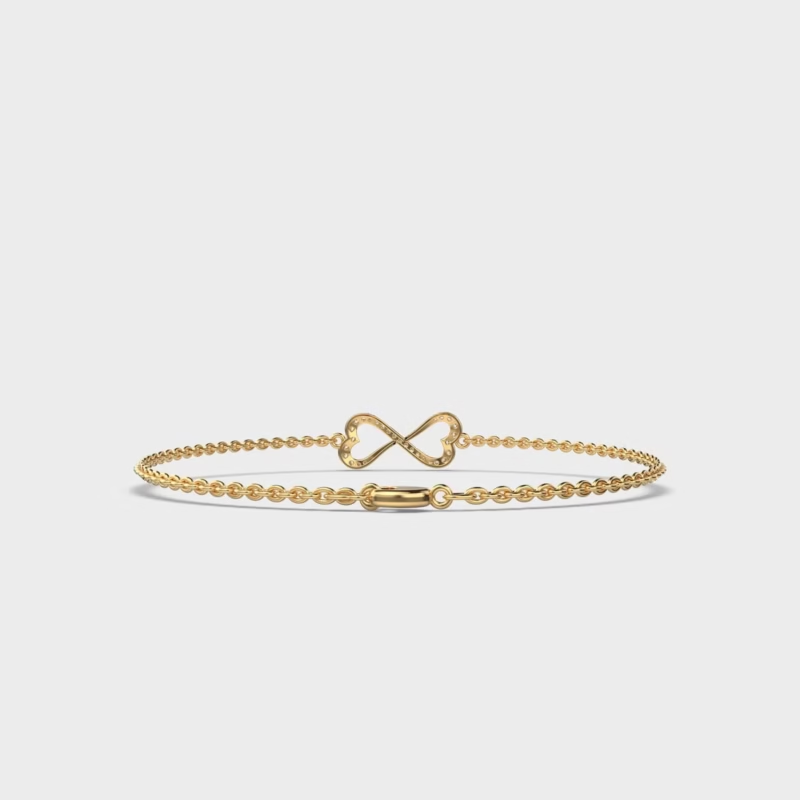
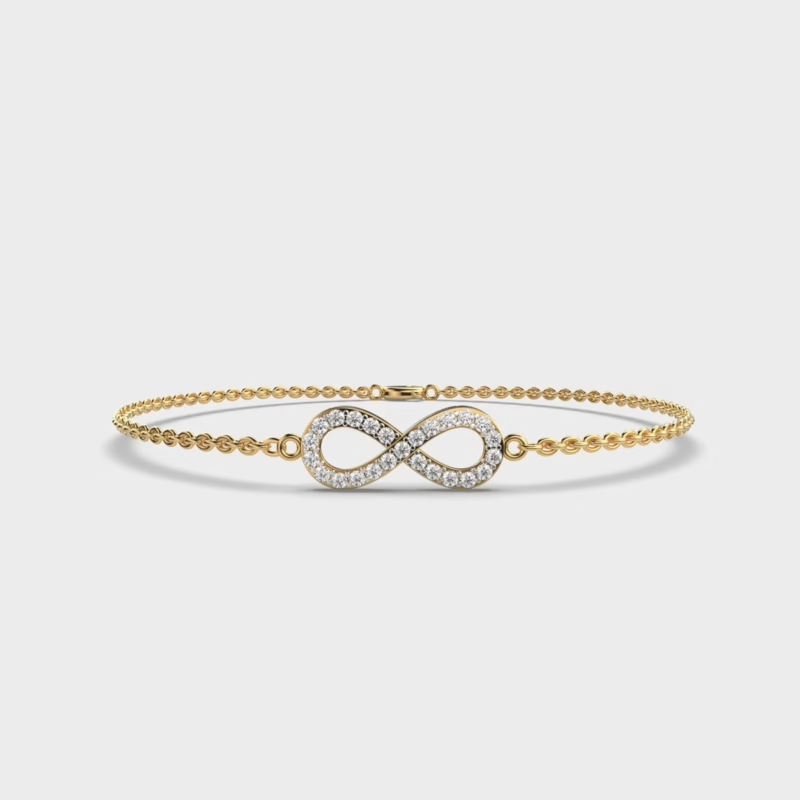
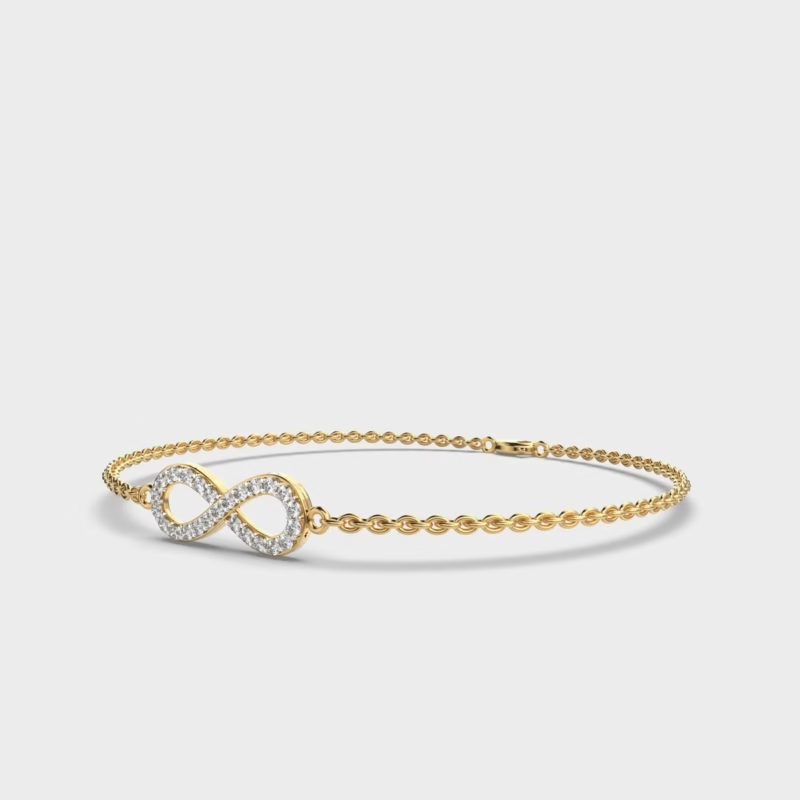
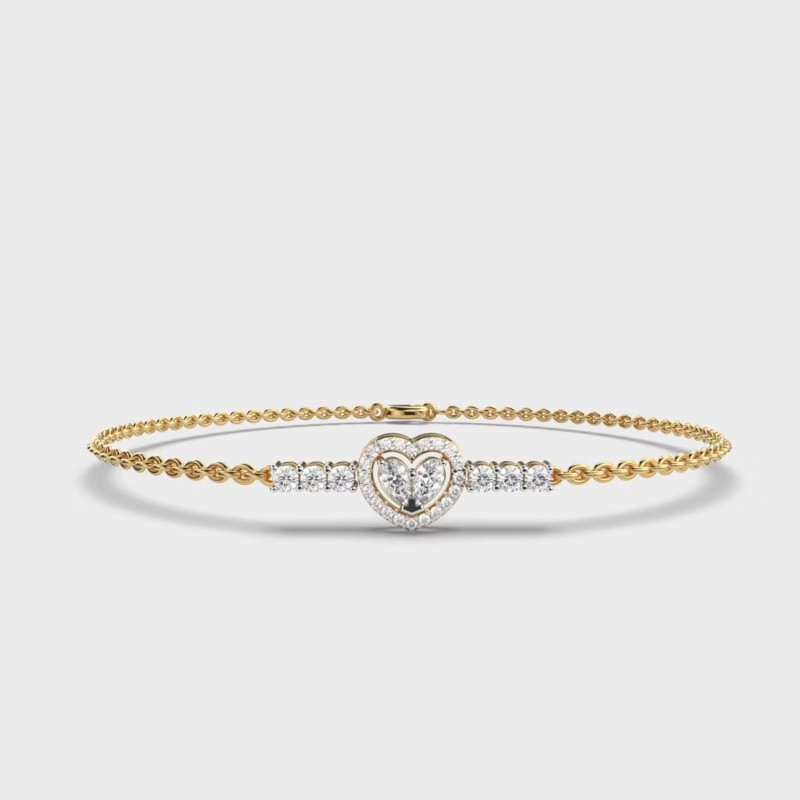
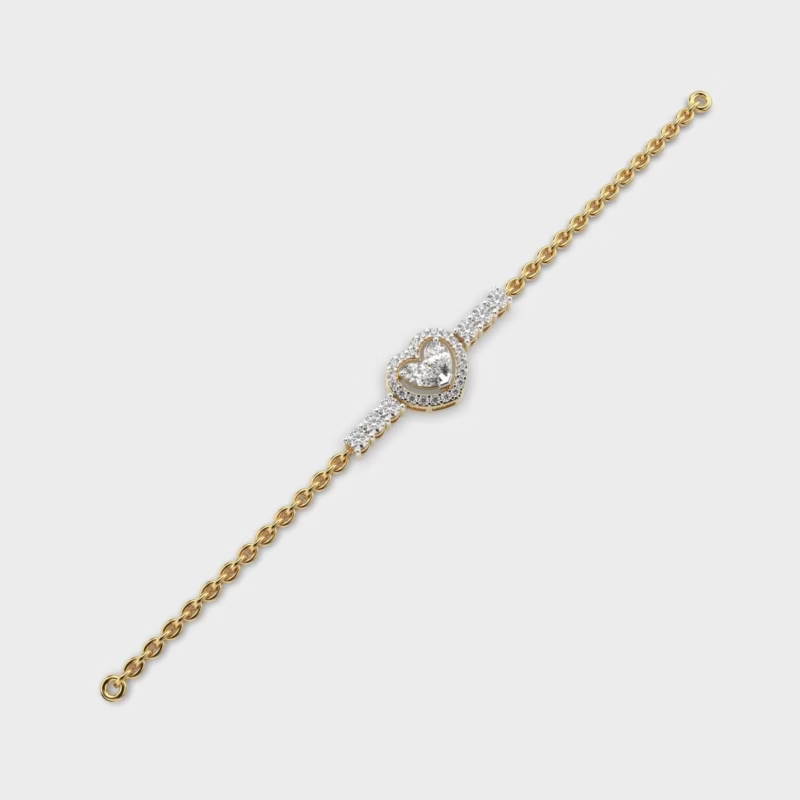
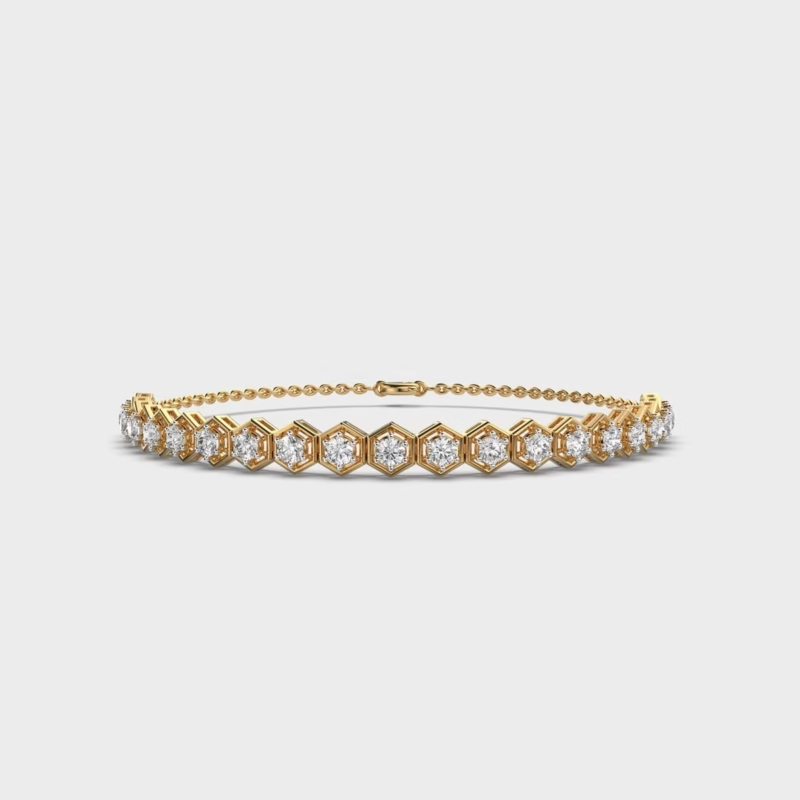
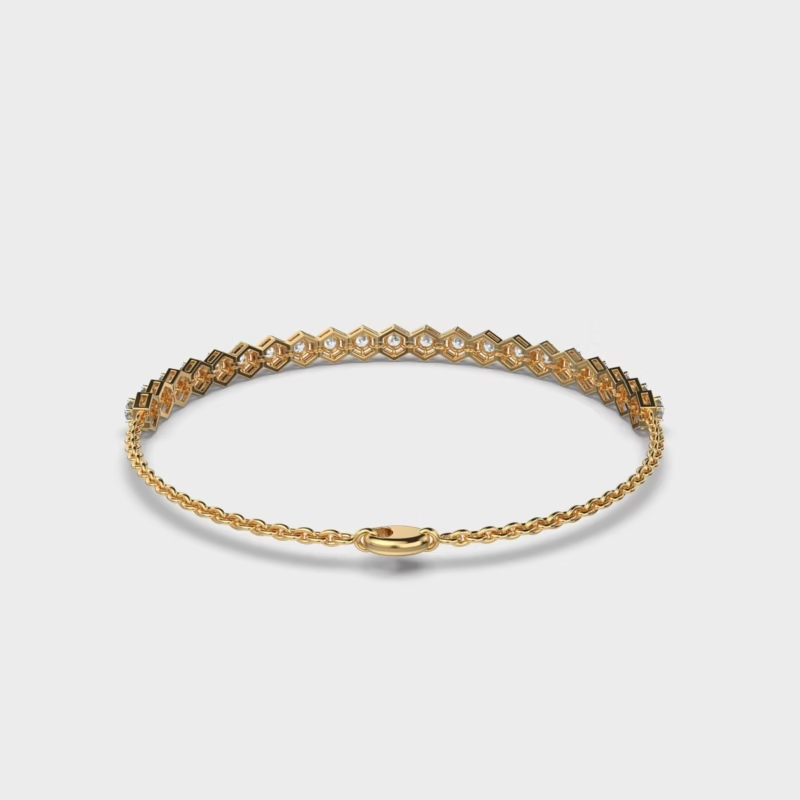
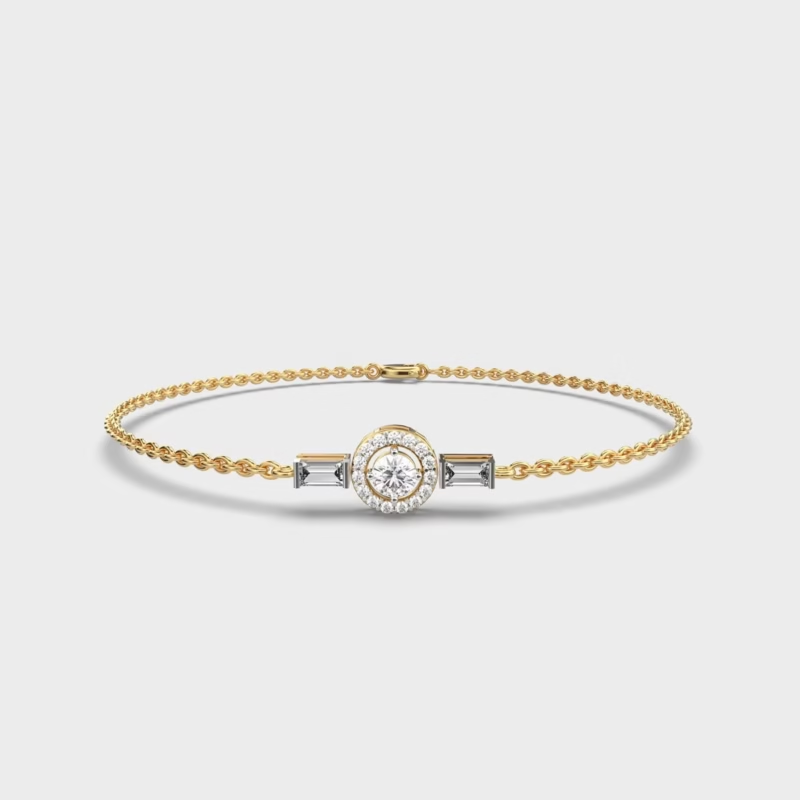
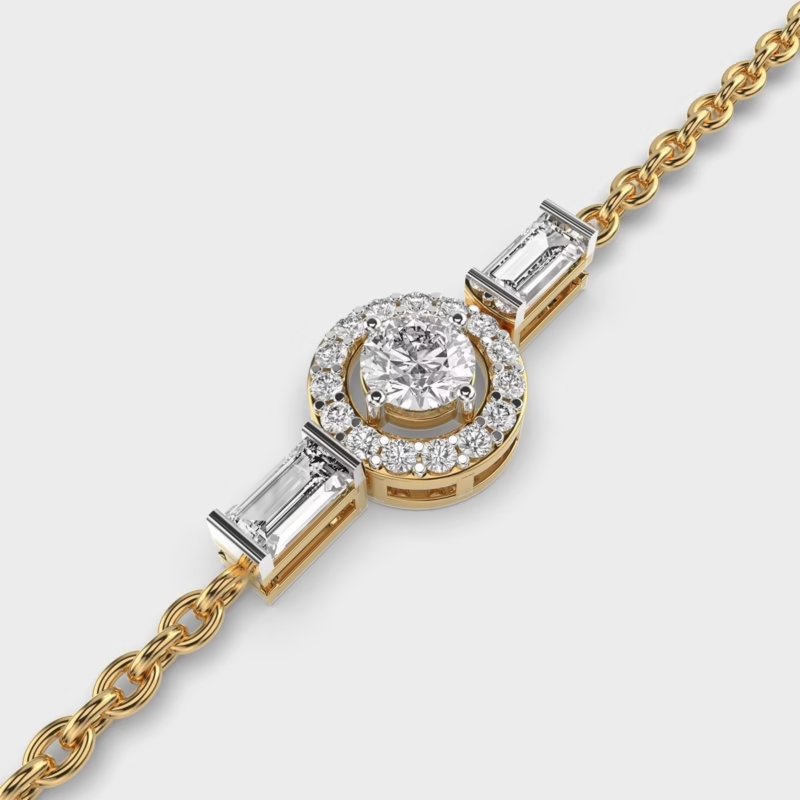
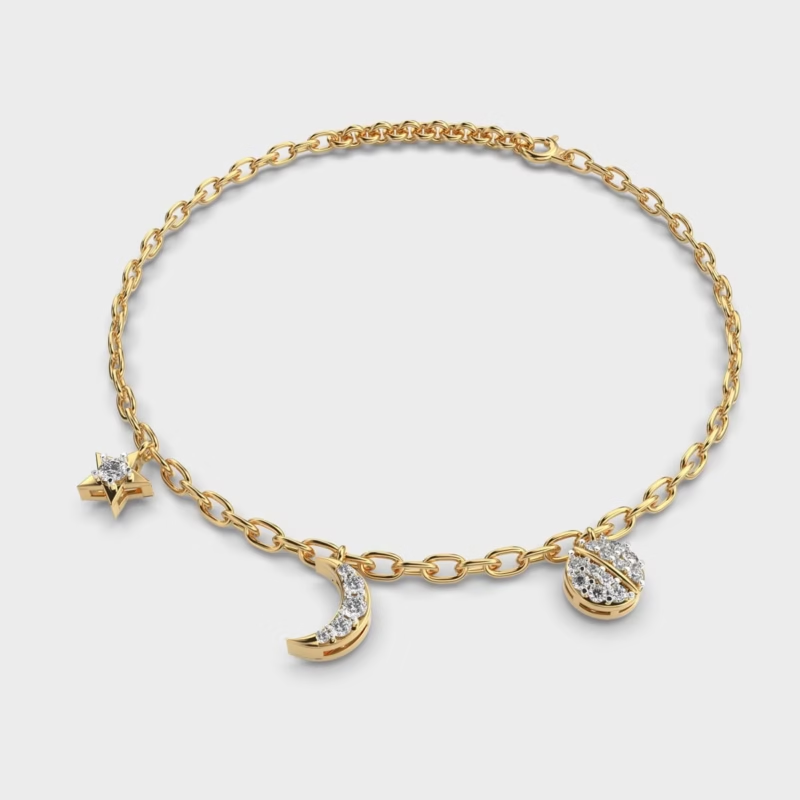
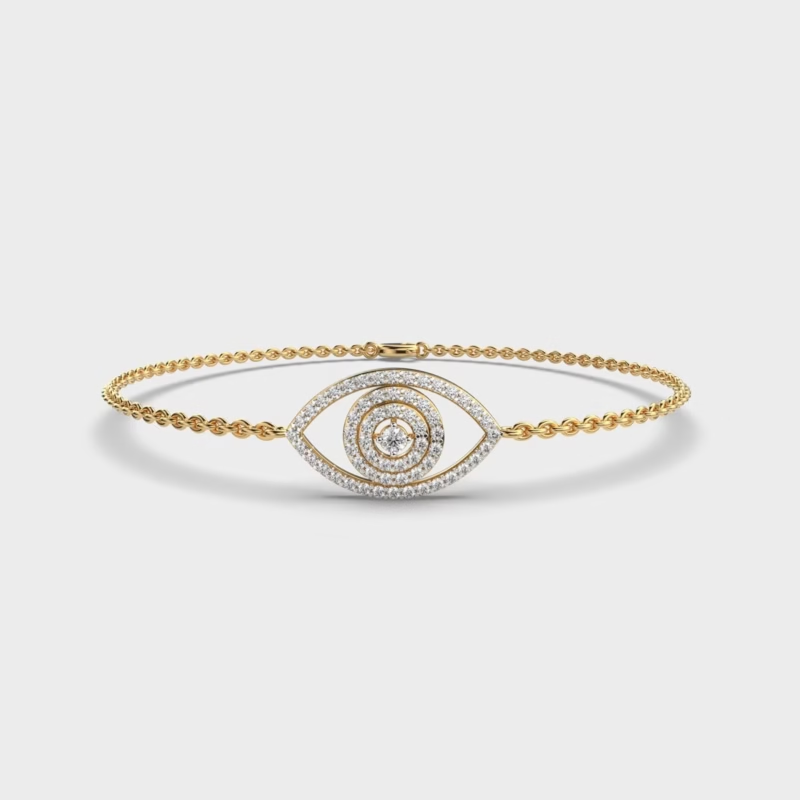
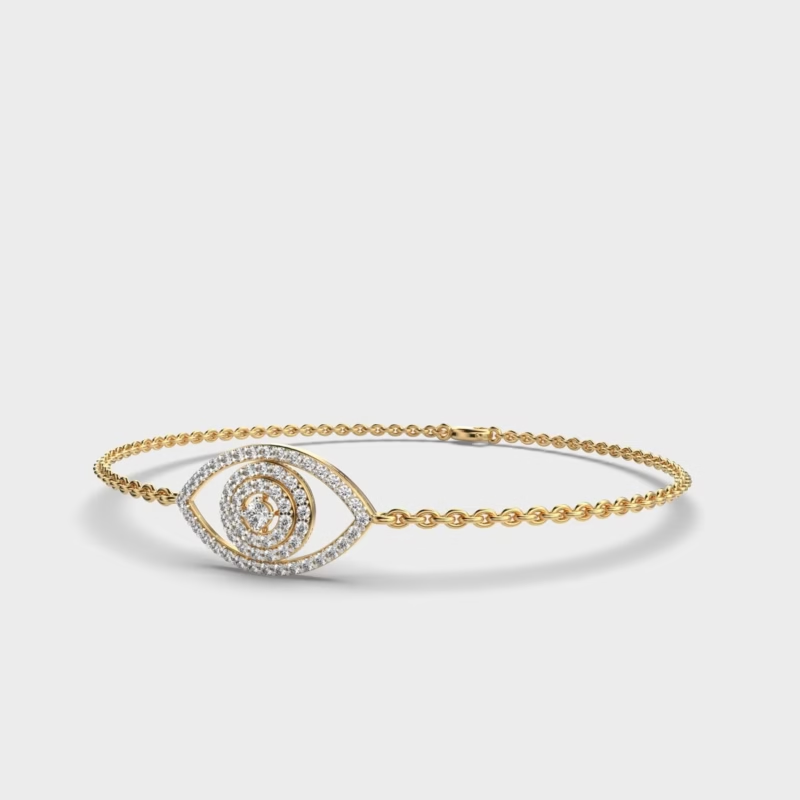
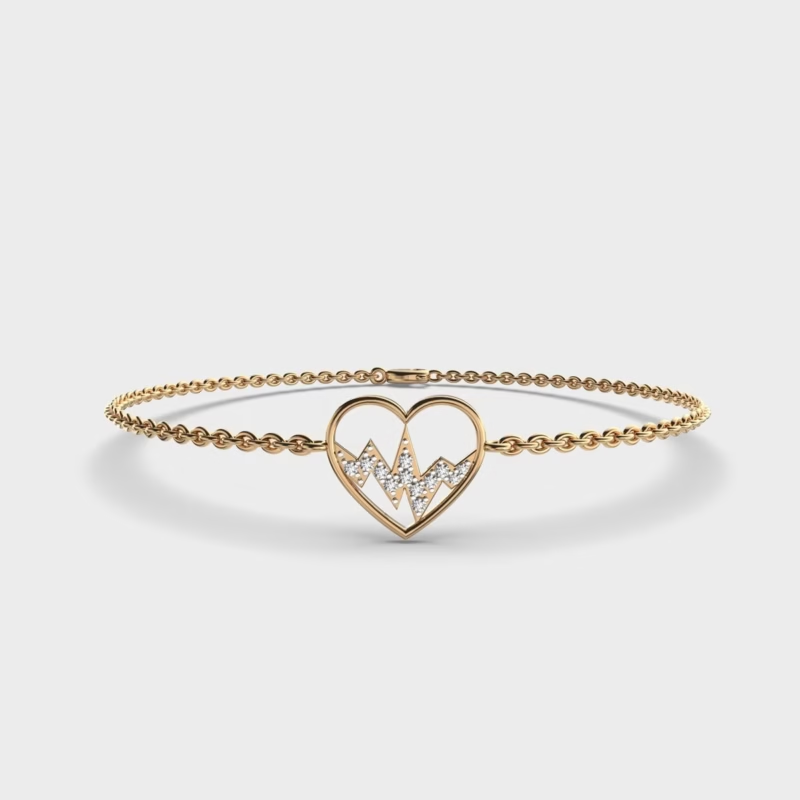
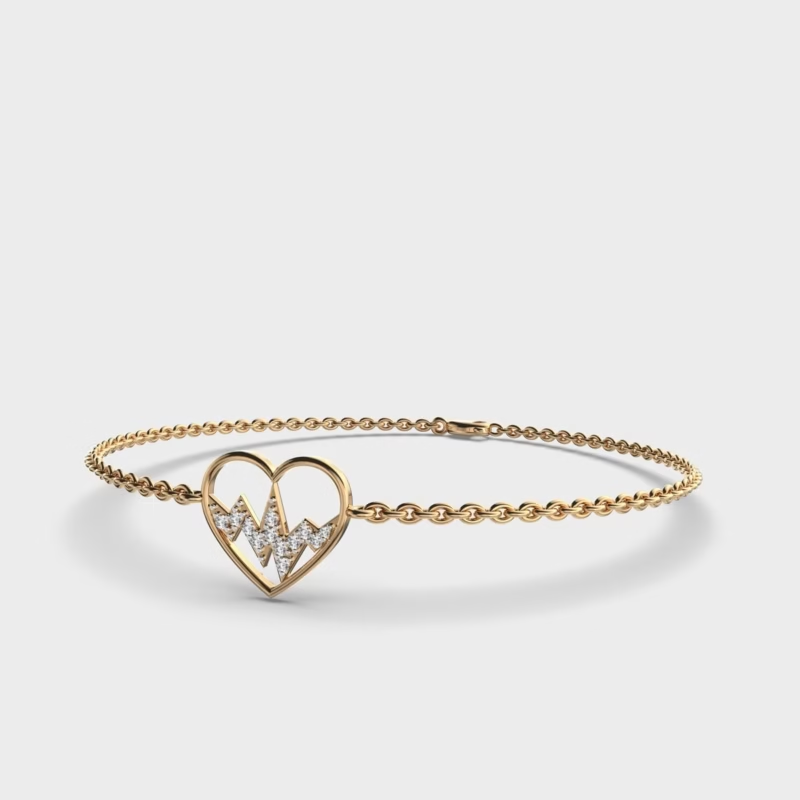
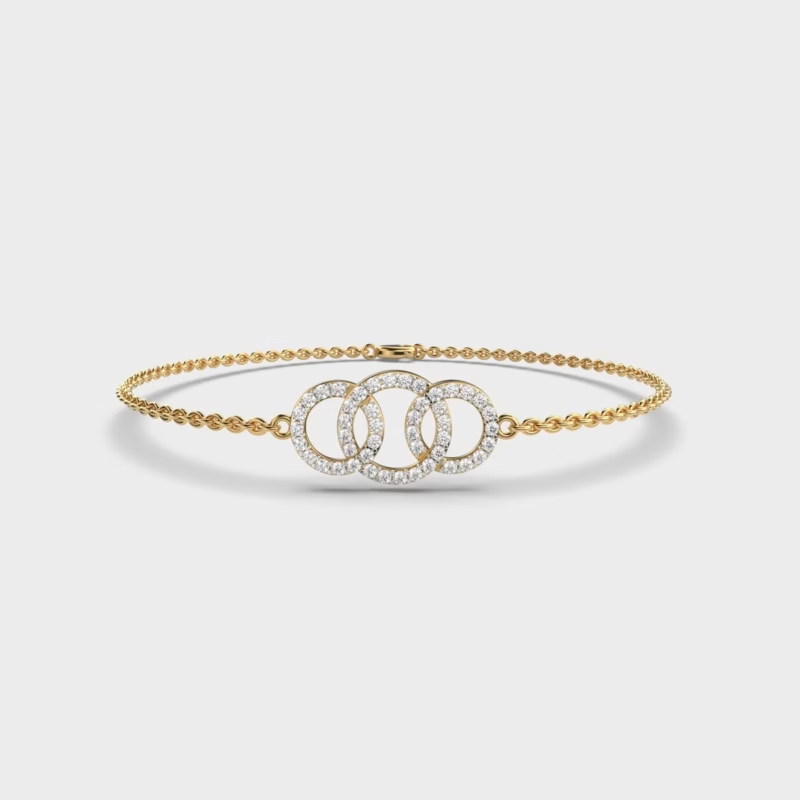
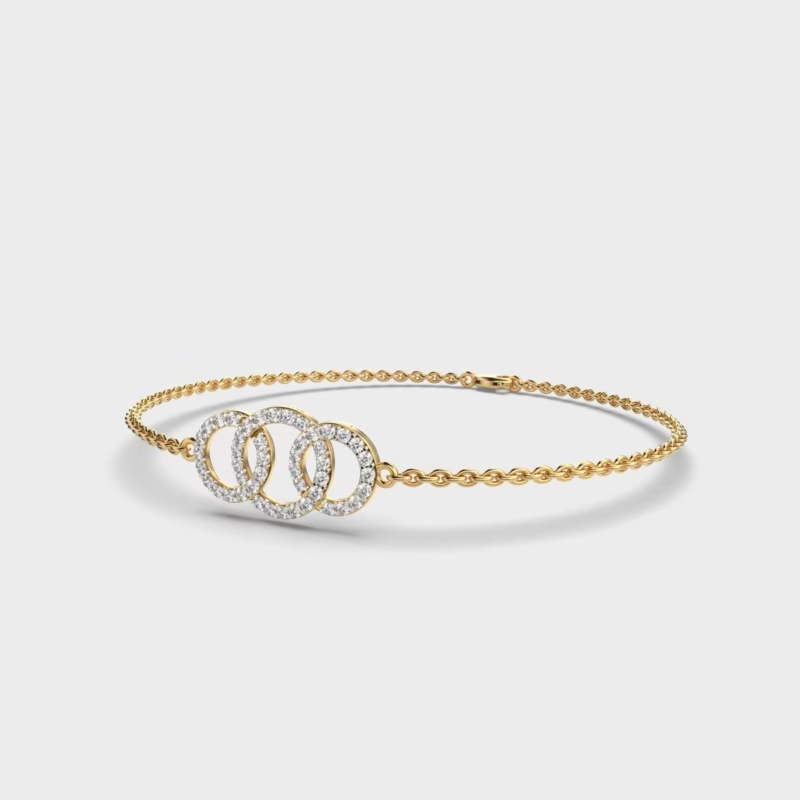
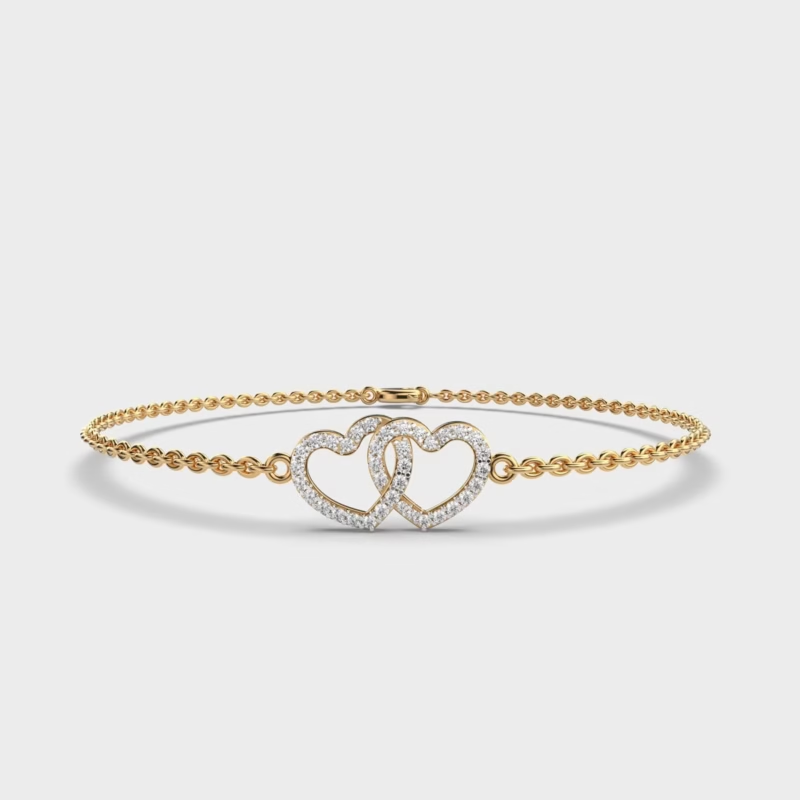
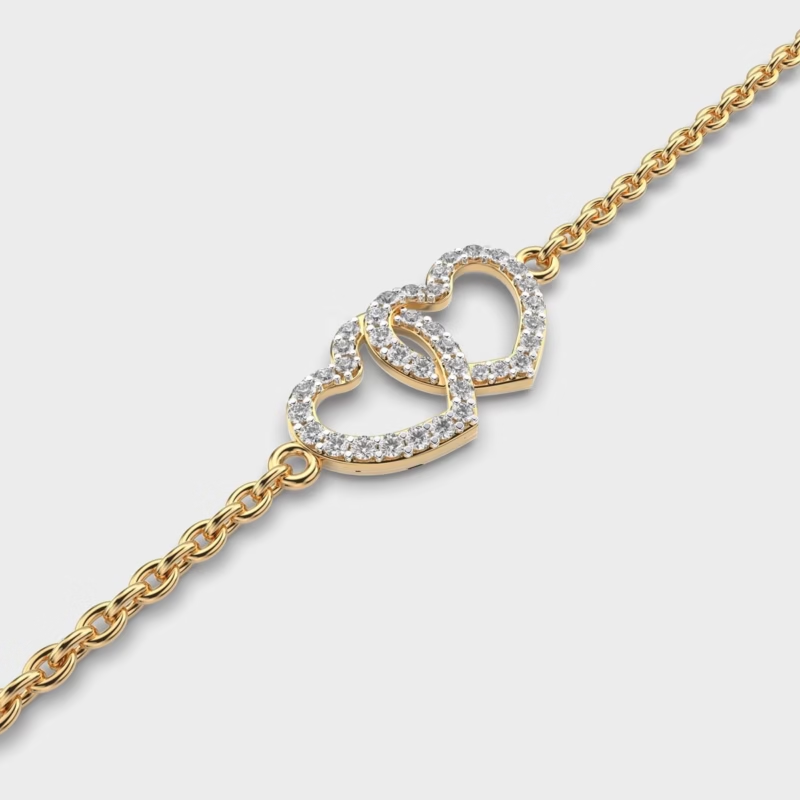
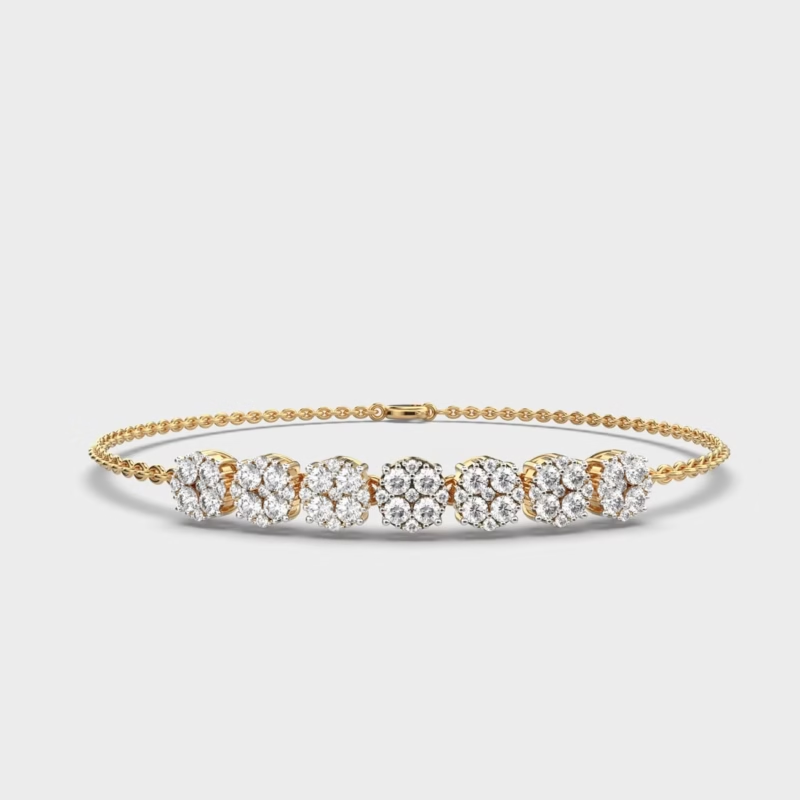
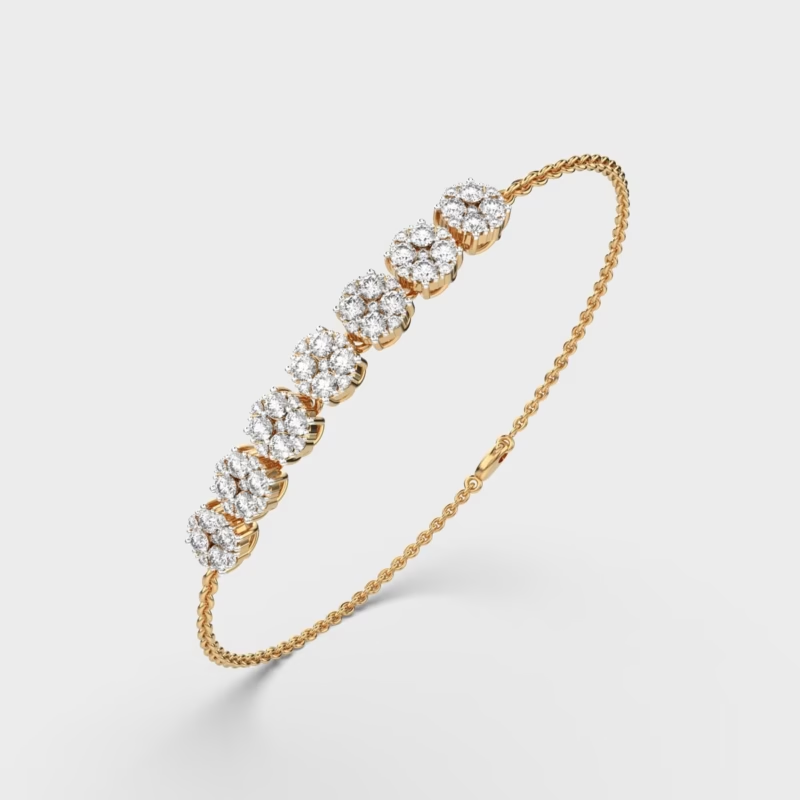
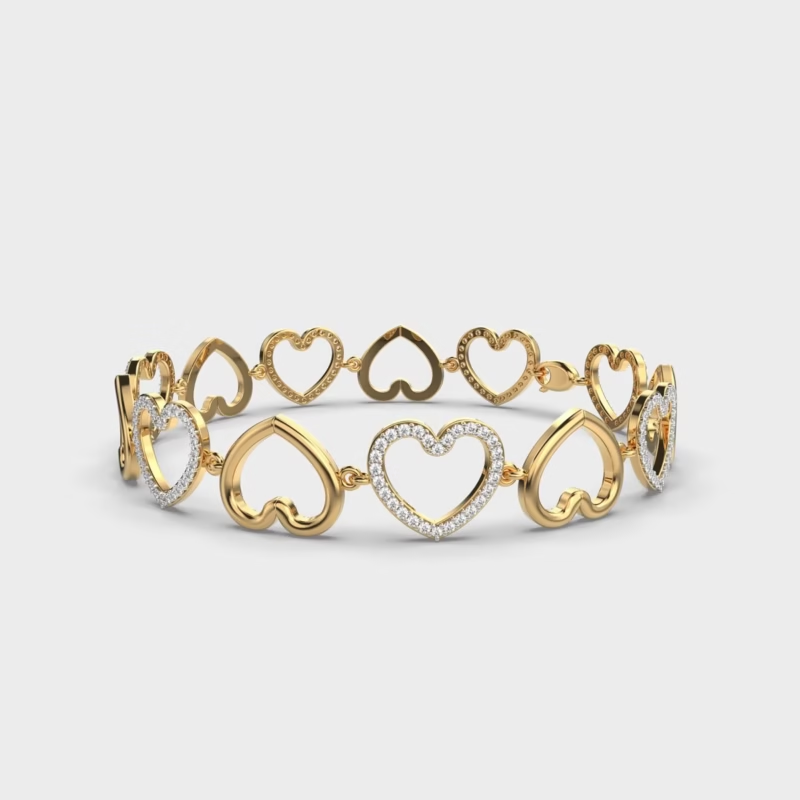
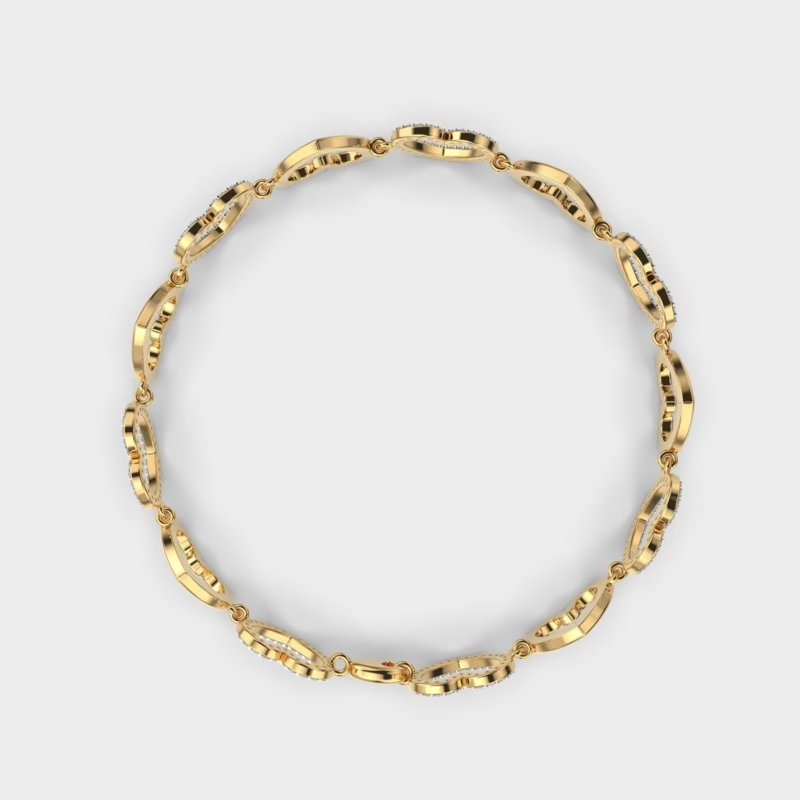
Showing 1–12 of 13 results
Discover Your Perfect Price
Filter by Stone Type and Metal to view accurate, variation-based pricing
Transparent, personalized, and effortless - explore designs that match your style, metal, and budget.
- Tip: Choose one stone type and one metal type to see your exact price.
- If prices seem off, just uncheck and re-apply your filters – the page will refresh with accurate pricing.
 1-to-1 Custom Design
Experience
 Craft Your Vision
Today with a 10% Starte
 HD video Preview
Before It Ships
 Fully Customizable
- Stone, Metal & Budget
 Choose Metal Tone:
Yellow, White or Rose Gold
 Handcrafted in Solid 10K · 14K · 18K
Gold, 925 Silver or 950 Platinum
 Select Your Stone Type:
 Lab-Grown Diamond or Moissanite
 Award winning
 craftmanship and detailing
 Hallmarked &
 Certified (IGI / SGL)
 Personalized Care &
 Expert Support
 Design Any Piece
Within Your Budget
1-to-1 Custom DesignExperience
Craft Your VisionToday with a 10% Starte
HD video PreviewBefore It Ships
Fully Customizable- Stone, Metal & Budget
Choose Metal Tone:Yellow, White or Rose Gold
Handcrafted in Solid 10K · 14K · 18KGold, 925 Silver or 950 Platinum
Select Your Stone Type: Lab-Grown Diamond or Moissanite
Award winning craftmanship and detailing
Hallmarked & Certified (IGI / SGL)
Personalized Care & Expert Support
Design Any PieceWithin Your Budget

Primira's
Real Reviews From Real Customers
Lifetime
Warranty
100% Money
Back Guarantee
Easy
Customization
7 Days
Return
14 Days
Exchange
Insured
shipping
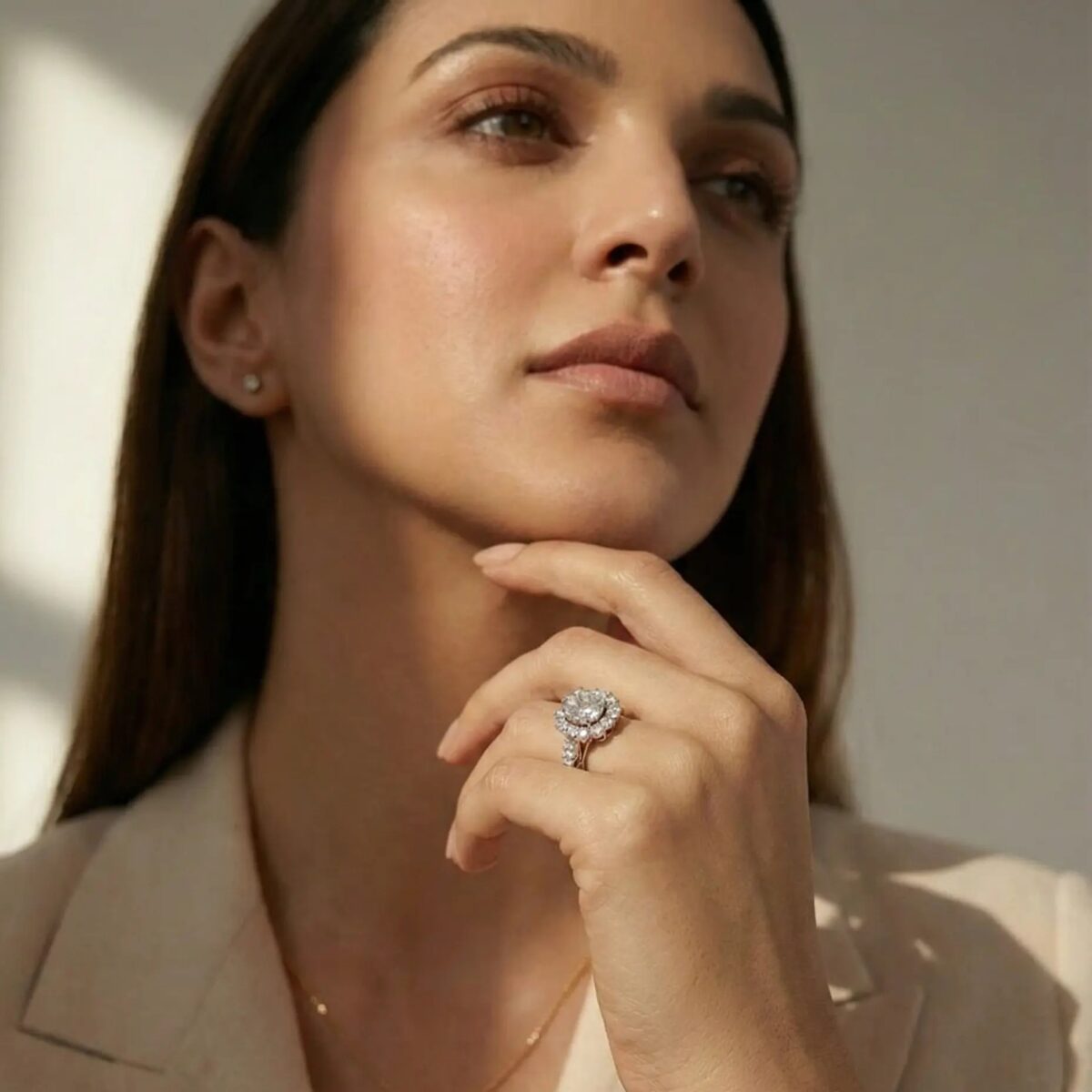
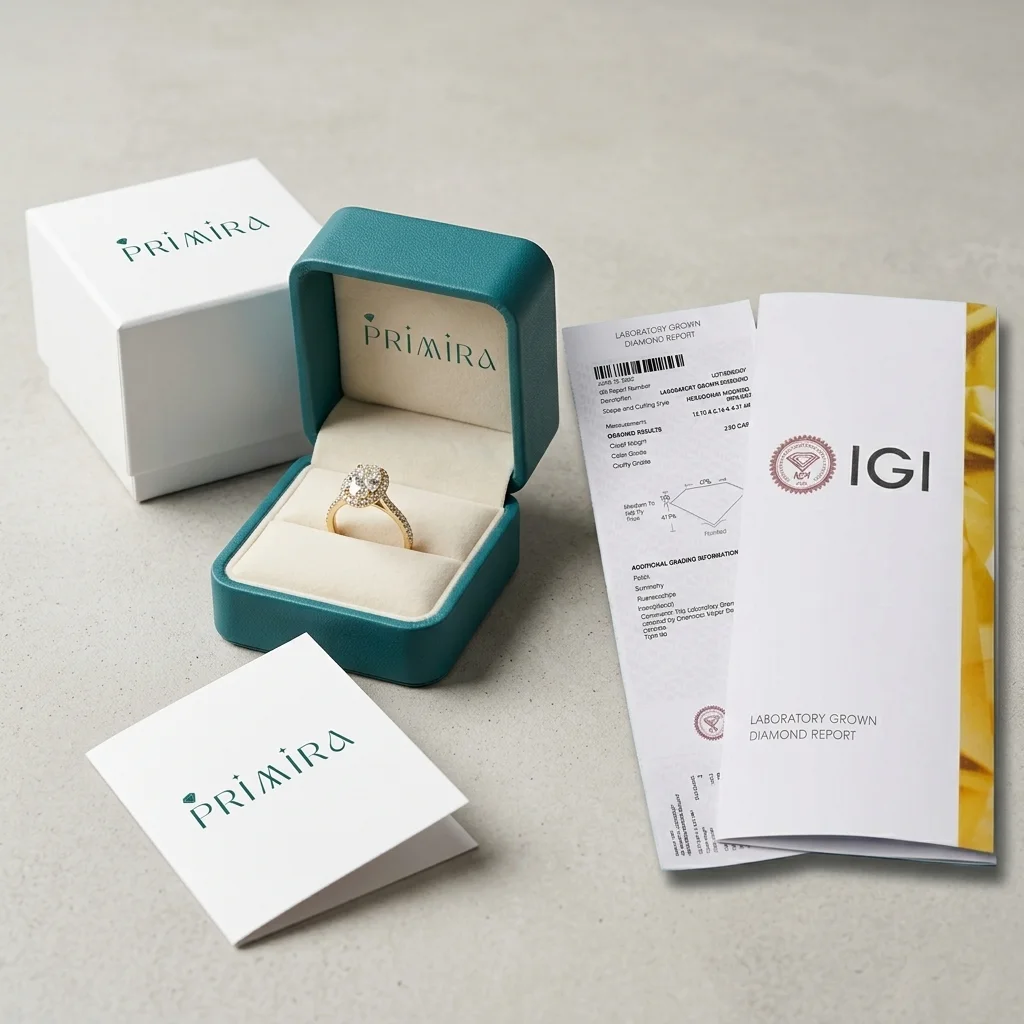
sustainable, beautiful packaging
Give your precious pieces a home they deserve with our stylish, soft-lined jewelry boxes made for effortless organization.
Read Our Article Behind Every Collection
Each design at Primira Luxury is handcrafted with precision, purpose, and emotion. From the first sketch to the final polish, our artisans turn your vision into a piece that feels personal, ethical, and timeless.
Read More
Lab Grown Diamond Chain Bracelets — Styles, Links & Buying Guide
What a Diamond Chain Bracelet Actually Is (And What Makes One Worth Buying)
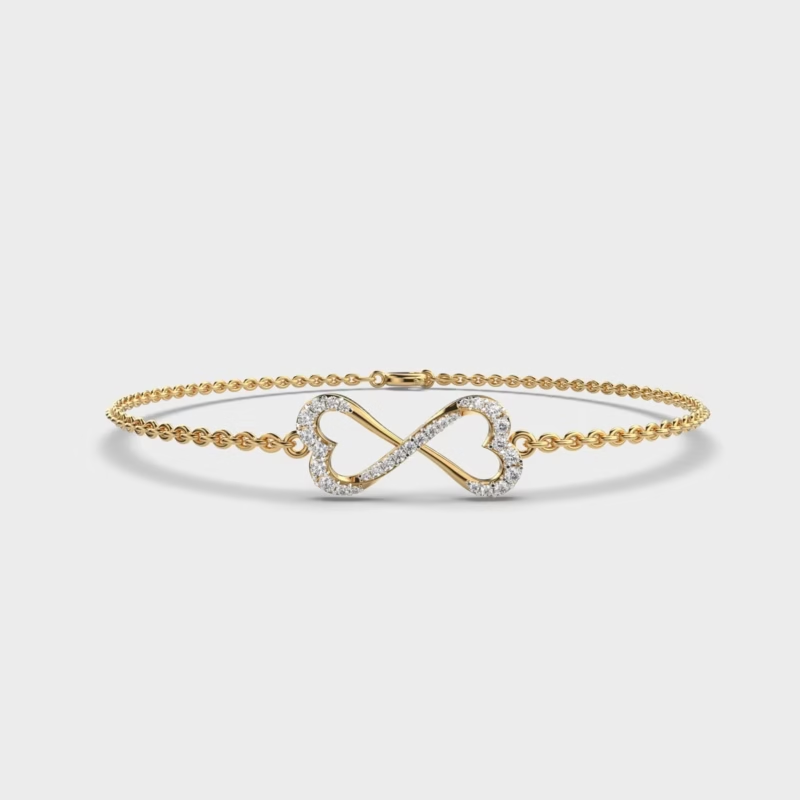
A diamond chain bracelet is a complete wrist piece built around a metal chain as the primary structure, with lab grown diamonds set into, along, or at focal points on that chain. It is not a tennis bracelet — the continuous-stone format is a separate design logic entirely — and it is not a bangle. The chain bracelet exists in the space between those two: flexible, wearable without a size commitment, and designed to carry diamond accents in motion rather than in a fixed continuous line.
That last detail matters more than it sounds. When a diamond accent sits on a chain link that articulates as your wrist moves, light hits it at constantly shifting angles. The optical result is different from a static prong-set stone, and the design choices that make it work — link gauge, link geometry, accent position on the link — are manufacturing decisions, not style preferences. This page explains those decisions so you can evaluate what you’re actually buying.
The Link Geometry Question
Most buyers choose a chain style the way they choose a colour: on instinct, from a photo. That works fine for appearance. It doesn’t tell you anything about how the bracelet wears, how diamond accents behave on it, or how long the chain survives daily use at the slider contact point.
Here’s what actually differs across the main link types:
Box chain (Venetian chain): Square-sectioned links that interlock flush against each other. The square geometry means adjacent links resist rotation — each link tends to stay face-up rather than tumbling as the wrist flexes. Diamond accents set on a box chain hold their orientation consistently, which is why box chain is the standard base for station bracelets where a small round or oval accent should face the viewer at all times. The interlocked structure also distributes flex stress evenly, which makes it one of the more durable options relative to its visual weight.
Curb chain: Oval links that are twisted and flattened so they lie flat against the skin. Diamond-cut faceting on the metal surface adds light independently of any accent stones — the chain itself catches light across its flattened faces. A curb chain with no diamonds still has significant visual presence. With diamond accents, the metal’s own facets and the stones work together rather than the stones doing all the work. India buyers searching for a heavier, more substantial gold chain bracelet with diamonds tend to land here.
Paperclip chain: Elongated rectangular links with open centres, currently trending strongly in both India and global markets. Open links mean maximum light passes through — the chain reads as delicate even at wider gauges. Accent stones set on paperclip links sit with less structural support than box or curb, which makes setting quality more consequential: a bezel or channel setting on a paperclip link holds the stone securely through wrist movement; an unsupported prong in that same position is more vulnerable.
Bolo (adjustable slider) format: Not a link style but a closure mechanism that works with any of the above. The bolo replaces a fixed clasp with a sliding mechanism: two chain ends feed through a slider housing, and the wearer adjusts the loop size by moving the slider up or down. Fully extended, the bracelet slides over the hand. Tightened, it sits wherever the wearer wants it on the wrist.
The slider mechanism is worth understanding specifically, because the difference between a bracelet that adjusts smoothly and holds position versus one that creeps or stiffens is a production specification. The slider housing contains a friction element — typically a silicone lining — that grips the chain under wrist load without requiring intentional re-adjustment. That lining’s tolerance relative to the chain gauge is calibrated at manufacture. If the chain gauge changes (because the piece was replated, or a different chain variant was used), the fit changes too. This is why Primira’s bolo chain bracelets are produced as matched sets: the slider and chain gauge are confirmed together before fabrication.
There is a second reason to understand the slider mechanism: the chain material at the contact zone. A bolo slider moves against the same section of chain repeatedly across years of daily use. Hollow-stamped links, which are lighter and less expensive to produce, compress and wear at that contact zone over time. Solid-milled gold links — produced from drawn and milled gold rod rather than stamped sheet — maintain their gauge at the contact point across normal daily use. Primira’s chain bracelets use solid-milled construction in 14K and 18K gold; this is a production choice made at the casting stage, not a marketing term.
Diamond Accent Placement — What Changes With the Chain
On a tennis bracelet, every stone is the same size, same shape, set at consistent spacing in a continuous line. The design logic is uniformity. On a chain bracelet, the design logic is selective emphasis: diamonds appear at stations along the chain (station bracelet format), at the centrepiece only (focal-point format), or as accents running through the link metal itself (bar or channel set within the links).
Each placement has specific setting implications:
Station placement: A round brilliant or oval lab grown diamond set at the top of a link, held in a prong or bezel basket, sits proud of the chain surface. The accent rotates independently of the link if the prong basket isn’t calibrated to the chain’s flex direction. Primira’s production process aligns the basket seating to the dominant flex axis of the link — the stone faces up when the bracelet lies naturally on the wrist.
Centrepiece format: A larger stone or cluster at the centre with plain chain on either side. The bolo mechanism is particularly well-suited here because the centrepiece always sites at the top of the wrist regardless of wrist circumference — the slider tightens the two chain ends symmetrically behind the wrist. Setting options for the centrepiece include single-stone bezel, micro-pavé cluster frame, or bar-set geometric shape.
Link-integrated: Diamonds channel-set directly into the link metal. This requires links milled with a channel groove — a production step done before chain assembly. The stone sizes must be precisely calibrated to the channel width (±0.05mm tolerance), or the channel closing process distorts the link. This format is less common in catalogue stock and more common in custom orders where the stone specifications are confirmed before the links are milled.
Chain vs. Tennis Bracelet — Which One?
The most searched comparison in this category, and it deserves a direct answer.
A lab grown diamond tennis bracelet carries a continuous line of matched-size, matched-colour stones from clasp to clasp. The design logic is total coverage: every millimetre of the bracelet’s visible surface has a stone. The stones must be colour-matched from the same growth-cycle batch for the line to read as visually consistent.
A lab grown diamond chain bracelet carries stones selectively. Some bracelet surface is chain. Some is stone. The result is a lighter piece — significantly lower total carat weight for the same wrist length — with a different visual character: flashes of light from moving stations rather than a continuous ribbon of light.
Who chooses which:
The tennis bracelet buyer wants maximum diamond presence and is often gifting to mark a significant occasion. The chain bracelet buyer wants daily wear flexibility, often pairs the piece with a watch or stacks it with other bracelets, and values the adjustable fit of a bolo format. Chain bracelets are also the more natural format for personalisation — a custom silhouette centrepiece, a coloured stone focal point, or initials cut in lab grown diamond can anchor a chain where a tennis bracelet’s continuous-stone logic makes similar customisation structurally complicated.
If you’re comparing both and undecided, the question to ask is: do you want a piece where the diamonds are the design, or a piece where the chain is the design and the diamonds punctuate it?
Stone Specifications for Chain Bracelets
Stone choice on a chain bracelet depends on the placement format.
For station accents (0.05ct–0.25ct per stone): colour grade matters more than clarity at this size, because inclusions at sub-0.25ct are eye-invisible across all of Primira’s stocked clarity range (VVS1–VS2). D-F colorless is the default and the right choice for white gold and platinum settings. G-H near-colorless is a practical alternative at no visible quality compromise for everyday wear.
For centrepiece stones (0.25ct and above): the full 4C specification applies. Cut grade carries the most weight for round brilliants in a focal-point setting — a well-cut 0.50ct round will outperform a poorly cut 0.75ct in visible light return. Primira stocks Ideal and Excellent cut grades only; no Good or Fair cuts are in the collection.
For bolo format pieces specifically: the centrepiece stone should have a table width narrow enough to clear the slider mechanism when the bracelet is adjusted. Primira’s production team confirms this clearance during the pre-production specification review.
Certification: All lab grown diamonds in Primira’s chain bracelets carry IGI or SGL certification. The report number is laser-inscribed on the girdle of each certified stone — for small station accents, this is a parcel-grade confirmation rather than individual stone reports, with the colour and clarity range documented for the full parcel. For centrepiece stones of 0.25ct and above, individual IGI grading reports are standard.
Custom Order: What’s Unique to Chain Bracelets
Custom orders for chain bracelets have two variables that don’t exist in other bracelet formats.
First, slider tension preference: some wearers prefer a snugger bolo fit, others a looser one. The internal friction lining of the slider housing can be calibrated at production to hold at a lighter or firmer position. This is confirmed in the pre-production WhatsApp conversation.
Second, link style selection: the chain style (box, curb, paperclip, or other) affects not just appearance but stone placement compatibility. A buyer who wants a specific stone format — channel-integrated accents, for example — needs a link style with a cross-section that supports channel milling. This is a production-level conversation, not a catalogue selection.
Reference images are accepted and translated into cutting and setting specifications at the Primira facility in Surat — the same location where the lab grown diamonds are cut. For a chain bracelet, that means the chain gauge, link style, slider housing, and stone specifications are all confirmed before any piece enters production. Nothing is committed until that confirmation is complete.
Custom chain bracelets follow the standard 15–35 business day production timeline, with an IGI or SGL certification report available on request for any centrepiece stone.
Care Notes Specific to Chain Bracelets
The slider mechanism is the maintenance point specific to this format. Residue from hand cream, soap, and body oils accumulates inside the slider housing and can cause the mechanism to stiffen or catch. A soft brush with warm water and mild soap, worked gently through the slider channel, keeps the friction element functioning correctly. Avoid pulling the bolo mechanism hard when the chain is wet — the silicone lining provides less grip when lubricated, and the chain can slip through the housing too quickly, potentially stressing the end-bead crimps.
For chain links with diamond accents, the vulnerability specific to station settings is prong tip lifting over time in active daily wear. Primira uses low-profile bezel and flush-bead settings for station accents specifically because these formats don’t present a prong tip to catch on clothing or keyboard edges. If a prong-set centrepiece accent is chosen instead, an annual inspection is recommended.
Ordering, Delivery, and Returns
Every chain bracelet order is followed by a WhatsApp and email confirmation from the Surat team within 24 hours. Slider tension, link style, chain gauge, stone specification, and metal choice are all confirmed before production begins. For bolo format pieces, the chain-end bead style is confirmed at this stage too.
India orders ship free above ₹10,000 via Blue Dart or Delhivery, with delivery in 2–7 business days after dispatch. International express shipping (DHL/FedEx/UPS, 5–7 business days) is free on orders above USD $550. All shipments are insured from dispatch to delivery confirmation.
The 7-day return window covers pieces delivered with a material specification error or in damaged condition. The buyback programme offers value recovery for pieces outside the return window, calculated against the invoice value at prevailing gold rates. Both are named alternatives to the standard ‘no returns on custom’ position that most online jewellers offer — use the pre-production WhatsApp confirmation to resolve spec questions before production starts, and the return and buyback windows are genuine safety nets if something still doesn’t arrive as expected.
Frequently Asked Questions
What is the difference between a bolo bracelet and a regular chain bracelet?
A bolo bracelet uses a sliding mechanism instead of a fixed clasp, letting the wearer adjust the bracelet’s circumference by moving the slider up or down the two chain ends. A regular chain bracelet closes at a fixed length with a lobster or box clasp. Bolo bracelets fit a wider range of wrist sizes without size-specific manufacturing — the same piece can be worn snug or loose — which is why they’re the dominant format for gifting when the recipient’s wrist size isn’t known.
What carat weight should I choose for a chain bracelet?
That depends on the format. For a station bracelet with multiple accent stones, the per-stone weight is typically 0.05ct–0.15ct, with total carat weight across all stations adding up to 0.25ct–1.0ct. For a focal-point bolo with a single centrepiece, 0.25ct–1.0ct for the centrepiece stone reads well. Station accents are graded and priced as a matched parcel; a centrepiece stone is individually graded. If you’re unsure, share a reference image during the pre-production WhatsApp confirmation and the production team can advise on the stone specifications that fit the specific design.
Is a lab grown diamond chain bracelet suitable for daily wear?
Yes, with one specific caveat for bolo formats: the slider mechanism needs occasional cleaning (warm water and a soft brush through the slider channel, monthly for daily wearers) to prevent oil and soap residue from stiffening the mechanism. Chain bracelets in solid-milled 14K gold are appropriate for daily wear — the link gauge and metal alloy hardness are both calibrated for active use. Remove before swimming in chlorinated water or using household cleaning products.
Can I stack a chain bracelet with a tennis bracelet?
Yes, and this is the most common styling context for the chain bracelet format. A bolo chain bracelet on one side of a watch, a tennis bracelet on the other, is a standard wrist stack composition. Match metals across pieces for a coherent look. In terms of thickness: a chain bracelet in the 1.5–2.5mm gauge range sits alongside a tennis bracelet without competing for visual weight. A heavier curb chain (3mm+) tends to read as its own statement piece rather than a layering element.
Can I get a chain bracelet with a coloured lab grown diamond centrepiece?
Yes. Fancy colour lab grown diamonds — pink, blue, vivid yellow, green, champagne — are available as centrepiece stones in bolo and fixed-length chain format. The metal backdrop behind a coloured centrepiece matters: yellow lab grown diamonds read most saturated in yellow gold settings; blue and pink centrepieces suit white gold or platinum. Stone specifications, saturation tier, and metal backdrop are all confirmed in the pre-production WhatsApp conversation before production begins. The lab grown diamond chain bracelet collection covers the full range of available designs, and custom coloured-centre orders are available at any carat weight.
What chain style is best for daily wear?
Box chain and curb chain are the most robust options for daily wear. Box chain’s interlocked square links distribute flex stress evenly and resist kinking. Curb chain’s flattened links are durable and its diamond-cut facets don’t require stones to do all the optical work. Paperclip chain is appropriate for light to moderate daily use but is less suited to high-friction environments (repeated desk work, gym use) because the open rectangular links present a slightly larger surface area for links to catch under lateral stress. Whatever chain style is chosen, solid-milled construction in 14K gold or above will outlast hollow-stamped links at any gauge, particularly at the bolo slider contact zone.

 Chat on WhatsApp