
Primira Luxury Blog
“Jewelry is more than an accessory; it’s a timeless tale waiting to be told.”
“Like a well-crafted gem, true beauty comes from within. Let your jewelry amplify it.”


Showing 61–70 of 70 results
- ₹6,713 – ₹10,867Price range: ₹6,713 through ₹10,867
- ₹7,068 – ₹13,227Price range: ₹7,068 through ₹13,227
- ₹7,406 – ₹15,585Price range: ₹7,406 through ₹15,585
- ₹7,179 – ₹13,983Price range: ₹7,179 through ₹13,983
- ₹7,073 – ₹13,407Price range: ₹7,073 through ₹13,407
- ₹8,448 – ₹22,098Price range: ₹8,448 through ₹22,098
- ₹7,154 – ₹14,088Price range: ₹7,154 through ₹14,088
- ₹6,995 – ₹12,723Price range: ₹6,995 through ₹12,723
- ₹7,344 – ₹15,650Price range: ₹7,344 through ₹15,650
- ₹8,007 – ₹20,737Price range: ₹8,007 through ₹20,737

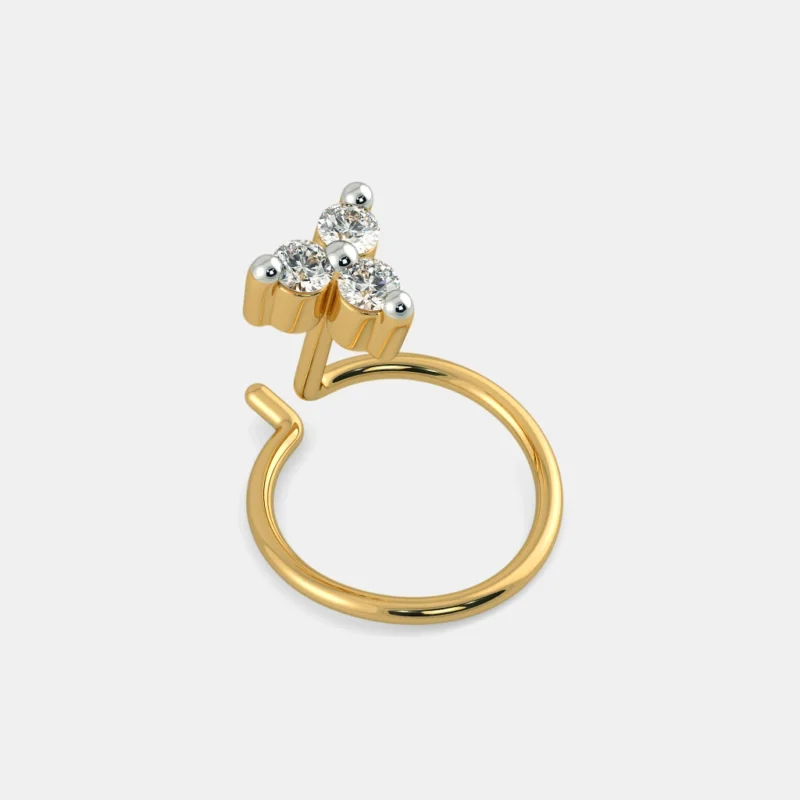

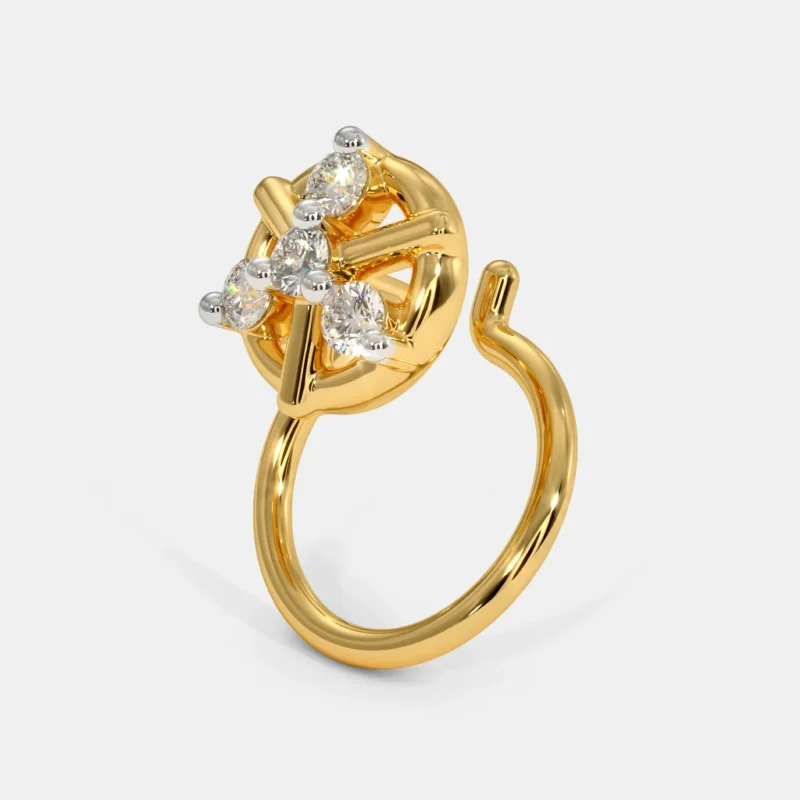
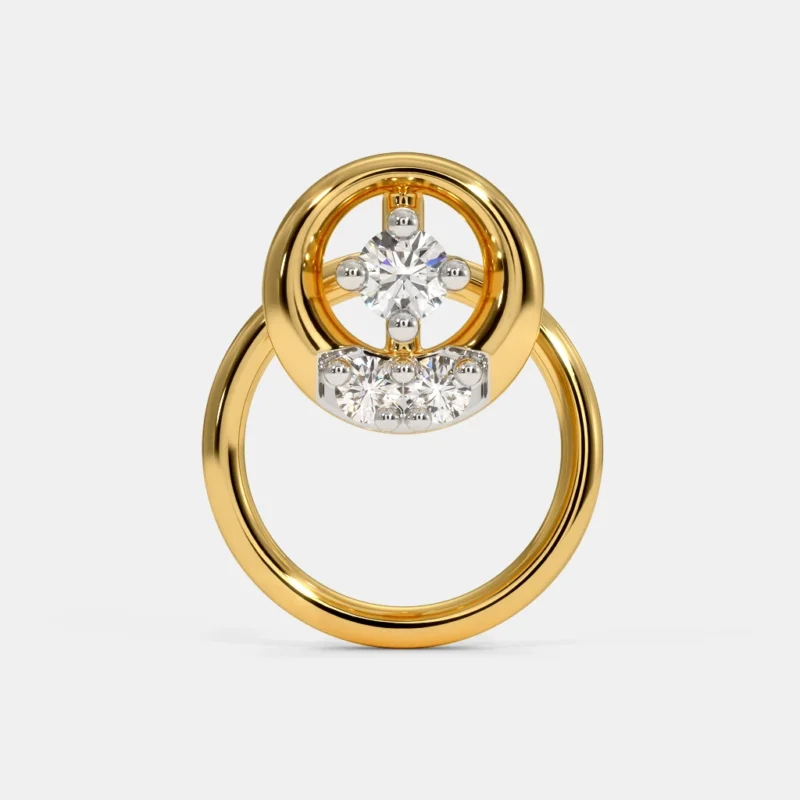
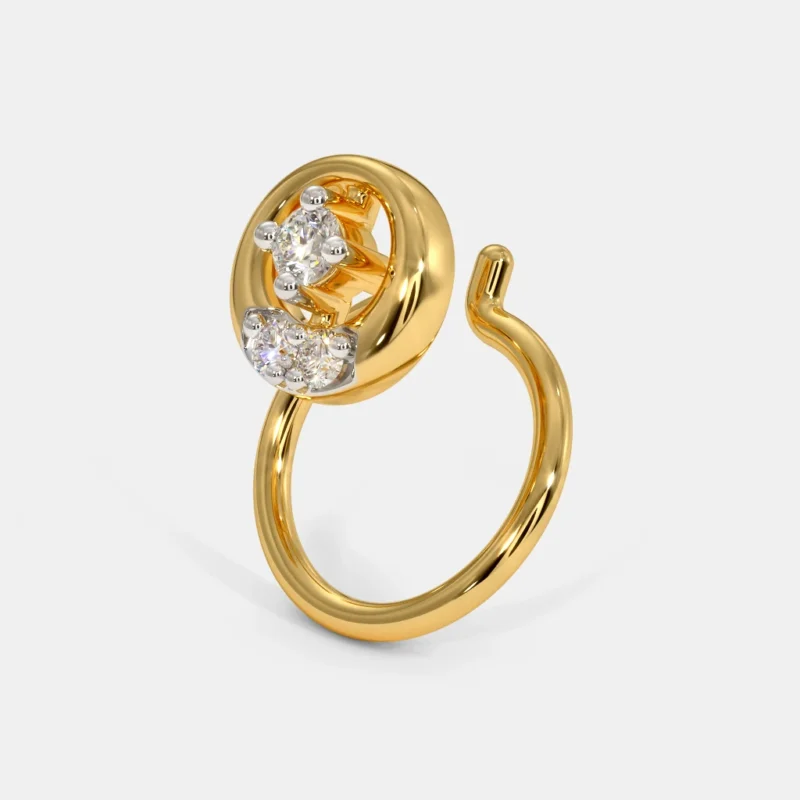

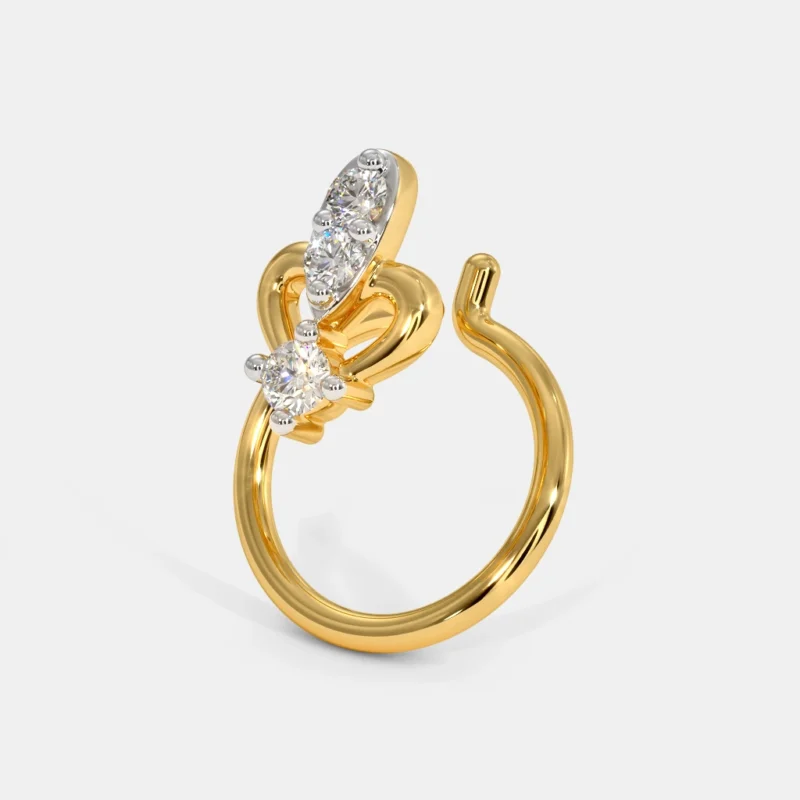
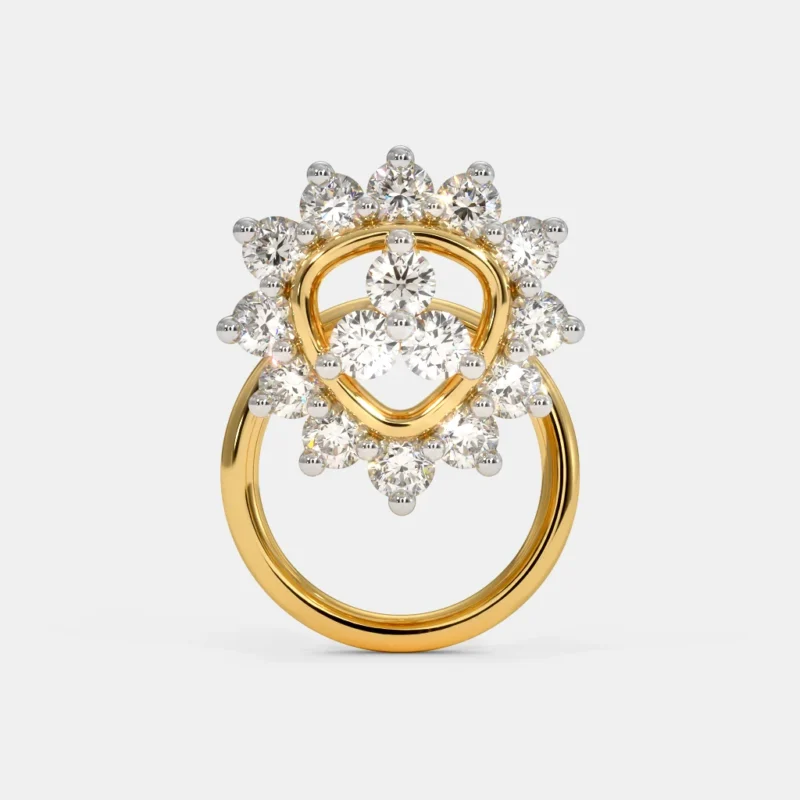
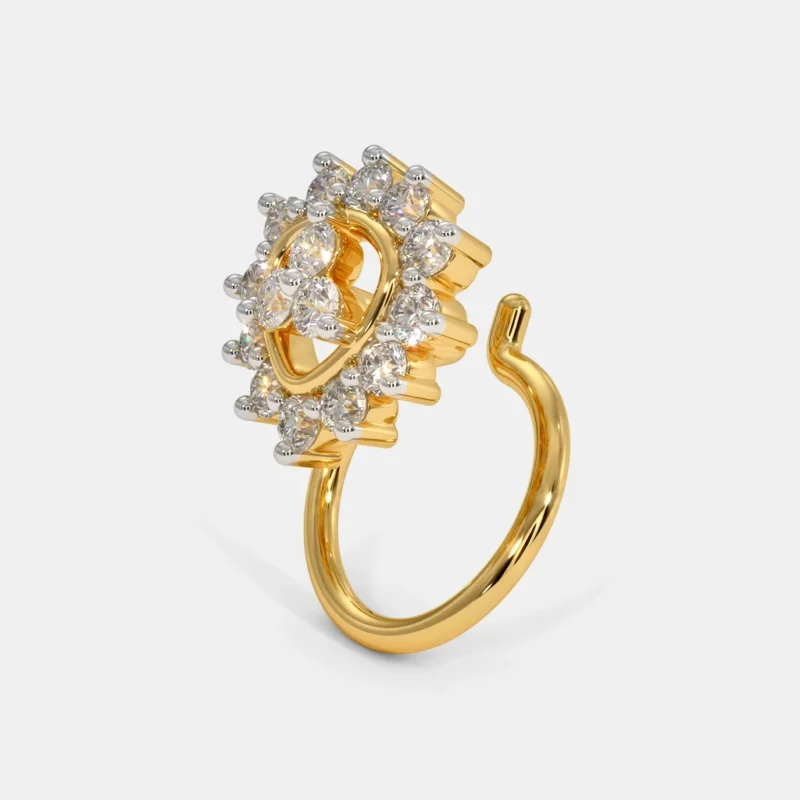

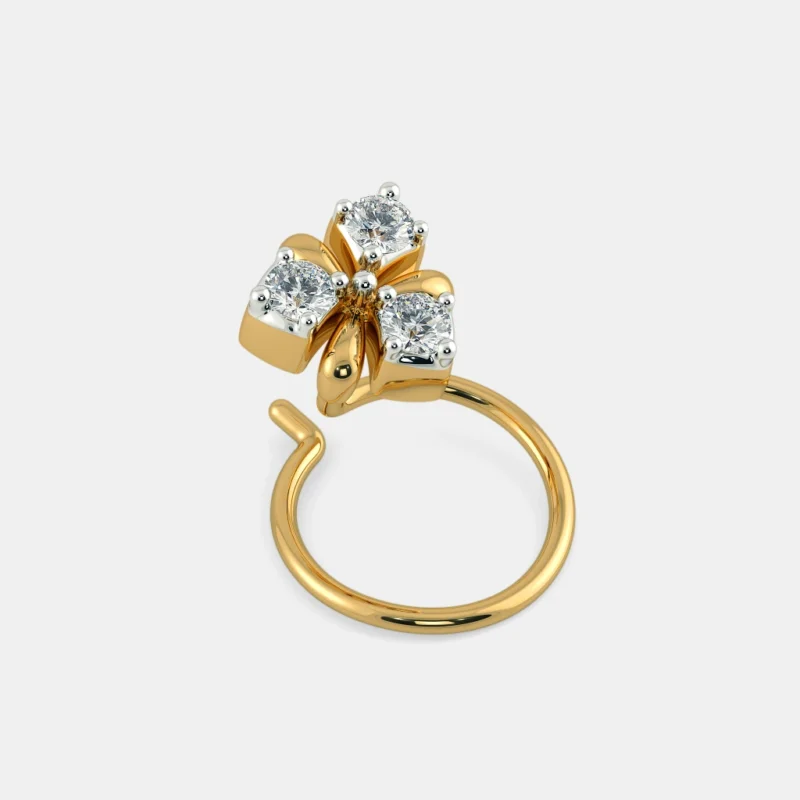

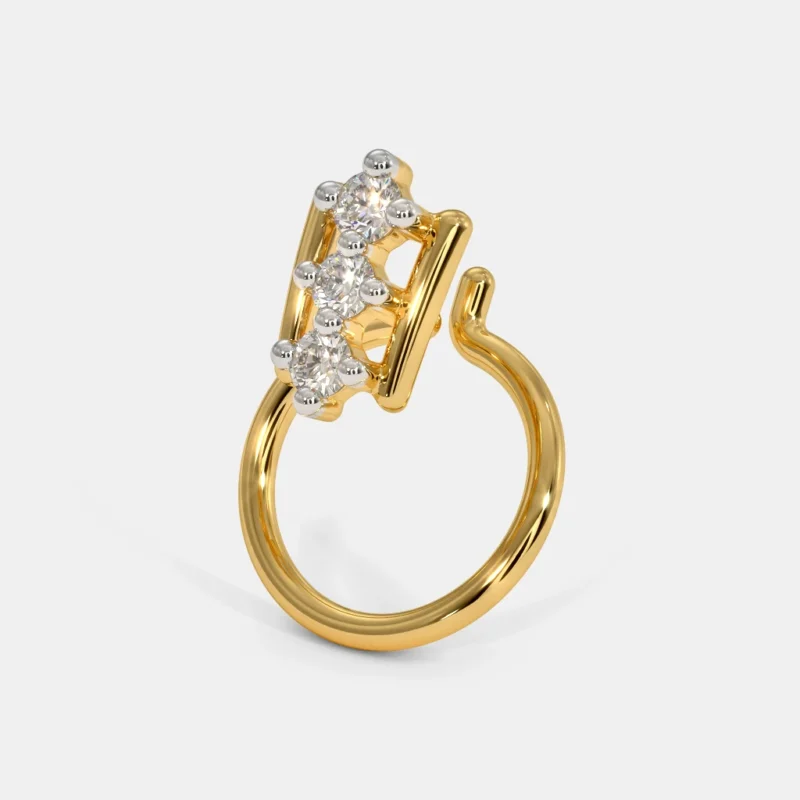
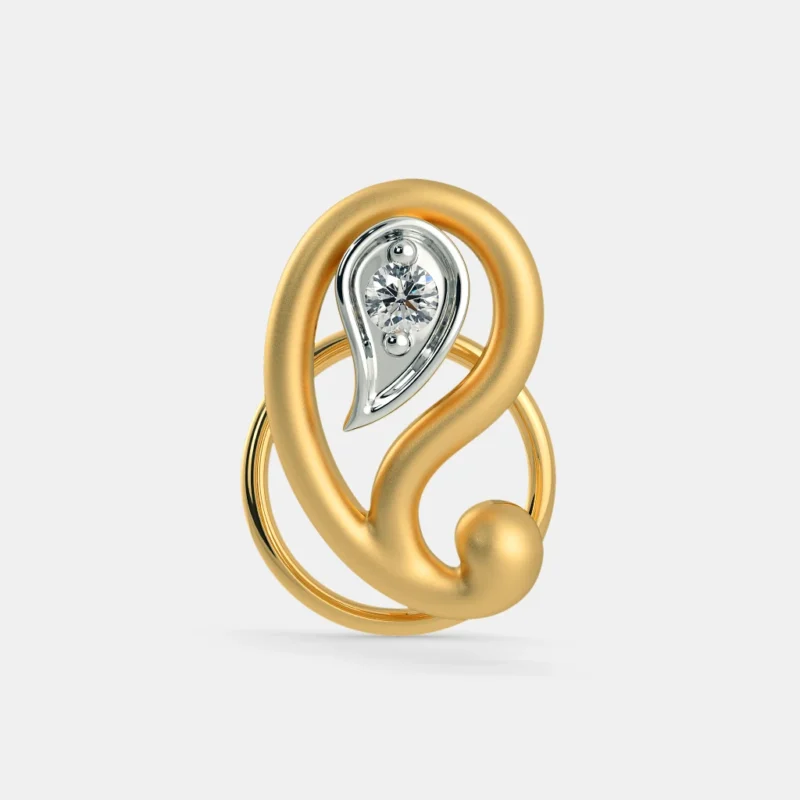
Showing 61–70 of 70 results
Discover Your Perfect Price
Filter by Stone Type and Metal to view accurate, variation-based pricing
Transparent, personalized, and effortless - explore designs that match your style, metal, and budget.
- Tip: Choose one stone type and one metal type to see your exact price.
- If prices seem off, just uncheck and re-apply your filters – the page will refresh with accurate pricing.
 1-to-1 Custom Design
Experience
 Craft Your Vision
Today with a 10% Starte
 HD video Preview
Before It Ships
 Fully Customizable
- Stone, Metal & Budget
 Choose Metal Tone:
Yellow, White or Rose Gold
 Handcrafted in Solid 10K · 14K · 18K
Gold, 925 Silver or 950 Platinum
 Select Your Stone Type:
 Lab-Grown Diamond or Moissanite
 Award winning
 craftmanship and detailing
 Hallmarked &
 Certified (IGI / SGL)
 Personalized Care &
 Expert Support
 Design Any Piece
Within Your Budget
1-to-1 Custom DesignExperience
Craft Your VisionToday with a 10% Starte
HD video PreviewBefore It Ships
Fully Customizable- Stone, Metal & Budget
Choose Metal Tone:Yellow, White or Rose Gold
Handcrafted in Solid 10K · 14K · 18KGold, 925 Silver or 950 Platinum
Select Your Stone Type: Lab-Grown Diamond or Moissanite
Award winning craftmanship and detailing
Hallmarked & Certified (IGI / SGL)
Personalized Care & Expert Support
Design Any PieceWithin Your Budget

Primira's
Real Reviews From Real Customers
Lifetime
Warranty
100% Money
Back Guarantee
Easy
Customization
7 Days
Return
14 Days
Exchange
Insured
shipping
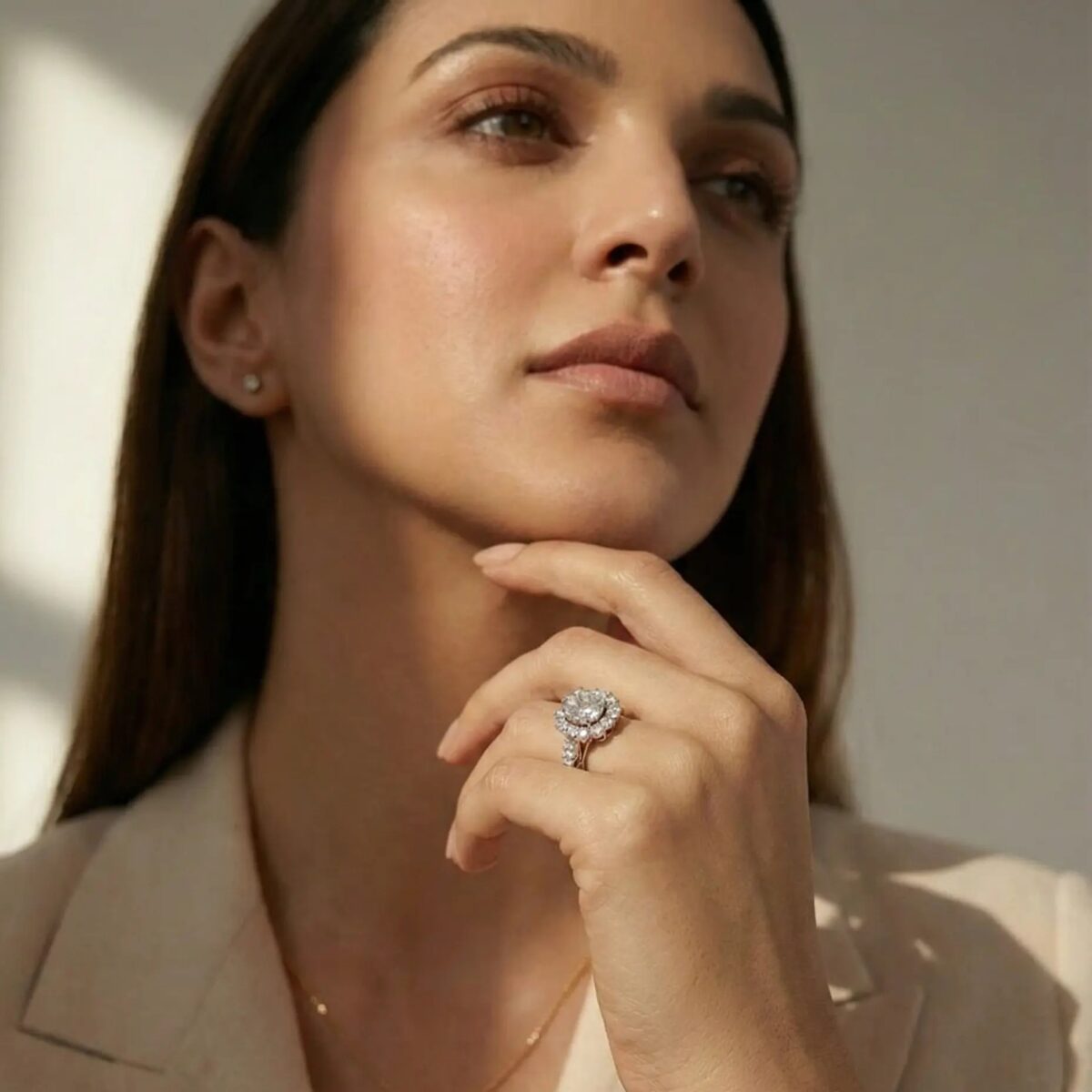
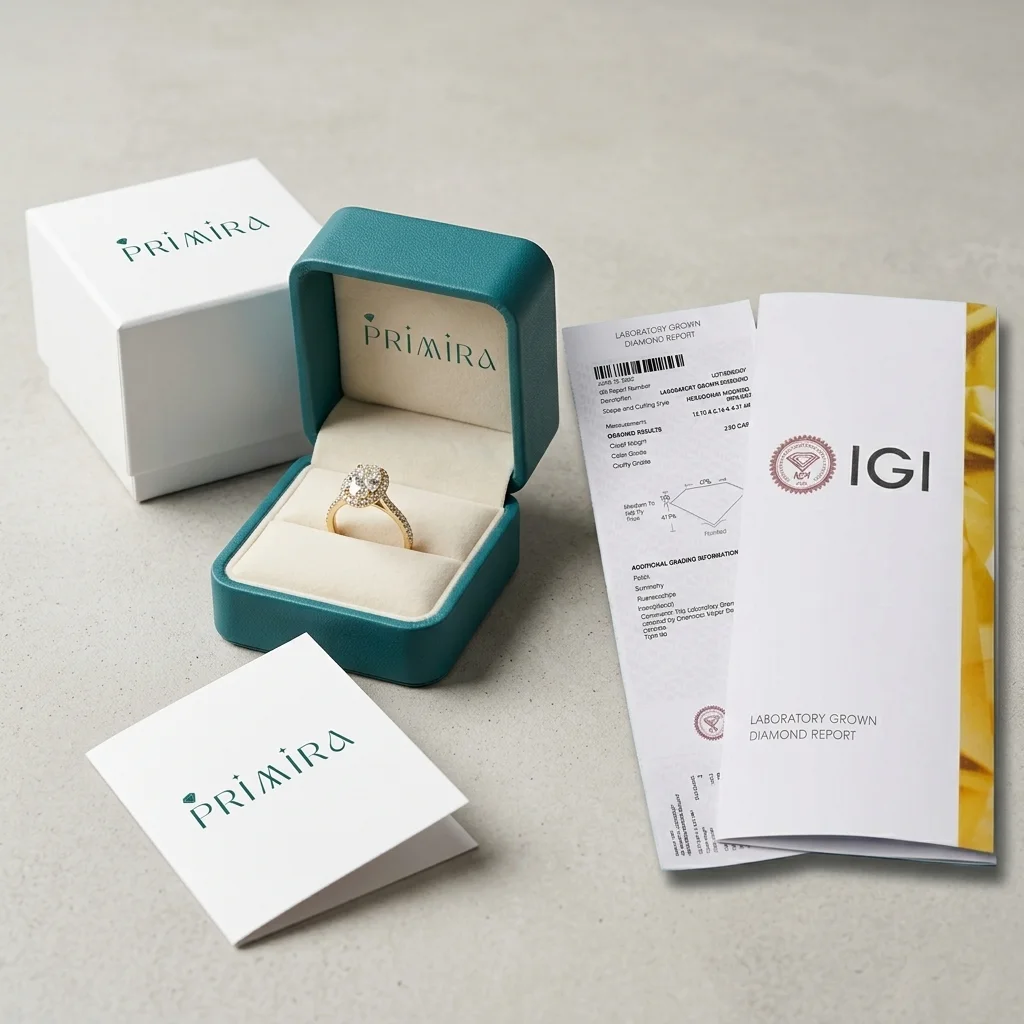
sustainable, beautiful packaging
Give your precious pieces a home they deserve with our stylish, soft-lined jewelry boxes made for effortless organization.
Read Our Article Behind Every Collection
Each design at Primira Luxury is handcrafted with precision, purpose, and emotion. From the first sketch to the final polish, our artisans turn your vision into a piece that feels personal, ethical, and timeless.
Read More
Lab Grown Diamond Nose Pins — Studs, Hoops and Custom Designs
Most diamond nose pins look similar in a product photo. What actually determines whether a piece works — whether it sits flush, catches light correctly, and stays in place through a full day — is a set of decisions that happen before the design is even chosen: post mechanism, post curve length, and wire gauge calibrated to how the piercing was done.
Those decisions live at the production level, not the retail level. This page covers both product types Primira makes — studs and hoops — and the specific engineering behind each.
Studs and Hoops: Two Different Products, Two Different Decisions
A diamond nose stud and a diamond nose hoop solve different things. Buying guidance that treats them as the same product in different shapes misses the point.
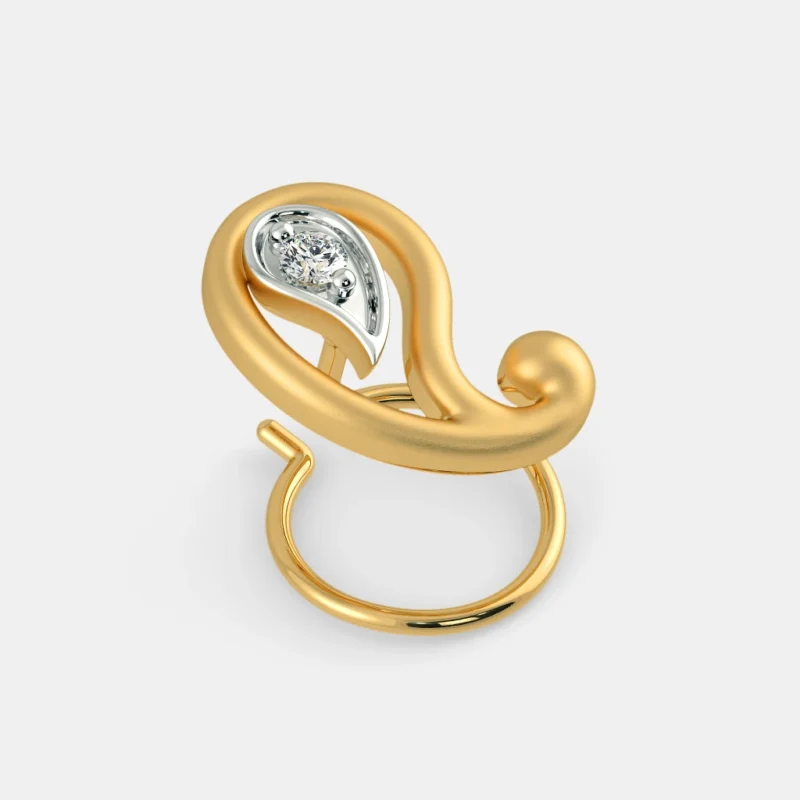
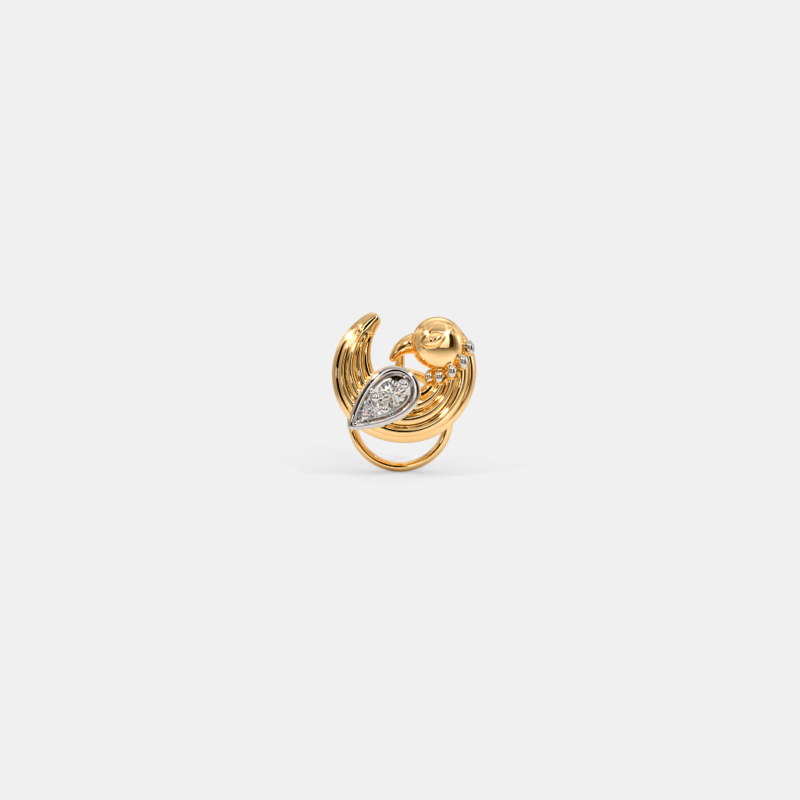
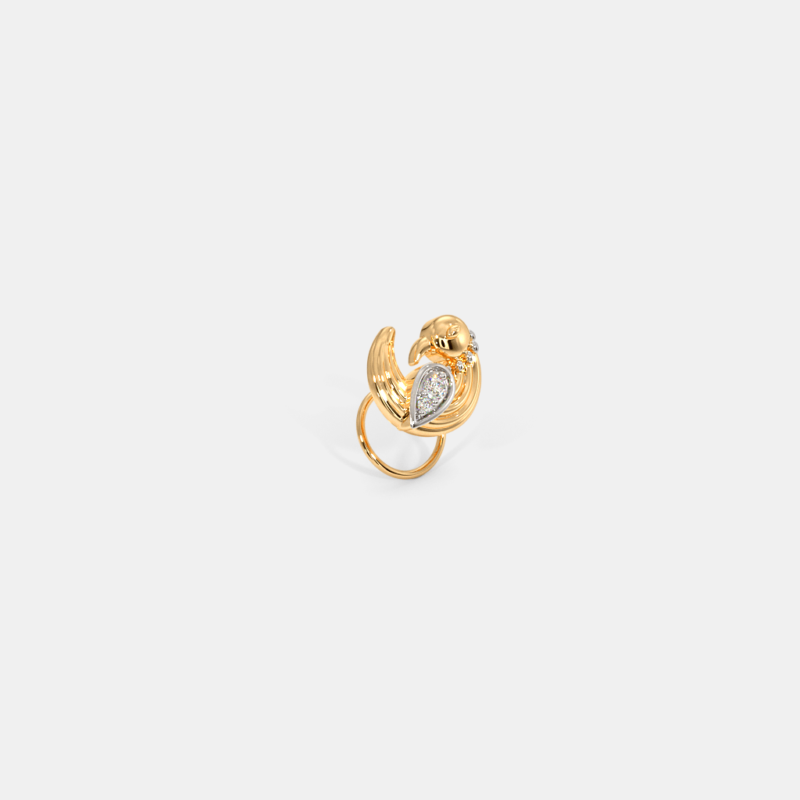
Studs — a single lab grown diamond set in a small frame, held in place by a post mechanism — are the highest-volume nose pin type in India. The diamond itself is the focal point: the visual outcome is almost entirely a function of stone size (typically 0.05ct to 0.20ct for everyday wear, up to 0.30ct+ for a solitaire-style statement piece), setting type, and how the stone sits against the face. The post mechanism is what determines fit — which is covered in its own section below.
Hoops — circular pieces that wrap around the nostril — are a genuinely different purchase. The stone, if present, is secondary to the hoop’s diameter, wire gauge, and closure mechanism. A poorly made hoop has a visible gap or step at the clasp; a well-made one is seamless. More on hoop construction below.
Both types are available in 14K gold (yellow, white, rose), 18K gold, 950 platinum, and 925 sterling silver for casual styles. Both use lab grown diamond or hand-cut moissanite, selected at checkout.
Stud Settings: What Changes the Way a Stone Reads
At nose-pin carat weights, setting choice has a proportionally larger effect on how the stone looks than at ring scale — because there is less metal and less diamond to absorb the visual consequences of a wrong decision.
4-prong: Four metal claws grip the stone’s girdle, lifting it slightly off the skin surface. Maximum light enters from all angles. Best for round and oval stones where light return is the entire value of the piece. The prongs are low-profile and non-snagging on a well-made nose pin, but they require that the prong tips be consistently finished to the same height — unevenness is visible at nose-pin scale in a way it might not be on a larger ring.
Bezel (full): A metal rim wraps the entire stone perimeter. Most secure setting for an active daily-wear piece; no prong tips exposed. Slightly reduces light entry but gives a clean, modern silhouette. Suits anyone who wears their nose pin continuously — during exercise, in the shower, through everything — and wants a setting that won’t catch on fabric.
Bezel (partial/semi): Metal wraps roughly half the stone. A middle position: more light exposure than full bezel, more protection than prong. Well-suited to floral or geometric cluster layouts where the partial bezel frames the centre without blocking adjacent accent stones.
Cluster: Multiple smaller lab grown diamonds arranged in a floral, radial, or geometric pattern — not a single prong-held stone. A cluster nose pin reads larger than its total carat weight because the arrangement distributes visual mass across the face of the piece. Setting quality for a cluster pin is about melee calibration (±0.01mm uniformity between adjacent stones) and shared-prong tension — at small scale, an inconsistent stone in a cluster is immediately visible.
Post Mechanisms: The Fit Question Competitors Don’t Answer
This is the section most diamond nose pin pages skip entirely, which is why buyers frequently receive a pin that either falls out or gaps away from the nostril.
The post is the part of the stud that passes through the piercing and holds the piece in place. The design of the post — its shape and the curve or bend that prevents it from sliding out — needs to match the angle of the piercing and the gauge it was done at.
L-post (L-shaped pin): A straight post with a 90-degree bend at the end. The horizontal portion of the L rests against the inner nostril wall. This is the most common post type and the most forgiving for different piercing angles. The critical specification is the length of the vertical section (the part passing through the piercing) — too short and the bend sits inside the piercing channel rather than past it; too long and it protrudes inside the nostril uncomfortably. Primira’s L-posts are cut to a standard length that fits the majority of standard nostril piercings, and can be confirmed or adjusted via pre-production WhatsApp if your piercing is at an unusual depth.
Twist/screw: The post has a curved or spiral shape that threads through the piercing as you rotate it. Extremely secure — the spiral prevents withdrawal even under direct outward pressure. Trade-off: harder to insert and remove than an L-post, and the twist curve needs to correspond to whether the piercing is in the left or right nostril (a left-nostril screw inserted into a right-nostril piercing will either not seat correctly or pull at the piercing). Worth it for buyers who want the most secure retention and are comfortable with the insertion routine.
Gauge: Indian nose piercings are traditionally done at a finer gauge than the Western standard of 18G (1.02mm). Many traditional piercings in India are at 22G–24G (0.64mm–0.51mm). Primira’s stud wire is calibrated to 20G (0.81mm) as the default — a practical middle-ground that works for piercings done at 18G or 20G and can pass through a finer traditional piercing once it has fully healed and the channel has settled. If you have a fresh or unusually fine piercing, note this during the WhatsApp confirmation before production.
No retailer selecting from an international wholesale catalog faces this specification at all — post length and gauge are fixed in the catalog product. Because Primira produces to specification, these variables are adjustable at production, not just selected from existing options.
Hoop Construction: What Makes a Seamless Hoop Actually Seamless
The 2026 trend in nose hoops is toward smaller-diameter seamless styles — pieces that hug the nostril without a visible gap, in yellow or white gold, worn alongside a stud in the same or an adjacent piercing. The appeal is the visual of a continuous curve of metal with or without a small diamond accent, not a decorative centre stone flanked by obvious hardware.
What determines whether a hoop reads as seamless in practice is the hinge mechanism, not just the wire thickness.
Clicker hoops: Have a hinged segment that clicks into a closed position, flush with the rest of the hoop. When made well, the click-closure is invisible from the front — the join is on the inner curve, and the hoop presents as a continuous circle. The hinge mechanism requires tight tolerance machining: if the hinge pin is even slightly oversized or undersized relative to its housing, the segment either won’t click shut cleanly or will wobble slightly when closed. At the nose pin scale (typically 6–10mm internal diameter), those tolerances matter more than on a larger earring hoop.
Hyper-polished inner surface: The inner curve of a nose hoop rests against the nostril tissue and rotates slightly with facial movement. A rough or textured inner surface creates friction and, over time, irritation. Primira’s hoops are polished through the inner channel specifically — not just the visible outer surface.
Diamond-set hoops: Small lab grown diamonds set along the outer curve of the hoop, typically 0.03–0.05ct per stone in a pavé or bezel track. The setting needs to be low-clearance — no prong tips rising above the wire profile — to prevent snagging when the hoop is rotated for cleaning or adjustment.
Stone Specifications for Nose Pins
The 4Cs at nose-pin scale work slightly differently than at ring scale.
Color sits closer to the face than a ring, and the skin directly beneath the stone means there is no dark setting to reflect back through the stone the way a ring’s under-gallery does. D–F colorless is the primary stock. G–H near-colorless is a value choice with no visible difference to the naked eye at this scale.
Clarity: VVS1 to VS2, all eye-clean. Primira does not stock SI2 or below. At 0.05ct–0.20ct, inclusions at VS2 level are not visible without magnification, so the primary clarity concern is that the stone is genuinely eye-clean — which every stone in stock is.
Cut: Ideal and Excellent only. At small carat weights, a poorly proportioned stone loses its sparkle entirely because there is less material to compensate for light leakage. A well-cut 0.08ct stone on a nose pin outperforms a poorly cut 0.15ct stone visibly.
Carat: 0.05ct is genuine sparkle with a low profile — suited to minimal daily-wear. 0.10ct–0.15ct is the everyday sweet spot for most buyers: visible at conversation distance, not overwhelming. 0.20ct and above functions as a statement-weight solitaire nose pin, noticeable from across a room.
Custom Nose Pins
Custom orders work differently here than in most other jewelry categories, because the shape of the piece is small and the variation space is mostly in the post and carat specification rather than the overall design silhouette.
What custom order means for nose pins at Primira:
- Stone specification: any carat weight from 0.05ct upward, any shape from the Surat cutting range including round, oval, pear, marquise, heart, and the full custom silhouette library
- Post type: L-post or twist, with post-length specification confirmed via WhatsApp
- Metal and tone: all five metal tiers, all three tones
- Setting type: 4-prong, bezel (full or partial), or cluster arrangement
- Hoop diameter: specified to your nostril measurement if ordering a custom hoop
Reference images are accepted and translated into production specs at the Surat cutting and setting bench. Send via WhatsApp before order confirmation; the team will confirm what is achievable at the requested scale.
Care and Longevity
Nose pins face specific wear conditions that other jewelry doesn’t: daily contact with skin oils and cosmetics, occasional removal and re-insertion that stresses the post, and exposure to water.
Oils and cosmetics: Apply any cosmetic products before putting the nose pin in, not after. Lotion, foundation, and nasal sprays all leave residue on the stone and the setting that dulls the surface. Clean weekly with warm water and a soft-bristle toothbrush.
Post stress: The weakest point on any nose pin is where the post meets the setting back. Repeated bending — especially with twist posts — can fatigue the metal over time. 14K gold is recommended for pieces worn continuously (higher tensile strength than 18K at the same gauge), and platinum for buyers who want the absolute maximum durability at the post-to-back junction.
Prong maintenance: Inspect 4-prong settings visually every few months. The prongs are small enough that a slightly bent tip may not be obvious until the stone is already loose. If a prong appears to have shifted, have it re-pressed rather than waiting.
Bezel maintenance: Full bezel settings have essentially no prong concern, but the metal rim can be polished to maintain its edge definition. Satin-finish bezels should not be polished (it removes the texture) — clean with water only.
Why IGI Certification at Nose Pin Carat Weights
Most sellers in this category don’t provide IGI certification for stones in the 0.05ct–0.20ct range — the industry norm is to begin independent certification at 0.50ct or above. Primira provides SGL certification on all nose pins as standard, with IGI certification available on request for all stones 0.25ct and above. The report number for each certified stone is laser-inscribed on the girdle and verifiable at igi.org.
This matters specifically for lab grown diamond nose pins because the stone cannot be assessed visually the way a larger ring stone can. A buyer looking at a 0.10ct stone set in a nose pin has no practical way to evaluate color or clarity independently — the certification is the verification mechanism. Tying the report to the stone at the girdle means the number stays with the physical stone regardless of what happens to the paperwork.
FAQ
What is the difference between an L-post and a screw nose pin?
An L-post has a 90-degree bend that rests horizontally against the inner nostril wall. It is easier to insert and remove, and suits most standard nostril piercings. A screw post has a spiral curve that locks in place as you rotate it — extremely secure but harder to work with. The choice comes down to whether you want ease of daily handling or maximum retention security. Both are available from Primira; post type is confirmed during the pre-production WhatsApp conversation.
What carat size of lab grown diamond suits a nose pin?
0.05ct–0.08ct gives genuine sparkle with a very low profile — best for minimalist or professional daily wear. 0.10ct–0.15ct is the most common range: visible at normal conversation distance, appropriately scaled for the nostril. 0.20ct and above reads as a statement-weight solitaire. The right size also depends on the setting: a bezel-set 0.15ct reads smaller than a prong-set 0.15ct because the bezel surrounds the stone and reduces visible diameter.
Can I wear a lab grown diamond nose hoop every day?
Yes, with the right construction. A clicker hoop in 14K gold or 18K gold with a polished inner surface and low-clearance diamond setting is designed for continuous wear. The key variable is closure quality — a properly made clicker hoop clicks shut with no visible gap and no catch point that could hook on fabric. If you are ordering a hoop for daily wear, note this during the WhatsApp confirmation and the team will confirm the closure mechanism is appropriate for your intended use.
Are your lab grown diamond nose pins IGI certified?
SGL certification is standard on all Primira lab grown diamond nose pins. IGI certification is available on request for stones 0.25ct and above — the IGI report number is laser-inscribed on the stone’s girdle and is independently verifiable at igi.org. For stones below 0.25ct, SGL grading is included and covers the same 4Cs assessment.
What metal is best for a lab grown diamond nose pin in India?
For continuous daily wear, 14K gold is the practical recommendation: higher tensile strength than 18K at the same wire gauge, more scratch-resistant, and available in yellow, white (rhodium-plated), or rose. 18K gold has a richer color and is ideal if the piece is worn carefully or for more formal occasions. 950 platinum is the highest-durability option and is genuinely hypoallergenic — worth considering for anyone with metal sensitivity or a relatively new piercing. 925 sterling silver suits casual, occasional wear.
Ordering from Surat
Primira is a manufacturing facility in Surat, Gujarat — the district that cuts 90% of the world’s rough diamond supply. Nose pins are produced at the same bench that cuts the stones, which means post specifications, gauge, and stone placement are production decisions, not retail selections from existing stock.
After checkout, the Surat team contacts you via WhatsApp and email within 24 hours to confirm: stone carat, shape, color grade, clarity, metal tier, tone, setting type, and post mechanism. For studs, the L-post curve length and gauge are confirmed at this stage. Production takes 15–35 business days.
Every shipment is insured from dispatch to delivery — a piece this small is a real transit risk and insurance is included, not optional. Returns are accepted within 7 days of delivery if the piece differs materially from confirmed specifications. The buyback program is available as a structured value-recovery option.
→ See the full mangalsutra collection — India’s other fine diamond category with zero global competition, and zero overlap with nose pins in intent or design.
 Chat on WhatsApp