The 4Cs of Diamonds, Explained
Every diamond is graded against four standards: cut, color, clarity, and carat weight. Together, these determine how a diamond looks, how rare it is, and what it costs. This guide walks through each one clearly, without the jargon, so you can choose a stone that fits your taste and budget with confidence.
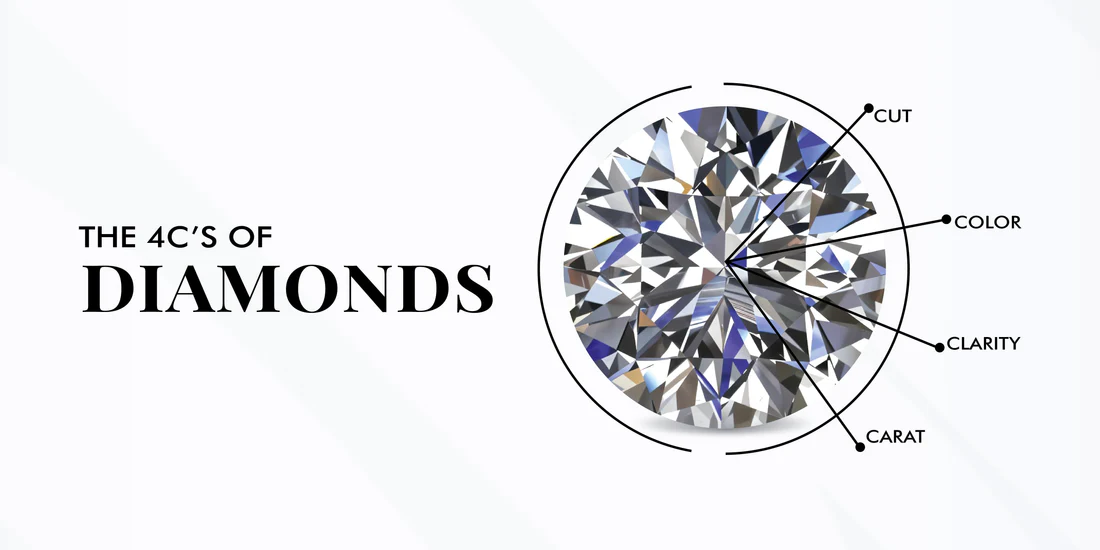
Buying a beautiful diamond – whether for an elegant jewelry piece or a stunning diamond engagement ring – is a significant investment. The process can often feel overwhelming, with complex terminology and varying prices. The key to shopping confidently and ensuring you get the best value lies in mastering the global standard for assessing diamond quality: the 4Cs of Diamond. These four essential factors – Carat Weight, Cut, Color, and Clarity – are what determine a diamond’s brilliance, rarity, and overall cost. Our complete guide breaks down each of the 4 Cs to demystify the grading process, empowering you to make a smart, informed decision and select the perfect stone that maximizes your budget.
Why Cut Is so Much Important In diamonds
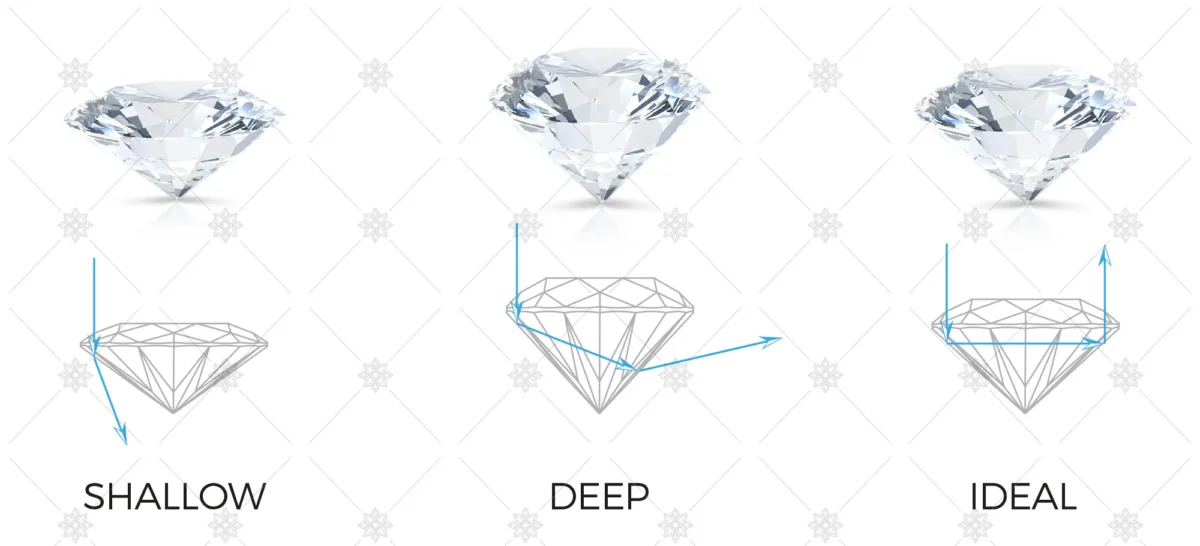
Cut refers to how well a diamond’s facets are proportioned and angled, and it has the single biggest impact on how much a diamond sparkles. A well-cut diamond returns light back through the top, creating bright flashes (brilliance), flashes of color (fire), and movement-based sparkle (scintillation). A poorly cut diamond leaks light out the sides or bottom, looking dull even with excellent color and clarity.
Cut is graded Excellent, Very Good, Good, Fair, or Poor. This scale was pioneered by Marcel Tolkowsky in the 1920s, who calculated the angles that maximize light return in round diamonds, and has since been refined using modern light-performance modeling. Only round diamonds receive a formal cut grade on most certificates; fancy shapes (princess, cushion, emerald, and others) are assessed by proportion and finish instead, since their facet patterns vary too much for one standard scale.
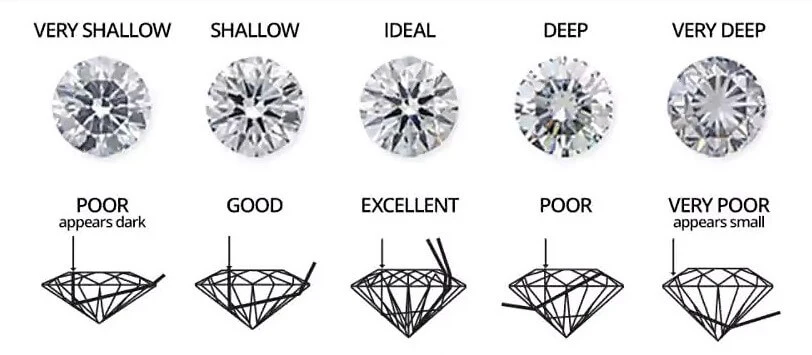
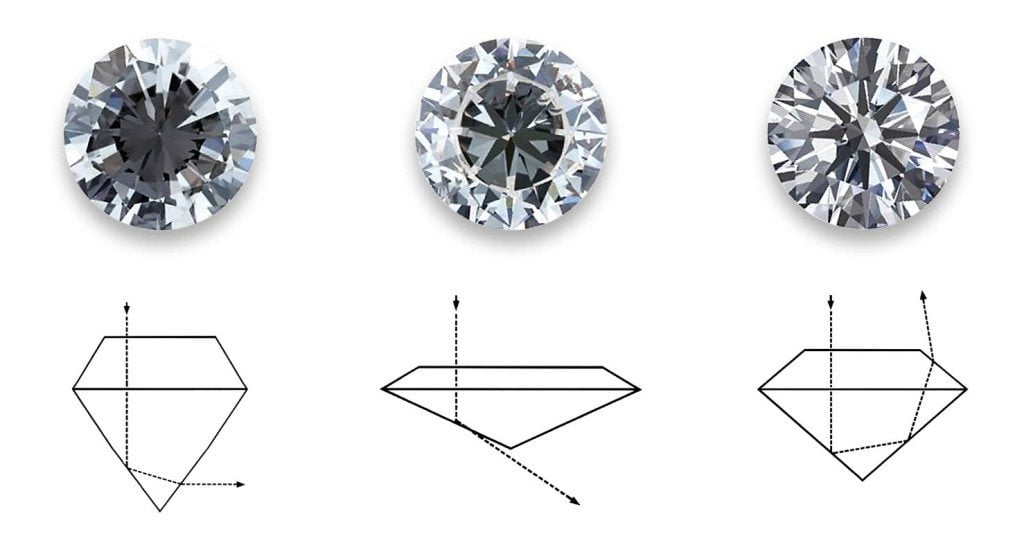
Our recommendation: for round diamonds, Excellent or Very Good cut offers the best sparkle for the price — the visual difference between Excellent and Very Good is hard to see even for trained eyes, but the price difference is real. Avoid deep cuts that hide weight below the surface, making the stone look smaller than its carat weight suggests.
Diamond Color
Diamond color is graded on a D-to-Z scale, where D is completely colorless and Z has a noticeable yellow or brown tint. The scale breaks into five ranges: colorless (D-F), near-colorless (G-J), faint (K-M), very light (N-R), and light (S-Z). Most yellow tint comes from trace nitrogen trapped during the diamond’s formation
The differences between adjacent grades are subtle — even D versus G can be hard to tell apart without side-by-side comparison under controlled lighting. Near-colorless grades (G-J) often look colorless once mounted, especially in yellow or rose gold settings, which can mask a faint tint. This makes G-J a strong value range for buyers who want the look of a colorless stone without paying the premium D-F commands.
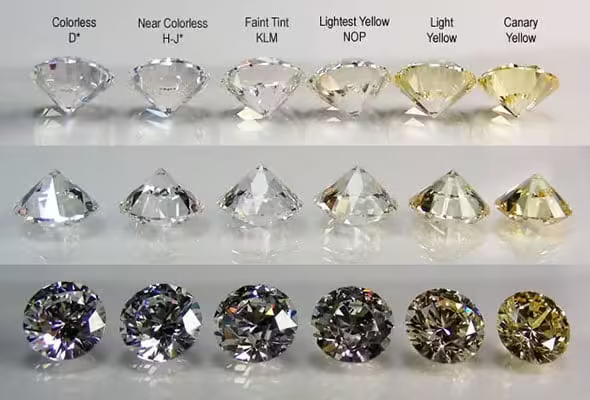
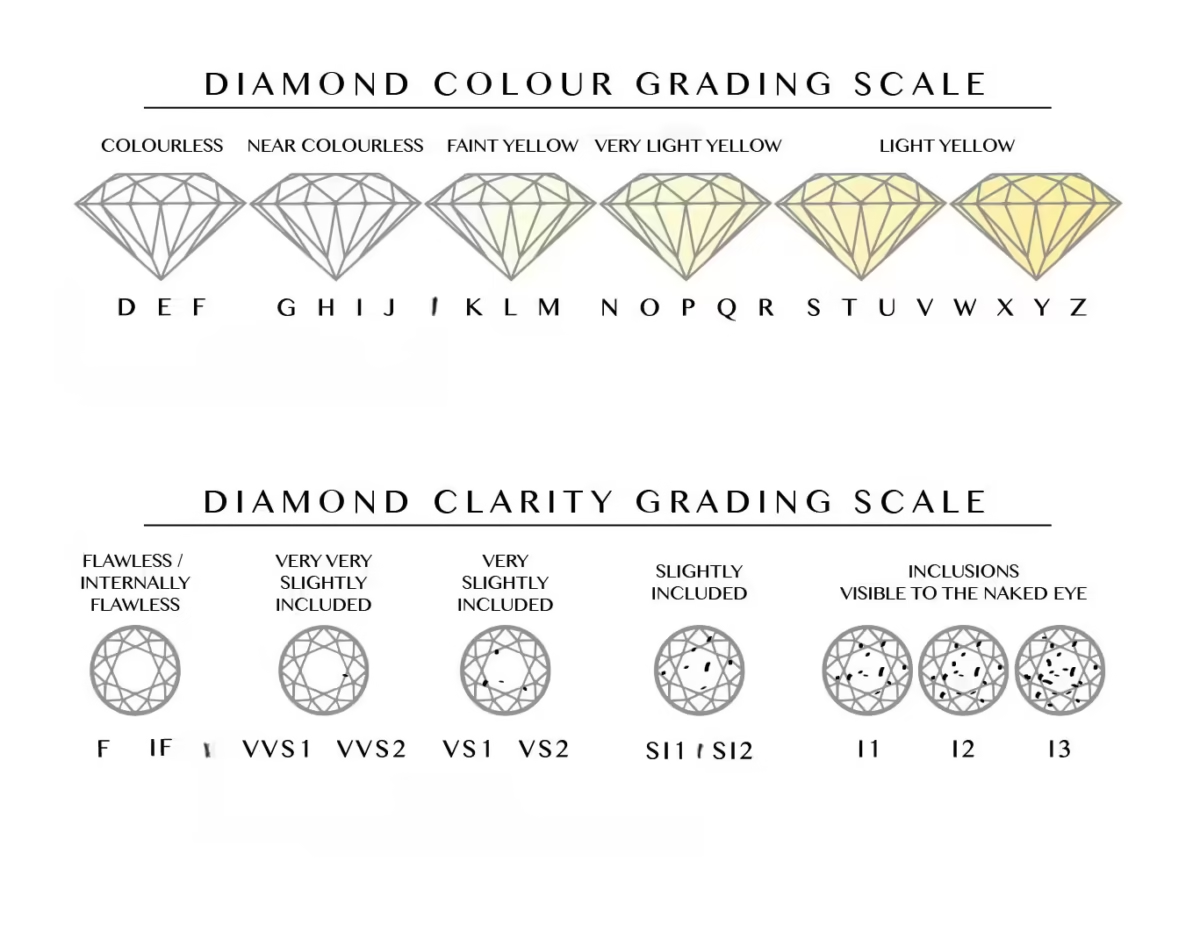
Our recommendation: D-F if color is a priority for you; G-I for the best balance of appearance and value
How to choose a clarity grade?
Clarity measures how free a diamond is from internal inclusions and surface blemishes, graded from Flawless (FL) down through Internally Flawless (IF), VVS1/VVS2, VS1/VS2, SI1/SI2, to Included (I1-I3). Four factors determine how much a given inclusion affects the grade and the eye: its size, how many are present, where it sits (inclusions under the table are more visible than those near the edge), and its nature (some inclusion types affect durability, most don’t).
Flawless and Internally Flawless diamonds are rare and priced accordingly, but the difference between FL and VVS is invisible to the naked eye. Most buyers get the best value in the VS1-VS2 range — clean enough to be confidently eye-clean, without paying for clarity no one will ever see. SI1 can also be a smart choice: many SI1 stones look eye-clean, though this varies stone to stone since inclusions at this grade can occasionally be visible without magnification.

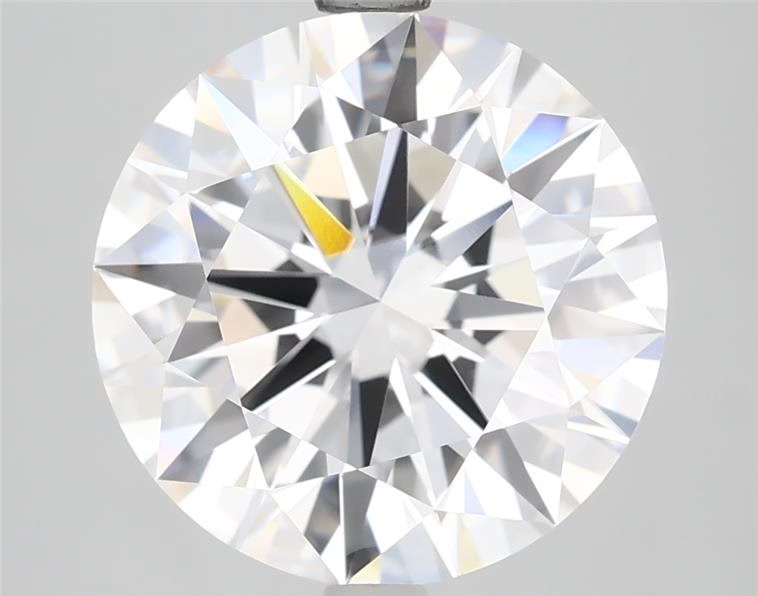
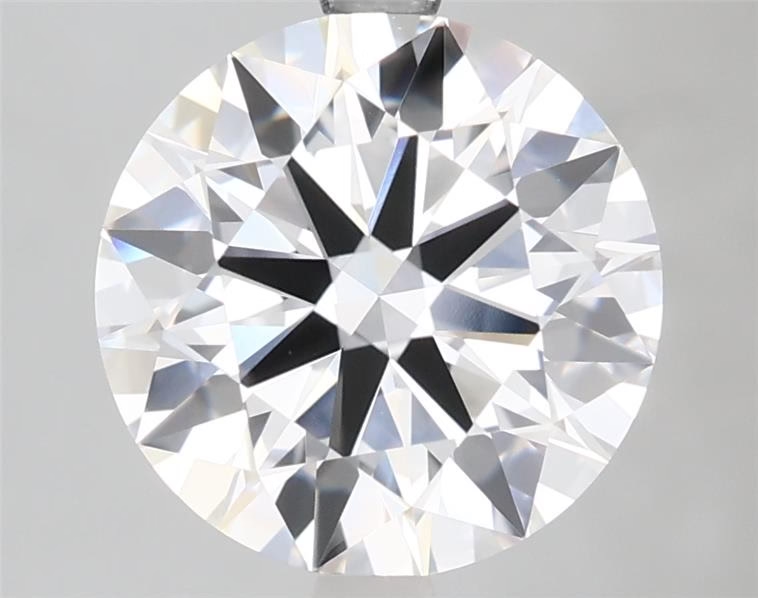

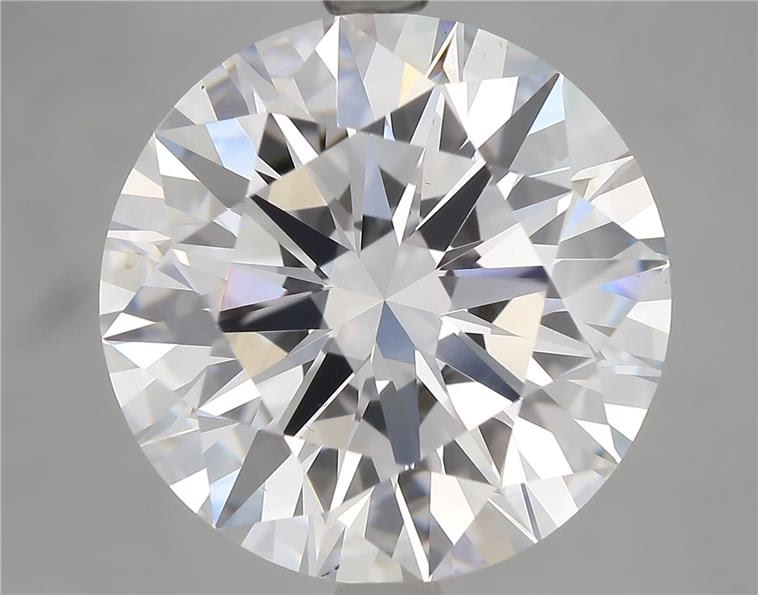
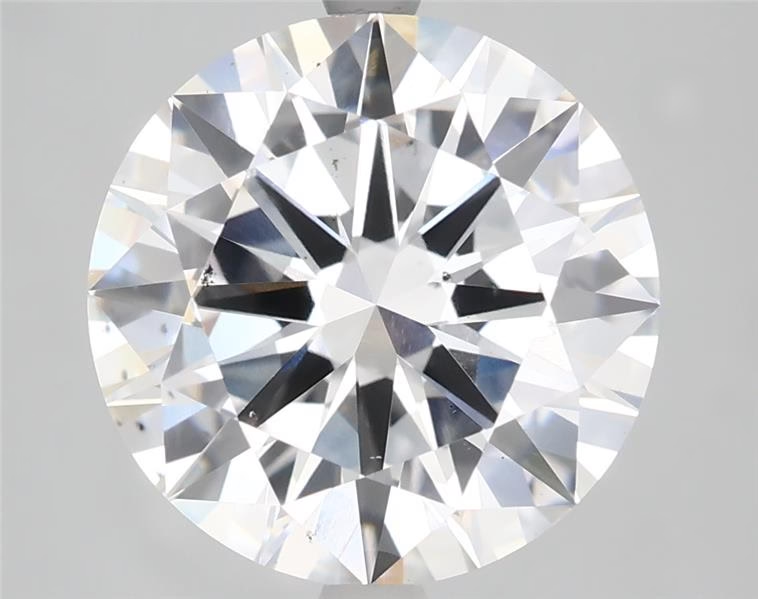
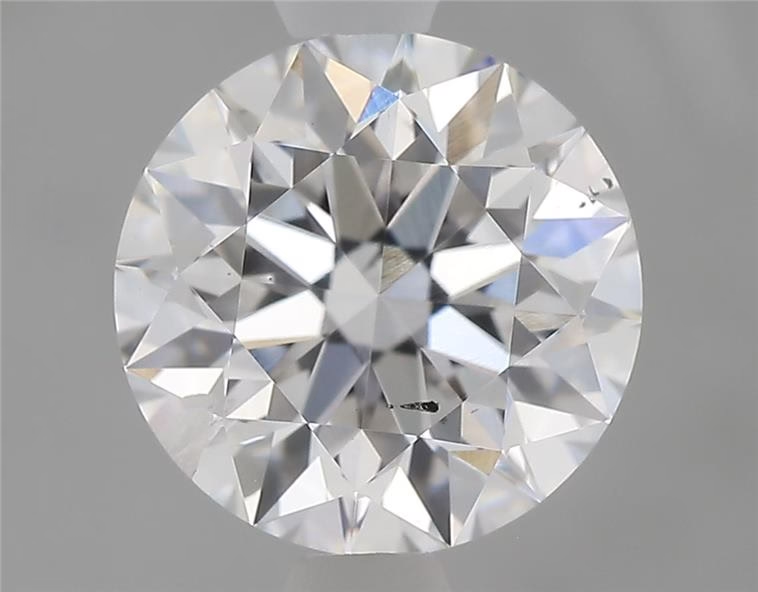
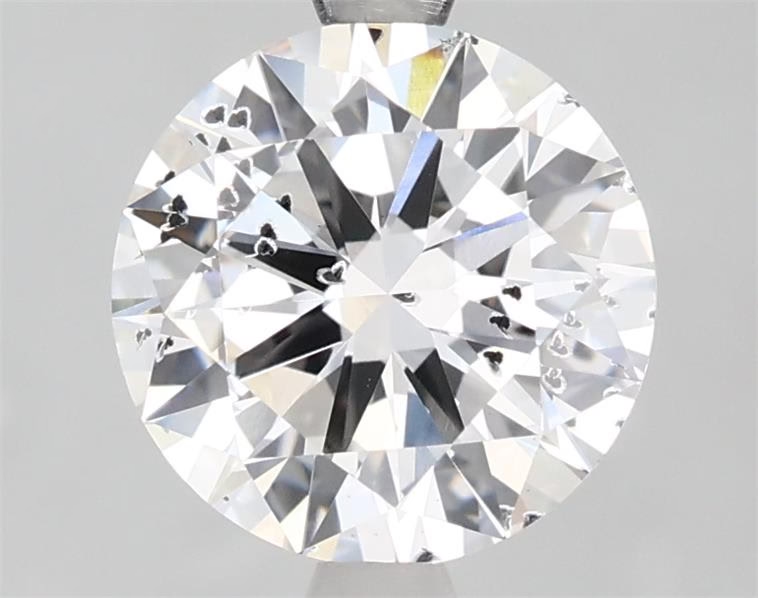
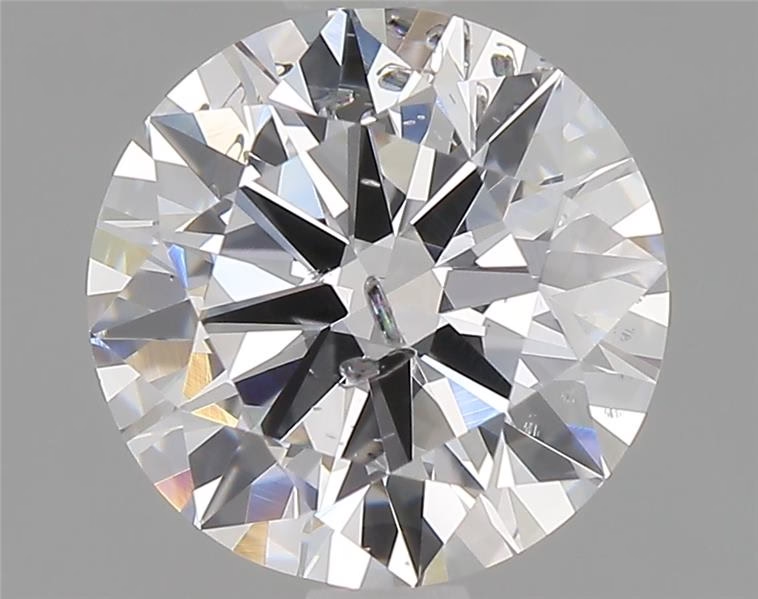
The 4 Diamond Clarity Factors
Size
Visible flaws and noticeable inclusions can significantly impact the degree of purity in diamonds. Understanding how these characteristics affect diamond purity grades is essential to select a stone with optimal clarity and value.
Number
The degree of purity in a diamond is greatly influenced by the number of visible features it contains. Diamonds with fewer visible inclusions and minimal observable characteristics achieve a higher diamond purity grade, enhancing both their beauty and value.
Position
Internal diamond features located under the table or near the pavilion can significantly affect the diamond’s refraction and overall brilliance. The impact of inclusions near the diamond pavilion is especially critical because these flaws can interfere with light performance, reducing the perceived purity and sparkle of the stone. Understanding how internal diamond features influence the degree of purity helps buyers select diamonds with optimal clarity and visual appeal.
Nature
Understanding natural diamond inclusions and durability is essential when selecting a high-quality diamond. These diamond inclusions form naturally during the crystal’s growth and can significantly impact the gem’s strength and beauty. By learning about the types of diamond inclusions and their effects, you can choose a stone that maintains its lasting brilliance while offering optimal durability.
A clarity note by shape: step-cut shapes like emerald and Asscher have large, open facets that make inclusions easier to spot, so we recommend VS1 or higher for these cuts specifically. Round and other brilliant cuts hide inclusions more easily, so SI1 is a safer choice there.
Carat Weight
Carat measures weight, not size — one carat equals 200 milligrams. It’s the easiest of the 4Cs to understand, but the one most often confused with visual size. A 2-carat diamond weighs exactly twice as much as a 1-carat diamond, but its face-up diameter is only about 30% larger, since weight increases with volume while diameter increases more slowly.
This is why two diamonds of the same carat weight can look different sizes: a diamond cut too deep (more weight hidden below the surface) looks smaller face-up than one cut to proper proportions. If visual size matters more to you than the number on the certificate, prioritize cut and diameter over carat weight alone — a well-cut 0.90 carat stone can look as large as a poorly-cut 1.00 carat stone, for less money. [See our moissanite and diamond size chart →]
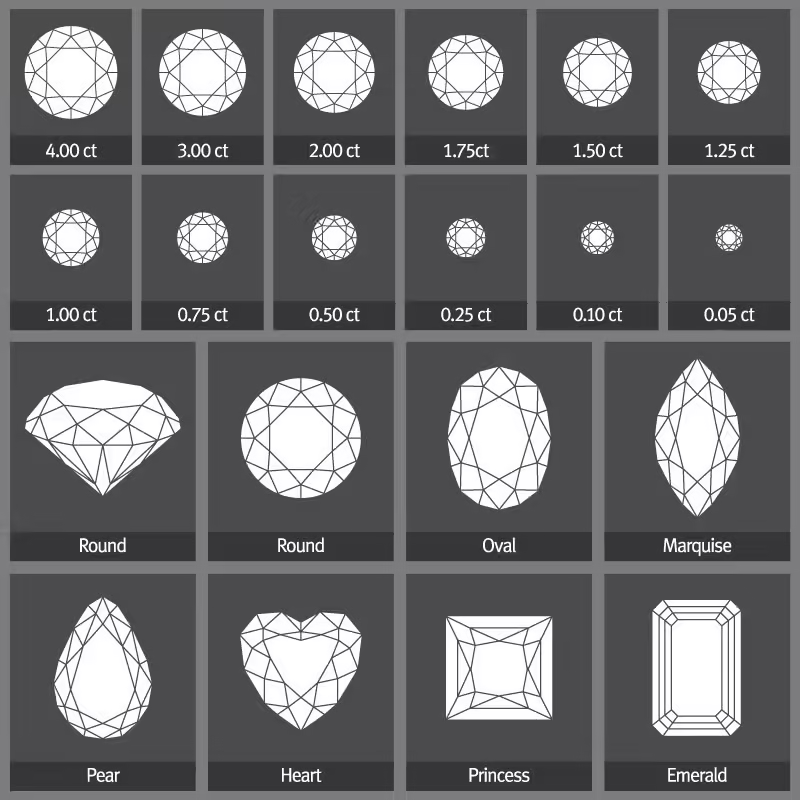









Diamond Shapes
Each shape distributes light differently and suits different settings and styles. All shapes below are available in our standard stock and as custom orders.
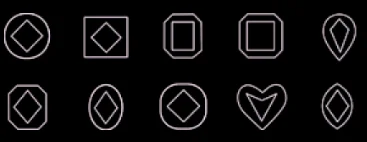
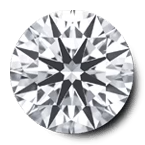
Round Brilliant Cut Diamonds
the most popular shape, cut with 57-58 facets specifically engineered to maximize brilliance. The benchmark every other shape is measured against.
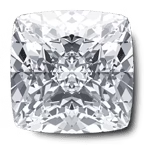
Cushion-Cut Diamonds
square or rectangular with rounded corners and larger facets, blending vintage character with brilliant-cut sparkle.
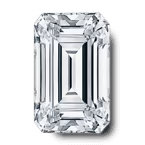
Emerald-Cut Diamonds
a step-cut shape with long, rectangular facets that emphasize clarity and produce a quieter, glassier sparkle rather than the round brilliant’s fire. Because inclusions are easier to see through these open facets, we recommend VS1 clarity or higher.
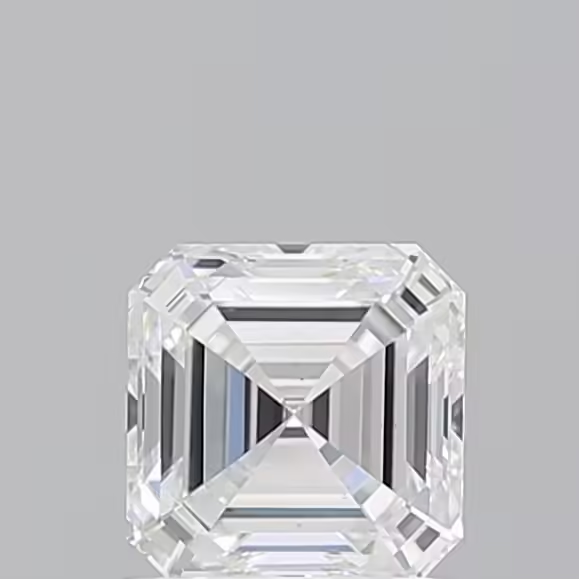
Asscher-Cut Diamonds
a square step-cut, essentially emerald’s square sibling, with the same clarity considerations.
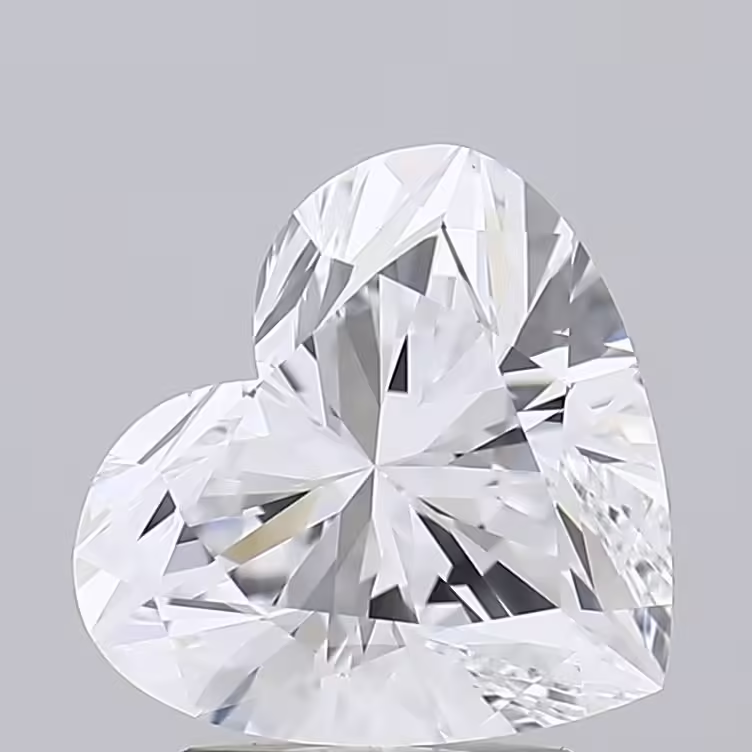
Heart Diamonds
a brilliant-cut variation shaped into a heart, requiring precise symmetry to avoid an uneven or lopsided silhouette.
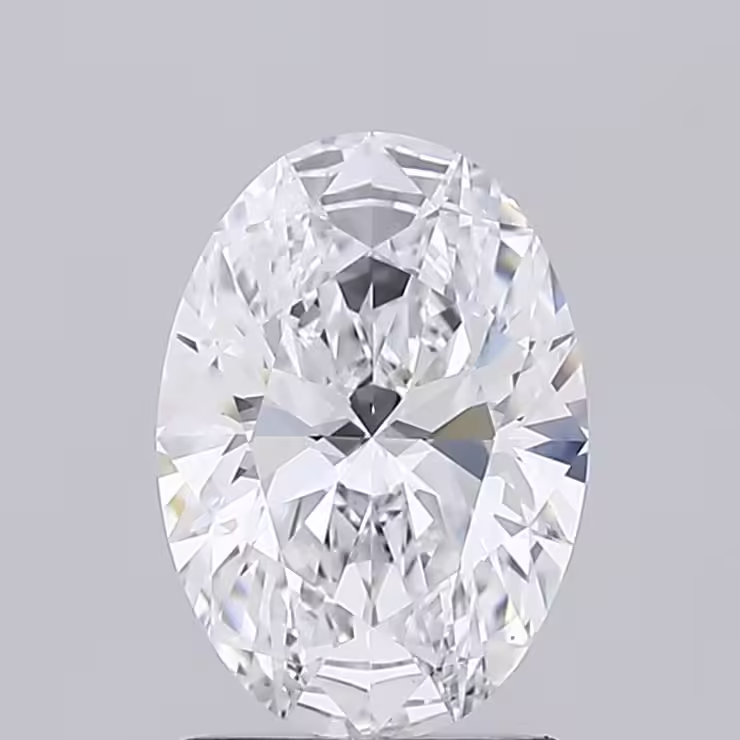
Oval Diamonds
an elongated version of the round brilliant’s facet pattern, offering similar sparkle with a shape that can make fingers appear longer.
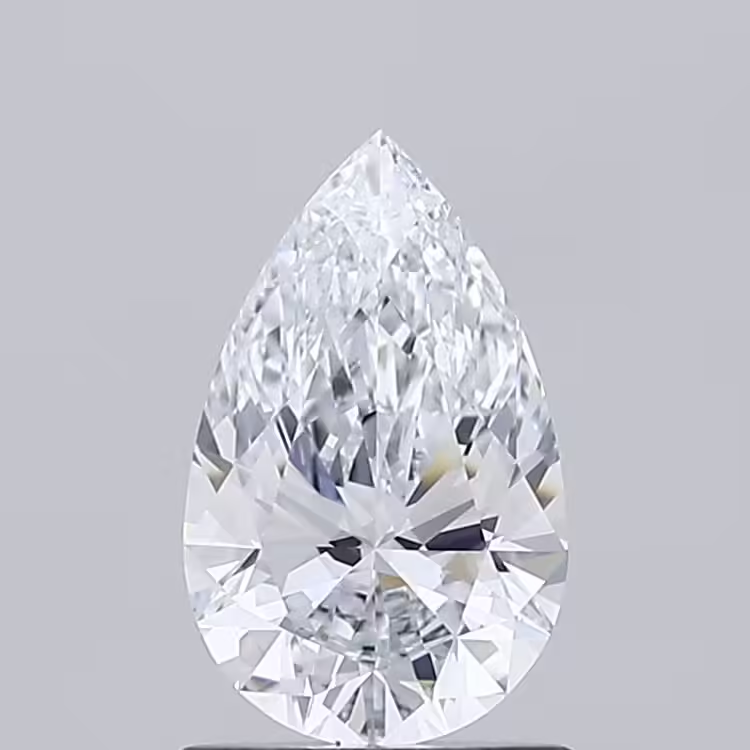
Pear Diamonds
a teardrop shape combining round-brilliant faceting with a tapered point; the wider end is often worn toward the hand.
Princess-Cut Diamonds
a square brilliant cut, the most popular square shape, offering round-brilliant-level sparkle in a squared outline.
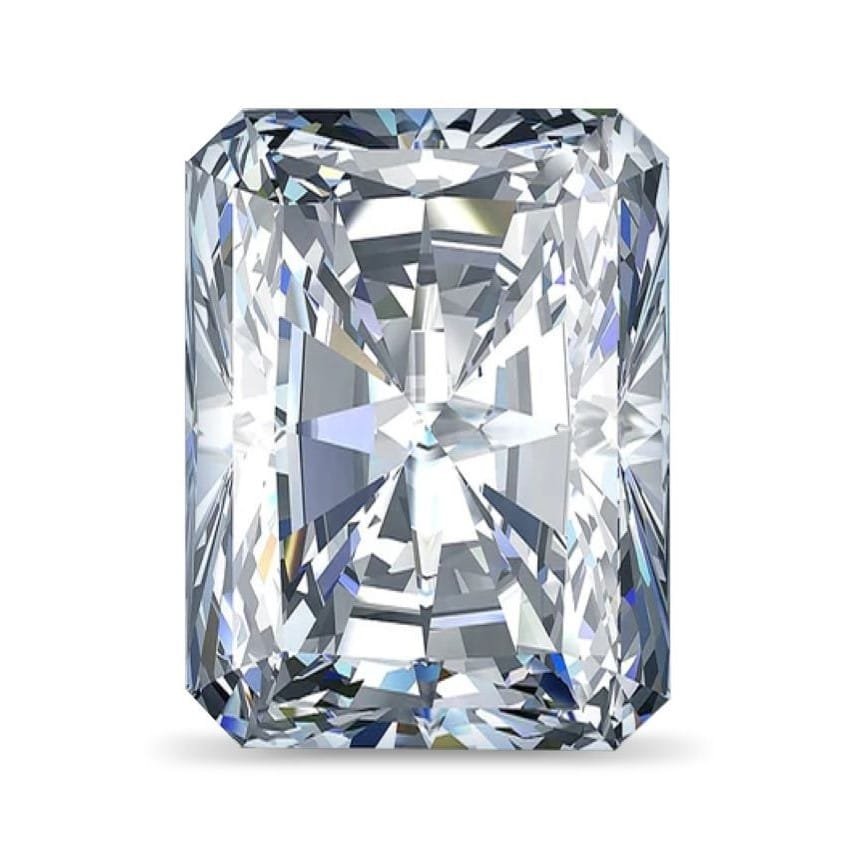
Radiant Cut Diamonds
combines the rectangular outline of an emerald cut with brilliant-style faceting, first developed in 1977; a middle ground between step-cut elegance and brilliant-cut fire.
Other Speciality Cuts
We also offer specialty cuts not shown here on request — Portuguese, Rose Cut, and Old European Cut among them — sourced and verified within 2 hours through our Surat network. [Browse all shapes →]
Diamond Anatomy
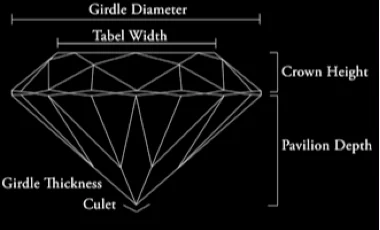
Understanding the parts of a diamond helps make sense of how cut quality is assessed.
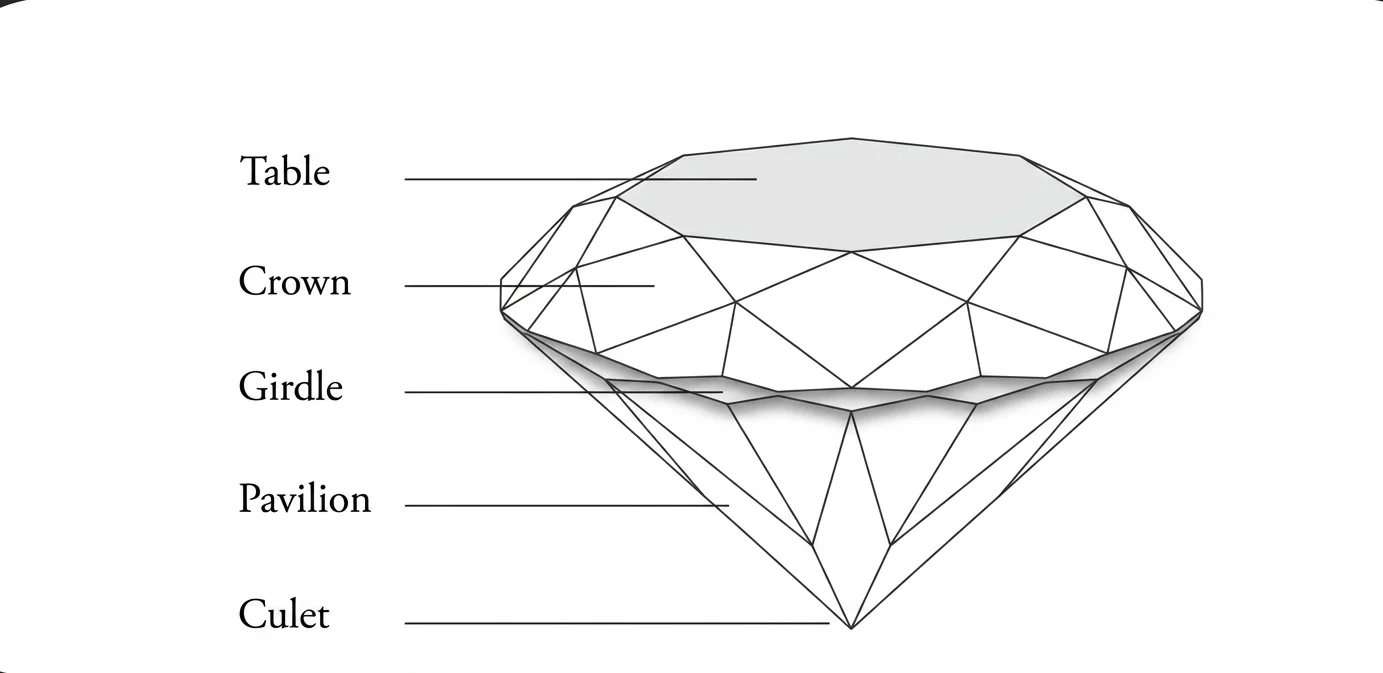
Table : The Table is the largest polished facet on the top of the diamond. It allows light to enter and reflect, directly affecting the diamond’s brilliance and sparkle. A well-cut Table enhances the diamond’s overall beauty.
Girdle : The Girdle is the diamond’s widest edge where the Crown meets the Pavilion. It provides strength and protects the stone from damage. The thickness of the Girdle also impacts the diamond’s overall proportions.
Pavilion : The Pavilion is the bottom part of the diamond, stretching from the Girdle to the Culet. It reflects light back through the Table to maximize the diamond’s brilliance. Proper Pavilion depth is crucial for optimal sparkle.
Depth : Depth is the total height of the diamond from the Table to the Culet. Correct Depth proportions ensure the diamond reflects light perfectly, enhancing its brightness and fire. Too much or too little depth can reduce sparkle.
Culet : The Culet is the small or pointed tip at the bottom of the diamond. It helps protect the diamond from chipping. Some diamonds have a pointed Culet, while others have a tiny flat facet for durability.
Proportion – Understanding Brilliance, Dispersion & Scintillation
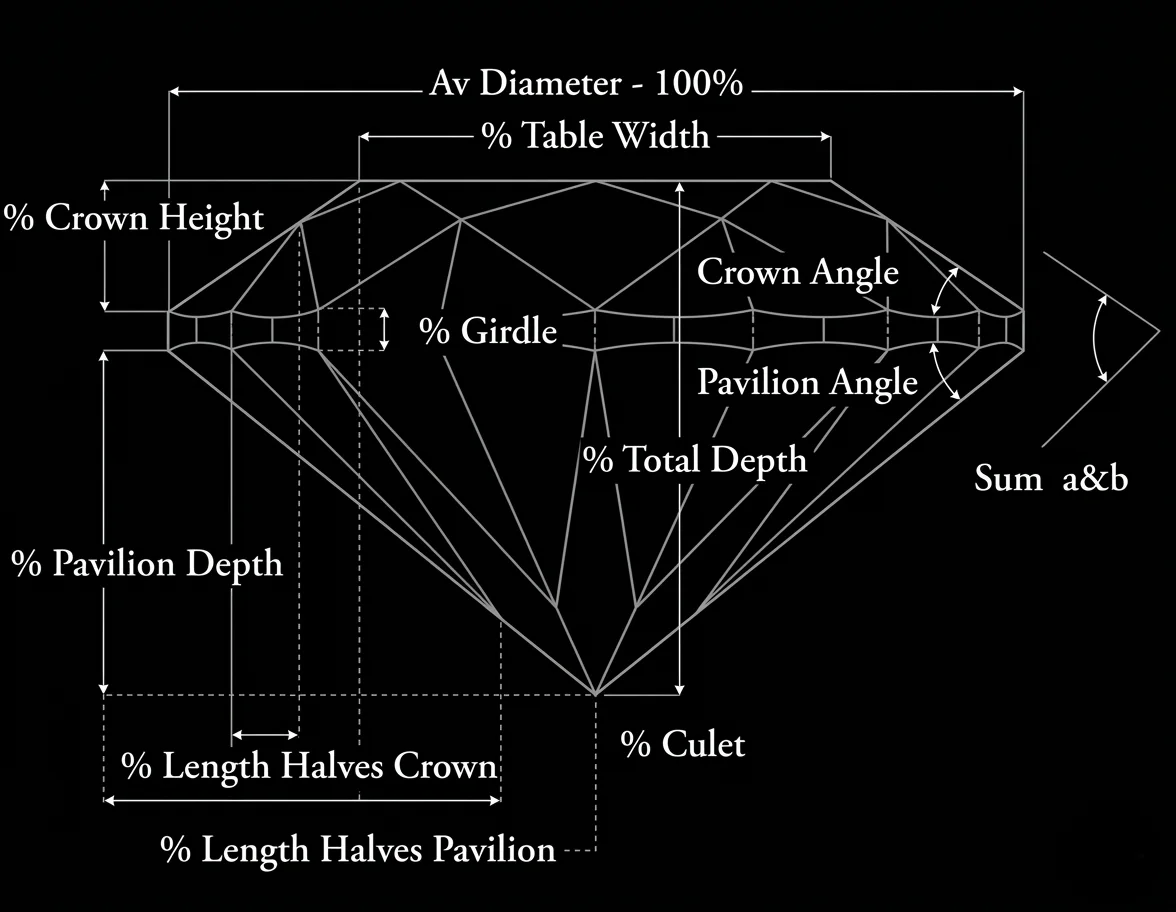
A well-cut diamond’s proportions determine three core elements of sparkle: brilliance (white light returned to the eye), fire (flashes of color caused by light splitting into the spectrum), and scintillation (the flickering sparkle seen as the diamond or the viewer moves). When crown and pavilion angles are correctly proportioned to each other, light entering the stone reflects internally and exits back through the table — maximizing all three effects. Proportions outside the ideal range let light escape through the sides or bottom instead, dulling the stone regardless of how good its color or clarity grade is.
Proportion – Understanding Brilliance, Dispersion & Scintillation
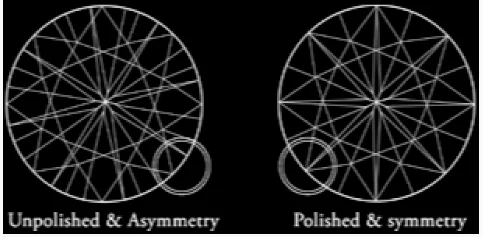
Symmetry describes how precisely a diamond’s facets align — whether the crown and pavilion meet correctly at the girdle, whether the table is centered, and whether facets are uniform in shape and size. Like cut, symmetry is graded Excellent, Very Good, Good, Fair, or Poor.
Common symmetry flaws include: a wavy or uneven girdle, crown and pavilion facets that don’t meet correctly at the girdle, extra facets added during cutting, an off-center table or culet, a table and girdle that aren’t parallel, and irregularly shaped or misaligned facets. Any of these can measurably reduce brilliance, even when cut, color, and clarity grades are otherwise high — which is why we recommend Good symmetry or better, and Very Good or Excellent where possible.
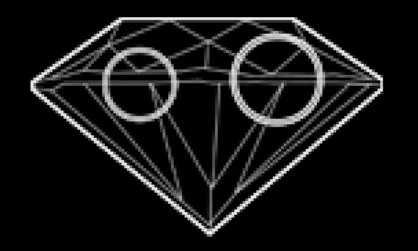
Wavy Girdle
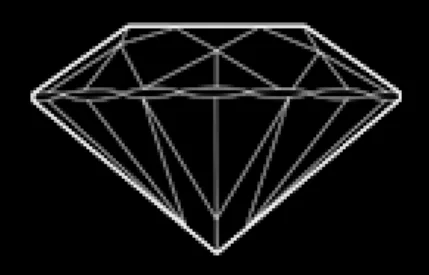
An ideal cut diamond features a precisely proportioned diamond girdle that enhances both beauty and durability. Proper diamond girdle alignment with the table ensures maximum light return and structural balance. Our diamond girdle guide for premium cut stones highlights the importance of symmetry in achieving brilliance. Understanding diamond anatomy: ideal girdle shape and positioning is key to selecting a truly exceptional stone.
Crown & Pavilion Misalignment
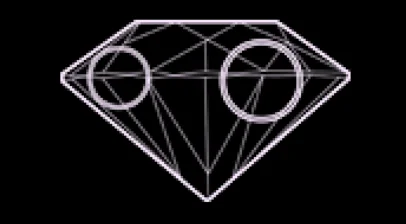
In a Round Brilliant diamond, the top of the pavilion mains and the bottom points of the bezel facets must meet precisely at the girdle to ensure perfect alignment. When the crown and pavilion are misaligned, it creates an asymmetry flaw that can diminish the diamond’s brilliance and overall appearance. Proper facet alignment is essential to maintain the diamond’s sparkle and value. Buyers should carefully evaluate diamond symmetry to avoid stones with noticeable imperfections.
Extra Facets
Off-Center Culet
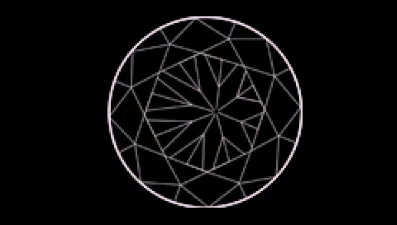
Diamond facets and their precise arrangement play a vital role in diamond symmetry, which is a key factor in diamond clarity grading. The role of symmetry in diamond quality becomes especially important for high clarity diamonds, where symmetry precision greatly affects the stone’s brilliance and visual appeal. Proper facet alignment in diamonds ensures optimal light reflection, enhancing both beauty and value. Understanding these aspects helps buyers select superior diamonds with exceptional sparkle.
Off-Center Table
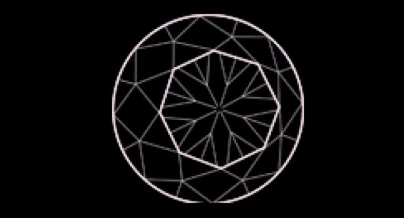
The effects of off-centered diamond tables can significantly impact the overall symmetry and brilliance of a stone. When the table facet is not properly aligned and centered parallel to the diamond girdle, it causes uneven crown angles that reduce light performance. Ensuring the diamond table placement is precise is essential for achieving optimal sparkle and value in high-quality diamonds.
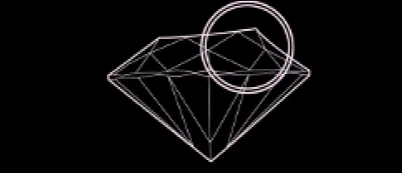
Table & Girdle Not Parallel
The importance of parallel table and girdle in diamond symmetry and cut quality cannot be overstated. When the table and girdle are perfectly aligned, it ensures uniform crown angles that enhance the diamond’s sparkle and brilliance.
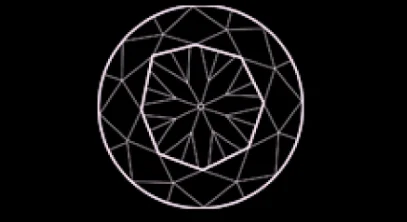
Misshapen Face
An ideal-cut diamond features a perfectly symmetrical octagonal table where each diamond facet is precisely aligned and equal in size. Any irregularly shaped facets or misshapen areas can compromise the diamond’s optical precision and reduce its overall brilliance. Ensuring flawless facet symmetry is essential to maintain the diamond’s beauty and maximize its light performance.
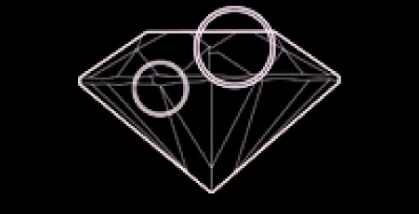
Faces Not Pointing Up
The diamond facets and their precise facet arrangement play a vital role in defining the overall quality of a diamond. The importance of facet pointing in diamond quality cannot be overstated, as poorly pointed facets significantly affect the diamond’s appearance and brilliance. Properly identifying diamonds with improper facet shapes helps buyers avoid stones with reduced sparkle and value.
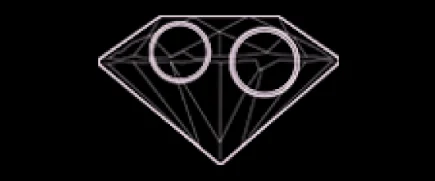
Naturals on Crown and Pavilion
What Is Diamond Polish?
Polish describes the smoothness of a diamond’s facet surfaces after cutting, graded on the same five-point scale as cut and symmetry: Excellent, Very Good, Good, Fair, Poor.
- Excellent — no polish lines visible even under 10x magnification.
- Very Good — minute polish lines, very difficult to see under 10x magnification.
- Good — polish lines visible under magnification, but not generally to the naked eye.
- Fair — polish lines visible to the naked eye in good lighting; not recommended.
- Poor — polish lines clearly visible, noticeably dulling brilliance; not recommended.
Our recommendation: Very Good or Excellent — the price difference over Good is typically small, and both genuinely affect how the stone performs.
What Is Diamond Fluorescence?
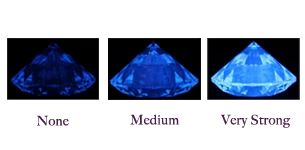
Some diamonds emit a faint glow under ultraviolet light — most commonly blue, occasionally yellow, green, or white — graded from None to Very Strong. Fluorescence doesn’t affect a diamond’s durability, and for most stones, it has no visible effect on appearance in normal lighting. In rare cases, strong blue fluorescence on a lower color grade can make a diamond appear slightly hazy; this is uncommon and mainly affects stones with Strong or Very Strong grades combined with lower clarity. For most buyers, fluorescence is a minor factor — worth knowing about, not worth worrying over.
What are the different types of Fluorescence?
Diamond fluorescence is a fascinating feature that can subtly affect a diamond’s appearance under specific lighting. When exposed to UV light, some diamonds emit a visible glow – this is known as diamond color under UV light. The most common glow is blue fluorescence in diamonds, but rare hues like yellow, green, or white can also occur. The degree of fluorescence in diamonds is assessed through fluorescence grading, which ranges from faint to very strong. Understanding fluorescence grading from faint to very strong is essential when evaluating a diamond’s true visual impact. Whether you’re seeking a unique stone or curious about the science behind glowing diamonds: fluorescence in detail, knowing how UV light interacts with your gem can guide a smarter, more confident purchase
Does Fluorescence affect the Diamond?
Milky or oily diamonds: When fluorescence becomes a concern is a topic every buyer should understand before making a purchase. While fluorescence in diamonds doesn’t always affect quality, in some cases – especially with strong blue fluorescence – a diamond may appear hazy or cloudy under certain lighting. This effect is more common in stones with lower color grades. Understanding milky or oily diamonds: when fluorescence becomes a concern helps ensure you choose a diamond that retains brilliance in all conditions.
Ideal Cut Diamonds
An ideal cut diamond is cut to proportions and angles specifically optimized for light performance, going beyond a simple “Excellent” grade to target the mathematically calculated best balance of brilliance and fire. The concept traces back to Marcel Tolkowsky’s 1919 analysis of the round brilliant cut, which established the angle calculations still used as a reference today. Modern cutting technology has refined these proportions further, but the underlying principle is unchanged: precise, consistent angles return more light than any other factor in a diamond’s appearance.
Hearts and Arrows Diamonds
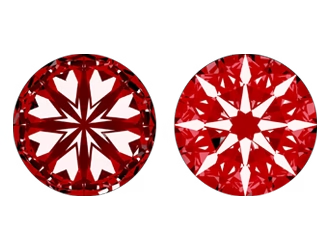
Hearts and Arrows diamonds are a category of exceptionally well-cut round brilliants, named for the pattern they reveal under a specialized viewer: eight hearts visible from the pavilion (back) side, and eight arrows visible from the crown (front) side. This pattern only appears when a diamond’s facets are cut and aligned with very high precision — making it a visual confirmation of excellent symmetry, not a separate grading category on a certificate. Hearts and Arrows stones are available on request for buyers who want this level of cutting precision specifically.
Color & Intensity
Fancy color diamonds are graded differently from colorless diamonds — instead of the D-to-Z scale, they’re assessed on intensity, ranging from Faint through Very Light, Light, Fancy Light, Fancy, Fancy Intense, Fancy Vivid, Fancy Deep, and Fancy Dark. A diamond can also show a secondary color modifying its primary hue (for example, a purplish pink), which adds further nuance to its classification. As intensity increases, so does both visual impact and rarity, which is the main driver of value in fancy color stones.
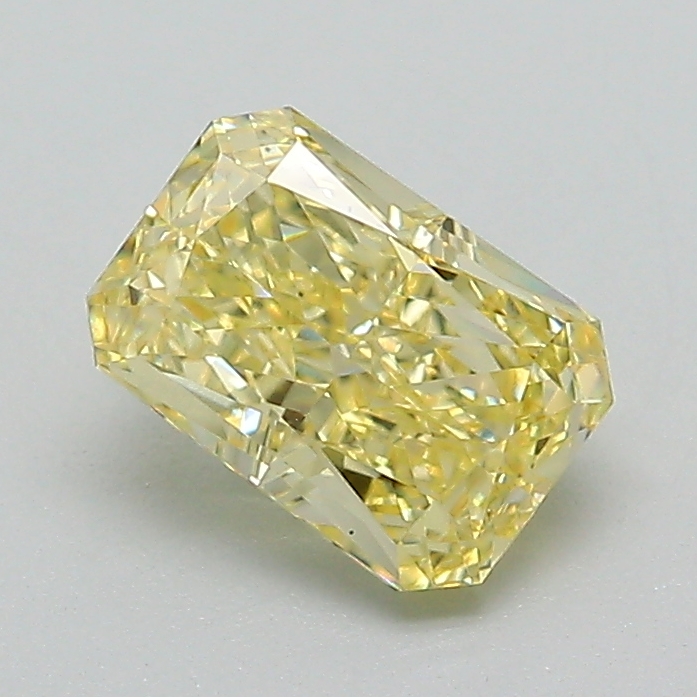
Fancy Yellow
Fancy yellow diamonds, sometimes called canary diamonds, get their color from trace nitrogen absorbed during formation. They’re graded across the same intensity scale as other fancy colors, from Fancy Light through Fancy Vivid — with Fancy Vivid Yellow commanding the highest premiums for its saturated, eye-catching hue. Fancy yellow is one of the more accessible fancy colors, available across a range of carat sizes and intensities. [Browse fancy color lab grown diamonds →]

Fancy Pink
Pink diamonds get their color from a structural distortion in the crystal lattice — not from a chemical impurity, which is what makes most other fancy colors. This distortion selectively absorbs light, producing shades ranging from very light pink to the rare, intensely saturated Fancy Vivid Pink. Because this lattice defect is rare in nature, natural fancy pink diamonds are among the most valuable fancy colors; lab grown pink diamonds offer the same visual effect at a more accessible price.
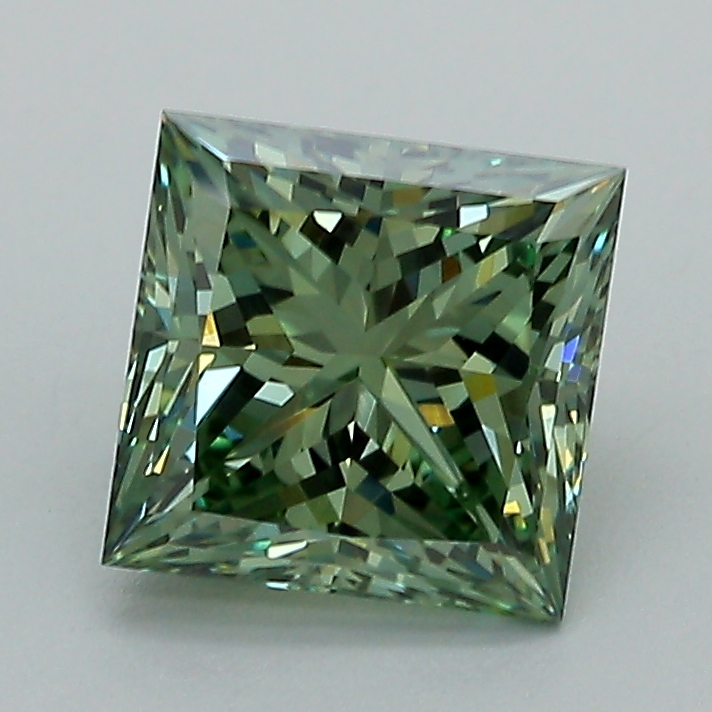
Fancy Green
Natural green diamonds get their color from prolonged exposure to background radiation over millions of years, which alters the crystal structure at a microscopic level. Some show color only as a thin surface layer (known as “skin” color), while true body-color green diamonds with color throughout the stone are exceptionally rare. Green pairs particularly well with platinum or white gold settings, which let the color read clearly without competing warm tones.
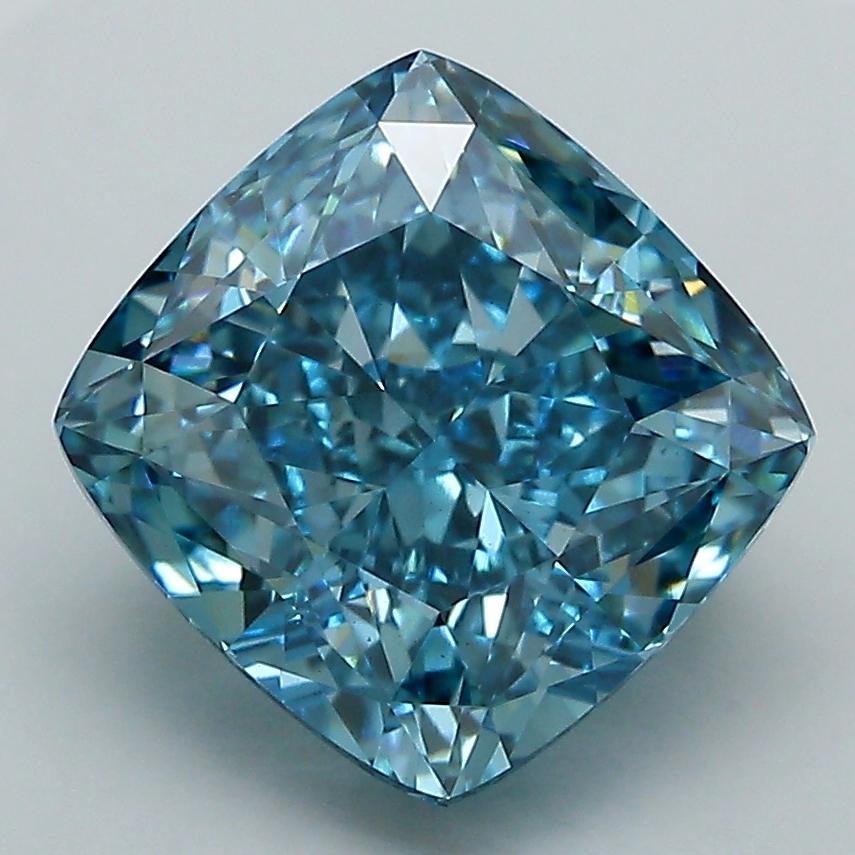
Fancy Blue
Blue diamonds get their color from trace boron present during formation, which absorbs red light and gives the stone its blue hue. Natural fancy blue diamonds are among the rarest of all fancy colors and are priced accordingly; lab grown blue diamonds reproduce the same coloration through controlled boron doping during growth, offering the look at a fraction of the cost. Graded on the same Faint-to-Fancy-Vivid intensity scale as other fancy colors.
Fancy Brown
Brown diamonds get their color from structural irregularities formed under pressure during the diamond’s growth. Within the brown family, lighter tones are often marketed as Champagne diamonds, while brown stones with an orange cast are called Cognac diamonds. Brown is one of the more naturally affordable fancy colors, making it a popular choice for buyers who want a warm, distinctive stone without the premium of pink or blue.
Fancy orange
True orange diamonds — without a brown or yellow secondary tone — are rare, since most orange-toned stones lean toward brown (technically “fancy brown-orange” or similar combination grades). Graded on the same intensity scale as other fancy colors, with Fancy Vivid Orange representing the most saturated and valuable end of the range. A bold, distinctive choice for buyers seeking a fancy color outside the more common yellow and brown range.
What Is a Diamond Certificate?
A diamond certificate is an independent gemological lab report documenting the 4Cs — cut, color, clarity, and carat weight — along with the stone’s measurements and, for lab grown diamonds, confirmation of the growth method (CVD or HPHT). It’s what lets you (or anyone else) verify a diamond’s specifications without relying on the seller’s word alone.
Every loose lab grown diamond from Primira ships IGI certified by default, with the report number laser-inscribed on the stone’s girdle and verifiable independently at igi.org. Jewelry ships SGL certified by default, covering both the stone and the mounted metal, with IGI available on request. [See full certification details →]
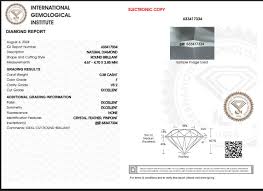
IGI Diamond Certification
IGI (International Gemological Institute) is the lab that certifies every loose lab grown diamond from Primira by default — no request needed, no upgrade fee. Each IGI report documents the stone’s cut, color, clarity, and carat weight, its precise measurements, and for lab grown diamonds, explicit confirmation of the growth method (CVD or HPHT) so there’s no ambiguity about origin.
The report number is laser-inscribed directly onto the stone’s girdle, microscopic but readable under magnification. This is what physically ties the stone to its certificate — and it’s also how you verify the certificate yourself: take the report number, enter it at igi.org, and the lab’s own record should match the carat, color, clarity, and shape on your physical certificate. Because the verification happens on IGI’s site, not ours, anyone — you, your local jeweller, an appraiser — can confirm it independently.
IGI is also available on request for jewelry pieces, which ship SGL certified by default. Choosing IGI for jewelry adds 3-5 business days, since it routes through a third-party lab, but IGI’s larger international office network — Antwerp, New York, Hong Kong, Dubai, Tel Aviv, Toronto, and more — can make the report more immediately recognizable to jewellers, appraisers, or insurers outside India. [See full certification details →]
SGL Certification
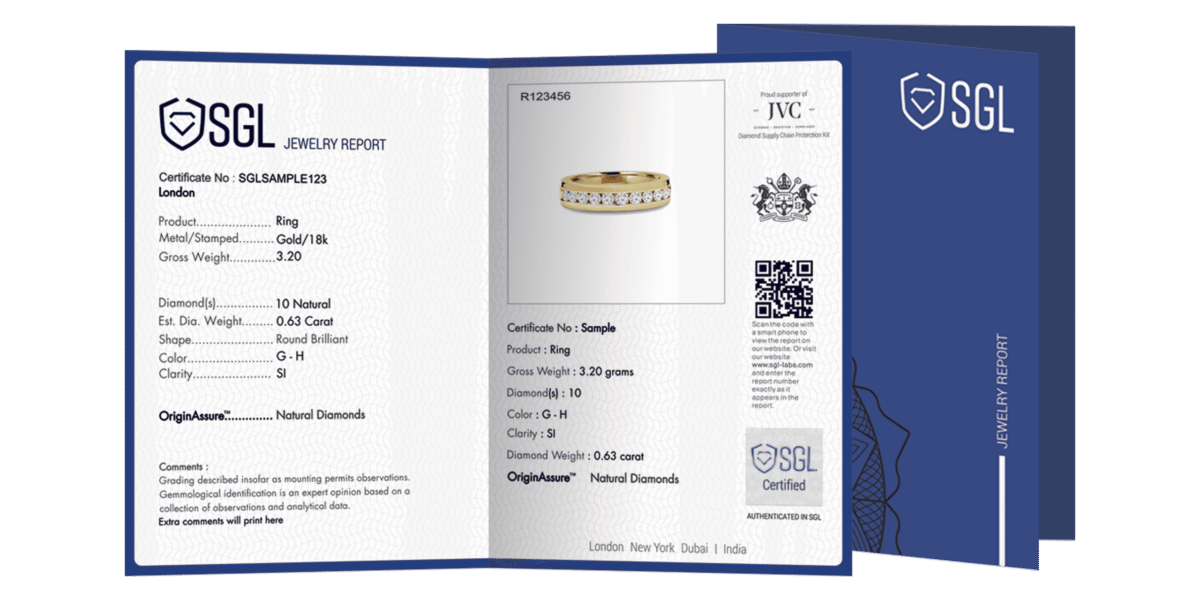
SGL (Solitaire Gemological Laboratories) is the lab that certifies every jewelry piece from Primira by default — rings, pendants, earrings, bracelets, and the rest. Founded in 2007, SGL now operates 25 locations across 5 countries, with Experience Centres in Mumbai, Surat, Jaipur, Dubai, and Hyderabad. Because every certification step happens within this network, including a center right here in Surat, SGL is fast to coordinate and easy to verify in person if you want to see the process directly.
An SGL jewelry report covers the full piece: the stone’s 4Cs (cut, color, clarity, carat) alongside the mounted metal’s purity and hallmark details. The same girdle laser-inscription technology used by other major labs is used here too, so the report number is permanently linked to the physical stone, not just the paperwork.
To verify an SGL certificate yourself, take the report number from your certificate and enter it at sgl-labs.com — the lab’s own record should match the carat, color, clarity, and shape on your physical certificate. As with IGI, this verification happens on SGL’s site, not ours, so anyone can confirm it independently.
SGL also certifies loose lab grown diamonds on request, for buyers who specifically want an SGL report instead of the IGI default. The report covers the same scope — cut, color, clarity, carat, measurements, and growth method confirmation for lab grown stones — and is verified the same way, through SGL’s own site rather than ours. [See full certification details →]
GIA Diamond Certification
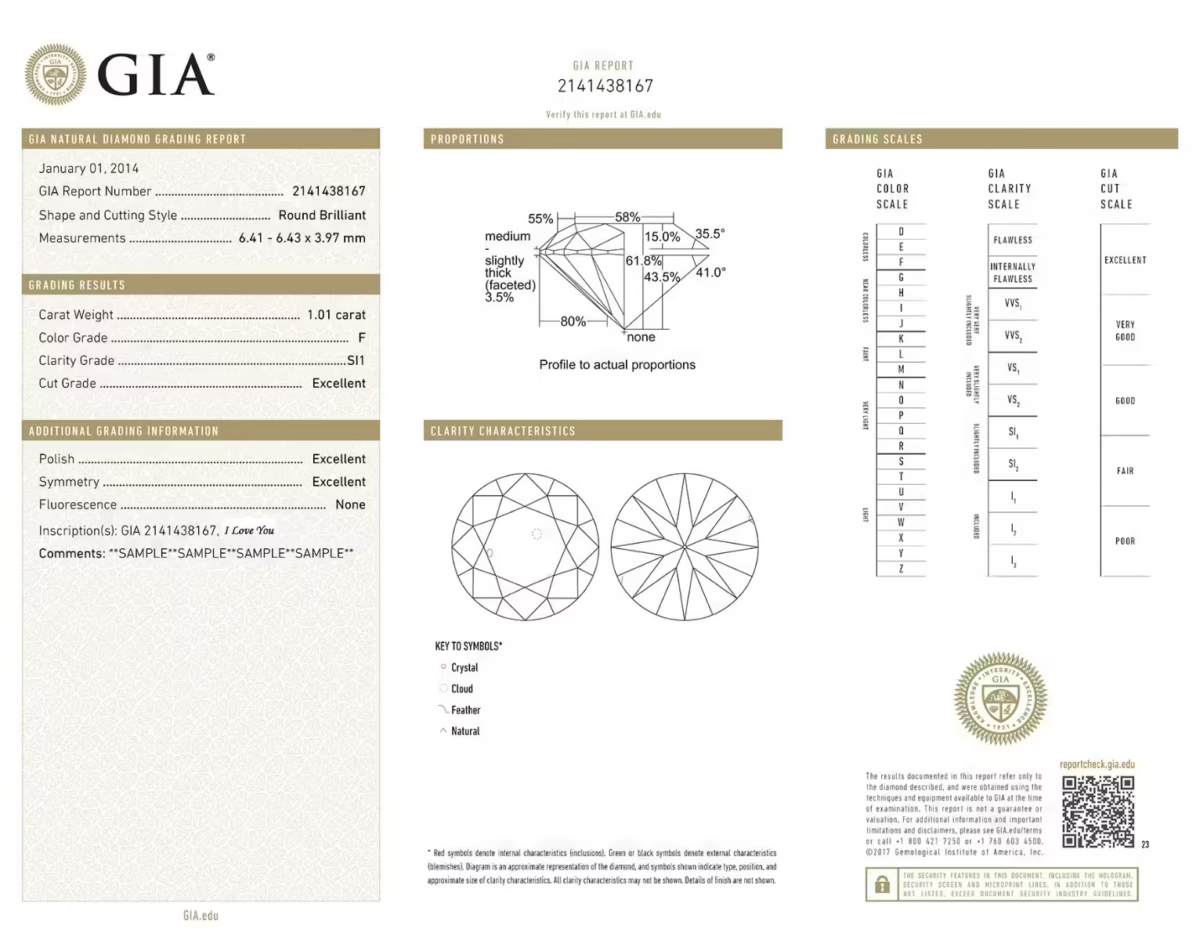
The GIA (Gemological Institute of America) plays a crucial role in the world of gemology by setting the benchmark for diamond certification and gemstone evaluation. Established in 1931, GIA introduced its globally recognized diamond grading system in 1953, revolutionizing how diamonds are assessed. The importance of GIA certification lies in its credibility—each GIA certificate is the result of an unbiased gemologist analysis, ensuring accuracy and integrity. Trusted worldwide, GIA’s thorough evaluation of a diamond’s cut, color, clarity, and carat gives buyers confidence and transparency. GIA’s role in gemology has cemented its reputation as the most respected name in the diamond industry, helping customers make informed, secure investments.
Why a Certificate Alone Isn't the Full Picture
Two diamonds with identical certificates — same carat, same color, same clarity, same Excellent cut grade — can still look different in person. Proportions within an “Excellent” grade still vary slightly, and how a stone performs under different lighting can’t be fully captured on paper. This is exactly why we offer a live 360° video inspection with a gemologist before you buy: you see the actual stone, magnified up to 40x, not just the numbers describing it. [Book a live diamond inspection →]

Conflict-Free by Nature
As lab grown diamonds, every stone we offer is inherently conflict-free — created in a controlled laboratory rather than mined, with no connection to the mining-related concerns the Kimberley Process was established to address. This isn’t a sourcing policy we follow; it’s a structural fact of how the stone came to exist.
What Are Eye-Clean Diamonds?
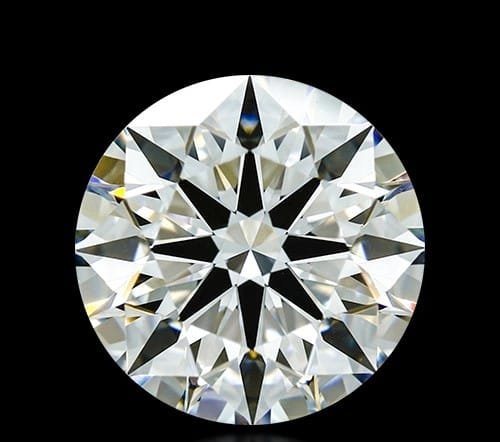
An eye-clean diamond shows no visible inclusions to the naked eye when viewed under normal lighting at a typical viewing distance of 6-12 inches. Flawless (FL), Internally Flawless (IF), and VVS1-VVS2 clarity grades are reliably eye-clean. VS1-VS2 are eye-clean in the large majority of cases. SI1 varies — many stones look eye-clean, but inclusions at this grade can occasionally be visible without magnification, so we recommend viewing the actual stone (via our live video inspection) before committing at this clarity level. Included grades (I1-I3) typically show visible inclusions and are not considered eye-clean.
How to Choose: A Quick Decision Guide
There’s no single “right” combination — it depends on what matters most to you.
If visual size matters most: prioritize cut quality and face-up diameter over carat weight. A well-cut 0.90 carat diamond can look as large as a poorly-cut 1.00 carat stone.
If looking colorless matters most: choose D-F color. If budget matters too, G-I looks colorless to most eyes once mounted, especially in yellow or rose gold.
If budget is the main constraint: G-I color paired with VS2 or SI1 clarity gives the best balance — clean and white-looking to the naked eye, without paying for grades only a loupe would distinguish.
If you’re choosing a step-cut shape (emerald, Asscher): prioritize clarity (VS1 or higher) over color, since these cuts reveal inclusions more readily than brilliant cuts.
Whatever combination you’re considering, you can confirm it’s right before you commit — request a live 360° video inspection and see the exact stone, magnified, with a gemologist walking you through it. [Book a live diamond inspection →]
Diamond Care
Clean your diamond jewelry with warm water, a small amount of mild dish soap, and a soft toothbrush, gently brushing behind the stone where dust and oils collect most. Dry with a soft cotton cloth — avoid paper towels, which can leave fine scratches on metal surfaces.
Ultrasonic and steam cleaners are effective for solitaire diamond pieces but should be avoided on jewelry with other gemstones (emeralds, opals, and several colored stones can be damaged by vibration or heat).
For everyday pieces, a gentle clean every few weeks keeps brilliance consistent; for special-occasion pieces worn less often, clean before each wear. Have prongs and settings checked periodically, particularly on rings worn daily — loose prongs are the most common cause of lost stones, and they’re easy to catch early
 Chat on WhatsApp